Society/culture
     Just as not all the limits the Law puts on people’s freedoms are bad, so sometimes one’s society and culture may exert limits that are beneficial to an individual, a family, and a society or culture.  Such limits are sometimes positive, sometimes negative.

S1 E4-6
     When Elizabeth realizes that she has an illegitimate pregnancy, she is full of tears to Fogarty (the father) that he must marry her.  She knows the social ramifications.  He keeps putting her off because he doesn’t realize that their intimacy has produced a pregnancy.  He wants to wait until he's a captain, given command of a ship, with the attendant financial benefits.
     She can’t find the opportunity to tell him, and in the meanwhile, her head is turned by her admirer Albert Frazer.  She decides she doesn’t want to marry Fogarty anymore.  When Albert proposes they elope, despite her sister-in-law Anne’s counsel, she thinks that she can provide legitimacy to her child by marrying Albert, and that he’ll never know.  Eventually that deception will be revealed, and cause great shame to herself, hurt for her husband, drive one of the wedges between them.  It will become an embarrassment to admit to her son and a wedge between her and her son as he grows to manhood.
      Her brother James bluntly speaks reality to his sister Elizabeth that a woman without her own means or her family support ends up on the streets or the poorhouse (recall that environment from Dicken’s “Oliver”).  Her brother Robert is upset because her choices have brought shame on the entire family.

S2 E2-5
     Anne is forcefully reminded the hard way that her society disapproves of a woman leaving her husband, disapproves of a woman in certain careers, disapproves of women bothering their heads with figuring.  She had already found that men did not want to have a woman in a position of authority over them (S1 E2, for example).

S2 E9
     Traditionalist Muslims limit an individual’s choices, the freedoms of their citizens, and their country.

S2 E11
     Well-meaning Lady Lazenby advises Anne that not only are she and Elizabeth being snubbed socially because of rumors that Albert & Elizabeth are getting divorced, but that there must not be a divorce, or all the family’s businesses will be ruined.  Additionally, no one else can afford to be even associated with them, as they will suffer the same fate.

S4 E4
     No one thinks Elizabeth, a woman, can run the Frazer Line and shipyard.  She bucks those prejudice/presumptions, though she still finds she has to rely on Matt Harvey to do so.
     Letty, as governess to James’ daughter Charlotte, brings her to visit her father.  She asks where she and Charlotte are to stay, and when he says they are to stay at his house, she is stopped for a moment, until he says he’ll be staying aboard his ship.  James (now a widower) falls for Letty, and proposes to buy a house nearby for her and Charlotte to live.  Charlotte is delighted to live nearby, but doesn’t understand why they can’t live together with her father.  James tells his daughter that it’s not considered proper for unmarried couples to live together.  For many living a hundred and more years later than the setting of this story, this seems ridiculous.  For others, it’s still a good rule to live by, giving legitimacy and greater stability to the family.

S5 E3
     James insists on getting a housekeeper to protect Letty’s reputation when she & Charlotte must move in with him, due to his recent financial disaster.  Letty says that neither she nor James care about gossip, but apparently he does care about it for her sake.  And what about the effect of gossip on Charlotte’s life?  Brother Robert doesn’t consider merely having a housekeeper protects Letty’s reputation sufficiently.  Letty claims that those who want to gossip will, no matter, which is the case as much nowdays as ever.

S5 E9
     Despite having said that she doesn’t care about gossip, Letty says she can’t go with James to Scotland without Charlotte, presumably to provide some legitimacy for her going with him.  Although James had previously tried to take precautions to protect her reputation, this time he tricks her into going with him without either a chaperone or even Charlotte as an excuse.  Whether others gossiped about their traveling together, it doesn’t appear that they were intimate, and we might presume the crew were aware of that, even though the crew might just assume they could do so with discretion.
     James and Letty married in the next episode.

S6 E8
     Much to James’ outrage, his daughter Charlotte makes the same mistake as his sister Elizabeth, and her illicit intimacy produces an illegitimate pregnancy.  Charlotte is young (perhaps 15) and enamored with her cousin and the idea of being in love and betrothed.  Her largely absentee father left her seeking to be the center of some male’s life.  Her governess’ overindulgence has made  her think she should always get her own way.
     But even if these were not the case, the social norms of avoiding situations that could lead to unintended consequences are reinforced in the story.  There’s a reason one should not be over-focused on one person too early in life.  Likewise, it’s wise to have chaperones and off-limit premises.  Too often isolated couples have fallen into temptations that have at best brought disappointment to themselves, and at worst have ruined their lives.
     Though William, who impregnated Charlotte, promises to provide well for her and the child all their lives (financially), he isn’t willing to give them legitimacy in society.  Even if that were not a problem, Charlotte’s choices would be limited by the fact that she already has a child.  What if Charlotte wanted to marry someday?  What if she wanted more children?  Not all men are willing to take on another father’s fatherhood (as Elizabeth’s husband Albert loved and cared for her child--yet left for Argentina in the boy’s critical teen years.  And when William grew to be a man, he was conflicted over his birth father).
     Illegitimacy brings with it many an awkward situation, such as with inherited health issues, such as in S2 E3 (baby William suffering fits).  Once 2 people have shared intimacy it often brings awkwardness in various social situations, conflicting emotions, and jealousy (as between Elizabeth, her husband, and her previous lover, the father of her child--through several seaons of the series).
     Charlotte’s other cousin, Samuel, felt compassion for her and her situation, saved her reputation and that of her son, by marrying her (S6 E10), and yet the solution to that problem became problematic for their marriage, so that the effects of that original sin, if you will, continued to warp not only Charlotte’s life, but Samuel’s and their children’s as well.

S7 E1
     The social stigma of disease is a 2-edged sword.  While it can help stop the spread of contagions, those diseases that are not understood well may have social consequences that can be worse than the disease.  Such were society’s fears about leprosy in the 1800s (and for centuries, millennia, before then).

S7 E8
     Letty finds opposition to acquiring a house for her children’s home.  No one in a good neighborhood where she wants to raise them, wants them there.  They fear the contagion of influence and ideas.  Letty has compassion for the children, who are not to blame for the circumstances of their birth.  James and others of their society feel that providing certain social services to those who make poor choices is enabling/encouraging them to continue to make poor choices and to avoid taking responsibility for them.  Each side has validity.  It’s one of many difficult problems for any society to resolve.  But then some people add social stigmas and prejudices that become downright cruelty.
     James said many times that in trying to help a person, you end up hurting them, though he also helped people/acted compassionately at times, so that whether he would admit it or not, it’s right to have compassion and caring for others.  That was Anne’s disposition and conscience, as well as Letty’s.
     While Anne was staying with Mrs. Jessop (S2 E3) she learned that the well-intentioned Contagious Disease Act had unintended consequences, as happens when legislation is not well thought through or researched.  Yet sometimes even good laws may be a detriment to a few circumstances.  It's one reason for having wise judges and juries of peers.

S8 E5
     More than one episode illustrates religious and superstition’s limits on people’s self-determination.  But this episode seemed to me a useful comparison between the religion and superstitions of one civilization and that of another . . . in this case, the English and the Nigerians.
     When Religion or Faith helps one to make wise choices and/or offers comfort and strength in times of trouble, they are beneficial to a person, family, society.  When they are used to excuse authoritarianism/tyranny, persecution, cruelty, they, like any other facet of humankind or its institutions, are corrupted, corruptors, corruptions.
     There might be some times when superstition could help one make better choices—like avoiding walking under ladders—but it seems reasonable to want to apply reason to whether any particular attitude or behavior is helpful or not.  More than religion, it seems to me that superstition has been used to frighten people into allowing others to have unreasonable power over them.
Education
     Baines’ illiteracy limited him from improving his lot in life (S1 E2), but Anne (his employer’s wife) bargained to teach him to read, write, and use mathematics.  She kept to her bargain, and through her he was eventually enabled to pass the test for a Master’s ticket (captain’s license, S1 E15).
     Mr. Callon and Jack Frazer saw to it that their children were educated, as did Robert and Elizabeth, in order to give them better prospects in life, more open doors.  (S1 E5 Callon’s son, S1 E15 Albert’s education, S5 E3 Samuel & William, S6 E2 Samul’s education).
One’s own choices
     Elizabeth chose to be intimate before marriage, and that put limits on her life, despite her determination that it shouldn’t.  She later admits to her sister-in-law Anne, that she “feel[s] nothing but regret every time [Daniel, with whom she had been intimate] enters a room.” (S1 E5).  When her son is grown, she fears to admit to him that he is illegitimate, afraid of what he will think of her (S5).
     Elizabeth decides to marry Albert Frazer instead of Daniel Fogarty, the father of her child, and decides not to tell him who the baby’s father really is.  Later she admits to Anne (to whom she goes for advice, even though she doesn’t want to take it) that she feels ashamed for having deceived him (S1 E8).  It becomes a wedge in their marriage, and she fears losing Albert, having fallen in love with him.  When Albert finally does learn the truth (when baby William turns 1, S1 E13), it becomes an issue they struggle with for years, despite Albert’s love for the child, he is so hurt by the deception.
     Ironically, Elizabeth’s very determination to determine her own life ruins nearly every romantic relationship she forms.  She has a stormy marriage with Albert for years, and a stormy relationship (and finally marriage) with Daniel, over many seasons.  Her relationship with Jose (son of James’ business associate/friend Braganza) was cut short by his death, before it could turn stormy--she was, after all, still married to Albert, and it left them open to temptations they found regrettable.  She has a stormy relationship with Matt Harvey throughout season 4.  It seems like she might have a more stable relationship at last with Marston, but she is uncertain (not wanting to ruin her husband's career), and his father finally blocks them from pursuing her divorce and their marriage (S7 E7-10).
     As a businesswoman, Elizabeth’s choices are much more successful (S4-8).

Season 1 & 2
     Anne’s scruples/conscience limited what she was willing & able to do—not a bad thing, unless she was uninformed or didn’t understand the situation (S1 E12, as far as the parson).  She admitted that she had things to learn (S1 E8 & 13).  She admitted that sometimes one may hold too tightly to excessive scruples that clash with what one wants in life, and yet some scruples must be held on to for the sake of one's self respect (S1 E9, S2 E6+).  Anne had her own opinions, and would try to influence her husband, but she chose to be loyal to him (S1 E10), unless her conscience was too heavily tread upon (S1 E12 feeding starving emigrant passengers; S2 E2-5 feeding starving families).  At times her conscience was conflicted (S1 E14), and she had to weigh her choices.

S1E 12
     A parson defrocked for lechery loses his life because of his lies/treachery.  He was taking advantage of islanders' trust in him to sell them into virtual slavery.

S3 E2
     Miners get drunk and sign on as sailors; some choose not to fulfill their contract and are sent to jail.  Some blame James for getting them drunk in an attempt to break a strike the mine owner refused to negotiate.  The strike would impact his own business as well.  He chose the lesser of evils.  But those miners chose to drink, and to drink to excess.

S4 E7
     “Uncle” Percy steals from Elizabeth/Frazers and is imprisoned.  She believes his protestations of innocence. He eventually loses valuable friends when he is finally forced to admit is actually guilty, not even sorry for it.  He considered that he was entitled.

S4 E9
     Sinclair’s uncle dangled promises of inheriting wealth for years and years, making him work for a pittance.  But then the uncle tied up his inheritance, so that he could not benefit from it until his aunt died.  Though his aunt makes him the company manager, he lets the business go to ruin (from a thriving 20 ships down to 6 wrecks), as though somehow that could revenge him of his uncle's unfairness.  Sinclair chooses to mortgage his future so that he can live a wastrel’s life.

S5 E10
     After being rewarded as a hero, Billie gets drunk and is taken in by crimps.   They manage to get all his reward away from him.

S6 E1
     Tim doesn’t want to be a sailor.  It's a hard life.  He covets, then steals Sir Daniel's gold.  Only through the mercy of Sir Daniel and his father's old mate is his punishment commuted to serving time on another ship under the probationary care of his father's old friend (who had got him his berth/job in the first place).

S6 E2
     Elizabeth tells her son:  Those who make decisions must take the consequences.  She had tyrannically said the same to her employee Matt Harvey, in a fit of authoritarianism (S4 E9), blaming him unfairly for losses.  Her overbearing ways lost him to her.  Maybe she finally eventually recognized that advice for her own self.

S6 E3
     Capt. Barry accepts bribery to sink his own ship.  He becomes alcoholic with the guilt/shame of it, and ruined his chances of getting command of any other ship.

S6 E5
     William & Charlotte are intimate.  She thinks it will draw them closer, and lead to marriage.  But he begins to see it as the mistake of a moment threatening to ruin his life.  Of course he had been unwilling to keep his word to Charlotte's father to stop spending so much time with her.  William was the elder of the two, and should have taken responsibility for the relationship.  But he refuses to marry her, and thus ruins her life--first in the intimacy, and then in refusing to legitimize it. (S6 E7)

S6 E10
     Samuel comes to Charlotte’s defense, eventually marries her, which becomes a disaster.

S7 E10
     Tom spoils himself instead of staying alert on guard, and gets kidnaped by Burgess & crew.

S8 E2
     James ignores the advice of Capt. Baines, falls into a trap baited with the promise of a highly profitable cargo of Turkish tobacco, so that he & Baines are held for ruinous ransom.
     Tom rescues them, but Elizabeth & Samuel scrounge up the exorbitant ransom, a disaster to James' & Elizabeth's finances.
Ill-Health & Drunkenness
     When one is ill or drunk, one doesn’t have full capacity to pursue one’s dreams, or have control over one’s life.  Decision-making is impaired, engergy & enthusiasm are depleted.
     Sometimes the one who drinks excessively ruins the lives of others, sometimes one drinks to try to forget or avoid responsibility for one’s choices, sometimes one uses alcohol or drugs to take advantage of others.

S1 E1
     Capt. Webster loses his ship and impoverishes himself and daughter, through alcoholism.

S1 E2
     James becomes ill and Anne is the only one literate to navigate the ship, but she is ill prepared.  All kinds of troubles follow.

S1 E6
     Mrs. Bascom drinks instead of feeding her kids.  She begs others to take the pity on them that she hasn't.

S1 E9
     A brothel owner spikes James’ drink to steal his document and reveal his strategy to try to rescue his company from an unjust insurance owner.

S1 E12
     An alcoholic parson limits his own choices, makes bad choices for others.

S1 E13
     Tipsy Robert spills the beans, causing embarrassment all around.
     Baby William comes down with fever and spots--is it smallpox or chicken pox?  Tense hours of tending a sick baby and not knowing follow.  Meanwhile, aboard ship to Canada, Sarah's brother & wife come down with smallpox.  Not only their own self-determination is in jeopardy, but that of the entire ship.  James & Baines explain to Anne what happens to a ship in quarantine.

S2 E4-5
     Sailors aboard the Chilean ship "Samantha" who have Yellow Jack are tossed over the side with shackles to drown them.  Sailors hired to bring the "Samantha" into Liverpool not only die, but spread death in the port.
     Anne becomes ill, unable to care even for herself, let alone make any choices for her life.

S2 E10
     Robert’s seasickness is debilitating (as in other episodes as well).  Pregnant Anne gets seasick, so must stay at home when she'd rather sail.

S2 E11
     Fogarty gets Emma drunk to seduce her.  She breaks their engagement, feeling used, especially as she learns that he is the father of Elizabeth's son.
     On advice from young seaman with a medical father, James saves Baines’ leg with ether & carbolic, despite Baines' objections.  He is in no position to be able to make that decision (fortunately, as it turns out).

S3 E2
     Drunk miners sign on as sailors, and must either serve or go to jail.
     Fogarty gets Robert drunk to persuade him into making a bad deal.
     Caroline suffers from exposure & dehydration adrift in a canoe at sea.  She has no power over her life whatsoever.

S3 E12
     An agent for the wealthy Rothschilds agent is injured, eventually dies, when Fogarty’s ship hits an iceberg.

S4 E1
     James’ eyesight is suffering, limiting his life:  a highly frustrating position for him to find himself in, to whom determining his own life is so important.
    Albert got sick and died poor in the Argentine.  His dreams unfulfilled.

S4 E2-3
     Jack Frazer’s health declines, and he dies.  He not only can no longer run his own company, he finds out that his grandson is not so by blood:  a huge disappointment to him.  He reluctantly realizes that Elizabeth is just ruthless enough to be a success at running the company.

S4 E5
     Liverpool is in quarantine.  People can’t pursue their business or livelihood, leading to poverty in port.  People left with few, if any, choices in life, or even in death.

S4 E7
     Charlotte has diphtheria, is confined to bed.

S4 E9
     A Profligate loses his aunt’s company, his own inheritance, through debauchery & debt.  His bedridden aunt not only can't leave her room, but must be totally reliant on caregivers.  She loses hope.

S4 E10
     Capt. Baines suffers from an insect infection, making him too ill to command his ship.

S5 E1
     James is hit on the head, must be abed, others decide where he will go.

S5 E3
     A drunken sailor has to face justice for his crimes.

S5 E4
     Consumptive Emma is consigned to an institution, others make decisions for her.  She eventually dies there.
     Robert gets drunk in NYC and gets crimped.  Luckily for him, he is sold to Capt. Baines, who bails him out (though he will have to repay James for the money Baines lent him was James').

S5 E7
     Due to her mother’s illness, among other troubles, Mrs. Purvis must work extra jobs.  She gets fired for tardiness while trying to juggle everything.

S6 E2
     Robert chokes on a bone in the soup and dies, then end of his grand dreams and schemes (except that in his Will he has limited his son's will).

S6 E5--Thugs rob a drunken sailor.

S6 E7
     Baines gets James drunk to help him accept Letty’s pregnancy (in this case, a redeeming use of alcohol).

S6 E8--A drunkard captain has neglected wife & all.

S6 E9
     James & Baines get drunk over their troubles.  When there is no other remedy, they go without sleep 2 days through a raging storm to try to get James home in time for his son's birth.
     Letty’s struggles through childbirth, but the newborn has a heart problem and dies after 2-3 days.  That's an end to her desire to have James' child.  It appears to be an end of his desire to have a male heir to carry on after him.

S6 E10
     James and Baines suffer from exposure, hunger, thirst, adrift at sea, unable to carry on their own lives, until at last rescued.  Meanwhile, their loved ones are sick with worry, and with wondering if James just doesn't want to come home.

S7 E1
     What does James, or the general public, know about Leprosy? Are people aboard infected?  The crew is sick with fears, James & Baines fear being put in quarantine when they must put into port.  They both well understand the severe limits that will put on them and all aboard.

S7 E2
     Baines gets a broken arm in a brawl and is forced to do office work, which  he hates.

S7 E3—Charlotte mourns William to the point of mental illness.

S7 E7
     James has an ulcer.  Letty insists that he follow doctor's orders, and limit his involvement in business and stressful living, as well as limiting his diet to milk & fish, no alcohol.
     A mentally ill sailor under Baines’ command taunts young Tom Arnold, nearly kills him.

S7 E8
     James must reluctantly take on a mortally injured ship’s captain as passenger.  He and Baines are unable to save the captain's life, but the captain passes on information highly useful to James.

S7 E9—Charlotte is knocked overboard, seriously injured, scarred.

S8 E6
     Capt. Baines’ ship is caught in a storm, then catches fire, killing young Tom.  Capt. Baines mourns his loss (who he considered like a son), blames it on James in anger, until he is able to face his own guilt, and forgive both James and himself.
Spouses
     Anne chose to live the life her husband chose, which had some real consequences for her in a material way--except when she left him over her conscientious self-determination (S2 E2).  Elizabeth and other wives would not be willing to accept such lifestyle limits.  It also meant that sometimes she went along with ventures she didn’t feel comfortable with (running the Yankee blockade to sell supplies to the Confederates, gun running to the French, and so forth).  The survival of a marriage nearly always requires some compromises, negotiations, give and take.  One/a couple has to find a balance between what the individual might choose as a single person, and the desire to live and work as a team/partnership.  That can be a challenge, and different people and couples resolve it in their own ways.
     James wanted Letty to share his life rather than be a businesswoman, yet he helped her acquire a mill and agreed to get the grain for it (S5 E6).  He disapproved of her sack-mending business (which affected his own business), yet was willing to provide premises for it when he saw how important it was to her (S5 E9).  These situations came up even when they were only intending to marry.  Once married, she felt useless at sea and he felt restless at home, so when she decided to provide a children’s home, though he disapproved, he didn’t prevent her, and, in fact, helped her acquire the premises without letting on to her that he did so (S7 E8).

S1 E4
     Sarah sometimes "wears the pants" in her and Robert's marriage, depending on who is more strong-willed at the moment.  See also, S2 E10, S3 E11, S4 E4, 5, & 7.  In S3 E12 Robert puts his foot down about having Elizabeth & Mrs. Maudslay stay, but then Sarah pushes for inviting Leonora.  He sees the possible benefits.

S1 E9--James forbids Anne from walking around London on her own, so she takes a cab.

S1 E15
     The wives work behind the scenes to effect business negotiations between their husbands.

S2 E2
     James forbids Anne to help the strikers’ families, a limit she isn’t willing to accept, and she leaves him.

S2 E3--Ellen Jessop has to work 2-3 jobs because of her husband’s choices.

S2 E9
     Albert expects Elizabeth to follow him to Turkey, and she refuses, leaving him to temptation.

S2 E11
     Albert sends William to boarding school when apparently Elizabeth is not ready to let him go.

S2 E13/14
     Emma is unhappy that her new husband leaves for a business meeting on her wedding day.  Then they spend their honeymoon on a business trip.  She had thought a ship trip honeymoon would be romantic, but she finds living in the confinement of a ship, with the vulgarity of the sailors is a turn-off.
     Though he had said he was not marrying her for her money or her business, when it comes to it, as husband, he claims “I am Callon & Company”.
     Emma requires Fogarty to give up the race to show his love for her.

S2 E14
     Anne isn’t honest with James about doctors’ warnings about becoming pregnant, thus giving him no choice, no say, about whether he would risk losing her in order to have a son.

S3 E1
     Albert has gone to the Argentine and wants Elizabeth to come.  She refuses. He takes a mistress.  When spouses each expect the other to bend to their wishes, no one is the winner.
     Fogarty, feeling a failure a business and at marriage, goes to sea. Emma forces him to sign over all assets of the Callon Co. to her new partnership with Jack Frazer.
     Robert becomes a politician, determining what his wife Sarah's life will be.

S3 E4—Caroline Maudslay claims marriage is a detriment to women.

S3 E11—Robert runs for Parliament, intending to move to London.  Sarah takes him at his word and spills the beans so that he must resign his present position on the city council.  She tries to force the sale of their home and business, but he declines the offers. (The move: S3 E12)

S3 E12
     Robert loses a huge investment in Kernan’s scam, loses the London residence, must move back to Liverpool.  This no doubt puts a crimp in the ever-ambitious-for-social-climbing Sarah's style.

S6 E1
     James plans for himself & Letty to be free to galivant when Charlotte is off their hands.  Letty hopes for a stable family life with children, or at least a child that is both his and hers.

S6 E3
     James doesn’t want children, Letty does. When she becomes pregnant, she is miserable about how to tell him.  The time never seems right (S6 E5-7).

S6 E4
     Daniel begins a canal scheme, Elizabeth disapproves.  It  becomes a source of contention in their marriage for several episodes.

S6 E7
     James explodes when he comes home after 2 months' voyage and it's obvious that Letty is pregnant.

S6 E8
     Capt. Bragg deserted his wife for 20 years (hardly even wrote, let alone send her any support), but still sends for her from across the ocean when he's dying.  He sells his one remaining asset, his ship, out from under her--though he has sold it to James, who will pay her a fair market value.  She will at least be able to live.

S6 E10
     James & Letty each suffer in their own way from the loss of their baby. James sails for Africa.  After a disaster, he is lost at sea for months.  She is left feeling he must not want to come home.

S7 E1
     James orders Letty not to interfere in the running of the ship.  She doesn't understand all that's involved.  Letty feels useless aboard ship, wants to go home.
     James buys a different home for himself & Letty than the one they’d agreed upon.  He expects her to like such a big house, when she wanted a smaller one.
    Elizabeth finds out Daniel’s having an affair in London.  They seem to be equally stubborn, and their separation leaves them each open to temptation.

Season 7
     Charlotte & Samuel’s relationship continues to erode, she runs off with money & Burgess.  He gets involved with an actress.

S7 E2
     Samuel refuses William even to come to the house, doesn't even let Charlotte know that William had written, asking to see Charlotte and the child.  But Charlotte also rejects William’s efforts to see baby Robert (the son he abandoned).  Yet when William is killed saving some children, she becomes morose.

S7 E3—James is too busy for Letty at home (but thinks only of her while away).
S7 E6—James orders Letty to get rid of a foundling left on the doorstep.
S7 E6—A volatile lecture from Letty effects contrition & compliance from James.
S7 E6-9--Charlotte runs off with Burgess, Samuel doesn’t want her back.
S7 E8—Samuel seeks advice from a divorce lawyer,
S7 E9—Samuel accepts Charlotte back home, but not back into his heart.

S7 E10
     James takes young Tom home to calm & quiet living, but after the Children’s Home burned down, Letty brought the children home with her.  It's bedlam.  James takes Tom and goes back to ship with a wink, expecting that she will relent.
     Elizabeth at last accompanies her husband appointed Ambassador to Turkey.

S8 E1
     Samuel divorces Charlotte, keeps the children.  She goes to stay with her father.  Elizabeth returns to Liverpool to run Frazers.

S8 E4
     James marries Catholic Margarita less than a year after Letty’s death.  Elizabeth, who had been great friends with Letty, has a hard time accepting her.
     When James' trade deals finish the ruin of the Van der Rheede brothers' business, Max tells Theo they must sell & leavethe only home they’ve ever known.  Max had always resented his younger brother Theo, and isn't kind about it. Theo commits suicide.  Max blames James.
     James is influenced by his wife to hire a sailor against Capt. Baines betters judgment.  When things don't go well, she wants him to intervene again, but he tells her he needs to let Baines run the ship, just as he is obligated to let her be her own person.
Parents/family/guardians/inheritances
     Like the limits of Law and Society, one’s family can help one avoid making poor choices (Elizabeth wonders if she married the wrong man, but if she’d have listened to her family members, she would have married the father of her child S2 E1).  Children can benefit from the experience of their elders, just as often as their elders might act as tyrants.  At least their counsel should cause one to stop and consider the ramifications of one’s choices.

S5 E4
     James went to sea at 14, despite his father’s objections.  It turned out well for him, over time, and he considered the pains worth the rewards.

S1 E6
     Elizabeth’s family members stop her from going to the opera with an admirer, because she has promised herself to another.  Her elder brothers demand she marry the father of her illegitimate child, she refuses.  She and others will pay over and over for her choices.

S1 E5
     Albert inherits a house, but must keep an aunt for the rest of her life; perhaps not a bad trade, though she is highly critical of him.

S1 E15
     Albert & his father clash (see also, S3 E1, S4 E1, S4 E3).  They miss out on the relationship they could have enjoyed.

S3 E3-4
     Braganza insists his son Jose go to England, under James’ care.  He wants his son to represent his company’s interests there.  He counts on his friend James to keep him in Liverpool.  James knows he can’t force the young man against his will, so offers him a position he knows will appeal to him (unfortunately, that turns out badly).  Jose expects to benefit from his father’s wealth, without inconveniencing his own preferences.

S4 E9
     Mr. Salt extracts a promise of his wife never to sell the Salt Line after his death, despite not being able to tell what the future may hold, whether she may need to have more flexibility in what to do with her inheritance.

S5 E4—Elizabeth & Sarah take over James’ & Elizabeth’s wedding plans.

S5 E7
     Polish emigrant Maritza’s brother makes the decisions for her, as her protector.  It’s not his fault that accidents of life turn out badly for her.
	James tells William that he is to back off seeing Charlotte so she can develop other friends.  He promises to do so, but then doesn’t.  He and Charlotte end up having an illegitimate child, then he refuses to legitimize the relationship.

S5 E9
     Charlotte pressures her cousin William to ask her father for a betrothal.  That William accedes to her will is one of the reasons James considers him weak.  Later, James will have other reasons to consider this nephew of his weak.

S5 E10
     Sarah takes over planning Elizabeth’s wedding to Fogarty.  Ironically, Elizabeth wants a simple service, after having insisted James spend a lot for an elaborate wedding for Letty and himself.

S6 E4—Charlotte uses Samuel in order to see William.

S6 E6
     The Reverend’s daughter must accompany him through any trial and be joyful about it.  She bears it patiently, but when he insists she answer honestly about whether she enjoys the life, he judges her harshly.

S6 E10
     Sarah brings her sister-in-law Letty out of depression by reminding her of her business responsibilities.

S7 E1—An Egyptologist’s daughter must live with her father’s choices & the consequences thereof.
S7 E7—James frees Sarah from both a spiritualist/medium Pilgrim and an unsuitable suitor Dampier.
S7 E8—James cautions the still-married Elizabeth about getting too involved with Marston.

S7 E8-10
     Marston and his father enjoy a happy, close relationship.  But when Marston develops strong feelings for the still-married Elizabeth, his father objects.  Marston is unable to convince him, and eventually the father uses his influence to quash the relationship.

S8 E1
     Samuel invests money from William’s son Robert for his own purposes, but then reimburses it when he is challenged by a relative for doing so.

S8 E3
     Margarita’s father sends her away, knowing a dangerous insurrection is about to happen.  She returns to her father, refusing to leave him alone in danger. Margarita's own uncle is leader of the revolt.
    Margarita isn't lacking in courage.  She had braved dangers to bury her husband & son in a previous revolution.  When James makes it clear to her father that she will never leave without him, he finally leaves with James so she will go as well.  Unfortunately, her father is killed as they escape.
More details about the relationships between Samuel, William, and Charlotte Onedin and their parents to come.
If the Onedin Line could be considered a body of work, then surely its structural frame would be the theme of Self-Determination, with other themes fleshing out the story. The impetus James Onedin felt to make his own way in life began the story, and carried it forward. Similarly, other characters in the story wanted to choose and have charge of their lives’ directions. What were the things that offered those opportunities? What were the things that limited the fulfillment of their longings?
A backdrop of individual freedom and value,and the rule of Law
     One could trace the development of individual freedom from the earliest of times--it’s not a straight line.  Important, and more near to the story of England (as well as its colonies), were the limits to the power of rulers over their subjects--the Magna Carta, for example.  The advantages of Britain’s limits on the power of the politically and socially powerful become profoundly illustrated when James and Capt. Baines voyage to other countries, or even have to deal with certain citizens of other countries, such as the Portuguese Dom Vasco (S1 E7), who has essentially enslaved the peasants under his care.
     Anne & James met with the virtual enslavement of Pacific Islanders through the practice of Blackbirding when they voyaged to Australia (S1 E12),  and actual slavery in America before 1865 (S1 E14).  A Chilean shipowner and her captain actually committed murder aboard their ship when it was infected by the deadly Yellow Jack fever (S2 E4).  Powerful Islamic traditionalists in Turkey (S2 E9) nearly succeeded in creating a pretext to destroy James’ brother-in-law Albert.  The sheik from Zanzibar had enslaved what he called “Pilgrims” (S2 E 13).
     Caroline Maudslay’s husband was beheaded by natives in Brazil (S3 E2).  Both James and Jack Frazer failed in efforts to make a deal in Brazil due to the economic rivalry between the authorities of 2 cities (S3 E 4), despite the decisions of the distant Brazilian government.  Caroline’s powerful Brazilian asmirer was his own law (S3 E6).
     Capt. Baines was put in a quandary by a corrupt Venezuelan official during unsettled times, but the honest captain resisted the enticements to dishonor, and eventually was rewarded for it (S3 E9).  Of course, bribery happened in Britain as well, but probably not to the extent of that James faced at the Suez Canal (S3 E11) and other adventures.  Some Brits took advantage of less lawful places, like Mexico, to foist investment schemes on their fellow British citizens, such as the “Honorable Kernan” (S3 E12).  Americans are not painted in a particularly delightful light, though perhaps no worse on the whole than various British villains, for example, crimping happened in both countries:  Baines & others got crimped in Liverpool (S1 E5, etc), Robert got crimped in NYC (S5 E4).  A group of Americans hijacked James’ ship in S3 E13.  James used the term “Yankee Bloodship” as a derogatory epithet.  Americans and British have had a sort of love/hate relationship since colonial times.
     James’ South American development of Port Baines was confiscated by insurrectionists (S5 E1).   Baines was held hostage by a mafia boss in Sicily (S5 E8).  International arms dealer Herr Becker (one of his aliases) tricked Elizabeth into gun running (S7 E4), from which James attempts to profit—unsuccessfully, due to an honorable British military man.  James & Baines were held as hostages by the Russians for their part in the return of Prince Alexander of Bulgaria (S8 E2).  Revolutionaries in “Guayada” overthrew Margarita’s father, the President (S8 E3).   James sought to deal with African tribesmen under the thumb of a local obi-man/religious leader (S8 E5) .  James & Margarita dealt with an Englishman who took advantage of Chileans (S8 E9), and managed to pull off a venture anticipated to keep them in business for the next 20 years.

     It was out of the development of English Common Law (the practical experience of centuries of seeking justice and equity under law), Christianity, as well as Enlightenment thinkers (and familiarity with the history of various forms of government, especially democracies) that the US developed its Constitutional Bill of Rights.  The ideas they formed and were informed by, grew out of the English experience.
https://www.nlnrac.org/earlymodern/common-law/primary-source-documents/us-bill-of-rights.html
• Freedom of speech, religion (still developing in Victorian times),  assembly, petition for redress . . .
• The right to bear arms  . . .
• The right against unreasonable search and seizure . . .
• Public trial by jury & evidence, with the right to defense . . .
• No excessive and cruel punishments . . .
• The right to own property and to inherit . . .
• The right to vote for representatives and laws to be enacted . . .


Compare:
S2 E1--Without agreeing with Jessop (Union organizer), Anne says that a man has a right to air his own opinions

Inventing Freedom:  How the English-Speaking Peoples Made the Modern World  by Daniel Hannan
www.hannan.co.uk
Empire:  How Britain Made the Modern World by Niall Ferguson
Empire: The Rise and Demise of the British World Order and the Lessons for Global Power by N.Ferguson
Civilization: The Six Killer Apps of Western Power by Niall Ferguson
https://www.pbs.org/wnet/civilization-west-and-rest/killer-apps/

     Authorities in Victorian Britain ignored certain injustices, such as the crimping of sailors  (S1 E5),  however, for the most part, Britain sustained the rule of law, had grown past the insurrections that interrupted citizen’s rights and freedoms in its earlier history and in other nations.  There were still struggles, though, as they wrestled with the development of unions and their strikes (eg S2 E2, S3 E2, S4 E2).
     British law also put limits on one’s freedoms.  It outlawed the slave trade (trading one group’s freedom for that of another—the freedom to trade vs the freedom not to be traded--S1 E1), the Harbor Board & regulations (presumably order vs disorder S1 E3 & 5, S2 E14), Health & safety laws (S1 E13, S2 E3 & 5, S4 E5).  Those who didn’t sail once they signed up would be given 3 months prison time (S3 E2 & 5), strikers might be compelled to serve prison time (S2 E2 & 14, S3 E2).  Mutiny had serious legal consequences (S1 E2, S1 E11, S2 E1).  Plimsoll sought the enactment of a law requiring load lines on ships, for the safety of the crews (S3 E5).  James resented some government regulations (see S3 E5, as did Jack Frazer S3 E1), seeing it as the interference of people far away making laws about things they knew nothing about (see also S6 E4 “. . . you wouldn’t want the government telling you how to run your business . . . we don’t do things like that in this country, thank God,” Sir Norman says to Sir Daniel, mentioning Karl Marx, who Daniel and most people had not heard of yet).
     Family Law regulated wives’ property rights (S2 E2-3 “A wife does not have property,” James says.  “Money a wife receives [for housekeeping] is at her husband’s forbearance . . .”;  it is recognized that if Emma marries him, Fogarty will be Callon & company, S2 E3, & S2 E14).  Family Law also regulated divorce (S2 E5, 7, 11;  S7 E8), and parental rights and duties  (eg those under 21 couldn’t marry without parental consent—S6 E3 & 10).
Rights vs Privileges
     In Britain (as just about everywhere), class had certain privileges, and there was a certain prejudice against those who tried to scale the ladder of class.  Ironically, even the social climber Sarah Onedin resented those who didn’t stay where she considered they belonged (S2 E1).  Robert & Sarah’s attitude toward Dunwoody buying their home, with the suggestion of his becoming their landlord (S5 E3), was matched by Mrs. Gibson’s attitude about them buying her former employers’ home (S5 E10).
     The head of the inquiry in Capt. Baines’ case considered him too low class to be in command (S2 E8), though later he apologized.  Lady Lazenby scorned being thought of as tradespeople (S2 E11), and at the same party, Robert & Sarah are proud to boast being included in the guest list:  “Houseful of gentry . . . The cream of Liverpool society . . . And us as good as any of ‘em.”
     Albert complained that his father had said openly that he had married below himself, yet Albert expected a certain deference toward himself (as when he boarded the “Charlotte Rhodes” sailing for San Francisco S2 E8).  The series begins with Capt. Webster considering himself, a retired Naval officer, a gentleman, above the station of the mere shopkeeping Onedins (S1 E1).

The self-determination of a whole nation
     Garibaldi took passage with James, seeking to unite Italy under its own governance (S1 E10), instead of being split between its neighboring nations and feuding states.  During “Bloody Week”, the French battled over what their nation would be, and against Prussian rule (S2 E12).  The Confederate States of America sought their own governance as well (S2 E14), but the Union forces fought to keep the nation together.  Rebels in Turkey, no doubt, were fighting for their own rule (S5 E2).  The Boers fought for freedom from British rule, and anticipating such troubles, Daniel Fogarty sold out his interests there (S6 E1).  Count & Countess Orova fled to NYC when their castle in Roumelia was burned down in a war with Bulgaria, the Turks being responsible  (S7 E3).  Would Bulgaria choose their own Prince Alexander (forced to abdicate by the Russians), or a puppet ruler chosen by a foreign power? (S8 E1)

Britain’s power as an Empire gave power to its subjects abroad
     “Before Drake, Britain was a relatively small inward country that battled France from time to time but had relatively little global influence compared to Spain and Portugal, the great maritime powers. After Drake, England was one of the most powerful nations in the earth. An argument can be made that the British empire began with Drake.”  https://ioa.factsanddetails.com/article/entry-520.html
     In the episode “Passage to Pernambuco” (S1 E7) James relies upon being a subject/shipowner of the British Empire to enforce his authority over the Portuguese Dom Vasco.  Gun running James (S1 E9) also threatens his French opponents with his citizenship in the British Empire.  Both James and Albert argued against the Prussian officer’s authority with the international power of Britain during “Bloody Week” (S2 E12).  James himself came up against British military power when an honest officer refused to make a deal to buy illegally traded guns in the episode “Dirty Cargo” (S7 E4).

British Commercial Law allowed & recognized certain Rights & Freedoms, but also set Limits
     James and others took advantage of British laws to develop their interests in commerce & trade. Success & Prosperity gave these venturers the power to determine the course of their own lives.

Contracts
     James began business by signing a contract first with his brother Robert, then with Braganza (S1 E1).  Over the years he signed many contracts, which spelled out both rights and responsibilities in writing, legally binding.  As ship’s captain, he knew the details of his employer’s contract with Braganza, and through many years his captains, partners, and companies executed many contracts for him.  Robert found out the hard way that one must carefully read the details of all contracts one signs (S1 E1).  Jack Frazer said the same to Elizabeth, even though he was the one who asked her to sign (S3 E13).  James found himself obliged to fulfill a contract made by a previous owner, even, when he had to transport Portuguese peasants to America (S1 E7).  However contracts could be rendered void when breached.  James calls his contract to carry Islamic “Pilgrims”  voided because the man had actually enslaved them (S2 E13).

Ownership
    Owners could use their property to secure debts, lenders could entail property for payment of debts.  Robert refused to use the shop and stock to secure a loan for James’ new venture (S1 E1), fearing the venture would fail and he would lose all his property.  So James gained ownership of his first ship through marriage, as a dowry.  Capt. Webster signed over his ownership rights of the “Charlotte Rhodes” to his new son-in-law (through the bargaining and influence of his daughter Anne).  James was able to mortgage that ship, and other property, to secure loans to invest in his company (S1 E4).  Capt. Webster lost his house when he mortgaged it foolishly and the debt was called in (S1 E4).
    James & Baines (& stowaway Anne) illegally sneaked out of port with a ship distrained (impounded) for debt so they could earn money to pay off their debt (S1 E9), incurred through an accidental explosion.  Later when the bank was about to seize all his ships for payment of debts James owed due to the confiscation of Port Baines by insurgents, James & Baines sailed his 6 ships out of Liverpool before they could have distraints nailed to their masts (S5 E1), to the consternation of Banker Harris and conniver Macaulay.  James himself bought up the debt of Salt Line heir Sinclair in order to acquire the company from the profligate who had laid waste to his uncle’s lifetime’s work, James was so disgusted with the nephew (S4 E9).
     As owner, James soon found additional responsibilities that he had not had to concern himself with as an employee (S1 E3; harbor dues, stowage costs, etc).  In S2 E1 Fogarty explains to Emma, who has just inherited Callon & Co., that profits must be made to work/be reinvested (something James often said):  crews must be fed and paid, harbor dues, pilotage, dock fees, stores to be put on board, vessels to be maintained, shore staff paid . . .
     James the owner took the risk of losing his investments (eg S1 E2, S2 E1 “It’s my risk”), the responsibility of finding contracts, maintaining his ships, crewing the ships, had ultimate responsibility for the employees and dealings of the company, as he described in S8 E3.   For all his work he considered it only befitting that he get the largest share of the company’s income (S1 E4).
     Some owners/employers, some captains & officers, seemed arbitrary to their employees.  For example, when Fogarty was made captain of a ship over the mate who felt he deserved it (S1 E5).  Some were downright cruel (eg Bully Hayes S1 E5 and the mentally unhinged captain of S1 E11).  Before James’ sister became an employer, she was flippant about laying people off (S4 E2) and the concerns of employees.  After she became head of Frazers, she had different advice for her son (who would inherit Frazers—see S5 E7; S6 E2 ) and later ordered her chief clerk Dunwoody to lay off family men last (S8 E3).

Legal Partnerships
     James offered a legal partnership to Capt. Webster, but Anne knew that on her father’s death, the surviving partner would inherit the company, and that didn’t suit her purposes, no matter James’ stated intentions (S1 E1).
     James finally got his brother Robert to sign a partnership document, which made each partner responsible for the debts of the company.  Robert had to pay the debts and spousal allotments while James was away at sea (S1 E1).
     Importantly, both partners had to sign documents for company business, and sometimes Robert used that as leverage to extract concessions from James (S4 E7, S5 E9).
     James convinced his friend/business associate Braganza to go into partnership with him for the “Pampero”, to save Braganza’s vineyards and to further James’ business interests.  Braganza had the capital to buy the ship, James agreed to maintain it, they both agreed to split the profits of each voyage, and James negotiated to be able to buy out Braganza within 5 years.  When a fire destroyed some of the cargo, James commented that those who share the profits must also share the losses (S1 E7).  Unfortunately, James never did manage to buy out Braganza’s share before the ship was wrecked (without insurance), rounding the Horn of South America (S1 E15).

Limited Liability Companies
     James used the relatively new law (1855) creating Limited Liability Companies (S1 E4) so that neither his nor Robert’s private property could be attached for company debts, only to the extent of their investments.  To begin such a company, all they needed were 2 persons serving as a Board of Directors.  Again, both of them had to sign legal documents for the company (S1 E4).

Public Stock Companies—offering part ownership to shareholders
     James (along with his brother Robert, and brother-in-law Albert Frazer), formed a public stock company in order to build Albert’s steamship design.  James took Robert to seek advice and understanding about how to set it up, wanting to protect themselves from a take-over.  Unfortunately, under advice from Fogarty, Callon managed to get control of the company by buying up shares under other names (nominees), and then he and Fogarty continually tried to force Albert to change his design (S1 E15 and forward).  James created another public stock company to fund his Port Baines venture (S4 E9).

Employers/Employees
     Both Employers and Employees had certain rights and responsibilities by law.  These were enacted by Parliament (eg S2 E2), legally enforceable, and, of course, changed as time went on, whwn  efforts were made to improve the lot of employees.  At the beginning of the series, there was no legally required compensation for loss of life, limb, or illness for crew members or their families (S1 E2, S1 E6).
     Ship’s captains were in charge of the ship, responsible over the crew and for the crew.  James made a point of that many times, such as S1 E7, S2 E1,  and S7 E1 (though as owner he had a hard time leaving it at that, sometimes, eg S2 E7 & S7 E5).  Officers under the captain, as well as crewmen, were expected to show due deference, as well as obedience to orders.  Disobedience could bring a charge of mutiny, which was a very serious crime (see also S1 E11).
     On their return voyage from Lisbon (S1 E2), when Anne had to take command due to James’ debilitating illness, the crew didn’t like it, but Baines as 1st mate required them to show her due respect, even when he disagreed with her.  He himself was obedient to her, until he felt it necessary to take charge for the safety of the ship and crew.  He schooled her on the seriousness of the charge of mutiny, but this he did in private, out of the hearing of the crew.  Discipline was essential.
     There were some rights and responsibilities made legal by “custom and practice”, such as when a crewman’s wife was refused an advance on her husband’s pay beyond her allotment (S1 E6).  Jessop aboard James’ ship stood on the grounds of “custom and practice” as to his duties (S2 E2).
     Miss Simmons had virtually no self-determination under the tyrannical rule of her employer, Mrs. Arkwright (S1 E4), and lost her unpaid position not only because her employer moved away and didn’t take her along, but because she had divulged her employer’s affairs.
     We find how imperious Daniel Fogarty could be as a ship’s captain in S1 E5, when he drives the men hard to get back to Liverpool sooner.  Even before being made a captain, he was imperious toward his underlings (S1 E4) and tricked the crew into working through tainted water so he could get home to Elizabeth (S1 E3).  Callon was a difficult employer, blaming his employees for things they couldn’t help (the weather), and things he should have taken care of (S1 E1).  The Rag & Bone woman was harsh with her women, both verbally, and physically (S1 E4).
     James, too, could be imperious, even a tyrant, aboard ship and toward his employees (yet he seemed to mellow with time and prosperity).  Baines took his share of the brunt of that (S1 E2, S1 E4, S1 E6 . . . S4 E1, S4 E8, and so forth).  Anne spoke up for Baines, “He’s your right hand.  You’d do better to let him appreciate it.” (S1 E5, S2 E7, as well as in other episodes, and Letty & Margarita also reminded James of Baines’ importance to him, and that he deserved to be treated better).  Although James and Baines had a rough way of speaking to one another (as old seadogs), and were on the outs a few times over their 20+ years (probably at least 25 yrs; see S2 E5 & 7, S4 E10, S5 E1, S8 E6-7), their friendship grew and deepened over those years and with all they went through, and James in the end showed how much he valued Baines by naming his son/heir after him.  More about their relationship under the theme of Friendship.
     Plenty of James’ employees complained of working conditions aboard his (and others’) ships (see, for example, S1 E6, S3 E5, S3 E9, and in particular S2 E1-2).  Anne complained of it (S2 E 1-2), Robert complained of the food and determined to improve it, as ship’s chandler/supplier (S1 E7, S2E2).  Caroline accused James of despicable working conditions aboard ship in season 3 (more than one episode), as did Letty later (S6 E1).  Yet Anne also defended James as tough but fair (S2 E1, etc), and we see in many episodes not only his justice, but care/gruff-love and pragmatic negotiation (S1 E7, 8, 11; S2E2 . . .).  Though he was condemned for shipping sailors aboard a fever ship (S2 E4-5), he did first go aboard himself, had the ship limed, water and focsle fabrics disposed of, tried to make sure the ship was safe for his men.  He got after Baines for thinking of family over ship and crew, just as Baines accused him of caring more about profits than his men and his promises of work (S2 E7), showing that neither was without fault.
     While separated from James, Anne learned more about other employers, how demanding, how unfair and prejudiced, how some take advantage (S2 E3—5).  Meanwhile, the owner of the ‘Samantha” was not only immoral, but criminal, and required such of her employees (S2 E4-5).   James tells Albert Frazer on their way to San Francisco that an apprentice “is a dog’s body to the officers, and a snotnose to the crew” (S2 E8).

S2 E8—shows Baines in a position over other employees
S3 E3—James requires Capt. Baines to take his difficult father-in-law off his hands (also E9)
S3 E5—all seamen/employees love a grumble, James says, but . . .
S3 E7—James counsels Baines on leadership by force of personality rather than brute physical force. Baines says many owners want a Capt. who can keep men in line with a fist:  the men only
respond to such
S3 E8—James holds sailors to their 3 month trading contract, despite lateness in year to go to the Baltic
S3 E9—both Fogarty and his engineer have found working for James distasteful
S3 E10—James requires Capt. Baines to steam up an African river with a native to see if it’s navigable
S4 E1—Frazer pressures the captain of the “Helen May” to meet a contract no matter what
James is unhappy with Baines visiting Frazer, gives a command position to another captain
S4 E7—Elizabeth can be an imperious boss as well (also S4 E9)
S5 E6--Baines won’t let Yallop go ashore for good reason, as he had not let the crew barter Foochow
S5 E7--Sarah runs a sweatshop, Robert instructs employees of his strict rules and fines
S5 E7—Elizabeth & Fogarty counsel William on responsibilities of employers
S5 E8—Robert fires Mrs. Purvis for tardiness, she begs Letty for work, even at sweatshop pay
James plays a tricky game of “poker” with Baines as hostage
S5 E10--William is a stickler for details
S6 E1—William lays off 40 men; Dunwoody would rather work for Elizabeth/Fogarty than William
S6 E2--William pressures a captain to sail in thick fog
S6 E4--William cuts wages in half
S6 E8--Capt. Baines is obliged by James to sail an old enemy’s ship home
S7 E2—James is unhappy with his new chief clerk

     On the other hand, Letty found a generous employer (S5 E3), and tried to be a conscientious one herself (S5 E8-9, S6 E10, S7 E3-6).  Season 8 episode 4, Elizabeth, embarrassed by bad press sets lay-off policy:  first unmarried men, then married with no children, and lastly married men with children.
Additional limits on self-determination:

Accidents of life, the economy, weather
S1 E2—& plenty other episodes , a storm comes up (eg S1 E15 loss of the “Pampero”, S2 E7 “Pibroch”)
S1 E7—grape beetle threatens to destroy Braganza’s vineyards
S1 E9—the ship James has chartered explodes (due to a careless seaman)
S1 E12—no wool to fulfill James’ contract due to the Australian gold rush
S1 E14, S2 E12, & S5 E2--War
S2 E1—Callon warehouse fire
S2 E6—sailors adrift in a lifeboat after ship sunk
S2 E9—volcanic eruptions in the Aegean
S2 E11--mast splits in cold, Baines nearly loses leg
S3 E1 (and other episodes, eg S4 E2, S4 E6)--economic downturns
S3 E12--Baines is lost when Fogarty’s ship hits an iceberg
S4 E1--James’ ship nearly broadsided by a Frazer steamer going full bore in the fog
S4 E8—the “Charlotte Rhodes” gets stuck on an uncharted shipwreck
S5 E7--steamship has engine/equipment troubles, young lace maker loses use of hand in an accident
S5 E9--Baines’ arm is broken by a falling bale of jute, he has to stay ashore
S6 E1--Boer troubles; when Panama Canal is built in future, it will squeeze out James & nitrate traders
S6 E10--James & Baines are lost at sea, then found
S7 E2—William is killed through heroism duing an accident
S8 E4—the van der Rheede brothers have experienced several financial setbacks
S8 E6—Capt. Baines’ ship caught in a storm, then catches fire, killing young Tom
S8 E9—Daniel’s ship goes down, he is lost

The actions/choices of others
(spouses considered separately below)
S1 E4—Capt. Webster loses his house when Callon forecloses on his debt
S1 E5—Callon has Baines crimped
S1 E7--Dom Vasco virtually enslaves Portuguese peasants, James offers them a way out
S1 E10—assassins commandeer James’ ship
S1 E11—mentally unstable captain tries to  destroy the crew & ship
S1 E12—blackbirders attempt to sell islanders into virtual slavery
S1 E14—pilot refuses to guide James’ ship out of the  Yankee blockade
S1 E15—Callon takes over James’ company
S2 E3—Stowaway forced to work to earn his passage; father takes it out on James’ trade
S2 E3—Anne’s trouble finding/keeping employment, has her money stolen, attacked by drunk…
	Ellen Jessop attacked by drunk, incarcerated by false accusation…
S2 E8—Capt. Baines has his license revoked over wrecking the “Pibroch” in order to save lives
S2 E11--Elizabeth & Albert’s divorce could ruin the whole family
S2 E11—James insists against Baines’ objections on using ether & carbolic (sets his leg vs amputation)
S3 E1—Previous repairs on ship James bought were done with sham bolts, ship breaks up
	Plimsol attacks reputation of both James and Frazer (who did honest repairs for James)
S3 E2--Caroline Maudslay’s husband is killed by natives in Brazil
S3 E3-- Jack Frazer sells the “Anne Onedin” to himself (Robert derelict in duty)
S3 E4—Brazilians attempt to force Frazer & James to their own advantage
S3 E9—James proposes to Caroline but she refuses
S3 E11—James orders Leonora to stay out of the galley; Pirates attack
S3 E12--the “Honorable” Kernan’s scam/con
S3 E13--James’ ship the “Osiris” is hijacked; James proposes at last to Leonora, too late
S4 E2—coal miners on strike (also S3 E2)
S4 E6—seaman Gill sells info about guano island to Matt Harvey
S4 E10—Robert loses re-election to Parliament; milliner nearly commits suicide from difficulties
	James’ expansions evictions make Capt. Baines’ niece & kids homeless
S5 E1—James loses Port Baines to rebels, bank and others lose their investments, too
S5 E1-4—Macaulay employs underhanded means to try to take over Onedin/Frazer interests
S5 E4—Robert is crimped in NYC, Baines has to bail him out
S5  E8--Poor Sicilians are ruled by a mafia boss and robbers; Baines & crew taken hostage
S5 E9—Sarah and committee want to develop a seaman’s home so crimps won’t get sailors
S5 E 10--Crew members attempt to take over the ship; crimp gets ahold of Billie, James & Baines rescue
Season 6--William is taken advantage of by Beaumont pretending to be his friend
S6 E1--Fogarty kept Blake from marrying into Chinese wealth
S6 E2—Insurance company doesn’t want to pay James’ claim for collision with Frazer steamer
S6 E3—Capt. Barry & mate are bribed to blow up their steamship for insurance
S6 E4—thief charters James’ ship, but James finds out in time to thwart him
S6 E4 to S7 E7--Sarah is increasingly influenced by spiritualist until James warns him off
S6 E6—Sir Norman surreptitiously, unethically, buys up land, brutally evicting  poor tenants
	He is privy to know canal co will need in a few years
S6 E8--William promises to provide for Charlotte & child financially, but not give legitimacy
S5 E10—William is forced to go abroad; Billie Oakum is forced to go along with cutthroats;
	After being rewarded for acting the hero, he is caught by the crimps again
S7 E1—one Egyptologist destroys the rep of another, and in fact, sicks the law on him
S7 E3—Paddy West deals dishonestly providing seamen
	Count & Countess Orova lose their castle in Roumelia due to warring factions
S7 E4—James loses a charter to Elizabeth due to Dunwoody
a dishonest charterer tricks Elizabeth into running guns after Dunwoody trusts him
S7 E5—young Tom Arnold is forced to go along with murdering thieves
S7 E5—Burgess cons Charlotte into investing in his steamship and ventures
S7 E6—James vs old adversary Summers; sabotage for shipping contract
S8 E2—James vs advice of Baines, falls into trap of Turkish tobacco, he & Baines are held for ransom
	Tom rescues them, but Elizabeth & Samuel scrounge up exorbitant ransom, ruining finances
S8 E7-8—Max frames James for a crime he didn’t commit, James committed to prison

Pressure from business associates
     Through the years James acts as the controlling partner with his brother Robert.  Only occasionally in their partnership does Robert use his own power to withhold his signature to get what he wants from James, eg S4 E7 & S5 E9.
S1 E5--Watson is pressured by Callon not to give any business to James
S2 E1—Emma and Daniel Fogarty pressure Robert to back Fogarty as chairman of Onedin Steamship co
S2 E12--Sir Lazenby pressures James to get involved in Franco-Prussian War
S3 E2 --Frazer seeks to set exclusive trading areas/rights (Frazers vs Onedins)
S4 E4--The Conference tries to put Frazers out of business by getting Robert to agree to higher rates
S5 E2—Macaulay pressures Robert (+Elizabeth) to run business as he outlines, make him partner
S6 E1—Beaumont pressures Symonds to go through with a contract with Frazers
S6 E3--William is involved in insurance scam through Beaumont & Lillie
S7 E6—Letty helps Samuel financially in return for agreement to honor employee promises
S7 E7—Marston offers contract to James only if he hands over Bullen, he accuses of thievery
S7 E8—James pressures Marston to get his friend to let Letty lease home for children

Finances & Debt
     The ebb and flow of James’ and his families' companies’ financial challenges over the years is a large part of the story, and a large part of what he could accomplish in his life.  He had vision, he was bold, he was courageous, and persistent.  In real life, like Robert, we might wonder whether we could have as much faith in an enterpriser like him as he did, or Anne did, or as others came to have.  Could we live with the amount of risk he took, the amount and duration of the debts he incurred in the pursuit of his dreams?  In a piece of fiction, it’s easier to do and to admire than it might be in the real world.  In a fictional tale things generally end well; not always in this life.

S1 E1-2—James as a ship’s captain employed by Callon has saved £175,acquires his 1st ship by marriage
He gets his shopkeeper/ship’s chandler(supplier) brother Robert to sign a partnership contract
For his 1st trading voyage as an owner, on which he depends for his 1st contract;
James has left £150 in gold coin with Robert to pay for refitting and vittling the ship
He didn’t mention the allotments payable to the wives halfway through the voyage
Robert ends up using all his own cash on hand and going into debt to pay partnership debts
S1 E3—James has returned with the contract he sought with friend Portuguese wine producer Braganza
But no cash for harbor dues, stowage, etc. He must scare up any trade he can for little outlay
Vengeful Callon, from whom James “stole” the Braganza  contract persecutes James & family
James & Anne must live with her father, Anne acts as company clerk
S1 E4—James sets up an LLC with Robert; James gets 85%, Robert 15%
James mortgages £250 vs “Charlotte Rhodes”, £200 vs the warehouse,to buy the warehouse
Anne’s father mortgaged his house & Callon forecloses, Anne & James move to the warehouse
S1 E5—James incurs £50-60 damage to his ship returning from France
James & Anne cultivate an alliance with Albert, heir of the Frazer shipyard & Elizabeth’s admirer
But Callon has 1st mate Baines crimped, James saves him, Anne learns Elizabeth’s pregnant
S1 E6—Albert saves James from ruin steaming him out to abandoned ship before Callon can salvage
James & Robert face Fogarty, father of Elizabeth’s child, but she refuses him
S1 E7—Braganza faces ruin from beetle, needs new rootstock from US
James convinces Braganza to buy the “Pampero”, cargo & all, in partnership with James
James sails for US to get rootstock, also gets grain
James has got a 5 room home they are to move into (£25/yr)
Elizabeth elopes with Albert, without telling him she’s pregnant via Fogarty
S1 E8—all James’ mortgages paid off
S1 E9—James chartered a ship from Callon, which explodes, insurance won’t pay
Robert complains of debts everywhere, pushing for profits, taking risks, pledging credit
Callon forces Robert to sell to build new dock; Robert’s family move in w/James & Anne
James begs to borrow money for trade, he & Baines sneak out, sailing distrained ship
(“Pampero” already sailing for Lisbon)
Anne stows away; desperate James accepts contract to run guns to French rebels
James gains £2000 to pay off Callon
S1 E10--Robert complains at Director’s Meeting (he & James), he should get a replacement shop
James shows few coins cash he has, Robert says plenty of money spent chartering & cargos
James is hired to take Garibaldi to Italy (along with cargo he already had), earns £400
Albert finds a shop with stock for Robert, who bargains to get it for £375
James uses that shop as beginning to 3rd company, Onedin Chandlers Ltc. Still 85/15% shares
S1 E11--James & Robert own 3 companies (shipping line, warehousing, chandlering)--85/15% shares
Robert complains always in debt; realist James negotiates with mutineers to save cargo
S1 E12—James carries emigrants to NSW as he sails with wool contract, but no wool, no profit
S1 E13—James & Anne sail with emigrants to Quebec, avoid quarantine for Smallpox on board
S1 E14—shippers, mill owners and workers suffer from loss of US cotton during US Civil War
James mortgages all for cargo to run Union Blockade, supplies to Confederates
After promising half to escape Federal prison, they come home with £15,000 profit (after Scots-Yankee runs off with his half)
S1 E15--Prosperity:  £27,484+ assets, well-cushioned vs adversity, £200 dividend to Robert & Sarah
Albert & Elizabeth can’t keep up their lifestyle, Elizabeth manages a reconciliation with Albert's father
James puts everything into Public Stock Co to build steamship of Albert’s design
But Callon (advised by Fogarty) buys controlling interest through nominees
“Pampero” is wrecked in storm rounding the Horn
If Callon calls in money for stock bought on promise, James will be bankrupt
S2 E1—James is greatly indebted for Public Stock Co, and loss of the “Pampero”
S2 E1-2--Jessop tells about the life of poor seamen, leads a strike with demands, James negotiates
But Fogarty comes in with brutal strike breakers, strikers loot & burn, Jessop is jailed
S2 E3-5--Anne learns about/lives the life of the poor
S2 E5—Capt. Baines’ sister made homeless by fever brought into the port
S2 E7—Capt. Baines desperate to get his sister out of desperate housing, takes command of coffin ship
S2 E10--£500 saved for house, £1000 salvage, plus £1300 debt all goes to buy an abandoned ship from insurer
S2 E11--James sells shares provisionally to get house, charters ship
S2 E12—Sir Lazenby uses the carrot/stick reward/threat to get James to France to collect money owed
James doesn’t get money owed, is captured, and Elizabeth buys his life with potato cargo
S2 E13—Mr. Mitchell has 5000 shares (would give controlling interest) of James’ Steamship co,
James negotiates a race for tea in China
S2 E14—Jessop trying to elude law; wife died in poverty, children in workhouse; Eliz, Albert, Robert help
Mitchell declares James the winner, James can buy controlling interest for £5000, but loses wife
S3 E2--Leonora learns about the life of poor, Plimsol says poverty & the Law forces men to sail for James
S3 E5—Caroline claims seamen must sail or starve
S3 E9--James has a fleet of 6 ships, and capital as well
S3 E11--James has 8 ships (including the “Anne Onedin”)
S3 E12—Robert & Sarah move into a fancy home in London, but then he loses to Mexican RR scheme
They must return to live in Liverpool (Robert had not been  willing to sell out there)
S4 E2--suffering dire lack of business, coal strike enables James to make £6000 profit buying/selling
He borrows £2000 from Robert for downpayment on 2 big sailing ships to be built by Frazer
S4 E3—Jack Frazer dies, leaves all to Elizabeth until her son William turns 21 & inherits
S4 E4—the other steam shippers try to ruin Elizabeth/Frazers with faut “Conference” rates, she outwits
James can afford not to push so hard, but can’t quit
S4 E5—Fever & quarantine ruin shipping in Liverpool
S4 E6—Capt. Baines blown off course discovers a rich guano island
Matt Harvey working for Elizabeth/Frazers stumbles onto ivory cargo instead
S4 E7—The Company is worth nearly £1.25 million; Robert has 15%, James 70% (who owns the rest?)
Robert invests in a high class house due to Sarah’s bidding
James begins work on a prospectus for Port Baines, Brazil venture
S4 E9—James buys up debt of profligate Sinclair/deteriorated Salt Line (20 ships down to 6)
James discusses with Robert, Port Baines—1876 prospectus, at abt 10.5 min
Capitalized at £3,000,000 for British Trade with wealthy interior of Brazil
(Robert complains to Sarah £5,000,000)
Onedin-Brazil Company Ltd, James shows prospectus to Elizabeth, too, at nearly 11 min
Discusses venture with banker Harris at 27 min; £1.25 million at 2.5% bargained to 2 1/8th %
Robert predicts failure:  “Like the rest of James’ promises, it’ll turn to ashes”
Elizabeth:  “James has the trick of succeeding where others fail”
S4 10—Capt. Baines’ niece made homeless, evicted in James’ expansion
S5 E1—James & the companies are ruined by the takeover of Port Baines in S. America
James’ 6 ships in port are about to be sold; he & Baines sneak them away to earn money
S5 E2—James returns with 6 ships loaded with Black Sea grain, only able to pay interest on debt
He’s brought a contract and promises of beginning to pay down debt
He gets Harris to sign a paper so his ships are safe to dock & discharge
Harris warns that he’ll have to foreclose on the other Onedin properties, houses, warehouses
James says those don’t matter, it’s the ships that earn the money
Macaulay insinuates himself in Frazers as well as Robert’s store, seeks James’ assets
S5 E3—desperate for income, James takes a contract to ship iron plates to Belfast
Macaulay has had a scheme of making coffin ships, James outwits
Robert & Sarah’s house is sold to Dunwoody, they end up in apartment above store
Robert sails for NYC, gets crimped, has to be bailed out by Capt. Baines
S5 E4—Fogarty returns from Australia very wealthy, partner of Macaulay
James & Elizabeth break up Fogarty/Macaulay partnership
Fogarty inherits his wife Iemma (Callon) 15% of Frazers, etc
James bargains with Fogarty for £5000 and Robert’s original shares for info
S5 E5—James has an opportunity to get some money back (secretly), gets a bag of gold
Letty is given £500 by her previous employer
S5 E6—Letty buys a mill, James gets grain from Philadelphia grain to feed it
S5 E7—James buys a steamboat for emigrants from Poland to US, all kinds of troubles
Samuel is sent to NYC
S5 E8—Sicilian mafia holds Baines for ransom, James outwits, brings emigrants to US
Letty starts sack mending business, poor women willing to work for anything
S5 E9—Fogarty tears up Robert’s £10K debt, Sarah's committee buys James’ warehouse for seaman’s home
James comes home: I’ve paid off every penny that we owe.  I’m a free man
Letty employs 30 seamstresses
Robert sells his shares to James for £20K
S5 E10—Robert surprises Sarah with a big new home
Having created a charity named for Prince Albert, Daniel Fogarty is knighted by Queen
James takes Letty to Scotland, buying a pair of ships there
Sir Daniel weds Elizabeth, James marries Letty
S6 E1—Sir Daniel sells out in S. Africa, brings home crate of £100,000 of gold bullion
Beaumont takes over Harris’ bank, insinuates himself with William Frazer
William is running Frazers, with Elizabeth looking over his shoulder via Dunwoody
Samuel returns from NYC, unhappy to be stuck with Robert Onedin & Son
S6 E2—Frazer steamer wrecks James’ ship in fog, James at last get’s imbursed by Frazers & insurance
Charlotte wants to live in style like Elizabeth & Robert & Sarah
Robert amidst dinner with big plans for the future chokes on a bone & dies
S6 E3—Robert’s will ties Samuel to his ventures
William gets involved in insurance fraud with Beaumont and Lillie
James is hired by insurance to investigate
S6 E4—Sarah gets involved with spiritualist
Samuel proves a savvy businessman
William cuts wages in half to undercut competition
Sir Fogarty begins canal scheme, to Elizabeth’s disapproval
James outwits thief/conman who chartered his ship the “Falcon”
S6 E5—James schemes for Sir Daniel to buy the Murchison Line with African advantage
So James can get the one sailing ship of that line
Beaumont had tried to acquire it stealthily through William/Frazers
Charlotte is intimate with William, lies about it
James sails to Norway for trade, brings back ice for Samuel’s salmon
S6 E6—James sails to Africa with cousin of Anne’s, meets with pirates
S6 E7—Letty is unmistakably pregnant, James explodes over the news
Charlotte tells William she is pregnant, he refuses to marry her
William turns 21, inherits the Frazer Line & Shipyard
James & Samuel avoid the party, find an abandoned ship with explosives
S6 E8—James finally learns of Charlotte’s pregnancy & William’s refusal
Didn’t want William for son-in-law anyway
William promises to provide for Charlotte & child financially
S6 E9—James struggles to get home for birth of son, baby dies
S6 E10—James sails with Baines to Africa, they end up adrift in a boat, gone 3 months
Samuel marries Charlotte to protect her reputation
James & Baines return, James reconciles with Letty & Charlotte, glad for grandson
Daniel & Elizabeth uncloak Beaumont’s schemes to William
William is to go abroad for at least a year, Elizabeth will run Frazers
S7 E1—after 2 years since Letty’s baby died and Charlotte’s marriage, Letty wants to settle
James surprises her with a 12 bedroom country home instead of smaller one she wanted
S7 E2—James makes a partner of Burgess in his steamship
William returns, wants to see Charlotte & son, refused by Samuel
William is killed in heroic act of saving children from being trampled
Elizabeth finds out Daniel is unfaithful in London, MP for Manchester, she separates
S7 E3—Letty improves working conditions for her seamstresses
Samuel seeks to complete chain of businesses, from mill to catalogue business, etc
Elizabeth promotes Dunwoody to General manager
William has left a legacy for his and Charlotte’s son
S7 E4—Elizabeth is tricked into running guns to S. Africa, James seeks to profit unsuccessfully
Letty continues to try to improve working conditions
S7 E5—Letty advises Samuel to give Charlotte an allowance
Samuel tries to make Charlotte happy, giving her money & Robert’s original shares/dowry
Seth Burgess cons Charlotte into investing in a partnership with him, so he can buy out James
Samuel is unhappy about Letty’s improvements in the business he has bought from her
S7 E6-- James vs old adversary Summers saboteur for shipping contract, China clay
Sarah has gone to Bath, Elizabeth hosts Chamber of Commerce Ball for Samuel
Charlotte gets drunk at ball, embarrasses Samuel, runs away with Seth Burgess
James is furious, sends puts out a £50 reward for info, and the same for helping catch them
Letty has been left a foundling on doorstep, must find a place for it
She decides to use the money from the sale of her business to found a children’s home
Marston (wealthy heir to coal & steel)  patron of ball spars with Elizabeth, seeks business
Letty helps Samuel financially in return for agreement to honor employee promises
S7 E7—Sarah brings suitor Dampier home from Bath, spiritualist Pilgrim is against
James frees Sarah from both spiritualist/medium Pilgrim and Suitor Damper
Samuel drinks too much, doesn’t want Charlotte back, nor Sarah’s suitor
Charles Marston partners with Elizabeth to build South American railway
Marston has bought the China Clay business, offers contract to Elizabeth, who declines
Marston bargains with James for contract, including return of Bullen he accuses of thievery
Dampier is key to Bullen’s story, Bullen is key to Dampier’s story
S7 E8—Elizabeth agrees to ship wine for Marston’s father’s birthday, but has to ask James’ help
Letty finds a home for her foundlings, but locals block her from attaining it
James agrees to ship wine on time, if Marston uses influence in Letty’s behalf, w/o her knowing
James has not been in favor of Letty’s scheme, but doesn’t pressure her not to pursue it
Helping an injured ship’s captain, James finds the true direction Burgess is headed
S7 E9--James pursues Charlotte & Burgess to Cypress, where he has arranged a trap
James exposes Burgess’ little love for Charlotte, who returns home with her father
James confiscates the “Black Pearl”
S7 E10-- James & Baines make Tom an apprentice, but he spoils himself and is off-guard
Burgess & buddy steal back the “Black Pearl”, kidnap Tom
James tracks Burgess, but his crew desert; James sees his love of ship, and lets him keep it
Sir Daniel is appointed ambassador to Turkey, Marston’s father uses that to thwart marriage
After initial refusal, Elizabeth at last goes to Turkey with Daniel
Sarah pays Doyles (actor & daughter, whom Samuel has fallen for) to take their show to US
S8 E1-- Elizabeth is called back from Turkey by Dunwoody, for the business; she’s glad to be back
Sarah has gone on a worldwide cook’s tour; Samuel more & more the businessman
Samuel becomes chairman of the Chamber of Commerce
James has promised to attend divorce proceedings Samuel has brought vs Charlotte, but:
James agrees to return Prince Alexander of Bulgaria to his kingdom safe & sound
As trustee for William’s son Robert, he uses the money to invest for his purposes
Samuel reimburses the trust due to criticism from Elizabeth
S8 E2-- Lured into a trap (promise of a cargo of Turkish tobacco)
James and Baines are captured & held hostage by the Russians
Tom rescues them
Unknowing of their rescue, Elizabeth and Samuel scrounge up the £50,000 ransom
James is back in the “poor house”
S8 E3—Onedin Line vs Frazer Line business; amalgamation, trying to recover from ransom business
James has been hired to return Margarita Juarez to her S. American president father
James’ Greek agent advises not to unload cargo/reload as no one is paying
Margarita’s uncle has incited a revolt; agent sends emeralds with James
James helps Margarita and her father escape revolution/death; but father gets killed
Elizabeth vs Samuel Onedin in business
Elizabeth intervenes for family men Dunwoody has layed off; bad press leads her to set policy
Lay off single men 1st, then md. w/o kids, those with children last to go
S8 E4-- James marries Catholic Margarita, Elizabeth has difficulty accepting, Samuel doesn’t
James & Margarita honeymoon in the East Indies, Sumatra (western Indonesia)
He & Elizabeth create a new company, Samuel wants a share for investment
James partners with Dutch businessmen so he is allowed to trade in Java, Dutch ports
James creates a web of business interrelationships, and undercuts Van der Rheede bros. in all
When Max tells Theo they must sell out, Theo commits suicide rather than leave his home
S8 E5-- James sails to Africa for trade, supposedly in Samuel’s interests
He outwits the powerful witch doctor and is able to get ivory, build a trading stationat the site of the Methodist Mission there
Baines disapproves James’ overly self-serving business practices, and has a falling out
Samuel uses James’ debt to get a NYC warehouse from Max Van der Rheede
Max blames James for his brother’s death, rather than himself, is out to destroy James
S8 E6--Capt. Baines buys his own ship, the “Sea Spray’
Tom invests in Capt. Baines ship, against James’ will
Tom runs away to join Capt. Baines; Tom is killed in a fire--Capt. Baines blames James
Max calls in James’ debts Samuel had sold him
Samuel returns from New York with a wealthy, ambitious American bride
Charlotte has become a music-hall singer, earns her own self-respect in being good/successful
S8 E7--Max frames James for a crime he didn’t commit
Has a stolen necklace planted on James’ ship
Arranges Betsy (whose male friend had given her the stolen necklace) to be sold into slavery
S8 E8--Charlotte leaves her profession, visits her father in jail and helps him get his company records
Max references being blown on the lee shore: James’ troubles, offers to buy 6 ships for nowt
Dunwoody refuses to even mention the offer to James
Margarita, Samuel, and Elizabeth seek evidence & witnesses to prove James’ innocence
A letter from Betsy, one of Letty’s former employees, comes for “Mrs. Onedin”, now Margarita
The letter outlines how Max got ahold of the necklace; Mr. Sparrow admits to hiding it
Capt. Baines realizes the clever ruse to use him in the plot to plant the necklace
S8 E9--Charlotte is taken into Frazers by Elizabeth, and begins a promising career
Charlotte and Samuel come to some kind of reconciliation
Sir Daniel decides to leave all business & political positions & return to Elizabeth
Daniel’s ship goes down,presumed drowned on his way home
James buys nitrate deposits from Samuel in South America , sails to develop a port for it
Margarita is able to get all the parties in place to make the deal
James figures it will last the next 20 years, which will be ‘til the end of the sailing ship era
Margarita bears James a healthy son on the way home, heir of the Onedin Line

More to come--Part 2, other things affect Self-Determination:
Education
Health
One's own choices
Society/Culture
Spouse
Parents/Family
A separate look at James' sister Elizabeth
Of the 9 episodes of the last season of the 8 season series, Margarita only enters the story in episode 3. But to understand the relationship between James and Margarita, it’s important to summarize the first 2 episodes of the season. The other 7 episodes only cover probably 3 or 4 years.
Again, through the story of James and Margarita, we see ever more the intertwined lives of the Onedin family, friends, and foes. And again we see how the other themes of the series interplay: Marriage, love, family, parents and children, self-determination, friendship, loss & grief, business success & failure, health & welfare, religion/superstition/personal faith, and character.
S8 E1 & 2—Backstory
     The Russians had forced Prince Alexander of Bulgaria to abdicate, intending to appoint a puppet ruler to take his place.  Queen Victoria had hosted the prince, but then the prince was determined to go back and see what his people wanted.  James was hired to secretly return him.  Why the Onedin Line?  “It was considered best to approach one of the smaller shipping lines:  not too well known . . . but reliable.”
     When assassins try to kill the prince, James pulls a ruse to get him safely back to his country.
     James, never wanting to miss a chance for trade, decides they should pick up some tobacco in Turkey to take home.  Capt. Baines doesn’t like the idea, he’s sure the Russians will be after them, “. . . just now I don’t reckon these waters are safe for even one more day . . . how do you know they’re not lookin’ fer us?”  Tom, their apprentice over several episodes, concurs, “You got to admit it sir, somebody didn’t take kindly to what we was up to back there.”
    “That was Bulgaria.  This here is Turkey.  And where we’re headed is the province of Dobruja.  Now that belongs to the Romanians,” James argues.  “Well, we’ll be sailing back through Bulgarian waters, won’t we?  Both ways.  Now look, the Russians don’t like to be cheated.  They must know by now that the Prince is alive . . . And they’ll be looking for someone’s blood for that, anyway,” Baines argues back.
     “Baines, just a few days north of here, there’s a cargo of prime tobacco just sitting, waiting for a ship.  Now that’s the cargo that’s worth having!”  “We can pick up one anytime on the way home,” Capt. Baines replies.  “Bird in the hand, eh?  Bird in the hand, Baines,” James concludes.
     But the promised tobacco turns out to be a trap.  James and Baines are kidnapped, held for ransom:  £50,000.  Tom manages to rescue James and Baines, but the folks back home don’t know that, and Elizabeth and Samuel go to desperate lengths to raise the ransom.  Their ship meets James’ ship, and Elizabeth climbs aboard joyfully, “James, how good, how good to see you!” the siblings embrace.
     “Now, what the devil are you doing all the way out here?” the happy man asks his sister.  When he learns of the ransom paid, he’s happy no longer.  “£50,000!  Where did you get it?”  Samuel answers, “We persuaded Mr. Dawkins [James’ chief clerk] to sell four of your ships.”  Elizabeth adds, “Samuel lent £10,000.”  “Aunt Elizabeth sold a large parcel of shares,” Samuel adds more.  James is looking nonplused.
     “I’m ruined,” he finally says.  “You’re alive!” Elizabeth counters.  “Ya mean we’ve gone through all that fer nothin’?” Capt. Baines exclaims.  “All what, Capt. Baines?” Samuel asks.
     James slowly walks over, puts his hand on Baines’ shoulder, and faces his nephew and sister, “We have just escaped.  You have paid £50,000, while we were getting out for nothing!” James starts slowly and ends by yelling.
     “James, we weren’t to know that!  You’re surely not going to blame us for trying to save your life!” Elizabeth defends their actions.  But James doesn’t accept that.  “Numbskulls!  £50,000!  Even I wouldn’t pay that for me!”
S8 E3–James meets Margarita (a young widow) in the Caribbean, and she gently thaws his heart
     A creaking winch raises the heavy remnant of a cannon from a boat onto the ship.  Meanwhile, James looks at his watch and strides across the deck.  He comments to Tom the apprentice, “Capt. Baines is takin’ ‘is time, isn’t he?”  “Had a face like a fiddle since he ‘eard you takin’ on a passenger, sir,” Tom replies.  “She’ll ‘ave ‘er orders to stay out of our way,” James assures him.
      But then a beautiful woman is helped aboard by a sailor, and James is obviously immediately taken with her.  She smiles, he doesn’t, Tom whistles.  “Hold your noise, lad,” James tells him quietly but sternly.  James walks over to her.
     “Capt. Onedin?” the woman asks.  “Ma’am,” James answers.  “I am Margarita Juárez.  I think my agent arranged for me to travel with you.”  “I trust he told you that this is a cargo, not a passenger ship,” James wants to be sure she knows.  “Yes.  Yes he did,” she affirms.  Tom comes up and offers with a smile, “Shall I show the lady to ‘er quarters, sir?”
     “No, you get back there and give Capt. Baines a hand,” James tells him.  We hear Capt. Baines yell out, “Damn yer eyes!  Let ‘er go!”  James stops Tom to tell him on the side, “And tell ‘im to mind ‘is language, will ya?”
     “I was told you’d be sailing immediately, Capt. Onedin,” Margarita brings up.  “Ah yes.  Soon as Capt. Baines has secured his personal cargo!” James says loudly towards Baines.  “Good, I have no time to waste,” Margarita says calmly and smoothly, a gentle contrast to Capt. Baines and James.
     “Oh, neither have I.  Your cabin is next to the saloon.  Would you like to follow me?” James’ tone is now also calm and smooth.  “I’ll stay on deck for the moment, thank you,” she replies.  “As you wish, miss.”  He doesn’t know as yet that she is a widow.
     James walks over to where Baines’ personal cargo is being loaded.  “Take care, Capt. Baines.  I don’t want my deck marked by that thing.”  “Here.  Morgan’s cannon [a famous raider in the Caribbean of the past].  You’ll never see another like ‘er, Tom,” Baines instructs.  “Morgan’s Canon?  If I had a penny for every one of Morgan’s Cannons, I’d be retired!” James opposes the notion.  “Well this one’s guaranteed certified,” Baines claims.  “Ah, just get it stowed, will ya?  I have an impatient passenger,” James prods.  “So I see,” Baines looks that way.
     “With half the hold empty, we can’t afford to be choosy.  Let’s just get underway, shall we?” James says and walks away.  “No sense of history.  There’s no romance in ‘im,” Baines responds.  “Oh, I don’t know, master,” Tom says as he looks over at Margarita.  “Bad business, women aboard,” Baines decries, despite  how he’d felt about Anne, Caroline, and Letty.
     “Just cargo.  That’s what Capt. Onedin says,” Tom points out.  “You wipe that grin off your face, lad, and show ‘er below.  And tell Bill Turner I want ‘im.  An old navy gunner like ‘im will know the value o’ this cannon, and he’ll stow ‘er right,” Baines tells Tom, then orders the crew, “All hands, stand by to make sail!”

     Margarita comes down into the saloon where James is at his bookwork.  “I hope I am not interrupting, Captain,” she says.  “Uh, no ma’am,” he says distractedly, but then remembering his manners, “Oh,” he stands.  “Oh please, don’t stop your work,” she says and sits opposite him.  James feels obliged to say something, “I . . . trust the cabin is to your liking.”
     “You’re not used to carrying passengers, Capt. Onedin,” she supposes.  “We carry any cargo, ma’am.  I mean, I didn’t . . .” he stammers as she laughs, “So I am as much cargo as Capt. Baines’ cannon, though probably not quite as valuable.”
     “Mmm, cannon’s a fake . . . fool and ‘is money,” James comments.  “Excuse me?” she asks for clarification.  “Oh, it’s an English saying.  ‘Fool and ‘is money are easily parted’,” he explains.  “The agent, uh, said you were in a devil of a hurry.  Otherwise, he didn’t tell me very much about you,” James now hopes for more information.
     “He assured me that you were reliable and that you would make the best possible speed.  Do this, and I will make sure my father pays you well,” Margarita tells him.  “Oh, no need.  I made sure the agent paid me before I took you on board,” James goes back to his work.  “You think my father is not honest, he would cheat you?” she is offended.
     “Well I don’t know your father.  There was no offense intended,” James says roughly gentle.  “He is President Juárez of Guyada,” she considers that enough assurance of his honesty.  “Oh, aye,” James says, still working at his books.  “We are very close,” she wants him to know.  “Well then he’s very lucky.  My experience, daughters take a poor view of their fathers, ma’am,” James reveals just a hint.
     “’Ma’am’?” Margarita smiles,  “Margarita is easier, I think, Captain.  And if we have to travel together . . .”  James stands up to say, “Aye.  Well, if you’ll forgive me . . .” He puts on his jacket to go up on deck.  Margarita is amused, “You live up to the English reputation . . . stiff-backed, formal . . . So, if you wish, I will continue to call you Captain Onedin.”  James turns to her to say, “James.  James Onedin will do.”  She reaches out to shake his hand, and he returns the gesture.
     Tom comes down to say, “Capt. Onedin . . .” but as he sees the handshake, he puts in, “Oh, sorry, Guv, I didn’t realize.”  “Well, what is it, Tom?”  “Cannon’s secured, sir.”  “In the for’ard hold?”  “No, Turner’s just finished chucking ‘er off on deck,” Tom corrects the assumption.  “What?” James turns on the run to get up to the deck.
     “Is your master always so abrupt?” Margarita asks Tom.  “Don’ know what you mean, missus.  ‘scuse me.” Tom follows up on deck.
     “Keep ‘er closer to the wind, helmsman,” Capt. Baines orders on deck.  James walks up to him, “Baines, where is it?  What is that pig iron doing on my deck?” he asks as Baines points where to look.  “That’s a proper place for Morgan’s Cannon, that is.  Besides, she’s a fine sight there,” Baines says of the cannon lashed to the rail of the ship, “She’s safe enough, she’s well chocked.”  James considers, as his head wags like a metronome, and at last he says, “Better than a piano, I suppose” (referring to S6 E5, when Baines was tricked into buying an upright piano for trade in Norway).

     Down in the saloon, Margarita is writing in a journal as Tom studies.  She asks how far they sailed the previous day, and he replies 152 miles.  “Hey, d’you write that for fun, missus?” he asks her.  “Of course,” she is amused, “Don’t you find what you’re doing fun?”  “Aye, no.  I’m doin’ this ‘cause Capt. Baines says I must.  Got navigation, trigonometry, law . . . there’s all sorts of stuff.”
     “You must be very clever,” she flatters him.  He looks into his vision of his future, “Yeah.  I’ll be a mate by the time I’m 18 and I’ll ‘ave me master’s ticket before I’m 21.  Maybe.”  “You’d better get on then.  I would hate to slow your progress.”  “Naw, I’m done fer the time bein’, missus, I’m on the next watch.”  He starts to put his books away.
     Margarita comes over to ask, “Tell me something.  Are you related to Capt. Baines or Capt. Onedin?”  “Naw.”  “I had noticed they do not treat you like the other sailors.  Then why do they take such an interest in you?”  He seems a little uncomfortable, but answers, “Well, I’m apprenticed.  They got their reasons, I s’pose.”
     “I’m sorry.  I did not mean to pry,” she says, but she seems always willing to pry.  “That’s all right.  You can ask me anything.  Cap’n Baines may not like a woman aboard, but I’m not bothered.”  “Thank you,” then she pries a little more, “Capt. Onedin said something about a daughter.  Does he have other children?”
     “That daughter’s enough, I’d say,” Tom comments.  “I’m sorry, I don’t understand,” she hopes to find out more.  “Caused ‘im a lot of grief, she ‘as.  Not like ‘is missus.  Still . . .” Tom picks up his books and stands up to go.  Margarita reaches out for him to pause, asks him to tell her about James’ wife.  He tells her that she died.  Margarita discerns that Tom liked her, he confirms it, and tells her about Letty’s kindness, especially for children.  Margarita is impressed by the woman he tells her about.  Then Tom turns to explain to her why James might seem abrupt:  his wife only died 8 months ago, “So don’t take it personally.”
     Just then James descends the stairs and asks Tom about his homework, wants to see his answers, then tells him, “Right.  You get topside, take a sight [navigational reading].  I want to know exactly where we are.  Off you go,” he says as he hands Tom a case with instruments.  “Careful with that,” he instructs.
     When Tom leaves, Margarita explains, “We were talking.  Do you object?”  “He’s got work to do.  I don’t want him distracted,” James tells her.  “He said he had finished,” she defends herself.  James offers her a glass of wine, and she thanks him.
     “You are a most difficult man to talk to.  Oh, I know I’m here as cargo and no more, but I’ve endured 5 days with hardly a civil word.  Suspicion from Capt. Baines, and you ignore me.  I’m not complaining, but it does make this voyage a little tedious,” she says so gently that he could hardly take offense.  He answers, “I see.  So you find me rude and Capt. Baines suspicious.  Well, happen that’s our nature.”
     “It’s your damned English stiff-backed stubbornness, sir.”  Her tone doesn’t really match her characterization.  “And ‘happen’ you have reason for it.”  James asks for clarification.  She brings up his daughter and his recent loss.  He interrupts her with, “Ma’am, I . . . I suggest you leave that subject alone.”

     On another occasion, James is again busy with his books in the saloon when Margarita attempts to connect with him, “In my country, a woman is expected to say very little.”  “Good,” James answers shortly.  But she goes on, “I am not like these women, and I will not be told to keep silent to please any man.”  He doesn’t answer to that, and she pursues, “You know you can’t live forever on memories of love and with anger in your heart because you think you’ve failed.”
     He turns to her, “Failed?”  “Do you feel angry because you think you are the only one who suffers, who feels guilty, who feels the loss?”  She might have some experience with that, but she doesn’t say anything about it at this point.  She just goes on about James’ loss.  “Tom feels it for her, too, you know.”
     “Well he never said it to me,” he tells her.  “You’d have warned him off, guarding your loss like a dog at its meat,” she refers to the way he warned her off.  “Well, I apologize.”  When she says nothing more, he says, “I cannot say any more, can I?”
     Then she pries again, “Tell me of yourself.”  “I’m 47 years old [more like in his mid-50s, at least].  I’m a sailor out of Liverpool.  I have a difficult daughter.  I have some ships, few friends, and a cold house to come home to [now that Letty is gone].  Not much at my age is it?”  No doubt he is feeling the loss of his fortunes as well as his wife, and the love of his daughter.  Margarita chuckles quietly, so he says, “Don’t laugh at me, woman.”
     But he has misinterpreted her chuckle.  “My father always said to me, ‘A simple honest man is worth a thousand clever dishonest ones.’”

     Capt. Baines and Tom at the helm see James and Margarita on deck.  “Billin’ an’ cooin’ now, they are.  You seein’ ‘em, master?” Tom comments critically to Capt. Baines.  “I seen nothin’, heard nothin’, and you’d do well to say nothin’,” Capt. Baines advises the young man.  But Tom isn’t one to say nothing, “Missus not even cold in the ground.”  He raises his voice to say, “It’s not right, is it Cap’n Baines, sir?”  “I’ve told you before.  Mind yer business and hold yer tongue,”  Baines rebukes the irrepressible youth.
     “But is it right, though, eh?” Tom asks his master.  Margarita walks away from James, and Capt. Baines tell young Tom, “Keep ‘er [the ship] on course,” Baines is concerned at Margarita’s walking away.  But Tom keeps on, “Well is it?”  “What you and I think don’t make a gob o’ difference.  He’ll do just what ‘e wants,” Baines explains.  “Or get led by the nose,” the previously accepting Tom proposes.
     Capt. Baines laughs.  “You know young Tom?  Sometimes I think you’ve got an old ‘ead on your shoulders.  Keep ‘er on the course,” Baines tells him.  He didn’t necessarily say Tom was right, but that the young man suspects such a thing is something a person older than himself would be more likely to do.
     Capt. Baines walks over to James, who comments cheerfully, “Fine morning, Baines.”  “Well it’s set fair.  That’s somethin’,” Baines answers.  “Oh come on man, ya haven’t cracked yer face since we left Barbados,” James says.  “Well I got things on my mind.  I mean, return cargos, for one thing.”
     “Yeah.  Well we wouldn’t need one if Frazers hadn’t stolen ours at New Orleans.  Oh, wait ‘til I get my hands on that Dunwoody [Elizabeth’s chief clerk]!” James exclaims.  “That Greek, Gavin . . . . whatever his name is,” Baines starts to say, and James corrects the name, “Gavrialides . . . he’s a good agent.  Stop worrying,” James walks away chuckling.  “Well someone has to,” Baines says.

     Tom, with a book in his hands, watches James sitting smoking next to Margarita as she writes alight in a deck chair.  James holds her ink for her, and Tom shakes his head to see it.

     Seated at table below, James pours  a drink for Margarita at the end of their repast.  “Aye, you’re right,” he says, “I did dream of what I was gonna do, once.”  “Let me guess.  You were going to build an empire.  White colonnades on a country house, a park, ships in the harbor, a whole fleet of sailing ships.  Well, you did most of it didn’t you?” Margarita appreciates his accomplishments.
     “I did some of it, aye.  Our father was a ship’s chandler, but he left everything to me brother Robert,” James says without rancor.  “I worked meself up to captain . . .” James becomes pensive, “Aye, I did nearly build an empire . . . uh, then I lost it [more than once].  Now I’m building it again.”  James has become less morose, more hopeful.
     “It’s something,” Margarita says.  “Nah, it’s not enough.  I’ve got responsibilities:  men to keep in work, ships to maintain, cargos to find . . . Letty never really wanted to share that part with me . . . Well no . . . The truth is, I never asked her to share it with me.”  Although he had wanted her to sail with him, he didn’t ask her to be his partner in the way that Anne was.  He was not in that place in his life anymore.
     “My wife died 8 months since, and I’ve never spoken of her until now.  Not to anyone,” he is able to tell her without gruffness, even with a pleasant look.  Though he had spoken of her to Elizabeth briefly, he could not open up in the way that he is now.
     “When both my husband and son died, I could not talk, but then there was work to do.  Work for my father, for the people of our country.  My father says that dreams and wishes are like plants.   You water a plant and it will grow.  You forget to water and it may die, or it may just stop growing for a time.  Then when water comes, it will flower again,” Margarita looks down.  James encourages her, “Go on,” not his usual way of dealing with feelings.
     “My father says it just needs the right person for the dreams to come alive again.”  Her father obviously is a widower, so maybe he knows something about that.  “D’you believe all that?” James asks gently.  “I believe there is one dream stronger than any:  the dream between a man and a  woman.”  This makes one very curious about her relationship to her husband—did she have a dream relationship, was it more a marriage of youth, contract, convenience, a family alliance . . .?  Whatever it was, she obviously has a dream about a relationship now.
     Tom comes down saying, “Capt. Baines says you left a plate of stew for me.  James stands up, takes his napkin from his neck, pushes his own plate toward the young man who has interrupted a tender moment, takes the young man’s hat off and drops it on the table before he heads up on deck.
     Following are romantic scenes of James and Margarita on deck--not of embracing, but of talking.

     At docking, Margarita disembarks, then Tom.  He seems to have come to terms with his resentment of her.  He walks up to her and she asks, “Well, Tom?”  “Well, it niffs [smells] a bit, missus,” he comments.  “It’s good to be home,” she replies.  “Yeah, I always think that.  Then after a couple of days, I just want to get back to sea again.  Cooped up ashore is not good.”
     “Seems very quiet.  There are so few people,” Margarita notices with concern.
     James comes onto the pier.  “Tom, seen Capt. Baines?”  “Takin’ on men to unload, sir,” Tom answers.  “Ah.  Well tell ‘im I’ve gone into town to see Gavrialides,” James gives him a task.  Tom says to Margarita, “Bye missus, good luck.”  She holds her hand up as women of her station and culture would do, but instead of putting his lips to it, Tom shakes it.
     “So, ah, you all ready to go?” James asks Margarita.  She assents, and he says, “We shall miss you.”  “I’m sorry the voyage is finished,” she admits with her face lowered.  “Hmm.  So, you’ve uh, got everything,” he wants to make sure.  “I will send men to collect my baggage later,” she tells him.  “It’ll all be ready and waiting,” he promises.  “Thank you for the voyage.  I hope I haven’t been too much trouble,” she says to him.
     “No trouble,” James, the changed man, responds.  “I think Capt. Baines would not agree with you.  Perhaps you will come to my father’s house.  He would enjoy meeting with you, and I would like to see you again,” Margarita lifts her hand to him, and he, with almost a quick glance at his sailors watching from aloft, kisses her hand.  She goes her way, and he looks after her.  He sighs as he glances at his sailors, who get back to their business, then he goes about his own business.

     At Gavrialides’ tropical office, James sits at a small table meant to serve as a desk.  Gavrialides asks if he had a pleasant journey as he brings in a small shiny tray with a shiny coffee set.  “I trust you found our President’s daughter an interesting companion.”  “What do you know about her?” James asks him, somewhat suspicious.  The agent laughs, “If you were a trader in these parts you would make it your business to know everything before everyone else.”  James has traded in the Caribbean for years, or at least sent Baines to do it.
     “Or, you’d end up with a cut throat,” Gavrialides continues, “or worse, an empty safe.  Did she say why she comes back?”  “To see her father,” James gives a short answer, perhaps all he knows.  “Ah, enough sugar?” the host asks.  “Why, is it important,” James isn’t asking about sugar in the coffee.  “Oh, now, come on.  I’ve known ya a long time,” James invites more information.
     “Maybe later, old friend.  Just for now, don’t unload your cargo,” the man cautions.  “Too late.  Already on the quayside.”  “Then get it back aboard.  No one’s paying for it here.”  “Nobody’s what?” James questions to make sure he heard right.  “Oh now, come on.  You said cash, cash on the nail,” James is perturbed.
     “If I can’t get cash from the merchant, how can I give you cash?” the man tells him calmly.  Less calmly, James replies, “You just tell ‘im I want my money.”  “You’ve met the President’s daughter.  He had a wife, God bless her soul.  And the wife had a brother, and that one is the merchant who’s got your money.”
     “I don’t give a damn who it is!” James sits back without relaxing, rather, he gets up.  “Look, be a good chap.  Take your cargo and quietly sail away from Guyada,” the agent advises, “It would be the wisest.  Believe an old friend.”  “I’ve never yet taken a cargo back on board, and I’m not about to start now.”
     “James, there is a problem here.”  “What problem?”  “Don’t stir the pot.  You stay in business here by keeping quiet.  People leave a poor Greek alone to turn a penny that way.”  “Ya expect me to leave a cargo back there, that’s not paid for?” James comes back into the room face to face with his old friend.
     “Now listen, if you sail this afternoon, I’ll give you a package to take, something of value and of profit to you.”  “No.  You listen to me.  I’m owed money, and I want paid before I go anywhere.”  He walks out, too stubborn to listen.  That stubbornness has served him well at times, but not this time.  Gavrialides takes a package from his safe, wanders a bit, thinking, then puts it under some trashed papers in a basket for that purpose.  He crumples more papers to add to the top of it, then pours the coffee from the cups and pot in as well.  He pushes it back under his table/desk with his foot.

     “Reload?” Baines asks, “There isn’t a damned stevedore in sight.  They unloaded, took their pay, and went.”  “I’ve a cargo on that dockside.  Now somebody’s got to pay for it,” James tells his captain, as he had his agent.  “Well who?” Baines asks.  “The merchant.  He’s got a brother-in-law, a President Juárez.  So, I’ll start at the top.”  With that, James starts to the top of the hill, to the President’s residence.
     On his way up the stone steps, 2 men next to a drawing of said President watch him ascend.  James pushes through the fancy gates cautiously.  He is admitted to the President’s residence, furnished with old world charm, by a soldier dressed in a red uniform.   James walks through French doors into a garden, but is soon greeted by a distinguished man matching the drawing of the President.
     “Capt. Onedin, I’m Juárez,” the man says simply, extending his hand.  “My daughter said that you might call.”  “Aye, well, I’m here,” James answers simply as they walk back indoors.  “I wish I could be pleased you brought her back,” President Juárez laments.
     “Well, actually, sir, I came here to see you about one of your other relatives . . . your brother-in-law.  He owes me . . . money.  There’s a cargo on the dockside not paid for.”  “Please, sit down,” the President invites, then offers, “Will you have a cool drink?”  James thanks him, sits, and says, “I thought maybe you could point out to him his forgetfulness . . . put some pressure to bear on him.”
     “Not on him,” the President says sadly, “Not now.  No.”  “What do you mean ‘not now’?”  “I have very little time,  There is going to be an attempt to overthrow my regime.  I sent my daughter away because I knew of it.”  “Did you tell ‘er?”  “Would she have gone had she known?”  “No,” James admits.  He knows her enough to know that.
     “My brother-in-law is ambitious and ruthless,” he turns to say.  “Ah, well that’s none of my business.  I’m a sailor, not a politician.  I really don’t want to get involved,” James has got up and come to say directly to the troubled man.  “You already are involved.  If they are successful, they’ll find a convenient wall for me, and possibly for her.  Your ship will be impounded.  They will say you must be involved if you brought my daughter back.  So I want you to take her away.”
     “Well, she’s made her choice,” James also knows her well enough that she has her own mind and will.
     “Do you have children?” he asks James.  “I have a daughter,” James admits without elaboration.  “We fathers have 2 loyalties.  One to our country, the other to our child . . . our blood,” the man assumes James has like feelings to his own.  “Which is the stronger?” the president asks.
     James takes a deep breath, “Well, I’m the wrong person to answer that,” he says as he wanders.
     “If you love your daughter, sir, you will understand what Margarita means to me.  She chose to come back to be with me.  The road to the white wall at noon is not one she should walk.”  The loving and beloved father walks out.  In walks Margarita with her classic grey dress and small crucifix necklace.
     “James,” she says with gladness in her voice as she walks toward him.  “You didn’t tell me, did you?” he confronts her.  “I’ve a ship and crew in that harbor, a cargo not paid for, now I find I’m in the middle of a revolution!  Why didn’t you tell me?”
     “I didn’t know, James,” she says.  “Why were you in such a hurry to get home?” he wants to know.  “There have been times like this before,” she feels is a good enough explanation.  “He wants me to take you away . . . wants me to persuade you.”  “Please, don’t try, James,” her voice is gentle as ever, but no less convincing.  “I’m not afraid to stay.  My father needs me with him,” she believes, not understanding what is most important to him.
     “Margarita, you’re in great danger,” James says factually.  “You think I’m afraid of danger?  I will tell you something.  I was married when I was 18.  When my husband and child were killed in the last revolution, I carried them through the jungle.  I wanted them to be buried properly by a priest.  So do not warn me to be afraid of danger, James Onedin.  I know what I am doing,” she says without gentleness, this time.
     “You lead 20 men and me into danger without so much as a word of warning, and ya have the gall to tell me you know what you’re doing?” James is also not using a gentle voice, but he lowers it to say, “Maybe you knew all along, hmm?”  He takes a breath, “Well, now I have to find a way out for my men,” he says to the back she has turned on him, then turns his back on her to walk away.  “I’ll not see them rot in some jail [or worse].”
     She whips around to call after him, “James, I’m sorry.”  “So am I,” he says, then leaves.

     Onboard ship, the old navy gunner Bill Turner is cleaning up what Capt. Baines has bought as  “Morgan’s Cannon”.  (Morgan the  17th century Buccaneer/Pirate of the Caribbean).  “Been under water for years,” the gunner says.  “Well of course it has.  But could it be one of his?  Morgan’s?” Baines asks his expert.  “I seen some cannons, Captain, but never one as old and rusted as this before.  See yere, and yere, all ate away with rust, and inside the barrel yere,” Turner shows.  “But is it old enough?” Baines keeps pressing.  “I wouldn’t like to fire ‘er Captain, and that’s a fact.”  “No one’s askin’ ya to fire it!  But could it be old enough to be Morgan’s?”  “Maybe.  Could be.  Yeah.”
     “Ahoy below,” comes the call from aloft, “There’s some soldiers down by the steps, Capt. Baines.  Capt. Baines calls for, “Meadows, Adams, Baker, look lively there.  Mostyn, Parkin, bring in that gangplank.  Keep watchin’ Tom,” who is the sailor aloft.
     James comes trotting down the stone steps from the Presidential residence.  Tom shouts out, “Meadows, Baker, get that gangplank out for Capt. Onedin!”  James gets aboard quick.
     The Greek’s office is being ransacked as he is held at knife point and forced to open his safe.  After destroying the place, the ruffians at last decide there is nothing worth looting, and leave.  The Greek agent grabs his coat and hat, and the package he had secreted in the trash, and leaves.
     James asks, “Would you leave ‘er, Baines, knowing she’d be shot, if she’s lucky?”  “It was her choice, she must have known what she was coming back to,” Baines is uncharacteristically unsympathetic.  “She told me she didn’t know,” James tells the man who has acted as his conscience many times before.  “Aw, fiddlesticks,” Baines looks away.
     “Well I don’t want her shot, whatever the truth,” James tells him.  “Well I don’t like women aboard ship, and that woman is damned stubborn.”  Has he (or the writers) forgotten how he first became acquainted with Anne’s stubbornness? (S1 E2)  “She’s brave, more like,” Tom offers.  “Sometimes not much to choose between the two, Tom,” James tells him.  “Right then,” James says, taking a deep breath, ”We’ll keep a man up aloft, 2 extra men on watch, get the ship ready for sailing, only so’s nothin’ shows from ashore.”
     “Why wait?  5 minutes, we get up sail, cut and go,” Capt. Baines questions James.  “Because I want to find something out first, Baines.  I’m going into the town at first light.”
     “’E’s gonna get ‘imself killed.  Can’t ya tell ‘im, master?  I mean, ‘e’s not goin’ back there to get the cash we’re owed, now is ‘e?” Tom questions Capt. Baines in turn, the next morn.  Capt. Baines stands by James, despite his own misgivings, as always (almost), “It’s none o’ your business, boy.”  “’e’s goin’ fer that woman.  You know ‘e is.”  “What I know and what I talk about, Tom, are 2 different things,” Baines literally points out to the boy, to his chest.
     A man aloft yells out, “Capt. Baines!  There’s someone coming across the quay!”  Tom runs down to tell James, “Capt. Onedin, there’s a man comin’ to the quayside.”  James is busy ripping cloth.  “Capt. Baines can deal with ‘im,” he tells the boy.  “Tom, I’ve got some work for you.  You can refuse if you want to,” James looks at the young man.  “Go with you, sir?” Tom guesses, “Yeah, I’ll come,” he’s cheerfully willing to attend one of his heroes.
     Gavrialides comes below with Baines ahead of him, “I must speak to him.  I must!  James, you are mad!  You should have left by now.  The rebels took over at 3 in the morning.  They already came to my place and smashed it up.  I tell you, you must leave!”
     James sets aside what he’s doing, “Where’s the President?”  “In his house.  But the rebels will soon take over the house, him, and his daughter.  It’s too late to do anything for them now.  So, I have something for you to sell for me when you get back,” he shows James his package.  “Emeralds.  Put the money in an English bank.  You can have 15%, but only if you sail now.”
     “I’ll go when I’m good and ready.  Anway, if you want to send these emeralds, you have no choice but to use me ship.  Now how about you?”  “I shall survive, once they are sure I’ve got nothing of value,”  “I think you’d survive anywhere, Petros,” James gives him an affectionate hand to his shoulder.  “I hope so.  Now listen, James.  They will stop all ships entering and leaving by midday.  It’s happened before.  So you have about 3 hours to make up your mind and go!”  All this is punctuated by gunfire in the distance.
     “I’ll go when I’m ready!” James insists again.
     “By this evening they will have executed the President.  They will make a public show of it.  They will tell people he’s been cheating them for years!” Gavrialides stresses strenuously.  “Is it true?” James asks.  “I don’t know if it’s true or not!  It’s his business, and God’s now.  Look.  Go now, please,” he pleads.
     “No.  I’m going ashore first,” James answers, then instructs, “Capt. Baines, 12 noon sharp, cut loose the ship.  You then take ‘er out to sea.  You then sail ‘er home,” James hands Baines the package of emeralds, as Baines has been answering, “Right . . . Right . . . Right, sir.”

     Up at the Presidential residence, the President and his daughter are burning important papers, as a lone soldier stands at the French doors to protect them.  “You should have gone with him, my dear,” he tells her, but she says, “No.”  “My guards will save their own skin when the time comes.  It’s only natural.”

     James and Tom, dressed like locals, sneak up to the President’s home.  They see rebels herding soldiers out of the gate, and Tom says, “Looks like we’re too late.”  “Come on,” James whispers to him, and they go through the vegetation to a back door.  It doesn’t yield to James efforts to open it.  He nods to Tom and leans up against the wall with his back creating a ledge for Tom to jump up onto the wall and climb over.  A church bell tolls and rebels herd soldiers past just as Tom gets the door open from inside the wall.

     Margarita tells her father from the French doors, “Some of your guards have surrendered.”  “Soon they will come for us,” he reminds her.  James bursts through the door, “You’ve a minute to make up your mind.  Either you stay here or you come with me,” James commands.
     “We can’t,” Margarita responds.  “I’m talking to the President,” James tells her as he walks past her to her father.  “Father, don’t listen to him, please.  I will stay.”  “I cannot go, Onedin,” the President tells his rescuer.
     “You hypocrite,” James accuses him.  “’My blood, our children.’  Ya didn’t mean a word of it!  Well you might want to be a martyr, but what about her?”  “Save her,” he whispers to James.  “She won’t go without you!” James yells at him.  “What is your decision?  She could be dead by noon,” James tells him in a lowered voice.
     Next we see all 4 of them dressed as peasants, the President with a rifle in the lead, then his daughter, James also carrying rifle, and Tom.  As they descend, Margarita has taken the front, and the others follow.
     Capt. Baines watches anxiously through a telescope, closes it with frustration when he doesn’t see Tom and James.
     The four go right to the front gate, where rebels stand.  James attempts to hide his English complexion.  The President speaks to the rebels as though he is one of them, telling them, “The President has escaped and the leader of the insurrection [the President’s brother-in-law] has offered a reward of 10,000 ducats for whoever finds him, dead or alive.”
    Now Capt. Baines is watching his watch, as he watches the shore.  The sailors are tensely awaiting the word to cut and go.  “One minute, ready with the axe,” Capt. Baines calls to them.  Then, “Cut it!  Get the headsails on.  Let the wind take ‘er, helmsman.”  The ship starts out to sea.  One might wonder that Baines would leave James, but he knows full well that the rest of the crew depend on him for their lives.  He’d have no thanks from James if he lost all their lives for James’ sake.
     James and the other 3 (the 2 men armed with rifles) come down the stone steps as explosions fill the air with danger.  And the ship has sailed.  “Wait!” Tom yells again and again, though none on the ship could possibly hear him.
     The chase is on, and the 4 refugees clamber under the timbers of the dock.  The rebels fire at them as they keep moving.  The President turns to fire back.  The other 3 jump in a row boat, and James and Tom pull hard on the oars.  The President was taking aim, shot and was shot as he tried to escape in another rowboat.  James tells Tom to change course to avoid fire.
     The ship has seen them.  They watch the rowers without being able to rescue them.  “If they hit them [with the cannon on the shore], they’ll be blown to kingdom come,” Turner comments to Capt. Baines, who doesn’t need to be told.
     “We gotta do something about it,” Capt. Baines responds.  “Turner, will that cannon of mine fire?”  “That, sir?  It’s old.  Barrel’s still rusted up.”  “I know that, man, but will it fire?”  “Might.  Damn it, Captain, that could be one of Morgan’s cannon, you gonna risk . . .” Turner is interrupted by the explosion of the cannon on the shore.
     “Look, we’ve got to take a chance.  And if we don’t put that cannon out of action, he’s gonna blow Capt. Onedin right out of the water!”  Capt. Baines is desperate.  “Chance it, sir?  Best go get some powder,” Turner gives himself the task.
     With cannon balls splashing close, James tells Tom, “Change course again.”  Another explosion, another order from James, “Right, change course, Tom.”
     Capt. Baines finds the position of the cannon on the shore with his telescope, gives the telescope to Turner.  “Can you hit ‘em?”  “Old navy gunner, me, sir.  But I’ll not fire this [unless] every man’s aft, including yourself, sir.”  Turner calls directions for the positioning of the ship.  When the old cannon is in just the right position, he fires it, and hits his target.  The cannon ashore, and its explosives explode.  A general cheer goes up among the crew.
     James in the rowboat says, “You were right, Tom.  That’s a fine cannon [Baines’].”  He and Tom exchange smiles.   Capt. Baines looks with sorrow on Turner, who gave his life to fire the old cannon and save Capt. Onedin.
     James climbs aboard and walks over to his captain, “Well Baines,” he laughs, “I reckon I cut that a bit fine.”  But then he sees the bloody, charred body of Turner.  He asks, “Who?”  “Turner.  Old Navy man.  And I told him to fire that cannon.”  Capt. Baines walks away devastated.  Tom walks up, sees the body, starts after Capt. Baines, but James stops him, “Nay, leave him be.  He’s best left alone.”  James is not immune to the tragedy, but he has had to face such tragedies before, as has Baines, and James understands that Baines needs some time and space.  Tom also feels the tragedy as he looks on it.
     James walks down the deck to Margarita, who’s staring solemnly back at the shore.  “Your father, he was a brave man.  And honest,” James says the only thing he knows how to say to try to comfort her.  “Yes,” she responds.  “What do you do now?” he asks her.  “You will have to decide that, James.  I’m too tired.”  Where are her friends and extended family?  With whom did she stay when she was away from her father?  But through these traumatic few days, she can only continue to rely on James, who is present here and now.
       “We’ll go home,” James says decisively.
S8 E4—James and his 3rd bride Margarita spend their honeymoon on business in Sumatra
     Riding in a carriage along that same foggy road home he brought first Letty, later Tom, James is telling his new bride, “The Dutch ship caught fire just after leaving Liverpool, so, Elizabeth arranged for us to carry her cargo to the East Indies.”
     “She is very clever, Isabel, yes?”  Margarita reacts.  “Oh, aye, she was scuttling her skirts down to the agent while the competitors were still watching the smoke go up,” James tells her with amusement.
     “I think she does not like me,” Margarita expresses her fears.  “Oh, yes, she will do,” James assures her.  “You had something to ask me,” Margarita ventures.  “Oh yes.  How would you feel if instead of going to Salcombe [SW England] for our honeymoon, we went to Sumatra?”  “Salcombe, Sumatra, or the ends of the world . . . All I want is that we are together.”

     The gathering at James’ house to celebrate his 3rd wedding includes family, friends, his and Elizabeth’s chief clerks . . . and Dunwoody tells Dawkins,  “But she knows nothing at all of the business world.”  Dawkins replies, “A wife doesn’t need to understand her husband’s business.  Indeed, it’s all to the good if she doesn’t.  She’s better able to take his mind off his work when he gets home of an evening.” Dunwoody is married, and we presume that Dawkins is as well.  Perhaps in their positions, it wouldn’t do to say too much about their jobs.  Their opinions on the matter of wives sounds very like the harem women in S2 E9.
     “Oh, I think she’ll be able to do that well enough,” Dunwoody is sure.  And Dawkins concurs, “Oh, yes indeed.  The Spanish are well noted for their  . . . uh, their . . . “  “Their fiery nature, you mean?” Dunwoody supplies the words Dawkins was trying to express.  “Something like that, yes.”  “But the Spanish don’t have a monopoly in fiery natures, you know,” Dunwoody thinks to inform Dawkins, “Far from it . . .”
     Elizabeth is talking to her nephew Samuel, “Well I don’t like her, and I never shall.  Don’t ask my why, because I don’t know.  It’s just instinct.  And her insistence on calling me Isabel doesn’t help matters.”  “Perhaps she finds Elizabeth difficult to say, Aunt,” Samuel proposes.  “Don’t be ridiculous,” Elizabeth refuses to accept his excuse.  “Well, they do pronounce their words differently, don’t they?  And after all, Isabel is the Spanish equivalent, as she explained.  [he chuckles]  It’s the way she says it, too, in those soft liquid tones.  Yes, I must say I think Isabel does sound most attractive.”  “Not to my ears, it doesn’t,” Elizabeth is adamant.
     “Anyway, she’s much too young for James.  He’s old enough to be her father,” Elizabeth has yet another objection.  “I must say you wouldn’t think so seeing them together,” Samuel counters.  “Oh, it’s the old story,” Elizabeth exhales as if she wishes the relationship to expire.  “The grieving widower losing his head over the first pretty face that looks his way.”  After the way Elizabeth chided her brother for his long mourning over Anne, and her frustration that James took so long to propose to Letty . . .
     “Oh, come now.  Uncle James is so level-headed,” Samuel comes to the defense of the couple.  “They’re not only unsuited in years, but in temperament, in outlook, in . . .”  “Religion,” Samuel provides the word that he knows all are concerned about.
     “Well can you think of anything more ridiculous?  The bride and groom in church and us waiting here,” Elizabeth again complains.  “To tell you the truth, Aunt Elizabeth, I thought it admirably tactful of Uncle James not to ask us to attend the ceremony.  It makes his bride feel less conscious of the fact that none of her family were able to be present.  And, of course, at the same time, it absolved us from any discomfort we may have felt in having to witness a Catholic ceremony.”
     “You’re determined to be difficult,” Elizabeth accuses him of the very thing she is guilty.  “Oh, I’m sorry, Aunt.  I wasn’t meaning to be.”
     Mrs. Gibson comes in and announces Capt. Baines, who is dressed in his best uniform, with Tom right behind him in his.  Elizabeth goes to him smiling, “Have you finished loading?”  “Yes, my lady.  But, uh, I haven’t signed on a full crew yet, so I shant be able to stay long.”  “Oh, well, James won’t have had the time to tell you, I’m sure, but he’s decided to sail with you,” Elizabeth informs Baines.
     “What, on ‘is honeymoon?”  Capt. Baines questions in amazement.

     The coach with the newlyweds pulls up to the big country house, as James and Margarita are sharing a kiss.  “Here we are,” James says cheerfully.  Margarita is full of doubts about meeting the family.  James sees that and reassures her, “This is your home . . . They’re just guests,” he says with a quick cock of his head, then a wide grin.
     Inside, Capt. Baines offers James his hand and a congratulations.  Samuel, too, shakes the groom’s hand, with “My heartiest congratulations, Uncle.  My congratulations to you, too, Margarita,” and gives her a kiss.  “I’m sorry, I suppose I should call you Aunt.”  “Oh, I hope not,” she is more comfortable with “Margarita”.  She is nearer Samuel’s age than her husband’s.  “Well, I hope you and Uncle James will be very happy together.”
     Elizabeth then comes forward to wish James congratulations, and, “My congratulations to you, Margarita.”  “Thank you, Isabel,” Margarita returns, and Samuel and Capt. Baines give each other a look.  Margarita gives “Isabel” a kiss, and Elizabeth turns away, looking down, “If you will both kindly excuse me . . .”
     James takes a champagne from the roving tray and follows his sister, who apologizes, “I’m sorry.  It’s such a petty thing, I know, but when she calls me Isabel . . .”  James leans over to explain, but Elizabeth continues, “No, please.  Samuel has explained about the pronunciation being different, and that Isabel is the Spanish equivalent . . .”  James inserts, “Isabel was her mother’s name.”  “Oh, I didn’t know that,” but Elizabeth is still peeved, “That’s no reason why she can’t call me by my proper name.”  It seems James doesn’t feel inclined to insist that his new bride accommodate herself to his family’s preferences.
     “Ever since we’ve come home, you’ve gone out of your way to avoid her.  Now why, hmm?” James observes and asks.  “She despises me,” Elizabeth feels.  “Despises you?” James asks.  “Oh, I know she tries not to show it, but I can see the contempt every time she looks at me.”  Surely we ought to give Elizabeth the benefit of the doubt, rather than to assume she’s projecting her own feelings onto Margarita, and we don’t often see Elizabeth doubting herself.  But sometimes people react so, to people who seem foreign.
     But James assures his sister, “She admires you.  She said so only a few minutes ago.  And she meant it.”  Elizabeth says humbly, “Then the fault is with me.  I compare myself with her.  Unfavorably.”  Elizabeth sighs, “She’ll be a good wife to you, James, the kind of wife I should have been to Daniel.”
     “Here.  You know what I think?  I think it’s time you paid Daniel a visit again,” James takes his sister by her arms.  “Nonsense,” Elizabeth gently objects.  “Yes, I can look after things here,” he offers.  “And what about the East Indies venture?” she asks.  “Eh, it can wait,” he says magnanimously.  “It can’t wait.  You said yourself the only way to pay back our debts [for the £50,000 ransom] is to find this new trade.  And there’re some fine cargos in those Java ports,” Elizabeth argues in a tempered voice.  “And the Dutch have fought hard for those cargos.  They’re not going to give up their trade that easily,” James admits.
     “Well you’re not going to let a few Dutch-controlled ports stand in our way, surely,” Elizabeth knows her brother’s abilities.  “We need to get cargos in and out of those ports to make the whole venture worthwhile,” James speaks to her as a partner, rather than as a competitor (a whole different way of relating, than they have over the years).
     “So you said you’d find a way,” again, Elizabeth trusts her brother’s creative problem-solving and shrewdness.  “Aye.  And so far I haven’t,” he admits.  But it’s not the first time he has pursued a goal without knowing exactly how it would play out.  “I think I’m beginning to understand . . . why you want to pack me off to Turkey . . . You want to make me the excuse for you not sailing to the East Indies, and I know the reason.  She [Elizabeth glances back at Margarita] doesn’t want to go,” Elizabeth is back to her competitive mood.
     “She does want to go.  ‘Salcombe or Sumatra or the ends of the world,’ she said, ‘so long as we’re together.’” James quotes Margarita.   “I should have known that would be her attitude,” Elizabeth is humbled again, in comparing herself to James’ gentle new wife.  She turns and escapes.

     Margarita stands by James under his umbrella (and her own smaller parasol) in the light rain, watching Capt. Baines taking on a crew.  When she hears Baines call for able seaman Kettle’s Certificate of Discharge, she looks to James to explain.  “Yes, it’s given to a seaman at the end of a voyage.  Then he has to present it to his next Master.”  Capt. Baines goes through the man’s character, good and fair.  He gives the man a chance to explain, which he does, excusing himself for being a “bit hasty with me hands now and again.  But there’s not a mutinous bone in either one.”  Capt. Baines gives him a critical look-over, but allows him to sign on.  It’s at least the mid 1880s, but the man still signs with an X.
      The next man is Jack Avery.  Baines chuckles in recognition.  “Well, I ‘ad the East Indies in mind.  Now what do you reckon? . . . You’ll want to tell me how to run my ship and how to treat my crew, I thought you’d want to tell me where I’ll be sailing, as well.”
     Hearing this, Margarita asks James, “Is he a bad seaman?”  He answers, “No.  No, he’s very good.  Only he’s a union leader . . . Well, he fights for better wages and conditions for the seamen, you see.”
     Capt. Baines tells Avery, “You find another Master who doesn’t know ya.  Or one who does and doesn’t mind cuttin’ ‘is own throat before ‘is  voyage is out.  Go on, get out.”  Avery walks away, but Margarita asks James, “Are we to snatch the bread from the mouths of his family simply because he puts his fellow men before himself?”  Similar words James has heard from other women in his life.
      “The captain signs on the crew,” James excuses.  “But you are the owner, James.  I thought you would be more just,” Margarita in her gentle voice seeks to influence her husband to be what she understands as his best self.  With the body language of a man giving in to his wife, James once again accommodates her wishes.  He calls, “Jack Avery,” then walks over to his captain, “Baines.  I’d like you to reconsider your decision.”  “Are you telling me to?” Baines asks.  James looks back at his wife, then bends down low to speak in a low voice, “Aye.  Sign him on.”  Baines reluctantly does so, as James goes back over to his new wife.

     The voyage begins.  Avery is climbing aloft when he looks down on a gruff man knocking one hand with a thickly braided rope in the other.  A fellow seaman comes up behind Tom, the apprentice, and names that threatening man, “Tiger Tyrell.  He’s got more blood on ‘is ‘ands than all the murderers who’ve ever escaped being ‘ung.”  Tiger whacks a can with his weapon as a warning to Avery.
     James comes below deck and confronts Capt. Baines, “Why sign on a troublemaker like Tyrell when there’s aplenty of other bosuns to be ‘ad?”  “The Master signs ‘is crew.  Leastways, he’s supposed to.  Any trouble from Jack Avery and Tiger will eat ‘im raw.,” Baines defends his decision.  “You mean he’ll give the sailmaker another job . . . making a canvas coffin.  Every voyage that the Tiger makes, there’s a death onboard,” James doesn’t like.  “Yeah, that’s just talk.  I mean there’s nothing ever been proved against ‘im.”  “Nay.  That’s because the Master’s always on ‘is side,” James says.  “As this one will be,” Baines announces his own prejudice.  James scoffs and walks away.
     He comes into his cabin and closes the door with a “Right” spoken under his breath.
     As James takes off his jacket, Margarita pauses brushing her long dark hair and asks, “You are coming to bed?”  This catches James off guard, “Uh, yes I am.”  “But I thought you were . . . How do they say it?  On watch.”  “On watch?  On my wedding night?” James queries.  “Well, that’s what they said,” Margarita tells him.
     “Said?” James drops his jacket on the bed and sits slowly down.  “The owner is always on watch until four bells.  I heard the men talking on deck.  When I asked Capt. Baines what ‘four bells’ meant, he said 2 o’clock in the morning,” Margarita reveals her naivete. James is now grinning.
     “What are you smiling at?” she asks the groom.  “Well, I think you’ve had your first taste seaman’s humor,” he explains.  “What?  You mean they intended me to overhear them?”  When he chuckles, she says, “Well I do not think it is something to smile at.”  “Well, I’ll . . . I’ll ‘ave a sharp word to say to them tomorrow,” he teases her.  She smiles, “The English humor [or seamen’s humor, or just plain men’s humor].  You will have to help me to understand it.”  James finds it humorous himself.
     As he sighs like a tired man retiring to his bed, she asks, “You do not regret? . . . Marrying with me.”  He is gently amused and explains, “It’s not ‘marrying with me’, it’s just ‘marrying me’.”  “More humor?”  “If you were to ask me that in five years’ time, well, I’d have understood it.  But to ask me do I regret marrying you not 10 hours after leaving the church?” James had asked Anne such a question when his fortunes were ruined, and she was not at all sorry.  She had found something more important than financial fortune.  (S1 E15)
     “You know what I mean,” Margarita tells him.  “Do I?” he is really asking her if she actually understands what she’s asking.  “Did you consider it well enough before you asked me?  Ten months [after Letty passed away, apparently], that is all.”  But James has had many years to consider how to choose a wife, and the experiences to fit him for making a good choice.
     James is gentle and kind as he sits but a foot away from his kind and gentle, beautiful new bride; he says, “You’ve been listening to the Liverpool tongues wagging.”  “Yes, but I didn’t need to.  The question was already in my own mind, if I was right for you.”  He is thoughtful as he asks, “Why do you wait until now to bring it up?”  “I was afraid I might lose you,” she is honest, “I loved you so much, and I wanted you to be mine.  Was that so very wrong of me?”  “Oh, I don’t know.  I don’t very much care,” he pulls her to him and kisses her.   His manner is relaxed with her, and he looks genuinely happy.  Whether that is the influence her gentle ways have had on him, or the easier relationship between the actors (Gilmore & Roberta Iger vs the final episodes with Jill Gascoine), I, at least, don’t know.  It seemed to me that there was a difference in the way the parts of Letty and James were played toward the end.
     Of course, it is tempting to compare how much Leonora had wanted James to want her, and for him to be hers.  She, too, was much younger than he (even less an age difference than between James and Margarita.  Of course 15 years’ difference when one is young, is a much greater gap than when one is older).  But James was in a different place in his life all those years ago (about 15, more or less).  He was so lately bereaved at first, he wasn’t attracted to such a young woman who slavishly idolized and chased him.  He was distracted by Caroline, and by the time he came to appreciate Leonora enough to decide to marry her, he’d lost her.  Margarita has come into his life after all those experiences (including the years with Letty).  Although Margarita intruded into his feelings before he felt ready, she was gentle and understanding, had the experience of losing a spouse she loved (and a child, as well as a mother,--though Leonora had lost her mother, too).  He has come to realize that he does need love in his life, some of his rough edges have been polished, and let it not be underestimated that he found himself her protector (not the first time he’s been a woman’s protector).  He has come a long way.

     Margarita brings a package (of smokes?) to James on deck, and they walk along past Avery, who smiles at them.  Tiger notices, and takes the opportunity to vex him with, “The owner’s wife, eh?  You take after your father, eh?  Lazy, clever-tongued womanizer.”  Avery retorts, “He told me about the likes of you.  How he suffered at your hands.”  Tiger taps Avery’s shoulder with his braided rope, “I see.  Looking for revenge, are we?”  Avery, the much smaller man, laughs wryly, “My father relieved his own sufferings by making us suffer.  My mother and me.”  Avery closes his eyes briefly in remembrance, then goes on, “He died 3 weeks ago.  And I didn’t shed a tear for him.  So I won’t be looking to shed any blood for him, now, will I?  Sorry to disappoint you, Tiger.”
     At that, Tiger comes down hard on Avery’s shoulder, knocking him to the deck.  “If ‘e lays into me like that, I’ll kill ‘im,” able seaman Kettle tells a fellow sailor.

     On an isle in the West Indies, Margarita with her parasol is escorted by a gracious trader about his grounds.  “It is a very charming garden, Mr. van der Rheede.”  “My father was very fond of gardening.  Now my brother Theodore looks after it, when he’s not poring over the company’s ledgers.”
     “So your father founded the shipping company,” she realizes.  “Yes, and he lived in this house with my mother.  Theodore and I were both born here, and we’ve lived here ever since.”
     “It is very kind of you to entertain us like this,” Margarita is also gracious.  “It was my brother’s thought.  When we heard from our agent in Liverpool that Mr. Onedin’s sister, um, Lady Fogarty . . . that she had taken the trouble to visit the injured seamen from our ship, the least we could do in return was to entertain you on your arrival here.  Oh, you will have some more coffee, I’m sure.”  “Thank you Mr. van der Rheede.”
     “Oh, please.  We have known each other almost 3 hours.  Please, call me Max.”  “Very well, Max.”  “And you are . . .”  he begins as he leads her to the table on the veranda.  “Margarita.”  “Margarita . . . How it suits you.”  He indicates for her to sit.  “You were born in Spain?”  “No, in South America.  In Guyada.  My father was the President, until three months ago.  He was killed by rebels,” she looks down.
     “Mmm.  I sensed a tragedy.  Strange, is It not, how tragedy sits upon us like a halo for all to see.  My parents died when I was 10 years old.  Theodore was almost 4.”  He slows and looks away as he remembers, “My father had taken my mother sailing.  A rare event.  My mother was not fond of the sea.  It frightened her.”  He takes in a breath, “A storm came up.  The boat overturned.  They were both drowned out there in the bay.”  A servant brings more coffee in a beautiful, ornate silver pitcher.
     Der Rheede chuckles.  “Why after all these years am I still not married, hmm?  You know, sitting here like this with a beautiful woman is the only time that I am truly content, and yet . . .” he waves his hand to indicated the irony of it.
     “What about Theodore?  Is he married?” she asks.  “Theodore!” he laughs.  “Poor Theodore.  Women frighten him to death.  And yet he falls in love with every woman that he meets.  It’s true, I tell you.  He’s already in love with you, and he has known you only 3 hours.”  “Max.  I don’t believe you.”  “Then watch him, the way he looks at you, the way he doesn’t look at you.”  He pours the coffee.
     “You are longing to be unloaded and setting sail for Liverpool, are you not?” he asks, and she looks at him questioningly.  “I mean, only as a bride, you must be longing  to settle into your new home.”  “Yes I am,” she admits, “But we shall not be sailing for several weeks.  James has some business here.”
     He takes that in, but then he notices, “Ah.  Here comes Theodore.  Now just see how much he admires you.”  Theodore is accompanied by James and Capt. Baines.  James greets his bride, “Ah, my dear,” with a kiss.  Max stands, Theodore hands Margarita a handful of flowers from the gardens.
     “Thank you, Theodore.  They are very beautiful,” she accepts them.  Max invites James and Capt. Baines to sit.  Theodore, with straw hat in hand stammers to Margarita, “Oh, uh, I’ll have them put in water until it is time for you to leave.”  Max chuckles.
     “A lovely view of the bay you have here, sir,” Baines comments.  “Yes, it is a splendid view, is it not?” plainly it doesn’t have the same beauty for him as it does for others, but he quickly passes on, “Of course we have become used to it, and so we do not appreciate it as much as we should.”  But Margarita looks down, knowing why the view is not as beloved as it might be.
     Max offers cigars to Capt. Baines and James.  “Your brother was telling us about the collision in Singapore,” Baines mentions.  “Yes, I’m afraid that involved us in some very costly and wearisome legal proceedings.  And then just 4 months ago we lost our newest and most expensive steamer ship in a storm.”  Max sits, “I must tell you Mr. Onedin, that when I heard the news from Liverpool that our other ship had caught fire, I cursed the whole shipping world and wished that my father had never gone into it.”
     “With a special curse, no doubt, for those ship owners who would benefit from such a calamity,” James doesn’t come across very sympathetic.  “Indeed.  But then, of course, had I been in your place, I would have done the same thing.  Had I been that much in need of a cargo.  But then, perhaps it was not just the need of that one cargo, so much as the opportunity it afforded.”  The two men play a verbal chess game, not exactly a friendly one.  “Aye.  Aye, I am here looking for new trade,” James smiles to say.
     Capt. Baines compliments Max on his cigars, the tobacco.  “Comes from the north of the island.”  Theodore has come back out and joins in, “We’ve had a contract with the growers for many years now.  We ship it all over the world.  We used to charge them an especially low freight rate in order to avoid competition.”
     “Used to?  You mean you’ve had to increase your rates?” James inquires.  “I’m afraid so,” Theodore admits reluctantly.  “Since losing the case over the collision, and then finding ourselves faced with the enormous costs of it, and losing 2 of our larger ships . . .” Theordore breaks off.  “Can I . . . Can I suggest, that is . . . May I offer you the use of our carriage tomorrow . . . that you may look at the places of interest?” Theodore proffers.  “Well that is very kind of you, Mr. Van Der Rheede,” Capt. Baines acknowledges.
     “Very kind.  We would be delighted to accept,” Margarita responds gladly.  “I could, if you wish, act as guide,” Theodore offers yet more hospitality.

     That night in their ship’s cabin, Crabbe brings them a tray, as Margarita braids her hair.  “Poor Theodore,” she says, “He is just like a small boy.  Did he tell you about his mother and father?”  “No . . . No, he did not,” the berobed James stirs her beverage and hands it to her.  She goes on to tell, “When he was very young, they were both drowned here in this bay.  Wasn’t it kind of him to offer us the use of his carriage tomorrow?”
     “Um . . . I shan’t be coming.  I’ve, uh . . . I’ve made my excuses to Theodore before I left,” James lets her know.  “Oh, why didn’t you tell me?”  “Well I thought you mightn’t want to go if I weren’t goin’.”  “Well of course I wouldn’t want to go.”  “Well there’s no reason why you shouldn’t.  Here.  You’ll enjoy the sights and Baines’ll be with you.”  “Why aren’t you coming?”  “I’ve got some business to attend to.”
     “Are you seeing the tobacco growers?” she asks accusingly.  “Yes,” he admits.  “James . . . Max and Theodore are both being so kind to us,” she objects.  “Kind . . . Cunning maybe,” he amends.  “Cunning?”  “The only reason Max was entertaining us was to find out what I was up to,” James explains the way the business world works.
     “He did say he’d heard from his agent in Liverpool,” she remembers.  “Aye, who told him, no doubt, that when the ship sailed, the owner was aboard,” James tells her.  “He knows about Isabel visiting the injured seamen from his ship [a shrewd move on her part].  And he was anxious to know how long we’d be staying here.”  How much easier to get that answered by the wife, couched in caring about her purely personal interests.
     “If Max could solve his financial problems by sinking me, he wouldn’t hesitate, either,” James reiterates what Max essentially admitted himself.
     “I see.  And so tomorrow, while Capt. Baines and I are being shown around the island in his carriage, you will be bidding for their tobacco contract,” she doesn’t seem to like the way it works.  “Look, Margarita, I reckon Max and I have had the same ups and downs.  Ya sink us today, we pop up again tomorrow.”  “I know,” she tells him, and they kiss.  “But it’s not Max I’m concerned for.  It’s Theodore.”

     Young Tom comes to Capt. Baines below deck, “Aside from that letter, there’s nothin’ to report, Cap’n.”  He hands Baines the letter, who opens it right away.  “Here, did ya ‘ave a good day at the Dutchie’s ‘ouse?” Tom asks in his typical irreverent way.  “Mr. van der Rheede,” Capt. Baines corrects him, “And 2 nicer gentlemen you couldn’t meet.  One of them ‘as promised to show us places of interest tomorrow.”
     Capt. Baines pulls out a chair to sit.  Tom asks if it’s good news.  “Aye, could be.  Next quarter day . . . Now let’s see . . . A week to unload, then I need a fast passage home.  Eleven weeks.  Now do y . . .” Capt. Baines stops, as Tom is looking over his shoulder to read the letter, which Baines turns over and gives a look to Tom.  “Ya think we could do it in 11 weeks, Tom? . . . We might, with the help of the Tiger’s rope’s end.  Depends on this new trade that Mr. Onedin’s startin’ up.  Now ‘e never told me anything about it.”  Capt. Baines continues his mental calculations, “How long’s it gonna take now?  That’s the question.”

     Next day James paces van der Rheede’s veranda.  The very man comes out and greets him.  “Ah, van der Rheede, I called at your office, but you had left.”  “What was it you wanted?” Max asks.  “I came because I thought it only right and proper to tell you that I had a meeting with the tobacco growers this morning . . . and I undercut your rate by 2 shillings a ton.”
     “And they told you that they would consider your offer,” Max chuckles, “Did you really expect them to cast aside so many years of a trusting relationship with an old established firm to take their chance with a total stranger, uh?  And for what?  Just for the sake of a few shillings?”
     “Why ask me?  You were there this afternoon, and had to undercut my rate by another 6 pence a ton,” James is fully informed.  “If it’s a rate-cutting war you want, Onedin, we can give you one.”  “Your company’s in no position to risk carrying that tobacco at a loss,” James poses.  “Neither is yours,” Max poses James position.  “I know all about your company’s debts, Onedin.  So don’t try to bluff me.  It won’t work.”  The chess game is in deadly earnest, and not friendly.
     Theodore comes running out, “Max . . . Oh, good evening,” he notices James, and hides the paper he’s brought to show his brother behind his back.  “I have just taken Mrs. Onedin and Capt. Baines back to your ship.”  “Thank you, Theodore,” James tells him.
     Theodore leans over to tell Max quietly, “I met one of the growers . . . just half an hour ago.”  He hands Max the paper.  “A contract for our tobacco . . . How much of it have you taken?” Max growls.  “Oh, I have left you some,” James says.  “And how much are you carrying it for?”  “Same rate as you.  Seventy-eight and six pence a ton.”  “If you didn’t undercut me, how did you get this contract?” Max asks angrily.
     “It seems that most of the growers are short of field workers,” James tells him what he’s learned.  “Oh? And what have you promised them?”  “I promised them all the field workers that they needed.  From Singapore.  You see, I take their tobacco to Singapore, where I store it in my warehouses in readiness for my steamers to carry it to England.  And then I carry the field workers on the return trip,” James is self-satisfied at his arrangements.
     “Free of charge?”  “Aye.”  “You fool.  You’ll be ruined.”  “Oh, I don’t think so.  They will earn their passage.  You see, before they sail, they help me unload the tobacco in Singapore, and then, on the return trip, once in Sumatra, they help me load my next cargo,” James is unconcerned about bragging to his competitor, who crumples the contract and turns away.  James bids Max and Theodore goodbye.
     “Damn the growers.  The mean, grasping . . .”  Suddenly Max turns to Theodore, “We’ll send our ships down to Java ports.  Onedin won’t be able to undercut us there, his ships can’t get in and out of those ports.  They’re under Dutch control.”
     Back in Liverpool James had left Elizabeth to work out the financing of their new venture in the East Indies.  She had gone to Samuel for £20,000 funding (to include 2 hulk ships to sit in Singapore merely as warehousing), and he wanted a percentage of the ownership of the new company.  She finally allowed him 20%, and she and James would each own 20%.   Once the new company was registered,  Elizabeth in her office explains to Samuel (Dunwoody and Dawkins behind him), “You see, the new company is called The Rotterdam-Onedin Company, and that other 40% is owned by Dutch investors.  “Uncle James, cunning devil,” Samuel admires.

     Tom sees through a telescope a ship with an Onedin flag, “That’s one of our ships,” he says to James, bewildered.  “First of the feeder ships from Liverpool,” James tells him.  “She’s flyin’ the Dutch flag,” Tom is still bewildered.  “That’s right.  Just registered with our new company.  Aye, that flag allows us to compete equally with the Dutch in the Java ports.  There’ll be a 2nd feeders ship here in a week or two,” James informs the boy with a smile.
     “When are we leaving for Liverpool, that’s what I’d like to know,” Baines comes up to James with.  “In a day or two.  Mrs. Onedin and meself are having a little holiday,” James answers him.  “Doesn’t look as if you’re going to be in Liverpool for your, uh, whatever it is, Captain,” Tom comes up to Baines with.  “I’ll soon see to that!” Baines turns and walks with a purpose.
     Baines walks over to Tiger, “Can’t wait to be sailing, eh, bosun?”  “No sir.  Reckon I can’t,” Bosun Tiger replies.  “When we do sail, I want you to drive this crew like no crew have ever been driven before.  Now do you understand?”  “Aye-aye, Captain.”  Baines walks away with a “Right.” And Tiger looks aloft at Avery and Kettle looking down on him.

     Max pounds the veranda table with a contract on it.  “Damn the man.  He undercuts us in every port,” he growls to Theodore.  “Every cargo we tender for, he just happens to edge us out.”  “Obviously.  We are both chasing the most lucrative cargos,” Theodore returns.  “Oh, the man is bent on our ruin.  What have you got there?” Max asks his brother.
     “I spent the afternoon bringing the accounts up to date.  Our costs have risen rather more alarmingly than I’d anticipated,” Theodore pages through the books to show.  Max gets up and angrily knocks the books away, “Damn Onedin, and damn you, too.  I don’t need your figures to tell me what he’s doing to us.  If you came to me with some answer to the plunderer, some glimmer of an idea how we could put a stop to his schemes, but you . . . you come to me with figures.  Just like you used to come to me with Father, remember?  No.  I don’t’ suppose you do.  You were too young.”
     “’Look, Father, I can write from one to ten.  How clever I am.’  Oh yes, you’ve always been very clever with figures, haven’t you?  I built up this company, and you sat in the office and counted the profits.  And now when misfortune strikes, and him, damn him, Onedin, all you can do is sit there and count our losses.  You are a dead weight round my neck, Theodore, and you always have been!”  Whether this is the first time Max has so attacked his brother we don’t know.  But Theodore sits taking the verbal blows in silence.
     “I hate this place.  This island.  This house.  Everything I see here.  Everything I remember having seen since I was a boy.  I think that I’ve always hated it all,” Max soliquizes as he paces the veranda in the dark.  “Why have I stayed here all my life?”  He reaches a turning point, pointing in the air toward his brother, “Onedin has done us a good turn, do you realize that?” Max strides quickly back to his brother still sitting quietly at the table where not long before there was laughing.  “He’s not driving us out.  He’s releasing us.”
     “What are you saying?” Theodore asks meekly.  Max grabs his shoulder, “We have got to leave this place.  Make a fresh start.  There is no other answer,” Max at last has enthusiasm for the future.  Theodore rises slowly, “Leave this house?”  “Well, what would you have us do?  Continue to count our losses until there’s nothing left?  No!” Max slams down an account book.  “We’ll get out while we still can.  We’ll sell this house, and the office, and the warehouses, and however many ships it takes to cover our losses, and then, God help us, we’ll spend our remaining years in some . . . some civilized part of the world.”  Max turns as if to say something more to Theodore, but then goes into the house.
     Theodore stands unable to move.  But he hears the waves, the sounds that have surrounded, cradled him from his birth.  He takes off, then replaces his glasses as frogs croak loudly.  “Leave?” he says quietly.  He walks slowly, stiffly at first, but then goes on with more animation as the camera returns to the company books he has left on the table.  Max calls for him to bring them in so they can start making plans.

     “A good wind comin’ up.  Let’s take full advantage of it,” Baines says to Tom next to him, then yells, “Mister Bosun!  All hands to crowd on sail!”  The bosun is heard, “Come on, you swabs, wake up below.  There’s work to be done.”
     James walks over,  “Capt. Baines, Tyrell’s driving them a bit hard this trip, isn’t he?”  “That’s my business,” Baines says without compunction.  Tiger Tyrell repeats his orders with the shake of his rope, calling to the men below.
     “Curse the devil, I was just drifing off nicely,” Avery says to his shipmates on their bunks.  A seaman sporting bloody evidence of the bosun’s means, says, “If he raises that rope’s end to me just once more, I’m off to see the old man.”  That’ll do ya no good,” Kettle rises to say, “It was the old man who signed him on.”  He also has bruises.  “To keep you from standing up for his rights,” Kettle says to Avery.  “Fat lot of standin’ up you’ve done for us this trip.”
     Tiger yells down again from above, “All hands, I said.  Are you deaf down there?”
     “One more beating for any one of us, and we do what I says we do,” Kettle says.  He’s the last one to come up from below.  Bosun says, “Kettle.  When I call for all hands, I wantcha to come running, not crawling.”  When Kettle emerges, Tiger knocks him down with his rope.
     Margarita comes up from her place below, sees Kettle laid out on the deck.  She goes to James.
     “It’s none of my business.  It’s up to the Master to interfere if he thinks his bosun is driving the crew too hard,” James tells her (despite what he’d said to Baines; like Baines, he keeps those conversations between themselves).  “But James you are the owner of the ship.”  Certainly he has interfered with Capt. Baines’ running of his ships over the years, but perhaps less so as time has gone on.
     “I might be considered to be your owner,” he teases her.  “My owner?” she asks, “Because you married me?”  “I can say you’re mine,” he shrugs.  “Just as I can say Capt. Baines is one of my captains.  But he has the right to make his own decisions, just as you have the right to make yours.”  James has really mellowed.  Maybe in part from Margarita’s influence.
     “Yes.  I do see.  You must not interfere,” she turns away.

     Back down in crew’s quarters, Kettle speaks to Avery, “I’ll ask you again, Jack Avery, are you with us in this?”  “No.  I am not a man for violence,” Avery answers.  “An owners’ man, eh?” Kettle tries to pique him, “Ever since his new wife spoke up for you.”  “What does that mean?” Avery challenges Kettle.  “If it wasn’t for her, you wouldn’t be sailing with us.  Curse her,” the other sailor adds his bile.
     “Aye, a peculiar one, that ain’t it?” Kettle comments to that sailor, “Strong union man, here by invitation of the owner’s wife.”  “Aye, and us having to suffer for it with broken bodies.  And you, Jack Avery, not even willing to help us in the remedy.”  “It is no remedy, that’s why,” says Jack, with his own set of bruises.
     “Oh yes, but it will be,” Kettle hastens over to say, “’cause we’ll beat him so hard, he’ll not dare raise a hand to any one of us again.”
     Tiger shouts again from above, “All hands on deck!  All hands on deck!”
     “Remember what I said, we all go for him together,” Kettle reminds them.  He turns to Avery to say, “And if you want no part of this, Jack Avery, you best hide yourself away in a corner, like all the other ship’s rats.”
     When the hands don’t rush up to the deck, Tiger comes down, “What’s goin’ on ‘ere?  I called for all ‘ands.”
     “Aye, and it’s all ‘ands you’re gonna to get, Tiger,” Kettle tells him.  Two of the sailors sit down on their bunks.  “What’s the matter with you two?!” Kettle challenges them.  “All together, I said, didn’t I?
     “All together for what, Kettle,” Tiger asks.
     “For this!” Kettle strikes Tiger full force.  But Tiger has hit him in the windpipe, and as he struggles to breathe, he strikes him with the rope.
     “So, it’s inspiring a mutiny is it, eh, Kettle?  Well, you know me.  I’m not one for tales to the Captain.  I’ll deal with you myself.”  He raises the rope to beat the man.  But suddenly Avery kicks Tiger in the gut, and follows with a double handed strike.  Kettle thanks Jack while one of the other sailors check on the big man fallen.  “Hey, Kettle, I think he’s dead.”  Kettle runs over and confirms it.
     What made Avery finally act against the bosun?  Was it Kettle’s words?  The combination of those and the other seaman’s?  Was it trying to prevent Tiger from literally beating Kettle to death?  Did it bring back the memories of his father beating his mother?  We can only surmise/speculate.
     “What’ll happen now,” asks the sailor.  “You let us down this time, Crabby,” Kettle tells the sailor, “And you go over the side the next dark night.  We say nothing.  Whatever questions is asked, there’ll be not one word from any one of us.”  Kettle walks over to Avery who is in shock, “And this time, Jack Avery, I know you’ll want to be with us.”

     James confronts the sailors, “I’ll ask you again.  What happened?”  All four crewmen stand straight and silent.  James turns to Baines, “Right.  It’s your responsibility.  Right.  You deal with it.”  James walks up the steps.  He wasn’t pleased with Baines for hiring on Tiger, and leaves it to him to sort it.  James has suffered such a bully himself (S1 E8).  While James has always valued Baines’ ability to get the most out of a crew, he hasn’t condoned such cruelty or violence (S3 E7).
     “A vow of silence to protect Mr. Tyrell’s murderer.  Shipmates to the very end, eh?  Well, I’ll tell you this much.  The judge in court will be on your side.  He’ll ‘elp you to an eternity of silence.  ‘Cause he’ll ‘ave no options but to ‘ang the lot o’ ya,” Capt. Baines yells at them.  He walks over to Avery, “Jack Avery.  You’re the one, eh?  I mean you’re the one who thought up this vow of silence.  It’s your sort o’ caper.  The question is, now, which one of these others would you be protecting?  Not Crabbe,” Baines walks around behind the line of men.  “I doubt your own mother would trouble to protect you, would she, Crabbe?”
     “You, Larsen?  Nah.  You’d lap up all the punishment Tiger could give ya without a murmur of protest.  Right, then.  Kettle.  Now suppose you tell me just ‘ow it ‘appened.”  “The pig is dead,” Kettle dares to say, “Soon he’ll be in his rightful place.  Sewn in canvas, and joinin’ all the good seamen he sent to their salty graves.”
     “Oh, bold words to break a vow with.  And just too bold for a man with the guilt of murder on his conscience.  Crabbe, Larsen, take Jack Avery below and put ‘im in irons,” Capt. Baines orders.

     “I’ve never heard of such injustice,” Margarita tells her husband with animation.  “How could he possibly know the man was guilty?”
     “He doesn’t know,” James says plainly.  “Doesn’t know?  And yet he locks him up?  And when we get back to England, he will be tried, and very possibly hung.  And you . . . you must not interfere!”
     “Margarita . . .”  “Don’t say it!  If I had not interfered when Capt. Baines was signing on his crew, Jack Avery would not be sailing with us.”
     “Here . . .” James comes over to put his arm around her.  “It’s true.  If that man is hung, it will be my fault,” Margarita bemoans having naively meddled in ship’s business.

     The ship comes into Liverpool port, moves slowly past a large building with the name James ONEDIN—Warehousing Company upon it.
     Capt. Baines speaks stoutly, “The Tiger’s wife and children.  Whether he treated them like he treated his crews at sea, the Devil only knows.  But one thing I do know, the good Lord above won’t provide for ‘is family now ‘e’s gone.  And I’m charging you with that task, Jack Avery.”  He hands Avery a note with their whereabout.
     “Me?” Avery questions.  “Yeah.  I’ve spoken to Kettle and the others.  They share your guilt, and they’re gonna share in providing for that woman and her children.  It’ll give you as a union man the chance to put your organizing ability to some useful purpose.  You’ll arrange to collect the money and deliver it at regular intervals.”  One can only hope that the others don’t eventually leave him alone holding the bag.
     “But Captain, I’m under arrest.  I don’t see how I can . . .”
     “No doubt she’ll be on the quay along with the other wives, and when yer passin’, you can break the bad news to ‘er.”  Capt. Baines hands him Tiger’s effects.  “Tell ‘er there was no pain.  All over sudden-like.  He fell from the top mast.”
     Avery is much affected as he murmurs, “Thank you, Captain.”  This arrangement Capt. Baines has come up with seems a tacit recognition of Baines’ own conscience’ tug over the cause of Tiger’s death, even if he doesn’t admit it out loud, and even if Avery and the others never recognize it.  He has not allowed the man or men to have to stand before a court of law for what happened.
     Capt. Baines dismisses the man, and turns, face to with face Margarita coming into the room.  “Forgive me, Captain, I should not have been listening.”  But we don’t expect she’ll do differently.
     “’scuse me, ma’am, I have some business ashore,” he turns to leave.  She gives him pause as she calls to him, “Capt. Baines . . . I think you are a man who understands the real meaning of justice.  I doubted your judgement.  What a fool I was.  Can you forgive me?”
     “Mrs. Onedin, I hope you’ll forgive me, that it wasn’t a pleasanter voyage for a honeymoon.  Goodbye, ma’am.”  And that’s as close as he gets to a tacit admission of his guilt in the matter, no matter that she doesn’t recognize it as such.
     We have seen through the years that Baines does have a conscience, has at various times acted as James’ conscience.  He has seen the way James has resolved matters of Justice aboard his ships.  Not every master or owner would be as just as either James or Baines.  Their form of justice is meted out through their own judgement of the balance between right and wrong, which depends upon their own characters.  They are no Javerts (from Victor Hugo’s Les Misérables , 1862).

     Elizabeth comes in a coach to meet James and Margarita as they step off the ship.  “Margarita, James, how nice to see you both again,” she greets them warmly.
     “We are glad to see you again, Isabel,” Margarite greets her.  “You’re looking very well, Elizabeth,” James compliments his sister.  “Aye, and so I should.  Due to a little windfall, I’ve arranged a small celebration dinner for us all this evening,” Elizabeth tells Margarita as they walk along.  “. . . to welcome you home.  Welcome home, Margarita,” Elizabeth reaches over and kisses her new sister-in-law, and Margarita returns the kiss.  Elizabeth smiles prettily.
     “By the way,” Elizabeth turns to add, as she opens the door to the coach, “we have a surprise guest for dinner.”

     As James in tails comes into the celebration, Margarita greets, “Isabel, how beautiful you look.”  Elizabeth thanks her and they exchange kisses.  “James,” Elizabeth bids him, and they turn to see Max seated there before them.  “Max,” Margarita says, “Margarita,” Max stands to say, “Onedin,” Max turns to James.
     “Van der Reheede, what brings you to England?” James extends a hand.  Max shakes it, but does James notice the unpleasant look on Max’s face?  Does he see it merely as part of the chess game of trade they are involved in?
      Elizabeth explains to Margarita, “Max is in the process of selling up in Sumatra.  I’ve found him a house, now he’s looking for an office.”  For what other competitor has or would Elizabeth do such?  Is she compensating for guilt in the ruin of Max’s company, feels in such a safe/superior position she can afford to be magnanimous, or simply playing out an ironic part in the writer’s plot?  Certainly the parallels are ripe between her hospitality and Max’s.
     “Ah.  So, how long have you been in Liverpool, eh?” James asks.  “Five days,” comes the quick answer.  “Thinking of starting a business here?”  “With the kind assistance of your sister.  She has made me most welcome.”
     “What about Theodore?” Margarita asks.  “He came with you, of course?”
     “No.  Theodore did not come with me.”  “Max’s brother,” Margarita explains.  “You didn’t tell me you had a brother,” Elizabeth mentions.  “No.  I didn’t.  It was very distressing, and I saw no reason to tell you of it.  I thought you [James] would have heard before you left for Java, but obviously you didn’t . . . My brother died.”
     “I don’t know what to say,” Margarita says, and she is not alone in that.  “He was such a fine man . . . What happened?  How did . . . “
     “He drowned himself in the bay,” Max interrupts to say simply.
S8 E5--Margarita is left in Liverpool while James sails to Africa
     James is preparing for a voyage to the Niger River of West Africa.  He tells Margarita, sitting in bed sipping from a cup, “Only be gone a couple a months.”  She tells him, “In my country, a wife’s place is with her husband.”  “Ah, but not this trip,” James says while he dresses, “It’s the Fever Coast.  It’s no place for a woman,” he tries to gently placate her.
     “Oh James, I want to come with you,” she pleads as she gets out of bed, “A quick trip to Sierra Leone, you said, and then home.  If I stayed onboard there would be no danger.”  “Ah, well, we’re goin’ up the River Niger now.  Civilize a bunch of bloodthirsty heathens . . . We’re gonna set up a trading post.  Palm oil, ivory . . . “
     “Not tobacco . . .” “Margarita, let’s not hear any more about Max van der Rheede, or ‘is brother,” James tells her, to which she answers, looking down, “Dead brother.”
     “Hey . . . this is no mood for a parting,” he comes to sit on the bed by her.  “Then take me with you!” she pleads again.
     “I wantcha here—safe, ‘ealthy.  Look, explore Liverpool,  It is your home now.  Interest yourself in the office.  Get Elizabeth to show you around,” he suggests.  “Oh, Isabel . . . She is even more cold and strange to me than Liverpool,” it seems Elizabeth has retreated from her warmth when James and Margarita returned from the East Indies.
     “She’ll melt soon enough in your sunshine,” he kisses her cheekbone with a smile and starts to get up, but she makes him pause, “James, if I am to stay, then you say goodbye properly.”
     “Look, I’ve got a hundred things to clear up in the office, and I’m late for the tide as it is,” he tries to convince her, as he has done with his other wives, especially Letty.  “The tide can wait,” Margarita says as she lays back and that’s all the enticement he needs.

     Capt. Baines is awaiting James aboard ship, looking at his watch.  He tells Tom the apprentice, “You know I’ve never known ‘im lose a tide before.  He was due on board an hour ago.”  Capt. Baines and Tom then talk a bit about the “Sea Spray” they have gone into shares to buy (Tom with 6/64 share).
     James comes walking up, “Spoken for a tug yet, Capt. Baines?”
     “Oh, we ‘ave plenty of time, sir . . . we missed the tide, you see.  We’ve gotta wait ‘til tonight,” Capt. Baines informs him.  “Shame . . .”  James looks up, “Pity to waste a good easterly wind . . . well . . .”
     “Well, for one thing, it’s a Friday,” Capt. Baines (who has previously told James he isn’t superstitious, but that’s not always what he says to others.  James laughs.  “Oh, Jonah’s luck, eh?”  He starts to cheerily sing a shanty, “We’ll stay in the harbor and look o’er the foam . . .”  Tom pitches in, “’Cause Friday’s the day the Devil doth own . . .”  James laughs again.
     “You know, happen you was an owner, Capt. Baines, you couldn’t afford to be so superstitious,” James walks away jauntily, not knowing that Capt. Baines has become an owner, of the very ship James had asked his sister Elizabeth to bid on for him (she and Dunwoody incorrectly surmised that Baines was bidding for James).
     “I’m not superstitious.  I don’t believe in askin’ for trouble, that’s all,” Baines claims, and James whistles the tune he’d just been singing.
     Van der Rheede begins pursuing his revenge on James while James is off to Africa.  James moves in on his nephew Samuel’s plans to establish a trading station up the Niger River.  He’s to take Reverend Stoner up river with him to the Methodist mission, possible site for the trading post.  James is determined to bypass the powerful local witchdoctor and get a load of ivory out.  Samuel trades James’ debt to van der Rheede.  The plots thicken, twist, & tangle.

     Meanwhile, Margarita rides in a carriage down to Paradise St, intending to explore Liverpool, as James had suggested.  It’s not the best part of town.  A thunderstorm catches her.  Seeking shelter down the steps of an alley, she sees a poor little girl and takes pity on her.  But then she’s attacked by a ruffian, who steals from her, takes the little girl and goes on the run.
     Dunwoody in his rain gear reports back to Elizabeth in her office, “No sign of ‘er, Milady.”  Elizabeth fusses, “She arranged to come and see the office, take tea, and interest herself in the business [James & Elizabeth are now working together].  As if I hadn’t got enough on my hands.”
     “Perhaps I should telephone to the house,” Dunwoody suggests.  “Yes,” Elizabeth agrees, then decides that she’ll telephone while Dunwoody continues to look for Margarita.
     Elizabeth lifts the phone, “Hello, are you there?  Netherton 8-2, please . . . Hello, Mrs. Gibson?  Is Mrs. Onedin still there? . . . The groom came back but  . . . dropped ‘er where?  Dear God.  Has the man taken leave of his senses? . . . . Well, yes, I daresay she did, Mrs. Gibson.  Well now you can just tell him to take the carriage straight back there and look for her!”
     But Dunwoody comes back in the office with Margarita behind, “Mrs. Onedin, we were really quite concerned about you . . . outside in such atrocious weather.  Come through here, please.”
     Elizabeth tells Mrs. Gibson, “It’s alright, she’s just arrived,” but then adds, “Gracious, you’d better tell him to bring the carriage straight here, Mrs. Gibson, post-haste.”
     Dunwoody pulls an office chair over for Margarita, “Sit here by the fire, Mrs. Onedin.”  Elizabeth is critical, “Fancy sending the carriage off home when it was obvious there was a storm in the offing.  Whatever can have possessed you, Margarita?”
     “James said I should get to know Liverpool,” Margarita is clearly fatigued and unwell.  “Yes, well not like this.  You’ll get yourself down with a fever, my girl, and James will never forgive us.  Not after the loss of poor dear Letty.”  And that may be the clue as to why Elizabeth has difficulty accepting Margarita.  Letty was her beloved friend.
     Elizabeth walks about the office, “Well, you’d better take those wet boots off.”  As Margarita touches a black-gloved hand to her brow, Dunwoody reacts with alacrity, “Allow me.”  But as he reaches down to take off her boots, Elizabeth gets after him, “Mr. Dunwoody!  Kindly fetch us some tea, Dunwoody, hot and strong.”  He leaves saying, “Very good my lady.”
     Elizabeth lets out a sigh, and goes to take off Margarita’s boots herself, none too gently, muttering, “Said to see Liverpool, did he?  He did not mean the docks, the slums . . . nor Paradise Street.  Mrs. Gibson told me just now on the telephone, though how in heaven’s name that groom of yours was so witless as to leave you in a place like that.”
     “That is more Liverpool than . . . than the parks and the museums,” Margarita says, though one wonders if she would choose similar places to visit in her own country.
     “Those people, the vile slums they live in, the unemployment, people starving and begging . . . “  This sounds less like a woman brought up as she was, than the writers’ ideas.
     “If you wish to concern yourself with the needy . . . instead of trapsing the slums, you could involve yourself in the orphanage that Letty founded,” Elizabeth says harshly.
     “Letty, Letty, Letty!” Margarita cries out, similar to Letty’s own cry about her predecessor, Anne.
     “Yes, Letty.  You’ve a great deal to live up to, Margarita!  A great deal.  And you could make a start by . . .” Elizabeth stops as she finds blood on her fingertips from the back of Margarita’s head.  “My dear, what happened?  Whatever happened?”  Instead of answering, Margarita falls to the side into Elizabeth’s arms.
     “Dunwoody!” Elizabeth calls to her right-hand man.  “Dunwoody! . . . Margarita?”

     Elizabeth puts Margarita to bed gently, “It’s all right.  Dr. Porton will be here soon.”  Margarita reaches for her Rosary, and Elizabeth hands it to her.  “Forgive me,” Margarita begs of Elizabeth, who responds, “Just you get better, and I’ll forgive anything.”
     Margarita becomes delirious, calling for “James . . . James!”  Elizabeth, sitting in her room by the fire, awakens suddenly at Margarita’s cries.  “¿Donde estás?  Disculpame.  Te quiero.  Ayudame . . .”  (Where are you?  Forgive me.  I love you.  Help me . . .).  Elizabeth comes quickly to wipe her brow and hush her cares.  “Perdón.”  (Forgive me).  Elizabeth continues her tender care.

     And out in Africa, James has won his game against the witchdoctor, got a treasure of ivory, plans to sell the trading post to Samuel (now the ivory’s been taken), suggested the missionary become the manager in order to pay for bringing Bibles, schoolbooks, etc. upriver . . . Baines has had enough of James’ self-serving hypocrisy (though James had told his sister-in-law Sarah that the one thing he wasn't was a hypocrite), and Baines walks out on James, determined to walk/sail his own path.
S8 E6--Capt. Baines, Tom, and the “Sea Spray”; Charlotte’s career, Samuel’s new bride . . .
     Back in Liverpool from Africa, James watches the quay for Margarita.  Tom is torn between the two men he admires, his 2 sponsors for his apprenticeship.  “Still ain’t too late, master,” he says to Capt. Baines.  “No?  Had the whole voyage home to make amends,” Capt. Baines says to Tom.  “Well it does take two, sir,” Tom reminds him.  Has anyone ever mentioned to him about their last falling out?  (S4 E10, S5 E1)
     James brings his case over and asks Tom, “Seen Mrs. Onedin?”  “No sign of ‘er, sir,” Tom answers.  “Well, off and find me a cab then, eh?”  He gives Tom his case to take.  “Well, I’ll, uh, leave you to finish off here, then, eh?” James says to Baines.
     “Right,” Baines answers with a monosyllable.  “I’ll get Dawkins to pay you your dues . . . It’s been a long time,” James says.  “Too long, maybe,” Baines answers.  “Maybe so,” James concurs.  “Good luck with that brig of yours,” James offers Baines his hand, and the tacit acceptance of Baines’ having got the “Sea Spray” he had wanted at auction, the one he had exploded over before.
     “Good wishes to Mrs. Onedin,” Capt. Baines shakes James’ proffered hand.

     James comes into his house calling, “Margarita . . . Margarita! . . . Ah, Mrs. Gibson.  Mistress about?”  Mrs. Gibson comes running into the parlor, “Oh, sir . . . Abed, Mr. Onedin . . . Ailing.”  James runs in a panic, yelling, “Oh, Margarita!”  Easy to guess what thoughts and memories would come to him.
     He comes into the bedroom where she lays asleep propped up on pillows, calling her name softly.  He walks over to her on the bed, “Margarita?” he speaks almost in a whisper.  He sits on the edge of the bed, and she wakens, “James . . . it is alright.”
     “Like hell it is,” he shudders.  “No danger, not now, James.”  But he’s so upset as he looks at her, “You’ve nigh wasted away to nowt.”  “But mending.  You may ask Dr. Porton,” she assures him.  He kisses her hands, saying, “Oh, that old saw-bones.”  His breathing is rough.
     “He is most pleased with me.  No more fever, my chest more easy.  A few more days, he says, and I may get up from this wretched bed.”  He keeps looking her over, but at last is able to smile.  He laughs, “We’ll see about that.”  The worst patient a doctor could have prescribes more bedrest for his beloved.
     “It is true,” she again asserts, but begins to cough.  “Easy, lass.  Easy,” he moves even yet closer.  “’Tis nothing.  The final remains of the pulmonia,” she tells him, and he gently corrects her, “Pneumonia.”
     “My first trip away, and this happens,” he laments.  “’Twas your Liverpool.  Wet and cold.  If you had taken me to Africa as I asked . . . Next trip I come with you, yes?”  “No.  I’ll come with you.  We’ll go to the sun.  Make you well again.”

     James walks into the office he and Elizabeth and their chief clerks share.  Dawkins asks, “A successful trip, sir?”  “Aye.  Handsome cargo of ivory, Dawkins.”  He hands Dawkins the paperwork.
     “Mrs. Onedin, sir?” Dunwoody asks.  “Oh, seems to be on the mend, thank you, Dunwoody.”  James doesn’t divulge his true cares.
     “Most alarming to have her taken ill like that right here in the office,” Dunwoody offers, “Mark you, small wonder, outside in such atrocious weather.”
     “Madam is used to a more moderate climate,” Dawkins adds.  “Well, I’m, uh, sure that Mrs. Onedin will have learned from it, sir, if only to the extent of taking a cab instead of walking around such places.”  Thus Dunwoody entices James to want to know more, and to know that he knows more than Dawkins (his rival).
     “Now what places?” James wants to know.  “The docks and Chinatown, even, uh, Paradise Street,” Dunwoody seeks shock appeal.
     “Well, getting to know Liverpool, I dare say, eh?” James downplays it in front of the clerks.

     The agents for a time charter specifically asked for Capt. Baines.  James, looking at the contract, says, “Don’t like this liability for damage to casks.  Cheeky is that.  That were my game when I started, you know,” James laughs.
     But, James must explain, “Baines is no longer with this line.  Captain Baines has ambitions.  Bought himself a rotten old trader.  Setting up in rivalry.”
     “I see,” Dawkins nods with animation.  “Do you, b’heck?  Wish I did,” James responds, then asks what other captains are free, and Dawkins tells him none have sufficient seniority to handle it.  James is ready to decline the contract, but Dawkins suggests he could captain the ship they have just returned on.
     “Of course you must go, James,” Margarita says from her sick bed, still of pale complexion.  “You cannot stop being a captain just because I am down with pneumonia.”
     “Down near the ground with it you were,” he says with his mouthful, as he eats there on her bed.  A few typical married people words pass, and he picks up a spoonful of food for her.  “I can feed myself,” she objects.  “Except you’re not,” he charges.  “It’s awful,” she complains about the food.  So he tries a spoonful.  “It’s lovely,” he pronounces.
     “Look, at home if we were ill, always we had a mixture of papaya and herbs,” she tells him.  “Yes, well here we believe in strength through suffering.  Come on.  Look, if I’m prepared to swallow the anchor [stay on land], you must be prepared to swallow this calf’s foot jelly.”  “Oh James . . .”  “Come on,  Umm hmm.  Can’t trust ya, can I?  Wonder all you got was pneumonia.”  The tone of this argument is so different than those with Letty (at least later in their marriage).  Much gentler, with much more good humor.
     “You told me to get to know Liverpool,” Margarita tosses the ball in his court.  “Yeah, but I didn’t tell ya to go trapsing round the city on your own. Through the docklands and whoretown, and the yards . . . now did I?”
     She chuckles softly, “Continue to love me, James Onedin, and nothing can harm me.”  “That’s all right, then, I’nit?” he smiles at her and takes a drink from a goblet.
     “Are there really no other captains for the whiskey cargo?” she asks.  “Ah, none senior enough that’ll be back in time,” he wipes his mouth with a napkin.  “Then, why not let Capt. Baines have it?  As a parting gift . . . for an old friend?”

     “We shall miss you, Capt. Baines,” Dawkins says as he pays him off, including profits from his shares in the “Christian Radich”.  “And now, master of a fine trader as well, I hear.”  “Aye, 160 tons,” Baines describes his ship.  “Caused quite a stir at the Exchange,” Dawkins notes.
     Capt. Baines notices a pile of charts and recognizes some as ones that are his.  He begins to go through them.
     “Had an agent after your services only yesterday, in fact, sir.  For a year’s whiskey charter . . . regrettably, Mr. Onedin might be obliged to let it slip.  And you know these young agents like Horace Peters.  Hurry, hurry, all the time.”  Thus Dawkins sets up the pass along of the contract without making it sound like charity or a gift.
     Capt. Baines takes a peek at the contract, and suddenly leaves, promising to send for the charts later.  “Just off to the Exchange, Mr. Baines?”  Dawkins asks, without needing to.
     “Well, like they always say, a shipowner never rests,” Baines says on his way out.  Dawkins chuckles.

     “The moment Dr. Parton allows me out, I plan to visit Charlotte,” Margarita tells James while still abed.  “Her place to visit you, not tother way around,” James tells her from his chair, “You’ve written to ‘er twice.  Now she could find the grace to reply.
     Mrs. Gibson comes in and sees James smoking his cigar next to the open window, and gets after him, “Mr. Onedin . . .”  James fans the smoke a bit, hangs the cigar over the window sill, “Window’s open . . .”  “Letting in the night air!”  He gets up, “Well, it’s mild enough,” he argues.  “Madam’s chest so weak, and there you sit . . .” she reaches for the cigar, but he tosses it out the window, and closes it.
     “Lady Fogarty’s downstairs.  I pointed out the hour and how Dr. Porton said for madam to rest,” the outraged servant continues her efforts to command obedience.
     “Well fetch ‘er up,” James tells the woman without effect.  He goes just outside the door and yells, “Elizabeth!”  “Rest and quiet!” Mrs. G stresses in a whisper.
     “Just bring us up some Madeira, will you Mrs. Gibson?” James commands with a question as Elizabeth walks in, and dismisses her with “Thank you, Mrs. Gibson.”
     “James, good trip, I hear,” Elizabeth says and he kisses her in like friendliness.  “Well, I can’t deny that,” James is delighted to say.  Elizabeth strides right over to Margarita, “Oh, infuriating what a tonic they are . . . you men,” Elizabeth looks back at James to say.  “First spot of color in over a month,” Elizabeth touches Margarita’s face while holding her hand.
     “I’ll be up in a day or two, doctor said,” Margarita tells her, to which James emphasizes with slowly pronounced, “May be.”
     “I’m sorry you can’t be all right for tomorrow,” Elizabeth condoles Margarita.  “Tomorrow?” James seeks more information.  “The launching, James,” his sister informs him.
     Mrs. Gibson comes in with a decanter and glassware, and Elizabeth isn’t shy to tell her, “Mr. Onedin’s morning suit out for an airing and a press, please.  He forgot the launching.”
     “The ‘William Frazer’?  Good luck, your ladyship,” Mrs. G says and exits.
     “Pity Daniel couldn’t be here,” James says rather pitilessly as he pours himself a drink.  “Just his style,” he adds.  “No Daniel, no Sarah, Samuel still in America.  Only you, James.  In good time, please, and on your very best behavior.”  “Always am,” he claims.  “Hmm,” she differs.
     “I want your support with my creditors,” Elizabeth says as she pours herself a drink.  “Unless, of course, you can help with some spare cash for a change.”  “Only wish I could,” he replies.
     “Oh?  A little birdie tells me you’re expecting a handy profit from your cargo of ivory,” Elizabeth seeks to elicit some of the spare cash.  “Aye.  But one thing your little birdie didn’t tell you is I’m buying a 3-masted barque.”

     But van der Rheede comes to call in James’ debt just as James is on his way with Elizabeth to the launching, so James misses that and has to use the money he intended to buy the barque to pay Max off.  Max wants to maximize the injury by gloating that he is going to use that money to buy that very barque.  He vows to James that he is going to ruin him, to which James responds that a certain witchdoctor in Africa made a similar claim.   Max blames James for his brother’s suicide because he ruined them.  As often happens, the guilty look for someone else to blame—Max doesn’t want to admit, even to himself, that he was actually the one that pushed his brother over the edge.
     James finds out that van der Rheeede took advantage and deceived his clerk Dawkins into telling all his financial affairs, and fires the clerk he never was happy with, for betrayal of trust.  Additionally, Dawkins had hinted to Capt. Baines that he could go for the whiskey contract, and he encouraged young Tom to enjoy his accumulated leave to sail with Capt. Baines.
     James finds out that Tom is going to sail with Baines, and has shares in the ship, and comes down hard on him for breach of his articles of apprenticeship.  Tom is so upset he lies (a skill he has used often) to Capt. Baines and says James was out of the office.  Eventually he admits the truth to Baines, who gets very angry at him for the breach of his apprenticeship articles.  He also comes down hard on the boy, tells him he’d better go back to James and beg on his knees for forgiveness, accept whatever consequences James imposes.  James is able to give the boy the experience and chances that Baines could not.
     Elizabeth tells James that Samuel is bringing home a bride from New York, due home on Sunday.  “Well I’ll be damned, and the [divorce] decree [against Charlotte] barely made final.”  “Yes, well, quick marriages seem to be favorite in this family [referring to James marrying Margarita, though he married Anne in even quicker order].  Elizabeth tells James that they have a duty to make Samuel’s bride welcome.  With Sarah away, Elizabeth expects that James should host a small reception at his home, so Maragrita doesn’t have to go out.  James is not only unhappy about the divorce, but Samuel having sold his debt to “that Dutchman”.  At last James agrees, “Aye, happen you’re right.  Well, the lad is family.  It’s not right feuding amongst your own kin.”  “I felt sure you’d see reason,” Elizabeth probably voices it with more conviction than she feels it.  James tells her, “I’m a most reasonable man.”  That can’t help but bring a smile to those watching.

     At last Margarita receives a letter from Aunt Mary about Charlotte.  For the last 2 months Charlotte has not been staying with Aunt Mary.  “She has an occupation, James.”  Margarita hands him the letter, and as he peruses it, he says unbelievingly, “She’s not in with this motley crew, is she?” he shows the show bill for the performers Charlotte has joined.
     “We’ll soon see about that . . .”

     Charlotte comes to see Elizabeth in a smart pale green outfit with a fluff of white feathers wrapped around her shoulders.  “I’ve been on tour, singing in Birmingham, Leicester, Leeds.  At the moment I’m in Manchester.  That’s how I was able to come across on the train today.  But I shall have to be back in time for the evening performance . . . I should have written to him.  I kept meaning to, but . . .now, you see, I’m booked to open here [at a music hall in Liverpool] next week.”  Elizabeth is loudly dumbfounded.  “Naturally, I don’t perform under my own name.  But should Father find out . . .Well, you know what he’s like.”  “Well for once I think I might be inclined to agree with him,” her Aunt Elizabeth says stoutly.
     Just then James bursts in the door of Elizabeth’s office to tell his sister what he’s learned about Charlotte, “You know what that damned girl of mine’s been up to?” he says before he sees Charlotte.  James explodes over the inappropriate occupation his daughter has taken up, but she is defiant, because she has done something on her own and succeeded at it.  Elizabeth switches sides and defends Charlotte.  Charlotte says she’ll bring tickets for the show on Sunday, “And then I can meet Margarita at last.”  “Best reserve a box.  Can’t have your father sitting amongst riff-raff,” Elizabeth teases.

     Sunday James, Margarita, and Elizabeth are decked out as finely as the silver service adorning the tables in James’ & Margarita’s parlor.  James fusses that Samuel is late.  Elizabeth assumes that Samuel’s new wife is the actress Helen he had fallen for the previous year, after Charlotte left him.  Margarita comments, “Helen, too, is an actress?  But how romantic.”  James says rather, “One actress in the family’s quite enough, thank you.”
     “But James, I’m sure Charlotte is a great success.”  Elizabeth is sure that Samuel would not allow Helen to continue her stage career.
     Mrs. Gibson announces, “Mr. and Mrs. Samuel Onedin.”  Samuel comes in with a sophisticated woman on his arm.  It’s not Helen the actress.  He introduces his wife Caroline, who bows to Lady Fogarty (Elizabeth invites her to more familiar terms).    Aunt Margarita kisses each cheek, “I pray that you and Samuel will find true happiness.”  And Uncle James, “You certainly jumped this one on us this time, Samuel.”  “Well, you did set the style, Uncle James,” Samuel replies in kind.
     Before comments get out of hand, James proposes a toast to the happy couple, and while the women chat, James takes Samuel aside, “I’ve got a bone to pick with you, lad.  Selling that debt off [to Max] without so much as a by-your-leave.”  Samuel has an excuse.  Then James tells him about the Niger investment to try to make what’s left of it sound like a good deal, and that the price is so low because Samuel already had an interest in it.  “I had it in mind as a joint venture all along.”  Samuel agrees to the deal, “Subject, of course, to contract.”
     It turns out that Samuel’s new bride is the daughter of the president of the Yankees, and president of the Balwin-Long Island bank.
     “And how are Samuel’s children?” Margarita inquires.  Caroline answers, “Oh, given time and a few changes, I guess we’ll get along just fine . . . Nurse Mumford for a start . . . Back home we do not foster precocity . . . I’m dismissing Nurse Mumford just as soon as my old nanny can get here from New York.”
     Mrs. Gibson comes in all aflurry, and James tries to dismiss her, but Charlotte (in a gaudy red & white striped dress) is already in the door.  “Why Samuel, I had no idea . . .”  (“Charlotte, this is not the time!” her father growls almost under his breath.)  “. . . I wasn’t expecting a family celebration.”  She greets Samuel’s new wife as “Aunt Margarita.”  Samuel comes up, “Caroline, may I introduce . . .”  He is cut off by Caroline, “No, Samuel.  An introduction would be, to say the very least, uncalled for.  Mr. and Mrs. Onedin, Lady Fogarty, excuse me.”  “Thank you Charlotte!” Samuel spits at her.

     Capt. Baines and Tom sail into a storm (Baines trying to get him back to Liverpool in time, before his leave is up).  They make it through fine, but afterward Capt. Baines wants the barrels checked and double-checked.  The crewman takes a lantern down and discovers rats “drunk as bishops” on the leaking cargo.  One of the rats jumps on him and he drops his lantern.  The 2 sailors flee the blaze below, “Fire down in the hold!”  Baines tells Tom at the helm, “Hold ‘er steady.”  As Capt. Baines goes to investigate, one of the sailors says the ship’ll blow.  Tom leaves the helm, tell the man to “Hold ‘er hard by the wind.”
     Tom goes below with a bucket of sand with the promise that he’ll save the ship/cargo.  The ship shifts, Tom falls into the blaze, and by the time Capt. Baines can pull him out, he’s dead.  The crew get to the longboat, but the ship blows.  “Monument to my damned pride,” Capt. Baines bemoans.


S8 E7  Baines seeks to confront James abt Tom’s death; Max frames James to destroy him
     “You just rest nice and easy, Tom,” Capt. Baines says as he places a cross with Tom Arnold handsomely carved into it.  “I wanted to bury you at sea, but . . . just weren’t possible.  But . . . you’re not too far from the sea now.  It’s just over that next hill.  And I reckon that most days you’ll hear the sound of the gulls crying.  And also smell the sea.  This . . . this is only temporary-like.  I’ll getcha a proper headstone as soon as I can afford it.  And that’s a promise, lad.  I’ll be off, now, to Liverpool to settle matters with James Onedin.”

      “Will you not sit down Mr. Pearson?” Margarita wearily invites the man standing in her parlor.  “When I called at his office, they said he just left for home,” says a peeved Mr. Pearson.
     “Well, I’m sorry you missed him at the office, but . . . “ Margarita tries to make the best of an awkward situation.
     “I’ve been missing him for some weeks now.  I’ve been very patient with your husband, Mrs. Onedin.  More patient than most would have been.’  “I’m sorry.  My husband does not discuss his business . . .” Margareta tries to explain, but he’s in no mood to listen.  “Five months now he’s been owing me,” he shows a hand of fingers.
     “If you will kindly excuse me, Mr. Pearson,” Margarita leaves as she hears James’ carriage drive up.  In the vestibule James greets her, “Ah, I come home for lunch and find you waiting for me by the door . . . Now that’s the sort of thing a husband likes to see.”  They embrace with smiles, but Margarita must break the unpleasantness waiting for her husband.
     “James, a Mr. Pearson is waiting to see you.”  “Oh, aye.  Mr. Pearson, eh?”  He walks into the parlor and puts on a bold front.  “Ah . . . Jack Pearson!  Why I haven’t seen you for . . .”  “Too long, Onedin,” Pearson replies.  “Hey, you’re lookin’ very well . . .” James does what he can to deflect the coming demand for payment.
     “It’s not good health.  Just a flush of impatience.”  “Ah, you’ll get your money, Jack,” James assures him.  “Aye, but when?  It’s 5 months since your ship left my yards.  I was warned not to let ‘er go until you’d paid up,” Margarita hears through the door.  “Warned?  By who?”  “Others who can’t get their money from you.  But I was fool enough to trust you.”
    “Oh, you can trust me, Jack.”  “I’d sooner have the money.”  “Well, I haven’t got it,” James at last admits, “It’s no small sum, you know.”  “Don’t I know it?!  Close on £2000.  And I need it now.  These are hard times for all of us [the continual reframe from all the show], not just for James Onedin.”
     “Ah, well, they are especially hard for me, but you’ll get your money.  I promise ya.”  “Another one of your schemes in mind, eh?  Well, have you or haven’t you?”
     “Well, as a matter of fact, aye, I have.”  Now he just sounds like a con.  “And who are you planning to stab in the back this time?”  “You’d better leave the house, Pearson,” James growls low.  “Oh aye.  And still without my money.  Look.  I don’t care how you come by it, I want my money.  [Doesn’t he sound just like James when money is due him?]  I’m warning you, I’ll not wait much longer,” Pearson says as he walks out.   Margarita has to rush away from the vestibule as he comes through.

     Capt. Baines comes to call.  Mrs. Gibson opens wide the doors of the Onedin home.  “I wanna talk to ‘im,” Capt. Baines come in.   “Mr. Onedin?  Mr. Onedin’s not at home.”  “Not at home to me, you mean?”  “You’ll either find him at the office or taking on stores,” Mrs. G takes Baines’ arm to encourage him to leave.
     “So ‘e’s ‘eard, ‘as ‘e? . . . And ‘e’s running like a frightened rabbit before I get back.”  She tries again to physically move him out the door, “I’m sure I don’t know what you’re taking about.”  “Out o’ my way, woman,” Baines moves to the door into the parlor.  She blocks the door with her body.  “He’s not at home, I tell ya.”
     “Come out and show yer face, damn ya.  Hidin’ behind some woman’s skirt!” Capt. Baines yells past her at the door.
     “Just keep your voice down, will you?  Mrs. Onedin’s in there and she’s been ill.”  This is a woman who is used to making excuses.
     “Now I came here to speak to ‘im, and I’m not leavein’ ‘til I’ve had my say.!”
     “I’ve told ya Captain, you’ll find him at the office.”
     “Stand aside there, I’m goin’ in,” he pushes her, but she continues to block the door, “Then you’ll be steppin’ over me.  Mrs. Onedin’s alone in there, and I’ll not have you pestering her.”
     “Now listen.  I’ve never laid ‘ands on a woman before, but if you insist on sheltering a murderer . . .  Aye, that’s what ‘e is, no less., a murderer.”
     Margarita opens the door, “Mrs. Gibson, what is going on here?  Capt. Baines?”  “I’m sorry, Mrs. Onedin,” Mrs. G apologizes, “He insists on talking to Mr. Onedin, and I’ve told him he’s not at home.”  “Kindly explain yourself, Capt. Baines,” Margarita orders in not quite a kindly voice.
     “Well, whatever ‘appened and ‘owever I may look [drunk?], I’m still a shipmaster.  And I came ‘ere to speak with ‘im.   And I’ll not be sent away with excuses like a common lackey.”
     “I’ve told you it’s not an excuse, damn you, he’s not at home!” Mrs. G gets more insistent.
     “Thank you, Mrs. Gibson,” Margarita at last intervenes.  Mrs. G doesn’t want to leave her mistress alone, but Margarita again excuses her, “I shall ring if I need you,” she says gently.
     “Please, come in, Capt. Baines,’ Margarita invites.  “Will you sit down?”  “No, I’ll stand, thank you,” he is still worked up, but stands humbled, without outbursts.  “I hope you do not mind if I do.”  He motions to signal to her to do so.
     “I am still rather unsteady on my feet,” she tells him, either because it’s true, or because it’s a way to calm him.    “We have not seen each other since you left the Onedin Line,” she offers conversationally to his back turned to her as he faces the wall.  “I was sad to hear of your leaving, but glad to hear you bought your own ship, and . . . “
     Baines breaks down into sobs.  “The poor lad didn’t even have a proper funeral.”
     “The lad?”  Baines turns around, composed and snarling, “Young Tom.  See how selfish I am?  Talkin’ about my pride . . .  And after all these years, workin’ at sea since I was little more than 12 years of age [previously he said he was working on a ship on the Chilean guano run, but of course sometimes remembrances are imperfect about our age in the past], I didn’t have enough money to buy the lad a piece of ground of ‘is own to lie in.  Now ‘ere I am in borrowed clothes, looking for faces to punch and bones to break ‘cause I can’t bear the grief I feel for that poor young soul.”  (Elizabeth had once told him he’d never end up a dependent if he didn’t choose to, because he’s a man.)
      “Tom?  Dead?” Margarita stands.  “But what happened?”
     “Oh, you must have heard . . .”
     “No!  At least I have not,” she looks down to the side.  She’s heard a lot about her husband lately, that has not been complimentary.  Is she thinking she married a man she didn’t even know?
     “Well, I lost my ship.  She caught fire.”  “I see. And young Tom?” she must suspect.  “Oh, he . . . he was burned.  Burned something terrible!  Damn your husband, missus, damn him!” Baines says as he wanders the room.
     Margarita sits again, “I’m sorry.  I don’t understand.”  “If he’d tried to show some sympathy for the lad’s feelings, if he’d treated the lad right, young Tom wouldn’tve run off like he did, and ‘e wouldn’tve been sailing on that damned devil ship of mine!”
     “But my husband said that you enticed the boy away,” Margarita believes one version of the story that was no doubt infused with hard feelings.  “That’s a lie,” Baines accuses.  He has his own version of the story, and it’s colored by his own feelings of guilt.
     “I understood Onedin gave him permission to sail with me, and it wasn’t until it was too late that the lad told me the truth,” Capt. Baines can’t bring himself to fault the young man he knows to have been a liar.
     “And what was that?” Margarita wants to hear Baines perspective, though it might be painful.  “Onedin drove him to disobedience.  Into breaking ‘is Articles, and to joining me and my ship.”  Very true James came down hard on the boy.  But through many episodes we’ve seen the boy to be clever, resourceful, sometimes too clever, too headstrong, compulsive . . . Maybe he was changing, overcoming his beginnings, through the influence of the 2 men he most admired, but maybe he still didn’t have perspective and compunction.
     “Onedin is to blame for that lad’s terrible end . . .” Baines is suffering so for his own guilt, he wants to unload it on James.  Truly, they share it, with the boy as well, with whoever didn’t make sure the cargo wasn’t leaking, and some of it just pure accident.  Baines was already angry at James regarding the African venture, over the years he had blamed James for other misadventures, and no doubt those came telescoping in the crisis.
     “. . . like he’s to blame for a whole lot else,” Capt Baines feels deeply.  “What else? Margarita’s face seeks answers.  “Matters I turned a blind eye to at the time, God forgive me.” As though Capt. Baines has been faultless.
     “And you know one of ‘em,” Baines points to her.  “Do I?” she wants him to explain.  “Aye.  Van der Rheede’s brother [Baines only knows Max’s side of the story, he didn’t hear the tirade Max poured upon Theodore].  But it’ll all catch up with Onedin soon enough.  You’ll see if it don’t.  And the Lord and the Devil will make ‘im pay for the things ‘e’s done, I’ll be along with them with all my strength!”  So says a man in anger and anguish.  James confessed when they were adrift on the ocean and nearly died, that he deserved a lot (S6 E10).  We have seen much of that.  We have seen that he was human, fallible, sometimes making choices with horrendous consequences, sometimes out of unbending pride.  But that’s not all there is or was to him.
    Capt. Baines stumbles, and it’s obvious that he’s drunk, speaking from drunken anger.
     He turns to say kindly to her, “I’ve nothin’ against you, missus.,” even though she also made some mistakes which had dire consequences.  “I just fear for ya, that’s all.  I mean that lad, he died in my arms, and I’ll never forget ‘is poor burned face as long as I live,” the unshaven old man breaks down again.  “And I’ll never forgive Onedin.  Never!”  Just as he will never forgive himself.
     He leaves, and we can only hope that having got it all off his chest, he can eventually heal.  We’ve loved the old man, he’s a good man.  Rough, but good at heart.
     Margarita is left to think, to wonder, to sorrow for his pain as well as the young man’s.
     We next see Baines in van der Rheeds carriage, the sly user.  Max offers to take Baines to dinner, but Baines just wants to go home.  Max invites him for at least drinks on the morrow, and knows how to twist the knife in a person’s pain, as well as to speak smoothly.

     “We’d heard there was a ship on fire at sea.  Never thought for a moment it was Baines’ ship.  The lad drowned?” James has obviously been confronted by Margarita.  She amends the “drowned” to “burned”.
     “Oh, God,” James murmurs and turns away.  Then turns back, “Baines say anything else?” James asks with a careworn face.  “Not much else.”  Suddenly James turns and hastens to the door.
     “Where are you going?” she asks with anxiety in her voice.  “Baines’ lodgings.”  “No, James, don’t go now!” she calls out in panic.  What has happened to the bravery she boasted of (S8 E3)?  He pauses, “Losing his ship and Tom.  He’ll want someone to talk to.”  James knows the man, but is James the one he can talk to about this?  Maybe being able to confront James is just what he needs, or maybe at this point James’ presence will only make him angrier.  No doubt that’s what Margarita fears.  She knows Baines’ is drunk, that by his own admission he wants to punch somebody . . .
     She wants to postpone, to let Baines sober.  She poses, “But it can wait ‘til the morning.”  Doesn’t seem like good advice, it would only seem James doesn’t care, if on learning about the tragedy he didn’t go right away.
     “Oh, he won’t be sleeping much.  Neither will I,” James tells her.  “No, James, please,” she pleads unwisely.  The panic in her voice causes him to turn and ask, “What’s the matter?  What’s wrong?”  “Hold me.”  For a last farewell, in hopes to distract him from his purpose, to offer him solace?
     “Hey, you’re trembling,” he notices as they embrace.  Suddenly she says, “You are right.  I am not well yet.  I can not wait to sail away from here.”  Again, where is her boasted bravery?
     “The news about Tom . . . It’s upset you, eh?”  “Yes.  Yes it has.” She is using this as a pretext.
      He wanders away, then turns to ask  “There’s something else?”  “I’m frightened for you,” she admits.  “Frightened for me?”  Though he had admitted to Caroline that he had felt fear often enough, he has never let it hold him back from what needed done.  “That man who came here this afternoon.  Other men you owe money to.  Captain Baines . . . You have so many enemies!”
     “Oh, you’re seeing dangers where there are none,” his voice is soothing.  “Hey.  We both of us need to get away from Liverpool.  We’ll sail as soon as I get a crew, eh?”  She’s feeling relieved, enthused, “Where will we go?”  “Oh . . . Holland . . . Yes, there’s a couple of people owe me favors in Amsterdam [ironic to sail to Amsterdam, when the greatest threat is Max of Dutch extraction].  Now, we’ll pick up a cargo and then . . . then off we’ll go.”  Earlier Elizabeth had told him the sooner he went to sea the better, and he had agreed that all his troubles were on land.  But now as he embraces Margarita we can’t help but notice some worry embrace his face, while she can’t see it.

     Max meets Samuel in the club, with his usual smooth talk.  Samuel confronts him about asking for immediate payment on the James’ debt, and Max pretends that was because James essentially tricked him into buying an unseaworthy ship (the one Max bought because he thought James wanted it).  Samuel warns him that it’s dangerous to cross swords with his uncle, because he generally wins.
     Max flatters him about his wife, invites the 2 of them to dinner, but Samuel says they are dining with his uncle.  Max extracts a promise that they’ll dine with him soon.

     James and Samuel rejoin the women after the women have retired to allow the men to discuss things without them present.  They are all dressed formally, the men have drinks, the women tea.  Margarita sits apart, looking down.   James asks Elizabeth, “What’s this you’ve heard from Daniel? [Samuel had thought she’d mentioned it].”  “Oh, it’s only a rumor, perhaps I shouldn’t . . . Oh well, you may as well know.  Daniel was talking to Sir Gerald Langley.”
     “Hmm? What does he want this time?” James asks.  “Nothing.  It’s just that he told Daniel that the Queen wrote you a personal letter of thanks for conducting Prince Alexander to Bulgaria.”  She’s obviously proud of the notice.  James merely quietly, simply says, “Ay, well, she did, yes.”
     Caroline almost jumps in her seat as she turns with animation, “The Queen wrote you a letter?”  Margarita is also happily impressed, “James, you did not tell me.”  “He didn’t tell any of us,” Elizabeth says with a smile.  “But what’s more important, the Queen may have it in mind to reward you in some way,” Elizabeth looks in her brother’s direction.
     Margarita stands with enthusiasm and walks to her husband, “James.  You are to be honored.”  Caroline stands and walks to her husband, “Isn’t that just wonderful news?”  James stammers, “Now, now . . .just a moment.  It is only a rumor.”  Margarita touches his arm, “James, surely you are pleased.  You are to be honored! . . . have you nothing to say?  You ought to be feeling proud!”  She definitely is pleased and proud, as are the other two women.  Samuel wears a smile but hasn’t’ said anything yet.
     “Maybe I should.  Only I’ve done a lot of things that I’m not so proud about,” and Margarita knows what he is referring to.
     Van der Rheede begins setting an elaborate trap.  He gets the girlfriend of a thief to lend him a diamond necklace “just for a few days”, he tries to get Baines indebted to him, and when Baines mentions he’s got things to return to James (and plans to just leave them on one of his ships), he sees an opportunity to have stolen goods planted on one of James’ ships.

     James hires a cook known for good cooking, but also coming away with more than just his wages.  “I’m hiring you because I want my wife to eat well on this voyage.  But I warn ya, I’m acquainted with every recipe known to ships’ cooks for lining their pockets at their master’s expense.”  He’s to start by cleaning the galley.

     James happens to come aboard his ship when Baines is returning some books.  “You waiting to talk to me?” James asks.  “No, I’m returning Onedin Line property.  We’ve nothing to talk about,” Baines tells him.  “Oh, you were most anxious to talk to me the other day.  Ranting and threatening.  My wife barely out of her sickbed.  She made no complaint.  I heard it all from Mrs. Gibson.”  This doesn’t sound like the kind of conversation that would help Baines heal.
     “What did you expect me to do?  Sit in my lodgings, nursing my grief like a sick child?  I’m not that kind of man,” Baines says, but it appears that’s exactly what he’s done.  “Well have you nothing to say, damn you?”
     “Yes I have,” James says calmly.  “I’m sorry about your ship.”  “Oh, damn the ship.  Timber and canvas.  What about the lad?”  James takes a moment, and says quietly, “I’m truly sorry about the lad.  I know that you and he had become . . .“  “What about you?  Are you saying you’ve no whit of feeling for ‘im?” Baines accuses.  “No, I’m not saying that, because I had,” James turns to him and emphasizes.  “And I’m not saying that I didn’t feel some measure of guilt for his death.  Don’t you?”
     Capt. Baines is affected.  “Well, whatever the truth of it, I’m leading my life my own way from now on,” Baines states adamantly, and turns away.
     “Working for Max van der Rheede,” James states his question.  “Yes, I am,” Baines sounds much more decisive than when he talked to the man.  He climbs up the steps, James shakes his head and pours himself a drink.
     A couple of policemen come down into the saloon.  They have questions.  James is anxious to sail, without a cargo, going to Holland to pick up some undetermined cargo.  Can they search the ship?  What for?  What’s it all about?  We don’t know (what we’re looking for).  We have the papers to do so.  So why are you asking?  “Just acting on information received, sir.”  “Information from who?”  “It wouldn’t help you to know.  Certain wretched souls are paid to pass it on.”
     In one of the map cases they find the stolen diamond necklace.
     Samuel calls Elizabeth, Lady Fogarty, to tell her James has been arrested.  Elizabeth and Samuel meet at Margarita’s to tell her.  Samuel’s new wife presumes James’ guilt, and they argue about it.  James is charged with receiving stolen property.  Because it was stolen from a private house, the fact that it was found on James’ ship is enough to convict him.
     Margarita comes into her drawing room, “What’s wrong?  Is it James?  Has something happened to him?” she begins to panic.  Elizabeth tells her calmly that James has been arrested for receiving stolen property.  Samuel insists it’s a mistake (as Elizabeth had, but Caroline was concerned about it getting into the papers, in England, in America, and her father thinking she had married into a family of . . . she doesn’t finish the sentence.)
     Margarita wants to know what will happen to James, what if it can’t be proven to be a mistake . . . he could go before a magistrate, who could recommend he be tried, if found guilty . . . “I have a right to know!” . . . 14 years of penal servitude.  Since it’s his first offense, Samuel says he might serve as little as 2 years.
     Samuel is finally allowed to visit James in jail.  If James didn’t buy the stolen goods, who put them there?  “Any wharf rat could have slipped aboard during the night,” James tells him.  What’s the motive, for hiding it, and for informing the police?
     “Uncle, I have the feeling that you know who it was.”  James denies it.  He also tells Samuel, “Listen, um, I don’t want Margarita to come here.  I don’t want her to see me like . . . um . . . well, it would upset her.”  Samuel promises to keep her from coming.
     “It’s a gross injustice for a man like you to be in here,” Samuel says.  “A man like me, eh?” James isn’t proud of everything he’s done.  Naturally, none of us is.  Not all of us would have made all the choices he has made, but who of us has a right to pick up stones to cast?  He is basically an honest man, not a thief, not a boldface liar (even if he may have used a certain version of the truth for his own ends, or because it really was his perspective).  He has a basic sense of morality, a sense of right and wrong.  And of course we know he has been framed.  No one deserves to be imprisoned for a crime they haven’t committed.
     The police aren’t even looking for the cook James signed on, because they don’t have to (as the case has been outlined above).  So James asks Samuel to look for him, which he promises to do.  Was he the one?  Who else?  Well, actually, the police have found out Capt. Baines was aboard the ship that day.  But James tells Samuel to forget about Capt. Baines.
     Elizabeth feels like James is just protecting Baines.  After all, Baines has motive.  Beside the loss of the ship and the boy that was like a son to him, Baines owed for the refitting of the ship before it sailed.  But Samuel knows that Max paid that off.
     At first Samuel can’t believe Max could be out to destroy James, because he’s always been so nice.  Elizabeth alleges that he’s been using them all.
     James’ counsel visits him in his cell.  He admits, “On the surface, Mr. Onedin, it does look bad for us.”  “Us? Huh . . . you mean me, don’t you.  I’m the prisoner, you’re the solicitor,” James strides back and forth across the cell.
     The solicitor brings up the point that Holland is the center of the diamond trade.  James says he was just being honest about where he was going.  The solicitor tells James he’s not being very helpful, and James says the same of him.
     “Thought of being locked away in this place for sommat I didn’t do . . . up to 14 years?”  “It hasn’t come to that yet.  Nevertheless, until we can discover how the necklace came to be in your possession, we must not belittle the gravity of your situation.”  James exhales, “Believe me, Mr. Dakers, I do not.?”  Can James think of who might want to harm him in such a way?  Yes.

     Van der Rheede goes to visit Margarita, feigning care for her, and James.  “It must be a severe ordeal for a man like your husband, so accustomed to space and freedom and the clean salt air, to suddenly find himself imprisoned in a dank cell,” he says, then asks forgiveness, as though he didn’t know the affect of such words.  “And the shipping world is full of opportunities and temptations . . . “You must not blame him too much.”

     Van der Rheed goes to visit James in prison.  James tells the jailer to take him away, but Max slips something into the hand of the jailer, who then walks away.  Max brings up the rumor of the Queen honoring James, and says even if he’s found not guilty, that honor is not likely to come.  Max thinks that James would really care about that, but Max would care more about it than James.  Such honors were never James’ interest.
     “Oh, enjoying this, aren’t you? . . .” James knows that’s why he has come, to try to torture/destroy him mentally, emotionally.  Max tells him that even his own wife thinks him guilty (or at least that’s what he tried to engender).  “If anything happens to my wife because of you, I swear I’ll kill you,” James gets up and comes to the cell door to say in a low voice to his adversary.  Max says there’s no use trying to threaten him, because he won’t be in a position to “for a very long time.”

     Samuel sees Capt. Baines in an old gutted stone structure.  “I’ve been looking for you for 2 days.”  “So I heard, Master Samuel . . . but I didn’t want to be found.  Mr. Onedin was right.  I was to blame in part for what happened to young Tom.”
     “Yes, well I can understand the need for you to drown your sorrows, Capt. Baines, but whilst you’ve been doing that, my uncle has been arrested.”  “Arrested? For what?”  “For receiving stolen property.”  “Stolen?  I mean they . . . they can’t prove that he’s . . .”
     “As far as the police are concerned, possession is proof.  But I’m of the opinion that Max van der Rheede is behind the whole thing.”  Capt. Baines begins to pace.  “I told Mr. Onedin I’d gone to work for van der Rheede.  Spoken out of grief and spite at the time.  But the truth is that I refused to work for ‘im.”
      “Why?”  “Well, he was being far to generous.  And I . . . I reckoned he wanted me to do something not legal.”  Samuel walks over to the man old enough to be his grandfather, “Capt. Baines, a stolen necklace was found in the ship’s saloon . . . on the day you were aboard.”
     “Huh?  So that’s why you’ve been lookin’ for me.  You thought that I . . .”  Samuel admits the possibility, “Yes, I’m sorry.”  Baines, after thinking about it remembers hearing someone below when he went aboard.   Samuel assumes it must have been the cook, who was the only crewmember hired at the time.  “Pendleton?  If you want whoever took that necklace aboard, you don’t need to look any further.  He’s the finest cook on the 7 seas, and he’s the shiftiest.”
     Elizabeth and Samuel want Dunwoody to find the cook, but he says he’d already sent a clerk to pay him off, and he was gone.  The clerk spent a whole day looking, asking, but the man had disappeared.

     The scene changes to Max and the thief’s girlfriend in her lodgings.  She’s unhappy because Max had said he’d only borrow the necklace a few days.  At first she thinks he must have given it to another woman.  Then she asks, “It’s nothin’ to do with Onedin being arrested, is it?  ‘e’s going to be charged with stolen jewelry, it said in the papers.”  Max denies it has anything to do with James.  She presses him to tell her what he’s done with the necklace.  He grabs her roughly, but then checks himself.  She rightly realizes, “You don’t care what happens to me.  When ‘e turns up demandin’ that necklace, if it’s not ‘ere, ‘e could kill me.”
     Max reiterates that he will take care of her.  But how can he if he’s not there?  Then she gets the idea that he could take her away somewhere.  He flatters her that she’s very clever, and after she presses him some more, he promises he’ll take her away.
     Next scene he is talking with a man as they walk along a beach, making a deal for a permanent removal of an embarrassment for £50.
     She finds herself, along with others, to have been sold, shipped away from Liverpool.    Betsy tells the woman crying next to her in the hold with a bunch of barrels, “You’re not cryin’ for any man, I hope.  Cry for yourself, love, but not for any one of them.  Pigs, all of them.  Deceivers.  Max van der Rheede,” she says bitterly, “He was frightened o’ what I might discover.  That’s why I’m ‘ere.  Whatever it was ‘e done, I’d never ‘ave given ‘im away, never.”  Such is the foolish loyalty of some women.

     James is about to go into court.  They know who’s behind it all, but have no evidence.  The solicitor mentions James having a big scheme that would pay off all his debts.  But James admits that there was no scheme.  “Wolves are howling at your heels, you gotta throw them something.”  Hardly makes him sound any better than a common con artist.
     James tells his solicitor that he’s well aware of the full weight of evidence against him.  Samuel insists loudly that they are not going to give up.  James is resigned:  One way or another, I suppose, a man gets what he deserves.  Yet years ago he said that a man doesn’t get what he deserves but what he earns, through hard work, etc.  He’s many years older now, is he wiser on that score, or just disillusioned, or despondent?

     Samuel announces to Margarita and Elizabeth that because of the preponderance of evidence, James is to be tried in court at the next Sessions.  Margarita is sure that he’ll be found guilty.  She claims that she can see a little doubt in Samuel’s eyes, despite his protestations.
     Elizabeth asks if someone has been making her doubt her husband.  Of course, Margarita has only known him a short time, has been confronted with things she hadn’t known.  Elizabeth has known him the longest and best.  She’s no innocent about the kind of person he is, but still believes in him.  Even Samuel, being that much younger, doesn’t know his uncle as well as she does.
     Van der Rheede has the gall to come visiting again, while all three of these are there.  Elizabeth is practiced at dealing with all kinds of men and businessmen.  He pretends to have come out of deep concern for Margarita, having heard the outcome of James before the magistrate.
     “You are the vilest man I have ever known.,” Elizabeth pronounces her judgment of him.  “You deem James responsible of the death of you brother, and you came here to Liverpool to wreak your vengeance upon him . . . Let me tell you something, Mr. van der Rheede.  In your hatred, your blind hatred, your determination to be avenged, you have revealed yourself as your brother’s destroyer.  I’ve no doubt you behaved towards him as you’ve behaved towards this family with one face as a smiling friend and the other a scheming enemy.  Take both those faces from this house . . . and never bring them here again.”
     He’s listened to her stiffly, without argument, and then walks out the door.
     Margarita slowly sits upon the settee, and says again, “They will find him guilty.”
     “Pray God no.  For James, the worst torture that could ever befall him would be imprisonment.” Elizabeth knows her brother.  There’s the freedom of space and movement he feels from sailing the seas, and there’s the freedom of self-determination:  to do and to be, to pursue, what he chooses for himself.
S8 E8—Margarita, Elizabeth, & Samuel seek to clear James, Charlotte visits James in jail
     Dunwoody informs Lady Fogarty’s employees that she is offering a reward of 50 guineas for finding the cook (Pendleton) James had hired for his voyage to Holland.  A copy of the letter is sent to all her captains.  Samuel warns her, “Could be a wasted of money, Aunt.”
     “It’ll only be a waste if Pendleton proves to have no knowledge of the necklace,” Elizabeth amends.  “Well if that’s the case, then God help Uncle James, because there’s no one else,” Samuel fears.  Elizabeth sighs, “There’s Capt. Baines.”  “Oh no, Aunt.  I’ve spoken to ‘im.  No, whatever bitterness there may have been between them, he could never have done such a wicked thing.”
     “Wicked! . . . to conceal stolen property aboard James’ ship, solely that he might be sentenced to years of penal servitude?  It’s inhuman!  As God is my witness I shall prove to the world that James is innocent, and that Pendleton was in the pay of Max van der Rheede.”  Whatever ebbs and flows of the relationship between Elizabeth and James, they do really care for, love, each other.
     “Can’t help wishing Uncle Daniel was here,” Samuel says as he crosses the room and picks up the man’s photo.  “There’s no profit in wishing, Samuel.  Besides, I doubt even Daniel could do as much as has already been done,” Elizabeth says as she consults the mirror to pin on her hat.  Mention of Daniel causes her to comment sadly, “There’s been no letter for over a month now.”
     “It’s just that for someone in my position . . . oh dear, I do hope you won’t take this the wrong way, Aunt . . .”  “I rather fear I may,” she says truthfully.  Samuel exhales, “ . . . but I’m beginning to realize that I have to be very careful.  See, I’m already losing customers.  It seems that the name Onedin is not to be trusted anymore.”  “You’d disown your Uncle James?” she confronts him.
     “No, no, no, of course not.  No!  But I’m not sure how far I can publicly defend him, either.”  At her disapproving look, he adds, “Well what earthly good will it do him if I’m ruined?”  It’s a balancing act fraught with peril.  “Well by all means, see to your own interests, Samuel.  But let me assure you that if James is convicted, we shall all suffer,” Elizabeth speaks the truth.  Yet if they lose their wealth and position, they can hardly help him in his case, or seek remedies or witnesses.
     Samuel opens the doors and they exit her parlor.

     Capt. Baines’ landlady knocks loudly and calls for him at his apartment door.  Her husband, an amputee (sleeve pinned up) is behind her.  “I know you’re there.  It’s no good pretending you’re not.  It’s time you and I had a talk!”  She bangs again.  Her husband offers, “’e might be ill, Mrs. Sparrow.”  “Insensible through drink, more like.”  Baines has been known to get drunk over his troubles.
     A view inside Baines’ apartment reveals a room crowded with mementos of his long sailing career and travels over a lifetime.  Baines is asleep in the solitary chair in the room.  “Captain?  I have my key.  Must I use it?”  She asks for it from her husband.  The key in the lock seems to rouse Capt. Baines, “The door’s unlocked.”  He rises with difficulty as they come in, “What can I do for you, Mrs. Sparrow?  I’ll get it for you soon, I promise.”
     “After your voyage, you said.  You’d pay all the overdue rent as soon as ya came ‘ome.  That’s what ya said . . . I’m not a rich woman, Captain.  And since Mr. Sparrow’s tragic loss, this ‘ouse is all the livelihood we’ve got.  Life is difficult enough without people who don’t pay their rent.  I’m not a charity, Captain.”
     Baines has said he was sorry.  He repeats that he’ll get the money soon.  “I . . . I . . . I’ll get a berth.  I promise.”  “I can give you just one more week.  No longer.   You should’ve accepted the  position Mr. van der Rheede was offering ya.  You’ll be lucky to find another one as good.”
     “Howd’you know about that?” Baines asks from his chair.  “Because ‘e came ‘ere to see you.  And where were you?  Beatin’ up against an ale-head wind, I’m sure.”  She calls for her husband to follow her out the door, but he takes a moment to lean over and say to Capt. Baines, “She don’t mean it, Will.  Ya’ve got longer than a week.  I’ll see to that.”

     Mrs. Gibson brings a large silver tray into the parlor as Margarita is sorting papers.  “These I must send to James’ bankers, these to his solicitor, these to Mr. Dunwoody, and these to Elizabeth.  And why?  Because I am not allowed to act for him, not allowed to sign for him, or pay money for him.  At home I helped my father rule a whole country!”  But was she really able to sign for him?
     “Ah, but this is England, ma’am,” Mrs. G says proudly, but when Margarita whips around displeased, she focuses on the tea tray before her.
     “And these.  Oh, I don’t know.  James is the only one who can say what to do about these, and yet I am not even allowed to go and see him,” Margarita expresses her frustration.  “But it’s no place for a woman.  We can’t have a lady like yourself going into prison.  Shall I pour the tea?” asks Mrs. G.
     “At home, Mrs. Gibson, when I was 19 years old, I was in prison for 8 months.  Men and women herded together without enough water or food.  In order not to starve, we had to eat the lizards and spiders that crawled over us!”  Mrs. G crinkles her face at that.

     James has been remarkably patient in his prison cell.  He doesn’t pace or vehemently curse or threaten, he sits stoically staring.  He eats stoically, quietly.  The prison guard opens his door to announce, “Visitor.  Young lady.  Says she’s Mrs. Onedin.”
     James answers vehemently, “I said she wasn’t to come!”  But the guard looks back and motions with his head for the young woman to come in.  It’s Charlotte in a handsome caped and vested brown ensemble, lacy scarf pinned at her neck.
     “Hello, Father,” she says with a pleasant smile.  James sets aside his tray of prison food and stands up, hardly able to believe who it is that has come to see him.
     “I’m sorry if you’re disappointed,” she says, still hopeful of a positive greeting.
     “Oh, nay, lass.  Bit of a shock.  Can’t seem to find me wits so quickly these days,” but at last he is able to smile and to come to kiss her forehead.
     “So, didn’t know you was in Liverpool,” he comments in a friendly way.  “Bristol,” she updates his knowledge.  “Margarita wrote to tell me.”  “Long way to come,” he mentions as he walks toward the window of his cell.  ( Bristol is about 180 mi south of Liverpool). “Not sure you should’ve bothered.  Can’t say I enjoy being seen like this,” he says as he buttons his vest.
     “I’m sorry,” she looks down, but then looks up to add, “I just . . . I just felt I had to come.”  “Aye, it’s a kindly thought.”  He walks back over to her.  “So.  When d’ya have to be back in Bristol?”
     “Oh, I don’t.  I’ve left the company.  I’ve decided to leave the theater altogether,” she says in positive strains.  He nods, favorably impressed.  “Oh, I enjoyed it for awhile.  And I proved to myself that I could do something on my own without anybody else’s help,” she explains
     He is able to appreciate that, and asks, “So what are you going to do now?”  “Oh, I don’t know yet.” She is of a class and family wherein she has time to decide.  “Most of all, I’d like to help  you,” she says genuinely.  With her newfound self-respect, and his apparent acceptance, she can rebuild her relationship with her father.
     “It’s all being done that can be,” he sits back on his bunk.  “I don’t believe that.  There must be something,” she rushes toward him and sits on his bunk next to him.
     “You could stay with Margarita, eh?” he sounds happy with the idea.  “That’d be a help.  Keep ‘er company.”  “Why yes, I’d like to.”  How good it is to see them able to smile at each other, perhaps after a very long time, or through long spaces of time.
     James gets up and walks away, then back with a stool to sit closely opposite to her, “And another thing.  I don’t know what’s happening to my ships.  Now Dunwoody and your aunt likely think I’ve got enough on me mind, so they’re not telling me.”  Knowing he’s in a prison cell with nothing to do, surely they wouldn’t think that, but no doubt they don’t want to add more worries or cares to his mind.
     “But I want to know!” he emphasizes.  “But I know nothing of your affairs,” she feels inadequate.   No doubt she will come to feel more self-respect and confidence with his willingness to entrust her with something that means a lot to him.  He may feel he can more successfully effect her cooperation than those who with more experience in his world would be less willing to allow.
     “Well, then ya ask ‘em,” he says simply.  “Nay, ya tell ‘em.  I might be stuck in ‘ere, but they are still my ships, and I want to know,” he again emphasizes.  She smiles happily at his giving her a task he values.

     “I shall have to consult his papers, Miss Charlotte.  I’m sorry, but . . .” Mr. Dunwoody explains to her.  “Perhaps I could do that.  To save you the trouble.”  It’s fortunate that she is talking to Dunwoody.  Because she’s an owner’s daughter, he would be more willing to cooperate with her.  She’s above him in social standing, her father above him in company standing.  Whereas her aunt Elizabeth would likely dismiss her, and Samuel would probably do as well.
     “Why, uh, yes.  If you so wish, by all means,  It was just the sailing schedules you were interested in, was it?” he moves to retrieve them.  “Well, I wonder if it would be possible to look through all the current charters,” she turns to him, as he has turned back toward her.  “Charters.  Of course.”
     “And bills of lading?” she adds, and with a chuckle, “If that’s what they’re called.  Plus,” she takes out a list, “any  tenders submitted recently, correspondence with agents, insurance documents . . . “
     “But Miss Charlotte, it would take you a a week merely to read a list of such documents, let alone comprehend them,” Dunwoody tells her.  “My father requires as full an appraisal as possible, Mr. Dunwoody,” her tone takes on a more serious sound.
     “Well, I’ll, uh, bring you the papers, if you care to step into Mr. Onedin’s office.  What Lady Fogarty will have to say, I truly don’t know,” Dunwoody says doubtfully.  “What should she have to say?  I’m sure my aunt would hardly object to . . .”
     Capt. Baines walks into the office as she is mid-sentence.  After each speaking the other’s names by way of greeting, Capt. Baines addresses Charlotte, “I’m very sorry about your father.”  “And I was sorry to hear about your ship,” she returns.  “Hear about young Tom and all, did you?”  I don’t know how well she knew Tom, or about him, but apparently something.
     “Yes,” she answers perfunctorily as she turns away.  “Burned to death.  Did you know that?”  “Yes.”  “Burned to death,” Capt. Baines repeats.
     “Was there, uh, something you wanted, Capt. Baines?” Dunwoody asks.  “I heard there was a hue and cry on for Jack Pendleton,” Capt. Baines walks toward Dunwoody.  “Oh, discreet inquires concerning his whereabouts, certainly.  Why?”  “I also heard there was 50 guineas reward,” it must surely be hard for Capt. Baines to mention it, testament to his desperate need.
     “That’s so,” Dunwoody confirms.  “Aye, well, I know where he is,” Baines reveals.  Charlotte and Dunwoody look at one another, mouths parted.

     Now they are in Margarita’s parlor.  “D’you meant to say he actually took the money?” Samuel asks his aunt Elizabeth as he lights her slim cigar.  “He did indeed, with great embarrassment.  Obviously he needed it.”  “He should never have left Uncle James,” Samuel assesses.  “I don’t think you can blame a man for wanting to be his own master.”  Certainly both James and Elizabeth have always wanted to be their own masters, and indeed, Samuel as well.  “But very few men are born to be their own master,” Margarita poses.  That’s a philosophical question that could be long discussed, has been long debated.
     “Was his information worth 50 guineas?” Samuel asks.  “Well the day after James was arrested, Pendleton signed on a ship called the ‘Bridget Mayland’.  They sailed immediately.”  “How convenient for him,” Samuel thinks.  “Seems the cook who had originally been taken on died.  Capt. Baines discovered this and wondered whether perhaps Pendleton had taken his place,” Elizabeth explains.
     “But if he has already sailed, how shall we find him?” Margarita asks.  “Do you know where they’re bound?” Samuel asks.  “Yes, I have it written down,” Elizabeth gets up with alacrity to retrieve it.  “The ‘Bridget Mayland’ is, at the moment, making for Cherbourg [France, across the English Channel from Southampton & Portsmouth], where she has a cargo to discharge.  And in 4 day’s time, she’s due in La Rochelle [France, north of Bourdeaux], to take on a cargo of flax and hemp.”
     “Bay of Biscay”, Samuel notes.  “Surely one of your steamships could get there in time.”  “Yes, indeed, but they’re all engaged.  No, wait.  The ‘Albert Trader’ could be ready in 3 day’s time,” Elizabeth walks over to say to Samuel.  She apparently sees no irony in her recent chiding of Samuel for pursuing his own interests ahead of James’ situation, or has come to recognize the truth in what he said.
     “No, that is too long to wait,” Margarita interposes, “We must go now!”  “Uncle James has quite a few ships that are idle, but of course they are sailing ships,” Samuel mentions.  “But could we get to La Rochelle in 4 days?” Margarita asks.  “Well, with a fair wind and a good crew, yes,” Samuel answers.  Margarita rises enthusiastically, “In that case, I shall take James’ fastest ship, engage the very best captain, and sail on the next tide.  Then I shall find this man Pendleton, and make him tell the truth.”
     “Hmm.  I suppose a signed deposition would do,” Samuel posits.  “And if he refuses to sign one?” Elizabeth poses.  “Elizabeth!  He will have no choice!” Margarita remembers to use her English name instead of Isobel.
     “He could be bribed, I suppose,” Samuel suggests.  “Yes, if necessary!” Margarita is in favor of anything.  “I am merely trying to point out that Pendleton may take a deal of persuading and that it might, therefore, be more fitting if he was confronted by a man rather than by a woman,” Elizabeth addresses the issue.  “Well there’s no question of him being confronted by a woman.  I shall confront him,” Samuel volunteers.  “Good,” Elizabeth agrees.
     “When we return, we shall have proof that James Is innocent,” Margarita has changed her tune.

     Samuel is anxious on the sailing ship.  He tells Margarita they should have waited for a steamer.  But having a course of action, Margarita could not wait around in Liverpool.  She asks the captain when they’ll arrive in La Rochelle, and he says they should make it before nightfall, but he’s worried about a storm coming up to hinder them.  “A bad storm?” Margarita asks.  “In these waters, ma’am, that’s the only way they come.”

     In his prison cell, Charlotte shows James the cancellations they’ve received:  looms, rice, pottery, wool, machine parts . . . “Innocent until proven guilt, like heck,” James voices what most feel.  He gets up from his bunk to bemoan, “As soon as ships become idle, they begin to rot.  Customers go elsewhere.  [it’s a] job to get ‘em back.  Loans get called in, before you know it, you’re goin’ under,” James knows the routine.
     Charlotte turns with conviction, “Then we must fight back!  Find new customers!”  James chuckles, “For a lass that’s supposed to ‘ave no ‘ead for business, you’ve got more gumption than some of my chief clerks,” James pats her on the shoulder as he retakes his seat on the bunk.  Over the years of living with her father, no doubt she has heard plenty of talk about his businesses, even if she didn’t know all the details of how to run them.  “. . .  but ‘ow you gonna find new customers while they’re callin’ me a thief?” he spotlights the problem.
     “They’ve still not set any date for the trial?” she asks in more subdued tones.  “Nobody seems in much of a hurry [one is reminded of Dickens’ Bleak House], least of all that damn solicitor of mine!  Could be another 6 months.”  “What are we saying?” Charlotte suddenly brightens, “As soon as Samuel and Margarita get back from La Rochelle, the charges will be dropped!”  James puts on an engaging smile, perhaps more for her sake than his own conviction, “Aye . . . Maybe.”


     Thunder rumbles as Margarita pages through a book.  Samuel comes below wearing a coat, carrying an umbrella, but no other rain gear, saying, “Thank God we made port before she broke.”  Margarita rises, asking, “The ‘Bridget Mayland?”  “Hasn’t docked yet.  We’ve got here first . . . Port or Brandy,” he asks as he rubs to warm his hands.  “Brandy please,” she sits again, “How long shall we have to wait?”
     “Well it’s Capt. Calder’s opinion that if she’s caught in the storm, she might run for shelter somewhere up the coast.  So we probably won’t see her until late tomorrow, or even the day after.”  “I think I can be patient for just that long.”

     James is engrossed in his books when the jailer calls lights out.  “Quieten down, go to sleep.”  He looks through the barred window of the door of James cell, “Goodnight, Cap’n,” he says before turning the gas down at the main pipe.  James is left to the whistle and chug of a passing train to hear, maybe symbolizing that life, freedom, is passing by.

     Elizabeth plays her piano as she hears Daniels voice in her mind, the words written in the last letter she received from him, speaking of his journey up the Bulgar Dagh range  (part of the Taurus mountains of southern Turkey), the simple followers of Rumi (13th century Sufi [mystic Islamists] poet/prophet), his own contemplation of what’s most important to him (his love for Elizabeth), and his intention to give up both politics and professional pursuits and focus on her.  She finds all this very pleasingly romantic, perhaps more easily romanticizes because of their long separation and her desire to be the epitome of his thoughts and actions in life.  She’s an interesting combination of the consummate businesswoman and the continual romantic.

     When the “Bridget Mayland” is 3 days overdue, it’s all Samuel can do to calm Margarita that it was only a guess, they might have been damaged in the storm and put into another port, but they still have to come to La Rochelle to pick up their waiting cargo.  Margarita is impatient, believing her feeling that the ship will never come, that it has been damaged to extensively, or even sunk.  Samuel talks with the captain, who thinks it’s a waste of time to search for people or evidence from the ship, since the chances are slim to none of finding anything.  The captain poses the possibility that the man they seek could have jumped ship in Cherbourg.  Samuel agrees, but hasn’t even brought that up to Margarita, asking the captain to refrain as well.
     Margarita tells Samuel, “I was thinking, if we do find Jack Pendleton, he’s sure to give us what we want, because if he doesn’t, we’ll simply throw him back in the sea again.”  Words of the sort so typical of her husband James.
     After some time of searching, James tells Margarita that the ship might be in La Rochelle, and they might miss it even if they go back.  Margarita is not ready to give up hope, and enfolds the cross on her necklace in her hands to pray.
     The captain is impatient in what seems to him a fruitless search, but Samuel is not inclined to override Margarita in her desperate hope for her husband, who is also Samuel’s uncle.

     Mr. van der Rheeder comes to the office James and Elizabeth share, run by Dunwoody.  He claims to be “very worried about Mr. Onedin.  As we both know, the shipping world is based on trust, and a reputation can be so easily destroyed.  I’m distressed to think that Mr. Onedin has so many ships lying idle.”
     “Mr. Onedin has weathered worse storms than this, sir,” Dunwoody assures him (he would do, whether he believed it or not).
     “Ah, but this time he is on the lee shore [reference to being dangerously blown ashore, run aground], and I think he needs assistance.  I may be able to help him . . . Idle ships are of little use to a man in prison, aren’t they?  I think by now he must be running short of funds.  I might be prepared to take these 6 ships off his hands.”  He hands a list to Dunwoody,
     “I see, and what sort of figure would you be offering?”  Dunwoody asks.
    “£3000.”  “What? . . . £500 a ship?  That’s a ridiculous figure, sir.”
     “I didn’t ask you for your opinion, Dunwoody.  Just pass the offer on to Onedin,” and Max turns to go.  But Dunwoody comes out from behind his clerk’s desk saying, “No, sir.”  Max then turns, “What did you say?”  “I shall not show this to Mr. Onedin, sir, nor will I even mention it to him.”
     Max comes back toward Dunwoody with, “I think you must be forgetting your place, Dunwoody.”
     “Oh no, sir.  You may have duped poor Mr. Dawkins, sir, but you will not dupe me.  This is what I think of your offer . . .” he tears it up and strides over to the door to open it for Max to leave.  Now we may conjecture that having seen James’ reaction to Dawkin’s foolish betrayal, Dunwoody doesn’t want to lose his job.  But that seems unfair to Dunwoody.  He knows his employers’ attitude toward Max van der Rheede (contempt), but he has a contempt for him of his own, and he knows he will be backed up by his employers.

     Samuel’s wife Caroline returns with Lady Fogarty to her parlor, where the butler Gladwyn has a gleaming silver tea service ready.  “You ride well,” Elizabeth compliments Caroline.  “I may not be a ranch girl, but I was taught to make a horse do what I want,” Caroline boasts.
     “Humans, too?” Elizabeth asks, “I only meant a husband may not be so compliant.”  There’s a certain irony for Elizabeth to talk so.
     “Oh, I’m ambitious for Samuel.  I’ll not deny it.  But then, aren’t you?” Caroline admits and asks.  “Only inasmuch as he is for himself.”  Thus speaks an aunt, rather than the wife.
     “I hope you’re not saying he’s so weak he can be persuaded into doing something he doesn’t want,” Caroline confronts her husband’s aunt.  Of course we know that Samuel was so influenced by Charlotte when he was younger, but we expect that he has grown some since then.
     “I am saying it would be a mistake to try,” Elizabeth hands a cup of tea to Caroline.  “Why indeed it would,” Caroline replies upon taking it.  “I really miss Samuel, you know.  I hope he won’t be away much longer.  Must be hard for you, being parted from Sir Daniel for so long . . . I haven’t met him yet.  I certainly look forward to that.”  No surprise there.  Hobnobbing with the upper classes suits her well.
     “Well you may not have to wait much longer.  It seems he’s thinking of resigning his position,” Elizabeth tells her.  “Giving up the Ambassadorship?!” Caroline is amazed at the notion.  “And resigning his seat [in Parliament],” Elizabeth adds.  “Seems he’s giving up politics altogether.”
     “Really?” Caroline sees it in such a different light from Elizabeth, who says almost to herself, “He’s coming home.”

     At last the captain tells Margarita, “There’s 2 hours more of daylight.  I’ll keep up a search until dark, then that’s it.  Sorry, ma’am, but I’ve done all I can.”  It’s amazing that the captain would think he could order the owner in such a case, but he does.  James has point out many times that the captain is the authority aboard ship, but he’s also overridden his captains at times.  And in this case, where it’s the wife seeking desperately to help her husband, the captain’s boss, his attitude comes across as indifference.
     “Don’t apologize to me, Captain.  Apologize to my husband when they convict him of something he didn’t do,” Margarita invokes the powerful image of her husband’s reputation over the years, a powerful man, as well as now a man sitting unjustly imprisoned.  She then turns and walks swiftly away.
     “I’ve done everything I can, sir,” the captain justifies himself to Samuel, who is right there.  “Mr. Onedin’s in enough trouble as it is, without me wasting more of his money needlessly.”  James had objected to the £50,000 ransom they’d paid for his release, would he object now to so much less a sum for his release?  With the prospect of watching his shipping line, his life’s work, waste away?  It’s different when it’s not so far distant.
     “I’ll talk to Mrs. Onedin.  Explain matters,” Samuel tells the captain.
     But just then, the man on watch aloft sights a distress rocket.  Samuel, the captain, Margarita and another crewman all rush to the starboard bow to see.  “Helmsman, 2 points to starboard,” the captain yells out, and calls out for more sails.
     “I can’t see them,” Margarita strains to look.  “Well, they’re too low in the water yet.  You will,” Samuel assures her.
     What’s left of the crew of the “Bridget Mayland“ see their ship, and begin to yell as loud as they can,  such weakened, wretched wrecked selves.  The captain calls for the sails to be taken down (so they don’t endanger or pass by the little boat, and that the boarding ladder be readied.  When they come alongside, he orders, “Right.  Get those men out of there as fast as you can . . . “
     Samuel comes over to ask about the cook.  He’s in the bottom of the boat . . .

     “Was he able to say nothing?” Elizabeth asks, once the search/rescue party return.  “He never regained his senses.  When they had to abandon ship, a falling spar hit him on the head.  They dragged him out of the water, but he never spoke again,” Margarita tells Elizabeth and Charlotte.
     “Oh, James.  What more can we do?” Elizabeth says to her absent brother and to herself.  Charlotte begins to sob, and leaves.  Margarita starts to follow her, but Elizabeth gently stops her, to allow Charlotte her private grief.
     “’Scuse me, ma’am, but a man, a seaman, by the look of ‘im, came asking to give you this.  ‘e said it was urgent, but he wouldn’t wait for no reply,” Mrs. Gibson hands the letter to Margarita.  She walks over to her writing desk and employs her letter opener.  She reads:
     “Dear Mrs. Onedin . . . there aren’t many people who have been kind to me in my life, but you being one, I want to tell you everything . . .” Margarita turns over the letter to see the signature.  “Betsy.”  “But I have never known any Betsy,” she tells Elizabeth who waits anxious to hear what the letter is about.
     “Letty did . . . Betsy used to work for her.  I can only presume she didn’t know Letty had died,” Elizabeth postulates, so Margarita holds the letter out to her to read:
     “I want to tell you everything.  It was on the ship that brought me here that I heard 2 of the crew talking about what had happened.  Then I knew . . . For what he’s done to me, I hope he burns in hell.  That necklace was mine, given to me by a gentleman friend.  It was me who gave it to Max van der Rheede, ‘cause like a fool, I loved him.  I didn’t know what he wanted it for, but I do know now.  That’s why he got rid of me.  Sold me to a white slaver.  ‘Cause of the kindness you did me, I hope this letter helps your husband, and helps make that wicked-hearted Max pay for what he’s done.  Remember me, your friend, Betsy.”  Elizabeth hands the letter back to Margarita.
     “But surely, this is all we need to free James,” Margarita is filled with fresh hope after the great disappointment looking for Pendleton.
     “I don’t think a court would accept it as evidence, but at least we know there’s no more doubt.  And that man is going to pay,” Elizabeth vows.

     Samuel leaving the prison holding James, sees Capt. Baines, calls to him, and Capt. Baines comes over to his carriage.
     “I’ve just been to visit my uncle.”  “I thought so, ‘ow is ‘e?”  “Much as one would expect.”  “It’s a wicked, cruel thing, a man like him being shut up in there,” Baines the seaman, the friend of over 20 years knows, “ I mean, when are they going to let ‘im go, sir?  They’ll ‘ave to, won’t they?” Baines states more than asks, but wants to be assured.
     “We don’t know.  Are you on your way to visit him?”  “Oh, no.  I don’t reckon I could do that,” Baines says in a low voice.  “Oh, why ever not?” Samuel wonders.  “’e wouldn’t wanna see me,” Baines supposes.  “I think you’d find that you’re mistaken.  Only a short step from here.  Be a shame to have come this far only to go home again.”  Samuel leaves that for Capt. Baines to think on, as he climbs into his carriage.  Capt. Baines starts on his way.
     In order to more effectively affect Baines, Samuel says to the retreating old man, “Did you know that we caught up with Pendleton?”  Baines turns back with alacrity, “No.”   But Samuel’s news is discouraging.  “He died before we could speak to him.  Storm.  Spar broke loose, killed him.”  How very Dickensian this episode.
     “Have you just told ‘im that?” Baines asks.  Samuel acknowledges with a nod.  “Well, he’ll likely be needing someone to kick . . . and it might as well be me.”  Capt. Baines has suffered a lot of verbal abuse from James’ anger at other misfortunes in his life, as he has been wont to take out his anger on others.  But that is not the man who sits in prison now.
     Samuel smiles as Baines walks away, content that he has effected the start of the reconciliation between the 2 men he has perhaps admired most in his life.  “Drive on, please,” Samuel instructs his driver.
     James is lying on his bunk, just lying.  When Capt. Baines comes in, without making to get up, he says, “Wondered how long it’d take.”
     Baines chuckles, “ I thought you’d’ve been up the chimney and out by now.”  Considering all the times the two of them escaped from being ransomed, ships nearly or fully impounded, and other misadventures.  “What chimney?” James says in a subdued voice.  “Well, tunnel, then,” Baines amends his assessment.  James acknowledges with a “hmm, hmm.”
     “Well, how’s the world treating you?” James asks.  Capt. Baines looks around, “Better than you, I reckon.”  “Well that wouldn’t be difficult [and yet there are actually far worse things that can and do happen to people in this world].”
     “I, uh . . . I heard about Jack Pendleton.  I’m sorry.”  James finally exerts himself to sit up.  “Aye.  I’m not sure it would make much difference.  Cook with a stolen necklace?  Got the whole of the galley to hide it in.  I’d’ve put it in a tub of flour if I’d been ‘im.”
     “Where did ‘e put it?” Baines asks.  “Where it was found was in the saloon,” James tells him.  “So that’s why you thought I’d done it, ‘cause you saw me there.”
     “I never said anything,” James begins before Baines ends, “Not to anyone.”  “But you thought it, though,” Baines is sure.  “Did wonder,” James admits with a quick cock of the head.
     “Well, it wasn’t.” Capt. Baines says in a low voice, “but I . . . I don’t blame you.”  Capt. Baines has had time to work through his trauma over the loss of Tom, his own guilt, his projection of that guilt onto James (who of course had his own share, as he admitted).
     “Hmm hmm.  Even if it had’ve been, I wouldn’t ‘ave blamed you, either.”  Thus, the two men are reconciled.  Neither railing nor blaming the other.  Even if Baines was guilty, James would not have charged him with the crime, nor even mentioned the possibility of Baines’ guilt.
     “Anyway, it wasn’t.”  “No, I know it wasn’t.”  “Still . . . can’t fathom out a ship’s cook hiding sommat inside a rolled-up chart,” James reasons.
     Capt. Baines chuckles wryly, until suddenly he realizes something, “Here.  I took some charts on board that day.  That was one of the reasons I was there,” he says as he sits himself on the stool in the cell.  “I ‘ad them in my lodgings, but they belonged to the ship.  Now which chart was that necklace found in?”
     “Coast of New South Wales,” James answers quickly.  He would notice such a thing.  “Now you sure?” Baines asks.  “Mmm-hmm,” James answers affirmatively.  “’Cause I seem to remember . . . I think that was one of the charts I ‘ad with me.”
     “I wondered if it was,” James has had a lot of time to think about things.  “Here, what are you saying?” Baines’ ire is raised.  “Nowt.”  “Oh yes you are.  You’re sayin’ . . .”
     “I’m not sayin’ anything!  I’m just askin’.  Did anyone know you were bringing that chart back?” James asks.  Baines answers with a solid, “No.”  But then he reconsiders, “Here.  Wait a minute.  I told Max van der Rheede,” Baines stands up again, “And it was after that ‘e came to my lodgings, askin’ to see me.”
     This is getting more and more of interest to James.  “And did he see ya?”
     “No, I wasn’t there,”  Capt. Baines exhales as if it would expel the truth.  “’ow long’ve you known it was ‘im?”
     “I’ve ‘ad my suspicions for some time.  I’ve ‘ad plenty o’ time to think.  Nowt much else to do.”  “Why didn’tcha say something before, damn ya!” Baines exclaims.  “B’cause I didn’t know whether ‘e paid ya or tricked ya!  Just been waitin’ ‘ere for you to come, so’s I’d know.” James gets up, face to face, “Only I didn’t reckon it’d take ya so long, damn ya!”  Only those of long acquaintance can speak so to one another without misunderstanding.  The two exchange expressions that express their mutual feelings.

     Dressed in formalwear, Samuel and his wife Caroline visit his aunt Lady Fogarty.  When Elizabeth excuses herself for a moment, Caroline comes to Samuel to ask, “Why don’t you say something to her?”  “Because it’s too soon,” he replies.  “Not a-tall.  There’s a lot of work to be done if you want to take advantage of the opportunity . . . Well you do, don’t you?”
     Samuel breaths out, “Dammit, Uncle Daniel may’ve resigned as Ambassador Extraordinary, but he certainly hasn’t officially announced that he’s goin’ to resign from Parliament.”  “Well Elizabeth seems in no doubt that he will.”  “Not, I would think, until he gets home.”  Samuel pours Caroline a drink from a  decantered spirit.
     “You must still make yourself ready, save them having to even look for a candidate . . . What was Daniel’s majority?”  “Large enough,” Samuel states solidly.  “I like it better and better.  A safe seat that passes from uncle to nephew?  Like a family business.”
     “Election campaigns cost a lot of money,” Samuel objects.  “Oh, we’ll sell something,” she strategizes.  “Oh no we won’t,” Samuel negates it.  “Something of mine,” she offers, “. . . I don’t know . . . oh yes I do . . . I was left a large concession of South American nitrates.  Why not sell that.”
       “Oh, that’s valuable stuff, nitrate,” Samuel recognizes.  She scoffs.  “Had it been that valuable, I doubt it would have been left to me.”  Is she out of favor?  Did her father mistrust her new husband?  Was it some other relative?
     Elizabeth returns with Capt. Baines on her arm.  He’s not looking the man he was.  After a brief greeting, Elizabeth tells her nephew, “Capt. Baines has something of importance to tell you, Samuel.  It seems he’s been searching everywhere.”
     “I beg pardon for intruding, sir, but I thought you’d want to know straight away.”  “Would you care to join us in a brandy, Captain?” Elizabeth offers and he accepts.  “Remember that conversation we ‘ad some time back about a necklace? . . . I denied all knowledge of it, well I wasn’t lying to ya.  But the way it looks now, it seems that it must’ve been me that took that necklace aboard Mr. Onedin’s ship, without realizing I was doin’ it.  Completely innocent-like.”

     The jailor comes in as James is shaving, “Mornin’ Captain.  Another young lady to see you.  A different Mrs. Onedin.”  One may smile at what the jailor might think James’ marital affairs.  Margarita comes in, puts her black veil aside, saying, “James . . . oh, my James.”  She comes to him, kisses him, and he can’t help himself but to respond to her embrace.
     “Oh, I had to come.  I’m sorry, but I had to.”  No doubt finding out that Charlotte had been to see him, she was emboldened to disregard his prohibition.  “Do you forgive me?”  How could he resist?  “Well, after a greeting like that, be a fool not to,” and he kisses her again.
     “Oh, let me see you,” she says as she opens a space between them.  “You are still beautiful to me.”  And no doubt her beauty, and his love for her, affect more than his eyes.
     “Beautiful . . . I can’t say I feel that beautiful,” he sits on his bunk, pulling her down to sit next to him.  “Feel a lot better, though, for seeing you.”  Had he known how her presence would help, he might have allowed her sooner, but now he’s to a point where he can hardly be unhappy about her being there.
     “Wait a moment,” she says and gets up, goes across the cell, looks through the barred window of  the door before bending down and pulling a small revolver from her laced-up shoe.
     “What are you doing!” he asks with alarm.  “Take it!  It’s loaded and it works,” she tells him.  “For God’s sake, Margarita . . . “  “We can go anywhere,” she thinks.  “You’re not in Guyada now, you’re in England,” he makes a distinction.
     “This is your only chance.  I can go anywhere with you.  But I cannot go to prison with you.  Now take it!”  Luckily there’s no guard in hearing distance of her animated importunity.  “No,” he laughs with irony.  “For my sake!”  “For your sake, put that thing away!”  He takes it from her and bends down to put it back where she got it, “before the jailor sees it and dies of fright.”
     She crouches down to his level, “You are impossible.  I am offering you freedom!”  “Aye, dangling at the end of a rope.”  If she were a hundred years later, one might think she had watched too many Westerns.  He takes her by the shoulders as he pulls her up standing with himself.  “Go home, take that silly thing with you, and get rid of it.”
     “Oh James, they will sentence you to years of prison.  Don’t you understand?”  But she doesn’t understand.  “No, you’re wrong.  Listen to me, trust me,” he invites with his hands on her shoulders.  “I’m going to walk out of here legally,” he at last has hope.  “My friend Baines will make sure of that.”

     “Are you accusing us of something, Captain?” Baines’ landlady asks, offended.  “No, I’m just askin’” Capt. Baines almost mirrors what James had said to him.
     “Who’s been in this room when I’ve not been ‘ere?”  “Nobody.”  “Oh, someone has.”  “Well, it wasn’t us, so mind your tongue.”  “Anyway, what’ve ya lost?” her husband asks.  “Oh, nothing,” Capt. Baines is back to himself again, in dress, in confidence . . .
     “It’s just somethin’ I found, and it don’t belong to me,” Capt. Baines says as he opens his trunk.  He pulls out something wrapped in black cloth.  “It’s either a piece of cut glass, or it’s a  diamond.”
     “Wherever did you find it?” the landlady asks.  “I had a lot of charts and things stacked in that corner.  Found it on the floor when I got rid of ‘em.”  “How would a sparkler get itself there?”  “If I knew that I wouldn’t be askin’, would I?”
     “Well, ‘taint mine, though I could wish it was,” Baine’s landlady states truthfully.  “It’s a mystery, and I don’t like things not regular.  Best take it to the police, first thing tomorrow mornin’.”  Baines puts the fabric-wrapped “sparkler” back in his trunk with one of his hardly-a smiles.  He’s laid the trap.

     Night comes, and so does Mr. Swallow, but he’s got a candle, and stealthily enters Baines’ room with his key.  Once he’s got the gem out, Baines calls out suddenly, “Sparrow! . . . I’m sorry it’s you, Sparrow.  I wanted it to be your missus rather than you.”
     “It’s just my weakness, Will,” Sparrow pleads.  But Baines chuckles, “Oh, no.  You wanted that diamond particular, in case it matched the necklace.  Have the police recognize it.”
     Sparrow backs up right into Samuel, who asks, “How much did he pay you, Mr. Sparrow?”  Baines introduces Mr. Samuel Onedin.  “How much did who pay me?” Sparrow pretends innocence.  “The Dutchman,” Baines answers, “When ‘e came ‘ere askin’ to see me.  How much did he pay you to put that necklace in that chart.  Now listen, you’ve only got one arm, Sparrow, so when I hit you I’ll only use one of mine!” and Baines pulls his arm back as if he were drawing a bow.
     “A signed confession, Mr. Sparrow.  Yes or no?” Samuel asks.  Sparrow nods his head in fright.

     “Good evening, Mr. van er Rheede,” Elizabeth greets him in a friendly voice as he enters her parlor.  “Lady Fogarty,” he gives a quick bow of the head.  He and Samuel exchange one another’s name as greetings.  “Would you care for a drink, Mr. van der Rheede?”  Meanwhile the butler quietly locks the door and takes the key.
      Elizabeth asks Samuel to take care of the spirits.
     “Samuel’s letter spoke of a most profitable business arrangement, but dare I hope, Lady Fogarty, that this might also mean a reconciliation between us?  Just to be here, a guest in your house is such a privilege and a pleasure.”
     In contrast to her friendly greetings, Elizabeth’s voice is cold, now the door’s locked.  “It’s no pleasure to me, sir, though I believe the outcome may be.”
     Samuel and Elizabeth confront Max with both the letter from Betsy and the confession of Mr. Sparrow.  They point out that he is locked in, “Give us what we want, or you won’t leave until the constables arrive.”  It’s a case of the stick and the carrot as Samuel offers that  he’ll be given 2 days’ lead to leave the country before they turn in their evidence.  At last, Max accepts the terms with, “You damned Onedins.”  It’s the Onedin Line(age).

     A bottle is uncorked, Margarita expresses her happiness to her husband for his freedom, and the room full of family celebrate James’ release.  “I thank God so much,” Margarita says, and James reminds her, “Told’ya it’d be alright, didn’t I?  There now, see?” he says as they embrace, and he turns to put an arm round Charlotte, “And I’m right proud of you, too, lass.  I am.”
     Samuel proposes a toast, “To Uncle James and Capt. Baines.”  James lifts his champagne, “Here’s to you, Will, and the rest of ya.  Best family a man could have.”  “Why not, then, yes.  Here’s to all of us, the family,” Samuel and all lift their glasses.
      Charlotte and Samuel exchange a look and a smile as they say, “Family”.  Elizabeth notices that, and says to Samuel, “I’m sorry Caroline can’t be here.”  “Yes, um, a headache,” Samuel looks down, away from the family.
     Capt. Baines deflects the awkwardness by asking James, “Well how does it feel to be a free man, sir?”  “I’m not, Will . . . I’m still on bail . . .”
     Samuel hands James Max’s confession to give to the magistrate.  “I thought he’d been arrested,” James responds.  Samuel admits that he’d agreed to give the man 2 days’ grace.  James is almost dumbfounded.  “Where is ‘e?”  “Took ship for Holland this morning,” Baines informs him.
     “You mean to say you let ‘im get away?”  Samuel defends his bargain by saying it was the only way to get the confession.  “I don’t care what it was.  He was quite willing to see me rot in prison!  How many hours start has he got?” James asks Baines.  “About 6,” comes the reply. “Have we any ships ready to sail?” James asks Elizabeth, and Charlotte answers “Yes,” with enthusiasm, “Yes, the ‘Soren Larson”.”
     “Right then.  Baines, are you coming?” James asks.  “But Uncle, I gave my word,” Samuel protests,   “Did’ya B’heck? Well I didn’t’ give him mine!”  “Aunt Elizabeth!” Samuel seeks her alliance, but she tells him, “I side with James.”
     They sail after the fugitive.  (Interesting note is the sluicing of the sails).  Elizabeth reminds James he’s breaking his bail.  “Damn me bail, I want van der Rheede.”  They catch up just as they are about to cross into Dutch waters.  Baines notes that the captain of the other ship is “honest as they come.”  Speaking through megaphones, James and Baines lay out Max’s crimes.  At first he tries to deny, then to bribe (that doesn’t go well), then to jump and swim for it.  But James orders a boat lowered, and the theme and credits put an end to Max van der Rheede.
S8 E9-- James & Margarita negotiate trade to last 20 yrs, Margarita bears James a son he names Will
     “He needs to go to sea again, Margarita, blow away that smell of prison,” Elizabeth understands.  “Yes, I told him so,” Margarita agrees, “Believe me, I’m not holding him back, Elizabeth.  But James is worried about something else, I think.”
     “Business,” Elizabeth understands this too.  “He lost both money and reputation when he went to prison.  And if I know James, right now he’s doing his best to get them both back.”  Elizabeth looks over at James a little way off, sitting on a driftwood log, smoking a cigar and writing in the sand with a stick—50,000.
     “Does he regret sending Max to jail?” Elizabeth asks her sister-in-law.  “No.  He is still angry with that man for what he did.”
     Elizabeth and Margarita are sitting pretty on chairs, Samuel on the sand leaning against a picnic basket.  “Pity Caroline [Samuel’s new wife] couldn’t come,” Elizabeth mentions.  “Yes,” Samuel agrees.  “Does she suffer much from headaches?” Elizabeth asks, no doubt knowing the answer and the reason.  “Hmm.  Only when . . .” Samuel breaks off to avoid speaking of the reason, but continues, “Well, um, they do tend to come and go  rather quickly, Aunt.”
     “But we’ll be seeing her at dinner?” Elizabeth supposes.  “Oh yes, I should think so,” Samuel also supposes.

     At dinner, James and Samuel are discussing business.  Everyone is dressed in formal attire.
     “£25,000.  You can’t seriously expect me to . . .” Samuel is saying when James interrupts with, “It’s all I can afford, lad.”  “But you see the report.  There’s damn nigh on half a million tons of nitrates sitting there.”  “Aye, and every ounce of it got to be humped around the Horn.”  “Even so, you could still end up making a fortune!  I thought to do you a favor,” Samuel uses a similar argument from his uncle’s arsenal when doing business deals with family members.  He’s learned a lot from the man.
     “Yes, well I do appreciate it, but, uh, look.  Why don’t you offer it around?  I’m sure you’ll find a buyer,” James has more tactics up his sleeve.  “Come on, let’s join the ladies,” James starts to walk away.  Samuel reaches for him, “Look, hold hard, Uncle.  Look, I know you’ve taken a knock.  I appreciate things haven’t been going so well.  So . . . [he sighs, and James is smiling], well, if the family can’t help out in time of trouble . . .”
     “You mean you’ll accept the £25,000?” James, the elder negotiator asks.  Samuel, the quick-learning understudy answers, “Mmm.  It’s a sacrifice, but then I know you’d do the same for me.  Call it a deal, shall we?”  “Course I’ll need time to pay,” James extends his hand on it.  “What?  How long?” Samuel asks.  “Well, a year at least,” James answers.
     “Oh no, no, no, Uncle.  Um, 6 months at the most,” Samuel negotiates.  James puts on the face of considering, “You’re a hard man, Samuel.  Your father’d be proud of you.  Very well, then, 6 months.  Done,” James again extends his hand.  Samuel gives it a slap of agreement.
     As James and Samel have rejoined the ladies, Samuel’s wife Caroline says, “And then I thought, ‘Well, why not?’  When Uncle Daniel resigns, they’ll need another candidate for the bi-election.   I just know that Samuel would make a truly splendid member of Parliament.  And who can say where that might lead?”
     “Well it would certainly keep it in the family, but as a Liverpool man, you’ll have a hard battle on your hands,” Elizabeth directs toward Samuel.  “But surely the fact that Samuel owns 2 mills in Manchester will count for something,” Caroline poses.  “Only if he shouts it from the rooftops so everyone knows it.”  “Don’t worry, I’ll see that he does,” Caroline the ambitious replies confidently.
     “The main thing is, will Uncle Daniel sponsor me?” Samuel interposes, “His recommendation would count a great deal.”  “I’ll write to him tonight,” Elizabeth promises.  “Oh splendid.  Then I shall look to you all for active support.”
     “Well you can certainly have my good wishes, Samuel, for what they’re worth, but I doubt I shall be here to witness your triumph,” James reveals, even to his wife Margarita, who asks, “What is this?”  “Well, we’re going to South America,” he tells her, and all.  “When?” Elizabeth asks.  “In a couple of days.”  “And you never thought to tell Margarita?” Elizabeth takes her part.
     “Oh dammit, woman, Samuel and meself only shook ‘ands on it afore dinner,” James excuses himself.  “How long will you be gone?” Margarita asks with concern.  “Well, 10, 12 months,” James admits.  “Twelve months?  Then I am coming with you,” Margarita says decisively.  “Ah, no Margarita.  Look, if it were anywhere else . . .” Except Africa, or . . . no doubt any number of places.  “I am coming with you, James,” Margarita refuses to accept his decision.  “Look, we’re rounding the Horn twice.  Now that’s some of the roughest stretch of water in the world,” James explains.  “You may talk until you are black in the face, my mind is made up,” Margarita insists.
     “Good for you, Margarita,” Elizabeth is ever the champion of standing up to James, and men in general.
     “You keep your nose out of this, Elizabeth,” James growls at her.  “Don’t you take that tone with me, James,” Elizabeth stands up to her brother.
     “Look, to put it bluntly, you would be an encumbrance, dear,” James speaks honestly, but perhaps also thinking more convincingly, to his wife.
     “Oh, so I am an encumbrance now, am I?” Margarita has heard enough couple arguments in front of the family that she is not afraid of having one herself.  “Now Margarita, I might have known you’d take it the wrong way . . .” James pleads with his wife in a sense.  But she is worked up now, “Look, you don’t even speak one word of Spanish.”  “What on earth has that got to do with it?  If you are going to South America, I can speak Spanish for you.”
     At the same time Elizabeth has a question she wants answered, “Does this deal involve Frazers?” she asks Samuel, but one can’t hear his reply, nor her response in turn for the commotion between James and Margarita.  Caroline is apparently overwhelmed at such goings on.  She stands with a sigh, and bangs the silver service with the ornate coffee pot.  “Would anyone like some more coffee?”  All goes quiet.

     “Well, the figures are absolutely correct, Capt. Baines,” Dunwoody pronounces with the books before him at his desk in the office.  “Have you any idea why Mr. Onedin wanted them so urgently?”  “No, ‘e . . . he just told me to find out our total assets and income,” Capt. Baines in his uniform stands to say.  “Only it crossed my mind he might be considering selling up.”
     Baines leans forward to say with concern, “’Ere, ‘ave you ‘eard something I ‘aven’t, Mr. Dunwoody?”  “No, no . . . but then, uh, Mr. Onedin does make a habit of being secretive [closed mouth], doesn’t he?”  “Yeah [Baines knows perfectly well about that, over the years], well, he just told me to make sure the ‘Soren Larsen’ was provisioned for a long trip.”  No specific time period?  “Ah . . . perhaps one last voyage before he swallows the anchor [quits sailing],” Dunwoody conjectures.  “Well, ‘tis a possibility, isn’t it?” after the disaster to his businesses, and at his age (likely late 50s), Dunwoody can’t imagine James starting all over.

     “Sell 18 ships?!” Elizabeth loudly questions, “James, you can’t be serious.”  “Never been more serious in me life,” James replies as they discuss the matter quite vocally in their joint office.  “Dispose of three-quarters of a fleet!” she drops to the chair at her desk.  “Look.  We sell 18 small ships, buy 4 big ones,” he explains with animation as he stands across from her.  Meanwhile Dunwoody stands at the side perusing a booklet regarding the plans.
     “Eventually we shall have a fleet of 10 big ships,” James continues as he leans over her desk.  “Look, without so much as a word of consultation, you propose to alter the entire structure of the company.  Well I’m not sure I can agree to that,” Elizabeth objects.  “Well I don’t care whether you agree or not,” James reveals once again what kind of business partner he is:  essentially a sole owner.
     “Look.  For the best part of my life I’ve been grubbing around brokers, merchants, picking up whatever cargo I could get.  Well now that is all over.  I’ve bought half a million tons of nitrate.  It should take me best part of 20 years to shift it, during which time the Onedin Line will have made a profit of nigh on £2 million.  Now, if the Frazer Line wants nowt to do with it, let’s just shake hands on it , end the amalgamation here and now,” James offers her his hand.
     “The trouble with you, James, is you take people too literally.  I was only advising caution,” she gives herself a way out.  She knows too well the shrewdness of James’ business sense.  “Do you have any thoughts on the matter, Dunwoody? She asks her chief clerk, with long years of experience.
     “Well, in principle, the scheme appears sound enough, my lady.  There’ll always be a ready market for nitrate [chief uses:  fertilizers & explosives—agriculture and war are endemic].  Uh, I take it that you’ve already paid for the nitrate, sir . . .”
     James chuckles wryly, “No yet.”  “What?” Elizabeth questions, “Well you’re not looking to me for the money, I trust.”  “Well of course not,” James acts as though he has never done so, then amends, “Not all of it.”  “Oh really, James.  Did I ask you to contribute to the building of the ‘William Frazer’ [steamship named in honor of her late son]?”  “All I’m talking about is a token payment!” James minimizes.
     She knows him too well.  “How much of a token payment?”  “Well . . . £25,000,” he admits.  “Twenty five . . . you call that a token payment?” Elizabeth isn’t taken in by his token payment.  Dunwoody adds as back-up, “And we are rather stretched at the moment, my lady.”  “No, it’s out of the question, James.”
     “I’m offering you a million pounds profit, and ya quibble at coughing up a mere £25,000?  Tch! . . . All right then, split it over 6 months,” James, knowing he has that much time to pay Samuel, “concedes”.  Elizabeth turns quickly to look at Dunwoody, who gives her the nod, so she tells her brother, “Very well.  Six months it is, then,” she smiles.  “You’ve made a wise investment,” he congratulates her with a kiss on the cheek, and winks at Dunwoody.
     Capt. Baines comes in, “Morning, sir.”  “Morning, Will,” James uses his given name.  “There’s a man down on the dock wanting to load timber, is that right?”  “Ah, damn me, I completely forgot to tell you about it,” James has been busy sewing up his deals.  “Pity you didn’t [tell].  Deck cargo, is it?” Will asks.  “No, no, no, it can all go below.  We’ll not be taking anything this trip.  By the way, do you think we can catch the morning tide tomorrow?”

     Elizabeth comes into her parlor, her small grand piano top filled with silver framed pictures of her loved ones.  She opens a letter from her husband, Sir Daniel, out in Turkey:
     My dearest, dearest Elizabeth, I can hardly wait to set pen to paper and let you share the good news I received but 2 minutes ago:  a letter from Salisbury himself.  He not only accepts my resignation, but much more to the point, promises faithfully to appoint my successor by next April at the latest.  By the spring, we shall be together.  Isn’t it quite ridiculous that we have spent so many years apart?  And equally ridiculous that only now have I come to realize how great is my love and my need for you, for without you, life holds nothing for me.  Your devoted, Daniel.

     James & Baines set sail for South America.  Capt. Baines tells James, for our information, “Those shore lights we saw yesterday will be the last we see for a long time.  We’re just south of the Scillys here [archipelago  off the SW tip of Cornwall],” he points on the chart, but James isn’t looking, he’s sitting to the side of the table reading a book.  “What you readin?” Baines asks, and James shows the cover of the book, “King Solomon’s Mines” [popular novel pub. 1885], a good yarn, that.”  “Sometimes wonder where these authors get their ideas from,” James comments, perhaps an ironic comment of the writers.
     “Capt. Baines! . . .” Blagdon comes down to announce, “Stowaway, sir.  ‘idin’ be’ind all that timber in the ‘old.  And it’s a woman, sir.  Come on down ‘ere, you.”  Margarita  comes down pleading, “Please don’t be angry, James . . .”  “How on earth did you get aboard?” James confronts her in nearly a whisper, but not a gentle one.
     “Well, it was when the sailors were all saying goodbye to their wives.  I . . . I just walked on,” she explains.  “You just walked on . . .” James is about to get wound up.   He gives an accusing look at Capt. Baines, who defends himself with, “I ‘aven’t got eyes in the back of my ‘ead.”
     “Oh, James, you must not blame Capt. Baines,” Margarita speaks on his behalf.  “Ah, Elizabeth put you up to this?” James suspects, because Elizabeth applauded Margarita insisting she accompany her husband.  “No.  I remembered Samuel telling me how he once stowed away.  It seemed so easy.”
     “Stupid brainless things to do!” James isn’t gentle when he’s worried.  “You might have been killed.”  “Oh no, James.  I was quite safe,” she thinks.  “Oh, safe, eh?  What if that timber had shifted?  You’d have been killed.  None of us any the wiser!”  “’e’s right, ma’am,” Capt. Baines concurs.
     “I’m sorry.  I did not think,” she admits her ignorance.  “Yeah, think . . . all you could think about was ‘ow clever you was being,” he grouches at her harshly.  “Well, I was clever, wasn’t I?  At least I am here and not in Liverpool.”
     “You realize all I ‘ave to do is put into the Azores . . . put you ashore?” James lets her know.  “Oh no, James, don’t send me back!  Capt. Baines, speak to him!  James I need to be with you!  Don’t send me back, please!” she puts her arms around his neck as any child would cling to a parent, pleading to stay.
     “Well . . . very well,” James relents, “I won’t send ya back.  Come the Azores, you’ll be pleading to be sent back.”  “Oh no, never, never!  Thank you, thank you,” she again puts her arms around his neck, then runs up the steps with, “I brought a bag.  I’ll go and get it.”  Hopefully one of the crewmen will retrieve it for her.
     “Your missus has certainly got a will of ‘er own,” Capt. Baines comments. “Aye, well so ‘ave I,” James doesn’t have to tell anyone, not the least Capt. Baines.  “I want ya to sail this ship as hard as you can.  I want to see those scuppers awash,” he instructs Baines.

     James comes up to Margarita in the wind at the side of the deck, “My word we were up early this mornin’, lass.”  He puts his arm around her in a gently taunting way, “How you feelin’?”  “Not very well, I’m afraid,” she admits, “But it will pass.”  “Yes, course it will,” he condescends, “You’ll soon find your sea legs.”  He takes a deep breath with folded arms, leaning against the rail, “Here, I think I can smell bacon cookin’ in the galley.  Come on.  Just the thing to perk you up.”  She doesn’t follow, so he turns back to say, “Oh, if I was you, I’d go to the other side of the ship,” considering that a fair warning.  She’s not amused.

     “Aunt Elizabeth,” Samuel comes bursting into her office to say, “Look.  I’ve got it . . . My official acceptance as candidate.”  “Well, well. So Daniel’s recommendation did the trick.  Congratulations,” she gives him a congratulatory peck on the cheek. “Thank you, Aunt Elizabeth,” he looks pleased, walks around to the other side of the desk, across from her.  “You know when Uncle Daniel was elected, he had that canal scheme to help him.  Well, these are difficult times [as always seems the case].  Caroline feels I need a message that will appeal to both heart and head.”
     “I think she’s right,” Elizabeth advises.  “Yes.  Something like, uh . . . oh, time of trouble, laying off married men with families last.  I b’lieve it’s an idea you’ve advocated?”  “Not advocated, Samuel, practiced.”  “Yes, of course.  I wondered, uh . . . well, naturally I’d give credit where credit is due, but uh . . .”  “But you think my idea might sound better coming from the mouth of a Manchester mill owner like yourself?” she knows what he’s getting at.  “Certainly wouldn’t do me any harm, would it?”
     “That Caroline’s idea?” Elizabeth surmises.  “Yes.”  “Samuel, you’ll forgive me for asking, but is it really you who wants to go into politics?” she asks.  “Oh, I’m well aware of Caroline’s ambitions, Aunt Elizabeth.  Fortunately, they fit me like a glove.”  “Are you sure?”  “Yes.  Thank you Aunt Elizabeth,” he rises and leaves.
     When he comes to the outer office, Charlotte turns, thinking he’s Mr. Dunwoody she addresses him as such, ‘til she sees who it is.  “Good morning, Charlotte,” he greets her.  “Samuel,” she greets him in a friendly voice.  He walks toward her in his black business attire.  “Strange to see you working here.”  “Yes.  Silly, isn’t it?  I who had no head for business,” she chuckles.
     “The children are well,” he offers, “You haven’t seen them.”  “I’ve been busy,” she excuses.  “Yes, I see, he turns, disappointed.  “Samuel . . .”  He turns back to listen.  “I think perhaps it’s best if I don’t see the children anymore.”  “Why ever not,” he asks gently.  She turns away, “Just let them forget me.  Let them think they’re like other children with one mother and father.”
     He walks over to her, “You’ve changed.”  She turns back toward him, “We both have.”  A moment of silence is broken when he says, “Look, we can’t talk about things here.  Why don’t we, uh . . . well, why don’t we dine together?”  “Do you think that would be wise?”  “There’s nothing wrong with a mother and father meeting to discuss their children, is there?”  “No.”  “Good.  Then we’ll meet in the very near future.”  He leaves smiling, she is left smiling.  It’s clear that they are each healing.

     James is on deck taking navigational readings, Capt. Baines is at table below with Margarita.  “Mr. Onedin will be down soon, Simon,” Capt. Baines tells the steward.  “So be ready to serve ‘is food piping ‘ot.”  He turns to Margarita to ask, “Want some more pudding, ma’am?”  “A third helping, Captain?  No thank you,” she answers.  He chuckles, “You know a month ago a sparrow would ‘ave starved on what you were eatin’.”  “Well, it just took me a long time to find my sea legs, that is all.”
     “Strange, that, isn’t it?  You’ve never suffered from seasickness before, ‘ave you?” Capt. Baines wonders about.  “No.  Perhaps it is something to do with that pneumonia I had,” she suggests.  “Yeah, yeah.  I never thought of that,” he takes her word for it.
     “And now, if you will excuse me, Captain, I think I will take a rest.”  One might wonder if she couldn’t wait a few minutes ‘til her husband comes down, but . . . Baines opens the door to her cabin for her, and promises, “I’ll make sure the men don’t make too much noise, ma’am.”  It appears he doesn’t actually dislike having a woman aboard after all, depending on who the woman is.
     James comes down, “Soon see what the clerk of the Horn has in store for us.”  “Glass is steady enough.  We’re not more than 300 miles from the Horn, I reckon,” Baines estimates.  Is that a couple days?  “Best clear the decks for action then,” James comments.
     “Discharging the timber at Antofagasta, then?” Baines asks James.  “No . . . You know, Will, I reckon you ‘avent got a curious bone in your body.  All this voyage I’ve been wanting you to ask what this trip is about.”  Capt. Baines chuckles and turns, “I know you ‘ave, and that’s why I ‘aven’t asked.”  He takes a seat at the table, “All right.  What is this trip all about?”  “Nitrate, Will, nitrate.  I’ve bought ‘alf a million tons from Samuel at a knock-down price.  From now on the Onedin Line will concentrate just on the one cargo.”  All the eggs in one basket, Robert might have said.
     “Well, you’ll need big ships for bulk cargo like that,” Baines knows.  “Aye, all in ‘and [all lined up].  When we get back there shall be 10 of them there.  Smooth as silk:  we’ll go out with coal, come back with nitrate.  I reckon I won’t ‘ave to look for another cargo  for another 20 years,” James leans back with a satisfied smile.
     Baines chuckles, “And ‘ere was me thinkin’ you was ‘ard pressed.”  Baines lets out a big breath.  “All right.  Where do we drop the ‘ook [anchor]?”  “’bout a hundred miles south of Antofagasta [N. Chile], where the Hambara River comes into the bay.”  Capt. Baines wants clarification, he gets up to get the map,“You show me on the chart . . . I hope to goodness that you’re wrong . . . Damn it, James.  You realize what you’ve done?  You’ve not made a fortune, you’ve just been and lost one!  . . . No wonder Mr. Samuel sold you that nitrate cheaply.  Why are you always so damned secretive?  Why couldn’t you’ve asked me first?  I’d ‘ave told ya not to touch it with a barge pole.”
     “Somethin’ wrong?” James asks innocently.  “Aye, your damn pigheadedness, that’s what’s wrong.  You go at everything like a bull at a gate [reference to bull fighting, a bull anxious to get to the cows, or if in America, at a rodeo].  And you’re always so damned cock-sure that you’re right.”
     James is enjoying this.  “You make me sound more like a farmer than a sailor.”  “Look, this is no laughing matter.  I know this bay, and I know this river.  It’s all silted up.  The nearest we can get this ship to the shore is a quarter of a mile.  And from there it’s half a fathom.  The only way we can get that nitrate on board is by rowing boat.”
     “Hmm.  Just as well I bought all that timber, then, isn’t it?” James says with his chin in hand.  “We can fill up buckets with nitrate an’ float ‘em out on the planks, can’t we?” Baines answers sarcastically.
     “Be easier to build a jetty,” one would think after planning Port Baines, Baines might have thought of this.  “Quarter of a mile long.  Good English oak planking.  Just run the nitrate along, straight into the hold.  Be loaded and away within the week,” James lays out the plan.
     “You mean you knew all along?” Baines is bested.  “I don’t part with ‘ard cash that easily,” James says what we all know.  “You’ve been deliberately ‘aving me on,” Baines complains.  “Aye.  Same as I ‘ave Samuel.  You know, I reckon ‘e’ll never make Prime Minister, that lad,” James leans back and grins.

     The sailors up top start preparing for stormy weather round the Horn of South America.  James is tying rope around Margarita’s bed.  “James, how long do I have to stay here?” she complains.  “As long as it takes us to get around the Horn . . . Now you tuck some of those around you,” he says as he tosses pillows over the canvas wall he has created around her bed.  “Don’t want you endin’ up with a cracked ‘ead.”  Perhaps he is remembering Anne ending up on the floor on her last voyage.
     “All this fuss,” Margarita fusses.  “I am a strong woman, you know.”  “I’ve told you, Margarita, we could be meeting waves as high as houses.”  That gives her pause.   “Oh, James, I do love you for taking care of me.”  She spontaneously rises up from the bed to put her arms round his neck and kiss him.  He’s not averse to that.

     But in the days before satellites and all kinds of forecasting information, seamen couldn’t know what the weather of Cape Horn (Tierra del Fuego) would be like, except maybe in general by season, and this is the calmest passage we’ve seen through the 8 seasons of The Onedin Line series.
     “James Onedin, do you mean to tell me I’ve been cooped up here all these days for nothing?” Margarita chides.  “Haven’t I just told you?  It’s the calmest passage that I’ve ever had.”  “You frightened me with your stories of the big, big seas, and yet nothing happens.  I think you just wanted me out of the way.”  Unfortunately, she won’t take him seriously in future.
     “Margarita, if you don’t pipe down, I’ll take ya on deck and chuck a bucket of water over ya,” he sounds like a man who’s over the honeymoon.  She throws a pillow at him with, “You would not dare.”  He turns round and comes for her, “Oh, wouldn’t I, eh?” and we see he hasn’t lost the newlywed playfulness after all.

     At her office desk in Liverpool Elizabeth reads another romantic letter from Daniel, with the lines of a poem, “From the beginning until the end of time, there is love between thee and me.  And how can such love be extinguished?”
     A knock at the office door is Mr. Dunwoody.  Elizabeth tells him, “Sir Daniel will be arriving home in April, and I have it in mind that he and I will then be going away . . . I’m thinking of taking a leaf out of my sister-in-law’s book and touring the world [Sarah Onedin].  There are so many places I should like my husband and I to visit together.”  She gives Dunwoody a drink she has poured for him from her decanter.
     “Ah, so you would be gone for some considerable time?” Dunwoody rephrases.  “Yes.  And that is the reason for this conversation.  Mr. Dunwoody, would you take complete responsibility for both the [Frazer Shipping] Line and the Shipyard?”
     “Of course I will, my lady.  Circumstances have kept you and Sir Daniel apart for such a long time that it is only right and proper you should make amends for this,” the longtime faithful man reacts as usual, with full support.  “Pray do not concern yourself on my account.  I can assure you that I shall manage admirably.”  Of course, he’s not averse to having full authority and position, either.
     “Dear Mr. Dunwoody, you are quite a giant the way you shoulder so much responsibility,” she praises the man less than giant in physical stature.  “And so, it gives me great pleasure to raise my glass to the Managing Director of the Frazer Line, with a salary commensurate with your new position, of course,” she says to the wide-eyed Dunwoody.  They drink the toast, and Dunwoody chokes a bit on his.  Elizabeth pats his back, “Words at last failed you, Dunwoody?”  He can only mouth words and nod.

     When the “Soren Larsen” arrives at their destination, Baines points out, “The village lies the other side of those trees, sir,” as James surveys with the telescope.  “The house I can see up there,” James hands Baines the spyglass, then directs his instructions to “Mr. Blagdon, be so good as to lower a boat, will you?”  He calls to a couple sailors to oblige.
     “May I come with you, James?” Margarita asks humbly.  “No, lass.  Best let me get ashore, spy the land out first, eh?”  “Very well.  I will have a little rest while you are gone,” she replies compliantly and goes to do that.  “Something we could all do with in this heat,” Capt. Baines comments.
     As Margarita reaches the bottom of the stair, she feels faint and asks for Simon the steward’s help.  He runs over to steady her.  “Thought you was gonna fall,” he’s concerned.  “I’ll be alright in a moment,” she assures him.
     “Course you will.  I ‘ad a bad fall once, from the roof of a barn.  Lost me job, lost me memory.  Ended up at sea.  I’m alright now, though.”  “Good.  Now perhaps if you would walk me to the cabin, Simon,” she asks, out of breath.
     He gives his arm, “Name’s George, really.  They just call me Simon.  I don’t mind, though,” he says good naturedly as he opens her cabin door.

     James and Capt. Baines sit at a table with Scrutton, the boss man who is flanked by a couple henchmen with rifles in their hands and ammo belts slung diagonally across their chests.
     “Well, Mr. Scrutton, is there as much nitrate ‘ere as that report says?” James questions the man.  “Oh yeah.  I reckon there’s enough here to see you and me out, that’s for sure.  Here.  Let me fill you gents up, and we’ll drink to our mutual prosperity.”  James accepts the drink with a smile.
     “’ow long ‘ave you lived ‘ere, Mr. Scrutton?” Capt. Baines asks.  “You can call me Alf.  10 year.  I ‘ad what you might call a little disagreement with a focsle lawyer who just ‘appened to fall overboard one dark night off Valparaiso [Chile].  Well, the old man didn’t want any trouble, so ‘e anchors in the river, pays me off, plus a bit extra for the inconvenience, and over the side I goes.  And in a manner of speaking, gents, I landed on my feet.”
     “Do well for yourself, do you?” James surmises.  “Anything I want, I ‘ave.  Anyone don’t see eye to eye with me, my friends ‘ere ‘ave a quiet word,” he indicates the men standing behind him with his thumb.
     “You tellin’ us you run these people?” Baines asks.  “Certainly.  Well, I got it up ‘ere, see?” Scrutton points to his head.  “Listen, when I landed ‘ere, the village ‘ad 10 rowing boats and not 2 farthings to rub together between the lot of ‘em.  So I ‘elped ‘em out.  Bought the boats for £20, and for that £20 I got control of the river.  Smartest thing I ever did.”
     “Till the river silted up and the ships stopped comin’?” James continues the story.  “Yeah, well then I ‘ad to think of something else, didn’t I?  Listen.  There’s 4 villages upstream.  I put nets across the river.  Now they ‘ave to buy all their fish off me.  Clever, eh?”  “That’s not what I call it,” Baines says.
     “Well now.  Let’s talk about you and your nitrate, Mr. Onedin.”  “Got a proposition worked out for us as well, ‘ave you?” James asks with a bit of sarcasm.  “Yeah, and somehow I don’t think it’s one you can afford to refuse,” the man is confident.  “Well, let’s hear it then,” James invites.
     “Ten boats, complete with crews, and my personal guarantee that each boat will load a minimum of 1 ton of nitrate a day.  10 boats, all included, £10 a day.  Now you can’t say fairer than that, can ya?” he says proudly.
     “A pound a ton to load,” Baines objects.  “This ain’t Liverpool Docks, Captain,” Scrutton answers, then turns to James, “A handshake’s all I need from a gentleman like you, sir.”  And why would he want anything in writing?  Someone might insist that he keep his bargain.
     “I think not, Mr. Scrutton,” James slaps his hand away rather than in a deal-making gesture.
     “Mr. Onedin.  You ain’t in a position to bargain,” the trader claims.  “Oh yes I am,” James the bargainer par excellence differs from the other’s assessment.  “I don’t need you or your boats.  See I intend to build a jetty out to deep water.”
      “Eh?  A jetty?  Well now, ain’t that a clever idea.  A jetty, eh?  No, I don’t see as how I can let that happen.”  “There’s nothing you can do about it, mister,” Baines tells him.  “Ain’t there?  Well now, I reckon that when Manuel and Pedro ‘ere ‘ave explained things back in the village, there won’t be no one willin’ go build your jetty.”
     “I’ll get it built somehow,” James assures him.  “And supposing you do.  I wonder what will ‘appen to your jetty once you’ve sailed.”  “Are you threatening me, Alf?”  Alf looks back at his henchmen, who move forward a step or two.  “Well, put like that, I suppose I am.’
     “And if you think I’ve sailed halfway round the world to be blackmailed by a jumped-up rogue like you, you’d better think again,” James chuckles and gets up.  “Come on, Baines.”  James and Baines leave, the henchmen start to follow, but Alf signals for them to stay.
     Back aboard ship, James paces the saloon, “Damned if I’ll be ruined by that upstart Scrutton.”  “Let me take one or two of the lads ashore, sir,” Blagdon suggests, “We’ll soon teach him a lesson he won’t forget in a hurry.”
     “Thank you, Mr. Blagdon, but no.  I need a solution that’ll last me at least 20 years,” James takes the long view.  “Supposing we shanghaied Scrutton and ‘is two louts and drop ‘em off in the Azores,” Baines suggests.  James chuckles drily, “Aye, well that thought had crossed me mind.”
     “No, James,” Margarita says with gentle persuasion.  “These people have long memories.  When your next ship arrived, they would run away and hide.  Who would load your nitrate then?”  “You could be right,” James admits.  “But I’ll not be fleeced by that man.  There’s a simple answer somewhere, and I mean to find it.”  James has ever put his mind to such problems, and nearly always solved them.
     Simon the steward hands James a cup of tea, mentioning, “Mrs. Onedin’s alright now, sir . . . coulda been a nasty fall.”  “Fall? . . . Margarita?” James asks her for an explanation.  “I felt a little faint.  It was nothing.”  “Oh, come on now, what’s all this about?” James wants to know.  She glances briefly toward the other men in the room, so James dismisses them.
     They all go with Baines for a “turn around the deck.”  From below everyone hears James bellow, “You’re what!?”
     “You are not pleased I am carrying your child?  I thought you would be happy!” Margarita pleads.  “Well of course I’m happy!” James yells.  “Then why do you shout at me?”  “Well . . . uh, . . . You took me by surprise,” he calms enough to sit and lower his voice, “Yes, of course I’m pleased,” he’s panting.
     “Good.  You see that’s why I knew I had to come on this voyage with you,” she explains.  “Wait a minute . . . You knew before we left Liverpool? . . . When will it be?” he’s in panic as well as shock.
     “In just over 4 months,” she’s delighted to announce.  “Four months!  Hey, we could still be here,” he’s really panicked, now.
     “Well, I exaggerate.  It is four and a half months, probably,” she says as though those other 2 weeks make such a difference.   “But what does it matter?”  “What does it matter?  This is no place to be having a baby!”  Despite what she may have been told about James’ 3 previous experiences with his wives’ pregnancies, she doesn’t seem to take his trauma to heart.
     “Oh James, don’t be ridiculous.  Women in South America . . .” she, like many, feels herself invulnerable.
     “I’m not going to talk about it anymore.  Baines!” he calls up the stairs.  “I’m gonna find you the best doctor that I can.  That baby will be born in a hospital in Buenos Aires.  Baines!” he shouts again.
     “But James, the nitrate!  If you have not finished loading . . .” Margarita is animated as well.  “I’m not going to risk the child, or you,” James would have said, or did say, to his 2 previous wives.
     Baines comes down, no doubt having heard all.  “Baines, how long would you allow for us to get to Buenos Aires?”  Back around the Horn?  After all he worried about rounding it even before knowing she was pregnant?  “Well allowing for the fact that we’ve got the wind up our tail most of the way, about 6 weeks.”  “In that case, we leave in 10 weeks.  I’ll be outside,” he goes up for probably some much needed space and air.  16 weeks = 4 months . . . cutting it awfully close.
     Margarita sits, hurt.  “I, uh, couldn’t ‘elp overhearing, ma’am.  I’d like to offer my congratulations.”  Baines has been through this before, with Letty.  “He says he is pleased, and yet he shouts at me and looks so angry,” she bewails.  “Well, ‘e’s put everything ‘e’s got into this venture.  It’s only natural ‘e’d be worried.  And it could also be . . . well . . . maybe it’s old memories ‘ave come back to haunt ‘im, ma’am.”
     And indeed, James leans on the rails of the ship’s deck, with a haunted look.

     Simon comes down the steps into the saloon at a fast stumble.  “They’re back, sir.  Boat’s alongside now.”  “Tell Mr. Blagdon I’ll see him immediately, Simon.”  James taps his watch with irritation as he says to Baines, “Nearly 5 hours they’ve been gone without a word to either of us.”
     “Well, ‘e’s a good man is Blagdon.  Let’s hear ‘im out first,” Baines tries to keep James on an even keel.
     Blagdon comes down, “You wanted to see me, sir,” he states more than asks.  “I certainly did, Mr. Mate,” James rises with his ire, “You’ve got some explaining to do.  You disappear with my wife and the ship’s boat . . .”
       Margarita comes down to interrupt, “James, you must not blame Mr. Blagdon, it was all my idea, and I told him we had your permission.”  More folks are descending the steps.  “Adelante, Adelante,” Margarita tells them.  In walk Alf’s 2 henchmen.
     “Would somebody tell me what is going on,” James is worked up, with good reason.
     “Certainly,” Margarita says forcefully, as she sits.  “First, we went to the village and met Manuel and Pedro.  I asked them why they work for Mr. Scrutton, and they say it is because he owns the boats.”
     “Yes, I know that, Margarita,” James says impatiently.
     “So then, I went up the river to the other villages, and they agree to sell me 10 boats for £50, providing I see the nets across the river are taken down.”
     “And you agreed?” James asks.
     “But of course.  So then I went back to Manuel and Pedro and told them that you will sell them 10 boats if they will stop working for Mr. Scrutton, and also take down the nets.  They agreed, but said they had no money.  So I told them that if they would build your jetty for you, you would give them the boats for nothing.  So now, they have come to shake your hand and seal the bargain,” Margarita is plainly proud of her success, and James is clearly in a bit of shock, but impressed.  He walks over and shakes hands with Manuel and Pedro.  They leave happy, he stays happy.
     He sits, “By heck.”  “’er brain works the same way as yours does,” Capt. Baines is also impressed.  James nods vigorously, “Better.”   And yet, she has made a chain of bargains similar to that James had made when they went to Sumatra (S8 E4).  It’s likely that he told her about all that, and quite possibly it gave her correspondent ideas, just as Samuel’s tale of stowing away gave her such boldness.
      James is good at bargaining in general, by reasoning things through.  But there are times when he is too emotionally involved to do so.  Margarita can become agitated at times, but perhaps in this instance she was able to take a more dispassionate look at the situation.  She might understand the culture better, she speaks their language, and sometimes a woman can effect a more effective transaction with her charm (as Elizabeth does at times, and Leonora did as well.)  That’s not to say that men can’t also be more effective through charm, as effective cons know.  More flies are attracted to honey than to vinegar.

     Mr. Dunwoody sits at Elizabeth’s desk.  He answers, “Come,” to a knock at the office door.  “Ah, Miss Charlotte, did the auction go well?” he stands in deference for a woman.  “Remarkably well, Mr. Dunwoody.  The ‘Esthe Loehse’ fetched £1600 and the ‘Charlotte Rhodes’ £1750.”  That’s a tidy sum for a sailing ship over 25 years old, but James has kept her maintained.
     “Upon my word,” Dunwoody is impressed.  She sits removing her gloves across from him.  “I was named after her, you know,” she mentions to Dunwoody.  “My father’s first ship.  I was sorry to see her go.”
     “Well, Mr. Onedin was never one to cling on to the past,” Dunwoody says, either not knowing, or endeavoring to make it seem less sad to her.  After all these years of clinging to the “Charlotte Rhodes” it seems amazing that James would part with her.  But it seems that he has a new lease on life, and is able at last to let go of the past.
     “And you obviously approve of that philosophy, Mr. Dunwoody.”  “Oh, we can learn from the past, Miss Charlotte, but it never helps to dwell there for too long.”  He leans forward, “There is always a bright future if only one looks for it,” he tells her wisely.  And she agrees.  “Something I’m only now discovering.”  “Yes.  And I’m, uh, so pleased to see that you and Mr. Samuel are on friendly terms again, miss.”  For so long she was Miss Onedin to him, he still calls her so.
     She turns to look at him as he wanders the office, “What do you mean?”  “Oh, uh . . . One evening last week when I was in Manchester, I saw the two of you dining together.  And, you know, for a moment, I almost forgot that you were no longer married.”  Yet he has just called her Miss.  Perhaps not to recall her to painful remembrances.
     “Yes.  Well, we just happened to run into each other,” she says without facing him.  She thus notices his photos on the desk.  “You’re wife, Mr. Dunwoody?”  “My late wife.”  “Oh, I’m sorry.  And this must be your daughter.”  She holds them side by side, an older, plain woman, next to a young pretty one.  “Uh, no . . . That is the present Mrs. Dunwoody,” he says with a self-conscious smile.  She smiles back at him.

     Samuel walks slowly across Elizabeth’s parlor as she says of him, “He’s taken the defeat badly.”  “Well he lost by such a large amount,” his wife Caroline points out.  “Well the country is in a very strange mood at the moment,” Elizabeth offers excuse.
     “I tried to get him to rehearse his speeches, even his gestures, but I’m beginning to wonder now if perhaps he didn’t want to win.”  “Oh come now, Caroline.”  “No, I mean that.  Whenever  I tried to get him to sit down and plan his meetings, he’d disappear to Manchester on business.”
     It’s possible Samuel took too much for granted, having Sir Daniel’s endorsement, perhaps was over confident.  But one suspects through this conversation that the more his wife pushed him, the more he came to realize that she would never stop pushing him until her ambitions became too difficult to live with, taking over his own self-determination.
     “Well, now the election’s over, you’ll find that life will get back on an even keel,” Elizabeth offers as compensation.  “Oh, there’s no sign of that.  He’s out practically every evening,” Caroline lets on, so that we can see the cracks in their relationship developing the possibility of splitting the vase.  Presumably Samuel didn’t hear what the women were saying “behind his back”, but maybe he just didn’t want them to know.  Nevertheless, he tells them, “I thought I might return to the office.  I’ll send the carriage back for you, Caroline.  Will you be out riding for long?”
     Elizabeth’s butler has brought her a message, and she opens it with excitement, “Well if this is Daniel’s telegram, I’m afraid I wont be riding with you . . . No . . . No . . . “ she crinkles it and walks, then runs out, dropping it behind her.  Samuel picks it up.  He must breathe deep to read to Caroline, “Steam yacht ‘Prelude’ in collision with ‘S.S. Orion’ night of 15th March.  Following extensive search, deeply regret to inform you that your husband, Sir Daniel Fogarty, must be presumed drowned. British Consul, Naples.”
     Elizabeth goes riding on her own, racing against her feelings, but she can’t outrun them, and at last dismounts to let them out.  She remembers the lines Daniel quoted from Kabir.   If this were not the last episode of the last season, one could almost expect him to miraculously to have survived, but all the romantic letters foreshadowed such an end.
     On the other side of the world, James awakes saying Elizabeth’s name.  When Margarita speaks to him, he becomes aware, “I was just dreaming.”

     James strides right into Scrutton’s office.  He gets up and turns his back on James, saying bitterly, “All loaded up and battened down are you?”  “Aye.  Come noon, I’ll be a speck on the horizon,” James confirms.  “So, not content with ruinin’ me, you’ve come to gloat,” Alf accuses acrimoniously.
     “No, thought to offer you a job.”  “Eh?  You pokin’ fun at me?”  “Within the year, there’ll be at least 10 ships callin’ here.  They’ll need fresh fruit, water, vegetables, meat, plus labor to move that nitrate.  And I need somebody to organize it.”  Now James has his temper under control, he knows it’s better to enlist Scrutton on his side, give him reason to make the venture succeed (a stake in the success), rather than leave a clever, bitter opponent looking for ways to destroy him.
     “How much does it pay?  £10 a month, plus whatcha make on vittling, of course,” James pulls out cash, “Six months in advance.”  James gives him a charming look.  Scrutton is enough a realist to recognize a good deal, “Always said you was a gentleman, didn’t I?”  James chuckles, but warns, “I wouldn’t count on it,” just in case.

     James walks the deck back to the helm, where Capt. Baines stands next to the mate.  “What are we making, Baines?”  “Mr. Blagdon?” Capt. Baines asks.  “Barely 3 knots, Captain.”  “Same as yesterday, and the day before.  And the only thing I’m not flying [as a sail] is my shirt,” Baines comments.  “Ah, the wind’ll pipe up soon, sir,” Blagdon tries to infuse some hope.
     “You’ve said that every day for 3 weeks, Mr. Blagdon,” James points out, “I don’t wish to hear that remark again!” James remarks as he walks by.

     Later, a very pregnant Margarita at table below tells her husband, “I think I will go to bed, James.”  “Aye,” he acknowledges.  “Capt. Baines, try to make him not worry so much about there being no wind.  I am enjoying such a pleasant voyage,” Margarita would rather rock a cradle than the boat at this point.
     “One month out and we’ve barely done 1400 miles,” James laments.  “I know, I know.  I’ve done my sums.   We’re still two and a half thousand miles from Buenos Aires,” Baines reckons.  That means they haven’t even rounded the Horn yet.
     Blagdon comes down.  “Beggin’ your pardon, Captain, but the wind is piping up, sir, and there’s storm clouds coming up fast.”  That brings Capt. Baines on deck.  He tells the mate, “Get the t’gallant in, Mr. Blagdon.”  But James comes up, “One moment, Mr. Bladgon,” and James taps Baine’s shoulder and says privately, “We’ve lost enough time as it is.  Just leave it be, eh?”  Many a time James has kept sail on to make a fast passage for the sake of a cargo.  But his wife is heavily pregnant, and he is worried about getting her to better facilities for a birth than a ship.
     “We’re carrying too much sail, sir.  I mean the wind’s strengthening,” Capt. Baines has his worries, too.  “No, leave it be,” James says and goes below where Margarita is eating.  He chuckles, “Take in sail indeed.  Baines is getting too cautious b’half.  Perhaps he’s gettin’ too old, eh?”
     “James, if Capt. Baines wants to sail pleasantly, what has that got to do with age?  You know, sometimes I think you like bad weather.”  “To get you to Buenos Aires in time, we need a fast passage,” he emphasizes to her.
     “But you’re going so fast I’m beginning to find it difficult to keep my feet,” she objects.  “Then you’d better take to your bunk,” is his solution.  “Oh no, James,” she pleads.  “Oh yes.  Soon as you finish your breakfast.”  Someone calls out to Mr. Blagdon, so James goes back up on deck, pointing to her, “I’ll be back,” as if he were her parent (and he is enough older to be that).
     Blagdon runs to tell Capt. Baines, “Fore-topmast has sprung, Captain.”  “Badly?”  “Aye, a big split.  We’ll need to fish it [reinforce it].”  “Right.  Get all her canvas off [take in all the sails].”
     “What’s happening, Baines?” James asks.  “Fore-topmast has sprung, sir.”  “Damn!”  “Well I told you we were carrying too much canvas.”  The mate tells the carpenter, “I want 4 oak splints to fish the topmast, right, and quickly, quickly.”
     “Turn ‘er about?  Why?  We’ve got us a good wind.  I thought you wanted to . . .” Capt. Baines calls after James as he goes below.  “I’ll not risk takin’ ‘er around the Horn with a patched up topmast,” James gives his reasoning.  “Where we heading, then?”  “Valparaiso.”  “Pity you didn’t settle for that in the first place,” Baines says from above.
     “But James, I thought we were going to Buenos Aires!” Margarita objects.  “Aye.  Well now we’re going to Valparaiso.  Look, there’s a good hospital there.  Any road, time you was in your bunk.”  “Ah, no.  I haven’t finished my coffee.”  “Oh, come on, take it with you,” James takes the cup and saucer.
     James comes up top again.  “What speed are we doing, Capt. Baines?”  “It’s a good 10 knots, sir, maybe 11.”  “That’s better.  Providing this weather holds, we’ll make Valparaiso in no time.”
     Simon the steward is below tidying up from Margarita’s breakfast.  Margarita walks back in the dining area, “Simon, may I have some more . . . “  A sudden jolt knocks her to the floor.  Simon runs to her, “Are you alright, Mrs. Onedin?”  “Yes, yes, I think so.”  “Let me help you up.”
     James comes down the steps in time to see her cry out in pain as she holds her belly.  “Margarita . . . what happened?”  Simon must answer for her, “She lost her balance.  I’d leave her be for awhile,” he counsels.
     “I told you, you should have stayed in your bunk.  Come on, now,” James tries to get her to get back to bed, but she cries out again, and Simon says, “I reckon that baby’s started.”  “Hold your tongue,” James tells him.  Margarita agrees with Simon, “I think he’s right, James.”  James sends Simon to get Capt. Baines while he helps Margarita back to bed.
     “Easy now . . . be still.  Hey maybe you just pulled a muscle,” he’s reaching for straws.  She convulses, “No, James.  Our baby will be born soon.  I know.”  She’s been through this before, we don’t know how many years previous.  Capt. Baines pokes in his head, “Simon . . . Simon said something had happened.”  “I shall be back soon, dear,” James in his best solicitous/caring mode tells her as he and Baines go in the next room to confer.
     “Simon said she had a fall.  She all right?” Capt. Baines asks.  “No, I reckon the baby’s started.”  “How soon, do you reckon?”  “Soon,” James pants like any nervous father-to-be, only his experiences have made him more panicked.  “But don’t you worry, I’ll give you all the help you need,” James the usually calm ship’s captain/physician is not at all calm.  “What you on about?”  Capt. Baines perhaps has a suspicion.  “Delivering the baby,” James says.
     “Oh . . . no,” Capt. Baines negates that idea.  “As master of this ship . . .” James reminds him of one of the hats a captain must wear.  “I’ve never delivered a baby in my life,” Baines tells him.  “Don’t be ridiculous.  Of course you have,” James reasons hopefully.  “No I haven’t!” Capt. Baines insists.  “Are you tryin’ to tell me that in all these years as master . . .”
     “Well, there’s not much call for midwifery aboard cargo ships, now is there?” Capt. Baines reasons in return.  James sounds like he’s going to hyperventilate.  “Yes, but you know how.”  “Of course I do, same as you,” Baines intimates the difference between book learning and experience, theory and practice.
     He looks closely at James, “When was the last time you delivered a baby?” James admits, “I never have.”  “What?”  “Same as you . . . cargo ships . . . Aye, well, the burden’s mine,” James makes up his mind to it, as he has all through his life faced hard things.  Of course, the father may not be the best one to do the job, or, in fact may be.  Much depends on the father.
     Simon comes in with an armload of towels, “Don’t mind about talking,” he warns.  “Last one of mine arrived in 10 minutes, start to finish.  Lucky I were there.”
     James says slowly, “Simon . . . uh, are you saying that you’ve . . . actually delivered a baby . . . your, yourself?”  “Lord bless ya, sir, I’ve delivered 3.  Ya see, living in the country, you sometimes have to wait a bit for help.”
     “And they all lived?” Capt. Baines seeks assurance.  “Oh of course they did.  Simple enough when you know.  All ya gotta do is make sure that you . . . Here, you’re not suggesting that . . . “
     “Fact of the matter is, Simon, that uh . . . Capt. Baines and myself . . .”  “We never had much call to . . . you see . . .”
     While they are trying to decide who will deliver the baby, Margarita cries from her bed, “James, don’t be long, please!”
     Simon shakes his head, “Right.  Capt. Baines, I reckon it would be a lot easier for Mrs. Onedin if the ship were steadier.”  “Right,” Capt. Baines is glad to take that duty rather than one less familiar.
     “Now, I’ll need more towels, clean blankets, hot water, and soap.”  “Right,” James is glad for something else to do.  “Um . . . I think I’d better tell Mrs. Onedin,” he actually thinks to do first.  Simon stops him before he goes in, “Sir, just talk nice and quiet.”  No doubt he heard James bellow over the news some months ago.  “Don’t you go upsettin’ ‘er now.”
     “This what you wanted, Simon?” James asks about the rope he has attached above the head of the bed for Margarita to hold on to.  Then Simon has to ask to trade places, “If I can just get there, sir.”  Simon listens for the baby with his ear to Margarita’s belly, asks, “How often you gettin’ the pains now, ma’am?”  “Every few minutes.”  James is hovering.  He’s never been allowed in the room before.
     “James, please don’t worry,” Margarita tries to calm him.  “Worry?  I’m not worried,” but his voice betrays him.  “Upon my word.  I’ve forgotten the napkins,” Simon says.  “Them towels out there.  Reckon you could tear each one in two, sir?” he gives James something to occupy him in the other room.  “Thank you, Simon,” Margarita is grateful.
     Simon also knows about reassuring the mother, “Just you cry out when you fee like it, ma’am.”  Margarita cries out and prays (in Spanish) by turns.  When the pains are bad, Simon tells her to “grip hold of the rope.”
     James can hardly contain himself as he hears her cry out, but he resists the urge to go in.  It helps that he has something to do, to focus on, beside just wring his hands and his heart.

     Up top, Capt. Baines has sails taken down, takes over the helm (where years of experience have given him the confidence to know he can make the smoothest sailing possible), and calls for oil bags.  The oil helps to calm the sea.  And, he yells out to the crew, “I reckon that squall’s just about blown itself out.”  He and the crew smile as they hear a baby squall from below.

     “Are you pleased with me?” Margarita asks James, now at her bedside.  “What a question to ask.  Go to sleep,” he tells the little one in mother’s arms, and his own hand.  He gets up to enthusiastically shake hands of gratitude with Simon.  Then he goes up on deck, puts on his coat, and Capt. Baines can’t wait, “Well?  Don’t keep it to yourself.  What is it?  Boy or girl?”  James turns to him, “It’s a boy.  I’m gonna call ‘im Will, after you.”  The two smile broadly at each other, and shake hands.  The series began with the two working together, and ends there, too.
     Mr. Blagdon at the helm calls out to the seamen, “It’s a . . . it’s a boy . . . Hey, lads, Mr. Onedin’s got a son.”  The crew let out a cheer.  Whatever previous crews have said about James, these men are glad for him.  In a sense, his success is theirs.  And maybe he has mellowed some.
     Capt. Baines tells Blagdon, “Let Mr. Onedin take the wheel.”  James smiles in thanks, Baines smiles in recognition of all they have been to one another.    James leans on the wheel, “I’ve got a son,”  an heir of the Onedin Line.
The End
Conclusion of the Series
      Such is a satisfying end to the Onedin Line series.  But in real life, there would be more to the story.  One (or, in fact, a couple) ought to consider the future of their joint venture.  Where and how will the children be raised?  Where and how will the family live?
     We have seen that James’ real love is life at sea.  He is unhappy, restless living on land (eg life with Letty).  As much as Anne and Margarita wanted to accompany him on his voyages (even Letty enjoyed joining him for shorter ones), how would it work to raise a child aboard ship?  James would no doubt dote on his son, and maybe he could escape the sound of a crying baby with the working of the ship and the sounds that entailed.  Maybe he would even develop more patience for crying infants than he’d had for Charlotte as a baby.  Maybe he has mellowed enough with age, experience, more motivation to be mellow.
     He surely would enjoy teaching his son seamanship and navigation, as he had enjoyed teaching those skills to his wives and the apprentices to whom we were introduced (William Green S1E8, David Teal S2E8, nephew Samuel Onedin S5E5, Tom Arnold S7E5-S8E6).  But he would want his son to learn reading, writing, and arithmetic.  Anne could have taught those, Margarita could teach them in Spanish, perhaps Baines could teach the rudiments in English, but would that be sufficient?  Maybe James’ temperament could be tempered to teach his son, his heir, while aboard ship, but I suspect that at some point a tutor would be called for, even if James never felt his son needed to go to school.  And there might be some educated person that would like to live and teach at sea, without being a seaman.
     But would James be willing to hazard his young son’s life to the rigors of rounding the Horn (as well as the sicknesses aboard ships)?  Since Margarita had given successful birth, it’s likely she and James would have other children.  But James would no doubt insist on Margarita living where she could get good medical attention as soon as he learned she was pregnant.  Liverpool was not really a home for Margarita.  Buenos Aires would be a trip around the Horn both ways, and James didn’t want her rounding that even when he didn’t know she was pregnant.  Valparaiso seems like it would make more sense as a home base for the family.  James might need to travel to Liverpool from time to time, but would probably rely on his sister/partner Elizabeth to take care of the business at that end for the most part.
     Maybe these arrangements could offer a “happily ever after”, as much as life does offer, for James and his Onedin line/posterity.  Surely we wish them every happiness, despite what life throws in their way.
It’s been about 3 years since James sought a match with first Caroline Maudslay (a poor choice for him) and then Leonora Biddulph (who might have made a good match, but by the time he realized it, he lost her to Cousin Richard Onedin, something like a younger version of himself, more her age).
Now his daughter is 9, and her Governess, Miss Leticia Gaunt, is bringing her to see her father. He’s never met this governess, he wasn’t the one who hired her. He doesn’t know what to expect, but the name sounds daunting.
The relationship between James and Letty lasted over 4 seasons, but those 4 seasons covered a period of about 10 years or so. It’s difficult to tell exactly, because the dates and ages have been fudged somewhat.
Although this post is meant to focus on James’ & Letty’s relationship, their lives were intertwined with others, especially family members, and the family has grown in more ways than one. One of those ways is in complexity. Other relationships, other themes, will be a part of this, and their story: Family, Self-determination, Business Sense, Friendship, Health & Welfare, Loss & Grief, Faith (religious, superstitious), Justice/Goodness/Character.
Note: not every episode had a part that Letty played, and her part in each episode varied. To have included everything from every episode would have distracted too much from this theme, as well as made this post much too long–long as it is already. You can always skip to the conclusion.
S4 E4—James falls for Letty Gaunt, Charlotte’s governess
     Shipowner James Onedin is barely in the door of his empty, closed up house, getting the news from Capt. Baines on the state of shipping, when he opens a letter that elicits a “Good grief,” from him.
     “Sir?” Capt. Baines seeks an explanation with a word.  “Me daughter’s coming.”  “Miss Charlotte?” Baines asks, not because he doesn’t know, but as the kind of rhetorical question conversations embrace when the conversants are trying to take in unexpected information.
     “If I may presume on your paternal affection for your daughter,” James reads, “I propose bringing her to see you on the 18th of this month.  We shall come by railway.  I am, sir, your obedient servant and governess to your daughter, Leticia Gaunt . . . Miss.”
     “Governess? . . .” Capt. Baines looks around at the room with some care for the way it looks, furniture covered, no doubt needing some TLC.  “Well, Miss Moffatt will soon put the house to rights, sir.”  He starts to pull off the furniture coverings.  James considers the room, and else, as he says, “You don’t think I kept on the housekeeper while I was away . . .”  Mrs. Moffatt was hired by Sarah, for James (S4 E1).  I liked her, I was sorry to see her not kept on.
     “Oh, I can send a telegraph, eh?  No need for them to come all the way up here.  I can go down to Derby and see them.”  He starts looking for paper and a writing utensil.  “Is that where they are, sir, Derby?”  “Aye.”   Derby is over 90 miles SE of Liverpool, about midway in England, west to east.  These days about 2 hours.
     “She’s looked after by a Miss Mullen, one of Sarah’s aunts,” James tells Baines.  In episode 1 of season 4, Sarah makes a disparaging comment about James having sent Charolotte to live with a governess.  Did she arrange for Charlotte to be moved in with her aunt?
     “How old is she now?” Capt. Baines asks to be reminded.  “Nine?” James thinks.  He’s not the only parent that has a hard time keeping up with children’s ages, moreso when they are less frequently seen.
     “Must be all of that since her mother died,” Baines takes Anne’s picture in hand.  Apparently it has been long enough that James doesn’t get angry or dour at the mention of Anne’s passing.
     “I’m eager enough to see me daughter, but it’s this governess I don’t like the sound of.  Leticia Gaunt.  When’s the 18th?”  “That’s tomorrow, sir,” Capt. Baines suddenly remembers.  “Hmm . . . oh!” the impending nature of the unlooked-for event shows on James’ face.

     James is on his hands and knees frantically sweeping the carpet with a handheld broom.  A knock on the door is followed by Baines’ voice, “May I come in, sir?  The front door is open.”  “Yeah, come in.”  James hurriedly wipes the couch and stuffs the cloth under the leather cushion.
     “What time is it?” James asks, as Baines comes in all dressed up.  “Getting on for 3, sir,” Baines answers.  “Oh, the train’s due at quarter to,” James groans.  “Anything I can do, sir?” Baines offers.  “Aye, uh, close those windows, will ya?
     “We finished discharging the ‘Charlotte Rhodes’.  There’s no cargo to take on till tomorrow.  Is there anything I can do while you’re with your daughter, sir?”  “Well, I thought to take ‘er down to the quayside.  Show ‘er some of the ships, eh?  Hey, maybe even take ‘er sailing.  She’d like that, eh?”
     “Perhaps, but I can’t rightly see a governess taking to it, sir,” Baines supposes.  “I mean she might hate the sea.”  “Eh, yes, I expect she would be a little fatigued after ‘er journey.  I’m sure she’d be very pleased to stay here . . . with you,” James suggests as he rushes around finishing dressing.  “With me, sir?” Baines is doubtful.  “It would be very ill-mannered to leave an old maid on ‘er own.”  “Oh now, Mr. Onedin . . .” Baines has been required to do a lot of hard things by James, but entertaining what he would suppose to be an educated prim and proper spinster governess makes him very uncomfortable.
     “Oh, come on, you did offer,” James literally points out.  “Ah, but I was thinkin’ o’ business, I mean, one of us ought to be on the Exchange.”  In a later episode we learn how loathe Baines is to do business at the Exchange, and here he’s willing to exchange that for conversing at any length with a governess. “Well, business can wait, eh?” James says uncharacteristically.
     “Well, I’d be no company for a young lady’s governess, sir, what do I do?”  James has to think a moment, “Keep ‘er company.  Make conversation.”  “Who? Me, sir?  With a governess?”  Poor Baines.  What a situation for him.
     Suddenly from the hall comes a young voice, “Papa!”  “Here. Quick! Give us a hand,” James hands Baines his coat.  “Papa?” a cute little girl dressed very nicely is at the doorway.  “Charlotte,” James greets her kindly.  “Well, you have grown a bit.”  He reaches a hand out to her with a smile.
     “Charlotte?” we hear a door and a female voice, as James looks back at Baines with some pride.  In comes rushing an attractive woman, “Oh, I am sorry, sir.  I was paying the cabman.  Well, you should have knocked, even if the door was open,” she gently chides the girl.  “You shouldn’t just walk in like that.”  James’ brow rises.  “I’ve no influence over ‘er at all, sir.  And I’m supposed to be ‘er governess,” she smiles with laughing eyes.  “Isn’t it awful?”
     “Oh, I’m pleased to meet you.  My name’s Letty Gaunt.”  She extends her hand, and James takes it to shake it.
     Once the adults are seated, Letty tells the story of their travel while she’s fixing Charlotte’s locks.  “So, the porter says, ‘All aboard’, and we still don’t know where we’re goin’.  So what does Miss Onedin do then, if you please?  She goes up and asks the driver.”  Everyone chuckles at that.
     “He should know,” James smiles.  “London, says ‘e,” Letty goes on.  “London?” James asks, amused.  “So you see, we would have taken the wrong train,” Charlotte tells all.  “What with ‘er remembering I’d left the luncheon basket in Miss Mullen’s carriage, and pickin’ up the tickets when I dropped them on the platform, well goodness only knows how I’d have managed without ‘er.”
     “Well, uh, how long have ya been ‘er governess, then, eh?” James asks.  “Well, that’s a good question.  I was taken on by Miss Mullen’s housekeeper to do some needlework.  Well, you know, mendin’ sheets and curtains, like.  Charlotte here used to help me.  And then one day Miss Mullen asked me ‘ow ‘er Latin and Greek were advancing.”
     “Latin and Greek?” James wonders at.  “Yes, it seems that she thought the child should ‘ave a governess, and seeing me about the house, thought she’d engaged one . . . I’m afraid Miss Mullen is a bit like that.  Well, naturally I packed my bags at once.  And then madam ‘ere, goes into one of ‘er tantrums.  And to keep ‘er quiet, I’m told to be ‘er governess.”
     James leans forward and good-naturedly asks, “And does madam often go into tantrums, eh?”  “Sometimes I do,” Charlotte admits.  “Not for long,” Letty puts her arm around the girl and pulls her close, “’cause I’d give ‘er a good slap.  But then she slaps me back, and the next thing you know we’re rolling on the floor in fits of laughter.  I’m afraid we laugh quite immoderately at times,” Letty lets on.  “Miss Mullen’s often complaining of the fact.”  “Poor Miss Mullen,” Charlotte says.  “Aye, poor Miss Mullen,” James laughs.
     “Well, Miss Onedin, how would you like to go down to the quay and explore one of your father’s ships, eh?” James asks his daughter.  She jumps up, “Oh, may I?”  “Aye,” James tells her, and Capt. Baines gets up quickly to escort her.
     “Did anyone ever tell you that you were named after one of ‘em?” Capt. Baines asks Charlotte.  “And as it happens, she’s in the harbor right this moment,” James adds.  “Capt. Baines, introduce Charlotte to ‘er elder sister.”  “Aye, aye, sir,” Capt. Baines salutes grandly.  “Come on, young lady,” Baines is practically dragged along by Charlotte, asking him “Can I go down into the hold?”  “Miss Guant and I’ll follow you soon, eh?” James calls after them.
     James sits back down, stiffly straight, across from Letty.  She starts tidying the tea things.  “I confess, you’re not at all what I expected,” he confesses.  “More’s the pity,” she replies without stopping or turning to look at him.  “I’m not sorry,” he admits.
     “Well you should be,” she looks at him directly.  “I’m no more suited to educate your daughter than Miss Mullen is to bring ‘er up.”  She indicates for him to set his tea cup on the tray she’s holding.  “Now you’re gonna ‘ave to make some new arrangements, Mr. Onedin.  Charlotte can’t possibly stay where she is any longer.”
     “My daughter will have no need of Latin and Greek,” James asserts.  “You taught ‘er to sew, read, write.”  “There’s more to education than that, Mr. Onedin,” Letty lets on.  “Well, then let her go to school,” he schools her.  “There’s no school within 10 miles,” Letty schools him right back.  “Miss Mullen seems to think that you’re fit enough to have charge of ‘er schoolin’.”
     “Miss Mullen is totally indifferent to Charlotte’s schooling.  Indeed, Miss Mullen is totally indifferent to Charlotte."  James' brows furrow at that.  “I see . . . I’m sure you make up in affection anything denied to ‘er by this Miss Mullen.”  Having walked around the room, James stops behind where Letty sits and leans on the back of the couch.  “Aye, and she returns it, now that’s plain to see,” he points out with his finger pointing at her, though as he’s behind her, she can’t see it.
     “Yes,” Letty turns to him, “She’s beginning to regard me as ‘er mother!”  “Oh?” he walks around to the other side.  “That’s why I feel compelled to start looking for another situation.”  “Well why?” he bends toward her.  “Because I’m growing altogether too fond of her, you silly man! . . . Oh, I’m so sorry.”  Though he lifts a brow, he’s plainly not offended.
     “Hmm, well, we’d better go and join them, eh?  We’ll talk about it later.”  He strides over to the door and holds it open for her.

    “This was my first ship, the ‘Charlotte Rhodes’,” James tells Letty as he leads her onboard.  “This is the ship you called Charlotte’s elder sister.”  “Yes,” he says as he lends her a hand at the last step.  “Mr. Onedin, have you considered where Charlotte and I’ll be sleeping tonight?”
     “At my house,” he tells her easily.  “Oh?” she says cautiously.  “I’ll be sleepin’ aboard the ship,” he explains, and she seems satisfied.
     “What’s down there?” Charlotte asks, looking below deck.  “Oh, that’s the seamen’s quarters,” Capt. Baines tells her.  “Sling yer hammock down there over yer sea chest, and look out for cockroaches.”  He knows how to curb curiosity.  “Ewww.  Cockroaches.”  He chuckles and with a hand ready to play the part, says “And they’ll chew your toenails right off!”
     They see a seaman climbing aloft, and Charlotte asks, “Ooh, can I go up there?”  “Oh, you better not, or we’ll both be for it.  Come on,” he takes her hand.  “Here’s your father.”  “Now what tales has Capt. Baines been tellin’ ya?” her father asks.

     In the next scene James has taken Letty and Charlotte sailing in a small boat on the smooth-as-glass river.  They are all enjoying themselves immensely, from their faces and body language, and it’s so very good to see James smiling and so utterly happy and without cares to crease his brow.
     Later that evening, James delights his daughter with a rope trick.  He has loops of cord in his hand, “And the jolly old sailor says, Heave away on the rope.”  Charlotte pulls on the cord, and out it comes from his hands with knots at even intervals.  She laughs and wants him to do it again, but Letty tells her “Oh, no, no, no.  Come on, off to bed with you.”  Charlotte’s already dressed for bed, her hair tied in pieces of cloth.  “Goodnight, Papa,” she says and kisses him.  He wishes her goodnight.
     “Goodnight, Aunt Letty,” Charlotte kisses her, and Letty wishes her, “Goodnight, love.”
     “She’s very devoted to you, Mr. Onedin,” Letty says.  “Eh, doesn’t even know me,” he replies, in admission of how little time he has spent with her.
     “Perhaps that’s why,” Letty surmises.  “I’m told that those who do, know you as an ogre,” she says gently.  He doesn’t take it gently.  “So . . . you think I’m an ogre, do you?” he responds gruffly,  She laughs, “I don’t know you, do I?”
     “What time are you thinking of leaving tomorrow?” James asks her.  “The afternoon train,” she answers.  “I hope by then you’ll have given some thought to what we spoke about yesterday.”
     “Bring ‘er round to the ‘Charlotte Rhodes’ in the mornin’, will ya?  You know the way.”  “Mr. Baines tells me that that was your first ship,” Letty says.  “Yes,” he answers matter-of-factly.  “First child, in a way,” Letty goes back to comments made earlier in the day.  “Perhaps,” James says without admitting any truth to it.  “And to some fathers, the elder always comes first, is that it?” she gently probes.
     “[I] always put business first, if that’s what you mean,” he speaks gruffly again.  “Now I am seeing the ogre, aren’t I?” but she is still bemused.  “Hmm . . . trouble is, the ogre’s getting long in the tooth.”  He sits back down across from her, with the drink he’s just poured for himself.  “Now the question is, shall I let him?” he asks both her and himself.
     So just how long in the tooth is James?  If Charlotte is 9, and was born in 1872, as I figure, this would be about 1881.  If James was in his mid-20s or so in 1860, when the series began, he’d now be mid to late 40s:  long enough to feel it, especially with how hard he has worked and the stresses of those 20 odd years.
   “What d’ya mean?” she asks. “Well, I can afford to take things a bit easier now, not put business first . . . Something inside of me says, No,” he admits.  “That doesn’t alter your responsibility to Charlotte,” she is not afraid to tell him, no matter she is in his employ, and has only met him a day or so ago.
     “But isn’t it better she’s brought up by somebody who can always be with ‘er, than a father who can’t be?”  “Yes, as long as that someone truly loves ‘er, and is always with ‘er,” Letty allows.  “As you could be!” James pursues, and gets enthused.  “Listen, there’s this house I know, it’s up for sale.  I take it you wouldn’t mind Charlotte treatin’ ya like a mother, if legally you were.”  “What? Mr. Onedin, if you’re suggesting what I think you are . . .”
     “Now look.  I can have a solicitor draw proper legal papers.  I’d leave you money, so you wouldn’t have to worry about that, and Charlotte could go to school.  And you wouldn’t have to worry about being a governess.”
     “Just about being a mother,” Letty hardly knows what to think, I expect.
     “She’s never had a proper home before,” he admits at last, after all the times he has insisted that his daughter was well taken care of.  See S3 E13, for instance.  “So far, I’ve never found anybody high enough in my esteem that I could entrust her to.”  And yet, he did entrust her to his brother and wife, and then obviously Sarah’s aunt, seemingly some governess between the two, at least (see S4 E1).
     “She’s not a parcel, Mr. Onedin . . . D’ya think ya know me well enough?”  It’s a fair question.  He has hardly known her less than a  a day.  And yet he is obviously drawn to her, attracted to her, no doubt sees an honesty and a genuineness in her, beside her obvious caring for his daughter.  Perhaps his experiences with Caroline and Leonora have caused him to recognize better who would be a suitable mother to his daughter, and to value a relationship that would benefit his daughter.  Perhaps the loss of them has made him more wise in the placement of his own affections.  Perhaps his experience with Caroline helped him to be more open, and to let go of Anne enough to see life beyond her.
     “Aye, I do,” he answers Letty’s question.  Letty is thoughtful, this is deep water, what undercurrents, and are they dangerous?  “We’ll have to see what Charlotte has to say,” both recognizes that she really cares how this would affect Charlotte, and it gives her a chance to be non-committal at this point.
     “Oh, she’ll love it.  Look, talk to ‘er, by all means, and tomorrow we can go and see that house, eh?  I know you’ll both be very happy,” James no doubt hopes so, thinks so, and it’s a situation that he expects to be happy with.  They will be close, yet have their own spaces/places.  He feel sure that Charlotte will be happy with a stable, loving, mother figure; he thinks that Letty will be happy with a stable situation with a daughter-figure who loves her.  He can feel like he has found a good home situation for his daughter, with a person he likes as well.  Yet he isn’t committed to something he fears:  total commitment.
     He bids her goodnight, and she the same.

     Next day James, Charlotte, and Letty are out for a picnic.  Charlotte tells her father, “Letty says we’re going to live in Liverpool.”  “Perhaps,” her father wisely doesn’t immediately make promises that may come to break her heart.
     “But your father won’t be living with us, Charlotte,” Letty clarifies.  “Why not?” Charlotte sees no impediments.
     As they sit dividing up the food with a blanket spread on the grass by the river, James and Letty exchange glances, and Charlotte notices, with the smile children get when they see there might be hope of being part of a real family.
     As it’s time for Charlotte and Letty to leave, James tries to explain, “You see, Charlotte, it’s not considered right for a man and a woman to live together in the same house unless they’re married.  But I shan’t be far away, eh?” Seeing Charlotte’s sad face he seeks to please, “Hey, if that house we saw this morning doesn’t prove suitable, we can always find another one.  It may not be in Liverpool,” he admits, “but I’ll come and see you,” he promises, “often as I can.”  He gives himself a loophole, not thinking it may hang him.
     Letty comes in, “Come along, Charlotte.  We’ll miss that train.  We promised Mis Mullen we’d be back before nightfall.”  Charlotte suddenly has the answer to everything, “Papa, you could live with us if you did marry Letty.”  James pulls back with a little surprise.  “Charlotte!” Letty chides her in a sharp whisper.  She tries to ease the awkward moment by telling Charlotte, “Run outside and see if the cab’s there.  Go on, quick.”  Charlotte says, “Goodbye, Papa,” and gives him a kiss before leaving.
     “You see, I’m not ready to settle for the chimney corner yet.” James tries to explain or alleviate the awkwardness himself.  “It was the child who asked, not me.  Goodbye, Mr. Onedin,” Letty turns to walk out the door.
     “Letty, you will stay with her, though, won’t you?” James hopes.  “Well, we can’t let her down on that as well, can we?” Letty replies, and leaves.
     James is left to himself, and he fiddles with the knotted cord of the previous night.  Suddenly he leaves the house.
     The writers increase the tension with an accident on the wharf, which doubles as a street, on which Charlotte and Letty travel in a carriage toward their train.
     James comes running after them.  He runs past the accident they had just passed.
     Letty and Charlotte wave to Capt. Baines as they pass him.  James comes running up, and Baines says, “Going back to Derby, are they sir?”  That recalls James to the world he knows.  “Oh yes . . . Aye, well . . . If you want me I’ll be at the Exchange.  Get some business.”  He composes himself and goes on about his usual business.  Capt. Baines looks a little thoughtful, then the touch of a smile sneaks onto his face.
S4 E7—James attends to Charlotte with Diphtheria, Letty lords it over him
     Now that Letty & Charlotte live closer, presumably Charlotte does see more of her father than when she was living a 2-hour train ride away in Derby, but probably not as much as she wishes, nor as much as Charlotte’s loving “governess“ Letty would like her to see him.  From the conversations above, it would seem Charlotte is attending some sort of school, so Letty is more a caregiver than an actual governess, but she still carries the title, at least.
     Having received a note that Charlotte has contracted diphtheria, James leaves his office in haste.   Nine years or so having passed since Anne’s death, and having Charlotte nearby in the care of the caring Letty (whom James is attracted to), he seems to be able to have a more caring relationship with his daughter.
     As he sits by the bedside of his dangerously ill daughter, Letty tells him in a whisper, “She’s sleeping now.  The doctor thinks she might have a chance.  He put the tube in her throat.  She was choking.  It was dreadful, dreadful.”
     “How long has this been?” James asks in a husky whisper.  “Four days she was taken poorly,” Letty answers.  “Four days?” James asks with some peevishness.  “I didn’t know what it was at first.  She seemed a bit pale and rather cranky.  I took her temperature.  It was up, but not alarmingly so.”  James’ expressions change from challenging to nodding approval, to the look of a concerned parent at his sick child’s bedside.
     Letty continues, “I put her to bed and gave her a little broth.  I thought it no more than a childish ailment.  And then last night, well, fortunately, I had taken to sleeping in her room.  She had difficulty in breathing.  Naturally, I called the doctor immediately.”
     “Aye, well, I’d better see the nurse,” James gets up to do so.  But Letty tells him, “There is no nurse.  I can deal with everything that’s necessary.”  At the door James turns to say, “Four days . . . you can’t have slept a wink!”  “I assure you, I can manage,” Letty tries.  “No you can not manage,” James tells her sternly, “Miss Gaunt, you must learn to delegate responsibility.  Now, who does the cooking, the cleaning?”  “Well, I do.  It’s only a small house,” Letty describes the home that James bought for her and Charlotte to live near him (though she summons a cab for him to get home).
     “Yes, well, I hired you as a governess, not a skivvy.  I want you to hire a cook and a housemaid, and 2 nurses to work turn and turn about.  Hmm?” he asks not as a question, but as an order to be agreed to.  “Yes, Mr. Onedin,” Letty takes her orders.  “I know you meant well, but we must think of what’s best for Charlotte.  I want a couple of Nightingale nurses, not yer gin-soaked drabs.”  Not like Anne had when she was in “hospital”.
     “What will you do?” Letty asks her boss.  “I shall wait here.” he pulls a chair close again and sits as she leaves to do his bidding.

     A nurse comes into Charlotte’s room where Letty has fallen asleep in her chair at the foot of the bed.  She walks past the sleeping James in his seat at his daughter’s bedside, and opens the window curtains to let in the light of day.  James awakens as the nurse touches Charlotte’s forehead.  Charlotte’s eyes flutter awake.  She smiles to see her father there, and he smiles back at her.  Letty has also awakened, and smiles at her charge.

     James, needing a shave, looks around the door of his company office, and seeing his partner & brother Robert at the desk, asks, “What on earth are you doin’ here?”
     “How’s Charlotte?” Robert asks.
     “Past the crisis, thank God.”  “Amen to that,” Robert says kindly.  “What arrangements have you made for ‘er?”
     “I left Miss Gaunt in charge,” James says as he pours himself a drink.  “I seemed to be gettin’ in ‘er way.  Huh,” he chuckles, “Quite lost ‘er patience with me . . . Bustled me out of the house.  Remarkable woman, that, you know.  Remarkable.”

     James sits asleep beside the sleeping Charlotte, whose countenance is still damp with sweat from illness.  (He’s still wearing his wedding ring).  Letty comes in quietly with a silver service on a tray.  She sets it on the dresser, then goes to the two sleepers and disengages their hands.  James awakens and comments that Charlotte is asleep, and Letty tells him that they’ve both been asleep for 3 hours.
     “I’ve brought you supper.” Letty tells him.  “Three hours, eh,” James touches Charlotte’s brow.  “She’s certainly on the mend,” he says in a whisper.  “I know.  That’s why I’ve packed off those two nurses,” Letty announces.  “It’s no good keepin’ a dog, and barkin’ yourself.  I can take over from now.”  She sets the tray on his lap and lifts the lid to reveal what she’s brought for him to eat.
     “Rabbit pie,” he seems pleased.  “While you’re eating up, I’ll go and get a hansom [cab].”  “Oh?” he asks.  “Well you have got a business to attend to, and a good night’s sleep is what you need.” Despite he’s just had a 3 hour nap.  Of course, it was sitting in a chair, and may have been preceded by hours of wakeful watching.
     “I think you enjoy bossing me around, don’t you?”  “Well, someone’s got . . .” she leaves her sentence unfinished, but we know her meaning.  “Huh?” James almost dares her to finish.  “Nothing,” she says and exits the room.  He starts to eat, and Charlotte, who has awakened without notice from the adults, smiles at her father.
S4 E10—A Family Christmas party
     Letty brushes Charlotte’s hair in the parlor decorated for Christmas.  It’s bedtime.  “Oh, Charlotte, you want to look your best,” Letty encourages her.  “Your father will expect it.”  “He’s not even here,” Charlotte replies.  “He will be,” Letty assures her.  Charlotte asks, and receives permission to stay up.  It’s Christmas Eve.
     “Who else will be here then?” Charlotte inquires.  Letty isn’t sure.  Certainly James and Letty, though Letty says she’s not getting up early.  “Aunt Letty,” Charlotte calls her, “I’ve only got presents for you two.”  “Oh, we’re honored.”
     With a bang of the front door James arrives with a pile of presents in his arms.  He leans down for Charlotte to hug him, as she has run to him for that embrace.  “Aren’t you supposed to be in bed or something?” asks the absentee father.  “Letty said I could stay up,” Charlotte defends.  “Oh, Letty said, eh?” James answers as adult relatives would.
     “And she said you’d come.  I didn’t think you would, like last year,” Charlotte says without bitterness.  “Well, I stand corrected then,” James looks to Letty, who tells him, “She can have an hour, I said.”  “You didn’t.  You just said stay up,” Charlotte amends.  “Here.  We both stand corrected.  Right.  Uh, I’ll get us all a drink then, eh?”  While he does that, Charlotte carefully handles the gifts wrapped.

     Letty joins James who sits next a blazing fire in the parlor.  She takes up her drink and tells him, “She seems settled.  I told her she could stay up tomorrow night.”
     “Here.  Did you remember to hire those 2 maids?” James asks her.  “Yes.  Seems strange being away from your own family.  We’re usually together at Christmas, crowding out the house, eating too much,” Letty reminisces a bit.
      “I’m very grateful to you for coming,” James leans in to say.  She laughs.  “What are you laughing at,” he asks.  “Oh there’s no need to be grateful, Mr. Onedin.  Quite glad to get away from them.  Families can be too much, especially at Christmas,” she foreshadows.
     “Oh, now there I’ll disagree with ya.  Now I’ve done something this year I’ve never done before,” he sits back with a proud smile.  “I’ve planned this Christmas.”

     James’ family Christmas party seems to be going well—a toast, talk, and tales of their childhood are accompanied with good humor and laughter.  But then the party is interrupted by Capt. Baines, angry that his illiterate sister with 3 children have been made homeless—evicted--living on the street in the cold and snow because of James’ expansion project.  Years earlier Baines’ sister lost her home due to Yellow Fever that was brought into port by men James had hired to sail in the “Samantha”.  Baines has had all he can take, and at last he can no longer keep the promise he had made to Anne to always stand by her husband.  James didn’t know about Baines’ promise, nor his niece.   James’ contractor had kept her from contact.  But that’s no comfort to Capt. Baines.  He leaves, vowing their relationship is at an end, even when James goes after him and tries to reconcile.
     Then other family quarrels come to the surface, and the party is broken up.
     Letty comes down the stairs with cups.  “What are you doing out here all on your own?”  “Family life,” he answers her, knowing she’ll remember their previous conversation.  “There’s not a room I can get away from them,” he laments.
     Letty takes the cups into the parlor and sets the cups on the table, about which the family had so lately laughed.  She picks up some of the toys and sits in a chair by the fire.  James follows her in and reseats himself at the head of the table.
     “Thought I ought to keep myself to myself, but now that they’ve retired, I didn’t think you’d mind my coming in,” Letty excuses herself.  “They haven’t retired, they never will.”  She looks at him affectionately, and he smiles as he leans back contentedly.
     Note:  at the Christmas party we get a clue that the relative ages of Charlotte and her 2 cousins—who are supposedly 10-12 years older than her--are not being depicted as that much older than her.
S5 E1--Letty and James adjust to James’ change in fortunes
     Season 5 is meant to be 5 years since season 4.  Insurgents confiscate James’ vast undertaking of Port Baines in South America (supposedly Brazil in season 4, but in an unspecified country in season 5).  From being a wealthy man with immense prosects, James is now deeply in debt, his company assets are being seized and sold.  A man named Macaulay is circling Onedin interests like a shark.
     Before news of the loss of Port Baines, James’ sister Elizabeth has inquired about a young ladies’ academy suitable for Charlotte.  It’s highly recommended, expensive, and in London.  Elizabeth and Letty have had at least 6 years’ acquaintance, and apparently are quite good friends.  So Elizabeth is concerned about what would happen to Letty if Charlotte went away to school.
          “Well, I expect I shall find another position.”  Even longstanding nannies and governesses are not always considered indispensable.  “Naturally I shall miss Charlotte,” Letty is really attached to her, as Charlotte is to Letty.  “Only Charlotte?” Elizabeth asks pointedly.  “Well, the whole family,” Letty avoids the real question.
     “I didn’t mean the whole family, Letty,” Elizabeth pursues.  “No, I know you didn’t,” Letty admits.  “Why, has [James] never broached the subject?” Elizabeth continues questioning.  “No . . . well . . . When he was leaving on this last voyage, just before I went ashore, he went very red in the face, and he muttered something about settling down.  And you know, sometimes I could shake him.”  “Nothing in his letters?” Elizabeth asks yet more.
     “Letters?!  7 in 2 years!  And all of them about South America!.” Letty lets on with humor.

     On his return to Liverpool, James walks into the dark parlor of his home, furnishings all sheet-covered.  He lifts the window shade, begins uncovering the furniture.  Letty comes quietly in the door, and their faces meet over the couch he is uncovering.
     “I didn’t hear you come in,” he says softly.  “I’ve still got the key,” she shows him.  “Ah, you’re, uh, you’re looking very well, Miss Gaunt,” he appreciates with a cock of his head and lift of his eyebrows, the hint of a smile.
     “Thank you.  I came round to attend to all this,” she takes over.  “I didn’t expect you quite so soon.  “Ah.  Made a fast passage,” he returns.  “Oh, you’ve lost some weight,” she notices.  He looks down and pats his stomach.  “Ah, I’ll have to go to the tailor, eh?” he says as they exchange brief smiles.
     “Well, then, how’s my daughter, eh?” he asks as he pulls out a cigar, walks toward the window, and begins to open the other shades.  “Well, Charlotte’s quite a young lady.  You’ll hardly recognize her.  She’s of an age, now, when she should go away to school to be . . . well, you know, finished.  Turned into a lady.  Something I couldn’t do in a million years,” she says with amusement.  “I took the liberty of writing to a young ladies’ academy.  It’s been very highly recommended.”
     “Academy?” he asks, “Oh, now where’s that then, eh?”  “Hampstead.  It’s just outside London,” she informs him.  “The fees are some £140 per annum.  Now I know that does sound expensive, but if you were to dispense with my services, and close up our little house . . .”
     “What. . . have you leave the house?  No, no.  I wouldn’t want that,” he hastens to say.  “Oh?” she turns to him for something more explicative.  “Well, what I mean is, uh, I can’t afford it,” again his eyebrow raises.  She turns her pretty face to him, and her brows rise as well. “I see,” though she doesn’t know yet what all there is to see.  “Well, thank goodness I didn’t tell Charlotte.”  She turns a bit coquettishly back to the furniture at hand.  He smiles as he watches her go out of the room, arms loaded with sheets.

    When James was captured by the insurgents in Port Baines (named for Capt. Baines before the falling out), Capt. Baines (along with a captain in James’ employ) had rescued him.  Thus, James and Baines were reconciled.
     James walks toward his ship at the dock and sees Capt. Baines seated forlornly looking out at the water of the Mersey.  James walks over to him, “Baines . . .”  The old captain turns to look, “Afternoon.  I was hoping I might see you, sir . . . I just had some harsh words with your sister.  She blames me for handing over my command.  She said I should have put the ship first and you second.”
     “She’s quite right,” James tells him.  “I know, but I don’t like being told by a woman, and I said so.  The upshot is that I’m on the beach.”  “Well, you’re in good company,” James commiserates, and starts to walk along the quay.  Baines gets up and follows.  “How do you mean?”  “I mean I’ve just lost everything.  Every ship I own taken by the bank,” James lays it out flat.
     “What?” Baines asks.  “Well, at least that’s their intention,” James answers.  Then he turns to look at Capt. Baines, “I’ve got six ships out there in the port.  Not one of them got a notice nailed on the mast,” James leaves an opening for hope.  “Oh, well, then you could say that at the moment, legally, they’re still yours,” Baines grasps the direction of the conversation.  “Aye,” James confirms, and walks on.
     “Hey, that’s sailing close to the wind, sir,” Baines points out.  “Aye,” James again confirms.  “Wouldn’t be the first time you or me’s done that,” Baines looks at James sideways.  James cocks his head, raises his brows, and a grin creeps onto his face.  Baines’ face also gets a sly grin.  They both laugh and board James’ ship.

     After talking with Harris, the banker, then with Capt. Baines his oft-times co-conspirator, James returns to his house and packs his seaman’s bag.  Letty comes in, “Can you at least not spare the time to say good-bye to Charlotte?”
     “Look, if it were possible, I would.  You must give her my love.  Tell her I’ll see her when I return.”  “When will that be?” Letty asks.  “Oh, three months.  No more,” he promises.  “That’s a long time to wait . . . for Charlotte, I meant,” Letty says as she sets her pretty jaw.
     “Miss Gaunt, um . . . when I come back . . . I hope we, uh . . . we shall have time to talk . . . discuss the future,” James hems & haws.  He is more or less saved by the bell, as Letty goes to answer the door.
     In walks Elizabeth.  “James, what is all this about?”  “Ah, got the money, then?” he asks his sister.  “Yes.”  “Good girl.  I knew you wouldn’t let me down,” he speaks almost endearingly.  Their relationship varies from competitive, to critical, to dysfunctional, to caring throughout their lifetime.  “Yes well, before I hand it over, I think I’m owed an explanation,” the dutiful sister requires.
     “Aye.  Right.  Very well.  The explanation’s quite simple.  By this time tomorrow, Harris will have confiscated my entire fleet,” James sets it out plainly.  “James, I had no idea!” Elizabeth is taken aback.  “Hmm.  Well.  I still have 6 ships in port.  I’m gonna sail them out of his clutches.  We sail at first light.”
     “But where will you go?” Letty worries.  “I don’t know . . . Cardiff, coal for Italy . . . then on to the Black Sea, maybe, for some grain.”
     “Well, I knew things had gone badly for you . . .” Elizabeth starts.
     “I wish you’d told me, James,” Letty says.  “Is there anything I can do to help?”  “No.  Just look after yourself and Charlotte.  Oh . . . housekeeping, eh?” James reaches for the bag of money Elizabeth holds, but she tells him, “I’ll take care of that.  You’ll need every penny for victualing.”  “Thank you, sister,” James really is grateful.
     “Well, I’ve not much time.  I’ve crews to find for 6 ships,” James says by way of goodbye.  No doubt he has waited 'til the last minute to avoid word getting back to the banker.
     “You have taken Baines back?” Elizabeth asks, perhaps feeling a bit sheepish for the way she fired him.  He affirms it.  “I knew you would,” she smiles.
     “Right.  I’d best be off, then.”  He strides over to the door.  But Letty makes him pause as she says, “James, when Mr. Harris finds those ships are gone, he could telegraph the other ports.”  “Yes, they could be waiting for you,” Elizabeth concurs.
     “Aye,” James says quietly.  “Unless, of course, someone were to tell him that, uh, well, I’d sailed for other parts.”  James grins and leaves.  The two women manage the misdirection quite cleverly the next day.  Letty brings a letter for James, Elizabeth says he has sailed, and Letty says she thought Elizabeth could get it to him via an agent in a port James is (not) going to.  The man intending to take over those ships (Macaulay) overhears, as they had intended, so is indirectly misdirected.
S5 E2—Letty and Charlotte (plus, James writes from Piraeus)
     James returned after 3 months, with 6 ships full of grain from the Black Sea.  It’s only enough to pay interest on his debts, but he has another contract for iron rails to Piraeus (Greece).  Most of the Onedin Line assets have already been sold, but Banker Harris warns that the 2 houses will also have to be sold:  Robert & Sarah’s, and Charlotte & Letty’s.
     Before leaving for Piraeus, James is at home seated once again at his own table.
     “Eggs, bacon, fried bread,” Letty lists off the components of James’ breakfast he’s heartily consuming, “Well, I was hungry,” he replies as he pours himself some tea.  “You burned the toast.  I can smell it,” Letty comments.  Obviously, he didn’t wait for anyone to wait on him.  “Just like being back onboard ship,” he says with a laugh.  But we know it’s not quite the same.
     “Where’s Charlotte?” he asks.  “She’s up at the [small] house, getting herself ready!” Letty lets him know.  “Eh?” he doesn’t get it.  “To see you!  It’s a special occasion for ‘er, seein’ ‘er father.”  “Well, I’d have come up later,” he excuses himself.
     “Didn’t write her a letter . . . not one letter while you were away.  Not to me, either,” Letty lightly complains.  “Well, you know, I’m not much good at writing letters . . .” and he takes a drink of tea.
     “Well, then it’s about time you started!  You let that girl down time and again.  She waits up for you, she puts on special dresses for you, and you never turn up.  It’s always happening.  You need a good thumping” she chides him.
       “Mr. Macaulay’s taken over the whole top floor of the Imperial Hotel, and he’s living it up like a lord,” Letty describes the man who had intended to take over James’ ships, as she clears the breakfast dishes away.
     “Oh really,” James answers, getting up from the table.
     “And he’s got his finger into every sort of pie, by all accounts,” she further informs.  But James has something else on his mind.
     “Miss Gaunt,” James begins, “I’m sorry, but I might have to sell your little house . . . the bank insists.  Of course, uh, you and Charlotte can come and live here.”  She’s taken aback, but replies, seemingly unfazed, “Good.”
     “What d’ya mean ‘good’,” James asks as he completes taking a drink of tea and turns to her.  “Charlotte will be delighted,” she demurs.  “Ah.  I shall get a housekeeper in, of course,” he expects to give some kind of protection to her reputation.  But she understands his situation, “Well, housekeepers cost money, don’t they?”  He explains his motivation, for her sake, “Well, you know what I mean.”
     “There is an alternative, James,” she points out and walks away with the dishes, and he lifts an eyebrow and stares as she leaves.
     Letty and 14-year-old Charlotte prepare a lunch for James, who has promised to come at 1 o’clock.  They sit waiting, until Letty finally says they ought to start without him.  “. . .you know how terribly busy he is at the moment, Charlotte,” Letty excuses James to his daughter, despite what she says to his face.  She tries not to let the young woman be hurt.  “He’s always terribly busy.”  Charlotte well knows the oft-lived story.
     Despite how often she has been hurt, Charlotte still loves and admires her father, and as he continues to prepare for his voyage, she tells Letty, “I could see him from the clifftop walk last night, with all those flares alight, working, shouting, urging them on, seeing everything was properly stowed.  When does he sleep?” the father-admiring Charlotte tells Letty as they take off their coats and hats.
     “Oh, he probably takes a catnap now and again in the cabin.  He hasn’t stopped for 2 days and nights, you know,” Letty explains.
     Charlotte edges nearer her.  “He . . . he will come and see us . . .” she advances timidly.  “Oh, of course he will, before he sails.  He promised,” Letty reassures her with a smile and clasp of loving hands.
     When he does get home, James puts together his seabag to take on his voyage.  Charlotte protests, “But we’ve hardly seen you.”  “I know, my love.  Times are hard,” James says in a low voice, but then brightens to say, “Hey, how would you like a little surprise, hmm?  How would you like to come and live here?”
     “In this house? . . . That would be wonderful!” Charlotte also brightens, “What about Letty?”  James chuckles, “Well, that, uh, that’d be up to Miss Gaunt, wouldn’t it?”  “Now I’ve already told you, Charlotte,” Letty reminds her, “you’re getting too old for me to cope with.  You should be off to that young ladies’ academy.”
     “Oh no, I should hate that!  Please don’t send me there, Papa!” Charlotte pleads.  “Besides, I won’t see William anymore.”  “William?” James asks.  “He’s your sister’s boy,” Letty reminds.  “Oh, I see.  A particular friend, is he, eh?” James asks.
     “Only recently,” Charlotte tells him shyly.  “He goes to mathematical school, you know.  I saw him the day Mr. Macaulay called,” Charlotte remembers fondly.  From the front door Baines shouts for James to come, but James wants to know more about Mr. Macaulay calling.  “Yes.  He’s terribly nice,” Charlotte judges, “Interested in everything.  He was even asking me all sorts of questions about the Onedin Line,” Charlotte innocently reveals.
     James turns his head back toward Letty, who tells him, “it was only for a few minutes, James.  I’d gone down the road to speak to your sister.”  “When was this?” James asks with a concerned look.  “Oh, I don’t know . . . 3 weeks ago?” Letty estimates.
     “He offered William some money so he could take me out.  William didn’t accept, of course,” Charlotte further enlightens her father.
     Baines yells again, “Mr. Onedin, we’ll miss the tide!”  “Yes, alright, I’m coming!” James calls back.  He is obviously troubled by the news he’s just been told, but his time is limited.  Letty laments that shortage of time, “James, you’ve seen her for barely four minutes.”
     “Look, I must go.”  He turns stiffly to his daughter, “Well, goodbye, Charlotte, uh . . .”  “Oh, Papa . . .” she gives him a kiss on the cheek he allows, but doesn’t return, his arms behind his back as if he were an officer in the Navy.  He isn’t known for displays of affection, at least not for awhile, and not with his daughter.  When Letty first came 5 years and more ago, he said his daughter didn’t really know him, and it’s obvious that he hardly knows her still.  He has been away so much and so long, he seems not really at ease with her.
     James grabs his seabag and another piece of luggage, one under each arm, and turns to go.  “It’s good of you to spare us the time,” Letty says gently sardonically.  He turns and goes out the door.  She purses her lips.
      After he has gone James’ sister-in-law Sarah visits.  “I saw Charlotte down on the quay.  She said you were here.  My goodness, that girl is getting more like her mother every day,” Sarah declares.  “Yes, she is,” Letty agrees, with a glance at Anne’s large portrait still hanging prominently in the room.
      “Yes, Anne Onedin was a fine wife.  James never appreciated her ‘til after she was dead.  But then he never does appreciate what’s under his nose.”  Sarah is obviously referring to Letty, but maybe with some remembrance of Leonora, whom Sarah had thought would also make James a fine wife.
     It seems Letty’s lectures about writing have sunk in, at least to some degree, and James writes his daughter:  ‘Piraeus is a pleasant port, but food is expensive.  I had to pay through the nose for fresh meat, but managed to bean them down over saltfish and potatoes.  I trust you and Letty are keeping well.’  “Full stop,” he ends the telegram.  .  He signs it, ‘Your loving father, James Onedin.’
     But in Piraeus, a certain man, Margesson, convinces James to try to rescue his family from unrest in Turkey, despite an Admiralty Notice forbidding British ships from going there.  It proves a disastrous episode, and James comes out of a harrowing experience no better off financially.  Sailing home, James leans back on the mast, a cigar in his mouth, his thoughts return to Letty’s words and ways.  “There is an alternative, James.”
S5 E3—Letty & Charlotte move in, but then Letty seeks other employment
     “Move here?  It’s definite, then?” Letty asks James about the news.  “Aye, I’m afraid that’s the long and the short of it, Miss Gaunt.  “Oh well, I’m glad it’s settled.  At least Charlotte will see more of you.  So will I,” Letty looks up at James.
     “So, uh, Charlotte won’t mind, eh?” James teases her as he sits on a couch drinking a cup of tea without saucer.  “I’m sorry things are going so badly for you, James.  I wish there was something I could do to help,” Letty replies from the opposite couch as she more demurely stirs her cup of tea on a saucer.
     James clears his throat.  “Now, a housekeeper.  Now you must engage a housekeeper.”  “I thought you were trying to save money,” Letty objects and James looks over at her.  “People are gonna talk, they will, housekeeper or no.  I’m sure idle gossip wouldn’t worry me, nor you.  Unless, of course, there were some substance in it,” Letty gently teases him back.  Of course she doesn’t appear to have given consideration to the awkwardness such gossip might cause for Charlotte.
     “Aye.  Well, I must get myself to the Exchange.  I want to check some freight prices with sister Elizabeth before I see her,” James gets up to leave with a case.
     “You say Charlotte’s at a party, then?” James asks.  For answer Letty says, “D’you know, I do believe that Christmas falls on Friday this year.”  “What?” James asks, leaning toward her.  “Nothing . . . You’re not the only one who can change the subject.”  “Ah, no,” he admits, then bids her a “See ya later,” and leaves.  She snickers.
     On the day that Letty and Charlotte move in to James’ house, Letty gives instructions to the moving men as Charlotte takes off her hat in the front hall.
     “Oh come on, Charlotte, cheer up.  I thought you were looking forward to living here,” Letty tries to cheer her charge.
     “Oh I am.  But you must admit, it does seem a bit bleak,” Charlotte replies.  “It’s like one of his ships,” Letty judges.  One might not quite agree, but Letty goes on, despite wanting to keep James’ expenses down, “Never mind, we’ll soon brighten it up.  Which room do you want?  There are plenty to choose from here,” compared to the little house where they have been living.
     “Can I have the big one at the top?” Charlotte brightens.  “Oh, but love, that’s where the servants . . .” Letty begins to protest.  “Oh, come on, Letty.  It’s so bright and sunny, and from the window I can see all the ships coming and going,” Charlotte cheerfully pleads her case.  As usual, Letty gives in to her.
     “D’you think Papa will agree?” Charlotte hesitates in her resolve.  “Agree?  Well, he’ll just have to, won’t he?” Letty and Charlotte giggle a bit.
     Letty & Charlotte settle in, and we see Letty being more a mother than governess.  One night as Charlotte is going up to her room she asks, “Letty, now that we’re all living in the house together, are you going to marry Father?”  “Bless you, child.  Whatever gave you that idea?” Letty asks, as though she doesn’t know.  “Besides which, he hasn’t asked me.”
     “But are you,” Charlotte pursues.  “Wait and see,” Letty puts her off.  “I wouldn’t mind if you did . . . You’d be more like an older sister than a stepmother.”  Stepmothers have a bad rep.
     James’ pecuniary problems lead him to pursue a risky contract to take iron plates to Belfast.  Five ships have gone down with all hands in the last 6 months on such a contract.
     James gives Letty some money before his voyage to Belfast.  She looks at it on the table before her.  “Twenty pounds?  But why?”
    “For housekeeping,” James answers her.  “Well, I won’t need that much.  You’ll only be gone a week, at most,” she protests.  “Well, might be delayed,” James offers a reason, “. . . storms, summat like that . . . Hey, is Charlotte at home?”  “No, she’s at your sister-in-law’s.  But then she didn’t know you were sailing . . . no more did I,” Letty says.
     “Pity.  Like to have seen ‘er,” James doesn’t explain that by all accounts it could be the last time.  “Well, she’s getting quite used to that by now.  Anyway, you’ll be back in no time, I’m sure,” Letty supposes.
     “Oh . . . oh, aye.  Of course.  Now, Miss Gaunt, uh, you realize that this house is in my name?” James says as he walks swiftly over to the window.  “Yes,” she affirms.  “What I mean is, it’s not part of the Onedin Line assets.  It’s, uh mine.  Unencumbered,” he emphasizes.  “So, come what may, they can’t take it away.  You and Charlotte will always have somewhere to live.”  “Oh, and so will you, James.  Unless you’re planning to move out,” Letty is getting a little concerned about where this conversation is headed.  Is he planning to separate their lives?
     “Huh?  No, no . . . no, of course not.  And another thing, um, a Mrs. Gibson will be calling.  Now she comes highly recommended, and I want ya to hire her as a housekeeper.”  “James, I believe you do this quite deliberately.  We get to this point, and then you change the subject.  Well, I refuse to be treated like some child’s rag doll to be picked up and put down when you please.  Time and again we get to this point and then you back away,” Letty gets extremely animated.  She refers, of course, to the “alternative”, that is, marriage.
     “Miss Gaunt . . .” James starts to say something, but Letty interrupts, “James, I’m talking about you and me . . . and Charlotte.  She knows how we feel about one another . . . maybe a lady shouldn’t talk about such things, and perhaps I’m no lady.  But it isn’t fair to her, and it certainly isn’t fair to me.”
     “Letty, I sail in less than an hour,” James says quietly.  “You silly man, you can propose in one minute . . . and I promise you, I’d say yes,” Letty looks straight at him.
     “When I get back from Ireland . . .” James begins, and Letty finishes, “I’ll not be here.”  “Well, I hope you will be,” he tries to convince her.  “I’ll explain then.”
     James knows the danger of his not coming home again, wants to be sure Charlotte and Letty will always have a home, and that they know they do.  He thinks it better, if he is to be lost at sea, that he not leave Letty a widow.  He means well, but it might be better for her, at least financially, to be his widow than his employee.  Emotionally, it’s hard to say whether it would feel to her more a betrayal for him to hurry a promise or a wedding before going on a voyage he knows he might not survive.  And if she knew the danger, she surely would not let him go, if she could prevent it.  He knows that such an argument could not be resolved in only an hour.
     “Oh, go and get on your damn ship,” Letty looks away, and James leaves.  She doesn’t snicker this time.
     So while James sails to Belfast, Letty is left hanging once again.  She’s finding it unbearable.  She tells James’ sister (Letty’s friend) about a position as governess she’s seen advertised in the newspaper. Although she had not felt qualified to be Charlotte’s governess, she is tempted to find other employment than James, and this sounds like the answer to her dilemma.  One that doesn’t string her along with ever unfulfilled expectations.
     “James is a thoughtless wretch.  But then he was the same with Anne,” Elizabeth consoles.  She encourages Letty to apply, and writes her a glowing reference.  Letty was wavering, worried about leaving Charlotte, but Elizabeth suggests that Charlotte can stay with Aunt Mary, who always loves to have her.  (Nothing is explained about who Aunt Mary is, or how related.)
     Charlotte reluctantly faces her separation from Letty with tears streaming.  Letty tries to distract from the pain of it by getting her to promise to write, and Charlotte tells her, “Every day.”
     Letty, with an arm around Charlotte, leaves a be-draped parlor, and a letter addressed to James.
S5 E4 —James’ & Letty’s plans for a quiet wedding are traded for an ordeal or two
     James is reticent to propose marriage, no doubt for more than one reason.  He’s been turned down twice before, but Letty has assured him she’d say “Yes”.  Maybe he’s too comfortable with things as they are.  His sister-in-law Sarah says he also took Anne for granted.  His sister Elizabeth has suggested that he has to be in fear of losing her as motivation to get him to propose.  And that would seem to be the case.
     James is on his own now, with Mrs. Gibson as housekeeper.  He holds up a sample of her cooking with a scowl.
     “Mrs. Gibson, what sort of offal do you call this, huh?” James asks.  “Steak and kidney pie.  Fresh meat and fresh kidneys,” she answers, regarding something that looks more like a piece of leatherwork, “and if it’s not to your taste, I’m sorry.”  She hardly sounds sorry.
     “Mrs. Gibson, I pay you good wages, and all you can produce is a burnt offering that would disgrace the focsle of a  . . . Yankee blood boat,” James searches to find a suitable description.
     “I’m sure I do my best, sir.  But if I may say so, I’ve put up with nothing but carping criticism this past week, ever since Miss Gaunt left.  Perhaps it would be better if I were to tender my notice.”  No doubt Miss Gaunt would have a kinder way of communicating with Mrs. Gibson, and get better results.
     The doorbell rings, and James tells her, “Oh, don’t be such a fool and see who that is, will you? . . . Oh, and see this catches the afternoon post, will you?.”  She takes the letter with the appropriate “Yes, sir,” and James wanders, noting the dust in the room as he lights his cigar.
     Capt. Baines walks in and wishes James a good afternoon, and James replies with, “What troubles have brought with you this time, then, eh?”  Baines ignores that and asks, “Who do ya think I’ve just seen?”  “Well, given time, no doubt, you’ll tell me.”  “You’re in a rare temper these days, aren’t ya?  I’ve just seen Daniel Fogarty.”  “Fogarty?”  “Aye, it must be all of 16 years since old man Frazer sent him packing with a flea in his ear, and there he was, dressed to kill and as large as life.”

     It’s in a fine restaurant that a waiter seats Letty, and James takes a seat as well.  “It was very kind of you to invite me to dinner, James,” Letty says graciously.  James chuckles as he says, “I can recommend the food.  Far superior to anything I’ve had at home recently.  Ah, I’ve suffered from a series of cooks who can’t cook, and a housekeeper who can’t keep house.”
     “Well, you must advertise.  And carefully interview each applicant.  I’m sure you wouldn’t tolerate an inefficient sea captain,” Letty speaks the truth.  “I haven’t the time to attend to such detail.”  We know how “carefully” he interviewed Letty, but then he had a feeling about her.  And, as a captain and shipowner he no doubt has an eye for suitable seamen.  Not so much household staff.  Additionally, he would be in a position to hear of the reputation of sailors.
     “I . . . I need someone of proven competence . . . a helpmate.”  Letty is shifting around in her chair and takes no notice of that word, “helpmate”.  “Are you comfortable  . . . where you are?” he asks her.  “Yes, thank you, James.  I’m quite comfortable,” she says as she peruses the menu.
     “N-no, I mean, uh, in your present position,” he clarifies.  “Oh, yes.  Sir Charles is a most considerate employer [in contrast to James], and the children are little angels, and never a cross word.  I’ve got my own private sitting room, and I’m waited on hand and foot.”  James can only look and sound disappointed to hear this glowing description. We don't know if she is exaggerating.
     As the waiter has come to take their order, James says, “Well now, I can recommend the soup.  I think we should start with that, yes.  The oxtail,” he tells the waiter.  “I’m content to be guided by you,” Letty tells James as she closes her menu.
     “Right.  Oh, I see they have some venison pasty.  D’you like venison, Letty?” James asks in a friendly way.  “Oh yes, indeed,” Letty smiles widely, “Sir Charles often has a whole haunch of venison.”  “Ah, I see.  We’ll have the steak and kidney pie . . . and, uh, your best burgundy, the uh, ’75, I suggest.”  The waiter repeats all as he writes.  He takes the menus and leaves.
     “How’s Charlotte?” Letty asks.  “Oh, she’s very well . . . she’s staying with ‘er aunt Mary, you know, uh, she misses you.”  “Yes, I miss her, too.”
     “Hmm.  What she needs is the affection of a constant companion,” James says pointedly, looking directly at Letty, “like yourself.”  “James, affection is not something that can be bought and paid for,” Letty says equally pointedly, looking directly at him.  She's referring to the difference between an employee (such as a governess) and a relative.  It would seem that Aunt Mary has plenty of affection for Charlotte, but of course James wants her to have Letty.  He wants himself to have Letty, too.  And Letty herself wants them to have her--as a family member, not a member of staff.
     “Oh, I know.  I know that.  That’s why I, um . . .” James is interrupted by the waiter bringing their soup.  As the man tries to shake out a napkin for James’ lap, James grabs it, saying, “Oh damn it,”  The waiter takes his cue and leaves again.
     After the waiter has poured their burgundy and left, James asks Letty, “How much does he pay you, hmm?”
     “£100 a year.”  “Good God, the man must be made of money.  Well, I see no alternative but to outbid him,” James poses.  “I’m afraid that’s quite out of the question, James.” Letty starts to say, but he comes back with, “. . . but oh, Letty, you haven’t heard my offer,” he fairly pants.  “I see no other course but to ask you to be my wife,” he proposes as quickly as he can.
     “What?” Letty asks.  “Well, since I cannot compete with Sir Charles on his terms, I must needs compete on mine,” James looks at her with his negotiator face.  Letty chuckles, “Oh James, only you could turn a romantic proposal of marriage into a business proposition.  I’m sure the words must have stuck in your throat like a fishbone,” she chuckles more.
     “Uh, well, if that’s your answer . . . nothing more to be said,” James is disappointed with an answer he seems almost to have expected.  He’s been turned down twice.  No doubt he’s been apprised plenty often by his friends, and especially his female relatives, how difficult he is to live with.  And Letty left him, after more than one less-than-friendly confrontation.  What should he expect?
     But Letty puts her hand on his, “Oh, dear James.  It was the lovliest proposal imaginable.”  “You accept?” he is incredulous.  “How could I possibly refuse?”  “Oh . . .” he begins to smile.

     After Emma (Callon, the consumptive) Fogarty’s funeral, James mentions to his brother Robert, “By the by . . . I have it in mind to marry again, Robert.”  Robert, who is still angry about having lost his home after the confiscation of Port Baines, and all the losses it entailed, shows hardly any interest.  “I, uh, I stand in need of a best man.  I was wonderin’ if, uh . . . if you’d, uh, oblige.”  Robert looks at James, “Marry? . . . Oh really, James!” and walks away.

     James closes his book with a bang. “All this fuss, and in half an hour it’s all over and done with!” he tells his sister, who has come to see him in his own home.
     “James, you really are quite impossible.  You seem to imagine a wedding to have no more ceremonial than signing a seaman aboard one of your confounded ships.”  Does Elizabeth describe her ships that way, since she inherited Frazers?  “There are arrangements to be made,” she continues.
     “The only arrangements that concern me are between Letty and the parson,” James asserts.  “I’ve never heard such nonsense,” Elizabeth scoffs.  “No, neither have I.  Now come to the point.  I mean you haven’t really come here to gossip about wedding arrangements.”  “I’m only taking a sisterly interest.”  “Oh, I know,” he groans.  “You want me to have some grand affair, 200 people gawping at us.  Well, let me tell you this.  It’s goin’ to be a simple wedding.  Now you might be invited.  I don’t know yet.  Now what really brought you here, eh?”
     Elizabeth sits on the couch opposite him with a sigh.  “Daniel needs your help to rid himself of Macaulay.” And the conversation turns to that problem.

     Robert, Sarah, and their son Samuel sit in their parlor.  Sarah, calmly engaged in a stitchery project, tells Robert, “My heart quite goes out to poor Letty.  I trust that James will have the courtesy to send us a formal invitation.”  Robert looks over at her from the newspaper he’s been reading, “Which, under the circumstances, we shall refuse.”
     “We’ll do no such thing,” Sarah states flatly.  “Oh, come on, Sarah.  It’s not a week since you swore you’d never speak to James again,” Robert reminds her.  “Oh, a wedding isn’t speaking,” Sarah reasons, “A wedding’s an occasion.  Besides, we are family,” she stands to say.  “Women!” Robert exclaims.  “Well, it’ll be a poor do, I can tell ya.  If James has anything to do with it, they’ll be toasting the couple in cocoa.  You know, he asked me to be his best man, didn’t you?”  Sarah turns quickly round.
     “Well you accepted, I trust,” Sarah tells her husband.  “No.  I said I’d think about it,” Robert replies.  “Robert, have you no sense of social obligation?”  Funny she doesn’t say family obligation.  No doubt she would not like people gossiping about such a rift in the family.  “It’s our bounden duty to stand by them.  Of course you must stand as groomsman.  It would be unthinkable to permit a stranger.  Besides, I wouldn’t put it past James to ask Capt. Baines.”  Capt. Baines is not of the same social position as the Onedins, and Sarah is keenly aware of social position.

     As Letty is being fitted for a wedding dress, she tells Charlotte, Elizabeth, and Sarah, “Well, we had planned a quiet wedding.  I know that’s James’ wish.”
     “If James had his way, you’d find yourself being wed by Capt. Baines aboard one of his rowing boats,” Elizabeth accuses.  Sarah chuckles, “You hold out for the best that money can buy.”  There's a bit of jealousy over James' successes . . . they want him to have to spend.
     “I don’t want the best,” Letty tells them, to no avail.  “Just leave everything to us,” Elizabeth says, and instructs the two fitters, “I think the waist [of the corset] could be a little tighter.”  “Oh no, I can hardly breathe as it is.  I shall swoon!” Letty protests.  “Brides are expected to swoon on their wedding day,” Elizabeth puts forward, as though she has so much experience.
     “And we shall come well-supplied with smelling salt,” Sarah offers.  “Oh, it’s James that will need those when he realizes the expense,” Letty has reason to surmise.
     “I trust Robert can be relied upon to drag him to the church on time.  You have persuaded him?” Elizabeth directs at Sarah.  “Robert has unavoidable business commitments abroad,” Sarah protests a little to fast and too loud.  “He’s taking ship for New York.  As you know, Robert has always had an eye to the future, and having heard so much about this new American system of departmental shopping, he’s decided to go and have a look for himself.”
     “He could go after the wedding,” Elizabeth suggests reasonably.  “Oh, my thoughts, precisely.  But you know what a determined man Robert is, and once he’s made up his mind to something, nothing will sway him,” Sarah replies.  “In other words, James is still out of favor.  Is he traveling by Frazer steamer?” Elizabeth responds.  “Of course not.  He’s traveling with Capt. Baines aboard one of our own ships, the ‘Orpheus’,” Sarah explains.  As we know, he can travel thus for free.  Aboard the ship to New York Baines admits to Robert he’s sorry to have to miss James’ wedding.

     At the wedding rehearsal James checks and winds his watch.  “Are you sure that everthing’s perfectly clear?” the clergyman asks.  “It was perfectly clear the first time,” James tells him, and the cleric replies that “Practice makes perfect.”
     Letty dispels the tension by offering the parson a glass of sherry.  Charlotte and William move to the piano.  Daniel Fogarty comes in, “I trust I’m not intruding . . . My wedding gift,” he says as he hands an envelope to James.  James takes it and names it, “Robert’s voting rights.”  “And a draft for £5000.  I’m a man of my word,” Daniel adds.  James had negotiated with Daniel for proof of Macaulay being behind the coffin ships in the previous episode, so that Daniel could send him packing.   James smiles, “Better add ya to the guest list then, eh?  Everybody else seems to be coming.  Have a glass of wine.”
     Mrs. Gibson brings a message to James.  He exclaims, “That damned fool! . . . I must leave immediately,” he tells Letty.  “Well what is it?” she asks.  “It’s from the master of the ‘Falcon’.  He’s run her aground just leaving Porthmadog.  She’s in danger of becoming a total wreck,” James explains.  “Porthmadog, North Wales . . . the very devil of a place to get into, as I remember,” Fogarty comments.  “Yeah, well things haven’t improved at all.  I’ll take the ‘Charlotte Rhodes’,” James says. “You go through the Menai Strait?” Fogarty asks.  “Well, I have a contract to meet.  Got to get there on time.”
       “But you will be back,” Letty worries.  “. . . the wedding,” she reminds him.  “Oh, yes, yes.  Of course,” James assures her.  “But you’ve only got 7 days,” Letty emphasizes.  “Look, 36 hours out, 36 hours home.  I’ll have time to spare, hey?”  But Letty doesn’t look entirely convinced.  She’s known him a few years.
     When James gets to the “Falcon”, he has all the cargo from it loaded on to the “Charlotte Rhodes”, sends the captain with that to fulfill the contract, and intends to sail the “Falcon” himself.  Then the captain says, “You have an empty ship.  If you are going back to Liverpool, there is something you ought to know . . .” and we are left hanging.
     Back in Liverpool Letty and her two prospective sisters-in-law are having tea.  “Well I hope and pray he’s not delayed,” Letty voices her concerns, “I mean, if the weather should take a turn for the worse . . .”  “With James to contend with, it wouldn’t dare,” Elizabeth assures her.  Letty worries about the reception and all the guests.  Talk of the wedding reminds Sarah of hers and Robert’s, and she laughs to retell it.  Elizabeth then tells of her elopement with Albert, her deceased husband.  Sarah connects that with Fogarty, and thinks she’ll be hearing wedding bells for Elizabeth and him soon.  Elizabeth replies, “Well, if you do, Sarah, your hearing will be sharper than mine.”
     Letty brings the conversation back to James, “He has been away five full days.”  “Don’t worry, Letty.  James is never late for an appointment,” Elizabeth again assures her.
     But Letty gets a note, and shows it to Elizabeth, who reads it aloud for our sake.  “Postpone wedding.  Detained 2 days.  Return Thursday without fail,” to which she adds, “Isn’t that typical of James!”
     “Oh, something dreadful must have happened to have made him postpone the wedding.  Well, perhaps something’s happened to the ship.  He might be injured!” she imagines all sorts of disasters, with ever increasing anxiety.
     But the camera shows sheep bleating their way up the ramp on the run to the quay.  James smiles as he climbs the ramp himself.  When he walks into his parlor with his seabag, Letty is there, furious.  She turns and says, “You.  You monster!”  “What?” he asks.  “You dare to postpone our wedding for a cargo of stupid sheep!”  He comes fully in the door to explain, “Well, it was too good a bargain to miss! . . . Mutton’s fetchin’ a fortune in Liverpool at the moment, an’ these were goin’ a-beggin’!”
     “Oh, James, how could you?!” Letty is outraged.  “Look.  They’d just come down from this mountain.  Now there was no fodder for ‘em, no ship at the quayside . . .”
     “James, ya promised . . . “  “And if I’d waited another week, somebody else would’ve snapped ‘em up,” it seems perfectly reasonable to him.
     “All those invitations!” Letty exclaims, but that would be an argument more likely to make James less than anxious to hurry back.  “Well, I don’t know why you’re so upset.  Hey, we can get married in a couple of days’ time.”  And he’d much prefer there not be time to make such a fuss over it.
     “No.  no,” Letty turns away.  “Yes, you’ll see.  Look, you wanted a quiet wedding.  Well, a quiet wedding you shall have.”
     “No.  Never, never!” she turns and faces him.  “Letty . . .” he tries to soothe her ruffled feathers.  “You heard what I said,” she emphasizes.  “Now you go and marry one of your damn sheep!”  She leaves with alacrity, and he is left to fold his arms and scowl.
S5 E5—Letty’s independence
     Robert has returned from New York to find some rather dramatic changes.  Regarding James and Letty, Robert says, “So then, after all that they didn’t get married.”  “Precisely,” Sarah says as she pours him another cup of tea [Americans just don’t know how to make a decent cup of tea, he says].  “James is convinced she’ll still marry him, but I’m not so sure.”  “She’s still staying up there at the house?” Robert asks.  “For Charlotte’s sake,” Sarah explains.  “They’ve got a housekeeper, but that won’t stop tongues from wagging.”  “You’d have thought he’d had some consideration for her good name.  Still, that’s James all over, isn’t it?”  He wasn’t privy to Letty and James’ discussions on that subject.

     James mosies into his parlor, reading a newspaper, as Letty takes a tray out.  She wishes him a cheerful good morning, he wishes her a pouting good morning.  She says she’ll get him some breakfast, he gruffly tells her, “Mrs. Gibson can do that.”  “Oh, it’s no trouble,” Letty tells him.
     “Look.  Why do we have a servant?” James asks.  “I wish I knew,” Letty answers, “Goodness only knows Charlotte and I could manage.”
     “Well, I’ll not have you as a skivvy,” James sits with his face still in his paper.  “Mrs. Gibson makes me feel so uncomfortable,” Letty complains.  James chuckles sardonically, “Oh, why does she do that?” James asks her to explain.
     “Well, I’m not a proper governess.  You know that.  I hate having to keep up a position,” Letty objects.  “Is that why you wouldn’t marry me, because ya had a position to keep up?” James charges.  “The injured innocent doesn’t suit you, James, and you know perfectly well that’s not the reason.  Now you read your paper, and I’ll ask Mrs. Gibson to get you some breakfast.”
     “You tell ‘er, don’t ask ‘er.” James sniffs.
     “Very well,” Letty sets down the tray and rings for the housekeeper.  “There you are.  I’ve even rung the bell for ‘er.”  Letty takes a seat on the opposite couch from James.
     “Were you at the shipping club last night,” she asks conversationally.  “I have a lot of people to see before I go tomorrow,” he says, with his nose still in his paper.  “Will you be out again tonight?” she asks.  “Would you mind if I was?” he challenges.  “Charlotte would be sorry,” she deflects.  “But not you,” he wants some kind of admission.  “Well of course I would,” she allows.  “If you’re goin’ away for goodness knows how long.”
     That brings a smile to his face and he quickly sets his paper aside.  “Here, Letty, I’ve been offered some tickets for Tudor’s Music Hall tonight,” he offers.  “Oh, Charlotte’ll love that,” she answers.
     “I’m not taking Charlotte to the music hall,” he wants her to understand who it is he wants to take.  She purposely takes it another way, “Well, the Tudors is not Dan Lowries!  You won’t be amongst the rabble.  Besides, she’s a grown woman now.”  Not so very grown that she can marry without parental consent . . . in fact she must only be in her mid-teens.
     “And old enough to understand what I feel about you, and to know that on my last night  . . .” he tries to clarify.  “However ya feel about me is not so important as what ya feel for her!” she tries to clarify to him.  “Look, I wanted you to be my wife.”
     Mrs. Gibson comes in, in answer to the bell.  “Yes sir . . .”  Letty answers her, “Oh, Mrs. Gibson, if it’s not too much trouble, would you get the master some breakfast?”  “Aye, and even if it is too much trouble,” James amends ungraciously.
     “Mr. Robert Onedin is here, he wants to know if you’re at home,” Mrs. Gibson speaks to James in kind.  “Show ‘im in,” James tells her.  But Letty wants her to wait.  “Mrs. Gibson, would you give Mr. Onedin my compliments and say we’ll see him in just a minute?”
     Once Mrs. Gibson is gone and closed the door behind her, “James, it’s not because I don’t love ya that I didn’t marry ya, and I thought I’d made that clear.  Ya say you don’t want me here as a skivvy, but if I married you . . .  do you realize that you’re going to the other side of the world tomorrow and you haven’t even told me why?  And you’ve taken to reading every inch of the ‘Times’ this week.  Before, you only used to look at the shipping news.  Now, what do you hope to read there?”
     “Perhaps if you were my wife I’d tell you,” he poses with a closed grin.  “I wonder.  I’ll marry you when I’m ready, and that’s when I’ve got the power to leave you.”
     Robert comes in, and the conversation is over for now.
     Next morning aboard ship, Charlotte is singing what she heard at the music hall, Letty is laughing.  James isn’t.  “I hope your Aunt Sarah doesn’t get to hear that I took you to a music hall,” he grouches.
     “Can we go again?” Charlotte asks enthusiastically.  “No, you cannot,” James attempts to smother the fun of it.  “While you’re away,” Charlotte’s enthusiasm isn’t dampened.  “Especially not while I’m away,” James lays down the law.
     “Charlotte, be a good girl.  Run up on deck and see if I’ve dropped my gloves . . . It’s bad enough your father going to the Argentine, without a good pair of gloves going as well.”  “Aye, go and tell Capt. Baines I want to get ready to sail, I don’t want to miss the tide,” James and Letty jointly parent the girl.  He actually smiles as he watches his daughter go.
     “James, I won’t have you going away bearing a grudge,” Letty tells him once Charlotte is out of hearing.  He claims he’s not.  She reiterates that she didn’t refuse to marry him because she didn’t love him, and says that if he believes that, he’s “just plain dense”.  She chuckles, “Oh, don’t look like such a wet Sunday.  Ya hardly laughed at all at that entertainment last night.”
     “Yeah, well you certainly enjoyed yourself,” he decides to take offense at that.  “You silly man.  Don’t you realize the feelings I’m trying to hide?”  She's not trying too hard to hide them.

     After James has sailed, Letty is looking perplexed as she searches the parlor.  Charlotte says angrily, “If you’re looking for that letter you were going to post the other day, it’s where you left it . . . not that you’d know where that is.  Here,” Charlotte takes the letter and hands it to her.  Why would Charlotte be angry with Letty?  We’ll find out in a moment.
     “I’ll post it myself if you like,” Charlotte offers without kindness, “I’m going out in a minute.”  “Now it’s not what you think it is, Charlotte.”  “I’m sure I don’t know what you mean,” Charlotte claims.  “Don’t you play the madam with me, young lady,” Letty chides.  “And don’t you talk to me as if I’m still a child!” Charlotte raises her voice as well.  “I will talk to you just as I please,” Letty’s voice ups the volume ante.
     “Sir Charles wont’ like you taking that tone in his house,” Charlotte thus lets us know why she’s angry.  She feels Letty abandoned her once, and maybe she’ll abandon her again, and go back to work for Sir Charles.
     “Oh, stop it.  You’re still not too old for me to slap, Charlotte,” Letty threatens (though she told James years ago that Charlotte would slap her back and they’d both end up laughing about it.  Things must have changed somewhat in their relationship.)
     Letty opens the letter and thrusts it at Charlotte.  “There.  Read it for yourself.  It’s got nothing to do with the position he offered me as a governess.  I only wish it were that simple.  Now that’s my reply to a letter he sent me the other day.  The one you found in my work basket.”
     “He’s given you money?” Charlotte wants to understand.  “£500.  Intended as a marriage settlement.  Well, when I told him I wasn’t getting married after all, he insists the money is for me anyway.  Held in a Liverpool bank for me to draw on whenever I please.”
     “So you’re telling him to take it back?” Charlotte asks.  “Of course I am.”  “Well what if he doesn’t?” Charlotte sits down, her anxieties turned to a wish to know.  “Well, then I suppose the money will stay there gathering interest in my name forever and ever.”
     “Well why did he give it in the first place?  Marriage settlement . . . is that like a dowry?” is Charlotte’s next question.  Letty answers, “Quite the reverse.  It was to give me financial independence, he says, so that even after I marry him, your father knows I won’t have to rely on him for protection.”  One can’t help wonder if Elizabeth may have told Sir Charles something of Letty’s reason for seeking other employment than James.  Sir Charles may feel the relationship already too rocky to be happy or to last.
    “Why shouldn’t you rely on him?  Do you have to be so proud?” Charlotte asks.  “Yes, I do, Charlotte, because it’s a proud man I love.”  Letty looks over at Anne’s portrait as she goes on, “You’re mother would have understood that.  From what I’ve heard about her, she also felt the need to show she was an equal.”
     “Why not accept the money, then?” Charlotte now urges.  “If that’s all you need to give you the courage to marry Father, why not?”  “What, accepting what amounts to a small fortune from someone who is, after all, just a stranger?  Huh!  What would your father think?”
     “Does it matter what he thinks?  He’s only your employer,” Charlotte points out, and that causes Letty to look at her as though she has spoken just to the point.
     So Letty decides to keep the money after all.  She decides to offer Charlotte’s cousin William (Elizabeth’s son), a place to work on his designs, and eventually invests in his research . . . in order to give him the means to pursue his own way in life as well.
     Charlotte, who is infatuated with William, is delighted that Letty has invested in him.  Letty knows it may come to nothing, but if it does succeed . . . Charlote thinks, “Papa will be pleased.”  It’s really Charlotte that will be pleased.  But Letty tells her, “Your papa will have nothing to do with it.   I’m not investing in William for your father’s sake, [but] for William, so that he can run his own life.  Well, and possibly for myself,” Letty chuckles.  “When your father comes home and finds I’ve got a triple expansion engine in his old stables, and that it might turn out to be profitable one day, well, he wouldn’t keep me waiting at the church after that, now would he?”
S5 E6—James’ brings home money from Port Baines; Letty buys a mill, James must supply the grain
     James has returned from South America with a bag of gold coins:  personal “compensation” for the loss of Port Baines.   “A gift from Colonel Vega,” James tells Letty.  “Now, Letty, the only people that know about this are Baines, myself, and you.”
     “There must be thousands there,” Letty comments.  “Oh, not as much as I lost,” he tells her.  “Now, this must remain very secret.  Very secret indeed.”  “Of course.  What will you do, James, keep it under your bed?” Letty asks slightly sardonically.
     “Now, money’s only useful if it’s made to work,” James tells her, as he’d told Anne more than once.  “Indeed.  Something I’ve only recently come to realize myself,” Letty allows.  “But how? . . . How can I make it work?” James is too self-absorbed to take note of Letty’s comment.   “If I went and bought another ship, half the people in this town would want to know where that money came from,” James knows.  And so does Letty, “Aye, you’d have creditors stretching from here to the town hall.  And Mr. Harris of the bank would be at the head of them.”
     James chuckles in assent.  “Aye . . . Perhaps it’s time I bought out brother Robert,” James ponders aloud.  “Well, you haven’t got enough there for that, have you?” Letty asks.
     “Now he owns 15% of the company.  But 15% of what?  He doesn’t know what the company’s worth,” James lays out his idea.  “James!  He is your brother,” Letty sounds like Anne.  “Oh . . . what’s that got to do with it?  This is business.  I’ve mixed business and family for far too long.  Now that’s a lesson that it’s taken me a long time to learn.”  James leaves out a few details.
     “I see.  Well, if that’s the way you feel, perhaps I’d better take a leaf out of your book,” Letty foreshadows.  “I don’t understand,” James is in the dark thus far.  “You will, James, you will,” she promises.
     “Well . . . ?” he asks expectantly.  When she doesn’t immediately explain, he turns to her with, “Letty, I’m not known for me patience.”  “You know, that fact has not escaped my notice, James.”  “Oh, you are an infuriating woman,” he begins peevishly.  “Ya hint at something, and then instead of coming out with it, like . . . well, like . . . uh . . .”  “A man?” Letty fills in the blank.  “Yes . . . No . . . You’re in all points of the compass [all over the place]. . .” he paces to and fro, “If you’ve got something to say, say it!”
     “Very well, I will.  Do you know you’ve been in this house for 30 minutes, after bein’ away for months?  30 minutes--I know, because I looked at the clock for the umpteenth time before ya came through that door--and in all that time you’ve talked about nothing except business and money,” Letty chides.
     “Oh,” James answers a bit more humbly.  “Well, I thought you’d be interested.”  “I’m interested in lots of things, James.  It depends, however, the order in which they come.”  Now Letty sounds a bit like Caroline.
     The doorbell rings.  Letty starts to go answer it, but James stops her.  “Mrs. Gibson will answer that.”  But banging on the door becomes most importunate.  “I think perhaps I’d better go, or else we’ll be needing a new front door.  When James hears his brother Robert in the front hall asking for him, he quickly stows the money bag out of sight.  Letty tells Robert that James is in the drawing room.
     Robert bursts through the door.  “Robert, you have come at a most inconvenient time,” James tells him.  “I’m not interested if it’s convenient.  I’ve got something to say to you that can’t wait,” Robert firmly asserts.
   “Oh, about Samuel, no doubt,” James surmises.  “You know perfectly well it’s about Samuel,” Robert marches forward to his brother.  “James, you’ve stooped pretty low in the past, but I never thought, never imagined that you’d stoop so low as to inveigle my own son away from me,” Robert is incensed.
     “Inveigle?  He stowed away,” James emphasizes.  “Well, ask him.  Nothing to do with me.”  “That’s rubbish, and you know it.  For years, you’ve enticed him with, with tales of the sea . . . with romantic yarns of life before the mast.  And all the time, you’ve known perfectly well that I’ve planned a quite different career for him.”  Another theme from the “Onedin Line” is that of self-determination.
     “Look, Robert, most lads of his age are interested in adventure, not in shopkeeping,” James tries to gently clue him in.  But Robert is not to be clued in, “In your opinion.  Well, you’ve done enough harm to me and mine in the past.  So I will thank you to stop interfering.  And don’t advise me on how to bring up my own son!”
     “Look, Robert,” James starts again to insert some reason in a gentler, reasoning way, “all I’m trying to tell you is, that Samuel has the makings of good seaman.  Now he might have the makings of a good shopkeeper as well, but talk to him about it, not to me.”
     “James, you took Samuel halfway across the world,” Robert accuses as he crosses the room to where his brother has meandered.  “You just can’t wash your hands of it as easily as all that,” Robert is still incensed.
     “I tried to dissuade him,” James objects, and Robert doesn’t know how much he tried.  “You did nothing!” Robert charges.  “You were sighted by at least 3 ships before you reached Lisbon.  You could have put him on any one of those.”  James physically as well as verbally stands up to his older, though less lofty, brother, “Well, I chose not to.”  “And we both know why, don’t we?” Robert presupposes.
      Robert follows James back to the middle of the room.  “Samuel is your nephew, but he’s as near as you’re ever going to get to having a son of your own.”  That wipes the smile off James’ countenance.  He looks at his brother with steely eyes.
     “Get out of my house,” James orders forcefully.  “What’s more to the point, keep out of mine!” Robert spits out word by word and slams the door behind him.

     James goes out to the old stable where William is testing out his little engine, with Charlotte, as ever, watching adoringly.  James walks in.  “Oh, what’s all this?”  “Father, you’re back,” Charlotte is delighted, and gives him a kiss on the cheek.  James asks William about his project, and William gives a short answer, including his hopes.  James says half the engineers in England are working on it.  “How long has this been going on, then, eh?” James asks.
     “Hasn’t Letty told you, Father?” Charlotte asks.  “Hmm?  No, it must have slipper her mind,” James tries to cover for the lack of complete sharing of information between him and Letty.  William mentions that Letty has been helping him pursue his venture, to which James replies, “Ah, come.  This must have cost a pretty penny.  Who’s footin’ the bill?” James asks as he looks it over.  William starts to say it’s been Miss Gaunt, Charlotte indicates he shouldn’t, but William goes ahead, “Miss Gaunt is, sir.”
     “Oh . . . uh, Charlotte, where is Letty?
     Then we see that Letty is gone to look at a mill.  The mill owner has driven her in his 2-wheeled horse-drawn cart.  She asks why he’s selling.  He claims it’s his health.  She comments that he looks well enough, he claims he’s sicker than he looks and has to take a quantity of medicine.
     He pulls up in front of the mill and asks her opinion.  “Well, I think she’s a very fine mill, sir.  But I’m wonderin’ what your price might be,” she looks at him shrewdly.  “Well, now, uh, I thought of 400 guineas, ma’am.”  When Letty lets out a deprecating sigh, he adds, “Well, that includes the land adjoining.”
     “Well, I fear my principal wouldn’t be interested at that price, sir,” she sighs.  “I don’t know as I like doing business with a lady,” he laments, “It unsettles a man, begging your pardon, ma’am.”  Likely he expected to take advantage of her, not expecting her to be as shrewd as she is.  “Well providing it doesn’t unsettle you too much, I’d like to take a look inside.”  He agrees to that.

     Back in James’ drawing room, James interrogates Letty about her funds.
     “Sir Charles Helsby gave you £500 . . . Well, I want an explanation, Letty.”
     “Can you manage to wait until I take my hat off, James?” Letty asks as she unties her bonnet from beneath her chin.  “I said you should have told him, Letty,” Charlotte reminds her.  Letty sends her to have Mrs. Gibson make a pot of tea, “And shut the door when you go out.”
     Letty sits on a couch, as James looks down on her.  “Are you going to stand there glowering at me all day?” she asks him, “Or are you going to sit down so we can talk?”  He sits down with a couple of “Hmms”.
     “The £500 was a wedding gift from Sir Charles and Lady Helsby.  When the wedding was canceled, I wanted to send it back, but they would have none of it.  Said I should keep it so that I would never be in need,” Letty explains.  No doubt Sir Helsby & his wife considered the apparent flux of the relationship between James and Letty might leave her asea financially at some point.
     “Well, it’s an extremely generous gift, Letty,” James protests.
     “Well, he’s an extremely generous man,” she offers.  Of course, he can well afford to give as the whim takes him.
     “Well, you should have told me,” James charges her.  “Well, I would have done, if you’d given me half a chance.  You’ve been like a bear with a sore head since you got back,” she charges him right back.  No doubt Robert’s accusations have made him grouchy, but he pretends it’s her.  “Well, whose fault is that, pray?  . . .” And at her look, he merely says, “Hmm.”
     “Well, anyway, what’s all this about William? . . . that engine of his out there,” James wants to know.  “. . . you have become a public benefactor, have you?”  “Certainly not.  James, he’s a very bright boy,” she poses, and he counters, “He’s a lad.”  “With some very original ideas.  He’s a born engineer . . . I’ve been speaking to Mr. Clegly at Frazer’s.  He thinks very highly of the boy’s work,” Letty lets him know.  He gets up and walks with more “hmms”.
     “I’ve invested £200 in William,” she tells him, which he repeats with incredulity.  “It’s a business investment, James, but it’s all mine.  And, since we’re talking about investments, I’ve had an idea that might interest you.”

     James and Letty go to see the mill.  The owner runs a demonstration for them.  “There we are, sir.  A fine mill, though I say so myself,” the owner says with pride.  “200 guineas,” James quickly offers.  “200?  I’m asking 400 guineas!”  James looks at Letty with his negotiating-tactic face, and counteroffers, “250, then.”
     “No, sir.  No, I couldn’t.” the owner says.  “Very well,” James makes as if he is done with the negotiating, but Letty touches his arm, “James, please.  Hear Mr. Wharton out.”
     “Nothing to hear,” James walks around.  “The mill’s not worth more,” James insists.  “Oh, but it is!” the seller protests.  “You should see the trade I’ve done.”
     “All right.  But not this year.”  James, as always, has done his homework.  “Not now that they’re bringing the wheat up by ship and milling it on the dockside.”  “But we’re navigable here, sir.  I could bring in the grain myself in barges.”  “Well then, why don’t you?  I’ll tell you why not.  You’re almost scuppered, like most of the country millers around here.”
     “Ah well, maybe you’re right, sir,” the miller admits dejectedly.  “Two years the wheat crops failed, and I can’t afford the prices they’re charging for this foreign wheat.  Time was I milled the finest flour around here.  Still, I expect I’ve put you off buying the mill now, haven’t I sir?” he sighs.  But James has him where he wants him in the negotiations—feeling himself at a disadvantage.
     “Letty, the money,” James calls for Letty to bring her purse.  “I uh, hope you won’t object to it all being in gold,” James directs to the miller, “Call at my office tomorrow morning, and we’ll, uh, draw up a bill of sale.”  With that, James walks away.
     “But we haven’t yet agreed on a price,” Wharton points out.  “There’s 300 in there,” Letty nods at the bag he now holds in his hands.
     James turns back to say, “Oh, by the way, Miss Gaunt would like to employ you to run the mill for her.”  “Miss Gaunt?  But I thought you were the buyer, Mr. Onedin,” Wharton says to James as he’s looking at Letty, but then walks toward James.  “Oh, no.  I merely advise her,” James says, and grins.
     Wharton chuckles, “Oh, I see.  Stay on here?  I’d like that, I reckon.”
     “Well, what d’you think?” Letty asks James as they step out into the sunshine.  “Think?  Well, I think you’d better be right, lass, now that you’re the owner of property,” James turns to her.  “James, I wouldn’t be the owner of this property if it didn’t suit you,” she knows.  “All the same, I have to find the grain, don’t I?” he leans toward her.  “Aye, and plenty of it,” she nods.  “Do you think you’re up to it . . . at your age?”  She smiles, and his short-lived scowl turns to a smile as well.  (His age?  If Charlotte is 14 [age 9 in season 4, & season 5 is 5 years later], was born in 1872, and James was mid-20s in 1860, he’d be about 25+12+14=51, though he later tells his 3rd wife, before they marry, that he’s 47 . . . so, the writers have fudged his age over the seasons.)

     James sets sail for Philadelphia.  Letty, Charlotte, and William wave him off at the pier.  (This is another example of age-fudging:  supposedly William was 10 when Charlotte was 6 months old [S3 E1], season 5 shows him only about 3 years older than Charlotte.)
     While James is away, he has required of Elizabeth and Letty to keep William and Charlotte under closer scrutiny, as they are developing romantically.  Especially Charlotte is enamored with William, whereas he mostly just rebels against having others make all his choices in life.  Yet he is no doubt flattered by her doting on him.
     The pretense Letty and Elizabeth use is that Charlotte has a cold, “It must be the longest cold in history,” she tells Letty, and she takes it out on Letty, whom she has always loved.  She’s unhappy about being unable to see William, bored with her life, bored with Letty.  Elizabeth tells her son that sometimes adults lie to the young, feeling it is for their own good.  She tells him that such was the case when she was William’s age.

     Out on the ocean, Capt. Baines says to James, “I still can’t figure why you’ve come on this voyage all of a sudden-like.”
     “Because Miss Gaunt’s a very astute woman,” James tells him.  “Eh?  I’m not with you,” Baines queries.  “Hmm?” James is busy reading paperwork.  “Oh, I bought old Wharton’s mill . . . At, uh, her suggestion.”  James doesn’t explain that it was Letty who bought it with her own money.  That could be an embarrassment to him for more than one reason (for instance, where she got the money and why).  “But all the mills inland is goin’ out of business, or do I hear wrong?”  “You hear right,” James affirms.  “All the grain’s being ground at the dockside in the new mills just built.”
     “Ah.  This mill is built on a tidal river.  Look,” James shows Baines on a map (a part of the sales document he’s just been perusing).  “I can bring the ‘Charlotte Rhodes’ right up alongside, full of grain.  The finest grain that I can buy in Philadelphia.  Then, we mill it ourselves, and it’s profit all the way.”
     “You standing the whole cargo?  I mean standing the whole cargo yourself?  Not selling half of it beforehand for insurance?”  Baines wonders at the idea.  “Not one grain of it,” James delights to say.  “Well, you’re a game [one] sir, I’ll give you that,” Baines says.

     In Philadelphia James negotiates with a Civil War veteran, seeking 2000 bushels of grain.  He observes how to connect with the man:  the flag, the pictures on the wall, the pride with which he speaks of his cavalry troops, the arm he lost at Gettysburg, his “excellent rye” whiskey . . . and James knows how to engender a bargain and get past impediments.
       James gets back to the ship “Not two seas over, four,” one of the crewmen comments about his obvious inebriation:  a crewman Capt. Baines had not permitted to go ashore because of his tendency to drink to excess.  James is washing his face in a basin below when Baines comments, “Well, I knew rye whiskey was strong stuff . . .”
     “Gaw . . . Let me tell you something, Baines . . . Cavalrymen can drink . . . ‘specially cavalrymen from the 5th Pennsylvania . . . But they are men of courage . . . and they are thrusters.”  James thrusts Baines chest, but he is the one who falls back, onto his bunk.  Baines helps him take off his boots, as James continues as drunks do:  “A fine company of men . . . fought in every battle in the Civil War . . . What’s more, trust a man who can hold his liquor . . . And what is more, their word is their bond . . . And what is more, they can sign a clearance certificate.” Baines punctuates with the usual kinds of condescending responses to a drunk:  “Are they now? . . . Is that the case, sir? . . . Can they indeed?”
     With his tongue pushing at his lips, James manages to take the certificate from his pocket to show Capt. Baines.  “This is for 2000 bushels, sir,” Baines reads.  “Aye, full cargo.  ‘Am I up to it,’ she says,” James refers to Letty’s challenge, and repeats himself as he falls back on his bunk chuckling as drunks do.
     Capt. Baines is not happy with the amount of loose grain.  Neither is the crewman who has had experience in shipping with a hold full of grain.  All well and good when seas are calm, but a storm arises, the grain shifts, and a man drowns in the shifting grain.  As it was shifting, James warned him to get out, but Baines still blames James for having to “prove” himself to Letty.  True, he was under-the-influence for probably more than one day, from drinking so heavily, but his pride prevented him listening to wise counsel.
S5 E7—James & Letty intend to marry, could have some “rare battles”
     James has bought a used steamer to carry 150 Polish emigrants from Hamburg, Germany to America.   He had gone to the villages of Poland and sold them tickets (presumably train tickets) to Hamburg, from whence he would take them to America.  William has come on the voyage, having found out about his parentage, and feeling the need to get away.  He’s enjoying the practical experience on a steamship.
     James invites the young man to sit and talk, pours him a drink, saying, “Come on, drink up.  You’re doin’ a man’s job, you might as well have a man’s drink.”  After James asks William the real reason he has come, and they talk about that, James has another subject he wishes to broach with the boy.
     “Now I hear that you and Charlotte have been seeing quite a lot of each other,” James begins.  “We, we are good friends . . . She’s my cousin.  I’m very fond of her,” William defends himself.
     “It’s because she is your cousin that I’d like you to give her the opportunity of making other friends,” James tells him sternly.  Now you take my meaning . . .”  “Quite, sir.” William responds.  “We’ll have another drink and say no more, hmm?”  James considers it settled.
     A pipe bursts on the steamship, so James takes it on to Liverpool under sail, intending to transfer the emigrants to the “Charlotte Rhodes” (Capt. Baines reminds him she’s due to go into dry dock).  But the emigrants have bought tickets for passage on a steamship, and refuse to sail to America on a sailing ship.  After some back and forth about the time it might take for repairs, and that James had only promised to feed them while sailing (but the immigrants can’t afford to buy their own food while the ship is being repaired), they at last negotiate terms.  James will feed them while repairs are being made in Liverpool, if they contract their labor as stokers for the rest of the trip.
     While they are in Liverpool, one of the emigrants, a lace maker, seeks to sell her handicraft in Robert & Sarah’s shop.  Samuel tries to convince her not to accept employment among his mother’s sewing staff, buying her lace from her for an inflated price.  He gives the lace collar to Charlotte.
     “Oh, Samuel, it’s lovely.  Truly lovely,” Charlotte exclaims.  Letty looks at it closely, “It’s quite exquisite, Samuel.  Where did you buy it?”  “Oh, from a street peddler,” Samuel leaves out the details.
     James comes in and names the lace maker.  “Well, young man, what have you to say for yourself?”  “I have nothing to hide, sir, I bought it from her tray,” Samuel answers simply.  “Hmm.  According to Mr. Rydze, you tried to entice his sister to stay ashore by showering her with gold.”
     “No sir.  On the contrary, I . . .” Samuel starts to explain.
     Letty can see that this might develop into quite a discussion and tells Charlotte she is to leave.  “Oh please, Letty,” Charlotte is anxious to hear the story.  But James tells his daughter, “Do what Miss Gaunt says.  High time you were in bed anyway.”  “When will you stop treating me like a child, Father?  I’m almost a woman,” Charlotte objects stoutly.  But James gives her the stare, brows lowered, and she at last acquiesces.
     “How much would you say all this lace was worth, Letty, hmm?” James asks.  “Well, it’s a very good quality.  I don’t know, 25, maybe 30 shillings,” she estimates.
     “Huh!  This young fool offers her almost double,” James is outraged.  “Uncle, I was only doing her a kindness.  Mama was going to pay her 15 shillings a week to work as a seamstress.  Well, that sewing room’s nothing but a sweat shop.  So I begged Maritza not to accept the offer, but to continue to America.”
     “Hmm.  You acted from motives of misguided sentimentality, on top of which, you caused a lot of mischief,” James chides him.  “Mischief?  How?” Samuel asks.  “How?  Because half those emigrants were all for marching ashore and settling here, convinced the streets of Liverpool are paved with gold.”
     “Oh.  I see,” Samuel says softly.  “I’m, I’m sorry, Uncle.  I just did what I thought was best.”  “Aye.  I’m sure you did.  I wonder if you would have offered her 3 sovereigns if she’d been a grey-haired old crone.  Here.  Take your money . . . I’ll see that she gets [the lace] back.  Now it’s getting late,” James says as he looks at his pocket watch.  “Say good night to Miss Gaunt and see yourself out,” James instructs his nephew, who exchanges “good night” with his aunt and leaves.
     James sighs as Letty chuckles.  “Young fool almost cost me a fortune . . . What if those emigrants had marched off and stayed here, eh?  A fine start that would have been to my emigrant trade,” James says as he sits next to Letty.  “It’s a good trade, too, you know,” he leans back contented.  “They walk on at one end and walk off the other.  No loading, no unloading, quick turnabout, and then back to the next lot.”
     “Oh, those poor emigrants.  They’re treated like cattle, and everyone exploits them,” Letty says.  “No, not me,” James begs to differ.  “They pay a fair price, and they get fair treatment.”  “And you make a great deal of money into the bargain,” Letty points out.  “Well, of course.  I’m in the business of making money.  So are they.  Why d’ya think they’re goin’ to America, hey?  To make money.  And I’m helping them,” James defends himself.
     “James, has it ever occurred to you that you can help people without making money out of them?” Letty asks without any discussion about the broader economic picture, or whether she is speaking only narrowly, personally.
     “Perhaps I should get another conscience, eh?” James teases her with what he had so often accused Anne of trying to be.  Letty looks up at Anne’s portrait on the wall, and says, “I can’t take her place.  Neither do I intend to.”  “I don’t expect you to.  Just remain yourself,” James returns.
     “Another proposal, James?” Letty teases him back.  “Miss Gaunt, I intend to marry you,” James tells her in firm terms.  “Mr. Onedin, I intend that you should . . . when I’m ready,” Letty answers.  He smiles.

     Maritza sneaks into the Onedin shop in the night, thinking Samuel will take care of her.  But Robert finds Samuel in an awkward situation and forces her to leave, never to come back.  Next day in the shop William and Samuel talk about it as young men do, with a bit of swagger on Samuel’s part.  But Samuel admits that because of the incident he is being sent away to New York City.  His father apparently trusts that Samuel won’t happen into, or seek to find, the young woman.  But though Samuel was attracted to the girl, he wasn’t necessarily smitten with her.
     Letty and Charlotte happen to be in the shop themselves.  Charlotte says to William, “You’ve been back 2 whole days and haven’t called on us.”  He tries to make excuse, but Charlotte says, “He must come back and have tea with us, mustn’t he, Letty?”  Letty is not quite comfortable with the suggestion, saying hesitantly, “Yes.  Yes, I suppose . . . Yes, of course.  That is if you’d like to, William.”  William, easily forgetting his conversation with James, replies, “Yes.  Yes, I would very much, thank you.”

     Toasting buns together at the fire in James’ drawing room, William tells Charlotte, “I had to tell you, because I didn’t want you to think ill of me.”  Charlotte squeezes his arm, “Oh, I’m so glad you did, William.  Father never should have told you to stay away.  I’m old enough to choose my own friends.”
     “That’s exactly how I feel.  And, to lead my own life,” William agrees.  “Letty keeps saying I’m grown up, but for all that, she still treats me like a child.  Why shouldn’t we be friends?” Charlotte wants to know.  “I quite agree, but it will be difficult for us to meet,” William warns.  “Yes, especially when Papa’s home.”  William takes her hands, “Perhaps we could find a secret meeting place.”  They smile at one another.
      Letty comes into the room carrying the tea tray, “Come along, Charlotte, you can pour.”  William asks if there’s anything he can do, but Letty just invites him to sit.  William closes the door, first, though.
     “So, you decided to finish with your engineering work then, William?” Letty offers conversation.  “Yes, but uh, how did you know?”  “Mr. Fogarty paid me a visit this morning,” Letty lets him know.  “Oh, may I ask why?” William asks.  “Well, he was most insistent that he repay me for all the money I’ve spent on your engineering,” Letty answers.  “He had no right!” William objects, “I promised to repay you myself.”  “Oh, that’s his intention.  From your allowance.”
     James calls from the hall, “Letty . . . Charlotte . . .”  “In here, Father,” Charlotte answers with no qualms, while William looks worriedly at the door.  He stands as James comes through the door saying, “Ah.  In time for tea . . . Hello, William.  Surprised to see you here.”
     “I invited him to tea, James,” Letty excuses.  Whether or not James has told her of his little talk with William, we don’t know, but we know that she knows he wishes to dampen the relationship between the cousins.
     “Oh, did you?” James replies to Letty, then he directs to William, “Well, no need to go on my account.”  “I was about to leave anyway, Uncle,” William claims.  “Well, the engineers have finished those repairs.  We can sail on the tide.  Quite complimentary they were about some of those modifications you suggested.  Yes, they’re going to replace that pipe,” James tells his nephew.
     “And that’s all they’ve done, sir?” William is anxious to know more.  “Well, all that was needed,” James replies.  “But I still feel the fault lies elsewhere,” William insists.  “Oh, I think the engineers are qualified to know,” James may yet wish he’d listened to his budding engineer of a nephew.  “Yes, sir.  Well, I hope I’m proved wrong.”
     Charlotte stands and asks, “Letty, can I walk to the corner with William?”  She knows her father would give a different answer than Letty.  James gives Letty a scowl, but Letty answers, “Yes.  Yes, of course, if you come straight back.”  William thanks Letty for tea as the 2 of them take their leave.  Letty is too anxious to stand up to James herself.  Between her laxity, and his absence, Charlotte will pay the price one day.
     James straightens up from gathering tea and treats from the coffee table.  He looks down on Letty, she looks up at him, and says, “If you like, I’ll stand on the front doorstep and watch them all the way to the corner.”  “We could have some rare battles, you and I,” James fairly growls at her.

     After James has sailed with his emigrants, William has realized where the problem lies, and explains it to Letty and Charlotte.  A corroded tension spring that opens and closes the valve to the steam bypass system could jam the valve shut, and burst the pipe again.  And sure enough, it happens.  In the midst of a terrible storm.  The engines stop altogether, and the crew must “make sail, and fast”.  In the tempest, Maritza’s hand gets crushed in a door.  James has to amputate some of her fingers, luckily not her whole hand.  But she could never make lace again.
     James decides after this he’ll charter a steamship if he needs one, “Let somebody else have the headaches.”
S5 E8—Letty and the sack mending business
     While James is on a voyage to Palermo (Sicily) and Naples (Italy) for emigrants booking passage to America, Letty is visited by the rag man.  She wants to get rid of a small boiler/stove in James’ old stable, he notices and wants to buy old sacks from her for a penny a piece.  They’ve been torn by the hooks the dock workers use.  With the price of jute so high, such bags can be mended and resold.  He offers her 2 shillings for all she has.
     “If they can be bought at that price, Mr. Figg,” Letty reasons, “well, it wouldn’t cost much to sew them up.  I might as well go into business for myself.”  Mr. Figg looks around the old stable, and says with a chuckle, “Aye.  I’ve seen worse places for a sweatshop.”
     In the meanwhile, William is at Robert’s shop counter looking at gloves.  Charlotte comes in.  They have arranged to meet there, and each drops a letter, which they both bend to retrieve, each from the other.
     Charlotte notices that the lady at the counter is upset, and when she goes to find more gloves in the stock room, William tells her why:  she’s been dismissed for being late the 3rd time.
     The woman, Mrs. Purvis, tells William that they expect more stock on the morrow, so he says he’ll come back then, and he and Charlotte exchange grins.  He leaves the shop, and Charlotte speaks with concern to Mrs. Purvis.
     “William tells me you’ve been dismissed, Mrs. Purvis.  Well, if you’re any good at sewing, you ought to see Miss Gaunt.  She might have a job for you.”  Mrs. Purvis smiles gratefully.
     Mrs. Purvis goes to see Letty at home, who tells her, “It won’t be the sort of work you’re used to, Mrs. Purvis.”  “Yes, well one can’t afford to be particular, Miss Gaunt.”  “Mendin’ old sacks,” Letty lets her know, to which she replies, “I’m very quick with a needle.”  “I’m sure you are, but . . .”
     “Listen.  My husband’s been laid off at shipyard, and, well, what with doctor’s bills for me mother and the children to feed . . .” Purvis explains her situation.  “But I could pay you so little,” Letty admits.
     “You pay for each sack mended . . .”  “Well, that’s what I intended,” Letty tells her.  “Then the quicker I can do them, the more I will earn.  Well, do you know how much you will be paying?” Purvis asks.  “Well not really,” Letty says hesitantly.  “There’s a man coming to see me this afternoon.  He says he can supply me with all the old sacks I’ll need, but until I know what I’ve got to pay him . . .”
     “Well, can I come back when he’s gone, Miss Gaunt?”  “Well why did Mr. [Robert] Onedin dismiss you?” Letty asks in return.  “It’s like I said.  I . . . I’ve got me mother to look after, as well as me family, and, well, with me husband laid off, I . . . I had to take in a cleaning job early in the morning.  Well, that meant I had to go home and change and give the children their breakfast, and, well, I was late at shop 3 times, and Mr. Onedin, he . . . he dismissed me.  Can I come back this afternoon, Miss Gaunt?” she can’t help but sound hopeful.  One has to wonder if her mother is too sick to help out, the children too young to help, and whether the husband could not help with feeding and caring for them.
     Letty answers hesitantly, “Well . . . yes.  I . . .”  “Oh, thank you, ma’am.  I’ll be ever so grateful.”  The woman’s hope (and desperation) makes her so sure that all will work out.  Letty couldn’t help but feel obliged to oblige her, and she’s not sure she can.
     Letty is sweeping the old stable when the rag man returns.  He doesn’t offer her any bargain.  He’s out for himself, naturally.  “Sixpence a sack, Mr. Figg, when I know you can buy them for a penny?”  “Well, if I have to scour the whole of Liverpool for them, there’s a lot of wear on the old cart, not to say the horse.  Got to think of my costs, you know, Miss Gaunt.”
     “If you supply as many as you seem to intend to . . .” Letty argues, but he interrupts her to say, “Ah . . . Thou’ll never make a go on it unless I do.  You should turn them over fast, you know.  No good payin’ the woman a penny a sack if you don’t give them enough to make it worth their while.  They’ll all clear off.”
     “Well, I’ll never make quite such a go of it as you, I fancy, if you sell me the sacks at 5 times what you pay for them.”  “Oh, well, happen I could meet you there a little . . . “
     Mrs. Purvis comes running in, explaining, “I thought I might get here too late,” she pants.
     “Too late?  Oh Mr. Figg and I haven’t even agreed terms yet.  I mean, there’s no question of the workshop starting for at least a week, you know,” Letty seeks to assure her.  “But there’s others on the way here, ma’am, and I didn’t want you to get all fixed up before I got here,” Mrs. P says, still breathless.
     “No one can possibly know about it yet, Mrs. Purvis,” Letty supposes, as Mr. Figg looks on squinty-eyed and sly.  “Yes, they do, Miss.  There’s Miss Dadswell, and old Miss Weston comin’, and Doris Briggs that was old Jack Hampton’s widow . . .”
     “The more the better.  That’s how a sweatshop works,” Figg delights to say.  “But I don’t want a sweatshop,” Letty objects.  “The more folks as want the work, the less you have to pay them,” Figg closes in on Letty and says in a low tone.  “That’s why I put the word around for you.”  Letty turns to him, “It was you!”  “Buyin’ off me at fivepence a sack, pay a penny to have them . . .” Figg proposes.  “A penny!  That’s wicked,” Letty tells him.  “It’s business,” the squint-eyed old man says.
     “I shall certainly pay more than a penny a sack to any employee of mine,” Letty puts forth.  “You’ll never compete unless you undercut the sack makers by at least one half,” the skinflint tells her.
     “I can still do that if I buy them off you at Tuppence each!” Letty cries.  “Nah, not worth my while at that price.  Sorry.  Can’t do business,” the old man hobbles out.
     “Don’t let him go, Miss Gaunt,” Mrs. P comes near to say.  “We’ve got nothing at all if you let him go.”  “I will not pay you so little,” Letty tells her.  “I don’t mind doing it for a penny a sack.  Well, some of them others, they do it for even less.  We’ve got children to feed and menfolk, too, can’t get jobs,” Mrs. P explains, as we see that Mr. Figg is still hanging in the background.  He’s counting on the woman making the sell for him.  “We don’t mind working hard,” the desperate woman pleads.
     “Fivepence a sack, Miss Gaunt,” Figg sticks his nose in.  “Thr’pence,” Letty counters.  “If these good women are prepared to do it for . . .” Figg presses.  “Thr’pence, Mr. Figg,” Letty sticks to her guns, “for every torn sack you bring me, and that’s my limit!”  “Now I’ll have to think about it, won’t I?  Come back tomorrow . . . maybe.  Maybe not,” he grins slyly.
     “Miss Gaunt . . .” Mrs. P pleads again.  “He’ll be back.  I’m sure he will.  He’s just trying to beat me down.  I can see that,” Letty busies herself with tidying.  “Well, I just hope you’re right.  But, well, it’s not as if you’re used to business, though, is it, ma’am, not being a man, I mean, like Mr. Onedin,” Mrs. P shrugs.  Letty sighs.
     “I’m sure he’s bluffing,” Letty tells Charlotte in the parlor.  “I mean, what can he earn as a rag and bone man?  If he makes it his job to keep us supplied with old sacks, well a regular order.”  “You don’t seem as confident as Papa would be, Letty,” Charlotte says between reading.  “Well, I’ve not had his experience,” Letty defends.  “You seem to be learning, though,” Charlotte comments.
     “I can only pay those women a pittance anyway.  Should be more than a penny a sack,” Letty debates.  It’s doubtful she has timed how many a woman could likely finish in a day, to give her something to go on.  “Heh!  Father wouldn’t give those women a thought,” Charlotte expresses.  “Well, I do!” Letty then expresses.  “That’s the difference,” Charlotte tells her.  “What, between me and your father?” Letty no doubt knows.  “No.  Between winning and losing,” Charlotte obviously credits her father with knowing how to be a winner.  Letty resettles herself in her place, “I’ll win,” she makes up her mind.
     Next day, as Letty awaits bolt upright in her place at the table, and Charlotte closes her book, the latter says, “Finished . . . Oh, it was beautiful.  About a big, silent, rather cruel man.  Very strong.  A bit like Papa in many ways,” Charlotte reveals the characters in her own story’s plot, as she sees them.  “There’s this governess that falls in love with him, and it turns out that behind his harshness he’s really in love with her, too,” Charlotte smiles at her own invention.  “Romantic nonsense,” Letty claims.  “Books aren’t life, Charlotte.”
     Through the open window we hear Mr. Figg calling out.  “I knew he’d come back,” Letty gets up.  “I’ll go let him in,” Charlotte offers.  “No you won’t, you’ll wait until he knocks,” Letty says as both she and Charlotte run toward the window.  “Your father would.  He mustn’t think we’re too eager.  He might give us even better terms,” Letty says as they both look out the window (can he see them?).  Letty also recognizes James’ business acumen, and has learned some from him.
     “He’s not even stopping.  He’s going right past, Letty . . . He’ll probably come round tomorrow.  It’ll all work out,” Charlotte tries to be cheery.  “Like in a book?” Letty asks a bit peevishly.
     The day following, Mrs. P is struggling to help Letty move the little stove in the old stable.  Letty tells her, “It would have been a sweatshop, Mrs. Purvis, and I wouldn’t have wanted that.  It’s a good job he didn’t come back.”  “Yes, well we’ve got nothing coming in at all, Miss Gaunt.  We’ll ‘ave to go on parish [church charity; apparently demeaning, perhaps pitifully poor].”
     “Wait, Miss Gaunt,” Figg walks in.  “You win.”  “What price,” Letty wants to be sure before she agrees.  “Threepence a sack, as long as you take all I bring,” he says.  The two women don’t hide their delight, even right in front of him.
S5 E9—Uncharted Waters
     Capt. Baines is overseeing the unloading of the ship as James is negotiating a price for his cargo.  “Damn it, man, the price hasn’t been as low as this for years,” James complains.  “I’m well aware of that Onedin,” his counterpart admits, “but it’s the current price here in Liverpool today.”  “We’ve done business together now for years,” James says.  “And I hope we will again.  Believe me, you’ll not get a better price.  Besides, you’re half unloaded [he hopes to use as a bargaining chip].  So, is it agreed?” the man offers his hand.
     James looks over at the unloading, then turns back and grouches, “No, it is not.  I bid you good day.”
     As the winch lifts a big bale overhead, James addresses, “Capt. Baines . . . Get all this jute back on board again . . . You heard me! . . . I’m afraid the price of jute is fallen in Liverpool.  We’ll take it on to Scotland.”  But as Baines tells the crewman to stop unloading, the bale falls.  James yells at his right-hand man, “Look out, man!”  Baines
 instinctively shields his face with his arms as the bale falls on him.
   “Capt. Baines?” James jumps down into the hold and moves the bale.  “You all right?” he asks.  “Oh, knocked the wind out of me, sir.”  James takes him by the arm and tries to help him up.  With a groan Baines realizes, “It’s broke me arm.”

     Letty is seated at the parlor table accounting for her women’s wages.  “Mrs. Morris 183,” she says to herself half aloud, “That’s 22 and ten pence ha’penny.”  She writes on the outside of a small envelope and puts the money inside.
     “You should have a clerk to do that,” Sarah says, seated next to her with a cup of tea.   “Clerks cost money,” Letty says simply.  “But you’re doing so well.  I hear you’re going to open another workshop down on the quay.  You must be employing at least 30 women,” Sarah realizes.  “Yes, I am.  But there’s not as much profit in it as I’d hoped,” Letty admits.
     “Well, why’s that?  The torn sacks you must buy for a song, and the cost of repairing them is trifling, surely,” Sarah makes a mental accounting.  “Three ha’pence,” Letty tells her.  “Ha’pence?  Oh, Letty.  You must be out of your mind.  My seamstresses work 60 hours for 15 shillings a week.  I only hope they don’t get to hear of the rates you’re paying,” Sarah bemoans.  This was long before Ford began paying his workers well enough that they became his customers.
     “Sarah, I can’t stay long,” Letty says as she packs up her accounting.  “The ‘Esther Lohse’ is docked.”  “Ah.  Then I’ll come straight to the point.  My committee is raising funds for a seaman’s home,” Sarah introduces her subject.  “And you want James to contribute?” Letty asks.
     “Well, after all, he does make his livelihood from them,” Sarah reasons.  “That’s true.  Well, I’ll have a word with him,” Letty promises.  “Look, for a substantial contribution, his name would go down on the list of benefactors,” Sarah considers a convincing argument.  It was with her husband Robert.
     The doorbell rings, and it’s Robert, come to pick up his wife.  He takes off his hat, saying, “Oh, thank goodness you’re still here, Letty.  I don’t wish to distress you, but I understand there’s been an accident onboard the ‘Esther Lohse’.”

     “Thank you for coming so promptly, Dr. Watson [the writers delight to name him],” James tells the man as he gives him a shiny gold coin.  James goes back down into the ship’s cabin, asking, “How does it feel?”  “Well, it hurts a bit, but a bottle of rum will soon dull the pain, sir,” Capt. Baines grimaces, holding his slung arm.
     James pulls out the requested beverage and 2 glasses.  The two men chuckle.  “Got any lodgings ashore?” James asks.  “There’s no need.  I can stay here, sir,” Baines replies.  “Couple of times up and down the ship’s ladder, and you’ll soon bust the other arm,” James tells him, making a point, if not an exact prognostication.
     “Oh, I can manage,” Baines the old seadog claims.  “Oh come on, man.  A spell ashore will do you good.  Warm bed, some good food.  You’ll soon be fit again,” James pours him a drink.  “I’m fit enough now, sir.  All that’ll do is just turn me soft.” Baines above all, does not want to go soft.  He’s not of an age to make getting fit again easy, but he is not of a temperament to have ever wanted to be soft.
     “Here.  If it’s money you’re worried about . . .” James has softened his edges toward his best friend (even though last episode he had to play it tough in order to effectively bluff the man holding Baines hostage).  “No, no, it’s not that, sir.  I got a few pounds put away for a rainy day,” Baines doesn’t want to be beholden for his own sake, though he’d asked for an advance to help out his sister in need.
     “The trouble with you is you’re so thick skinned that you don’t know when it’s raining,” James refers to Baines’ rainy day remark.
     “James . . .” we hear Letty’s voice.  “Aye.  Down here,” James gets up to meet her.  “James, are you all right?” Letty voices her concern.  “Aye,” he chuckles.  “It’s, uh, Capt. Baines here.”  “Thank heavens you’re all right,” she speaks with relief, but then realizes, “Oh, I’m sorry, Capt. Baines.  That must have sounded very unfeeling of me.”  Letty goes gently to the old man.  “Now, there’s no need to worry about me, Miss Gaunt.  I’ve just been told I got a hide as thick as a rhinoceros,” Baines says to both her and James.

     At home again, Letty polishes dishes as James walks in the parlor.  “I thought we employed a housekeeper to do that.”  “Well, if you must know, I got bored whilst sitting about waiting for you.  I thought you said you’d be no more than an hour.”  “Well, I’ve been doing some ferreting around . . . Mmm,” he says as she begins dishing up what apparently smells so good.
     “Uh, Charlotte in?” he asks.  “No.  I’ve sent ‘er down to the mill with the wages.  She’ll be quite safe.  The country air will do her good,” Letty answers.  “Letty, I’ve got some good news,” James begins, and Letty breaks in, “Don’t tell me you bought yourself a watch.”  “No, no, no . . . now . . . now listen,” he puts his hand on hers to pause her in dishing up the food.  “I’m listening,” she says.
     He takes her by the arms, “I’ve just been to see Harris at the bank.  Well, I’ve paid off every penny that we owe.  I’m a free man,” he proudly announces, grinning widely.  “Well, why didn’t ya say so in the first place?” she is also overjoyed.  “Here’s me standing here with a long face,” she rushes over to the cabinet.  “Here.  Where are you goin’ now?” he asks.  “Well, I have something to celebrate with,” she pulls out a bottle to show him.
     “Champagne?” James says softly.  “I’ve been saving it up for this moment.  I knew it wouldn’t be far away,” Letty tells him, and us.  It has only been less than 9 episodes since he was utterly bankrupt and deeply indebted, after the loss of Port Baines.  Charlotte doesn’t look like she’s even a year older, so that’s a lot of money he has recouped.  And though he came back nearly empty-handed on his second voyage following, he had 5 other ships sailing, trading all that time, and probably eventually some chartered ones as well.  It’s the way he works.
     He did have that bag of gold Vega paid to him personally (episode 5), which he probably reinvested in his companies, somewhat surreptitiously, so none would suspect.  He seems to have made good profits from the “coffin ship” ventures to Ireland in episode 3, probably made considerable profits from the grain he brought back from Philadelphia (episode 6), maybe didn’t make as much as he’d hoped in the carrying of the Polish emigrants to America, but probably did well transporting emigrants in the last episode.  No doubt these are not the only voyages he and his ships have made.  But it still seems like a lot to earn in probably less than a year.
     “Miss Gaunt, you’re a remarkable woman,” is one of James’ highest praises.  “I know,” she is not too modest to say, even if only in jest.  “Well now that’s not the only good news.  After I left Harris, I went to the club.  I met ol’ George Avery.  Now he’s gone over to steam, as you know, entirely so . . .” James pops the cork.  It would seem that James keeps Letty well-informed on shipping news, at least in general, if not necessarily in every particular of his own decisions.  “He’s got a couple of ships laid up in, uh, Scotland.  So I’m buying them off him, for a song.  So apart from the jute, it’s been a marvelous day.”
     “Jute?” she asks.  “Aye.  I’ve discovered why the price of my cargo has gone down.  Some idiot has been mendin’ old sacks.”  Letty makes a face we can all chuckle to see.
     At supper, Charlotte seems to have spilled the beans on the sack mending business.  James says, “You, mendin’ sacks out there in the stables.”  “Oh Letty’s got another building on the quay as well,” Charlotte explains further.  “Oh, has she?  And tell me, how many women do you employ?” James asks with dramatized patience.
     “Thirty, but I’d like to take on more,” Letty admits as she folds her napkin, and Charlotte continues to feed information.  “Letty was thinking of using that old warehouse of yours on Burke Street.”  “Oh was she?  Well that old warehouse is worth a lot of money,” James directs his peevishness at the bearer of not-so-good news.  But Letty begs to differ with James’ assessment of the value of that warehouse.  “It’s falling down.  Even the bank can’t sell it.”
     “It happens to be on the site that the Harbor Board will be wanting in a few years’ time . . .” James informs the two.  “Well, yes, but in the meantime . . .” Letty begins.  James rips off his napkin from its place tucked under his chin, and throws it down, “Oh, really.  I go halfway across the world, fetch back a cargo of jute, only to find that you . . .”
     “There you are, Charlotte.  I told you he’d blame me,” Letty puts the child, though a teen, between herself and her father.  “Well of course I blame you!  How else do you account for the fall in the price?” James blares loudly.  “Look, James, I’ve thought about that, and I can’t believe that my few women . . .” Letty defends herself.  But James sees a larger picture, “Don’t you realize that others have begun to follow suit?”
     Charlotte, essentially the child in the middle of 2 squabbling parents, gets up and asks, “Shall I bring in the coffee?”  But the 2 adults go on as if she hadn’t attempted to quell the argument.  “It’s always the same.  Whenever I try to do anything on my own . . .” Letty laments.  “Well, why d’ya have to do anything on your own?” James wants to know.
     “Well what am I supposed to do, play keep house for a man who’s never here, play mother to Charlotte?” Charlotte should not have to hear her say that, as though she resented it.  “Well, why . . . look . . .” James stammers, “Why can’t you just be . . . be a woman?” James strides around to face Letty.  Letty tells Charlotte, “Go and bring the coffee in . . .”
     “Oh, if only you two would stop scratching at one another!” Charlotte runs out crying.
     “Now see what you’ve done,” Letty doesn’t take any responsibility for her part.  “All you want me for is a doormat,” Letty blames him additionally.  “Oh, rubbish,” James says as he sits on the other couch opposite her.
     “Is it?  You don’t like me doing anything on my own.  You begrudge me the success I’ve had with the mill,” Letty counters.  “No, I do not,” James claims.  “And William’s engine you treated as a joke,” Letty accuses.  “Well so it was.  Just playing at being an engineer.  A few good ideas, I suppose,” James begrudgingly admits.  “Well, he would’ve had more, if someone had given him some encouragement,” Letty’s voice softens, but then firms, “Look, James, all I ask is that you accept me as I am.”  She sits next to him.
     “I want you to be my wife, but you seem determined to become a businesswoman,” James separates the two.
     “No, I want to be your partner.  Someone you can trust and confide in, someone you respect,” Letty pleads her case.
     “Oh,” James sighs, “you mean like Anne.”  He looks up to Anne’s portrait.  “No!  No, that I can’t be.  I certainly have no intention of being a pale reflection of Anne Onedin,” Letty says, and we sympathize with her feeling that she has to compete with his idolized memories of his first wife.
     Letty gets up and walks over to the portrait, “It’s about time I did something about that.  She’s been watching over me ever since I’ve stepped foot into this house.”  In her imagination, Letty perhaps thinks that Anne is or would be judging her, or misjudging her, as not good enough.  She takes the portrait from its place on the wall.
     “Here!  What are you doing?” James is alarmed.
     “She’s dead, James!  Dead to everyone except you!” Letty yells at him, though he is not necessarily the only one who has more or less idolized Anne through these years since her death.
     James gets up and angrily shouts and gestures, “You put that picture back!”  “No!” Letty yells to his face, and he slaps her.  She lets go of the portrait, holds her face and walks away, as James stands there holding the portrait, shocked at himself.  He looks at the portrait, the back, the frame, whatever . . . probably realizing how Anne would have reacted to his behavior, whether toward herself or toward Letty, probably toward most any other woman who didn’t deserve it.  Maybe even some who did.
     He sets the portrait down, faced away from the room.  Letty is a bit in shock herself.  “I had no idea you still loved her so deeply,” she says in almost a mutter.  She takes a breath, walks over and gently says, “I’ll do it,” with the intent to rehang the portrait.
     James, also almost in a mutter, without turning to her says, “No.  Leave it where it is.”  He walks away, and she follows him.  “James, I’ve always known I could never take her place.  I want to do so much, and all I’ve done is hurt you,” she apologizes.
     “I hit you.  I’m sorry,” he apologizes, perhaps for more than the physical blow.  “No, I deserved it,” she takes it on herself.  “No, no.  Oh, it’s unforgiveable . . .”  At last he turns to her, “Seventeen years.  All the things I should have said . . .”  “James, I’m not Anne, and I never will be!”  He puts his hand gently to her face, and she leans into his shoulder with tears, “But I’m here . . . now.”  They share a tender embrace.
     By 17 years, what does James mean?  Has it been 17 years since Anne’s death that he has been mourning, regretting all he wished he’d said to her through their marriage?  Is Charlotte supposedly 17 years old?  That would make this 1889, and Charlotte’s 2 cousins would be 27-28, and clearly that is not how they are depicted.  He couldn’t be counting the years since he and Anne were married, since they were married about 12 years before Charlotte was born, which would make Charlotte only 5 after 17 years.  Is he counting the years since they were reconciled?  That was probably about 1865 + 17, would be about 1882, and Charlotte would only be 10.  So, it’s unclear what the writers had in mind.  If Charlotte is about 14 or so now (5 years or so after she was 9 in S4 E4), 17 years prior would be 2-3 years before Charlotte was born, it would seem sometime between Anne’s miscarriage and Charlotte’s birth—possibly about S2 E11 (when Elizabeth & Albert nearly divorced but were reconciled) and S2 E12 “Bloody Week” (1871).  Maybe it was not an exact number of years, but an estimate, but the conviction with which James says it makes it seem like he was counting the years specifically.  It just seems another case of fudged or unthought out dates/ages.  Maybe changes in the episode(s) were not carefully edited or revised.

     Sarah comes to see James about the warehouse she and her committee hope to acquire from him as a seaman’s home.
     “It has to be close to the waterfront, in an area that the seamen frequent.  And as the Harbor Board have bought up all the available sites, the committee have agreed that that old warehouse of yours on Burke Street would make an ideal place for a seaman’s home,” Sarah explains to James.
     With exaggerated patience, James says softly, “I see. And just how much is your committee prepared to offer me for it, huh?”  The wide smile Sarah has been wearing suddenly drops off, “Offer?”  “Aye.  Ya didn’t expect to get it for nowt, did ya?” James’ tone has toughened.  “Well as the place is almost falling down, we thought you might make it over as a gift,” Sarah poses.
     James’ voice is again almost a whisper, “A gift? Oh, aye.  Well, what do you think Miss Gaunt?”  “Well, it’s a very worthy cause, but isn’t there a foundation home across the river?”  “Yes, there is.  But if we had another seamen’s home, we could stamp out those dreadful crimping houses forever,” Sarah proposes.
     “Now what do ya say, James?” Sarah again appeals to him.  “Well, I’m sorry, Sarah but I have a use for the building,” James tells her.  Letty knows to what he’s referring, and says, “Oh no, James, this is much more important.  You must let Sarah have it.”  “Must I?  Very well, then.  You can have it . . .” James sets her up, and just as she is thanking him, he gets up and finishes his sentence, “for £10,000.”
     “What?!” Sarah’s face is so expressive!   Letty repeats the price with disbelief.  James goes on, “Oh, yes.  As you said, it’s a very rare site.”  “But James, £10,000!  That’s a ridiculous sum,” Sarah objects, and Letty says, “James, you can’t mean it.”  “Well, I most certainly do.  I’m sure Sarah’s committee can raise the money,” he says, sure of the opposite, “Why there’s plenty of people in Liverpool only willing to give to charity.  Eases their conscience, raises their prestige [exactly what brother Robert expects].”
     “I had hoped you would be one of them,” Sarah states sourly.  “Hmm.  Well, I might be plenty of things, Sarah, but I’m not a hypocrite,” James claims.  Letty speaks up again, “James, I don’t really need that building.”  “Well, I’ve been thinking about it, and, well, I think you could make a profit out of that place,” James says in a tone that seems not quite sincere.
     “No need to be sarcastic,” Letty takes his tone to be.  But he sincerely defends himself with, “I’m not.  I’m showing you my faith in you.”  James then turns back to Sarah and repeats the price.  As he’s about to leave the room James says confidentially to Letty, “That’s not a bad sum for a doormat, is it?”  He smiles and steps out.
     “Doormat?  What’s he talking about?” Sarah asks when he’s gone.  “I think he was trying to pay me a compliment, Sarah,” Letty smiles wryly.
     Later, Letty speaks privately to James.  “. . . all I ask is that you reconsider.  No business venture of mine could be worth £10,000.”  “I know,” he acknowledges.  “Well then, let them have the building,” Letty pleads their cause.  “I will if they pay my price.  You see, despite what you say, I do put a value on you, quite a high one,” James offers by way of proof.  “I know what you mean, and I’m very flattered.  But you always value things in terms of money,” Letty speaks in favor of valuing things for other reasons or in other terms.
     “Why not? . . . good way of measuring one’s achievements.  Degrees of success, failure.  Hmm?  Money’s quite a good yardstick, you know,” James puts it in terms that make sense to him.  “You know, I don’t think I’ll ever understand you,” Letty says, but maybe she means rather “agree with” than “understand”.  But it’s the writers’ way of setting up the following:  “Your real self is out there somewhere on the ocean.  A secret world I know nothing about,” Letty does know that he values that life more than merely by monetary measure (yet he means to make a financial success of it).  To which James has a chance to respond, “So why not find out?  Here.  You’ve never been to sea, have you?”
     Letty turns to say, “No . . .”  And James offers, “Well, then . . . couple a weeks in Scotland would do you good.  Wouldn’t do Charlotte any harm, either.”  “Well, you know her Aunt Mary wants her to go and stay there,” Letty brings up.  “Oh, come on.  She can stay with Aunt Mary anytime.  What do ya say?”  “I’ll think about it,” Letty is noncommittal.  “Ah, woman, I sail tomorrow morning,” James is anxious for an answer.  “Well, by then I will have thought about it.”

     The plots of the series intertwine, as in life, and the lives and choices of other actors in stages affect the play of our own.  James’ sister Elizabeth has caught her son and James’ daughter meeting secretly and kissing romantically.  She is determined to separate them, and she and Fogarty (the boy’s birth father) have decided to send him to London, using the excuse of having him learn the business by running their office there.  Fogarty is trying to prove himself to Elizabeth so that she will marry him, so has decided to show her he values other things than money.  He absolves Robert’s debt to him, and gives Sarah’s committee the £10,000 to buy James’ warehouse.  That gives James a goodly portion of the money his brother Robert wants for him to buy out his share of their company.  All this will affect James and Letty’s lives and relationship.
     When Letty announces to Charlotte the plan for them to go to Scotland, Charlotte, who is used to Letty’s overindulgence, thinks only of being separated from William.  “But I don’t want to go to Scotland,” Charlotte tells Letty.  “Heavens, child.  It’ll only be for a couple of weeks,” Letty thinks that shouldn’t matter to a child of Charlotte’s temperament?
     “Letty, will you stop calling me ‘child’ in front of William?” Charlotte objects.  “If you’re not careful, my girl, I’ll call you something else, William or no,” Letty threatens.
     “I won’t go,” Charlotte insists.  “Yes you will.  It’s either Scotland or Aunt Mary’s.  And if you go there, I don’t get to go to Scotland.  So just for once, we’ll do what I want.  And I’m sure William doesn’t wish to hear us squabbling,” Letty says, but William is plainly enjoying the show.
     Letty sends William to get more hot water for the tea, then Charlotte tells Letty that she’s spoiling everything, “I’ve invited William around here for a purpose.  Now it’s all going wrong . . . He was going to ask Papa for my hand.”  As Letty looks stunned, Charlotte asks, “Well, why shouldn’t we get betrothed?”  “Because you’re too young, that’s why,” Letty quite reasonably argues.
     “Well, lots of people get married at our age,” Charlotte reasons childishly.  “Charlotte, he’s your cousin!” Letty objects.  “Albert was Queen Victoria’s cousin,” Charlotte makes a great case for people in power to consider the influence of their choices carefully.  “That’s royalty.  They do all sorts of strange things,” Letty dismisses quite truly.  She continues, “. . . that’s beside the point . . .”
     But Charlotte’s point is this, “. . . he loves me and I love him.”  “You think you do.  I know it may seem real,” Letty reasons as an experienced adult.  But Charlotte aims a dagger, “What, you mean I have to wait till I’m as old as you?”  “I think we’d better wait and discuss this when you’re in a more reasonable frame of mind.”
      William returns, “I hope you’ve both kissed and made up,” he teases.  “No, we’ll get no help from Letty,” Charlotte says.  William isn’t clued in to Charlotte’s intentions.  “Help?” he asks.  “When you ask Papa for my hand,” Charlotte tosses at him.  That fairly stops him in his tracks, but Charlotte doesn’t notice.  She had previously extracted an admission from him that they would marry, but he insisted that he choose the timing.  She wants it to be on her timing:  right away, or at least an immediate betrothal.
     Letty gets up and says, “Look, I think you’d be very unwise . . .”  “What did I tell you?  If she’d wanted to, she could have persuaded Father.  I’m sure,” Charlotte tells William.  That may or may not be true, but it indicates that Letty has influenced James before, in her behalf (For example, when Charlotte wasn't sure if her father would let her have the bedroom she wanted, Letty indicated that he'd "have to".). “Now, listen, both of you.  You’re both very young, and I think your wisest course would be to wait for a few years,” Letty tries again.
     “You see, it’s always what they want,” Charlotte hits a sore spot with William, who wants his independence.  So he goes along with Charlotte.  “At home I’m always being told what to do, and it’s always for my own good.”  Charlotte hugs him, “Oh, William, I knew you wouldn’t go back on your word.”  William looks beyond her to see a scowling James in the doorway.
     “Time you were leaving, William,” James growls.  As William is doing so, Charlotte takes his arm, pulls him to face her father, “He has something to ask you first, Papa.”  She looks happily expectant, William stammers out, “I . . . I’d like to ask your permission, sir, to become betrothed to Charlotte.”
     James angrily grabs William by the arm and drags him out the door.  He takes William to his parents.  “Elizabeth, this nonsense has gone on far enough . . . Well, tell your mother,” James insists.  “I simply asked if I might become betrothed to Charlotte,” William tells them plainly.  Elizabeth is outraged, Fogarty thinks he ought to have consulted them first.  “I warned you to keep him away from Charlotte some time ago,” James puts to them.  They don’t want him interfering in their parenting.  “It’s my daughter that he’s been courting on the sly,” James accuses, to which Elizabeth accuses Charlotte of being the instigator.  William insists that he’s going to marry Charlotte, his parents say no, and end up sending him to his room.
     “I’m taking Charlotte with me to Scotland,” James tells them.  “William is also being sent away,” Fogarty says, but they won’t tell James where.
     Back at home, Charlotte is crying into Letty’s shoulder, “I will marry him, I will!  And I don’t care what you or Papa say.  You won’t stop us,” her teenage bravado comes out.  Letty tries to console her, “Oh, Charlotte, don’t be so silly [not a good word choice in talking to a teen].  Now you know full well you can’t marry without your father’s permission till you’re 21.  And by then, you may feel very differently about William.”
     “Never!” Charlotte looks up into Letty’s face to say.  She’s young, infatuated, and can’t imagine ever  feeling any different.  “Well, if you feel that strongly, there’s no need to get betrothed, is there? . . . Or are you afraid that William might change his mind?”  Charlotte thinks that’s not the point.  She wants to feel the euphoria of expectant betrothal.
     James returns.  Letty asks, “Well?”  “He’s a determined young man.  And Charlotte seems equally determined to disregard our wishes [regardless if they are from wisdom and genuine caring about the future of the child they share responsibility for].  I see no alternative but to keep them apart for awhile.”
     “It’s all my fault,” Letty takes the blame, as usual, and certainly she is not entirely blameless.  “I should have kept a stricter eye on her.”  But James is not inclined to condemn her, after their late blow-up and reconciliation.  “No.  You can’t be expected to be a governess and a businesswoman.  No more can Elizabeth be expected to be a mother and run Frazer’s.”  This might be used by some as an argument for nannies, others for at least one parent being focused on parenting, even if it comes as an “opportunity cost”.
     “Are they sending William away?” Charlotte asks.  “Aye.  So when you return from Scotland, you’ll go and stay with your Aunt Mary.  I’ve sent her a telegram.”  “Father, if you think that’s the end of it . . .” Charlotte tries to say, but James interrupts her with, “I know that it’s the end of it.  Now you’re not marrying William, and that’s final.”  Typical of many parents, he thinks by ordering it, it can’t happen.  He is used to being obeyed, as a captain and as a ship owner.  He discounts how some children find ways around the boundaries, rules, and commands of the adults in their lives.  Typical of a child, she accuses him of not caring, and maybe in her case she has had some reason over the years to feel that.  “You don’t care whether I’m happy or not, do you?  And I know why.  It’s because I’m your daughter, and I’m not your son.  You’ve never forgiven me for being born a girl!”  She throws a dagger hoping to hurt him because he is thwarting her.
     At first Charlotte’s very existence was the painful reminder to James of his loss, then there may have been a time, or comments from others that she overheard, that made her think that he wished she was a son to follow in his footsteps.  Certainly, he did want a son.  Perhaps she knew the connection he and Samuel seem to have.  Perhaps her grandfather, or her aunt Sarah made comments that made her feel that pain.  Neither of those two were very careful about what they said or who might hear.  Probably just in being around her more, as well as through Letty’s influence, James has come to care more deeply about his daughter (witness his cares when she had diptheria), but he hasn’t always been very good at showing it in a way that she recognizes it, or maybe she is just unwilling to admit it—especially in this moment. Although through Letty’s influence James and Charlotte are not as alienated as they had been, he has still been a mostly absent father.

     James is eating breakfast when he gets the letter from Sarah’s committee, “I’ll be damned.  Sarah’s committee have accepted.  They’re giving me the £10,000! . . .”  “For the warehouse? . . . They couldn’t be so stupid,” Letty says.  “Oh, well, when you’re spending other people’s money, you can be as stupid as you like,” James chuckles.  “Now, the point is, do I accept?”  “Do you seriously mean you wouldn’t accept £10,000 for my sake?” Letty asks.  “Well, I thought I’d made that clear yesterday,” James reiterates.  The door bell rings, but even as she leaves to answer it, she says, “Oh, for heaven’s sake.  I can find somewhere else.  And even if I can’t, it isn’t the end of the world.  Of course you must accept.”
     Robert comes in and when he leaves, he and James have negotiated for James to buy out his shares.  Letty comes back in as Robert leaves, and comments, “Your brother’s looking very pleased with himself.”  “Ha.  So he should.  He’s just taken £20,000 off me,” James explains.  “You bought his shares?” Letty surmises.  “Aye.”  “Is that what you expected to pay?” “No.  But then I’m not exactly complaining.”

     James boards his ship and tells a crewman, “Johnson, get my daughter’s trunk aboard that carriage, will you?”  Letty is below, fussing about Charlotte’s trunk.  “Charlotte, you could at least show some interest.”  “Why?” Charlotte exhibits a typical adolescent attitude.  “Oh, for heaven’s sake, girl, stop sulking.  You can’t go to Scotland without any clothes.”
     James enters the compartment, “She’s not going to Scotland.”  “What?” Letty asks for some clarification.  “I’ve just had a telegram.  Aunt Mary’s leaving for London, and she wants Charlotte to join ‘er there.”  “London?” Charlotte asks with interest.  “Aye.  There’s a carriage waiting to take you to the station, so say goodbye to Letty,” James instructs.  Suddenly Charlotte’s mood changes entirely.  She kisses Letty goodbye and wishes her a good time in Scotland.
     “Scotland?  But I can’t go there now, now that you’re not coming,” Letty argues, as James leads Charlotte back up top, “Come on Charlotte, we don’t want you to miss the train.”  Letty gets frantic, “James, my luggage.  Can you ask someone to take it ashore?”  “I’m seeing to Charlotte first, dear,” James chooses to be diverted.
     As the carriage pulls away, Charlotte smiles.  She’s going to London, where William will be.
     Back aboard his ship, James quietly tells Johnson, “Uh, get the gangplank inboard.  Give the captain my compliments, will you?  And, uh, tell him to put to sea at once, hmm?”  Johnson nods and smiles as though he knows what James is up to.
     Letty is struggling to move her trunk, though it would be impossible for her to get it up top.  James comes down and offers, “How about a glass of wine?”  He gets out the wine and glasses while she’s struggling.  “I really think I ought to get my things ashore first.  You’ll be sailing soon.”  “Oh, plenty of time for that,” James tells her.
     She hears a man up top call out, “Cast off forward.”  “What was that?” she asks with a voice of concern.  “Hmm?  What was what?” James asks innocently.  A man is heard calling out, “Cast off aft.”  “James, you can’t sail yet,” Letty is alarmed.  “We don’t want to miss the tide, do we?” James smiles as he’s uncorking the wine.
     “Oh, but I’ve got to get off,” Letty rushes for the ladder.  The sailors start singing ‘John Kanaka naka,’ and Letty runs down the deck to see that they have already cast off.  “James!” she says to herself.  She goes below, where James is whistling (without any superstitious compunctions).  “James, you turn back this instant,” Letty orders.
     “I was under the impression you wanted to come to Scotland with me,” he turns to her with a drink in either hand.  “But I can’t go now, now that Charlotte’s not coming,” she says, though she had previously told him that she didn’t care about gossip.
     “Well, let me show you some of that secret world you say that I keep from ya,” he hands her a glass of wine.  “I don’t think I’m going to like the sensation,” Letty sets down her glass, apparently unsettled by the motion of the ship.  James chuckles, “Well, I can’t help that.”  He walks over to her.  Their eyes meet, and he says, “Nor can I promise you a calm passage.”  They smile at one another with their eyes.
S5 E10—The real Adventure begins for James & Letty
     In Scotland James and Letty walk to the top of a hill overlooking a ship at anchor below.  James asks her, “Well, what do you think of her?”  “Oh, what a beautiful ship,” Letty’s appreciation can’t help but please him.  He smiles to say, “She’s one of a pair.  The other one’s homeward bound.  I bought them from George Avery.  He’s gone over to steam,” he repeats for the audience’ sake.
     “When can we go aboard?” Letty’s enthusiasm also can’t help but please James.  “Well, as soon as Baines gets to Oban.  Then we’ll all sail home together, in style,” James answers, and they look at one another, both pleased.  “It’s a beautiful ship,” Letty repeats, on this beautiful day made more beautiful by the ship of life they anticipate sharing.  Although at the end of the last episode James’ comment foreshadowed their passage through storms, at the moment none of those are darkening the day.
     Capt. Baines gets the crew in gear for the voyage back to Liverpool, “All hands, tumble ‘em out.  Look lively.  Owner’s comin’ aboard . . .”  In the crew’s quarters he pulls up the head of a drunken sailor from the table and recognizes, “Well, well, if isn’t little Billy Oakum.  What are you doing ‘ere?”  “I reckon I must’ve fell in with bad company [a crimp house].”  “At your age?  Billy, Billy, will you never learn?  Now lay aft and report to the sail maker,” Capt. Baines tells him.  “Oh, thankee, Capt. Baines,” Billy repeats, and salutes, for a position less demanding than some.  “That’s all right,” Baines tells him kindly.
     Another man that’s been crimped is coming to, having no idea where he is.  He’s a carnival barker.  “Well, you’re a sailor now, and you work the dead horse,” Baines has no sympathy for him.  It’s the beginning of a “beautiful” relationship, as Baines orders him up on deck and he answers with a stout, “No.”  “Don’t you backtalk me!” Baines grabs him.  A fellow crewmember gives him this advice, “You’d best do as he says, friend.  Otherwise, he’d beat you to a pulp.”  Capt. Baines recognizes that man, too.
     “Well, well, Captain Jack.” Baines chuckles.  “That’s all I need:  a thief, a rumpot, and now a gallows bird, all in the same watch.  Now, I'm keeping a weather eye on you, Jack.”  Jack tells the carnival man (the thief), “Come along, friend.  I’ll show you the ropes,” and he does.  Baines tells the man that was crimped he’s costing the company £2.10 a month, “and my owner believes in value for money, so best foot forward!”  Surprisingly, the man is given  the position of steward (if Baines believes him a thief), but probably because he has no experience as a seaman, and wouldn’t give value for money.
     It seems James has been showing Letty around the ship when he opens the door to a nicely furnished room with, “And this is your cabin.  Oh, and I’m on the starboard side,” he literally points out, “Baines is aft, under the poop deck.”
     “My word.  I never realized a ship could be so luxurious.  Not a bit like the ‘Charlotte Rhodes’,” Letty admires her quarters.  “Well, she’s an old cargo ship, but this one’s designed to carry both cargo and passengers,” James explains.
     Two seamen bring in Letty’s trunk, including the new steward.  He plays the part by asking, “Uh, will there be anything else you require, madam?”  “Well, I . . . I’d love a cup of tea,” Letty tells him as she takes off her hat.  “Oh, I’ll attend to it right away, madam,” he replies.  James asks him his name.  “Phelan, sir.  Pat Phelan.”  “Hmm.  Well, now, you take care of this lady.  See that she has everything she needs,” James instructs.  “Oh, I’ll do that, sir,” Phelan rubs his fingers hinting at a tip.  James dismisses him without paying attention to the hint.  When the man leaves, James tells Letty, “That Pat Phelan’s a shade oily for my liking.  I doubt he’s ever been aboard a ship before, though.”
     “You mean he was crimped?” Letty, who knows the meaning, remarks as she has just taken off her coat and is about to settle in.  “Aye, like the rest of ‘em.  Still, Baines will soon knock him into shape,” James has faith in his captain.  He looks at his pocket watch and says, “Well, time we was underway.  I’ll leave you to your unpacking.”
     For some reason Letty decides to look at her jewelry.  Might it be some James had given her?  One suspects that she is quite finely attired for an ordinary governess, though she is also a successful businesswoman.  It’s a beautiful case for her jewelry, and it’s possible she had it, even her jewelry, from her family heritage.  She has to work for a living, yet she wouldn’t be the only one who had inherited nice things kept and passed through generations.
     Naturally, just at that moment the new steward pops in, without knocking, sees what she’s got, but asks politely, “Oh, excuse me, madam, uh . . . I forgot to ask.  Uh, do you like your tea, uh, weak or strong?”  “As it comes,” she answers amenably, as she is wont.  One can’t help but be happy for Elizabeth and her to become friends, and for Caroline’s influence apparently out of Elizabeth’s life.
     At supper with Letty and Capt. Baines, James asks his captain, “Well . . .?”  “Well what, sir?” Baines pretends not to know.  “You know full well what I mean.  The ship.  We’ve been at sea eight hours and so far you’ve said nowt.”  “Well, I was just gettin’ the feel of ‘er, sir,” Baines answers as he peels an apple at the end of the meal, prolonging James’ suspense.  “Oh, come on then, spit it out,” James is anxious for Baines’ approval.  Capt. Baines extends the moment with a look at Letty, who smiles.  “It’s my considered opinion . . .” Baines pauses to munch on a piece of his apple, “. . . That the ‘Trident’ is the finest ship I’ve ever commanded.”  He smiles, Letty chuckles, James smiles and pours him another glass.
     “Well, it’s certainly . . . she’s certainly the most luxurious ship I’ve ever seen,” Letty praises.  One doesn’t know how many ships she’s seen so intimately, other than the “Charlotte Rhodes”.
     The steward clatters dishes at the sideboard, so James tells him, “Uh, all right, you, uh, you can do that later.”  “Certainly, sir.  Uh, anything you say, sir,” Phelan secretes a bottle behind his back as he backs out of the dining room and quickly leaves.
     “What is he?  Irish tinker?” James asks Baines.  “Well, he says he’s a sideshow barker in a fairground, but he’s a sly one, that’s for certain,” Capt. Baines judges.  “He seems most anxious to please,” Letty defends him.  “Well no crimped man should ever want to please anyone, Miss Gaunt, so you watch him.”  A crimped man doesn't want to be "asked" to sail again.
     In the crew’s quarters the dishes are quite dissimilar to those we’ve just seen.  Capt. Jack complains the meat’s rotten, while old Billy wipes his “platter” clean with his bread, saying, “Gamey, that’s all.  I like me meat gamey.”
     The steward comes in, “Ah, they look like fighting cocks up top [referring to their fine looks, rather than fighting].  But what the eye don’t see, the hearts don’t grieve over.”  “Ah, what is it?” Jack asks.  Pat laughs as he pours, “A drop of this and a drop of that.  Ah, they’re very generous with their leavings.”  Jack coughs, Billy coughs, then comments, “It’s not . . . not bad, that.  Not bad at all.”
     Pat gets quiet and confidential, “That, uh, that woman passenger . . . she has a case full of jewelry.”  “You keep your thieving hands off it,” Jack tells him sternly.  “It’s goin’ a-beggin’,” Pat says.  “Captain Jack’s right,” Billy concurs, “Pickins is one thing.  Thieving’s another.  We don’t ‘old with light fingers on ships.”  “. . . 'sides, 5 minutes after a piece was missing you’d find yourself in irons.”  “Take my advice.  Forget about it.  I don’t ‘old with thieving,” Billy says as he pours himself another drink.
     “And not unless it really pays,” Jack amends.  “Not ever,” Billy insists.
     Capt. Baines calls for all hands on deck.  “Oh, God.  ‘ere we go again!” Billy chokes down a gulp of drink.  The crewmen file out of their quarters.  Pat takes a couple pieces of jewelry from his pocket, “Ah, well, I suppose I’d better put ‘em back.”  Working on a ship, with limited people and no quick escapes, is not the same as working a crowded fairground full of strangers, and plenty of countryside to run off and hide, with perhaps some hope of not being found, sniffed out.
     That night Pat slips into Letty’s unlocked room and puts the jewelry back into her unlocked box sitting on her table (expecting the seas to be calm, apparently).  She stirs, but doesn’t awaken.  Pat hears footsteps, and James knocks softly at her door.  Pat quickly draws a knife, but James merely says, “Good night, Letty,” and moves on.  Pat slips (or slithers, as one might describe him), out and back to crew’s quarters.
     Next day Baines is shouting at the men, “Heave ‘er round, me lucky lads.  There’s booze an’ judies [prostitutes] aplenty waitin’ ashore.  Come on, me lads, put your backs into it!  Strike up, shantyman,” Baines sings out to the crew’s lead singer.
     “’Sing!’ he says, ‘Sing!’ and then backhands me across the mouth just because I told him I didn’t sign for no canary,” Pat complains to Jack when the get back down to the crew’s quarters.  “If a ship’s captain tells you to jump over the side, you jump.  You don’t talk back,” Jack counsels.  “And then when the bosun backhanded me, I damn nearly stuck a knife in his ribs,” Pat pulls a knife from about his person.
     Jack gets up from the table where he’s seated, to look, “That’s no working knife.”  “No, it’s a killing knife, for close work,” Pat says as he puts it back in the back of his pants.  “But this one . . .” Pat pulls out another and demonstrates throwing it, “. . . is for long range.”  It’s stuck firmly in the post of a bunk across the room, which is not so very long range, but suits to show the deadliness of Pat’s skill.
    “I’d never have thought you could handle a chiv like that,” Jack is suitably impressed.  “And there’s many others who made the same mistake.  Eh, in a fairground you learn to look after yourself,” Pat explains, and one can well guess why carnivals had a reputation far different than “Dumbo” portrays.
     “Taken a life, have you?” Jack asks.  “Aye.”  “More than one?” Jack pursues.  “What’s it to you?” Pat asks menacingly.  Jack walks over to the table.  “Could be you’re the sort of man I’m looking for,” he schemes.  Both men sit, and Jack looks back at the bunk behind him before continuing in a low voice, “How much d’ya think this ship’s worth? . . . £10-15,000, at least . . .”  “I mean, you . . . you can’t just sell a ship,” Pat points out.  “Ya can if it’s yours, if you control it,” Jack says.  “But there’d be papers, documents,” Pat points out yet more.  “Ships are changin’ hands all the time,” the more experienced sailor informs him.  “This one’s got new owners, and I doubt if she’s reregistered yet.  Ideal for the purpose,” Jack knows.
     “Damn me, but you’re serious,” Pat knows too.  “’Course I am.  Deadly serious,” Jack assures him.  “Look, there’s only the two of us,” Pat reminds him.  “And it only takes one who can navigate . . . me.  It’s the chance of a lifetime.  Are ya game?”  “Supposin’ we did take the ship.  Where the hell would you sail ‘er?”  “France.  Nearest port, so long as it’s foreign.  Sell it quick.  £5000 apiece.  You’d never have to work again.”  That is, if you don’t have to have an extravagant lifestyle, which would likely cause suspicions, unless one did so far away.  And if one is not addicted to “working” the game.
     “And what about the rest of the crew?”  “Once the ship’s ours, for £100 or so [a piece, one assumes—the crew would have some idea of just how much the ship would bring, but they daren’t get too greedy], they’ll follow, and them as doesn’t will feed the fishes!”  “£5000.  That’s a powerful lot of money.  Just how would we go about it?”
     The camera pans to show the wide-eyed shocked face of Billy Oakum as he hears, “The mate’s asleep, and Capt. Baines is on deck . . . First, we take care of Onedin and that woman, then the mate, then Baines.  By tomorrow night we’ll have the Isle of Man on our beam (directly across from the ship), and that’ll be our last chance.”
     Billy slips and Pat draws his knife, “He was listenin’!”  Billy tries to deny, then to minimize, but his life is at stake.  He is forced to go along or be cut up.  Jack asks Pat, “What about you?”  Pat replies, “I’ll sleep on it.”  “You’d best stay on my side, friend,” Jack threatens.  Pat is not intimidated, and repeats that he’ll sleep on it.
     In the daylight, the camera shows porpoises playfully swimming alongside the ship.
     Letty points the ship’s progress on a chart with a ruler, as she recites to James, her teacher, “Then we came down here, leaving this island on our left . . .”  “On our what?” he asks.  “Oh.  What was the phrase?  Oh yes.  The ship left port, so that means the island was on our port side.”  “Good,” James praises her.  “That means we’re . . . here?” she asks.  James marks the spot.  “Ah, you see?  Navigation’s quite simple,” he is satisfied to say.
     “Do you know, James, I really think I could take to life aboard ship,” Letty is pleased to say, and he is pleased to hear.  “No reason why you shouldn’t,” he replies.  “Well, there is one reason,” she points out.  He uncomfortably responds, “Uh-huh . . . Um, ahem.  Uh, Letty . . .”  A quick knock at the door, and James says, “Oh, damn.”  It’s Capt. Baines at such an inconvenient moment.
     “Miss Gaunt, would you care to come on deck?  There’s a school of porpoises keeping station with us,” Capt. Baines tells her.  “In a moment, Baines.  In a moment, huh?” James tells him.  Baines’ brows furrow as he realizes his faux pas, and leaves.
     “Hmm.  Where was I?” James asks as he scratches behind his ear nervously.  “About to propose, I think,” Letty helps him.
     Below deck, as crewmen are stretched on their bunks, Jack walks over to quietly threaten Billie, “You as much as go near Baines or Onedin, and you’re a dead man.”  “I’ve told ya, I’m with ya,” Billie is scared to say anything else.  “I don’t like being crossed,” his threatener intends to intimidate.
     “Wake up lads,” Pat comes in announcing loudly, “I brought you some breakfast.”  He laughs, “I woke up cold and thirsty, then I remembered this bottle in the captain’s cabin,” he pats the bottle.  “Real French brandy.  So I said to meself, if he wants the best out of us, then we deserve the best to warm our bellies.”
     “Like hell you do!” Baines has entered without notice, but quickly, physically makes his presence felt.  He knocks Pat clear over to Billie’s bunk.  “You keep your thievin’ ‘ands to yourself!  And the next man I catch stealing, I’ll pound to a pulp personally!  That goes for the lot of ya,” Baines says to all the men who are now in audience.
     While Baines is telling them, his back is exposed to Pat, who is ready to knife him, but is prevented by Jack.  “Later!” he whispers.  “Now are you with me?”  “I am,” Pat says in a low growl.
     When later comes, Jack tells Pat and Billie it’s time.  He tells Pat to check on Baines & Onedin.  “Billy, you see if the woman’s asleep.  I want you both back here in 5 minutes.”
     James is in the ship’s saloon writing in the ship’s log when Capt. Baines looks in on him.  “Miss Gaunt gone to bed, then?” Baines asks, and James affirms.  “Pity.  I wanted to show ‘er the Isle of Man.  The lights ashore twinkling like stars.  She’d have found that a picture,” Baines clearly has taken to Letty.
     Pat knocks at the door and James responds with, “Come.”  “Uh, is there anything else before I goes to bed?”  James says no, “Off with ya, then.”  “Ah, thank ya kindly, sir,” and he leaves.  James asks his captain, “Well, fancy a nightcap, Baines?”  “Well, I wouldn’t refuse one, sir.”  For the amount of screen time they are shown drinking, one might think the characters are alcoholics.  But they are not shown drinking all day, nor generally to excess, except certain characters and at certain times.  They no doubt have a nightly drink, and one or two to celebrate an occasion, but that is in moderation.
     Billy scuttles off to Letty’s cabin.  He pulls a note from his back pocket and slips it under Letty’s door, then thinks to tap lightly at the door.  He doesn’t stay to say anything to her query, “Who’s that?”  She looks out the door both ways, and inadvertently kicks the note back into the hallway without seeing it.
     Billy tells Jack that Letty is asleep, and Jack tells Billy that Baines and Onedin are in the saloon, as Pat has obviously reported to him.  Jack is sharpening his knife for action.  “We’ll take care of them [James & Baines],” Jack says of himself and Pat, “You’ll deal with the woman.”  She’s the least of their worries.  If Billy doesn’t succeed, it won’t affect their plans much.  “Do I have to?” Billy is squeamish.  He trusts that she has been warned.  Pat flips a knife in front of him, “Make it quick and silent.”  “If ya don’t, you’ll end up feedin’ the fishes yourself.  Go on,” Jack tells the frightened little old man.
     “You take care of Baines.  Onedin is mine,” Jack tells Pat, who is now sharpening his tool of death.
     Billy stealthily walks back to Letty’s cabin carrying the knife he’s been given.  He sees with alarm that the note he’d left is there in the hallway, outside her door.  He picks it up and taps frantically on her door, calling out softly, “Missus, missus! . . . It’s Billy Oakum, ma’am!  I must speak to ya urgent.”
     Letty puts her dressing gown back on and opens the unlocked door.  At the sight of the knife, she gasps, but he quickly reassures her (or at least tries), “No, it . . . it’s all right!  Just a minute.”  He shows her the note and asks, “Didn’t you read this?”  She takes it, “No, what is it?”  “Oh, my God!” he exclaims, “Keep yer door locked!” and he leaves.  She reads the missive, and we notice her eyes are rather overdone for those days, for a respectable woman, as she is meant to be.
     In the saloon James and Baines are sitting back relaxing with their drinks, James with his seeming perpetual cigar.  “You still got that frock coat o’yours, Baines?” James asks.  “Eh?  Well, yes.  Why?”  “Just see that it’s on the next voyage, will ya?” James says without explanation.  “Where is that gonna be, sir?” “Uh, West Indies,” James answers.  “Same run as the ‘Neptune’ under Capt. Baldwin.  “Baldwin?” Baines chuckles.  I’ll soon show him a clean pair of heels,” says Baines of his rival.  “Yes, I thought you might say that,” James understands their rivalry.
     Two men with knives sneak quietly into the saloon and edge ever closer to their two unexpecting prey.  Pat lifts his knife, then suddenly screams and drops to the floor.  Jack turns and throws a knife at Billy, pins his arm to the wall by his shirt.  James and Baines, of course, jump into action and quickly subdue Jack.  Baines calls for the bosun to come take him away.
     Billy is holding his bleeding arm as James turns Pat over to see the knife stuck in his back from Billy’s throw.  “I tried to warn the lady, sir,” Billy comes over to tell James.  That catches James’ attention immediately.  “Miss Guant?” James takes hold of Billy, but Letty appears at the door calling for James.  “Oh, thank heaven, you’re all right!”  James pants from panic, as well as the late rush of adrenaline.  He stands, sees Billy’s wound, and gives him full credit, “All thanks to Billy here.”  “Mr. Oakum, how can we ever repay you?” Letty humbly asks.

     After they’ve reached Liverpool, Billy comes to see Capt. Baines aboard ship.  “Just comin’ to say goodbye, sir.”  “My my, Billy, you’re lookin’ smart as paint,” Baines compliments.  “Look quite the dandy, don’t I?  Miss Gaunt bought me this,” he turns round to show.  “Soon as we tied up, she called for a hansom and took me off to the tailor’s.”  Without having rent to pay, Miss Gaunt must have more disposable income, though she does own a mill and a sack mending business.  It’s doubtful she would have asked James for money.
     “You know, there won’t be a woman in Liverpool able to resist you, Billy,” Baines waxes a bit hyperbolic.  Billy chuckles, “Not with what I’ve got in me pockets, they won’t.  Filled ‘em up with golden sovereigns, did Mr. Onedin.” Billy jingles them to demonstrate.
     “Aye.  Listen, next trip out, we’re going to the West Indies.  Now, I’ll find you a soft berth and bring the color back to yer cheeks,” Capt. Baines offers magnanimously.  “Capt. Baines, I was born with color in me cheeks.  It’s sailing ships what’s drained it out.  No, no.  From now on, it’s steam ships for me.”  Baines laughs with quiet amusement.
     James walks in, “Not gone home yet, Billy?”  “Oh, uh, just sayin’ me last farewells, sir . . . Oh, uh, what ‘appened to them two?”  “Oh, your shipmates?” James chuckles, “Safely under lock and key.  Even if they do escape the gallows, it’ll be many a long year before you see ‘em again, Billy.”  So, Pat didn’t die, motionless as he’d lain from Billy’s knife.  But no matter how many years, one may imagine that those 2 would ever after vow to come after Billy.  We can only hope that they never get out of incarceration, though probably he would come to a peaceful rest before they were released, old as he is.
     “Ah.  Well, I can go out and enjoy meself proper!” Billy anticipates.  “Yeah, until your money runs out.  Now listen, Billy, why don’t you go and stay at one of these new Seamen’s Homes?” Capt. Baines advises.  “What are them?” Billy asks.  “The Prince Albert Foundation Home for Sailors.  Take my advice.  Sign yourself on there,” James adds his counsel to Baines’.

      At the breakfast table at home the next morning, Letty eats, James reads the paper, Charlotte mostly sighs.  William has also returned from London, and has been put in charge of the Frazer companies, with his parent’s oversight.  He’s quite impressed with the responsibility, and takes it very seriously, much to Elizabeth’s clerk Dunwoody’s discomfort with a boss that has quite different ideas and ways than Elizabeth and even Fogarty.  When William didn’t show as much attention to Charlotte as she thought he ought, she was miffed.
     Letty has to call to her twice to get Charlotte’s attention.  She begins with a subject she knows will interest the girl, “We assume you’ve seen something of William since you returned to Liverpool.”  “Yes, but at the moment, he seems rather preoccupied with business.”
     “Is he indeed,” James reveals that he isn’t so engrossed in the paper that he doesn’t notice his daughter’s own preoccupation.
     Mrs. Gibson announces Capt. Baines.  “Morning, Miss Gaunt.  I’m sorry to interrupt your breakfast, sir,” Baines apologizes.  “Yes, well now that you have . . .” James is peevish, whether at Baines or Charlotte we can only guess.
     “Well, I did like you said and put the word around to keep a weather eye open for Billy Oakum, sir,” Capt. Baines reports.  “Billy Oakum?  What’s happened to him?” Letty asks.  “Well that’s the point, ma’am.  I don’t rightly know.  He was seen last night with a couple of . . .” Baines clears his throat in embarrassment.  “Well . . . female persons, and they were takin’ money off ‘im left, right, and center.”
     “Well . . . Billy never could keep out of trouble,” James has folded his newspaper.  “Yeah, the crimps’ll have ‘im fer sure,” Baines says quietly, then increases his volume to say, “Some bucko [tough]  [1st] mate gets hold of ‘im, it’ll be the last voyage that Billy makes.”  James slams his paper down and pushes away from the table, plops his napkin on the table as well with a sigh.  “All right, then.  He deserves better than that.  Come on.”
     “James, take care,” Letty no doubt knows that crimping houses can be rough, dangerous places.  He smiles at her as he puts on his coat, then gruffly tells Charlotte to finish her breakfast.  Instead of being upset, she smiles and silently laughs toward Letty.

     We get a glimpse of life on the streets in the neighborhood of the crimping houses as James and Baines go searching for Billy.  Two men take turns making out with a woman, two sailors sit quietly chatting over pipes and pints.  A woman comes up to Baines and puts her arms around his neck.  He extracts himself, and she goes looking elsewhere.  A music box musician churns out his garish tune.
     “This is the 5th place we’ve tried,” James tells Baines, in case he has lost count, and to let us know.  “Sixth,” Baines corrects him, “My knuckles is quite sore from asking questions.”  James chuckles at that.  “Long time since I’ve been in this part of Sailortown,” James admits.  Capt. Baines has to send another “friendly” woman on her way.
     “Ma Gammon’s Boarding House,” James reads the sign where all are welcome, for a price.  “Still in business.”  “Aye, and still the biggest rogue in the game.  Come on,” Capt. Baines leads on.  James grins, perhaps remembering many years ago.
     Inside, while some drink and play cards, another woman comes up and puts her arms around Capt. Baines, an obvious seaman.  “Aw no, lady.  Come on, now,” he pushes her away.  Ma Gammon comes from behind a blanket curtain, smoking a pipe and looking more like a man than a woman.
     “Why, if it ain’t Capt. Baines,” she greets him.  He’s probably come looking for hands more recently than James.  “You lookin’ for a crew?”  “No, I’m lookin’ fer Billy Oakum.  ‘ticed off the street by one of your doxies [women].”  “Capt. Baines, how can you suggest such a thing?  I runs an honest establishment,” she claims, despite knowing he knows all about her.
     “He was last seen in this neighborhood,” James inserts.  Ma’s jaw drops, as she recognizes, “Mr. Onedin, I do believe!  Little Jimmy Onedin!”  She comes rushing up for a big embrace, with “’ow you’ve grown . . .”  James ducks and swerves around to hold her secure from behind.  “Now listen, Ma.  I want that man.  I want him now.”  She scowls.  “Billy Oakum,” she repeats and shakes her head.  “Don’t ring no bells.  But I’ll speak to Tiny Tim,” she tries to intimidate.  “No, you will not,” Capt. Baines orders, “Not ‘til I search this warren from top to bottom,” Baines grabs her arm.  “And if I don’t find ‘im, I’ll come back and burn this pest house down around your ea . . .”
     Baines has been backing away as he speaks, but turns around to see a big man wielding a knife.  “Tiny Tim!” Ma cries out.  “Now you try it,” Baines says in a low tone, “and I’ll tear your arm off.”  He gives the man the squint eye, and glances sidewise to see James giving the man a like stare.  The knife disappears, and the man with a scar on his cheek walks past Baines and James.
     Baines turns to James and indicates with a gesture, “This way, sir.”  “Thank you, Baines,” James nods and walks in the direction indicated.  Ma takes a puff on her pipe and spits as they go.
     Into a dirty room full of men on small beds as well as the floor James and Baines walk, James kicks a can.  Baines roughly grabs men by their vestures, turning them to see their faces.  “Looks as though Ma Gammon was tellin’ the truth,” James supposes.  “Aye,” Baines agrees, but hears a familiar voice groaning.  He pulls the blanket off a man, “No she wasn’t.  Here he is,” Baines chuckles.
     James lifts Billy and tries to rouse him, roughly gentle.  “Oh . . . I were took,” Billy excuses.  In walks a big bearded anti-Santa.  “Oh, God bless us,” James remarks.  “This must be Tiny Tim.  Ahem.”  Perhaps the other was an imposter, or Ma wanted them to think he was, or she was calling for him.
     James moves to one side of the man, as Baines says, “We don’t want any trouble, Tiny,” distracting him while James reaches into his pocket.  Isn’t it handy that they started sewing them into the pants?  “No, we do not want any trouble, Tiny,” James reiterates.  The two men move around the big man, keeping their faces toward him.  “Now look, here’s a sovereign, see, and it is yours” James shows him, then tosses it in the air and Baines gives him a powerful blow to the abdomen while he’s watching the coin up in the air.  Could be called the “Squirrel Play”.  The coordination between the two makes us wonder if they haven’t had some practice with the maneuver.   The big man falls with a groan, out like a light.
     James goes over to Billy’s bed and sits him up.  “I think you’d be safer off sailing with us, you know.  Heh, here, how would you like to be captain’s steward, eh?” James is in full salesman mode.  That catches the hung-over Billy’s attention, “Captain’s steward?  Me?”  “Aye,” James agrees.  Baines includes, “And all the perks.”  “I’ll be the best steward you’ve ever got,” Billy promises.  “You certainly will.  I’ll see to that,” Baines promises in turn.
     Ma Gammon comes in, “What ya done to Tiny Tim?” she interrogates.  “Go on, then take him out,” James tells Baines, as Baines answers Ma, “He overreached himself ma’am, and ran out of breath.”  James hands Billy to Baines to take out.  “Time to close the shutters, Ma, I think,” James grins at her.  “While there are men like you needin’ crews, Captain?”  He laughs and pats her cheeks in a cheeky way, then leaves.  Tiny Tim’s hand starts to move, but Ma sees the coin and steps on his hand so she can grab the coin.  She bites it to test its purity.

     Back in James’ parlor (Anne’s portrait has been replaced by a painting of antlered animals, not ships.  Who could have chosen that?), Mrs. Gibson hands Robert a telegram.  “Oh, yes, it’s from Elizabeth.”  “Will she be back in time?” Sarah asks.  “Yes, she seems to think so . . .” Robert draws in a breath, but notices Mrs. Gibson cocking her head to read the telegram.  “Thank you, Mrs. Gibson.  It is private.”  She leaves in a little tiff.
     “Is that all she has to say,” Sarah asks.  “No, she goes on to say that . . .” Robert stops reading and slowly sits down.  “Oh, great heavens,” he finally says.  “I knew it,” Sarah is suspicious, after all she’s done to prepare for the wedding and reception, and being embarrassed by the cancellation of James and Letty’s wedding!  “I knew it!  They’ve eloped!  I’ll never live this down!”
     “No, no!” Robert explains, “They’ve both been received in audience . . . by the Queen! . . . at Balmoral.  And that’s by no means all . . . here, you better read it yourself,” Robert hands the letter to his wife.  When she reads it, she puts her hand to her head, “I . . . I think I’m going to faint.”  “Oh now, don’t be ridiculous!” Robert goes to her as she plops onto the couch opposite.  Letty goes to the door as James walks in.
     “What’s going on?  What’s happening?” James asks as he closes the door.  Robert picks up the telegram his wife had dropped.  “Daniel Fogarty.  He’s been knighted.” Robert at last reveals.  James looks at the telegram for confirmation.  “I thought it must be something like this,” James says.  At Robert’s skepticism, he goes on, “Oh, come on, Robert.  Aberdeen, the Queen in residence at Balmoral?  Well, it does all rather add up, doesn’t it?”  “Oh, really, James!” Letty is incredulous, “I don’t believe that even you could have foreseen this.”
     “Oh, Letty, come on.  Now, a man gives a small fortune to start a private charity, then, he is canny enough to call it ‘The Prince Albert Foundation Home for Sailors’.  Well . . . how better to touch the heartstrings of our Sovereign Queen, now?” James grins.
     “Yes, but . . .” Robert is still trying to take it in.  “Sir Daniel Fogarty?” Robert tries how it sounds.  “Lady Elizabeth,” Sarah tries the sound of that.  “Our Elizabeth, a Lady!” Sarah exclaims.  “Robert . . . We are related to the nobility.”  “Well, it’ll add a little extra luster to our reception,” Robert says.  “It’ll be a day to remember!” Sarah agrees.  James leans over and speaks quietly so that only Letty can hear, “Certainly will.”
     On the day of the wedding of the Fogartys—Sir Daniel and Lady Elizabeth—Elizabeth is late, waiting for James to bring her to the church.  At last she comes without him.  Charlotte is her maid of honor.  Robert ends up having to give her away instead of being best man, and William has to fill that role.  Samuel is still in America.  James and Letty are nowhere to be seen.
     When at last the ceremony is over, a telegram comes from James while the pictures are being taken.  Robert reads, “Good heavens, it’s for me . . . I’ll be damned.”  Sarah comes over, “Hope it’s not bad news.”  “It’s from James,” he tells her, and hands her the telegram.  She reads, “Sorry can’t be with you.  Letty and I likewise engaged at sea”.  “What does it mean?” she asks her husband.  “Well, it means they’ve got married, of course.”  Sarah is delighted, “Oh Robert, just think.  We’ll all be family together at last.  No more quarreling or bickering.”  “Don’t you believe it,” Robert tells her, “Honeymoons don’t last forever,  you know.  They’ll be at it hammer and tongs [reference to blacksmithing] when they get back.  Mark my words.”

     Aboard ship Captain Baines reads the ceremony, “Wilt thou have this woman to thy wedded wife, to live together after God’s ordinance in the holy state of matrimony?  Wilt thou love her, comfort her [in a time when infant mortality was so high, this was most important, rather than blame], honor and keep her in sickness and in health, and forsaking all other, keep thee only unto her, so long as ye both shall live?”  Letty looks up at James, James looks straight forward and states solemnly, “I will.”
     “In the name of the Father and of the Son and of the Holy Ghost, Amen.”  Capt. Baines closes the book, and says, “And now, I’m going to claim the captain’s privilege of kissing the bride.”  He gives her a peck on the cheek and wishes her, “Long life and happiness to you, Mrs. Onedin . . . And congratulations to you, sir.”  Letty and James thank Capt. Baines, he tells the 2 crewmen serving as witnesses, “Well, don’t stand there gawping, you two.  These folks want to be on their own.”
     While it may be tempting to comment on the irony of the colors of the wedding dresses:  Elizabeth appears to be wearing white, Letty is in a blue or grey or light purple outfit (It’s hard to tell with the 40 year old film.), it must be remembered that white did not become the standard for wedding dresses  until after WWII when white fabrics were more common, less expensive.  Queen Victoria wore white for her wedding in the 1840s, so that made it popular for those who could afford it, which Fogartys certainly could.  But Letty and James wanted less ostentation.
       “’A quiet wedding’ you said,” Letty remarks as she looks at her simple gold wedding band.  “Well, you certainly got your own way,” she looks up to him.  He smiles at her, “I usually do.”  “Well . . . we’ll have to see about that, won’t we?”  They smile at each other, and he kisses the bride.
S6 E1--The difference between Letty and James
     Letty is hanging a tapestry in the sitting room.  “Took 3 months to do that tapestry,” she tells Elizabeth who is there giving her input, “I hope James likes it.”
     Elizabeth brags about how well the Frazer Shipyard is doing.  “Oh, cheer up, Letty” Elizabeth tells her, “Your business will pick up, you’ll see.”  But Letty’s worried about the price of jute bags continuing to fall.  That’s not good for her business.  “The women are barely makin’ a living now.”
     “Well then, some of them will have to go,” Elizabeth tells her easily (more flippantly than when she and Daniel advise William about being an employer).  But she can see that her friend and sister-in-law is upset about something else, and sits down beside her to ask gently, “Letty what is it?”  She doesn’t accept Letty’s glib answer that it’s her business worries just described.  “I mean the real problem.  Something to do with James,” she guesses.  Letty claims she’s just feeling a bit under the weather, that’s all.”  “You’re sure?”  “Yes.”
     Letty gets up and while facing away from Elizabeth, says, “As a matter of fact, I went to see Dr. Porton the other day.  Is he reliable?”  “Why?”  “Just wondered, that’s all.”  Elizabeth takes another guess, a happier one, “Letty, you’re not . . .”  “No,” Letty doesn’t allow her to finish that sentence.
     “Oh, I see.  And that’s the trouble, is it?” Elizabeth surmises.  “Well, I’m not exactly a young maiden, am I?” Letty worries about her fertility.  “I was . . . Well, I thought I might be barren.”  “Oh don’t be ridiculous,” Elizabeth tells her.  “You’re perfectly healthy.  You’re probably just overanxious, that’s all.  Some women go for years before having a child [as Anne had].”
     “That’s exactly what Dr. Porton said,” Letty admits, but it seems to neither convince nor comfort her, as Elizabeth thinks it should.  “There you are then.  James isn’t worried, is he?”  “James?” the question takes Letty aback.  “No, oh, Elizabeth I’d rather you didn’t . . .”  But Elizabeth doesn’t give her a chance to finish before breaking in, “Give him a son.  That’s what he really wants,” Elizabeth draws near, “Even though he won’t admit it.”
     The bell rings, Elizabeth thinks that’s probably Dunwoody, her chief clerk, and says she needs to go.  “Now don’t worry,” she kisses Letty goodbye.

     Samuel returns from America, grown, and growing porkchops.  He accompanies his mother to Josiah Beaumont’s party.  Beaumont has moved to Liverpool, and moved in on Harris’ bank.  While William is flattered by him, Elizabeth has taken a sound disliking to him.  After the party, the amused Samuel tells his equally bemused Aunt Letty all about it.
     “And having [asked her son William to summon the carriage, as she finds ‘the atmosphere oppressive’], she swept out.  Within 5 minutes all the other guests had left as well.”  “Poor Mr. Beaumont,” Letty laughs.  “Oh, I doubt you’d say that if you’d met him, Aunt Letty.”  “Oh I feel sorry for anyone who gets on the wrong side of your Aunt Elizabeth.”  Letty is busy looking here and there for her sewing things as they continue talking.
     “Did you have a chance to talk to William?” Letty asks.  “Yes, yes.  He seems to have changed a lot.  Are he and Charlotte still seeing one another?”  “Um . . . yes, occasionally” Letty hesitates, but then quickly goes on, “Still, I know she’d like to see you, Samuel.  You must come to tea one day, if you can get away from the store.”
     Samuel turns serious.  “Yes, I’m afraid that once Father gets back [from a business trip], that store looks like being my prison, unless I do something about it.”  “Oh dear, Samuel, you’re not still hankering after the sea, are you?”  “It’s what I’ve always wanted, Aunt Letty.  It’s not just the ships, I want to travel.  I want to see the rest of the world.”
     “Perhaps your father would agree,” Letty poses optimistically, “You won’t know ‘til you ask him, will ya?”  “No,” he bemoans, “Robert Onedin and Son.  That’s the future they’ve planned out for me.  I’ll not be able to make a decision of my own until my father’s in the grave.  By then I’ll be so old I won’t want to change anything.”
     “You see, the point is, Aunt Letty, unless I go now, I’ll never get away,” Samuel is no longer sitting comfortably, but now pacing about the room.   “And the trouble is, I know it’s going to hurt Father dreadfully.”
     “Look, Samuel, I’m really flattered that you should confide in me . . . I’m going to give  you some advice.  Now your father’s due home soon, and like as not . . . you’ll tell him before he’s got his coat off.  Well don’t.  Give ‘im time to settle down.  Wait a few days.  A week, even.  Then introduce the subject gradually.”
     “Is that how you do it with Uncle James?” Samuel smilingly surmises.  “Don’t be so cheeky,” she points to him with a sly smile and a chuckle.

     When James returns to Liverpool from a voyage to South Africa, he’s brought back Daniel Fogarty and invited him to tea.  As the men talk business, Elizabeth tries on a gorgeous shawl Daniel brought for her, and Letty exclaims over the fine needlework of the China doll gift for her.
     Elizabeth notices the African war shield James brought back as a souvenir, “Oh James, wherever are you gonna hang this?”  He strides right over to take it from her, “Oh, I know just the place for that [he chuckles].”  He takes it to the wall where Letty had hung her tapestry.  “Right over . . . where the heck did that come from?”  “D’ya like it?” Letty asks.  He’s a bit nonplused.  “Well, it’s um . . . well, it’s different, yes.”  What’s different to a man is different from what’s different to a woman.  To him the tapestry is “different”, to her the shield must surely be “different”.
     “Right,” Letty changing the subject, indicates they should go ahead and eat, not waiting for Charlotte.  She sits at the table with a big ham on it, as well as other dishes and dishware.  “You know that that girl gallavants around too much,” James comments.  He invites everyone to sit down, which they are already doing, and he returns to what he was saying, “Still, there’s one consolation, Letty.  Once Charlotte’s off our ‘ands, we’ll do some gallavanting around ourselves, eh?  Just the two of us, alone.”  Letty and Elizabeth exchange looks.
S6 E2—Shall Letty and James have a son?
     “And why must we continue to live in a hovel like this?” Charlotte asks Letty as she paces the sitting room.  “Your father and I find it quite comfortable,” Letty answers as she works on sewing and has to continually look for notions.
     “Comfortable!  Oh, why can’t we have a country residence like Uncle Robert, or a townhouse like Aunt Elizabeth?”  “Perhaps they have a position to keep up.”
     “Well Papa could well afford it.” “Well, no doubt, but he chooses to live here.”
     “And the neighborhood is positively run down.”  “Charlotte--it’s not exactly a slum!”
     “I have nowhere, absolutely nowhere to entertain my friends.”  “If your friends are only impressed by appearances, perhaps you should choose them with more care.”
     The bell rings, Charlotte looks out the window, and says, “Oh, it’s only Samuel.”  “Well, he seems a very frequent visitor these days,” Letty comments.
     Samuel comes in with a bouquet.  Letty mentions they are about to have tea and invites him to join them.  He thanks Letty and hands the flowers to Charlotte, “I bought these for you on my way.”  “From an itinerate flower seller, I expect,” she speaks with less than praise and gratitude.  He chuckles, “Yes, I did.  Yes.”  She says she’ll go put them in water, declines his offer to help.
     Samuel walks toward Letty on the couch, “Well, I seem to have put my foot in it.  What was that all about?”  “I’m afraid she’s in one of ‘er moods today.”  “Oh, dear.  Perhaps I’d better go,” Samuel starts that way.
     “Oh, sit down, Samuel,” Letty indicates next to her.  “She’ll be back in a few minutes . . .  smiling very prettily, I assure you.”  “I don’t think she knows I exist,” he laments.  “Well, now, what’s the old saying? ‘The race does not always go to the swift.’”
     “I hear cousin William’s crossing swords with Uncle James.  Perhaps he’ll come a cropper [take a fall, as in falling headlong from a horse].”  “Well, anyone who crosses swords with your Uncle James lives to regret it,” Letty pronounces factually.

     Another day, more tea.  This time Letty is entertaining Sarah and Elizabeth.  She offers little sandwiches to Elizabeth to go with her tea.  “Charlotte’s at such a difficult age.  Such tantrums!” Letty worries.  Sarah comments, “Girls always are more difficult than boys,” as Letty offers her the sandwiches.  “But then, James always did want a son,” Sarah continues.  It might be her unguarded tongue that has convinced Charlotte that he can’t forgive her for being a girl.   “In the past, perhaps,” Letty poses.  “Ah, uh, well, yes,” Sarah stammers, “But then marrying so late in life . . .”  “I’m not that old, Sarah,” Letty parries, “I can still bear children.”
     “Well, as we all know, children are the blessing of the Almighty, Letty.  And it is not for us mortals, and that includes James, to question His purpose,” Sarah preaches.  Elizabeth is amused, “I think children can be a mixed blessing.  Daniel and myself are of the same opinion:  not to treat babies as the necessary fruits of matrimony.”  When Daniel Fogarty proposed to Emma Callon he certainly seemed to think so--he was ready for a houseful (season 2), but this is probably 20 years (more or less) later, and he does have a son.
     “Well, I declare, Elizabeth, sometimes I think you are totally without shame.  How can you be so indelicate?”  “Oh Sarah, really.  I noticed that you and Robert have not progressed beyond one,” Elizabeth says as she takes a dainty bite of sandwich.  Quite possibly cucumber (reference with a wink to “The Importance of Being Earnest”).
     “Oh,” Sarah chuckles uncomfortably.  “Well, that also, was the will of the Almighty,” and she quickly takes a drink of tea.

     Later at home Sarah pours her husband a drink and gives it to him as he’s reading the “Daily Telegraph” (https://en.wikipedia.org/wiki/The_Daily_Telegraph ) seated comfortably in his chair.  “Robert . . . I took tea with Letty this afternoon, and she told me, in the strictest confidence [yet Sarah is divulging it], that she and James have decided against having any children.”  “Good Lord, the subjects you women find to gossip about,” he replies.  “You understand what it means . . .”  “Well, of course I do.  It means that one day Charlotte will inherit everything,” he goes back to reading his newspaper.  “Mmm--hmm,” Sarah nods, even though he’s not looking.  Suddenly her meaning dawns on him, and he lets down his news to look at her.  “You mean, Samuel and Charlotte?  Oh no, they’re cousins.  No, it’d never do.”  “William is also her cousin,” Sarah states pointedly.  “William . . . Good God, you don’t mean to tell me that nonsense is still goin’ on.  James’ll never allow that.”  “When she’s 21, James will have no say in the matter.  And after all, cousins do marry.  Our own dear Queen is married . . .”  “That’s a royal alliance,” Robert objects.
     “On the other ‘and, it would be a merging of empires,” Robert’s eyes show the inner workings going on behind them.  “Exactly,” the ever-ambitious Sarah also points out, “But if William should gain her hand, then Frazers would, in the fullness of time, become one of the most important shipping companies in the north.”  “Yes,” Robert pronounces pensively.  “But she and Samuel . . .” Robert thinks about that.  “It would be a very good match, Robert.  It really would,” she shakes her head side to side, as that doesn’t always mean “No”.  “Well in that event, I think ya ought to give the lad a little bit of encouragement.”

     At a family dinner Daniel has to be in London on business, so asked Robert to fill in his place.  Seated round the table are Sarah next to Robert at the head, James and Letty on a side, Elizabeth opposite Robert’s end, and  Samuel, Charlotte and William opposing James & Letty (the cousins all looking fairly near the same age, instead of the 2 boys being 10-11 years older than Charlotte, as original to the series).
     Robert is in a fine mood, with big aspirations:  a partnership with Daniel in a cotton mill, a mail-order division to be run by Samuel from Australia, Robert’s goods to be shipped by James to Australia (he is expected to returns with wool), Samuel to be encouraged to court favor with James’ current heir Charlotte, the Liverpool department store “Robert Onedin & Son” . . .
     Elizabeth gives the nod to the servant to serve the soup, which Sarah informs is her own special recipe, “I gave it to the cook myself.”
     James inquires about Robert’s business, but Letty schools him, “James, don’t pry into everyone else’s affairs.”  “I’m not prying, just curious,” he tells her.  “With Daniel absent, and I want to know. . .”  “James . . .” Letty urges him to let it go, in a word.   Robert tells the group, “I was only remarking to Daniel today how each of us have progressed from such small beginnin’s . . .” and he continues in that vein.
     But Robert’s big aspirations are literally choked, as he gets a little bone caught in his pipe instead of air . . . and dies before they can dislodge it or get a doctor on scene.
S6 E3—Heirs:  Robert has an heir, will James have a male heir? Letty wants to have his baby
     At the reading of Robert’s will (1883; by the original storyline Samuel would be 23, William about 22, Charlotte 11), wherein little bits were bequeathed to his siblings, Sarah having been provided for previously, the store and the rest of Robert’s interests are bequeathed to Samuel, as long as he personally manages the store, and the name continues as “Robert Onedin and Son”.  James and Letty look at each other:  they both know that Samuel never wanted to be chained to that store.
     “Cunning, crafty devil,” James says to Letty in a low voice.  She hushes him.
       At the end of the reading James accuses the lawyer of having Robert add the codicil (just 3 months prior) because they knew Samuel “wasn’t too keen” on being tied to the store."
     James takes charge, as someone must when all are in an emotional state.  He acts as the natural leader of the family he has always been since the death of their father.  He tells Samuel, “Get your mother a brandy, will you?  She’ll probably need it.”
     Letty comes, puts a hand on his arm to tell him something, but he tells her, “Not now.  Go to Elizabeth.  She’s taking it a bit hard.”  Then James sits next to his sister-in-law, “Well, Sarah, that’s that, then, eh? . . . finished.  Worst part’s over now,” he leans over to tell her.  Considering the years he mourned Anne, one wonders he could be so glib.  But he’s doing his best to help Sarah through it.  “It’ll do no good blathering over it, he’s gone.  Oh, come on, lass, he wouldn’t want to see ya like this.”  Knowing Robert, that is also doubtful; Robert would not want his passing quickly passed over.  “Got to pick up the pieces,” James offers her all the platitudes he would have rejected bitterly.  “Now you’ve no money worries, he’s left ya well-provided for.  You’re secure.”  That may seem unimportant, unless one is not left well-provided for.
     “I can’t understand, James, just one little bone.  It’s as though I killed him,” she sobs.  “It could happen to anybody.  It was an accident.”  “Lyin’ on the floor tryin’ to breathe,” she relives it.  “Stop it, Sarah,” he tells her firmly.
     “Now.  You’re going to have to look to Samuel.  He’s the one that will need ya now,” he tells her, so true but hypocritical for him to say, having neglected his own daughter after her mother’s death.  But those words do help Sarah, give her purpose beyond her own tears.  “Samuel . . . yes . . . I never wanted him tied that way,” she tells James.  “You’ll not need to convince me,” James gives her absolution.  “But you’ll have to look to him.  There’ll be storm clouds there, eh?”  She expresses her grief, and he is there beside her.

     On another day of her grief Sarah expresses the same to Letty.  She’s afraid that Samuel blames her, yet she still defends her husband, “But Robert did it for his own good.  Robert always knew best.”
     They are interrupted when Charlotte announces one of Letty’s employees, Mrs. M.  She’s come to complain that they don’t have enough work to do, and Letty hasn’t been around to take care of business.  The woman suggests laying some off, some of the troublemakers, in particular.  Letty promises that she’ll find work, and that they’ll be kept on.  Letty’s business focus is not as much about making money for herself as in providing a living for others.

     Samuel takes care of his business, James is involved in investigating a corrupt insurance claim (that William was drawn into by Beaumont, Elizabeth and Daniel are thus also collaterally involved.)  At the same time, Letty has business of a personal matter she tries to discuss with James.

     James is eating heartily and hurriedly as usual when Letty attempts to bring up her issue, “James, I want to talk about it.”  “And I don’t,” he says forcefully, “Anyway, now’s not the time.  Letty, I’m in a hurry.”  “You’re always in a hurry.  I won’t be satisfied with [that answer].  Look, James, what I’m saying is, I’m not young.  And I want your child before I’m too old to enjoy it.  At least . . . at least let’s talk about it,” she pleads.
     “And I said, Not now, Letty, and I meant it,” but he sees her importuning what’s important to her, and tries a different tack.  “Ah, look, we’re happy as we are,” he speaks for both of them.  “In other words, my interests don’t concern you.  You want everything your way,” she says in a low voice.  “Letty . . .” he drawls and scowls.
     “I thought you said you were in a hurry.  Don’t let me keep you.  I’m sure you have more important business.”  So then he sits up still and straight, arms folded, “I’m meeting a Mr. Buxton,” and then he rushes to get up, “Tell him I’ll meet him on board the ship.”  Buxton is the insurance man that handled both James’ case in the previous episode, and the one who sought James to investigate this claim.
     As he is rushing to leave, Letty follows him, “James . . . James, I’m sorry if I upset you.”  Her apology gives him pause, and he comes over to her, “Letty . . . give me time, eh?  Just, well, not yet,” he puts his arms on her shoulders, his hands clasped behind her neck.  They embrace, and he smiles to feel her love, but Charlotte comes running in at the inopportune moment, announcing a man that insists on seeing James.

     Everyone in the family “knows” that James wants a son, has always wanted a son to carry on after him.  Yes, he did.  But he was traumatized first by Anne’s miscarriage, and moreso by her death, in trying to give him that son.  He had so looked forward to years of happiness ahead with Anne as well as an heir.  Letty is not as old as Anne was when she died in childbirth, but she is not young.  James himself is not young to start all over as the father of a baby, a child that would only be grown when he is an old man.  He has found love again, and he doesn’t want to take a chance of losing it.  And, he is painfully aware that he has not really been a good father.  The idea of going through all that pain again is hard for him.

     Back to Letty’s other business, Samuel has brought a sample pillowcase as work Letty could provide for her employees.  Mrs.  M. looks it over and pronounces it shoddy and rips it open.  Samuel poses the business deal as an effort to help out (the kind of thing James would say to Elizabeth), Letty accuses him of looking for sweatshop prices (compare his reaction to his mother’s sweatshop, S5 E7).  Letty tells him, “Now my women do good work.  Fine work . . . ‘Spoil the ship for a ha’penny o’ tar’?”  In other words, taking shortcuts doesn't reallypay.  Samuel and Letty negotiate like pros, though truth to tell, she’s better at it at this point.  He’s only begun as a businessman in his own right.  But Letty has already talked to Sir Fogarty (Samuel’s inherited partner in a cotton mill), and the cotton fabric is to be delivered the next day.
S6 E4--Letty aboard the “Falcon” with James; Charlotte uses Samuel to pursue William; Sarah shares with Letty her visit to a spiritualist
     Aboard the “Falcon” (a 2-masted ketch) James is teaching Letty about navigating.  She looks through the telescope and says, “Oh, it’s no good James, I just can’t tell.  We could be approaching America for all I know.”  “It’s just that you’re seeing things from a different point of view,” James tells her.  “Sometimes that’s no bad thing,” she plainly means in life, maybe even in marriage.
     “I’ve enjoyed this trip,” she smiles at him.  “What, Liverpool to Swansea [Wales] and back?  Hardly gives you a taste of blue water [sailing on the ocean].  Still, it’s a start,” he says softly, happy with hope.  He looks back toward Capt. Baines.
     “What do you reckon, Baines?” James asks his favorite captain and seaman.  “I was right.  Compass is definitely off.  What was she carrying before?  Steel plates?” Baines answers and asks.  “Right.  Swansea to Belfast.  Regular run,” James confirms.  “That is why it’s definitely overcompensated,” Baines states.  “Plenty of fixed bearings around,” James says as the camera pans the landmarks the 2 experienced seamen would be so familiar with.  “Aye . . . could fix the compass here, or wait’ll we get back.  It’s up to you, sir.”
     James looks at his novice navigator, “What do you say, Letty?”  “I say the pair of you are talking Double Dutch.  I haven’t understood a word,” Letty gives her opinion.  “Aye, does sound a bit of jibberish, doesn’t it?  Come on,” he drags her over to the ship’s compass and uncovers it.  “Look now, the ship’s been carrying a lot of metal.  Now metal affects a compass,” he starts with the basics.  “You mean it doesn’t give a true reading,” she understands that.
     “Right.  So inside there they put magnets to correct the error,” he explains.  “But now that you’ve no longer got a cargo of metal, the compass is all wrong again.  Is that what you mean?” she comprehends.  James nods with his whole body, “By heck, we’ll make a sailor of ‘er yet, Baines.”  Capt. Baines laughs, “There’s a sheltered cove a little way up the coast.  I mean we could anchor there for the night.”
    “Aye, why not?” James agrees, and Letty thinks it a good idea as well.  “That means for once I can have supper without chasing my plate all over the table,” she smiles at Baines.  “And, as it’s your last night aboard, ma’am, I’ll tell the cook to come up with something special,” Baines enjoys the chance to give her a treat.  “Thank you, Capt. Baines,” she appreciates his thoughtfulness.
     Capt. Baines goes to do his own bidding, Letty goes forward, James follows her.  “What do you think of the ‘Falcon’?” he asks.  “It’s a pretty name for a pretty ship,” is what she thinks.  “Pretty?” James looks around, “She’s a workhorse.”  “Well, can’t a workhorse be pretty?”  “Aye,” he admits to her assessment.  He puts his arm around her and pulls her closer to his side, “You’re in a funny mood.”  “Well, perhaps it’s the sea air,” she replies a bit mysteriously, and they exchange smiles.
     At supper, Capt. Baines offers Letty another serving of the “something special” the cook came up with, but she declines, as she is full.  He says he’ll compliment the cook on her behalf.  “Well, if you’ll excuse me, ma’am, I’ll take a turn on the deck, get everything snugged down for the night,” and Capt. Baines gets up to do so.  James says he might join him later, as he lights up his cigar.
     “You know, in a way, I’m quite looking forward to going home tomorrow,” Letty admits.  “Aye.  Landfalls and departures; leaving home, coming home; beginnings and endings—all chapters in a sailor’s life,” James waxes a bit poetic.  “Well, go on,” Letty is listening, “It’s not often I hear you talk about the sea.”  “Well, not much to say.  Not of words,” then he passes to a different subject.
       “Wonder how Sarah is faring,” James shows he cares.  Letty wishes there could be some way of getting her out of the house.  “Thank goodness she’s got Samuel.  Must be a comfort for a woman to have a son like that,” Letty appreciates for Sarah’s sake, and perhaps thinking of her own hoped-for sake.  “He’s a good lad.  Got ‘is head screwed on.  He’ll carry on Robert’s name,” James is glad for both Sarah and Robert.
     “You miss him, don’t you?” Letty knows.  “Robert?  Pompous old fool,” James says affectionately, “Aye, I do.”  But that’s all the sentiment James is ready for, and he says, “Stuffy in here.  Think I’ll go on deck, finish me cigar.”  In the fresh sea air.
     When James comes back, Letty is settling herself in bed.  She hears James bid Baines good night, and pinches her cheeks, as though he could see them in the dark.  “Thought you’d be asleep,” James says as he comes in and closes the door to their cabin.  “Not a bit tired.  Beautiful night,” she says.  “Aye,” he agrees as he takes off his vest, “Full moon tonight.”  That only matters for the sake of the story, as they are not gazing at it.  He sits on the double bunk to take off his boots, and noting her summer nightgown fallen off her shoulder, says, “You want to see you don’t catch cold in that thing.”  “I won’t.  Not if you . . . put your arms around me.”
     James turns to his wife, kisses her, and they embrace.  “Hmm,” he noises contentedly.  “What exactly does ‘hmm’ mean,” she asks with a smile.  “I said you was in a funny mood tonight.  I was right,” he smiles back.  “Turn the lamp out,” she bids him, and lays back.  We don’t have to see any more.

     Sarah does begin to get out of the house, visits the shop, and she and Samuel agree that he could hire a manager to take care of the day-to-day running (though they disagree on who would be best suited; she acquiesces, but he’ll be sorry) while he concentrates on the catalogue sales.  She tells him she is getting back to her committee work; she starts seeing a spiritualist to have some contact with Robert.  She tells Letty about it over tea, and Letty advises her about the cleverness of such men, but Sarah is hooked and hoodwinked.

     As for Charlotte:
     “Good morning, Charlotte,” Letty greets her as she comes down to breakfast in her nightgown.  Letty is dressed and starting her repast.  “How was Henry Irving [famous Victorian performer]?” she inquires.  “Oh, marvelous!” Charlotte is enthusiastic as she sits herself down, “Father not down yet?”  “He’s been gone for 3 hours,” Letty lets her know.
     “Oh, where to this time?” Charlotte asks.  “I don’t know.  He said he’d be back in a few days.  He’s up to something, but for the life of me I can’t think what,” Letty worries a bit.  “He didn’t get in until 1 o’clock this morning, did he?” Charlotte mentions.
     “How do you know that?” Letty asks.  “I heard him.  I was awake.  “Surprising, then, that you’re as bright as a button [perhaps a shiny captain’s button].  Could it be something to do with Samuel taking you to the theater last night?”  “Samuel?  Good heavens, no,” Charlotte laughs off such a notion.
     “Letty, there’s something I must tell you about last night.  When we got to the theater, William was there.  He’d taken a box, and he insisted we share it with him.”  “That must have pleased Samuel,” Letty comments sardonically.  “Oh, Samuel can be so ungrateful . . . and when William ordered Champagne in the interval, he never so much as thanked him.”
     “Now wait a minute.  Who brought you home?” Letty is concerned.  “William,” Charlotte admits, “in a hansom [cab].”  “Then I think it just as well that your father did come home late,” Letty scolds.
     Letty is still Charlotte’s confidante, but she did not let Letty in on all the details, such as that after Samuel had asked permission  of her father to take her to the theater--and he had gladly given it--Charlotte had come up with the idea of asking William to come with them (not in front of her father, of course).  Samuel reluctantly agreed, as he is wont to bend to anything she wants.  She had Samuel do the asking, but William said he had too much work to do.
     Behind the scenes, sharing a carriage with Dunwoody, William’s mind was changed when Dunwoody mentioned Samuel and Charlotte in such a way as to enliven a jealousy William had not thought to even consider when Charlotte asked if he didn’t mind that Samuel would be taking her on his own (she hoped he would be jealous).

    In the meantime, James learned that the man who chartered the “Falcon” is a thief and a con, and that’s where he was off to that morning.  He sailed with Capt. Baines, and used the trick of the adjusted compass of the “Falcon” to fool the thief/swindler and land him where he’d be caught.
S6 E5—Letty is pregnant, tries to tell James; Charlotte makes a serious mistake & lies about it
     Elizabeth has come to visit Letty, and Letty has let on something important.  Elizabeth congratulates her with enthusiasm, “Letty, this is wonderful news!  When did you hear?”  Letty is all smiles, “Yesterday.  I went to see Dr. Porton, and he confirmed it.”
     “Letty, I’m so pleased for you!  Elizabeth gets up to give Letty a kind kiss.  “Now come on and sit down.”  As Letty sits on the couch with her, she reminds her, “Well, as you know, for a long time I thought I might be too old.”  “Didn’t I tell you that was nonsense and not to worry? [S6 E1]  Oh, James must be overjoyed.  What did he say?”
     “Uh . . .” Letty’s face has lost it’s brightness.  She gets up suddenly, checks outside the closed door, then with wringing hands, says, “Nothing.”  “Oh, isn’t that typical of James!” Elizabeth decries.  Letty comes to sit down again, “Elizabeth, I haven’t told him yet.  You’re the first one to know.”  “Haven’t told him?  Why-ever not?” Elizabeth doesn’t understand.  “Oh, I don’t know, he’s at . . . well . . . he’s at an awkward age for a man to have parenthood sprung upon him,” Letty stammers.
     “James has always been at an awkward age,” Elizabeth says something James might have said about her some years ago, “but you’ll have to tell him some time.”  “Well, I’ll pick the right moment.  When he’s in a good mood,” Letty laughs.  “Or perhaps when he’s feeling low,” Letty doesn’t laugh, “Aye, that might be better, to cheer ‘im up.  Or, maybe it . . . would make him . . . feel worse . . . Elizabeth . . .” Letty is in more than 2 minds.  “If I were you, I’d tell him the moment he comes home, and have done with it,” Elizabeth wisely advises.

     James comes to see his sister Elizabeth.  “Ah, there you are!” he says on entering her drawing room. “Been runnin’ round after ya all morning.  Why can’t ya stay in one place for more than half an hour,” he says as he closes the door and strides across the room to her, so that when she turns round she bumps into him.
     “Oh, look, you’ll have to be quick.  I promised I’d have lunch with Sarah,” she walks past him to get her hat from the table.  “Oh, uh, how is Sarah?” he asks.  She hands him her handheld mirror to hold while she pins her hat in place.  “Perhaps if you called on her you’d have no need to ask,” she takes him to task.  “Well I haven’t got the time,” he pleads his innocence.  “Then make time, James, she is family.”  “I haven’t come here for a lecture, you know,” he lectures.
     “I saw Letty this morning,” Elizabeth brings up another topic she intends to chastise him about.  He stands up and quietly says, “Oh.”  “Yes, it seems she sees little of you either,” Elizabeth says as she puts on her wrap.  “Well I’m busy!  Here,” he runs over to her, “Hasn’t, uh, been complaining, has she?”  “No, Letty’s not the type.  But she is your wife, James, not just one of your hands.  You really should pay her more attention.”   “Yes, yes, yes,” he keeps nodding and agreeing. “Now would you like to listen to me,” he swiftly follows.
     He brings up the Murchisson Line, with the schooner he wants.  “I’ll take ‘er off your hands.  She’s [the schooner] falling to pieces anyway.”  “Is she now?”  “Aye, so if you want to sell ‘er to me, I’d withdraw from the bidding.  Save you a bit of money,” he leans close to say conspiratorially.  “I should think we’ll all be saving some money, James,” she says as she heads for the door, but turns to say, “We’ve made no offer for the Murchisson Line.”  She leaves him looking perplexed.

     Capt. Baines comes to see Letty.  “Why Mrs. Onedin, yer lookin’ quite . . . quite blooming,” he says, cap in hand.  “Oh, how kind of you to say so,” she looks up to him from the couch.  “Yes,” he mutters.  “What can I do for you, Capt. Baines?” she asks.  He gets to the point.  “It’s about this here piano I’ve bought, ma’am.”  “Oh, I didn’t know you were musical,” she offers cheerfully.
     “Well, I’m not.  The truth is, I might well have been bamboozled.  But I’ll sell that damn piano if it takes me forever,” he vows.  “Well, I’m afraid we’ve already got one,” she is apologetic.  “Eh?  Oh oh, no.  I’m taking it to Norway tomorrow.  Very musical, the Norwegians,” he repeats the story he was sold.  “Are they?” she questions curiously.  “Well, so I’m told . . . I thought if I’m to show it off to advantage, I should maybe learn a tune.  And seein’ as you play, I was hopin’ you’d teach me one.”  “Oh,” she understands.  “Well, I don’t know how much I can teach you in one afternoon,” she sets aside the large frame of stitchery she’s been working on.
     “Well, it’d only be one finger, ma’am, ya see I bought a notebook here, and I thought if I gave the keys a number, and copied ‘em down, I could practice on the voyage . . .”  As Letty gets up from the couch, she stops and puts one hand to her head, the other fingertips steadying herself on the back of a stuffed leather chair.  This makes Capt. Baines stop mid-sentence, concerned for her.
     “What is it?” he asks as he puts a hand round her back onto her shoulder.  “I must’ve stood up too quickly,” she tells him.  “Oh, yeah?” he is solicitous.  “. . . it’s nothing, really,” she downplays it.
     “Maybe I should get you a little drink, get the blood moving . . .” he offers.  “Oh no, no please, Capt. Baines,” she waves the air a bit to signal she has no need.  She sits at the piano, recovered.  “Well, then,” she reaches for some sheet music atop her upright, “What tune did you have in mind?”
     Capt. Baines leans down toward her, “Well, now, I was thinking maybe a . . . cradle song?”  She looks at him, “How did you know?”  He laughs, “I didn’t, but I do now.”  “Capt. Baines, it must be kept a secret,” she connives with him.  “Oh, you have my word on that, ma’am,” he promises, “but Mr. Onedin must be very pleased.”  She looks away and stammers, “He . . . he . . . doesn’t . . . know yet.  And you mustn’t tell him.”  “Oh, no no. Course not.  I mean it wouldn’t sound right comin’ from me.  But anyway, I’m pleased,” he gives her his understated smile.  “Thank you.  Still, I think we’d better forget the cradle song,” she says as she looks through some other choices, “Even James might put 2 and 2 together.”

     James happens upon (on purpose?) the auction of things from Murchisson’s Warehouse on the quay, some of it having been warehoused for years. The “piece de resistance, a genuine handwoven silk carpet, made in Persia, and guaranteed never to wear out,” the auctioneer describes it.  James looks at it thoughtfully.  The price started at 20 guineas . . . the auctioneer notices James looking at it, “Mr. Onedin?”  James nods at 21 guineas.  James scowls as the price keeps going up, but he keeps bidding with movements of his head, apparently getting it for 28.  He brings it home to Letty.
     “Well, what d’ya think of it, eh?” he asks as he puts it down by the leather couch in the drawing room.  “Oh, it’s lovely,” she is prepared to be amenable.  “You don’t sound very pleased [or not as pleased as would please him].  It cost money did this, ya know.”  “It’s been in somebody else’s house,” she’s a little hesitant.  “What’s that got to do with it?  Here, for heaven’s sake, it’s silk, feel that, go on,” he brings her a corner to feel.  “That’s quality, is that, you know,” he points out and she dutifully feels the quality.  “Should be for the money I paid for it,” he just “mentions” again.
     “Oh, will you stop forcin’ the price of everything down me throat?”  “Now what ‘ave I said?” “Did ya . . . buy me a present or not?”  “Aye . . . Look, I’ll go out, come back in again, eh?  See if I can’t get on the right footin’ with ya.”  He goes out the door, comes back in “La la-ing”, closes the door, “Hello, Letty.  How are you? Bought you a carpet, cost a fortune, but I won’t mention it, and it’s for you.”  He ends up on his knees at her knees, a corner of the carpet in hand.  She starts to tell him something, “James . . .” but he goes right on, “I bought it for you . . . as a present.  ‘Cause I love ya, ya stupid woman,” he says gently, lovingly.
     She tries again, “James . . .”  “Well, aren’t ya goin’ to thank me?”  “Thank you James,” she kisses him, he kisses back, and things might go on, but she laughingly gently stops his forward motion, thanks him, “It’s a lovely present,” and tries yet again.  “Look, come and sit down,” she indicates next to her on the couch he’s kneeling against.
     James sits down, exhaling some of his energetic enthusiasm.  “I’ve got something I want to tell ya.”  “Well?” he’s fiddling with the carpet.  “Are ya in a good mood?”  “Aye.  Talkin’ o’ moods, you’ve been in a funny mood all week.”  “Well, happen there’s a reason for that . . .” He interrupts with, “You know Letty, I don’t think I do like the carpet ‘ere . . .”  He starts to get up, and she protests, “Well, I do!  Can’t ya sit still for 5 minutes?  James . . .”  (Note that Anne had to just blurt such news out in the midst of James’ preoccupation.)
     The bell rings, and James asks, “Who the heck is that?”  “It’s probably Samuel.  He wanted your advice about something, and I asked him to call round,” she laments her lost opportunity to tell her husband of her, and soon his, expectation.  “Good.  Tell ‘im I can’t stay long though, I’m goin’ out,” he says as he pushes the couch over, and Letty with a “tch”, goes to answer the door.

     Samuel and James negotiate a business deal, and James has to admit that he’s coming right along as a businessman.  As they leave, sharing a cab, James calls back to Letty that he won’t be long, but she shouldn’t wait up for him.  Then Charlotte comes in, having waited for them to leave, so that Samuel won’t keep her in conversation when she is anxious to go out, and her father might be in one of his moods, and prevent her from going out.
     “Well, if you’re not back at quarter past 10, like as not you’ll find me in one of my moods,” Letty tells her as she fastens a pearl necklace round the girl’s neck.  Charlotte has grown considerably taller than Letty.

      Letty waits up for Charlotte.  The clock chimes and Charlotte comes rushing in like Cinderella, and like Cinderella, she has lost something in her hurry.
     “Oh, there, Letty.  I wasn’t late, was I?” Charlotte comes in panting, “Had to run the last bit, though.”  She takes off her gloves, and Letty asks, in stark contrast to the girl’s liveliness, “Did you enjoy the concert?”  “Yes, very much.”
     “Pity you weren’t home earlier.  You had a visitor . . . Mrs. Hardcastle.  Lucy’s in bed with tonsilitis.  She wants to know if you’ll go around and see her tomorrow.”  Charlotte has become nearly motionless, “I see.”  She’s been caught in a lie.  She had told Lettie she was going out with Lucy Hardcastle.
     “Right, young lady,” Letty begins.  “Where exactly have you been tonight?”  Charlotte tosses her gloves, and tosses off her answer, “I told you, I went to the concert . . . only I went with William.”  “Charlotte, I’ve known you long enough to know when you’re lying, and you’re lying right now.”  Charlotte has no answer, so Letty says, “Very well, your father will be home in a few minutes.  Either you tell me or you tell him . . .”
     “Charlotte hastens to answer, “Very well.  If you must know, I went to this apartment with William he’s thinking of buying.”  She stands there defiant.  “At this time of night?” Letty is alarmed, “The two of you on your own?”  “He wanted my advice about furniture, that’s all,” but Charlotte turns away.  “Why d’ya have to spoil everything?”  It would appear that Letty has principally spoiled Charlotte.
     Letty gets up, and indignantly grabs Charlotte by the arm and swings her around.  “Charlotte, look at me!  Now did anything happen?  Now don’t play the innocent, you know full well what I mean.”  “Yes, Letty, it did.  He kissed me.  Twice,” Charlotte smiles.  “Is that all,” Letty studies her face.  Charlotte says, “Yes,” but Letty notices the something that's missing.  The something lost.
     “Where are your pearls?” she asks steadily.  Charlotte’s hand flies to her neckline where they would hang.  “I expect they dropped off,” she answers not as steadily, “Running to be home on time.”  “Go to your room,” Letty tells her in a low voice.
     “I was going anyway,” Charlotte doesn’t want to go just because she was told, she wants it to be because she chooses to go.  She opens the door, then stops to ask, “Will you tell Father?”  “I don’t know,” Letty says slowly.  It’s a pity she doesn’t know.  It’s a pity she could have any doubt.  It’s a pity she could even consider “protecting” Charlotte from the consequences of her foolishness, her poor choices when they are this serious.  Being alone with a man in his apartment, especially at that hour, especially in those times, was/is serious.

     When James returns from Norway, he checks with Daniel Fogarty, for whom he had strategized to obtain the Murchisson Line with its valuable monopoly, in return for which James would get the “Jenny Peak” schooner.  His scheme worked.  When he greets Letty on the dock, he notices, “Here, ya look peaked (ironic choice of words).  Everything all right?”  “Yes, of course,” it’s not the right time and place for her to explain, “bit of fresh air do me good [in walking along the pier].”
     “What do ya think of ‘er then, my new ship,” he asks Letty of the “Jenny Peak”. ‘”Lovely.”  “I’m having her reregistered the ‘Letty Gaunt’.  What do ya think of that?”  Letty happily puts her arm in his as they walk along the quay, and he asks with a laugh, “Hey, what’s for dinner?  I could put away a couple of pork chops.”  “Ah, well then, pork chops it shall have to be.”  “You thought any more about that carpet?”  “Yes, I told you, I like it.  It’s nice.”  “Well so you should, seeing what it cost.  You know that . . .” the ending theme intervenes there.
S6 E6—Letty is pregnant, Charlotte is also feeling ill
     James sits in his parlor chair reading “The Liverpool Echo” (founded in 1879), Letty is doing some delicate sewing as she sits on the couch.  “I see there’s still no peace at Harland & Wolf [famous Irish shipbuilders, founded 1861, later they launched the Titanic, but many other great designs as well],” James comments.  “Well, can you blame them?  Cutting wages by 10% . . . nothing short of scandalous.”
     James suddenly notices what Letty is working on, “What are you up to?”  “It’s a baby’s bonnet,” she answers.  “Oh?”  Seems like a good time to tell her husband she’s pregnant, but the longer it goes on, seemingly the less courage she has to come out with it.  “It’s for one of my women.  She’s due next month,” she says, and it’s possibly true, but one might suspect she could be prevaricating.
     “I suppose you’ll be paying her wages while she’s laid up,” James doesn’t have to suppose. “Confined,” Letty reminds him of the preferred term.  She changes the subject.  “Why you going to Africa again so soon?”  “Oh, a lot of trade opening up there.  Want to get me foot in the door with some of those trading posts.”
     “Oh, I’m quite tired all of the sudden,” Letty sighs heavily, “Would you mind if I went to bed?”  “You sick or summat?” he asks.  She hastens to deny it, “Just tired.”  “I noticed ya didn’t eat your supper.  Come to think of it, neither did Charlotte,” James is not impervious to all in the family.  “Well, she wasn’t feeling well this morning.  I think she’s probably caught something,” Letty excuses.
     “Maybe you have too,” James posits.  But again, Letty hastens to say, “No.  No, I just have no appetite.”  “What you need is a change of air,” James gets up and tosses his newspaper on the chair he just left.  “Naught like sea air for giving you an appetite, you know.”  “What are you suggesting?” Letty wonders.  “That you come with me,” he suggests without turning to look at her as he lights his cigar.
     “To Africa?” she asks.  “Aye.”  “James . . .”  “Well why not?” he comes over to sit next to her.  “Well, I don’t know,” she stalls.  “Look, I want ya to come,” he puts his arm around her.  She should come out with it right now, we armchair experts are thinking.

     Elizabeth comes to visit Letty for lunch, and speaks to her of the current issue dividing her and Daniel.  “So, as long as he supports that scheme, the devil can have him.  Now, will you talk to James?”  “Well, James has tried once already,” Letty sighs.  “Well not hard enough.  He must talk to him again.  Daniel must be stopped.”
     Letty is clearly not feeling well.  She gets up from the table, holding her abomen, saying, “He may not be able to do anything before he sails.”  “When is that?”  “The end of the week,” Letty says as she sits in the chair James had occupied the previous night.  “Where for?” Elizabeth asks, still at table.  “West Africa,” Letty replies.  “Oh, he’ll be gone for months,” Elizabeth realizes.  Letty sighs, “He’s asked me to go with him.”
     Elizabeth brings her tea cup over, “By the time he gets back it’ll . . . You, go with him?” Letty’s words finally sink in, “in your condition? . . . Oh, Letty, you still haven’t told him,” Elizabeth speaks with dismay as she sits on the couch.  “I mean, look at you.  You’re laced in so tight I don’t know how you can breathe.”  “I don’t know how to tell him,” Letty hopes she’ll understand.  “Do you want to kill the child?” Elizabeth warns.  “Oh, good God, no,” Letty is clear.  “Well then you have no choice.”

     A reverend comes walking down the quay and boards the “Esther Lohse” as Capt. Baines is overseeing the loading.  “Capt. Baines . . .[“Aye” Baines acknowledges.] . . . Reverend Fierce [note the choice of name to match the man] Webster, sir.  You’re bound for Lagos [SW Nigeria], I believe. ["Yeah," Baines says.] Do you carry passengers, Captain.”  “Sometimes,” Capt. Baines answers.  “You see, Captain, there’s a mission station on the Apobe [Yobe?] River that I must reach before the summer rains. Now, my daughter and I were to have sailed last week . . . but unfortunately our cargo didn’t arrive in time . . . Bibles, 10 crates.  What’s your answer, sir, to the Lord’s call?  Will you carry us?”
     “Well, it’s not really up to me, sir.  It’s up to the owner,” Baines tells him.  “Who might that be?”  “It’s a Mr. Onedin.  You’ll find ‘im at the office or the house,” Baines informs him.  “James Onedin?”  “Aye” “James Onedin.  Thank you Captain.”  The Reverend goes his way, muttering contentedly, “The Lord works in mysterious ways.  Surely He does.”  Presumably it's not hars to find out where James Onedin works and lives, whether by cab or walking

     James enters his parlor with “Letty . . .” on his tongue.  He sees 2 strangers in the room, and asks, “What’s . . . oh . . .”  “We have visitors, James,” Letty explains, “This is Reverend Webster.”  Rev. Webster goes right over to James and shakes his hand.  “Allow me to introduce my daughter, Hannah.”  Hannah is an attractive young woman sitting primly across the room.  “Miss Webster,” James acknowledges with a puzzled look.
     “The Reverend is seeking a passage to Africa, James,” Letty lets him know.  The Reverend further expands, “When I heard your name, sir, I could scarcely believe my good fortune.  Surely God’s hand is at work here, I thought . . . You probably had no notion of our existence, even.  But would you believe me when I tell you that we are related?”
     “Oh, Webster,” James recognizes Anne’s maiden name.  “Yes, through Anne,” the reverend clarifies.  “She and I were cousins, Mr. Onedin,” Hannah speaks up.  James walks toward her, “Yes, there is a certain resemblance.  I . . . I remember her speaking of you.”
     Letty rises to the occasion, “Well, isn’t this a happy meeting, James?”  “Yes,” the Reverend chuckles.  “One might say Divinely inspired.  You know, when our cargo was delayed . . . we put our trust in the Good Lord’s deliverance, but never thought to find such joy as this,” the Reverend finds it all very providential.
     “Yes, it does seem to be more than just coincidence,” Letty agrees, perhaps not as stoutly stated as the Reverend.  “Anne’s cousin, eh?” James looks at the pretty young woman with a smile.  “May I say, ma’am, that I trust our presence causes you no discomfort.  I mean, Anne was called to the Lord so long ago, and man . . . surely needs a helpmate,” the Reverend addresses Letty, a bit uncomfortably.
     Hannah stands, “Mr. Onedin, will you help us?  Carry us to Africa?”  “You, as well?” James asks with surprise.  “Of course,” Hannah takes it as a matter of course.  “I suppose . . . uh . . . we do have cabins,” then he smiles to say, “I don’t see why not.”  Letty looks a bit uncomfortable now.

     Later we see James entering his parlor, he walks right over to the table humming, carrying papers, sits and opens his books.  Letty moves from near the table to the chair by the couch and comments, “What a strange couple.”  “Hmm, seems simple enough to me,” James responds while he’s busy.
     “She’s a beautiful woman,” Letty notes.  “Eh?”  “Anne’s cousin,” Letty says.  “Oh, did you think so?” James either doesn’t want to agree, or is distracted.  “Didn’t you?” Letty inquires.  “Oh, she seemed handsome enough, I suppose, in her way.  Here, where’s Charlotte?  Does she live here anymore or not?” James asks suddenly.
     “In her room.  She’s still feeling poorly,” Letty tells him, as she is herself not feeling all that well, so tightly corseted.  “Well why not send for the doctor?” James demands.  “She’s says it’s not serious,” Letty isn’t concerned.  “Women!” James exclaims in a low voice.
     Letty walks over to her husband, puts her hands on his shoulders as he works.  “James, about this trip.  I think I won’t come with you.”  “Oh?”  “Well, would you mind?”  “Up to you . . .”  “I know you wanted me to come . . .”  “Seemed a good idea . . .”
     She slowly walks away, troubled.  “Me and Miss Webster aboard . . . be worse than being at home [with 2 women].”  “Come, Letty, what sort of nonsense is that?” James dismisses the thought.  “Just . . . well you don’t want to be surrounded by women . . .”  “Hardly surrounded . . .” he turns to his wife seated on the couch, “Is she the reason you’re not comin’?”  “No,” Letty hastens to say.  “It’s not that I don’t want to come, I simply cannot.”
     “Well why?” he wants to know, and when she seems without words, he turns back to his work, “All right, don’t tell me.”  “I’m buying a shredding machine,” she finds an excuse.  He looks back at her again, and she continues, “to turn ticking into flock,” he turns even more toward her, implying there should be more to the story.  “Well, the machine will arrive while you’re gone, and I feel . . . well, I ought to be here.”  He gives in to her reason without looking convinced, “Well it’s your decision.”  He turns back to his work.

     While James sails to West Africa, Elizabeth comes again to Letty, “You mean he sailed, and you still haven’t told him?”  Letty is miserable, more emotionally than physically, “Oh Elizabeth, how could I?  With that woman aboard it would almost have been . . . I don’t know, as if I didn’t trust him.  To have told him about the child now . . . oh, you know, sometimes I think he must be blind.  Even Capt. Baines guessed the truth, and I didn’t say a word.  Oh, but not James,” Letty’s voice quavers.  She leans over into Elizabeth’s shoulder, and Elizabeth hugs her friend and sister-in-law.  “Oh, Elizabeth, I should have told him,” Letty sobs.

     On the voyage, Capt. Baines notices James showing Miss Webster around the ship, being very attentive to her.  She's a pretty young woman, but her connection to Anne gives her a connection to James.
     For once Baines doesn’t share a drink when James invites him to join him.  “Pity Mrs. Onedin couldn’t have come with us this time, sir.”  “Aye, some business commitment,” James doesn’t elaborate.  “Oh, is that what it was,” Capt. Baines, doesn’t seem satisfied with that explanation.  James looks over at him to affirm, “Aye.”  “I expect you’ll miss ‘er, sir.”  “Well, no more than usual,” James’s answer, again, doesn’t seem to satisfy Baines.
     Around the Captain’s table at supper sit James & Baines, and the 2 Websters.  Miss Webster tells of their life, many years in India and China.  She always accompanies her father, since her mother died.  James keeps pressing her about whether she enjoys the life.  She at last admits that one’s duty isn’t always pleasurable, and her father thinks she ought to find no greater joy than in the service of the Lord, no matter how hard the service.  He excuses himself, pointedly telling his daughter that he'll pray for her, and reminding Hannah not to be long.  James gently tells her that anything she wants, to make the journey more comfortable, she has only to ask.
     “Did you ever know the first Mrs. Onedin, ma’am?” Baines asks her.  James doesn’t look happy at the question.  “Yes, the last time I saw her I was 12 years old,” Hannah replies.  “Fine lady.  We was all very grieved when she passed on.”  James eyes his captain as if to warn him off the subject, his response is short, “Aye, well . . .”  But Baines presses on, “Never thought to see her like again.  Of course that was before the present Mrs. Onedin come along.  You met her, I expect,” Baines is quick to add.  He chuckles, “Another fine lady.  I’m sure you’ll agree that Mr. Onedin’s a very lucky man.”  James sets his glass down a bit more forcefully than necessary, gives Capt. Baines a hard look from under those brows that intimidate most, and says almost under his breath, “Thank you, Baines.”  He's sensitive about Baines' connection to his wives, a mutual defense alliance.

     The portrayal of the Reverend and his daughter is less than complimentary, as the writers are wont to show the religious/religionists.  This time they are not cons (S1 E 12), corrupt (S2 E13), superstitious (S2 E6) mentally disturbed (S1 E11), pompous (S3 E11), nor disillusioned (S4 E9), but well-meaning, naïve, over-moralizing, and the Reverend walks the deck reading his Bible aloud (compare S1 E12).  James is disgusted when Hannah tries to stop him from defending the ship from pirates, (“You can’t do that [shoot them], they’re all God’s creatures!”).  “My Anne could have taught you a thing or two,” James tells her as he works on the wounded of his crew.  One wonders how the Reverend and his daughter could be so naïve if they had so much experience in the world.
S6 E7—James explodes over Letty’s pregnancy; what will be his reaction to Charlotte’s?
     Disembarking on their return from West Africa, Capt. Baines says to James, “I’ll see you in 3 days, then, sir.”  James invites him to the house for something to eat.  Capt. Baines says, “No thanks . . . I got things to do.”  James takes his arm, “Nothing that can’t wait, come on.”  “23 Cable St, Driver,” James tells the coachman.
     James comes in the house calling loudly for Letty, as usual on his return, “Letty . . . Letty . . . We’re home.  Oh, come in, Baines, come in.  Help yourself to a drink.  Letty!” James calls as he opens and reads a letter.  “Aww, damn!  That fool Baldwin’s gone and broken a leg.  Supposed to sail for Belfast tomorrow morning.”  “I’ll go, and take the ‘Esther Lohse’, sir,” Baines is quick to volunteer.  “I thought you wanted a couple o’ days ashore,” James mentions.  “Oh me?  No sir.  Short trip like that is just what I could do with,” Baines makes excuse.  “Oh, it’s up to you, whatever you say,” James tells Baines, then calls again, “Letty!”  Before he can yell for her again, he is met at the parlor door by Mrs. Gibson, “Mr. Onedin, I know you’ve just come back from Africa, but there is no need to go shouting round the house like a hottentot!”  To modern minds such a term is offensive.  But this series is set in a time and place in history when such words were used.  Ignoring that does a disservice to our having learnt better.
     “Right.  Is yer mistress at home,” James asks with a much less vociferous volume.  “She’s lying down,” the housekeeper says.  “What, half past 11 in the mo- . . .?!  She’s not ill, is she?” James asks quickly.  “No, she’s . . . ‘avin’ a rest,” his servant says.  “James, I’m just coming down,” Letty calls from above.
     “Well, I’ll be off, then, sir,” Capt. Baines hurries to escape.  “Here, here, here,” James grabs his arm, “why don’t ya stay . . . say hello to Letty, have a drink.”  “Oh, no sir, I’ve gotta turn that ship round fast.  I’ll see ya,” Capt. Baines makes a rapid retreat.
     “Will you be in for dinner?” Mrs. Gibson asks.  “Course I’ll be in to dinner,” James answers rudely.  “I was only askin’,” she says, “Seems to me you ought to go out and come back in again.”  She leaves, James sighs and pours himself a drink.  He happens to be facing the other way when Letty greets him, “Hello, James.”  He strides over to her light-heartedly, “I was beginning to wonder where you . . .” but he breaks off suddenly.  There before him stands his wife in a maternity dress.
     He’s speechless, and she suggests, “I think you’d better sit down, James.”  “You’re . . .” “Yes,” she confirms.  “How long?” he’s still in shock.  “Six months.”  “Six months? . . .” he nods, walks away, and then the explosion.  “Six months, and you chose not to tell me!” he yells at her.  “You’ve been away for just over 2 months, James,” she tries to soften the news.
     “But you must have known before I left!”  “Well, of course I did,” Letty looks down.  “Well, why in damnation didn’t you tell me?!”  “Because I knew you’d behave in the same way as you’re behaving now, that’s why!”  “Well how do you expect me to behave?  I thought I made it perfectly clear that I didn’t want any more children!”  Letty sits to say calmly, “I made it quite clear that I did.”   James leans down to say, “Well you made damn sure that you got your way!”  “I did not get with child on my own, James!” she is now yelling as well.
     He turns, takes a step or two away, sits, and says more calmly, “You’ve known all this time . . .”  “Now shall I tell you the reason why I’ve kept it from you?  I had hoped that you’d grow to want a child.  Our child.  One that would be a symbol of our love,” she had said all this looking kindly, straight at him, but once again she looks down.
     He gets up again, “I’m not cut out to be a father.  I thought I’d made that perfectly plain!”  “Why, because you don’t love Charlotte?” But Letty immediately regrets the accusation, “I’m sorry, I . . . I shouldn’t have said that.”  She walks over to the back he’s turned on her.  “I know you’ve tried . . . James!  It could be different!” she holds his arms.  “How many more times . . . I don’t want ano . . .!” he turns round to her and in a quiet voice, says, “Letty, I’d made plans for us . . . show you the world, just the 2 of us . . .”
     She takes his hands, “No, no, no . . . it is a different world, that’s all.  But it’s still one that we can both share!”  A knock on the door signals the entry of Mr. Gibson, “Dinner in half an hour, if that’s all right.”  “Not for me,” James growls, “I don’t want food.”  He kicks his case as he goes out and slams the door.  Letty is left to exclaim, “Ohh!” in exasperation.

     James walks the cold, windy quay in his warm coat, strikes a match to light his cigar, and glancing over, sees a woman and her blanket-wrapped but bare-headed baby hardly dressed for the cold, sitting near a receptacle for glowing coals.  A seaman sits by as well.  We don’t know if the 2 have any relation to each other.  James gives the woman a coin and walks on.
     He descends the steps into his ship’s saloon, tosses his cigar down on the table with more force than necessary, roughly grabs a chair, takes off his coat and plops it on a side table before pouring himself a drink.
     “Who is it out there,” Capt. Baines calls from another room, then walks in.  “Oh, it’s you, sir.”  James points the bottle at him, “You knew,” he grouches, “That’s why you scuttled away, isn’t it?”  He slowly walks toward Baines and points the bottle in his face.  “You knew, didn’t you!”  Baines pushes his arm away and says calmly, “Aye, I knew.”
     “Then why the hell did you not tell me!” James yells at him.  “It was hardly my place, was it?”  James repeats his words, “Hardly my pl . . . Course it was your place,” James goes back to the liquor cabinet.   “I mean, if a man don’t know when ‘is own wife’s havin’ a baby . . .” Baines defends himself.
     “How long have you known?” James interrogates.  “Three months,” Baines is forthright.  “Three months . . . oh, you are a fine friend [a friend who still calls him sir].”  James walks back over to him, “Did Mrs. Onedin tell you?”  “No sir, it was just a lucky guess, that was all.  She swore me to secrecy, and I kept my promise.”  “Everybody in the whole world knows,” James claims, not without some reason—if his sister-in-law Sarah knows, everyone does.  “Everybody but me!” he sits with his glass at the table.  Capt. Baines brings the bottle and another glass.
     “Well, I must say you don’t seem none too pleased, sir.  Could be a boy, you know,” he tries to give it a more positive spin.  “You know, I always reckoned that you wanted a son.  If it was me, I’d want a son,” Baines is calm.  “Well, it’s not you!  I mean, 10 or 20 years ago, it would have been all right.  But it’s not as if I’m a young man anymore, you see,” James is anything but calm.  “No, well that’s true,” Baines admits.  “It’ll be 20 years before that child’s off me hands,” James points out.
     “Yeah, but supposing it’s a boy.  Be a strong right arm for ya.  Great strength to a man, in ‘is old age,” Baines just keeps pouring the booze, calmly using the arguments he knows will have the hoped for effect.
     “Oh, what do you know about it?” James argues.  “Well, only what I missed.  I mean, seems a pity to me that a man could work ‘ard all ‘is life, and leave no mark on the world.”  “What are you talkin’ about, eh?  I’ve left my mark.  I’ve left the Onedin Line, built up from one ship!”  “Who’s to carry it on?  Your brother has Samuel . . . I mean, Mr. Robert’s name will be on that store for many a long year.”
     “Samuel’s a good lad,” James is calmed with the mention of his favorite nephew, of whom he thinks highly.  “What’s to say you shouldn’t have a son as good as ‘im?”  “Aye, that’s true, but what’s to say I shouldn’t have a daughter?”  “Aye, yeah, well, I mean daughters can be . . .”  “Well, they can’t sail the ship, can they?  Or run a shipping line.”  “Well, your sister did.”  “What, sail a ship?”  “No, ran a shipping line.”  “Elizabeth?  Oh, hells bells, imagine havin’ a daughter like ‘er!”  Baines just keeps pouring for James, and James asks at last, “You tryin’ to get me drunk or summat?”  “Is that such a bad idea, sir?” “Congratulations to the next Onedin,” Baines lifts his glass in a toast.  James grudgingly drinks to it.

     “An’ I’ll tell ya this, ma’am, if he comes in at this hour and wants his supper, he’ll get the rough edge of my tongue,” Mrs. Gibson waves a silver spoon at Letty as she walks across the parlor to tell her.  Letty, who is sitting knitting, asks, “Charlotte gone to bed?”  “Aye.  She looked quite flushed.  Tch.  I hope she’s not sickening again.”  There’s a pounding at the door, and Mrs. Gibson goes to answer as she says, “Who can it be at this hour?”
     Letty puts down her knitting and stands up, watching to see.  We hear Capt. Baines’ voice in the hall.  Mrs. Gibson comes running back into the room, “It’s the master!”
     James is not quite sure on his feet as he walks into the room.  He takes a deep breath as he comes in.  “Letty, I’ve come to apologize.  I behaved very badly, and I’m sorry [his voice cracks from inebriation].  We’ll talk about it in the morning.  I think I’ll go to bed now.”  “You’d better,” Letty agrees.  Capt. Baines offers a hand to James, but he says gruffly, “I can manage.”  Letty directs, “Mrs. Gibson, will you see he doesn’t fall down the stairs?”  “Happen it might bring ‘im to ‘is senses,” she answers sharply, but does as bidden.
     Baines is about to leave, but Letty calls him back, “Capt. Baines,” he turns and she gives him the “come here” motion of her finger.  He clears his throat and carefully walks over to the couch, reaching for it to steady himself.   He drops himself on it with a chuckle.  “Well?” Letty asks for an explanation in that one word.
     “Well, I’m afraid it’s all my fault, ma’am.  When ‘e came aboard this afternoon, he was in a very poor state.”  “Well what kind of a state would you say he’s in now?”  “State of mind, I mean.  He was very low.  So I thought if he had a few drinks it’d take ‘is mind off things.”  “Well, I’d say you’ve succeeded admirably.”  “Aye [chuckle], brought ‘im round, though.  To the child, I mean . . . I . . . he . . . he’d be happier if it was a boy, though.  Said he’d make his 2nd name Will after me.  I’d like that.  I really would.”
     “Well, between you, it seems as if you’ve settled everything.”  “Though I did point out that it might be a girl.”  “Oh, you did consider that possibility.”  “Aye.  Yeah.  But he seemed to only want to talk about a boy, so I didn’t mention a girl no more.”
     Letty gets up, “Well, Capt. Baines, I’m not sure if I should thank you or not.”  Baines struggles to get up, and Letty gives him a hand to steady himself.  “I’m only sorry to bring ‘im home in such a state, ma’am.”  “Oh, well you brought him home.  I suppose what you did was for the best.”  He chuckles, “I think I’d better be going now.”  He puts on his hat, and as he walks toward the door Letty asks, “Are you sure you can manage?’  He turns around chuckling, “Bless you, ma’am.  He’s had twice the amount I’ve had.”  He chuckles again and bumps backward into the wall by the door, then leaves.  Letty laughs into her hands.

     Sarah comes to visit Letty and suggests that they go into a partnership.  Letty names off her businesses:  the mill, the sack mending, the sheets and pillowcases for Samuel, and now the flock.  She feels it’s too much to take on more.  But Sarah has ideas, and has talked them over with Samuel.  Letty tells her, “You know, you’ve taken on a new lease of life!  I’ve been worrying about you needlessly!”
     The bell rings, Samuel comes in.  The 2 women leave, and Charlotte comes in (having heard the bell, hoping it’s her favorite cousin) . . . Letty suggests she pour Samuel a cup of coffee.  Charlotte asks Samuel if he’s coming to William’s 21st birthday party.  He says he’s had an invitation, and when she says she wants him to be there. “In that case, of course I shall come.”
     Charlotte looks out in the hall, then closes the door.  She tells Samuel confidentially that William has asked her to marry him.  That’s what she wants to believe, but William doesn’t see it that way at all.  She broke the news to him that she was pregnant, and she thinks it’s the perfect solution, because now they (her father in particular) can’t say no to the marriage she's been wanting all along.

     James goes to Elizabeth’s and lets her know that he and Letty won’t be at William’s birthday party.  He’ll be on his way to Ireland, and the very pregnant Letty has an excuse not to be out and about in Victorian society.  He asks Elizabeth to check in on Letty.  “Is something wrong?”  “No.  I just thought she might like to have a little talk with you, you know?  A woman’s talk.”  “James, have you upset her?”  “Me?” he laughs it off, “No.  Uh, no, no, we’re fine.  Aye, fine.”  “Well try hard enough and you’ll really convince yourself,” Elizabeth responds.   He leaves suddenly.


     James brings his seabag into the parlor at home.  “You’re off, then,” Letty says calmly.  “Aye, well I need to catch the tide.”  “Three days, ya said,” she seeks affirmation.  “Or maybe 4 . . . no more.”  “Take care.”  “Letty, um, I need a bit of . . .” “time,” she fills in the sentence, “I know, it’s my fault, I should have told you sooner.”
      “No, no, no.  No, you had your reasons.”  In so saying, he is admitting that his reaction was the reason.  “I won’t keep anything from you again, I promise,” Letty tells him.  “Well, we’ll talk about it when I come back, eh?” (His oft repeated refrain.)  “I’ll try and keep sober this time,” he looks down.  “Oh James, I do love you,” she runs to him, and they embrace.  “You cryin’ or summat?”  “It’s because I’m happy.”  “Funny way of showin’ it,” he responds gently.

     James comes down into the saloon of his ship to find Samuel there.  The young businessman says he has business in Belfast, and asks if he can sail with James.  They reminisce a bit about when Samuel had stowed away on James’ ship.  As it turns out, Samuel is using this “pressing business” trip as an excuse to avoid William’s party as well.  They have an adventure finding an abandoned ship with leaking explosives, and luckily neither Letty nor Sarah know that they’ll be trying to take it as salvage.

     Elizabeth does visit Letty, and as the latter arranges flowers in a vase, she tells Elizabeth, “The more I think about it, the more I realize how foolish Capt. Baines was in suggesting it would be a boy.”  “You know Letty, you worry too much about what James thinks.  The sooner he realizes he can’t have everything his own way, the happier he will be,” Elizabeth advises with her own opinion.
     “Something wrong between you and Daniel again?” Letty surmises, just as James had (James with a grin).  “Oh.  Is it obvious?  Stupid man.  But they’re all the same, you know.  When a woman marries, no matter what . . . protestations or promises have been made before, these are soon forgotten.  A woman takes her place beside all his other chattels.  Unless, of course, one is prepared to fight for some degree of independence.”  Are these the words of a woman of the 1880s, or the 1980s, when the show was written?
     “Yes, well, it would seem that you are,” Letty can see.  “And so should you, Letty.  I know that brother of mine.  Even as a boy he was determined to have his own way.”  “Oh.  Well then, I’ve nothin’ to worry about . . . he’ll obviously have a son.”  The two women share a quiet, friendly laugh.

     At the end of William’s party, wherein he inherited the Frazer shipyard and shipping line, he tells Charlotte clearly that he does not intend to marry her.  He will fulfill his obligations to her and the child (financially, but he can't thus take back the illegitimacy and shame they would carry all their lives).

     Sarah brings Charlotte home the next morning.  She had been walking at least 6 hours, and ended up at Sarah’s. “Something has obviously upset her, but every time I start to question her, she just bursts into tears,” Sarah tells Letty, “Look, she’s not going to say anything with me here, so I’d best go.”  Sarah leaves Charlotte with the loving Letty.
     “Fancy you getting up early just to go for a walk,” Letty begins.  All is silent.  Letty walks around and sits next to Charlotte on the couch.  “Did you enjoy the party last night?” Letty ventures, either because she thinks that will be something Charlotte is happy to talk about, or because she suspects that it has something to do with Charlotte’s unhappiness.
     Charlotte manages to say quietly with a tear-wetted face, “He won’t marry me.”  “Hmm?”  Charlotte lifts her face, though not looking at Letty, and says a little louder, “He won’t marry me.”  “Oh, Charlotte,” Letty pulls her into her embrace, and Charlotte bursts into sobs.  “Oh, there, there.  I know he was your first love.  Oh, yes, I do.  Ya feel as though the world’s come to an end . . . “  But Charlotte tells her amidst her sobs, something that Letty must ask her to repeat.  “I’m carrying William’s child.”  “Oh, my God!” Letty exclaims.
     “Letty, what am I going to do?  What will Father say?”
S6 E8—Letty & James face Charlotte’s troubles, all sorts of family troubles
     James sits at the breakfast table chuckling at something in the newspaper.  Charlotte keeps looking at Letty to help her tell her news.  Letty shakes her head subtly indicating it’s not the right timing.
     “Good news, is it?”  Letty asks her husband.  “Hmm?  Oh, aye.  It’s, uh, from Mr. Blake in New Orleans . . . he says Baines bellowed like an angry bull when he got me cable, but he ended by going anyway.  Didn’t like handin’ over the ‘Trident’ one little bit.”  “Hmm, I’m sure he didn’t,” Letty comments, "Not like you, James, sending Capt. Baines to another owner.  What do you get out of it?”
     “Oh, not quite sure yet,” James says with a sigh.  “From what you tell me, this Bragg sounds like a dreadful man,” Letty ventures.  “Well, he wasn’t always like that.”  “What happened to change him?”  “Hmm?  Sorrow, guilt, drink, in that order.”  “Well, go on,” Letty is ready to hear the whole story, in order to avoid telling him another tragic story closer to home.  “Well, not really very much to tell.  He put his father’s ship on the rocks.  Lost all hands, including his father and his two brothers.  Most people blamed him, so, uh, he took to drink.”  “He’s been trying to drown the memory for 20 years.  Poor man,” Letty sympathizes.
     James gets up suddenly, “Well, I best get myself off to the Exchange.  I’ll see you Letty,” James comes round the table to give her a kiss.  Charlotte stands up, upset.  Her father notices:  “By gum, you’re puttin’ on weight, young lady.”  “Yes I am, Father,” she tries to speak of her situation, but Letty tells her, “Don’t keep your father, Charlotte, he’s late already.”
     James leaves and when he’s shut the door, Charlotte turns on Letty, “If you won’t tell him, Letty, then I will!”  “It wasn’t the right moment,” Letty says and takes a sip of tea.  “It never is!  He’s been home from Africa for a month now, and you said you’d tell him!”  “And I will.  When he’s in the right mood.”  Letty seems to have forgotten her promise not to keep anything from him ever again, and the anguish she suffered when she didn't tell her husband her news when she had the chance, before the Reverend and his daughter showed up.
     Charlotte cries out, “Oh, I’m beginning to show already.  Soon everyone will know.”  “Nonsense, they’ll just think you’re putting on weight, like your father does.”  Letty says but she knows that’s not the right answer.  “You’re quite right, the sooner he’s told, the better.”
     “I wonder when William gets back from London,” Letty brings up.  “Well, he’s . . . he’s due back today, I think,” Charlotte tells her, then asks, “Why?”  “Men do change their minds sometimes [as James has done, about Letty’s pregnancy].  I know your father doesn’t like William very much, but I don’t know . . . if it’d make an honest woman of you . . .”  “You mean Father wouldn’t feel so badly about it,” Charlotte begins to hope.
     “Well, I wouldn’t go as far as to say that, but . . . he can hardly object to the pair of you getting married now, can he?” Letty supposes.
     “Letty, do you think it’s possible that he could have changed his mind?”  “You should go and see him this morning.  We’ll take the carriage.”  Charlotte doesn’t want Letty to go, so Letty allows that Mrs. Gibson can accompany her.

     When Charlotte arrives at the Frazer office, Beaumont is there.  But he excuses himself, complimenting her that she is “bloomin’”.  That upsets Charlotte, as it is a term often used toward pregnant women.  William assures her Beaumont knows nothing, and at last gets her calmed down.
     Charlotte asks about London, William closes the door and asks how her father took the news.  When she admits that she hasn’t told him yet, he’s not at all happy, and reminds her he’s been gone nearly a month!  She says that Letty has been looking for the right moment.  “And, I hoped . . . I thought you’d change your mind.  I’d make you a good wife . . .” He cuts her off to say, “I’m sure you would, but I’d be a bad husband.  And an even worse father.  I’ve told you, Charlotte, I’m not ready for marriage, not yet.”
     “And I’m not ready to be a mother, William, but it’s something that I have to face up to!” she yells at him through her tears.  “Keep your voice down, please,” he tells her, “Let’s talk about this sensibly, calmly.”  “The only sensible solutions is for you to marry me,” she sobs.  He reiterates his promise to take care of her and the child.  He tries to convince her with the promise of a legal document, a house in the country . . . but she alternates between hysteria and sobbing.  At last, she just runs out of the office.

     At home, James looks at his pocket watch.  “Two o’clock.  Right.  Clear the table, Letty . . . If she can’t learn to be here on time for her meals, then she can learn to do without them.”  He gets up and pats Samuel’s shoulder, “Nice to have seen you, Samuel.”
     Samuel gets up from the couch, “But I haven’t told you about Alderman Swales yet.”  “Swales . . . oh, owns the post office.”  “Used to.  Beaumont’s bought him out.”  “Good bit of land that was, just by the river.  I had it in mind for you, Letty,” James tells her, “. . . sell off some of the land, with the profit build a factory for your women.”  “Well, you never said,” she says.  “Well, there wasn’t much point until I got it, was there. Still, too late now.”
     “That’s not what I came to tell you, Uncle.  Mr. Swales says that Beaumont is standing for the Council.”  “Is he now?  Really getting his feet under the table,” James says with a laugh.  “Several of the councilors think he ought to be opposed,” Samuel tells his Uncle.  Samuel assures Letty and James that he hasn’t come to ask James to run for the office, “We’d like you to sponsor Uncle Daniel . . .”  Samuel outlines the positive aspects of Sir Daniel running.  Samuel admits he has joined the Chamber of Commerce.  After some discussion, James leaves, and Samuel is about to leave.  Letty tells him, “You’re quite a politician yourself, Samuel . . . You know how to handle people, how to get your own way.”  “In some things,” he is modest, and honest.
     Charlotte and Mrs. Gibson come in then.  “We’ve had tears all the way home,” Mrs. Gibson says as Charlotte is still upset and in tears.  Letty dismisses Mrs. Gibson, and guides Charlotte to sit down with her on the couch.
     “Perhaps I’d better go,” Samuel says, and Letty agrees.  But before he can move, Charlotte is sobbing, “He won’t marry me,” and “Samuel knows.”  She had told Samuel that William proposed, now she tells Letty and him that she’s pleaded with William, and he wouldn’t change his mind.  Samuel is outraged for her sake, not even knowing the worst of it.  He leaves vowing that he won’t stand by and let Charlotte be treated this way.  “Oh dear.  If only you had chosen differently,” Letty wishes.

      Elizabeth comes to tea, and James instructs her, “Now, Elizabeth, soon as Letty’s had her tea, you see that she puts her feet up, hey?”  He takes a little sandwich and leaves as Elizabeth says, “I will.”
     “James is being very considerate,” Elizabeth notes.  She offers Letty the little sandwich tray, but Letty declines.  “Letty, something’s wrong.”  Letty says she’s just tired.  Elizabeth says, “Are you sure that’s all it is? . . . I somehow had the feeling you rather I hadn’t called.”  “What nonsense.  I’m just a bit preoccupied . . . How’s William? . . . Daniel? . . . Oh, you’re not still . . . Look, Elizabeth, it’s none of my business, but, well, I always find with James if I give way over most things, when it comes to something really important, well, I usually end up getting what I want.”
     Elizabeth is upset about Daniel’s canal scheme, and Letty tells her confidentially that James has been asked, and will sponsor Daniel to oppose Beaumont in the election.  She supposes that will settle the canal issue, as a conflict of interest.  Elizabeth is delighted to hear it.  They are to come to Fogartys on Sunday.

     On Sunday Daniel insists he can serve in both capacities, so he and Elizabeth get into an argument.  James tries to point out the good points of the canal, so Elizabeth turns on him.  Letty defends James--it was Samuel’s idea that Daniel stand for election.
     Meanwhile, Samuel challenges William to a fight, which solves nothing and upsets Charlotte, who doesn’t want Samuel to champion her, especially if it means hurting William.  She takes James’ carriage to return home.  Daniel comments that she’s been in a strange mood all day, and James overgeneralizes, “She’s been in a strange mood all her life.”  Daniel loans him a carriage so he and Letty can get home.
     At home, James confronts Charlotte.  “James, James, keep your voice down, do you want all the neighbors to hear?” Letty tries to calm him.  “I’ll shout in me own household if I want to!”
     After more loud demands, Letty finally says, “James, you’ve got to be told sooner or later . . . Charlotte is with child.”  James is incredulous, but as Letty continues to affirm it, he comes at Charlotte with, “Oh, you trollop, you!”  Letty puts herself between the two, “Don’t you dare strike her!  You hit her, I’ll leave this house!”  “You think she should go unpunished?!”  “That girl has been punishing herself for months!  What do you think the world will do to her once the baby’s born?”
     “Oh, she’ll be married long before then!” he roars.  “No, James, she won’t.  William has refused.”  “Oh, no, not of all people! . . .  What do you mean refused?” James is shaking with anger.  “He won’t marry me, Father!” Charlotte yells at last.  “He damned well will!  Charlotte, you come with me,” James marches to the door and opens it.  Charlotte walks through.  “You too, Letty,” he orders.

     James bursts into Elizabeth’s drawing room, interrupting another Fogarty argument.  Charlotte and Letty come in behind him.  “That damn son of yours has put my daughter in the family way.”  An argument ensues about William and Charlotte and who is to blame.  “This is history repeating itself,” James brings up Elizabeth’s past.  Both Letty and Daniel try to calm the situation.  They decide they must confront William.  “Father, you’re not to hurt him,” Charlotte pleads.  “If he doesn’t marry you I’ll break every bone in his body,” James growls.

     Daniel and James confront William at his office.  William confronts Daniel for having waited 18 years to marry his mother (William is 21, so it seems the dates have slipped around amongst the script writers).  But William is adamant that though they may beat him to a pulp, he won’t marry Charlotte, “It would soon end in unhappiness.  We are neither of us suited to one another.”  Too bad he didn’t come to that conclusion long ago, or at least a few months ago.

     “Oh Letty, he must be made to change his mind,” Elizabeth says back at Letty and James’ home.  “Once he’s decided on something, it’s like trying to move a mountain,” Letty states flatly.  “But we’re both agreed that a marriage between William and Charlotte could only lead to disaster,” Elizabeth points out.  She has experience with a disastrous marriage to legitimize an illegitimate pregnancy, even though she and Albert really cared for each other.  Letty agrees.  “Well then, somehow we have to convince James,” Elizabeth says.  “And Charlotte,” Letty adds.  Pretty soon Elizabeth and Letty are arguing about who is more to blame, William or Charlotte.
     James walks in, and when Elizabeth wants to talk about the marriage, he says, “There’s not going to be a marriage . . . You know the thought of William as my son-in-law just about turns my stomach.”
     “James, what’s happened?” Letty asks.  “I’ve come to my senses, that’s what’s happened.”  He goes on to call William names.  So then Elizabeth comes again to her son’s defense and attacks Charlotte.  Letty yells at them to stop.  “Now will you both sit down and take a deep breath,” she commands, rather than asks.  They each take a seat--on opposite sides of the room, facing away from each other.  Letty tells them they must decide what’s best for Charlotte.

     Charlotte goes to Beaumont, William’s supposed friend and confidente, to see if he will convince William to marry her.  Beaumont denies that William has discussed it with him.  But William comes in saying it’s all decided, he doesn’t have to marry Charlotte.  Too late he sees Charlotte there.  She leaves with as much dignity as she can summon.

     Back at home, Charlotte sits stiff as a statue, while her father outlines the plan.  “So, Letty will take you to Aunt Mary’s, and there she’ll, uh, well, explain.  [After the birth] you can come home.  As far as the rest of the world is concerned, you’ve been on a holiday.”  James stops pacing and sits.  “Whatever you say, Father,” Charlotte is still a statue.  “While you’re away, I’ve persuaded your father to let me furnish the old cottage by the flour mill,” Letty says as she sits next to the scowling Jame and holds his arm.
     “I’ll engage a nurse, and you can visit the baby whenever you want to,” Letty offers generously.  “I don’t want to see it,” Charlotte says.  The child would always be a painful reminder of her mistake(s), but having been in a sense ignored for years by her father, one would think she would not want to do that to her child.  But she's still a child herself, and it's too recent and traumatic.
     “Oh nonsense, Charlotte, you can’t just abandon the child.”  “Very well,” Charlotte bends her will but not her body.  “Father, I’d like to go to my room, now, if I may.”  She is totally dispirited.  James says, “Yeah.”  Letty says that she must get as much rest as she needs, and that she’ll send Mrs. Gibson up with a tray.  When Charlotte is gone the two parents (Letty having been the closest Charlotte has had to a mother for many years) look at one another—they’ve faced a crisis together, at least the first phase.
S6 E9--The birth of James’ son, Samuel’s solicitude for Letty, then for Charlotte’s situation
     As Letty nears her due date, James is stuck in a northern port having trouble filling a contract for shipping spuds (potatoes).  All the officials conspire to keep him from filling the contract, claiming his ship is unseaworthy.  While waiting for their troubles to be repaired, Baines and James share a bottle and get drunk.
     “Funny, really . . . I was just thinkin’ here’s me, the last of the Baineses, and there’s you young enough to be my son, just startin’ a 2nd family.  Funny, that,” Baines thinks.  “Funnier still, when you think my child, and my grandchild will be the same age,” James considers.  “Grandchild?!  What, Miss Charlotte?” Baines is astounded.  “Thought you knew,” James says.  After all, Baines knew about Letty’s pregnancy before he did.

       Letty is anxious for her pregnancy to be done.  Sarah good naturedly warn her that pregnancy is nothing compared to the trials of motherhood.  Sarah calls the expected baby a boy as they descend from the bedroom (where the doctor examined Letty) into the hall.  “Surely you can’t doubt it’s going to be a boy,” Sarah says.  “Well, I hope so, for James’ sake,” Letty responds.
     As the doctor leaves, he asks if Mr. Onedin will be home in time.  “Oh, I don’t think even James would miss the birth of his son,” Letty is amused, but sure.   Sarah stays to visit awhile in the drawing room.
     “What news of poor Charlotte?”  “She seems . . . very well, her Aunt Mary spoils her a good deal.”  Sarah volunteers to take care of Letty’s business so that she can focus on resting before her delivery.

     Samuel comes to visit Letty, and he is very solicitous.  Letty expresses her gratitude both for him and for his mother Sarah.  He says the more Sarah has to do, the more it will keep her mind off that charlatan spiritualist.  Letty asks him not to think too badly of Charlotte, and he says to the contrary, he sympathizes with her for her having to face the censure of the world alone.

     Dr. Porton is the attending physician, as well as the sponsor of Mr. Simmonds to run a 3-way race between himself, Beaumont, and Sir Daniel Fogarty.  Elizabeth manages things so that Beaumont and Sir Daniel destroy each other’s chances.   Simmonds wins the position, though Daniel had tried to bribe him to leave the race.

     James and Baines find out that the officials holding them up have interests in another ship, to whom they give the potato contract.  The officials will not allow any sailors to work their ship, so at last James tells Baines the two of them will sail home just themselves, and Baines, as he has so many times, willingly supports James, even through a severe storm.

    Samuel happens to be visiting when Letty goes into labor.  He gets a bit panicked, keeps calling for Mrs. Gibson, and Letty tells him just to run for the doctor.  As she labors in her bed upstairs, Letty keeps asking if James has come.  He does finally make it, not having slept for “a couple of days.”
     When he realizes what’s happening, James starts to run up the stairs, but Elizabeth stops him.  The doctor is with her.  But Elizabeth warns him that Letty is having a difficult time.  Letty manages to say through the pain, “Must be a boy, he’s so stubborn.”  James looks up toward the bedroom, then closes his eyes and whispers, “Oh, please don’t let her suffer.”
     Samuel hands him a drink and stays with him as they wait.  James paces the hall, stares up the stairs, remembers.  “This is how Anne died.  Just like this.  I thought, never again.  I’ll not go through all this again!”
     Elizabeth comes in to announce to the sweaty faced James, “It’s a boy.”  At last he can smile.  He goes up to find Letty still, eyes closed.  He kisses her gently, and she opens her eyes, manages a sort of smile, and asks, “Is it what you wanted? . . .”   The doctor gestures for him to come outside the room, so James tells her, “You just rest, now, eh?” She takes hold of his jacket, and he assures her, “I’m not leaving.  Just going to have a word with the doctor.”
     The doctor waits for him just outside the doorway.  When James comes, he closes the door.  “The child is not well.  His color is blue, heartbeat very irregular.  I’m afraid I have no choice.  I have to tell you it is unlikely the child will live above a few days.”  It's tempting to wonder if the baby's development was affected after all by being corsetted so tightly in the first trimester, but we can't really knoow.  Our hearts are breaking with and for James’, and for Letty.
S6 E10—James’ and Letty’s loss; James is lost at sea; Samuel marries Charlotte
     James and Capt. Baines stand on the dock watching the loading of their ship, in the rain.  James stands like a stone monument under his umbrella.  A man comes up and introduces himself, wants to take passage as they are bound for South Africa.  James merely says, “You deal with this Baines,” and walks away.
     “Not a very civil sort of a chap,” the man judges.  “He has his reasons,” Capt. Baines says without elaborating.

     “Mistress says she’ll be down in a moment, Milady,” Mrs. Gibson tells Elizabeth, aka Lady Fogarty.  Mrs. G leaves.  “It’s 10 days now, since the funeral, and she hasn’t been out of the house once,” Sarah notes.  “It’s up to us to stop her from brooding.  Isn’t that why we’re here?” Elizabeth asks.  “Oh, what a tragedy.  She and James so looking forward to a son, and within 2 days that poor little mite . . .”  Elizabeth interrupts, “Sarah, talk like that isn’t going to help Letty.”
     Letty comes through the door looking traumatized, but she pulls herself together to answer their queries, “I’m quite well, thank you.  Can I offer you some refreshments?” her hands are gripping each other, maybe not quite wringing, but squeezing, at least.
     “Oh no, no.  We won’t stay long.  I called, really, to ask if you and James would care to have dinner on Saturday.”  “Oh, that’s very kind of you, Elizabeth, but . . . well, I rather not, if you don’t mind.”
     “Well Sarah will be there with Samuel,” Elizabeth tries to entice.  “It’ll be a family gathering,” Sarah adds.  “Well, all the same, I’m sure you’d understand,” Letty doesn’t give way.  “Wouldn’t you rather talk it over with James first?” Elizabeth tries to keep the door open.
     “Well, I wish . . .” Letty’s face is struggling to hold itself together.  “Oh, I do wish I could,” Letty cries into her hands.  “Oh, there, there, come and sit down,” they guide her over to the couch.  “I’m so sorry,” Letty sobs, “I’m trying to control . . .” she retrieves her white handkerchief to help her efforts.
     “It’s just that James has . . . has hardly said a word . . .” Letty laments.  “Oh, that brother of mine can be so heartless,” Elizabeth says.  “No.  Oh no, Elizabeth.  He wants to, I know he does.  It’s just that he . . .  seems to have shut himself off.  He’s all bottled up inside.”  “James was never one to show his feelings, even at the best of times,” Elizabeth tries to console.  “I know he grieved deeply over Robert, but he kept all that inside,” Sarah also tries to comfort her.
     “. . . but I’ve shut off too.  He needs my help as much as I need his.  It’s just that . . .”  “Letty, the best thing for the pair of you is for you to get with child again,” Elizabeth imparts her “wisdom”.  Perhaps the writers wished to show the foolish, thoughtless things people say to those who grieve.  “Oh, Elizabeth, how could you!” Sarah chides.
     “Oh no.  Oh no, I’ve quite made up my mind I shall have no more children.  The thought of going through that again . . . with the possibility . . .” Letty barely manages to get out a few disconnected words, and Sarah says at the same time, “Those things are not in our hands.”
     “It was a chance in a thousand,” Elizabeth tries to convince Letty.  ‘No, no, Elizabeth . . . If you don’t mind, I’d rather not talk about it.”  “Letty, with the best medical attention . . .” Sarah is trying to say, when Letty whips around and shouts angrily, “Oh, for heaven sakes, Sarah, I had the best of medical attention!”
     The room goes silent, in stark contrast to the 3 of them all trying to speak at once.  “Look, I’m sorry, I know that ya both mean well.  It’s just, if you don’t mind, I’d rather be left alone,” Letty sobs and turns away.
     “I see.  So you’re just going to stay here moping, and feeling sorry for yourself, I suppose,” Sarah says what she thinks. Elizabeth says quietly to her, “Oh, Sarah.”  But Sarah goes on, “Well, she does have others to consider.”  Sarah gets up and walks over to where Letty has retreated.  “I had to lay off 2 of my seamstresses yesterday . . . without supervision, your women at the flockworks are falling behind with my order.  Now for my girls--no flock means no work.”
     Elizabeth sees that Sarah’s forthrightness is working.  She also rises and comes over, “Sarah is right, Letty.  Employers do have a duty to their work people.”  “Jobs are not easy to come by.  I’d hate to think that I was the cause of some poor soul facing starvation,” Sarah continues.
     Letty, struggling to comprehend, stammers.  “Bu . . the . . . They’ve fallen behind, ya say?”  “Unless something is done, I shall have to lay off more . . . You know the saying, When the cat’s away, the mice . . .” Sarah keeps on.
     “Oh well . . . maybe I shall just have to go down and see what’s happening at the flockworks.  You know Mrs. M promised me faithfully that she would keep an eye on those girls.  Well, I’ll soon sort this nonsense out,” Letty slowly begins to return to her old self.

     Later, Letty sits at the parlor table with her business books open, muttering and sorting out nonsense.  James sits stiffly straight, hardly moving.  Letty looks over at him, compassion in her whole demeanor, “There’s a letter from Charlotte on the mantlepiece.”  “Aye,” he mutters, “I’ll read it later.”  She gets up and walks toward him.
     “Elizabeth and Sarah called today.”  She sits beside him.  “Oh . . . uh,” he almost looks at her.  “Elizabeth asked us to dinner on Saturday.”  “What’s she going to serve up for sympathy? . . . Oh, she’s got as bad as Sarah.  Why can’t they leave people alone?” his voice is low.
     “I think you’re being a bit unfair,” Letty lets him know.  “Well, I don’t feel I’ve been unfair to anyone at the moment.”  “Me included,” Letty charges.  He moves his hands at last, one to his knee, the other to cover her hand, and he looks at her, almost says something to her, but instead says to the room, “I’m gonna go for a walk to the docks.”  He gets up and walks out, saying in his ordinary voice, “See if the ‘Osprey” is ready to sail yet.”
     “Maybe you ought to sail with . . .” Letty starts to say.  “Hmm?” James didn’t quite hear.  “Nothing,” she isn’t quite ready to finish that sentence, that kind of decree.
     Interestingly, for all the words he could say to Sarah in her grief, he isn’t able to say them to himself, nor to listen to them.  For all the difficulty Sarah had to get back out into the world again, she feels that 10 days of mourning is more than enough for Letty.  But Sarah found healing in getting back to life.  James admitted that he got through the loss of Anne by keeping busy (S3 E9).  Sarah and Elizabeth rescued Letty from the abyss by getting her back to work, back to thinking outside herself, concerning herself with others.

     In the saloon of the “Osprey” Capt. Baines tells James, “Every bit of cargo is stowed, and all I wait on is the tide.”  “Then you should make a fast passage, shouldn’cha?” James makes a comment/command as he drinks the glass Baines has just poured for him.
     “Aye, and I can’t wait to get away.  If the truth is known, Liverpool don’t mean much to me these days.  Too much noise, too many people.  When I’m at sea somehow I feel I have time to think.”  Liverpool population in 1880 was about 600,000, ranked 6th in the UK; 1890 not quite 700,000, still ranked 6th.
     “Oh, aye, what about?” James asks as he continues working on his paperwork.  “Oh, sometimes nothin’ a-tall.  I dunno, it sorta clears my ‘ead.  You know . . . I, uh . . . Well I’m no go with words.”  “No, I know whatcha mean.  Somethings that just can’t be put into words,” James says pensively.  “Aye, that’s true,” Baines agrees.
     Baines understands James, has a way of talking to him that is effective, like when he helped him come to terms with Letty’s pregnancy.  They “get” each other, they have some similarities of personality, some similarities of experience and perspective, and they have the history, the easiness of old acquaintance, that makes for sharing.
     “You know I enjoy that run down to the Cape [of Good Hope].  Plenty of sun, flying fish fer breakfast . . .” Baines begins applying balm to James’ hurt.  “. . . you’ll be wantin’ me to come with ya,” James chuckles wryly, “I imagine that was your intention.”  “Aye?  What would I want you along with me for?  I was planning to enjoy meself,” Capt. Baines uses reverse psychology without any formal education.
     “What are you thinkin’ of getting up to, Baines?”  “Oh, nothing.  Just that.  Couple a months relaxin’ in the sun, doin’ nothin’, thinkin’ nothin’ . . . just what I need.  I’d hardly get that with you along, now would I?”  Baines claims, as he knows it will provide the remedy.  “Taken to speakin’ yer mind quite a bit, recently, haven’t you, Baines?” James pretends to rebuke his employee, who has actually become his best friend.
     “Well, there’s nothin’ wrong with that, is there?  After all, you do it enough,” Baines points out.  “Let me tell you this:  if I want to come on this voyage I will.  I want the ‘Osprey’ to have a quick turn around,” James gives himself an excuse to do just as he wants.  “And so she will,” Capt. Baines promises.
     “With you lyin’ around in the sun, stuffin’ your belly full of flying fish . . .” James makes it sound like he’s questioning his best captain when we know it’s just their way of relating to each other.  “Now look, I can work this ship just as hard as you can,” Capt. Baines knows he doesn’t have to say that, but for the sake of their conversation, the healing that it offers, he does.
     “You sailing in the afternoon?” James asks.  “Aye,” Baines answers.  “I’ll bid you good night, then,” James gathers up the papers he’s been working on and goes up the steps from the cabin to the deck on his way home.  Capt. Baines silently chuckles to himself.

     At home, Letty, standing above the seated James, tries to get through to him the only way she knows how, “It’s past.  No good can come of brooding on what might have been.  If we were meant to have . . .”
     “Meant!?” James interrupts her.  “If I thought like that, I’d still be a penniless sailor,” he spits out bitterly.  “All I’m saying is that we’ve got to pick up the pieces.”  “Oh aye.  Pretend it never happened, I know.”  “James!  I lost a son as well,” she cries out in pain.  That does have some effect on him, by the look of his face.
     “Look,” Letty seats herself in another chair.  “Why don’t ya take yourself off to sea?”  “What?” he can hardly believe what she’s saying, rather than bemoaning his going.  “I’m tryin’ to forget, but you won’t let go.  The way we’re both feeling, we’re no help to one another a’tall.”  James leans forward in his chair, “Do you really mean it?” he asks in a flat voice.  She looks at him momentarily before saying, “I think it would be best for both of us.  Yes.”

     Next day James is boarding the ship with his seabag under his arm.

     While James is gone, Samuel and his mother visit Letty.  He tells them he’s paid a visit to Charlotte at Aunt Mary’s.  Letty appreciates his thoughtfulness.  Sarah says, “I sometimes think that Samuel is the most thoughtful member of this family.  Not like that scapegrace Will . . .” Letty interrupts her there.
     Sarah gets up to take her teacup to the table and goes on, “Samuel, dear, it was a kind thought, and I appreciate that you were motivated by the highest principles,” then she turns toward him to say, “but you must understand that in this wicked world, cruel tongues do wag.  And we don’t want the finger of suspicion pointing in the wrong direction, do we?”
     Samuel simply says, “I proposed . . . I asked Charlotte if she would consent to be my wife.”  “Samuel, how could you?!” his mother can only ask with a whisper.  “That’s a very gallant gesture, Samuel, but you do have your own future to think of,” Letty tells him.  “I absolutely forbid it!” Sarah says.
     Samuel reminds his mother that he is of age (he’s 7 months older than William, who has recently turned 21).  “It’s only Charlotte that requires permission.  That’s why I wanted to speak to you Aunt Letty.”  Letty doesn’t want to make that life-altering a decision without James.  Samuel says they can’t wait for him to get back (as his intention is to save her reputation, besides his own feelings toward her).  If Letty has to make the decision, her conscience will only allow her to say, "No."
     Sarah thinks that settles the matter, “Really, Samuel, I can’t imagine what your poor father would have said.”  “Oh, it was my impression that he was quite in favor of the match,” Samuel counters.  To Sarah these are totally different circumstances, but to Samuel they are the same.  He is still in love with Charlotte.
     Letty presses him to consider if Charlotte loves him, “Such a marriage would be a sure recipe for disaster.”  Samuel reminds them that Aunt Elizabeth eloped, and though he’d prefer to have their blessing, he and Charlotte plan to marry with or without approval.  “We thought just a quiet wedding.  One or two close relatives.  And that way one more skeleton can be safely locked away in the family closet."
     “Well, I don’t know what James is going to say,” Letty is concerned.

     When Elizabeth and Daniel tell William about the wedding, he comments that they went without even telling him about it.  Daniel says he could hardly expect an invitation, Samuel has forbidden him from the house, and probably his Uncle James will never forgive him.
     Elizabeth still points out that it wasn’t a one-sided affair (without considering that her son was the elder of the two, and thus responsible).  Daniel tells him that he must make peace with James, or James will make it a point to ruin the Frazer Line (we don’t know that, but Daniel thinks so).  That’s when William admits that he’s thinking of selling out (under the influence of the manipulative, conniving Beaumont).

     James and Baines have ended up stranded on the coast of Africa without a ship.  They are fortunate to find a boat, but the best they can do is float adrift on the ocean, after they lose the pieces of wood they were using for oars, hoping to cross the sea lanes and get picked up.  With no replies, no word from them, Charlotte imagines that her father doesn’t want anything to do with her.

     Samuel and the very pregnant Charlotte come to visit Letty, who looks like she’s crocheting with knitting needles.  Samuel is very attentive to Charlotte.
     “Any news from Uncle James?” Samuel asks.  “Not a word.  But he never was the most industrious of correspondents,” Letty remarks.  “I did write and give him the news, of course,” Letty tells them.  “Perhaps that is why he does not deign to reply.  Words for once have failed him,” Charlotte is a little bitter herself.
     “Your father always had the highest regard for Samuel,” Letty no doubt knows that he, as well as herself, would have preferred Charlotte to have attached herself to Samuel rather than William.  “I’m sure he’d be delighted by the news,” Letty doesn’t want to dwell on her concerns over the marriage.
     “Not delighted enough to find his way to a telegraph office,” Charlotte accuses, while Samuel proposes that perhaps he hasn’t had opportunity, or may not have received Letty’s letter yet.
     “Well, he should have, I sent it care of our agents in Lisbon.  He should have called there weeks ago,” it’s plain that Letty is concerned about her husband, even more than for Charlotte's feelings.

     Through one of her employees, Letty finds out that a company called Portside Holdings has plans for buying up a series of properties, including the one she has a leasehold on.  She has turned down their offer, but the family knows that Beaumont owns Portside Holdings.  Letty shows the map to Samuel, and wishes James were around, as “he would know what to do”.
     Then Charlotte goes into Labor, and Samuel is a little less novice at knowing what to do (and less panicked), as well as having Letty there to direct.  Charlotte says, “I’m really glad Father isn’t here at the moment, Letty.”  At last she can think of something other than fearing her father's condemnation.

     James and Baines have been out to sea in a little boat for 12 days, they’ve lost their “paddles” through fatigue and deprivation, no food nor water, faces blistered by the sun.
     “Been through a lot together, you ‘n me,” James says through swollen lips that hardly move.  “Aye, more’n 20 years,” Baines replies.  “’cept when you left me for 2 years [I thought it was 5, or was there another time?],” James brings up.  “Aye, you deserved that,” Baines isn’t afraid to say.
     “Deserved a lot of things, Will,” James confesses, using his friend/employee's given name, which he doesn't do too often.  “Wish I could’ve made my peace with Letty, though,” James regrets.  “Aye, fine woman.  I should have told her about how sorry I was about your son.  But in times like that, words don’t come easy,” Baines speaks for both of them, really.  “I know . . . I know,” James agrees.

     At home, Charlotte has given birth to a boy.  Elizabeth mentions the Portside Holdings affair, that Daniel has said he will look into.  With emotion Letty says, “Well, if James were here, I . . . I wouldn’t have to bother Daniel over this matter.”
     Elizabeth gets up and walks over to Letty, “Have you still not heard from him?  I look at the list every day, but there’s no mention of the ‘Osprey’, so at least it isn’t bad news.  Oh look, Letty, maybe they’ve put into some remote place for repairs.  Or maybe they’re simply becalmed,” Elizabeth offers some possibilities.
     “Or maybe he’s still so unhappy that he can’t bring himself to write to me or anyone.  Oh, Elizabeth, I should have helped him more . . . it’s just that I was so lost in me own sorrow, I . . . oh, he did so want a son.”  She lets out all her emotions in a way she could not do with any other, especially Charlotte.

     James, nearly dead, calls out to the motionless Capt. Baines, “Will . . . Will . . . Will!”  At last Baines answers, “Aye, I ain’t gone yet . . . and when I do, it’ll be the last of the Baineses.”  “Nobody to follow me, either,” James laments.  “Don’t matter.  Not really matter,” Baines speaks of the long run.  “Does to me,” James finally admits.

     Mrs. Gibson comes into the parlor apace, and at the table, notes, “Tch.  Why ya haven’t touched your food.  It’ll be stone cold,” then she notices that Letty sits with her back turned, stone cold.  She walks over, “Ma’am, what is it?”  “It’s the ‘Osprey’.  She’s finally been reported as missing.”

     The camera shows Letty framed by a pane of the window, a still-life.  The clock ticks on.  Elizabeth goes over to her, “Letty, I know you don’t want to talk about it, but . . . sometimes it’s better to face the facts.”  But Letty is torturing herself with, “Did I do enough to save our child?”
     Letty has got up and walked away as she talked.  Elizabeth and Sarah follow her.  Elizabeth speaks, “Letty, James has been missing for over 3 months . . .”  “He’ll be home very soon, I know he will!” Letty is sure.  “You must face facts,” Sarah reiterates.  “We can’t believe it any more than you can,” Elizabeth says, though it’s clearly not exactly true.  She and Sarah have faced the “facts”.
     “But the ‘Osprey’ has been officially posted missing, and there’s not been a word,” Elizabeth continues.  “I know it’s hard to accept,” Sarah begins, but Letty cuts in, “I won’t accept it.  James is alive.  I know it.  I feel it!”
     “Mr. Tuppman needs instructions concerning the Onedin Line.  Now Letty, all I’m trying to say is . . .” A scream is heard in the hall, and in walks James.
     “Ya look as though you’ve seen a ghost,” he says to the three women standing rigidly across the room.  Elizabeth is first to walk over and embrace him, then Sarah.  Letty is rooted to her spot.
     “James . . . oh, how dare you put us through all this torture,” Elizabeth gently chides, “Why didn’t you let us know you were safe?”  He chuckles, “Couldn’t.  A steamer picked us up.  Even then it took 6 weeks.”  That would mean they were adrift a month and a half.  No doubt much of that 6 weeks aboard the steamer they were very ill and recovering from exposure, starvation, dehydration.
     Letty and James walk slowly toward one another.  “Letty . . .” James speaks her name as Sarah excitedly says, “Oh, James, so much has happened since you’ve been gone, I don’t know where to begin . . .”  “Sarah . . . go home.  Both of ya.”  Exuent.
     James and Letty gaze at each other, not as young lovers, but as easy long-acquainted loved ones.  At last they embrace.

     At the christening party, Capt. Baines tells about his lucky pebble that kept him alive by keeping it in his mouth to produce saliva.  It turned out to have a diamond in the middle of it.  The one he gave James didn’t; they all enjoy the humor of that.  James, with Letty’s hand clasped around his elbow, congratulates Daniel on his election to Parliament.
     Samuel comes in and thanks Capt. Baines for coming, who says, “I done a lot of things in my life, but never a godfather.”
     James beckons, “Samuel, a word in your ear.  Bit late in the day, I know.  This is Charlotte’s dowry.”  He hands Samuel an envelope.  “Oh, that’s most generous,” Samuel takes it.  James nods his head at it, indicating he should open it, which he does.
     “Oh, £15.”  “Well, not exactly . . . Them’s 15 original Onedin shares.  I bought ‘em back from your father.  That represents a 15% interest!” James explains.
     “15% of the Onedin Line?  Oh, no, I couldn’t!” Samuel is overwhelmed.  “Go on, while I’m in a generous mood!”  Letty happens up at that moment, and looking at her, James says, “Anyway, somethings [are] more important than money.”
     “Well, thank you, I’m really most grateful, Uncle . . . Father-in-Law,” Samuel says.  “Uh, let’s say Uncle for now, until I get me bearings,” James tells him good naturedly.  Samuel goes to show his mother, and Capt. Baines comes over to James and Letty.  “You know, it does my heart good to see you and Mr. Onedin so happy together.  You know, I always remember what he told me when we were in that boat together, and he . . . he . . .” Baines notes the look on James’ face and suddenly he’s forgotten what it was he always remembers.
     Charlotte comes in with the baby, to general oohs and aahs.
     “Hello little Robert,” Sarah says.  “Robert, what a well-chosen name,” says Baines.  “You’ll like the 2nd one even better, Robert Baines Onedin,” Samuel announces.  Charlotte tells her father, “We had thought of Robert James, but . . .”  Elizabeth says, “Oh heavens, one James in the family is more than enough!”  James isn’t offended, he's as amused as any of them.
     The bells are ringing out the happy tidings, and Sarah says it's time to be off.  Charlotte hands baby Robert to her father.  She uses the intimate moment to say something, “Papa . . .”  “Eh, Lass, let the past bury the past.”  She’s about to take the baby back, but he indicates “not yet”, nods with his head for her to join the others on the way to the church.  Letty calls for James, and he smiles at his grandson, “Come on then, lad.”  Can this grandson fill the place of the son he always wanted?
S7 E1--Lettie feels useless on long voyages, James wants her to sail w/him; what can they really share?
    “He’s letting her fall away again, Capt. Baines,” James micromanages again.  “I know, I know.  I got eyes in my head,” Capt. Baines answers, then calls out, “Helmsman, watch your course.”  “I reckon we should log up 200 [miles or knots?] today.  We should see the Rock [Gibraltar] within the week, if this wind holds.”
     “It’s freshening.  Don’t you think it be a mite too cold for Mrs. Onedin?” Baines suggests.  Letty sits on the deck wrapped up, shivering, trying it read.  “No,” James answers.  “Sea air never did anybody any harm.  In fact, I told ‘er it would do ‘er good.”  Capt. Baines walks away.
     “Bit liverish this morning,” James accuses Capt. Baines as he follows him along the deck.  “We lost 3 days putting into Port Said,” Baines brings up one of his complaints.  “Oh, not still on about that, are ya?” James questions.  “Well, I’ve been workin’ it out.  Port dues, towage charges, and pilotage.  We’ll see no change out of £50.”  “Well, what of it?  It’s my money,” James argues.  “Some of it,” Baines responds.  “Oh, I see.  Now that you’ve got a few shares in the ship, you . . . Well, I’ll pay for it out of me own pocket,” James tells him.  “Right!”  “Right! . . . And take the profit,” James retorts.  “Profit? . . . What profit?” Baines wants to know.
     “I picked up a contract, transporting horses for the army,” James is self-satisfied.  “Well that’s steamship trade,” Baines notes.  “Yes, and Sister Elizabeth will offer me no less than £500 for it.”  Baines looks at him with open mouth.  For all his experience as a seaman and a captain, Baines still doesn’t have quite the shrewd, strategic trading mind that James has.
     “Yes.  I think I’ll join Letty,” James says.  But Letty’s deck chair is empty.  Capt. Baines comes up behind James.  “Perhaps she found the atmosphere a bit too sharp,” he digs James a bit in his turn.

     “Here ya are, ma’am.  I put a bit of rum in [the coffee].”  “Oh, thank you, Croaker,” Letty is still wearing her coat and hat.  “You want to watch that wind,” he says as he pulls her wraps up onto her shoulders better.  “Easy to go down with the pneumonia, or the influenza,” he is solicitous.  “I think I will survive, Croaker,” Letty speaks kindly, but doesn’t want to be a bother.  “It’s a killer, that old influenza,” he tells her.  Probably he speaks from experience, likely someone in his family or friend circle.
     James comes down the steps, and Croaker greets him with a salute and a “sir”.  James takes his coat off, but doesn’t greet his wife.  “I see Thomas Cook & Son are sending a steamer up the Nile at their own expense,” Letty comments on what she’s reading.  “That’ll cost them a bob or two,” James makes his own comment.
     “Do you think General Gordon will be rescued, James?” Letty asks.  “Oh, ‘course he will.  I heard that he can hang on in Khartoum for at least 6 months [the siege of Khartoum lasted mid-Mar 1884 to the end of Jan 1885] . . . Still enjoyin’ the voyage?” James asks her.  “Hmm?  Oh yes.  Yes,” she says, “Still, I shan’t be sorry to get home.  I mean, we’ve been away for 6 months.  Oh, I’m so looking forward to moving into the new house, James.  Our own little villa, just for the 2 of us.  Oh aren’t you?”
     “Oh, aye, aye,” James agrees verbally, at least.  “Anyway, I don’t think I’m really cut out to be a lady of leisure.  Oh, there’s little to do at home and, well, the factory more or less runs itself now,” Letty goes on and on.  It would stand to reason he could relate to her dissatisfaction with being idle.  He certainly is dissatisfied when idle.
     “But you are still enjoying it?” James wants to be reassured.  “Some of it,” Letty gives way to a little more honesty.  “Well, most of it, really.  Only . . .”  “Right.  Next time we’ll go somewhere warmer,” James jumps to a conclusion based on Baines’ observation, rather than listening carefully to what Letty is saying, or not saying.
     “South Africa . . . now, you’ve never been there . . .” he begins to plan.  “James . . . no,” Letty can see where this is headed.  “Look, don’t you see when you’re aboard ship, there’s always something for you to do.  But, well, I feel I’m just frittering my time away.  Oh, it’s pleasant enough, and some of it I do enjoy . . .”
     “But it’s not enough,” he finally clues in.  “Look, James, in the 2 years since Charlotte married, I’ve been away with you 3 times.  I’ve tried sharing your life.  Really, I have.  Don’t you think you could try sharing mine?”
     If this is 1884, then Charlotte would have married in 1882 (age 20).  But Robert died in 1883, sometime before that event.  Thus, again, the dates/chronology of the storyline don't match up.  Someone(s) wasn't/weren't careful on that score.
     “Thought you said you had nowt to do,” James retorts.  “Well, I’m sure we could find something to share together,” Letty supposes.  “Like what?” James challenges her.  “Oh, dammit, James, I don’t know,” she finally loses her patience.  “There you are, ya see,” James feels he’s won.
     “Sometimes you can be so pigheaded and selfish!” she tells him.  “Who, me?”  “Yes, you!  Always what you want.  Take the house, for instance.  You knew I wanted somewhere smaller now that we’re on our own.”  “Well, I agreed to move, didn’t I?”  “Yes, in the end.  And I expect I shall be left to furnish it on my own . . . Oh now, that’s something we could do together, James,” Letty feels satisfied that she has found something.  “Right, if that’s what you want . . . I’ll spend a couple of months ashore.  Get the place ship-shape.”
     “Do you mean that?

     But James feels the ship’s change in course, a metaphor for their lives.
     They’ve come across a couple people in a small boat.  It’s an Egyptologist and his daughter, and he has something in his bag he keeps tightly in his clutches.  The professor and his daughter join James, Letty, and Baines for supper at the captain’s table.  James wants to know how the professor and his daughter came to be adrift mid-Mediterranean in a small boat, but the professor wants to tell about his prowess as an Egyptologist.  Letty tells her husband gently, “James, why not let Professor Dawson tell the story in his own way?”
     The professor had a rivalry with another Egyptologist, who defamed him and had him set upon by the authorities.  He and his daughter escaped.  They were offered passage to Crete by a Greek who took a high price to ship them in the middle of the night, and the next morning they discovered that the dhow was full of lepers headed for a leper colony.
     Everyone at the table is suddenly highly uncomfortable.  James gets up and quietly tells Croaker, who is serving, to get on with his work.  The professor claims that they had no contact with any of the lepers, as the captain roped off a section of the deck for their sole use.  When they got close to Crete, by paying a lot more money, they got the captain to let them off on a deserted stretch of beach.
     They had no papers, weren’t sure if the captain would tell a story that would get them in trouble with the local police or the British Consul, so the professor stole a fishing boat.  Knowing nothing about sailing, they just drifted for 2 days.
     Interesting that several men/widowers in the series travel with, or rely on, their daughters.  One might speculate whether that reveals something about the writers, or whether it’s just a means they use of providing a relationship interest for the main character, for the sake of the audience.  We might also contrast that with the relationship between James and his daughter.
     “What a terrible experience for them to go through,” Letty empathizes after they have left the room.  “Aye, if it’s true . . . Only got their word for it,” James, the more experienced in life, the world, and the more skeptical, poses.  Capt. Baines threatens Croaker, “If you breathe a word of what you heard in here tonight . . . If I hear anyone else mention the word leprosy, I’ll know you’ve gabbed and I’ll personally make sure you never work another ship again.  Now do I make myself clear?”
     “You were a bit sharp with Croaker, weren’t you Capt. Baines?” Letty defends the man who was so solicitous of her.  “Mrs. Onedin, if the word got out that those 2 have been in contact with lepers, we’d have a mutiny on our hands before we could say knife.”  “Surely not,” Letty doesn’t want to believe it.
     “Letty, for a start, no port would give us entry.  The best we can hope for is 5 weeks quarantine.  So, uh, just forget you ever heard the world leprosy.” James has to school her about quarantines, as he had Anne.


     Next day up on deck the professor is passing the time with James, and asks, “Tell me, does your wife often travel with you?”  “Occasionally,” is as far as James is willing to open up to the stranger.  “My wife used to accompany me to all the diggings.  She was a great helpmate.  God rest her soul.  Only wish she’d lived to share in my triumph.”
     “What triumph was that?” James inquires.  “Well, my discovery of the chamber . . . And not only the chamber itself, but what I found . . . I can only reveal that to the Royal Society.  But you’ll read all about it in the newspapers.”  “So, you’re to become famous, eh?”  But more important to the professor is to be acknowledged by his peers.
     “So, how is your daughter this morning,” James asks.  “She seems to have a bit of a temperature.  Oh, she’s probably caught a chill,” he surmises, but James is visibly concerned.  “Anyway, your wife said she’d look in on her,” the man tells James.  “Did she, by heck?” James gets up in a rush to go talk to Letty.

     “How long have you had this rash, Emma?” Letty asks the young woman.  “I first noticed it last night,” Emma tells her.  James barges in the little cabin where the professor and his daughter are staying.  He wishes her a cheerful good morning.  “Your father tells me you’re not feeling well.”  “She has rather a high temperature, James, and then there’s this rash,” Letty shows and tells.  James has had a lot of practice as Captain and owner at not causing panic, so he says calmly, “Letty, um, would you come outside, please?”  When she doesn’t move as quickly as he wishes, he adds, “Well . . . now.”
     “Excuse me just a moment, Emma,” Letty waits until they are out in the hall before she lays into him.  “James, how dare you talk to me like that in front of . . .”  “Letty, you don’t seem to rea . . .” James is ready to make her realize.  But the professor comes up and asks, “Well, how is my daughter?”  James asks him to come into the cabin, but doesn’t invite or even allow Letty to join them.
     “Professor, would you mind opening your shirt, please,” James politely orders him.  “Look, Onedin, I know what’s in your mind, but . . .” “Just do as I say,” James tells him forthrightly.  When the man delays, his daughter asks him please.  James doesn’t make him open his shirt very far, nor does he look very far down the man’s back.  But perhaps in practice it has proven to be far enough.  James puts a hand on Dawson’s forehead, “How long have you had this temperature?”  “I’d hardly call it that.  Look, it’s stuffy down here.  That’s why I went up on deck.”
     “I see.  Professor, I hope you don’t mind if I ask you and your daughter to stay in the cabin,” James has had to wear many hats as a captain, one of them being Dr.  “For how long?” his impatient patient asks.  “I don’t know.  At least until the rash disappears,” is the best James can prognosticate.  “But that could be days, cooped up in here.  Look, Onedin, I think you’re being very unreasonable.  Whatever my daughter has, it certainly isn’t leprosy.”
     James takes him to one side, as much as possible in the confined quarters, “No.  There’s no need to frighten her.  All I’m saying is, whatever it is you have got could be contagious,” James speaks to him quietly.  “I want ya to remain in isolation.”  “Yes, I understand,” the man finally agrees.  After James leaves, the professor admits to his daughter, “He’s right, Emma . . . It could be Scarlet Fever, measles . . . anything [anything seems less worse than leprosy to them].  Wouldn’t be fair to pass it on, would it?”

     Letty is very unhappy with James’ decision, “James, you can’t do that!”  “I have to, for the sake of everybody on board this ship.  That cabin door’s gonna be locked, and I’m keepin’ the key.”  “But you’re locking them up like criminals, like animals, and all because of a rash.  It could be anything,” Letty is unwilling to consider that her husband has far more years’ experience than probably many doctors of the time.  If this is 1884, he’s been on the sea for over 24 years, much of it all over the world.
     “Aye, and it could be one thing in particular,” James tells her.  As with Anne, Baines explains that her husband is right.  He, too, has had a lifetime of experience all over the world.  He was on the Peruvian guano trade when he was 10 years old, and he’s old enough to be James’ father.
     “Mr. Onedin’s right, ma’am.  Best take no chances.”  That’s not only for the contagion of diseases, but the contagion of superstitious panic among the sailors.  “After all, we do know that they’ve been in the company of lepers.”  In 1884 the bacteria causing leprosy had been known, at least by research, for about 10 years.  But there was still widespread fear and social stigma about the disease, and effective treatments were years away.  People knew something of the horrific symptoms of the disease, and those were very scary.
     “Fear.  You’re both acting out of blind fear!  Don’t you think that poor girl has been through enough?” Letty argues vehemently, and maybe if she had an advanced degree, had researched it, or lived today, her arguments would be more convincing.
     James pulls out what little formal medical information captains were given, to show her.  “This is the Ships Captain’s Medical Guide.  Now anything to do with medicine and this is his Bible.  It tells him all sorts of things.  How to set a broken leg, or stitch up a wound, take out a tooth.  [He chuckles.]  Even tells him how to deliver a baby . . . Scurvy, lice . . . But it says damn nowt about diagnosing leprosy.  I know, because I have read this from cover to cover.” He hands it to Letty.
     “All you’re saying is that you don’t know,” and yet surely he knows more than she.  “Well, what am I to do?  Pretend they haven’t been in contact with lepers?  Dammit.  I don’t even know if it’s contagious or not.  That’s how little I know.  And I’m not takin’ any chances!”

     Later on deck, Letty apologizes, “I’m sorry, James, you were right, I was wrong.”  “Master’s always right, even when he’s wrong,” James tells her.  “Don’t tease,” she replies.  “I’m not.  It’s Master under God.  That’s his official description.”  It sounds ridiculous to modern ears, but someone has to be in charge, or there would be chaos.  “Everything is his responsibility,” she finally understands.  He puts an arm around her, “Aye.”  “How long before we reach Liverpool?” Letty asks.  “Eight, ten days.”  She leans against his shoulder.

     Another day Letty is on deck when Baines warns her, “We’re in for a bit of a blow, ma’am.  You’d be better off below.”  “I’m quite alright, thank you, Capt. Baines.”
     One of the seamen tells another that he’s doing all the work, pulling on the rope of the rigging.  So the other lets go, and the complainer’s hands get caught in the block & tackle.  Baines sees it and calls for the bosun to put the man’s fingers into hot tar.
     Letty is shocked, “Tar!?  Capt. Baines, he needs a proper dressing on!”  “Mrs. Onedin, will you kindly allow me to run this ship?”  James moves next to Letty and says to her, “Come away, Letty.”  She objects, but he interrupts her abruptly with, “Do as you’re told.”  They both go down below.  “Letty, you really must not interfere with the running of the ship.”
     “I was simply trying to show some compassion,” she defends herself.  “Look, sailors are used to taking knocks,” he tells her.  “James, Capt. Baines told that poor man to put his fingers into boiling tar!  It’s absolutely barbarous.  I would never have believed [it of Capt. Baines].”
     “Oh, pipe down, and sit down, will you, for a moment?” James tells her.  The honeymoon is long over.  “He said ‘hot tar’, not boiling.  Just warm enough to seal the wound and purify it.  It’s an old remedy, and it works.”  He is interrupted by Croaker.
     “Yes, what do you want?” James answers peevishly.  “I got the food ready for them two.”  “Aye, I’ll be with you in a minute,” he tells the man, then turns to Letty, “Now you just stay there . . . until this blows over.”

     More troubles:  the seaman whose hands were caught in the block and tackle has been feverish for days.  Emma’s fever is not responding well enough, as James has tried everything in the medicine chest.  Croaker overhears the professor saying that James must still believe the girl has leprosy, but he doesn’t hear James say he just doesn’t know.  James has compassion on the 2 locked up in the stifling cabin, and promises to unlock the door so they can stretch their legs when no one’s around.
     Emma begs her father to get rid of the treasure he’s been hoarding secretly in his bag.  She says she feels its presence.  “You don’t know what you’re asking,” he pleads.  “It’s nothing to do with that . . .”

     Letty goes into the crew’s quarters.  “What are you doing here, missus?!” one of the sailors vehemently confronts her, “You’re not wanted here, lady!”  She had come to see if there was anything she could do for the injured man.  James comes in and tells the man to leave it, as he herds her back out the door.  Another of the sailors asks, “Why didn’t you ask Mr. Onedin to look at his hands?”  “Because Jimmy’s looked after me since I was a bairn, that’s why.”  He wants to look after the man himself.

     “Letty, will you get it into your head that the focsle belongs to the men, just as the saloon belongs to us.  Those are their quarters, and they are private,” James lectures her.  “I’m not a child, James.  I understand perfectly now.  But don’t you change the subject.  I was talkin’ about the dreadful conditions they live under.  They’re crammed in like animals.  The place is running with water, the air is foul, there’s hardly any light . . .”
     James has listened impatiently to her, and at last answers, “Oh, I’ll fit ‘em cabins, shall I?  Build ‘em bathrooms?  Yes, I might even leave ‘em a settee to lounge around in.  ‘Course there won’t be any room for the cargo, but what does that matter?”
     “Oh, now you’re being ridiculous.  All I’m suggesting, is that you provide your men with better living quarters,” she protests.  “Letty, you are poking your nose into something that you do not understand.  I feed ‘em well.  I pay ‘em good wages.  ‘Course, if you want to become the great reformer, why not start with your own factory, eh? . . . Aye, why not?  Just look at the conditions that your women work under before ya start preachin’ to me, huh?!”
     That gives her something to think about.  “Very well, I will . . . Now, if you don’t mind, James, I think I’ll go to the cabin.”  “As you please,” he almost sounds kind, after having got his diatribe off his chest.
     Baines comes down, “Nasty little squall, while it lasted,” words befitting more than just the weather.

     Croaker has let out that the 2 passengers might be lepers.  Jimmy’s friend notes that he has a fever, same as the passengers.  Croaker says Jimmy ought to be in quarantine, just as the other 2 are.  The man responsible for Jimmy’s hands says the captain never should have brought them on the ship.  Jimmy’s big friend calls for a deputation to go to Capt. Baines and insist the 2 be cast adrift in the little boat they came in.  None of the other seamen are willing to confront the captain, so Jimmy’s friend and Jimmy’s foe go.  The foe takes a knife.
     The 2 seamen enter the saloon as James is telling Baines that they’ll have to stop at Falmouth, get the girl to a doctor, despite the imminent quarantine, “Can’t be helped.”
     “I didn’t hear no one tell you to come in,” Capt. Baines challenges the sailors.  “Deputation, Cap’n,” the big man says, a belaying pin in his hand.  When Baines mentions it, he puts it in his pants, says he’ll put it back later.  “Right.  Now speak yer piece.”  “Now, those 2 passengers:  we want them off this ship.”  Capt. Baines folds his arms and says quietly, “Oh, you do, do you?”  “Aye, they’ve got leprosy.”  “Who told you that?” James asks.  “It doesn’t matter.  Now what does matter is my wee pal Jimmy’s got it.”
     “Any sickness in the focsle, and I should have been told,” Capt. Baines emphasizes.  “Damn your rules and regulations, Cap’n.  Now Jimmy’s sick, and we want those 2 off this ship now!” the seaman yells.  “You’re out of line, mister,” Capt. Baines raises his voice as well.  He walks toward the seaman, finger forcefully poking the air until it pokes the man, “Now you just listen to me.”  “No!  You listen,” Jimmy’s pal yells again, “Now if you don’t get those two off this ship, then we damn well will!”  He pulls out the belaying pin to threaten Baines with.  But Baines slugs him first.  He groans and falls.
    The other man pulls out his knife and gets into a fighting stance.  James walks toward him, “I wouldn’t do that if I was you . . . Oh, get ‘im [the grunting man Baines has just slugged] back to the focsle.”  James isn’t afraid to turn his back on the 2 men, who struggle back to the focsle as ordered.  Such is the power James has over men, such is the power with which Capt. Baines keeps his men in line.  They make a good team.
     “I’ll be along to see Jimmy,” Capt. Baines tells the retreating men.  “We’ll put him in a cabin of his own.”  Baines turns to James, “Now we’ll have to put into Falmouth,” Baines accepts, and James bemoans, “And into quarantine.”

     Emma becomes delirious.  Her father finally takes his precious box out, and when he returns, she is resting peacefully.  He touches her forehead and face.  “The fever’s broken,” he tells her with relief.  “Father, I had the strangest dream.”  “I know.”  “You’ve got rid of it, haven’t you?”  He nods and speaks his assent.  “Thank you,” she whispers.
     The deputation returns to the focsle, and Jimmy dies.  His friend, the big man who’d had the belaying pin, holds him to his chest and sobs like a little one.

     “Well?” James asks Letty and the professor as they come into the saloon.  “Emma’s rash is almost disappeared,” Letty is relieved to say.  “Yes.  It was quite incredible,” the professor is also relieved.  “Unbelievable.  Within minutes of my throwing that casket overboard, Emma’s temperature began to fall.”
     “Professor, what was in this casket?” James has to know.  “Something quite unique.  You see, the casket was the sole content of that chamber I had discovered.  And when Professor Maspero told me that if I attempted to take it out of the country, I would be cursed, well, I simply assumed he was being overly melodramatic.  Now I’m not so sure,” the professor shakes his head.  It makes one wonder if Prof. Maspero had some experience with the feared casket.
     “What was in the casket,” Baines repeats James’ question.  “The mummified head of a small boy.  Possibly a son of Amenhotep.  Probably the child had been murdered.  Who can say?  But the actual state of preservation was quite amazing.  To have been able to present that to the nation would . . .”
     James interrupts him to say, “Professor Dawson, when we dock, I shall ask for a clean bill of Health.”  “But what of that poor, unfortunate sailor who . . .” the professor objects.  “Died of influenza, and that’s what I’ve entered in the log,” Capt. Baines tells him.  “You mean you’ll not even mention leprosy?” Dawson asks.
     James turns round to say, “Oh, if we did that . . . we’d have to mention every disease that it could have been.”  “More sailors die of influenza each year than I’ve had hot dinners, and that’s what I reckon he died of,” Capt. Baines concludes.  It’s not very surprising, considering their exposure to the elements, plenty of long hours, and the less than balanced & fulsome diet.  But then, considering the logs James and other captains have fudged in this series, that statistic isn’t surprising, either.
     “If only I had thrown it overboard earlier, perhaps that would have saved him,” Dawson laments.  “Only if you believe in all that mumbo-jumbo,” James says.  Like the fever brought into the port by the little girl’s guinea pig (S4 E5), such an artifact from such a place may have carried some infectious disease.

     Back in Liverpool, James and Letty ride through an old foggy forest of huge trees, in a carriage with a driver.  “Oh, James, I feel so excited,” Letty smiles to say, and James smiles to hear.  “Calm down,” he tells her gently.  “Our own little villa.  Just for the 2 of us.”
     We see a house through the window of the carriage, and Letty becomes alarmed.  “James, we’re going in the wrong direction, surely.”  “No, we’re going in the right direction.”  (Metaphors for their different visions of life?)  “Are you sure?”  “Aye.”  He smiles slyly.  They drive onto the premises of a country manor Sarah would be proud to own.
     “James, this is the wrong house.”  “No, that’s the right house.”  “Before we left, we bought a small villa.  It can’t have grown.”  James gets a big grin on his face.  “You’ve bought a different house, haven’t you?”  “Aye,” he is delighted to say, and gets out of the carriage.
     The driver helps Letty down from the carriage, and James walks up and opens the front door.  They walk in, and James is so pleased with himself.  But Letty laments, “Oh, James, how could you?”  “Oh, you’ll get to like it, Letty.  I promise you, you will.”  “I liked that little villa.”  “Well . . . well, once you get furniture in here,” he tries to get her to imagine it.  But she goes on about the small villa, “just for the two of us.  There were just 6 rooms.  Comfortable, easy to manage,” she bemoans, as she walks into one of the rooms.
     “Now, we did agree that I . . . I . . . I needed a study.”  “And if you remember, we agreed that one could be built on!”  “Well, this place has already got one.  Saves us the expense [like this huge house isn't more expense].  Here, look.  It’s got a library.  Now the other place didn’t have a library.”  “Library!  You don’t read a book from one year to the next.”  We have seen him reading, but perhaps she is thinking of a different kind of book than he would likely be reading (manuals, charts, and such).  “Well, happen our guests might!”  “Guests?  What guests?”  “Ooo, well, uh, the, um . . . Charlotte, Samuel, the children, the nursemaids.  Sarah likes a good book.”
     “Just how big is this house, James?  How many bedrooms are there?”  He looks around, thinking, counting them up.  “Eh?  Oh, um . . . 12.”  “Twelve!” she says incredulously.  “Some of ‘em are quite small,” he tries to excuse the number.
     Letty almost runs out, gets into the carriage, as James chases after her.  “Dammit, woman, is there no pleasing ya?”  One can argue whether he was out to please her, or to gratify his own pride at being able to afford/provide her such a place.  Heaven knows his sister has lectured him plenty over the years about providing a big house and servants for his wife.  At last, he is left to join Letty in the carriage.
S7 E2--James is restless at home, Letty wants him to share a life with her on land
     Letty comes to James’ office just as he is berating his clerk, Mr. Dawkins, for an error in the books that amounts to £37.10.  James bemoans that Dawkins doesn’t come up to the standards of his old clerk, Mr. Tuppman, who “used to check everything twice, and once again for luck.”
     “Uh, James, have I called at an inconvenient time?”  “No, no, Letty, come on in.  Mr. Dawkins here is just going.”  “You’ve upset him again,” she charges James.  “More like he’s upset me.”  James kisses the side of her face affectionately, even if only a peck.  It’s the sort of kiss people married for some time and comfortable with each other give.
     “You know, he’ll never be as good as old Tuppman,” James seats himself at his desk.  “Well, not while you go on treating him like an errand boy, he won’t.”  “Oh . . .” James sighs as he puts his feet up on the side of the desk.  “I should have gone to Belfast with Will [Capt. Baines], you know.”
     “Oh, James, you promised you’d have a spell ashore.”  “Well, I’m ‘ere, aren’t I?  Both feet on dry land.”  “Aye, and hating every minute of it,” she resents, but that’s who she married.  “No, no, no,” he denies it.  “Oh, a couple of weeks at home, and you’re bored already.  With the office, with that house.  I sometimes wonder if you’re bored with me.”  James has made a little telescope with a rolled-up paper he’s looking through, out of boredom.
     But her last remark catches his attention.  “Nay, Letty.  No, just a bit restless.”  She walks over to him, “Look, James, you’re one of the biggest ship owners in Liverpool.  Why can’t you just relax and, well, enjoy the fruits of your success?”
     “Look, if I was in steam, maybe I could.  But I’m in sail.  I’ve got to fight for every cargo.  I can’t do that behind this here desk,” whether true or an excuse for his restlessness might be debated.

     Then Capt. Baines comes home with his arm in a sling.  James finds it a convenient excuse to sail in his place.
     As James prepares to leave, Letty is upset.  “Belfast!  Oh James, no!”  “Well, look, it’ll only be for a few days.”  “But there’s 3 rooms yet to furnish.  The men are coming tomorrow with the pattern books and the swatches.  You promised you’d be here so we could choose them together.  We talked about it only yesterday.”  “You don’t want me . . . I’m no good at that sort of thing.  Here, why not ask Sarah?  She’ll jump at the chance of spending my brass.”  Or possibly Charlotte would find it of interest?
     “Two months ashore, you said.  Get properly settled in the new house, you said.  Your words, James.”  “Well, how can I help it if he is fool enough to go and break his arm?”  “There are plenty of other masters on the beach, and you know it!”
     “Aye, maybe.  But look, I want to look over a couple of ships in Belfast.  All this fuss just for a few days!”  “Oh, you’d fuss soon enough if I let you down.”  “All this about a bit of wallpaper.”  “It’s not just that, James, and, well you know it!” she yells at him.
     “Well, what is it, then?”  She is ready to break into tears, “It’s . . . It’s just that I feel a bit lost without ya these days, that’s all.  And if that annoys you, I’m sorry.”  She’s had him close by, even if busy, for the 2 years while they were sailing, since Charlotte’s marriage.
     Her feelings yet again catch his attention.  “Hey . . .” he walks over to her and says again quietly, “Hey . . .”  He gives her a peck on the lips, then another, and at last they are really kissing.  Her whole tone changes.  “I’d . . . I’d best get your things packed,” she goes to do so, and he is left to consider how such an embrace changed her attitude.

     James goes to see his sister Elizabeth, who is talking by phone to Dunwoody at the office.  “No peace and quiet for Dunwoody since you bought that thing.”  “Have you called to tell me how to run my business, James?”  “No.  No, I ‘avent.  But talkin’ about business, you know that army contract I offered you.  £500, I think you said.”  “Now, it was you who said £500, James . . . anyway, I’ve handed the whole matter over to Mr. Dunwoody.”  James strides over to her, as she’s been flitting about the room taking care of things.  “Well, I don’t want to talk to him.  Look, this is between you and me.”  “You’ll find him at the Exchange.”
     “Look, I’m just off to Belfast.”  “What?  When you promised Letty you’d remain ashore for 2 months,” Elizabeth is about as outraged as Letty was.  “How did you know?” he asks his sister.  “She told me.  Oh, now I suppose you’ve upset her again.”
     “No!  Well, she was a bit put out,” he minimizes.  “Look, that’s not what I’ve come to talke about.”  “No, I’m sure it’s not.  You’re always thinking of yourself.  You are James.”  “What are you on about now?” James is peeved.  “Letty.  Can’t you see how unhappy she is?”  “Letty unhappy?  Rubbish.”  “Oh well, perhaps unhappy’s not the right word.  But she’s dissastisfied, unfulfilled.  She needs more in her life than that business.”  “She’s got the house, she’s got me . . .”  “She needs a child, James.”  “No she doesn’t!” James answers stoutly, forthrightly.  “I know she says she doesn’t . . .”
     “No!” James wanders away around the room.  “We’ve spoken about it.  I said at the time, I wasn’t goin’ to put her through that again.  Anyway, it’s none of your business.”  “Yes it is.  James, I’m your sister . . .” Elizabeth sits next to him, as he has alighted.  But his arms are folded, “Elizabeth, I don’t want to . . . Now look . . .”  “You’re both bottling up your true feelings for one another.”  “I don’t want to talk about it.  It’s not the sort of thing you talk about, even between brother and sister.”
     Elizabeth gently puts her hand on his shoulder.  “I’m sorry, James.  I’m just trying to help.”  “Aye.  Well, you say Dunwoody’s at the Exchange?  Well, I best go there, hadn’t I?  Aye, time’s crackin’ on.” he changes the subject, as he is wont to do when he’s uncomfortable.  He gets up and heads for the door.  “Here, give my regards to Daniel,” he chuckles, “always assumin’, of course, that you are still talking to one another.”  Possibly a little dig about her stormy marriage, since she has just been giving him heck over his.

    As James and Baines walk the pier on his way to get aboard ship, Capt. Baines is again complaining about being stuck with office work.  James argues that it’s good for him, and pretends he’s making a sacrifice to sail in Capt. Baines’ place.  “D’ya think I wouldn’t rather be home with Letty?”  But Baines is not convinced.

     Sarah comes to help Letty with the decorating decisions.  Letty feels she’s imposing on Sarah, but Sarah loves the opportunity.  As they visit, they mention how little they see of Samuel, Charlotte, and the children.  “Uh, talking of children, have you and James thought any more about . . .” “No,” Letty cuts Sarah off.  “But Letty, it’s [over] 2 years now since you lost the baby.”  “Sarah, I said at the time that I wanted no more children.  I meant it then, and I mean it now.”
     “It’s just that I always knew that James always wanted a son.”  Such comments might have something to do with Charlotte always feeling that her father resented her being a girl.  But Letty insists, “James and I are both agreed on this point, Sarah.”
     “But how on earth can you manage . . .” Sarah suddenly realizes, “Oh, I’ve touched on a delicate nerve.  I’m sorry.”  It’s funny that Sarah would ask such a question, since she and Robert managed to have only one child in all the years they were married.  She was the one who insisted that it was all in God’s hands.
S7 E3—Letty & James disagree on improvements for workers; they avoid intimacy to avoid pregnancy; he thinks only of work at home, only of her when away
     True to her word on their voyage in the Mediterranean (S7 E1), Letty has decided to improve the conditions for her workforce.  “Are you sure you want all this work done, Mrs. Onedin?” asks the contractor she’s talking to about it.  “I wouldn’t be wasting your time on a whim, Mr. Copeland.”
     “I can understand ya protectin’ the buildin’ itself, but with this canteen, enlargin’ winders, plumbin’ in a stove . . . I mean it don’t come cheap, missus . . . then there’s the roof.  Slates need re-nailin’.  Gutterin’ and downpipes . . . Well, you’ll get away with them for a couple a more years.”
     “I want you to do the lot,” Letty doesn’t go halfway.  “Well, lucky lads, that’s all I can say,” the man says.  “Women . . .” Letty corrects.  “Women?  Well it’s plain daft,” he scoffs, but is quick to say, “I mean, I don’t want to do meself out of a job, but . . .”  “Then stop behaving as if you do,” Letty suggests sensibly.
     “Aye.  Well, it’s um, £300 so far, excludin’ cookin’ range.  Still, it’s your money, Mrs. Onedin.”  “Aye, it is, Mr. Copeland.  “And like as not you’ll be passin’ it on to th’ customers same as I do.”
     “There’s just one thing you’re forgettin’, ma’am . . . Will they appreciate it?  Now take your husband's line o’ work, for example.  Conditions on ‘is ships won’t change b’cause the men who sail ‘em are all thievin’ rascals.  If ‘e was to give ‘em feather beds and clean linen, they’d steal it as soon as look at it.”  No doubt he is voicing the general opinion about sailors . . . true about some, but not all.  “Now your women . . .”  “Are not thievin’ rascals . . .”

     At home Letty is sitting at her desk as James has been reading the newspaper, sitting on a settee in the same room.  “You saw Copeland, then?” he asks.  “Yes.  He sends his regards.”  “Well, he would, wouldn’t he?  Wants as much business as he can get.”  “He was just being civil, James.”
    “Did he say when he’d start?”  “The end of the month.”  “Well, so long as ya know what you’re doin’.  Ya know my opinion.”  “Yes, that it’s a waste of money,” she continues working on her books, a photo of James before her.
     James looks around the settee toward her, “Ya know ya could sell that business.  Ya know Samuel’s after it.”  She turns round to look at him, “Is he?”  “Aye.  It’s the one link in ‘is chain that’s missing.  He’s got me to bring ‘im back cotton, got the mill to produce the cloth, he’s got ‘is department store to sell it.  All he needs now is your sweatshop to make the stuff up.”
     “It is not a sweatshop,” Letty objects to the term and what it represents.  “No.  Be more like a rest ‘ome by the time you’re finished.”  Letty ignores that, but wonders, “Was he serious?”  “Aye.  He’s a good lad, is Samuel.  Got ‘is fingers into everything.”  “In other words a true Onedin,” she is a bit sarcastic, though she’s always liked Samuel herself, and knows he’s a good person.  “Nowt wrong with Samuel,” James says.
     The clock chimes, and James folds his paper, gets up, looks at his watch, and says, “Oh, ‘eck, is that the time? . . . Aye.  I promised Elizabeth I’d meet ‘er in the office.  Look, um, I’ll be a bit late tonight.  Got a lot o’ work to do.”  He gives her a peck on her temple.
     “So you won’t be needing any supper?”  “No.  No-no . . . Tell Mrs. Gibson to leave me out sommat cold, will ya?  Don’t wait up for me.”  Apparently he has learned to eat cold food since he told Caroline he didn’t like it (S3 E9).
     “James . . .”  “What?”  “Are you staying out late on purpose?”  He walks back over to her, “How d’ya mean?”  “You know full well what I mean,” she gets up to face him.  “If I didn’t love ya so much . . . well, it isn’t easy for me, either, James.”  “Well, I know . . . I know, uh . . . Look, I’ll, uh . . . we’ll talk about it when I get back, eh?” says James, ever the procrastinator for talking about things that involve relationships.  He leaves.
     Later when James returns, Letty is asleep.  He gently shakes her shoulder as the cock crows, but the room is still dark, “Letty . . . Letty . . . Oh, no.  No need to sit up.”  “What time is it?”  “Five o’clock  in the morning.”  “Time to say goodbye,” she touches his face.  “Must ya go just yet?”  “Letty, when I get back, there will be more time for you and the house.  We will talk about things.  And I love ya.”  She has heard such things for many years.
     “So Capt. Blake didn’t turn up, then?  Nothing could please you more.”  “Well, I’ll not deny I’m lookin’ forward to it.”  “Take care,” she says gently as he goes out the bedroom door.

     Upon James’ return, Letty comes to the quay in a carriage.  Capt. Baines asks her to give him a message, “Tell ‘im I’m down Paddy West’s retrievin’ 7 advances.  Now he’ll know what I mean.”
     In the carriage, James tells her, “When I’m at home, I spend most of my time working.  When I’m away, I spend most of my time thinking’ of you.”  Their looks embrace, and she replies, “What a lovely thing to say.”  He draws in a little breath, “You make that sound as though I never compliment you.”  They touch lips, and she asks, “This Paddy West’s?”  “It is,” he affirms but keeps looking at her.  “Hmm.  Looks like a rough neck of the woods,” she comments.
     “Hmm, aye, ya best stay here.  I’ll not be gone long.”  James goes in to see Capt. Baines win the arm wrestle for the advances Paddy West owes the company.  “Thank ya, Will.  I think back to sea for you, where you keep out of mischief.”  Capt. Baines laughs in delight at that news.

S7 E4—Letty & James:  different perspectives on Charlotte and Samuel
     James & Letty are visiting Elizabeth, who is separated from her husband Daniel.
     “You keeping busy, Elizabeth?” Letty asks.  “Quite, Letty, Yes.”  “I wish Charlotte was busier,” Letty laments, “Idle hands make the devil’s work easy.  She called this morning.  She seems dissatisfied with her life.”
     “Yes, she is,” Elizabeth agrees.  “You’ve seen ‘er, Elizabeth?” James inquires.  “The other day,” she answers as she pours coffee for Letty and herself, and James smokes one of Daniel’s finest cigars (Elizabeth informs him).  “I promised not to say anything, but well, she came to see me about William [who was killed in an accident (S7 E2), not having been allowed to see Charlotte or their son].  She seems to feel . . . oh, I don’t know, to blame in some way . . . I told her not to distress herself.  She has other responsibilities.”  But does she really have such responsibilities, when she has employees to take care of her children, cook, clean . . . She doesn’t have charitable work & committees, as Sarah has had.
     “Quite right,” James agrees, and both women look at the man who for so many years avoided parental duties.  “Doesn’t she concern you, James?  Your own daughter?  She is dissatisfied, bored by her life.”  Letty can appreciate that.
     “She’s made ‘er bed,” he has no sympathy, probably because she’s mourning William, for whom James had no respect, and has not been a good wife to Samuel, whom he does respect.  “Oh, nonsense.  You ought to tell her, James.  She’s a simple duty to her children and to Samuel,” Letty lectures, but surely he’s hardly the one to be able to talk to her effectively.
     “It’s their business, not ours,” and no doubt it was a relief for him when Samuel took over the responsibility for her.  He had hope for her then.  “Oh, well, it’s perfectly clear that you don’t intend to lift a finger, so it seems that Elizabeth and I must.”
     “Well, I shan’t be here to lift one, will I?  I’ll be in South Africa within the month,” he’s glad enough to be gone.  “Very well,” Letty looks to Elizabeth seated next to her.  “Then Elizabeth and I will manage without you.”
     “Well, I’m sorry, Letty, but I’m off to Port Nolloth [South Africa] to do some business on a copper concession.  And to deliver the cargo that Mr. Dunwoody so cleverly negotiated,” Elizabeth piques James, because she got the contract he was counting on.  “I’m very pleased with him, James.”  He glances back at her, but lets the remark go.
     “So.  I must manage Charlotte on my own.”  For many years Letty did essentially raise Charlotte on her own, and they were very close.  But so much has happened since then, perhaps they are somewhat alienated.  Charlotte is in an unhappy marriage, feeling guilty over William and his child, Letty has been gone for much of the time since Charlotte’s marriage . . . Letty feared Charlotte’s marriage to Samuel would be a disaster, and perhaps Charlotte had some knowledge of that . . . Quite possible with Sarah as the disapproving mother-in-law (not the silent type).
     “Look, leave Charlotte to Samuel,” James advises, ever the one to caution that when you try to help people, you often make things worse.  “He knows how to manage her.”
     But he obviously doesn’t, or Charlotte refuses to (maybe is still too immature to) really try to make their marriage work.  Charlotte may look a lot like her mother, but she is not like her mother Anne in anything else.  Not that it’s her fault.  She wasn’t raised by her mother.  Letty is a good person, but Anne would surely have expected more from her, spoiled her less.  Perhaps even involved Charlotte in hers and James' partnership, so that she might have had more interactions, a better relationship, with her father.  If Anne had lived to raise her daughter, her father could not blame her for the death of her mother.
     It's possible, of course (and most likely, since it's the job of writers to come up with conflicts to dramatize for the audience), that other issues would have come up, such as, James might have resented her for diverting Anne's attention from him (especially if she came to  feel she needed to stay at home with their child, though Anne didn't sail on every voyage with James), Charlotte was still not a son (and James wasn't too great with relating to females, less even than with males), she might still have been taken advantage of by someone, and so forth.  But I still think Charlotte would have been a different, a less lost, person, had she been raised by her mother.

     James finds out that the contract he had so wanted, but his sister Elizabeth got, turns out to be running guns to South Africa.  He comes home calling Letty, “I want my sea chest and new boots.”  He finds Burgess having tea with Letty.  “What the devil are you doing here . . . I thought you were supposed to be getting that steamer of yours ready for sea.”  Burgess makes excuses, and James doesn’t have time for dealing with his partner in a steamer.
     “Letty, I sail in an hour.”  “But James, I thought tomorrow was the earliest,” she protests.  “Aye, well, Elizabeth’s in trouble.  I’ll have to stop ‘er.”  “What’s the matter?” Letty worries about her friend and sister-in-law.  He doesn’t have time to explain.  “Letty, don’t forget my 2 reefers,” he calls out to her as she’s gone to gather his things.  James has a heated discussion with Burgess between calling for Letty to get him packed.  “Letty, is that chest of mine ready yet?

     After James has sailed, Letty goes to talk to her workers about the changes that will be happening.
     “Did we get you right, missus?” Mrs. McGahy asks, “A penny an hour extra?”  “Aren’t you worth it . . .?”  “Of course we’re worth it.  I don’t get it, that’s all.  There’s a catch somewhere.”  “Look, you work 65 hours a week for 15 shillings [Some years ago Samuel complained that his mother was paying her seamstresses 15 shillings a week in her sweatshop (S5 E7); (S5 E9) Sarah said her seamstresses worked 60 hours for 15 shillings a week, of course Letty mentions machines--probably machine tenders got paid less], ya see nothing of yer families, you’re worn out.  I’m reducing the hours, that’s all.”  “Oh, I’m not so sure about that.”  “50 hours a week, and a meal provided.  Well, I’ve already talked to the builders, they say they can turn this storeroom into a decent eating place.  Put a cooking range in, tables, seats . . . oh, yes, and a better light.”
     How could they have time to cook on an old cookstove and work as well?  Would the fewer hours give them time for that?  But weren't the fewer hours intended for them to have more family time?  It would seem Letty would need to hire a cook for them, at least part time, or their earning power would diminish.
     “What for?” the women mistrust changes.  “Well, you’ve complained in the past that you’ve not enough light over the machines.  I’ll provide it.”  “Look, missus, what’s all this about?”  “Look, I wanted to tell you before the rumors start.  I’m thinking of selling.  Now whoever buys this place will be bound to honor any arrangements we may come to.  It’ll be drawn up.  They’ll have to honor it . . .”
     “But they might put in their own workers and cut out the old hands.  It’s usual.  Better the devil you know.”  Letty puts a reassuring hand on the worried woman’s shoulder, “I’ll get a guarantee that none of you will be thrown out of work.”  Letty walks back over to the table where half a dozen or so women sit working, all but one, who is asleep.
     “Now listen, all of you.  You’ve all worked well for me, so if you need any help, advice, well, you know where I am.  Look, I’m just trying to make sure that you’re not all working ‘til you’re too tired to stay awake, like Betsy there.”  The women laugh.  “She’s used to lying down, her.  It’s the night work, missus.  She does too much of it, isn’t that right, Betsy?  It’s the night work makes you sleepy?”
     Betsy awakens and sits up, “It’s a damn sight better pay than here, and better company.  I get paid for what you do for nowt.”  The women are all set a-cackling.

     Samuel goes to see Letty.  “Samuel, how pleasant!”  She comes over with open arms and he greets her with a kiss.  “I trust I’m not disturbing you.”  “Oh, I think I can find time for you.  Just.”  The twinkle in her eyes complements her bright smile.
     “I wondered if you’d like to come to dinner this week,” his voice is businesslike.  “Must be a lonely prospect with Uncle James away.  Charlotte would enjoy the company, she’s, uh . . . she’s rather low, I think,” he says in a rather low voice.
     “May I sit down?”  “Oh, yes, of course.  Would you like some tea or coffee?”  “Ah, if you wouldn’t mind, I think I’d rather like a rum,” he says as he settles, and chuckles, “Just to keep out the cold.”
     “How are your schemes going?” he asks her in a friendly way.  They’ve always liked each other.  “Schemes?  What schemes, Samuel,” she is a little cautious.  “Oh, come now, Aunt Letty, it’s the talk of the Chamber of Commerce.  More money for your women.  There’ve been some long faces at the Chamber, I can assure you,” he looks at her with his business eyes.
     “Well, if people listen to rumors, Samuel, that’s hardly my business.  If people paid better, they’d get better work and happier workers,” she reasons, without being a statistician or economist.  “Have you told that to Uncle James?” he’s bemused.  “Oh, I’ve tried.”  “Did he listen?”  “Only to suggest that I put my house in order before I start to criticize him.  So, I’ve taken his advice.  I’m doin’ what I can for my women.”
     “And possibly causing trouble for other employers, Aunt Letty.  There have been some harsh words said, by some factory owners.  They’re concerned,” he gives her to know in a gentle way.  It hasn’t been so many years ago that he was disgusted at his mother’s sweatshop (S5 E7).
     “’Do unto others as you would have done unto you,’ that’s all,” she quotes the Bible.  “But will you show a profit?”  “Enough.”  “Really?”  “Come to the point, Samuel,” Letty invites, though she knows what it is, as James had mentioned it to her.
     “The flockworks.  The whole business.  I’ll take it off your hands.  Oh, it’s a serious offer.  I mentioned it to Uncle James.”  Letty looks pensive.  “I’ll give you a fair price for it.”  One has to hope that his idea of a fair price is different than James’ usual negotiations.

     When Letty comes for dinner at Samuel & Charlotte’s they talk over the proposed business deal.
     “Right then.  A price,” Samuel has a business ledger before him on the desk in the drawing room.  Letty sits across from him, very engaged.  Charlotte sits in a chair by the fireplace looking on.
     “Let’s not haggle about it.  9000, and the promise that you stay out of the business for 5 years,” he offers.  “10,000, and we’ll not haggle,” she counters.  “Hmm,” he gives it some thought.
     “You two have talked about nothing but business all through dinner,” Charlotte complains.  Some years earlier she had complained about William being so engrossed with business, just like the rest of the family.  “I’m going to bed,” she announces as she gets up.
     “Oh, we won’t be long, Charlotte,” Letty the now businesswoman tells her.  “I’m sorry,” Charlotte apologizes, “You must forgive me,” she says to Letty.  To her husband she says, “Samuel, I’m going up.”  “Very well, Charlotte,” he glances at her briefly and speaks in a gentle voice.  Charlotte then turns to Letty again, “You see?  Goodnight, Letty.”  “Goodnight, dear,” Letty returns.  The young wife leaves.
     Samuel exudes a sigh.  He’s been doing some figuring.  “Very well, then, 10,000.  Done.”  He and Letty shake, and he says, “Good.”
     “Charlotte’s gone to bed, Samuel,” Letty broaches.  “Yes, I know.  She said,” he glances at Letty and smiles, but returns to his books.
     “She’s had enough of our business talk,” Letty mentions.  “Yes . . . it, uh . . . bores her, I’m afraid,” he acknowledges.
     “Look, Samuel, I don’t want to pry, but don’t you think she’s . . . Well, she’s very young, very highly strung, she needs to enjoy life . . . more than dull dinners with businessmen.”  “Yes, I am aware of Charlotte’s weaknesses, Aunt Letty,” he says sadly.  Considering how he chafed under his father’s insistence that he must keep his nose to the business grindstone, surely he can remember.
     How young is Charlotte?  At the beginning of Season 7, General Gordon is in Khartoum (1884).  As I figure Charlotte to have been born about 1872 (about a year after “Bloody Week” in 1871), that would make Charlotte only 13 or so.  But she was said to be 9 in S4 E4, and S5 E1 is said to be at least 5 years after that, so she would’ve been 14-15 when she got pregnant.  Samuel married her before she gave birth, and Sarah mentions that it’s been 2 years since Letty lost her child (S7 E2), which was born near the same timeframe (Letty says it’s been 2 years since Charlotte married in S7 E1).  Obviously, there are some dating problems in the series.  But it’s believable that Charlotte is only less than 20 years old.  If the ages were consistent, Samuel would be more like 30, which makes some sense for his being such a successful businessman and member of the Chamber oF Commerce, but supposedly William turned 21 (and inherited Frazers) only after Charlotte was pregnant, and Samuel was born 7 months before William.  The storyline doesn’t depict William being that much older than Charlotte when he turned 21 (she would have only been 11).  It’s a conundrum for a person who likes historical and storyline consistency.
     It’s unfortunate that Samuel thinks of Charlotte's desire for some enjoyment in life in terms of a weakness.  Certainly she has weaknesses, faults, but being young and wanting to enjoy life, if not excessive, surely isn’t a weakness.  He has tried to be a good husband, and it's hard to be one's best self while living in a dysfunctional marriage, though perhaps he could find more balance for her sake.  But just as she was infatuated with William, without really knowing him, Samuel was infatuated with Charlotte, without really understanding her.  And they were all too young (in the story) to even know themselves.  Yet it’s not only the young who are attracted to someone without real clarity about how their marriage might work out, or their own unrealized expectations.  Letty and James have their own challenges in that.
     To be fair, Samuel has had to mature through his experiences in life in a way that Charlotte has not:  the expectations of his parents (especially those of his father--"Robert Onedin and Son"), the expectations for a middle class man in his society, his inheritance and the responsibility that thrust upon him when he wasn’t that old, the responsibility as a husband and father to provide for his family financially (and certainly Charlotte would expect a certain standard of living).  Also, to his credit, Samuel still tries.  He comes home calling for his young (rather spoiled) wife, “Charlotte . . . Charlotte . . . I managed to get tickets for Mr. Irving [Sir Henry Irving, famous Victorian actor].”  He finds a note she left for him, “Taken carriage, gone for a drive.”
S7 E5--James & Letty:  brief goodbye
     Samuel pours a drink for himself and asks Letty, “When does Uncle James leave?”  “Oof, on the next tide.  This time the Azores.”  “Hmm.  He’s not one to swallow the anchor [stay long on land].”  “Stubborn, like his daughter.”  Letty had wanted James to build their life together on land, but he wants a life on the sea.  Charlotte has never gone to sea, as far as we know, but Letty sees in her the same desire for independence, self-determination.
     Letty rides with James in the carriage to the quay.  “Well, ah . . . see you within the month, eh?” James says by way of bidding her goodbye.  “Don’t forget you’re travelling as the owner, not the master.  So don’t you cross with Will Baines, now.  His friendship is worth more than a load of lemons [the cargo they are carrying from the Azores],” she reminds him gently.  Anne would have told him the same.  “Aye.  Well, don’t wait for me,” he says as he exits the carriage.  “Take care,” she says kindly.  He looks around, pats her gloved hand on the carriage door window, and promises, “I will, I will.”
(In the storyline they are avoiding intimacy to avoid pregnancy, but is there a difference among the cast?)
     While he’s gone, Letty deals with Samuel on business, and advises him on dealing with Charlotte, she counsels giving her some money, to give her some independence and responsibility.  Unfortunately, he unwisely overcompensates, and Burgess takes advantage of her dysfunctional relationship with her father, her unhappy marriage, and her naïveté, to con her into investing in his pecuniary troubles, and to help him divest from his partnership with James he finds so distasteful.
S7 E6—Letty finds joy and purpose in children
     Letty instructs the housekeeper as she puts on her gloves to go out, “The master docked this morning, so we should be back directly . . . will you see if the carriage is waiting, Mrs. Gibson?”  But when she goes to do so, she calls from the doorway, “Madam . . . Mrs. Onedin . . .”  “What now?” Letty asks.
     There on the stoop Mrs. Gibson points to a basket of baby.  “Oh, my goodness,” Letty exclaims.  She takes the note left with the child as her servant picks up the basket, “It’s a fine homecoming for the master.”  The 2 women look at one another . . .
     It isn’t long before Letty is smiling, lovingly carrying the little one around the house.  “Are you sure you want to use this?” Mrs. Gibson asks, holding a blanket Letty has made.  Letty does.  She sends her housekeeper to answer the doorbell as she sits and coos at the baby, “Oh, that’s a good girl . . .”
     Elizabeth comes in, “What’s this?”  “Oh, Elizabeth.  Trouble,” Letty hands her the note and tells Mrs. Gibson to take the basket and all that came with the baby to burn it.  “A foundling?” Elizabeth asks as one does while taking in surprising information.  “Just look at her.  Yet from her teeth, I’d say she’s all of 12 months.” Letty is loving this little bundle of trouble.
     Elizabeth reads the note:  Madam, this is Lizzy.  Her mam went off for her fortune in London, and I cannot manage no more.  Please help.  Obligings, Betsy.
     “Betsy?” Elizabeth queries.  “One of my factory girls as was,” Letty answers.  “And now?”  “Indulging in a more profitable trade,” Letty says charitably.  “Well, what will you do?” Elizabeth asks.  “Well, I don’t know,” Letty admits, “How about your orphanage?”  “Oh, well, that depends on the director, I’m afraid . . . Mr. Symonds [S6 E6] has now handed over to a Mr. Archibald Jonas.  I’ll see that you meet him at the ball.”
     “What ball?” Letty asks.  “Oh, at my house this Saturday,” Elizabeth informs.  “I had no idea,” Letty comments.  “No more had I, until this morning.  It’s the Chamber of Commerce annual ball.  Samuel’s on the committee . . . Sarah’s house would have suited, but of course she’s still away in Bath . . . And so, please dear sweet Aunt Elizabeth, come to the rescue.  Can we use your house?” Elizabeth explains.
     “Oh, well, that was exceedingly handsome of you, Elizabeth,” Letty compliments.  “Well, it’s there, fully big enough.  Haven’t had the carpets up, though, since Daniel . . .” Elizabeth leaves the sentence unfinished.  “Anyway, we . . . we [Frazers] expect a substantial return of good will from our illustrious merchants.  Will James be here?  He always looks so well in a tails-suit.”
     Letty and Elizabeth chat about Sarah, who has been in Bath, and was to move in with Elizabeth.  We hear James calling as he returns home, “Letty . . .” He walks in the door with his seabag, “Wondered why you weren’t at the docks to meet me.”  He kisses her, and she quickly answers, “Oh, well, there is a reason.”  He greets Elizabeth, who returns it.  “Did you have a good trip?” Elizabeth inquires.  He chuckles, “Aye, picked myself up a fruit contract.”  “Oh, more profitable than guns, I hope,” Elizabeth teases him about his failed attempt to make money on the guns she was tricked into running (S7 E4).
     “Here, enough of that, now,” he says to his sister, then thanks Mrs. Gibson for a cup of tea.  He notices the baby in the rocking crib. “Hello, what’s this?” he chuckles.  “Our Annie [his granddaughter]?  Hey . . . she’s losin’ weight,” he notices as the 2 women exchange worried looks.   He bends to look closer, “That’s not . . . that’s not our . . .” He looks to Letty for an explanation, and she hands him the note, saying, “She’s the reason I didn’t meet you.”  “Betsy?  Lass has left factory to go whoring? . . . Listen, our Annie uses that cot [rocking cradle] when she’s here!”
     “The bedding can be washed,” Letty hastens to say, and Elizabeth hastens to say she must be going.  “You don’t know what’s . . . That child could be dirty . . .”  “Letty’s going to try and place the child at St. George’s [orphanage], James,” Elizabeth tries to intervene.  “Oh, fine.  Here, why not take ‘er with you now?” James is anxious to suggest.
     “No, no.  Acceptance depends on the director of the orphanage, not the governors [of which Elizabeth is one] . . . Remember Saturday, Letty . . . James, too . . . Easy now, James,” Elizabeth quickly makes her exit.
     “Look, what’s this about Saturday?” James is getting all sorts of surprises.
     “Chamber of Commerce Ball,” Letty lets him know as she picks up his seabag.  “Hmm . . . Huh?  Nowt to do with Elizabeth,” James reasons.  “To be held at her house, as a favor to Samuel,” Letty tells him.  “Oh ho!  I suppose she wants us there, then,” James challenges.
     “It’s a long time since we danced together, James,” Letty comments.  “Aye, and little wonder, the way trade’s been looking recently,” James returns.  “Well, not so bad we shouldn’t enjoy ourselves once in a while, surely,” Letty supposes.  “No?  25, 30 ships laid idle in Mersy for lack of cargos,” he emphasizes with gestures and takes his seabag from her.
     “Well, none of yours,” she points out.  “No, none going to be neither.  Not going to miss a contract for sake of Chamber of Commerce Ball,” he states his case.  “James, you’re not off again,” Letty says.  “Aye, tomorrow.”  He notes her downcast demeanor, and tries to soften the blow, “Well I shall be back within the week . . . Look, I’m chasin’ this clay contract for Imperial Staffs,” he smiles with delight.
     “Last month fruit, now clay . . .” Letty’s complaints are interrupted by baby noises, that remind James to say, “And out.  As soon as may be.”  He points at the child.  “She’s not the only one, you know,” Letty looks down at the little one.  “Hmm?  What does that mean?” James asks as he’s busy with his seaman’s stuff.  “Scores of waifs around Sailortown.  Ragged, half-starved, ganged up like stray dogs, homeless . . .” Letty speaks slowly, sadly.
     “How do you know so much about it?” James confronts her.  “It’s true.  True for anyone with eyes to see,” Letty has seen.  “Here.  Here, you’ve not been down there on your own, have you?” James is frantic to ask.  But Letty says no, “Question is, what’s to be done about it?”  “Well ask people at your precious ball,” he lays it on the shoulders of the important people of the city.  “I’m asking you,” she gives him a chance to consider.
     “Look, all I know is . . .” he starts loudly, but she shushes him for the sake of the baby.  He lowers his voice, “All I know is that she’s out by the time I get back.  Else I’ll put her out meself.”

     At the Chamber Ball, Dunwoody dances with Letty, then has opportunity to introduce her to Mr. Archibald Jonas, Director of St. George’s Orphanage.  He invites her to dance.  He tells her that “acceptance of the child would be subject to the usual inspection . . . might I suggest a call at your house? [Tomorrow] is Sunday.  Might we say Monday, p.m.? . . . Now then, as to the child’s antecedents.  Its origins, ma’am . . .”
     At the ball, Charlotte drinks too much, quarrels with Samuel, and leaves.  Capt. Baines comes and asks Mr. Dunwoody to help him find Samuel.  When Capt. Baines sees Letty he excuses himself for interrupting her interview with Jonas, “It’s an urgent matter, ma’am.  Urgent and confidential.”  Letty follows him into the hall.  She comes back in to pull Samuel away from asking his Lordship Marston to make the royal toast.  “Samuel, something urgent you must hear from Capt. Baines,” she tells him quietly.
     “It’s a very urgent matter concerning your wife,” Capt. Baines quietly tells Samuel in the hall.  He has a carriage awaiting.  Elizabeth asks Letty about what’s happening, and she is about to tell her when Marston interrupts and takes Elizabeth back into the ball.

     Capt. Baines and Samuel go back to Samuel’s home.  “Merely business.  She simply invested some money in steam . . . Charlotte’s probably in bed,” Samuel tells Baines.  He calls for Alice the maid, and finds out that Charlotte took the carriage.  Baines asks, “Where to?  Come on, speak up, girl.”  Alice lowers her head and says, “Fancy it was to the docks, sir.”

     The inebriated Charlotte has gone to seek Burgess, planning to sail to the Mediterranean with him.  He tries to dissuade her, mentioning her husband.  She scoffs, “Samuel has never been a real husband to me.  It was a marriage of convenience.”  He even mentions her children.  “Aunt Sarah and Letty will love and cherish them,” she argues.  She has taken the cash on hand and the Onedin shares, thinks that she and Burgess are “two of a kind”, and begs him to take her.  At last, he agrees.  Samuel gets drunk, doesn’t want anyone to go after her.  Elizabeth thinks the children should be with her and Sarah.  Samuel insists that they will stay with him, just as they have been cared for, by a nanny and servants.

     Mr. Jonas goes to see Letty as arranged.  “I’m obliged to you, Mr. Jonas.  My husband would not have been best pleased to have found her still here,” Letty tells him.  “Well then let us hope there is no impediment, ma’am.  Now then, as to antecedents,” he returns to his questioning.
     “A foundling, left at my door,” she tells him.  “Now not infrequently there is a note,” he notes.  She goes looking for it.  “Betsy?” he asks.  “A former employee,” she answers.  “Now?”  “I’m afraid fallen in circumstances.”  “The mam off for her fortune in London . . . Well, there’s really only one fortune I know that would attract a Liverpool woman down there, I fear, ma’am.”  “What of it, Mr. Jonas,” Letty wants to know.
     “Regrettably, at St. Geroge’s, we have a definite rule . . . excluding such offspring,” Jonas tells her.  “Hard on the likes of little Lizzy, isn’t it?” Letty posits.  “I’m afraid with so many contenders and so few vacancies . . .” he leaves the conclusion to be drawn.  “Case of the sins of the mother being visited on the child,” Letty comments.  “Bound to exercise priorities, ma’am,” Jonas excuses.
     “And of course, being a respectable Christian institution, you would never compromise your moral standing, not for a child born of sinful union,” Letty gets more adamant.  “Perhaps you missed what our good Lord had to say about fallen women, Mr. Jonas,” Letty hands him a big Bible with a hard, accusing look.
     But he claims that, “Exclusion has nothing whatsoever to do with moral constraints.”  “Then what?” she begs to know.  “Fifty children, ma’am . . . The well-being of 50 children to be considered.  It’s a heavy responsibility.”
     “Are you suggesting that . . .” Letty begins with incredulity. “Contagion . . . spreading unseen from child to child,” he further claims.  “D’ya fancy that I’d risk such a thing?  Now that child is free of infection . . . In the opinion of Dr. Porton, one of the finest, if not the most costly, practitioner in Liverpool, yes,” Letty retrieves some papers.  “Nevertheless, where there is a rule . . .” he objects.  But Letty pulls some weighty strings.  “Was a rule, Mr. Jonas.  It no longer applies.  Not to this little girl, any road.  Not if you want to look for one jot more patronage from either Lady Fogarty or Mrs. Sarah Onedin.”  She hands him Dr. Porton’s certificate of health.  She has prepared for the objections she surmised would come.
     “Now, I’ll thank you to take it and that poor child, and we’ll have no more said about rules or exclusions,” Letty says fiercely, trusting that the child will face no ill-treatment or persecution.  Perhaps she will make it her business to keep track of the little one’s future.  Mr. Jonas gives the certificate and nods the OK to the nurse who has been attentive to the baby.

     Samuel comes to see Letty, and she offers him tea.  “I’d as soon take a whiskey, thank you,” he says.  “By the looks of you, you’d best do without,” she notes, but she tells him, “Go on [help yourself].  Whiskey won’t bring her back.”  “I told you, I don’t want her back,” he has had enough.  “Aye, so you did.  Well, nor will it heal the wounds,” but she looks at him with compassion.  “What news from the bank?  Has she taken it all?”  “Aye, near enough,” he answers.  “The Onedin shares as well,” he adds.
     “Fool!” Letty almost whispers.  “Oh, aye.  I’ll not deny that, Aunt Letty.  I drove her to it,” he takes the blame on himself.  “Oh, I’m talking about Charlotte.  Running off like that, looking for excitement, a new life,” she bemoans Charlotte’s poor choice.  “Happen he’ll give her more than I ever did,” Samuel sits with his guilt.  “Oh, now you listen to me, Samuel.  The only thing that that man loves Charlotte for is her money.”  Letty has met the man and can surmise both from what she knows of him herself, and no doubt what her husband has said about him.
     “Aye, maybe.  Oh, as if all this wasn’t enough,” he is despondent.  “Oh, is there something else?” Letty encourages him to tell.  “Problems with the bank,” he reveals.  Letty gets up and walks across the room.  “How much?”  “Four thousand [would] see me right.  1% a month fair?” he asks as she writes out a check.  “I’ll want no interest, Samuel,” she assures him.  “Oh, no. Let’s be sensible,” he protests.  “Just a promise you will honor all the conditions on the sale of that factory.  Including the 50 hour week for my women.”  He agrees to it.  (According to the FRED blog graph, the average weekly hours in the UK didn’t get down to 50 until the early 1900s.)  She hands him the check.
     “It’ll come right.  You’ll see,” she assures him.  But is she prescient, or choosing optimism for his sake?
     “Oh, there is another favor you could do for me,” he tells her.  “I’m listening,” she says with a sip of tea.  He gets up, sets his drink down, goes to the door of the parlor and calls for the nanny.  “Aunt Elizabeth keeps on at me to let her and mother look after the children . . . And I have to visit a mill in Halifax a couple of days away.”
     A pretty young woman brings in 2 cute little tikes, a toddler boy and a baby girl.  Letty is melted.  “I’d as soon you had them as her, if you can manage it.”  “Oh, you reckon you’ll get ‘em back easier from me, do ya?” Letty is all smiles as she takes the baby from the nanny.  “Never,” she laughs teasingly.

    When James returns through the parlor door with his seabag, he calls for Letty.  She calls back from another room.  Baby calls from the crib.  “Well I’ll be damned!” James exclaims.  He picks up the cradle from it’s frame just as Letty comes in.
     “Oh James, stop!” Letty cries out.  “Letty, I thought I told you . . .”  “Oh no, don’t you even know . . .”  “I meant what I said!” The two of them talk over the top of each other.  “James!” she laughs.  “Damn me, come on, it’s no laughing matter.  Here.  I can hardly hear meself think with this noise.”  Letty continues to laugh, “Don’t you even know your own granddaughter?”  He looks more closely at the crying infant.  “Our Annie?  Damn me.”

     Later in the evening James and Letty sit side by side on the settee of the parlor.  “Outfoxed that rogue Summers . . .” James reports.  “So that’s it?  You got the clay contract?” Letty listens.  “Sign with Imperial Staffs tomorrow noon.”  “Good.  And you’re feeling better?  Here, let me get you another cup of tea.”  He smiles at her as she gets up to do so.
     “What happened about that child?  The orphanage take ‘er?” he asks.  “Eventually.  They were very set against it,” she tells him.  “Hmm.  Well, whore’s child.  Thought they’d object,” he says matter of factly.
     “It’s wicked, James.  The poor mites aren’t at fault.  Why should they suffer for how they’ve come into the world?”  “Hmm.  Well, that’s the way of it,” he takes for granted, without making any connection to his own.  Of course, though both Elizabeth and Charlotte bore illegitimate children, they were not selling themselves for sex, nor indiscriminate and prolific with their partners.  And, thankfully, a couple good and kind men stepped up to legitimize their children, albeit Albert didn’t know that’s what he was doing at first, yet he grew to love William and care for him as his own.
     “I thought I might do something about it,” Letty begins to formulate.  “Hmm?” James takes another sip of tea.
     “Now promise you’ll hear me out,” she says gently.  He takes in a breath, and says gently, “Well, I’m listening, aren’t I?”  “Well, since I sold the factory, I’ve got a tidy sum of money lying idle,” she knows how to frame her argument.  “Aye.  And money must be made to work,” James repeats his motto.  “Now you put it into summat.”
     “Well, that’s just what I intend doing.  James, I want to start a home,” she begins.  “What?” his brows furrow.  “A home for waifs and strays,” she says.  “Hmm?”  “Even for the children of fallen women,” she adds.  “Fallen women?  Sluts and whores, you mean?  Here, look, you start lookin’ after their brats and you’ll only encourage ‘em,” he gives his perspective on the matter.
     “Oh, that’s rubbish, James, and well you know it,” she gives her perspective on the matter . . . from the opposite point of view.  “It is not rubbish, Letty.  There’s plenty of orphanages around,” he supposes.  “Not enough.  And, anyway, this won’t be just an orphanage, it’ll be more of a home,” Letty tells her intention.
     He chuckles.  “I hope you’re not thinkin’ of starting one ‘ere.”  “Course not.  Buy a separate house.  Eight or nine bedrooms,” she opens her thoughts.  “Thought it all out, haven’t you?” he recognizes.  “Aye.  Well, you’re always telling me I’m forever gabbing on about the wrongs in the world . . .”  “Aye, well you are,” he affirms.
     “So now I’m gonna do something about it,” she looks at him, “Well?”  “Well you don’t expect my support or approval,” he tells her, more than asks.  “Oh, that’s a pity, but the fact is, I don’t need either,” she tells him.  “Oh.  You’re getting very single-minded these days,” he comments.  “By choice . . . Anyway, it’ll keep me out of your hair,” she looks at him again.  “I’d rather do it with your approval, James.”
     “Well, it is your money.  Ya usually get your way,” is essentially his way of giving his tacit approval.  She recognizes that.  “James Onedin, I do love you.”
     (He sits stiff & straight, they don’t kiss or embrace.  Another clue it might be more about the cast/crew than the story.)
S7 E7—James’ ill health and ill-temper are tempered by Letty’s tantrum
     Dr. Porton has come to examine James at home, “From now on, it’s milk and fish for you, sir.”  “No, thank you very much,” James tells him.
     “James . . .” Letty remonstrates with her stubborn husband.  “There’s nowt wrong with me,” James insists.  “Except for an ulcer in your stomach, which will only get worse, unless you live more calmly and worry less,” the doctor prognosticates.  “Indigestion.  That’s what it is,” James diagnoses.  “I know the cure for that.  First ship out, and I’ll be on ‘er,” James puts on his jacket. The doctor walks over to him, “What you need is rest, man.”
     “Look, I can’t afford to be idle.  Business isn’t that good,” says the well-dressed man living in a big country house.  To be fair, where predators sense weakness, they attack.  But Letty must be in a position to know, and she says, “It’s thriving, James, and you know it.  He’s just moved his office into new and bigger premises.”
     “You could even less afford to be bed-ridden, sir.  Think on that,” the doctor advises, as James had advised Anne to care for herself or the sick she was caring for would have no one to nurse them (S1 E13).  “I shall call again early next week,” the doctor says as he turns to leave.  “Well, do so, by all means.  Course I can’t guarantee to be here,” James gives away his intentions.  The doctor turns back to James, “If that ulcer were to happen to burst while you were aboard ship, Mr. Onedin, I couldn’t guarantee you’d ever come home again, either.”  Letty shows the doctor out, James pours himself a drink.
     Letty comes back to the drawing room door, sees what James is doing, and tells him, “Doctor Porton said no spirits.”  “Not to me, he didn’t,” James turns to tell her.  Letty closes the door to the room, saying, “Well he did to me.”  “Well then you can do the abstaining,” James says with a sassy attitude.
     “Why do you seek his advice when you have no intention of following it?” Letty asks, and one might remind him that he’d told Anne “To pay a man for professional advice and then not take it, that’s poor business (S2 E13).”  Of course, that would be a rather cruel reminder of a loss he seems almost to have gotten over.
     “I didn’t.  It was you insisted he come here,” he points out.  “Well, because, as he has just confirmed, there’s something plainly the matter with you,” Letty almost verges on hysteria.  “Ah,” James says dismissively, “Nothing that a good sea breeze won’t put right.”  “James, ya can’t mean it,” Letty is upset, but she calms herself enough to sit next to him and say, “Now listen.  It is time to stop all this gallavanting around the world.  Oh, for heaven’s sake, you’re not some young adventurer out to make his first fortune,” she misunderstands how much sailing and the adventure are in his blood.
     “Aye, and I’m not about to lose the one I’ve made, either,” he gets up with his drink in hand, goes over to another chair, and opens a newspaper.  Letty sighs, “I was talking to Dr. Porton about my plan . . .”  But James rudely interrupts her before he even hears what she’s going to say, “Dr. Porton!  Dr. Porton!  Let’s not hear any more about . . .”  The doorbell and Letty herself interrupt James, “. . . about my plans for a children’s home.”  James answers humbly, “Oh.”  “He’s agreed to advise me,” Letty finishes her thought.
     In a more reasonable voice James replies, “Oh.  Let’s hope he’s of more use to you than he was to me.”
     Sarah comes enthusiastically through the door, followed by Elizabeth.  Letty greets her warmly, “Sarah, you’re home!”  Letty invites the 2 women in, and while she and Sarah begin a conversation, James accuses Elizabeth of coming to gloat over getting the “Clay Contract” he thought he’d won, and gets worked up.  Letty tries to calm him with probably the wrong tactic, “For pity’s sake, James, remember what Dr. Porton said.”
     “Oh, if I hear any more “Dr. Porton”, I’ll . . .” James starts to threaten, and Sarah, alarmed, asks, “Dr. Porton?  What did he say?”  “Nothing!” James shouts.  “Just that James is not well, because he just overexcites himself and he worries too much,” Letty says a bit animated herself.  “And little wonder, when me partner runs off with me daughter, and me own sister runs off with all me contracts!”
     “Oh, you’re insufferable, James Onedin, I wish I had taken it!” Elizabeth faces him.  “Insufferable, am I?  Ho, ho, that’s nowt to what I could . . .”  he has to stop in the tracks he’s barreling down.  “I beg your pardon?” he says calmly now.  “I said, the contract was offered to me, but I declined it . . . at the end of the day, I decided it would be barely profitable, unless I could be guaranteed return cargos, which wasn’t the case, so I turned it down.”  James humbly asks, “When?”  “Two days ago.”  James strides to the door and exits to go see his clerk, who’d told him his sister had got the contract instead of himself.
     The women continue happily visiting at tea, Sarah telling of her fun time in Bath.  Then Sarah asks, “Letty, would you and James be free to come to tea on Sunday?”  “As far as I know, although I doubt you’ll be glad of James’ company, unless his mood and manners improve somewhat.”  After James’ explosive behavior, there’s no hiding, defending, or excusing what they all witnessed.
     “Oh.  Yes, well, it’s most important he be civil.  But I do so want you both to come,” Sarah pleads.  “Sarah has invited somebody special,” Elizabeth reveals.  “Who?” Letty asks.  “Well, I’ve tried to wheedle it out of her, but she simply refuses to say.”  “It’s just a friend I met in Bath,” Sarah minimizes the acquaintance, but then negates that impression by saying, “Someone I want you most all particularly to meet.”  Elizabeth and Letty exchange looks, and Letty promises, “James will be on his very best behavior.”

    Next day, as James is again reading his newspaper at home, he insists adamantly, “I’m not eating milk and fish!”  “It is for your own sake, James.  You’ll thank us for it when you find the pain’s no longer there,” Letty insists equally adamant, but her tones are not as tough, “though knowin’ you, you probably won’t, for if you can be as rude as you were to Elizabeth and Sarah yesterday . . .”
     “Oh, they know me well enough,” he excuses himself.   She turns on him, “That’s no excuse!”  She stands and walks over behind him on the settee.  “Anyway, I hope you’re gonna be in a better mood on Sunday.  Sarah has a surprise for us.  There’s someone she wants us all to meet, and if that means what I think it does, we don’t want you making an exhibition of yourself,” she says as she walks around to the front of him.
     “Letty, if there was a ducking stool handy, I’d put you in it,” he refers to what they did to those accused of being witches 2 or 3 centuries previous.  She starts to rush out the door, but then slams it without going through.  She moderates her tone carefully at first but it gets away from her with emotion, “James Onedin, if I’ve become a nag-wife, it’s because . . . you are the most stubborn, the most unreasonable man I’ve ever met.  You’re pig-headed, you’re selfish, ya trample on people’s feelings, and ya completely take me for granted.  Oh, but all that wouldn’t matter if only we could share in something again, like we used to.  Because otherwise, I’m going to go on getting more and more jealous and resentful, and not over some other woman, but over your damned ships!”
     James sits looking at her speechless, wide-eyed in surprise.  She walks to the other side of the room, “Isn’t that the most ridiculous thing you’ve ever heard?”  It’s quite unlike the peacemaker Letty we first came to know.
     “Oh, now look . . . Look, if I seem unreasonable, it’s . . .” he puts his paper down and gets up, “it’s ‘cause I’ve got Charlotte on me mind.”  He’s back to excuse making, though no doubt the Burgess & Charlotte run-away did make him angry as just about nothing else, as well as his displeasure with his clerk, and business stresses.  But certainly it’s not fair of him to take those out on others, especially Letty.
     “I know, and I’m sorry,” Letty ever apologizes.  “No!  I’m sorry.  I shouldn’t complain . . .” her tirade has at least got through to him, “. . . least of all to you, Letty Gaunt.”  She turns to look at him in wonder, “I’d almost forgotten I was ever called that.”  It’s amazing how once such major changes happen in life, such as marriage, we forget our lives, even our identities before, despite how long those previous lives may have been compared to the present state.
     “Well, I hadn’t [forgotten].  It puts me in mind you didn’t have to take me,” he walks over to say to her gently.  “I should be grateful.”  “James . . .” she begins to excuse him again.  “No, from now on, I shall reform,” and he turns his walk around symbolizing his life.  “Milk and fish let it be,” he declares.  “Anything you say.  On Sunday . . . I shall be as proper as you’ve ever seen me.”  Though he stands stiff and proper, she softens, walks over and gently kisses him.  He stands there straight and stiff, as if to show his unbending resolve.

     On Sunday, Sarah introduces, “Letty, James, I would like you to meet Capt. Arbuthnot Dampier.”  True to his word, James behaves very polite and civilly, showing considerable interest in Sarah’s new friend.  He greets Elizabeth, who treats him cooly, then goes to greet his nephew Samuel.  Samuel offers him a drink, but James tells him, “No, its, uh, not allowed.”  Noticing Samuel indulging at little too freely, and perhaps having been informed by others in the family, he tells his nephew, “That won’t bring ’er back, you know.”  “Thank God,” Samuel answers.  “Getting groggified won’t help, either,” James advises.  Samuel is not just unhappy over Charlotte’s choices, he’s unhappy about his mother’s choice to encourage a suitor that doesn’t suit him.
     Capt. Dampier invites all to come aboard his steam yacht the next Saturday.  Sarah, of course, is thrilled at the idea.  James says, “Well, if that’s what everybody else wants . . .”  Letty responds with gentle sarcasm, “Oh, we wouldn’t dream of disappointing you, James.”

     After James and Letty get home, he is well aware, “That’s why she invited ‘im ‘ome, for us to meet ‘im.  She wants all objections settled before she says owt.”  “Do you . . . object?” Letty asks.  James paces a bit before saying, “Samuel does.”  “Oh, poor Samuel.  Yes, well I can quite see why ‘e might,” Letty sympathizes.  “He’s a sight too damn sorry for himself, that lad.  Thought ‘e ‘ad more backbone.”  This from the man who for so many years so deeply mourned his own loss, that is, felt sorry for himself.
     “Well, it’s your daughter that brought him so much unhappiness,” Letty doesn’t mention that she was the girl’s principle caregiver for a good many years.  “Aye, and I’ll get ‘er back for ‘im,” James promises, more for his own sake than Samuel’s.  “Has it ever occurred to you that it might not solve anything?” Letty asks him to consider.  “Well, what else should I do then, eh?”
     If Charlotte were older, perhaps nothing.  But Charlotte is likely still a teenager, even with 2 children . . . one probably born when she might have been 15 or so, the other perhaps 2 years later.  She’s no less a teen runaway, though she’s married.
     But Letty considers Capt. Dampier “a very pleasant man.”  “Aye, well, least he’s got an estate.  Can’t be after ‘er money.  That’s all that worried me.”

     The next Saturday, on Dampier’s yacht, goes similar to the first meeting, except that Sarah isn’t hanging on Dampier’s arm and every word.  James and Dampier are engaged in yacht talk and showing.  Samuel is drinking a lot, and resentful.  Letty gets after him, “Just because your own happiness has been spoilt doesn’t mean your mother mustn’t be happy.  Or are you so selfish that’s what you want?  And don’t you think you’ve had enough of that [alcohol]? . . . Well, James said I shouldn’t feel sorry for you, and today I’ve stopped.”  Letty goes to James to ask him to talk to Samuel.  Dampier thinks the problem is Pilgrim, Sarah’s spiritualist, who has discouraged her from getting involved with Dampier.

     Both Dampier and James go warn Pilgrim off, so Sarah plans to marry the captain.  Her sisters-in-law are so happy for her.  But then James in his business dealings finds out that Dampier doesn’t actually have an estate, and that though he does care for Sarah, he was in fact attracted to her fortune.  James, as head of the family, carefully confronts Dampier.  When Dampier admits his ruse, James tells him, “I don’t blame you.  I think you would have cared for her, looked after her.  But, you see, I can’t let it go on.”  He and Elizabeth have each made out a check to buy the man off.  Though he doesn’t like to accept them, he does.  “You take them, and your yacht, a long, long way away,” James tells him and leaves the room.  Dampier is left to admit the facts to Sarah, who doesn’t want to believe anything ill of him, but to his credit, he sticks to the truth.  Not that he could have done anything else without being found out, but there are worse men who would have tried.
S7 E8--Letty attempts to found a children’s home, James helps her behind the scenes, without her knowing
     Letty has come to see a possible site for her children’s home.  It’s been uncared for for years, it appears.  It’s dirty and needs a great deal of work to make it liveable.  Dr. Porton has come with her.  The agent is heard talking with him about it in the other room:  “Of course I would agree that the servants’ quarters aren’t extensive, but you will be surprised how economical on staff such a residence can be [In other words, there’s no room for a large staff, thus saving money, by his conception].  One good woman and 2 girls, and the place will seem to run itself, I do assure you.”  Just like a real estate agent.
     Dr. Porton walks over to Letty, “I must warn you, ma’am, the place will need money spending on it.  Replumbing, at the very least.”  The agent comes over to insert, “Oh, but sir, the modest price does, of course, reflect that we recognize that some work may be desirable.”  “I am not sure that Mrs. Onedin would consider the price all that modest, particularly for a mere leasehold.”  “But sir, do consider the desirability of the neighborhood.”
     “Oh, I like it.  I do,” Letty admits with the agent right next to her, “I like it best of everything we’ve looked at so far.”  “Ideal as a family residence, no doubt,” Porton cautions.  “But that’s exactly the kind of home I want the children to have.  Not some huge, soulless institution,” Letty lets on to her dream.  “So long as you’re sure they won’t be cramped,” Porton points out.  “Well, there are 6 bedrooms,” Letty thinks that should be enough, perhaps at least to start.
     At that, the agent steps forward with some concern, “Well, ma’am, how many children do you have?”  “None, yet,” Letty answers mysteriously, which offers a bit of humor for the audience, “but I don’t envisage more than 12 or 15.”  As the agent’s eyes widen, Dr. Porton clarifies for him, “Mrs. Onedin is to run a home for children.”

     But 2 men come to Letty with their own concerns about her plans.  “As a result of things we have heard, you understand, uh, we thought it prudent to seek an interview simply in order to ascertain the truth.”
     “Well, you’d better tell me what you’ve heard,” Letty thinks it wise to start there.  “That you intend to turn the house into a home for the children of, uh . . . of loose women,” one of the men attempts to put some delicacy to the description.  She admits, “That’s right.”  Then the other man takes his turn with objections, “I knew it.  Damn it, ma’am, it won’t do.”  “What’s it to do with you?” Letty wants to know.
     “We, and the . . . and the others on whose behalf we speak will be your neighbors there, so surely you do see the cause of our concern.”  “No.”  “We don’t relish the prospect of our neighborhood being invaded by hoards of those kind of women.”  “It won’t be!” Letty assures them.  “But how can you guarantee that, ma’am?”
     “But it’s not a question of . . .” Letty starts to explain, but is interrupted by, “You mean they won’t come?  Who’ll bring their brats then?  Do you mean they won’t visit?”  “The occasional visit, that’s all,” Letty envisions, whether naively or not.
     “Think of our wives and our daughters, ma’am,” the more politic man asks.  “How may they walk abroad freely and without fear, knowing that this is the sort of woman they may accidentally meet?”  “There would be no more risk of that than if they were going shopping or walking in the park,” Letty argues.  “But this is on our own doorstep, Mrs. Onedin.”  “And I promise you there will be no disorderliness, no nuisance, no . . . “
     “If one of those women gets herself with child, the best thing she can do is throw it into the Mersey,” the less tactful of the two men suggests.  Letty looks at him with incredulity.  One wonders how she would react to a woman nowdays getting an abortion instead.
     “If any woman gets herself with child, Mr. Barber, some man is responsible!  Perhaps you’re just afraid that one of the mothers might recognize you,” she accuses without any real reason other than frustration at his attitude.  Certainly it was not unknown for a man to get a servant with child.  “How dare you!”  “And how dare you come into my house and try to bully me!”  The more temperate tempered man intervenes in the fomenting argument, “Mrs. Onedin objects to our intrusion here.  Very well.  But ma’am, we object to your proposed intrusion in our lives, too.”
     “And I do not agree that there will be any,” Letty insists.  “I had so hoped to avoid further unpleasantness,” the more diplomatic man ends the conversation.

     The two men go to see James at his office, where he’s drinking a glass of milk and smoking a cigar at his desk.  “I run my business, and me wife runs hers,” he tells the men.  “Ho ho, come come, Onedin.  You really mean to imply that you have no influence over your wife, sir?”  “I didn’t say that,” he states steadily as he looks at them straight in the eyes.
     “Then surely at least there must be some financial constraints you might apply,” the man suggests.  James leans forward to say, “Well, you see, it’s her money she’s using.”  “A woman should do as her husband tells her.  You could demand that she gives up the whole crackbrained scheme,” the less tactful man says what he thinks.  “Suppose I could,” James says calmly.  “And will you?” the more tactful man asks.  “No,” James answers in a word.
     “You mean you’re prepared to condone your wife’s scheme, regardless of the consequences?” the first man implies.  “Whether I do or whether I don’t is my business.  But I’ll tell you this, gentlemen, I don’t take kindly to anybody telling me what my wife shall or shall not do.  Now, uh, good day to you,” James gets up to indicate they should get up as well.

     Elizabeth has promised to transport a case of special port for her friend Marston to arrive by the 20th, but a complication arises.  She comes to James for a favor.  This Marston and James came to be at odds in the previous episode.  James and Elizabeth don’t find a satisfactory bargain in the matter, and she leaves.

     Back at the prospective house, Letty and Dr. Porton are still discussing what would need to be done.  “In view of the large amount of washing there will be, I think you should consider building on a proper wash house at the back here, for I doubt the old copper would prove adequate on its own,” Dr. Porton points out as Letty takes notes.
     “You put me to shame, Dr. Porton.  It hadn’t occurred,” Letty admires his foresight.  “Oh, if you and Mr. Onedin had a . . . well, that is to say, if you and Mr. Onedin had been blessed with children, no doubt you would have anticipated me,” he is kind to say.  Remember, he was her attending physician through her pregnancy.  “Well, soon I shall have more than I know what to do with, and I hope I’ll learn.”  The two of them share a chuckle.
       “Hello, Mrs. Onedin,” the agent calls from another room.  He comes in accompanied by one of the former men objecting to her scheme.  “You must forgive me, ma’am, but it appears I was somewhat precipitous in allowing you the key.  I fear I must ask for it back and for you both to leave.  I am instructed that the sale just cannot proceed.”
     “Instructed, sir?  By whom?” the good doctor asks.  “Lord Hawkmore, no less,” the agent answers.  “What is he to do with anything?” Letty inquires.  “He owns the freehold to this house,” the objecting neighbor informs her, “as indeed he does the whole neighborhood.”  “But we’re not trying to buy the freehold,” Letty says.  “Ah, but he does have the power to obstruct the sale of any leasehold on properties he owns,” the agent lets her know.  “Should he consider a particular sale . . . undesirable,” the neighbor adds.
     Letty looks straight at the man to say, “I see.  Well, when you toast your victory, I hope you’ll always remember at whose expense it was won.  Children . . . little children, who can’t help how they come into this world, or who their parents are,” Letty walks out and Dr. Porton dangles, then lays down the keys on the filthy table.

     Later, Letty brings coffee on a tray for herself and James into the parlor.  He tries to console her with, “Look, Letty, if he has the right to say who shall buy those houses and who shan’t . . .”  “He has, I’ve checked,” Letty laments.  “Well, there’s little point carrying on fighting then.  The sooner you start lookin’ for another house, the better,” James tells her what his strategy might be, though he has been known to pursue a place he wanted when it looked impossible, with obstacle after obstacle in the way (S1 E4).
     “Have you any idea how many houses I’ve looked at since I started?  Besides, suppose I did find somewhere else just as good, who’s to say that all this won’t happen again?  No, I shall write to Lord Hawkmore.  He must be told the truth,” Letty plans.  “Won’t do no good,” James predicts.  “Well, then I shall go and see him.  I must do something.  Anyway, I thought being an Onedin meant one never gave in . . . at least that’s what you’ve always told me.”

     Elizabeth comes to see James again, having renewed her promise to Marston to get the special bottles of port to Liverpool to give to his father for his birthday on the 20th.  This time she has a convincing reason for James to go retrieve the bottles for her.  She’s received news that Burgess’ “Black Pearl” has been docked for repairs where she wants James to go.  He agrees to do her the favor in order to get to Burgess.  At the same time he cautions Elizabeth about getting too involved with Marston.  She’s a married woman, and her husband is in London, seemingly to stay.  “Is it safe?” her brother asks her.  She has, after all, vowed to keep herself only for her husband.  Though some people choose to be dishonest, should that excuse others from being honest?  It’s a dubious defense.

     Letty works on some stitchery at home as we hear James’ voice in the other room, “Aye, well, let’s not debate it, doctor.”  James comes in buttoning his vest with a grin on his face, followed by  Dr. Porton.
     “Oh, no, tell him, doctor,” Letty tries to invoke, “Surely he can’t be ready to sail yet.”  “It is not an easy judgment,” the doctor defends.  “You’ve prodded and poked me hard enough,” James asserts.  “It is sooner than I would honestly recommend, but you’re adamant there’s been no more pain.”  “I have been saying that for the past 2 weeks.”  “So if it is genuinely important for you to go . . .”  “Thank you doctor.”
     “Why is it so important?” Letty asks her husband.  “Well, for more reasons than I can tell ya now,” perhaps in part since he probably expects that she’ll object, and in part because he has a surprise that he doesn’t want her to know about.  He hands her a letter he has just sealed and asks her to give it to his clerk Dawkins.  She notes that “It’s addressed to Viscount Marston.”  “Aye.  And tell him that when he gets a cable from me, to give that to Marston personally.”
     “James, what are you up to?” Letty asks.  “I just want to do someone a favor,” James answers mysteriously, such that a skeptic might doubt.  “In fact, this trip, if everything goes well, we’ll be doing just about everyone a favor,” James is pleased as he hands Letty a full glass of milk.
     On the voyage Capt. Baines comments to the recent landlubber James, “I can tell from your face how much you’ve missed it.”  James is all smiles.  “You look like someone who’s just been released from prison.”
     Capt. Baines pours himself a drink below deck, “You allowed?” he asks James.  “You’re the doctor on board this ship, Captain.”  Capt. Baines gives him a glass.  “I’m not sure why I should be glad to have you breathing down my neck again, but I suppose I’d better say it:  welcome back.”  “Aye, you’d better ‘ad.”
     James asks Baines, “How long do you reckon it’ll take us to get there?”  “Oh, we’ll be back long before the 20th, don’t you worry,” Baines answers.  “That’s not what I asked,” James wants the answer to the right question.  “Well, if this weather holds, six days . . . seven . . .” Baines estimates.  “Make it 5?”  “Oh, wine won’t go off just for the sake of a day.”  “I want to make sure I get there in time to pick up a passenger,” James explains.  “Someone important, is it?”  “My daughter.”

     After James has sailed, Dr. Porton reads a letter to Letty:  Dear madam, I hope you will believe that I understand the sincerity of your good intentions, but you in turn must understand that my own responsibilities allow me little discretion in this matter.  [The home would be] Inappropriately placed.  Concern for my tenants’ peace of mind.  Must with regret reaffirm my earlier decision.  Hawkmore.
     “It came this morning,” Letty sits and says stoically.  “Rather as I feared it would be,” the good doctor tries to offer some solace.  Letty sighs, “I had hoped for better.  D’ya think if I were to go and see him?”  “I’m afraid this is one battle we must reconcile ourselves to losing.”  “Oh . . . that’s just what James said,” Letty lets out a big breath.  “I do believe that one of the reasons he was so keen to go on this trip is that he wouldn’t have to concern himself over all this!” she quietly lashes out.  “Just when I need all the help I can get, he decides . . .” but as she turns and is reminded that the doctor is there, she breaks off.
     Marston, visiting Elizabeth, tells her, “I received this morning a letter from your brother, delivered personally by his chief clerk Dawkins.  I should like to read it to you.  ‘Dear Marston, knowing how much you value a certain case of port wine, I should be obliged, if by whatever means necessary, you would persuade Lord Hawkmore, who is, as I have discovered, a friend of yours, to sell to my wife the lease on a property she wishes to buy.  If by the time that we dock, this has not been accomplished, I greatly fear scenes reminiscent of the Boston Tea Party.  I’m sure Elizabeth will explain.  Yours, Onedin.’
     “How could he?” Elizabeth fumes, “Oh, how could he?”
     Marston goes to visit Letty.  “To what do I owe this honor?” Letty asks.  “I understand from Lady Fogarty, ma’am, that you have plans to open a home for children . . .”

     When James returns to Liverpool (after some twists and turns of the plot), Letty runs to greet him with a hug.  “Hey . . . Now that’s what I call a welcome home!”  “Oh, James, such news!  I’ve been longing to tell you . . .” she pulls him over to the settee.  “I’m to buy that house after all.  Lord Hawkmore has changed his mind.”  “Has ‘e by ‘eck?” James pretends ignorance.  “Well, I don’t know why, except I’ve got a suspicion it’s something to do with that Viscount Marston.  Well, he called to see me one day, and all he wanted to talk about was my children’s home.”  One might have thought Elizabeth would have told her, but she must've had her reasons.
     “Another rich man tryin’ to buy himself a seat in heaven,” James purposely misleads her.  “Oh, that’s not fair, James.  I liked him.  And if it is him I’m indebted to, well I hope you’ll be nicer to him in future.”  “Well, I will, if he’ll let me,” James claims.  “Eh, would you like to hear my news?” amazingly he let her tell hers first.  “I’m sorry.  Babbling on . . .” Letty apologizes yet again.
     “Well, was it a successful trip?” she asks.  “I’ve ‘ad word about the ‘Black Pearl’,” he says in almost a conspiratorial whisper.  “I see,” she responds without enthusiasm.  “With any luck, it won’t be long now before we have Charlotte back where she belongs.”
S7 E9—Letty has remodeled a home for children, hoping it will be a model for other homes
     Letty brings James to see how she has renovated the house she’s bought as a home for children.  “This is the kitchen and refectory.”  There’s a table with 5 chairs on each side, and large stove with gleaming copper cookware hanging above and around it.  “D’ya like what I’ve done, James?”  He looks around.  “Here.  Every one of them rooms had a carpet on floor.  It’s not an orphanage, it’s more like a hotel!”  “I want this to be a model for the children’s homes in the future.  I’m glad you approve.”
     “Oh, I didn’t say I approve.  As for being a model, I don’t see anybody following your lead, unless they’ve got more money than good sense.”
     “Oh, James, the children that come here will only ever have known squalor and filth.  Would you deny them a bit of comfort?”  “Comfort?  Huh!  More like luxury.  I can’t see any lads wanting to go to sea after stayin’ in a place like this.”  Of course, the sea is James’ focus in life.  And, it was through hard work, struggle, years on end that he attained his success.  Those lean years provided important lessons in life.
     “I’m not running it for your benefit, James Onedin.  These children will want something better out of life.”  “Aye, they’ll want to start halfway up tree.  Here now, listen Letty.  You cut out all the fun in the house, put lime on the floor, straw mattresses for ‘em to sleep on, and, uh, you’ll have two homes for the price of one.”  One could almost take his perspective seriously, until he outlines his idea thus.  Perhaps it's a bit of hyperbole, or he isn't as serious about it as he sounds.  We'd like to believe so.
     “James, I intend running this home my way.”  “Oh, hope you got the brass to do it.”  “I could always do with a bit more,” she admits.  “Lookin’ for a donation, hmm?” he asks.  “I’m not particular on whose door I knock,” she answers with good humor.  “Very well, James walks across the room, “50 guineas.”  “James!  You’re not serious . . .”  “Aye, I’ve had a bit of luck.  Yeah, some time back I invested 50 guineas in this fellow who wanted to go gold-mining in the Transvaal (S7 E4).  Well, tother day he sent me a draft for 5000.”
     “5000 guineas?!” Letty reacts loudly.  “Aye, not a bad return, is it?” he is amused.  She turns, “And you had the gall to offer me a miserly 50?”  He looks at her from where he’s been inspecting the sink and all of the kitchen, “Miserly?”  “With a windfall like that, what else would you call it?”  “Well if I was in your shoes, lass, I’d call it a handsome donation,” he walks over to tell her, “I doubt I shall get the same return on this 50 guineas as I got on the last one.”
     “No, because you can’t balance the lives of children in a profit-and-loss account,” she literally points out to him with a finger jabbing at his chest.  She goes out, he scoffs.
S7 E10—Letty the moral compass
     Mrs. Gibson brings a woman dressed in a low-necked dress of red and fluff to see Letty.  Letty greets her enthusiastically, “I’m so sorry to have kept you waiting Mrs. Jenkins.”  Letty comes quickly to her with arm outstretched.
     “Miss Jenkins, but Nelly will do,” the woman amends as they shake hands.  Letty dismisses her housekeeper, “Thank you Mrs. Gibson.”  The woman leaves with a disapproving look.  Letty offers Nelly a seat.
     “Well, I expect you’ve come to inquire about your daughter,” Letty has a case file she’s looking at.  “Well, little Emily is a very bright child.  And though she’s only been at the home for less than a month, she seems to have settled down very well.”
     “Oh, that’s nice.  I’m glad she weren’t no trouble.  Now, I want to take ‘er out.”
     Letty is almost without words.  “Oh, well . . . well, I’m afraid it’s not quite as simple as that, Miss Jenkins.”  “I told ya, call me Nelly.  Listen, I don’t see no difficulty.  I put ‘er in, I take ‘er out.  I mean, I’m ‘er legal mother.  I’ve got a paper to prove it.”
     “Yes, but if you remember, you also signed a paper relinquishing any parental rights until Emily came of age, or until we felt that your way of life had changed for the better.”
     Nelly stands, “Well, of course it’s changed for the better.  That’s why I’m ‘ere.  Listen, I’m not walking the streets no more, I’m bein’ kept in style.  I’ve got a real smart gent that’s took a fancy to me . . . “
     “Yes, well that’s not really the change that we had in mind, Nelly,” Letty lets her know.  “Oh, you mean my still bein’ on the game?  Well I don’t ‘ave much choice, do I?  It’s that or tuppence an hour in a sweat shop,” Nelly has weighed her options.  But Letty tells her, “There are other alternatives . . .”
     “Oh, yeah.  Oh, God.  Me 'ead’s coming off.  You don’t ‘appen to ‘ave a drop of spirits in the ‘ouse, do ya?”  “Um, yes,” Letty gets up to get her something.  “Then I’ll ‘ave a noggin o’ mother’s ruin [gin], please, dear.”
     “Are you not well?” Letty asks.  “'ad a bit of a party last night.  My Lenny’s good to me.  None better.  When it comes to booze, ‘e don’t know when to stop.”  This brings Letty to a stop, and she walks over to Nelly, “Then I am sure, Nelly, you must see that we cannot possibly release Emily into your custody.”
     “No, I don’t’ see nothin’ of the sort,” Nelly is incredulous.  She’s my kid and I’m entitled.”  “I’m sorry,” Letty puts up a solid wall between this mother and her child.
     “All right, I’ll buy ‘er back.  ‘ow much?” Nelly looks in her purse.  “It’s not a question of money,” Letty is now incredulous.  “You mean it’s not enough?  Well, there’s plenty more where that come from.  My Lenny’s a very generous-'earted man.  What’s more, ‘e loves kids.  He’s got 3 of ‘is own.”
     Letty puts a hand to her head, as she tries to think how to make this woman understand.  “Nelly, tell me one thing.  Is there any chance of you regularizing this union?”  “Regularize? . . . No, I should think not!  My Lenny’s a family man with responsibilities!”
     “Well then I’m afraid I can hold out no hope.  Emily must remain with us.  Well, you must see that it’s in the child’s best interests.”  “I don’t see no such thing!  I got comfortable circumstances, and she’ll be treated like a little princess.”  It doesn’t apparently occur to Nelly that being treated like a little princess could be grooming her to take her mother’s place.  “Well, I’ll tell you what I’ll do.  If I fall on 'ard times again, I’ll bring ‘er right back.  That’s a promise!”
     “I’m afraid we don’t run the home in that way, Nelly.  Our first and only consideration is the moral welfare of the children in our charge.”  “Moral welfare?  You wait ‘til you ‘ave a kid of your own before ya talk to me of moral welfare.  If I don’t’ get my kid back, there’ll be trouble.  That I can promise you,” Nelly is upset.  Letty rings the bell for a servant.
     “I’m not impressed by threats, real or imagined,” Letty tells the woman.  “There’s nothin’ imagined about this one.  I’ll get my kid back one way or another.”
     “Good day to you Miss Jenkins,” Letty says and Mrs. Gibson comes as called.  “I’ll show you out,” she tells the red-frocked woman, who leaves in a huff, “No thanks, I’ll show meself out.”

     When James gets word that Burgess has stolen back his ship, Letty realizes that young Tom is aboard her.  James & Baines assure her that he’s a smart kid, able to take care of himself.  “James you’re surely not thinking of going after him?” Letty challenges.  “Course I am,” James says as a matter of course.  “Well before you know it, you’ll be spending half your life chasing that man.  Leave it be . . . You’ve got Charlotte back.  Oh, for heaven’s sake, let him have the ship and let the matter rest,” Letty charges him.
     “Ya think I’m goin’ to allow a man like Seth Burgess to steal my ship, and get away with it?”  “Pride.  That’s all it is, pride.”  “If the truth were known, you don’t care about that ship.  You just can’t afford to be bested!”  There’s some truth to that, but then there’s also precedent.  Such a precedent is likely to  embolden others to think they can get away with the same.
     “Now you listen, Letty, you take care of your business.  Let me take care of mine.”

     While James sails in pursuit of Burgess, Elizabeth comes to Letty for advice, just as she had to Anne nearly 30 years ago.  Marston is pressing her to marry him.  His father is against it.  Sir Daniel has been appointed ambassador to Turkey.   Like Anne, Letty is horrified at the course Elizabeth hopes she’ll advise her.  “This is something you have to decide for yourself,” Letty tells her.
     “I had thought if anybody could give me sound advice, it would be you,” Elizabeth pleads.  Letty turns round to face her, “Then you were wrong.  That you could even consider divorcing Daniel, now, of all times, in order to marry this Viscount Marston.  The idea just appalls me.”  “We cannot govern our hearts, Letty,” Elizabeth pleads yet again.
     “Elizabeth, you’re talking like a schoolgirl, not like a grown woman.  You should’ve stopped seeing this man months ago, as well ya know, but ya chose not to.  And now what you really want me to say is divorce Daniel.  Well, that is one piece of advice I cannot and will not give.”
     Elizabeth stands up from her contrite position, “Very well.  As you seem determined not to consider my feelings, I think I’d best go.”
     “Well if ya have no stomach for honest home-truths, then . . . yes, you had better go,” the two friends quarrel.  Then Letty’s tone softens, “But before you do, let me ask you one thing.  You put Daniel aside because he deceived you once.  How many times have you deceived him, not by deed, but by thought? . . . I’m sorry Elizabeth, I shouldn’t have said that.  I had no right.”  But it was Elizabeth who came to her asking for advice.
     “You don’t hit out often, Letty, but when you do . . .”  “I know.  I know.”

     Samuel also comes to Letty as the most stable moral influence in the family, after Sarah paid the father of the actress he’s fallen for, to go to America.  “I never for one moment would have suspected Mother of such base treachery.”  “She probably thought she was acting for the best,” Letty gives her the benefit of the doubt.  Samuel doesn’t.
     “Oh, aye, what was best for her [he laughs wryly].  She’d rather try to ruin my happiness than run the risk of being touched by so much as a breath of scandal [he exhales loudly].  So, now, having done the deed, she’s disappeared off to Brighton [seaside resort town 47 mi south of London] again," Samuel complains.  And yet, Samuel had been so lately unwilling that his mother have another love than his dead father.  "I’ll tell you this, Aunt Letty . . .”
     “No, Samuel.  Don’t tell me any more.  Not a word.  I am sick and tired of every member of this family crying on my shoulder.  You got yourself into this situation, now sort yourself out.  Don’t come bleating to me.  Do you imagine I don’t have problems of my own?  But do I come to you with them, or Sarah, or Elizabeth?  No . . .”  In the midst of all this, we keep hearing the bell ring.
     Suddenly Mrs. Gibson comes rushing in, “It’s the children’s home.  It’s on fire!”

     When James returns, having let Seth Burgess have the ship after all (he recognized how the man’s soul was entwined with it, saw something of himself in the man), he brings young Tom home in the carriage, through that foggy forest he had brought Letty (S7 E1), Tom gets a glimpse of the house and says, “It’s posh, i’nit?”  “In this neighborhood,” James educates him, “secluded is the accepted expression . . . hmm.  Means peaceful, tranquil.”
     But the camera shows us anything but peace and tranquility, as Letty is playing a lively game of Blind Man’s Bluff with her children from the destroyed orphanage (one can’t help but wonder if those disapproving neighbors had a hand, or torch, in that).
     The carriage comes to a stop at the house, and James climbs out saying, “What the devil?” Tom follows him.  James walks up to his blindfolded wife, and she touches him with a “Gotcha!”  (Yes, she’s got him, one could say with a smile.)  She pulls down her blindfold and exclaims happily, “James!”  His face is solemn and stern.  She seems not to notice, or is used to it, “Oh, I’m so glad you’re back safe and sound.”
     “What’s all this?” he wants to know.  “Whose are all these children?”  “Ours.”  “Ours?”  “Well, for the time being.  The orphanage burned down and . . . oh, I’ve got so much to tell you,” she says with a wide smile of pretty teeth.
     As they walk into the house, James asks, “Was anybody hurt?”  “Not a soul.  The police say the fire was started deliberately, though I find that hard to believe.”  After the ill-will she was shown in her efforts to acquire the premises?
     “Well have they caught the culprit yet?”  “No, and I doubt that they ever will.”  “Listen, Letty, you could’ve been in that house, you know,” James is suddenly full of care, much as his wives have been for the dangers of his voyages.
     “Well, I wasn’t, so don’t fuss.  James, I’ve got such news,” she is eager to tell him.  He is distracted by the commotion of the children in other rooms, doesn’t notice the quiet one sucking his thumb and watching, listening to every word, right next to them.
     “Daniel has been made an ambassador . . . Elizabeth has gone to Turkey with him.  Samuel . . .”  “Look, Letty, let me just get in there and sat down, eh? Right.”  He goes into the parlor where Mrs. Gibson is trying to deal with about 8 noisy children.  “Mr. Onedin, if this goes on for much longer, I shall be leaving,” she tells him.  “I don’t blame ya!  Here, how many more children have you got in the house?”  “Twenty-two at the moment, but there’s 5 more to come,” Letty answers.
     “Oh no they are not,” James orders.  “James, they must stay somewhere.”  “Not in my home.  Now listen, Letty, I was against this damn fool idea right from the start.  Now if you think that you’re going to turn my home [with 12 bedrooms] into an orphanage for the . . . the brats of Liverpool whores, you’ve got another think coming!”
     “James, I’m not turning them out ‘til I find somewhere else for them to stay.”  “Well then send them back to wherever they come from!” The two argue amidst the pandemonium.  “You’re being unreasonable.”  “I reckon I’ve been far too reasonable for far too long.  Now look, there’s stables out there.  Put ‘em up in there.”  “I will not!”
     “Right,” James strides out, “Come on, Tom.”  He speaks in a low voice to Tom as he puts on his coat, “Lesson number one, never let a woman have the last word.  Now she’ll come round, you’ll see.”
     “Where d’ya think you’re off to now?” Letty asks him.  “I’m goin’ back to the ship for some peace and quiet,” he nearly yells, toward the children in the other room.  “James Onedin, you are being so stubborn and pig-headed,” they argue with the thumb sucker right between them.  “I know.  Always have been, always will be,” James tells her and winks at Tom as he walks smiling down the hall to the front door where he came in.
S8 E1--Letty died 3 months ago
     The home that James enters now is not full of children, it’s void of life and Letty.  Mrs. Gibson informs him, “. . . the builder called again, that Mr. Garside.”  “What does he want now,” James grouches.  “He’s found another window that needs replacing.”  “Tell ‘im to replace it,” James tells her straightly.  “He thought that in view of the roof and the upstairs floors, you’d be worried about the mounting expense.”  “Well damn the expense [so very unusual of James],” he tells her as he takes off his winter coat.
     Then he softens his tone, “Mrs. Gibson, you know as well as I do, she wanted the place properly maintained.”  “Aye, that were her last request,” Mrs. Gibson confirms, then adds a sorrowful ,“God bless her.”  It seems strange that the upkeep of the house Letty didn't want would be her last request, unless it was to make sure that James didn't let it, as a symbol of himself, go to ruin.  She didn't want him to retreat into delapidation with the loss of her, her love, their life together.
     “Three months,” James turns to his housekeeper, uncharacteristically, but in order that we are informed of her passing, “You know, coming into the house just then, still half expected to hear her call.”  Yet it was customary for him to be the one to shout for Letty as he came in.  Gibson turns away with his coat in her hands, “Well, I’ll tell Mr. Garside to get on with it then . . . Ya haven’t forgotten your appointment with that Mr. Borovec, have ya?” she turns back to ask.  “No, I have not.”
     The telephone rings, and James grouches, “Such a convenience they told me.  So far it’s been nowt but an inconvenience.”  He picks up the phone and says loudly, peevishly, “James Onedin speaking.”  He moderates his peevishness to say, “Oh, hello, Samuel.  It’s you . . . What the devil do you mean?” he turns peevish again.  He leaves to get his daughter Charlotte, who has left Samuel’s house again after another argument, and then spent the night walking.  He finds her in front of his dockside offices, and rescues her from Samuel’s wrath.

     Elizabeth, returned home from Turkey for business reasons, comes to call on James.  Mrs. Gibson tells her, “Mr. Onedin will be surprised.  He’s in the garden with a foreign gentleman.”
     “Mrs. Gibson, how has he been?” Elizabeth asks, knowing the years he so deeply mourned for Anne.  “Oh, he’s borne it very well.  Very well, indeed.  But . . . it’s the impatience and the ill temper, and me havin’ to pretend that I don’t know how much he misses her,” Mrs. G. expresses with feeling.
     “I knew it was diphtheria, but James didn’t tell me the exact circumstances in his letter,” Elizabeth wants to know more, as do we.  “She caught it from the children,” Gibson fills in.  “In the children’s home?”  “She would insist on nursing them herself, and she hadn’t the strength.  She’d been workin’ that hard, you see, getting money together to raise the new home.  The old one being burnt down . . . more children comin’ in every day . . . Oh, not just orphans, but children from families who couldn’t afford to feed them.  There’s so many out of work, milady.  You’d never believe how many.”
     “Then for her sake, Mrs. Gibson, we must make sure that that home stays open.”  One wonders where all the children are at present, where it was that Letty was nursing them.  Did she find some temporary premises?  Perhaps not the kind of home she wanted to provide, but what could be had (such as an old institutional structure)?
     Elizabeth finds that Charlotte is living with her father again, and the 2 speak of Samuel, the divorce, the children.  Then Elizabeth notices James walking with his visitor in the snow-covered garden, and she is reminded, “We used to tell him he had enough ambition for an army of Napoleons.  And now, he walks his garden in the snow.  Poor James.”  She doesn’t wait for him to be done with his business, inviting him (via Mrs. Gibson) to call on her the evening.

     That evening Elizabeth apologizes for her letter of condolences at the death of Letty.  “It was so formal, but I was so shocked at the time, I couldn’t express what I really felt about Letty.”  Elizabeth and Letty became great friends from long before she and James were married.
     “I understand,” James tells her, “She was a good woman.  Never thought of ‘erself, only of others [that’s not strictly true, as he would know more than any others, but it was true in general, and memories of loved ones often enshrine them].  Um, I think myself fortunate to have shared some of my life with her.”  Elizabeth embraces him, and he returns it, but then returns to business.  It's remarkable that he could say that much, but he has changed at least as far as that by now, that he could say as such to his sister, perhaps Letty's best friend, one who also loved her dearly and would be feeling the loss.  And though often at odds, at times James and Elizabeth shared a bond beyond mere business, resentment, or competitiveness.
     Yet James’ personality can only bear short episodes of deep emotion.  If he was able, Letty was the one he and Charlotte could remember together, since Charlotte never knew her mother, and Letty was more like a mother to her than anyone else.  One doubts how much that would happen, though it’s possible he had changed enough and his relationship with his daughter had changed enough.  It’s possible, with the death of Letty he may have felt more drawn to Charlotte, because she was of utmost importance to Letty:  it was uppermost to Letty that he would be a good father to Charlotte, and their relationship become close, as Charlotte needed.
S8 E3—Letty has been gone 8 mos, James meets Margarita
     James is contracted to carry one Margarita Juárez (a pretty widow) home to her father, president of an imagined country Guayada in South America (possibly in the neighborhood of Guayana?).  She is curious about him, and asks his apprentice Tom.  “Capt. Onedin said something about a daughter.  Does he have other children?”  When she had mentioned that she was very close to her father, James told her, “In my experience, daughters take a poor view of their fathers.”
     “That daughter’s enough, I’d say,” Tom answers Margarita.  “Caused ‘im a lot of grief, she ‘as.  Not like his missus.”  She asks Tom to tell her about James’ missus.  “She died,” he says simply.  “You liked her?”  “Yeah, she was straight with me.  She sort of cared and she took her time to 'elp people.  It was kids, mostly.  She ran a home for them.  She fed ‘em.  Gave ‘em a bit o’ lovin’,  I s'ppose.”
     “She sounds remarkable [James' highest praise for a woman, seemingly a favorite of the writers],” Margarita comments.  “Yeah, she was a great lady.  I don’t want to talk about it no more.”  But then he turns back as he’s leaving, “I’ll tell you somethin' else, missus.  Look, my master may be what you called 'im . . . abrupt.  Maybe you ain’t used to it.  But remember 'is missus died just 8 months ago, so don’t take it personally.”
     Margarita tells James, “You are a most difficult man to talk to.  Oh, I know I’m here as cargo and no more, but I’ve endured 5 days with hardly a civil word, suspicion from Capt. Baines, and you ignore me.  I’m not complaining, but it does make this voyage a little tedious.”
     “I see.  So you find me rude and Capt. Baines suspicious.  Well, happen that’s our nature,” James tells her.  She tells him, “It’s your damned English stiff-backed stubbornness, sir.  And ‘happen’ you have reason for it.”
     “Hmm? What exactly do you mean?” James asks her to explain.
     “A daughter who has caused you pain, and a wife not long dead.”  “Ma’am, I . . . I suggest you leave that subject alone.”  James walks stiff-backed back over to the decanter.

     At a later time Margarita tells James, “You know you can’t live forever on memories of love, and with anger in your heart because you think you’ve failed.”  “Failed?” he asks.  “Do you feel angry because you think you are the only one who suffers, who feels guilty, who feels the loss?  Tom feels it for her, too, you know,” Margarita points out.  She is too alienated from Baines to know what he feels.  He also thought much of Letty, though perhaps he didn’t know her as well as he knew Anne.
     “Well, he never said it to me,” James defends himself.  “You’d have warned him off, guarding your loss like a dog at its meat,” she is forthright, but her voice is naturally gentle, not biting, like Caroline’s was.
     “Well, I apologize . . . I can’t say any more, can I?”  “Tell me of yourself,” she bids.  “I’m 47 years old.  I’m a sailor out of Liverpool.  I have a difficult daughter,  I have some ships, few friends, and a cold house to come home to.  Not much at my age, is it? . . . Don’t laugh at me, woman,” he says when she barely makes a soft chuckling sound.
     “My father always said to me, ‘A simple honest man is worth a thousand clever dishonest ones.’”
Conclusion
     So then, at last, we come to the question:  Were Letty and James a good match?  Did they have a successful, happy marriage?
1. They were attracted to one another immediately. Yet their “language of love” was different.  He shows his love in financial terms, she want respect and doing things together.  He wants her to focus on him/his interests. They do try to show their love in ways meaningful to each other.  She wants to have his child as something they can share, and hopes it’s a son for his sake.  She listens to him, he manages at times to really listen to her.  He helped her get the place she wanted for her children's home, even though he didn't think much of the scheme, and he defended her right to pursue that even when others thought he ought to expect and insist that she bend to his command on the matter.
2. Letty was able to set aside what she’d heard about him until she knew him better for herself.  When she did get to know him better, she loved him despite his faults.  She tried to bring out the best in him, sometimes through confrontations.
3. After his experiences with Caroline and Leonora, James seemed to know more what would be important in a match for himself.  Letty loved his daughter, and his daughter loved her.  Letty wasn’t afraid to speak her mind, she was truthful, able to match wits in a verbal contest.  The 2 important times that Letty was not honest with James, were about her own pregnancy and Charlotte’s, as she was afraid of his reaction, which was not without reason.  And yet, she should have been honest with him.
4. Letty was a kind and a good person, with a conscience . . . Though that could be a frustration to him, I think he would not have her otherwise (other than recognizing that sometimes she didn’t understand the situation, such as in running a ship).
5. Letty didn’t want or try to take Anne’s place, in fact, she wanted to be appreciated for who she herself was.  Yet she recognized Anne’s positive traits, and realized that Anne knew to be married to James, one had to be a match for James’ strong personality.  James didn’t expect Letty to be just like Anne, but to be herself.
6. Letty was a steadying personality, a peacemaker, almost too quick to apologize, too quick to take the blame in their relationship.  All his relatives liked and respected her, and though she was good friends with Elizabeth, she was not overcritical, laugh behind his back, or seek to dominate or diminish him (as Caroline did).  She seemed to genuinely like his relatives.  (She never knew his father-in-law, who apparently died between season 3 and 4, but she would no doubt have tried to get along with him.)
7. James and Letty did have differing parenting styles, though they sometimes functioned in supporting roles.  He was too distant, could be harsh, she was too lenient.  James, Letty, and Charlotte would all suffer the consequences of that.
8. Though Letty enjoyed a certain amount of sailing, ultimately, she wanted something more personally fulfilling.  James was in a different place in his life and career, if you will.  He didn’t need her to fill the same sort of partnership role(s) that he had needed with Anne.  So they struggled with carrying on almost 2 separate lives.
9. They were not really clear about their expectations--perhaps even to themselves--before their marriage.  After they were married they had real struggles over their different desires and expectations.
   a. She wanted children, he didn’t.  Well, that is, at least he recognized that his age would make him an old man by the time a child between them would be grown, despite his regret at not having a son as an heir.  He also realized he had not been a good father, and didn’t think he could be one.  And, he had been so traumatized by Anne's dying in childbirth, he desperately feared going through that again.
   b. He wanted Letty to travel with him, she wanted him to stay home with her.  Neither of them liked enforced inactivity:  what being at sea meant for her, what being on land meant for him.  They had a really good time together at the start of their relationship, and sometimes through their relationship, but daily life is different than just having fun together.
10. They had respect for each other in many ways, appreciated the abilities of each other.  He called her remarkable and recognized her developing business acumen.  She seems to have recognized his abilities.  But apparently he often took her for granted (as he had done with Anne), she also took him for granted at times, and had to learn that he knew more about the wider world, and in particular the seaman’s world, than she did.
11. They had different perspectives about social issues (such as helping the poor and employees), as James’ 1st marriage did.  But they seemed to have the same set of sexual mores, as Anne and James did.  They neither were overly influenced by gossip, but he did care about her reputation (insisted they have a housekeeper when she moved in with him), and she did, too, when it came to it (had qualms about going to Scotland with him without Charlotte along).
12. Letty was willing to be self-sacrificing when necessary.  She was supportive in real financial need.  They both wanted a quiet, rather than an ostentatious wedding, but when he postponed it for trade, she was angry, no doubt embarrassed, and felt he wasn’t valuing her sufficiently.  He tried to show her that he did value her.  She wanted to be on some sort of equal footing, so she held out until she felt she had gained it.  When James became quite wealthy, she was more modest in her desires than he (like the size of house they needed).
13. Why was he so reticent to ask her to marry him, when he clearly didn’t want to be without her?  He had been turned down twice, and that had, in fact, affected him.  He had been so schooled by his sister about his defects over the years, that he was more aware of them than he probably admitted openly.  He did take her for granted, as it seemed she would always be around, and when he was faced with really losing her, he gathered his courage and asked her to marry him.
14. When they lost their son, James’ difficulty dealing with loss made it also more difficult for Letty.  Through a harrowing experience adrift in the sea without a paddle, James came to see that he must show Letty that he cared more about her than the loss of his son.  When he was willing to do that, she was also able to heal emotionally, and their marriage could heal as well.
15. Capt. Baines played a part in their relationship . . . he was first to realize she was pregnant, and was happy about it.  He helped James to reconcile to the pregnancy.  Capt. Baines felt the need to remind James of his present good wife, that he had been fortunate in both his wives, when he thought James a little too attentive to the Reverend’s Daughter.  And Letty in her turn, reminded James of Capt. Baines’ importance to him, as well.
16. James and Letty’s marriage did last until they were parted by death. They were each committed to that.  They kept their marital vows, even though it took a harrowing experience for him to be able to comfort her after their most devastating loss. They did truly love each other, and they did share some very tender times.  They had a certain comfortable relationship in general, but they had a lot of frustrations, challenges, and sorrows--though so did Anne and James.  Of course drama is created for audience consumption, and we don’t see how much smooth sailing might have been between the dramas.
17. Letty was a good person, as was Anne.  James had perhaps learned some things about relationships by the time he married Letty, but he was still not an easy person to live with.
18. Sometimes James didn’t tell Letty everything in order to protect her.  Sometimes he had to inform her for her protection.  It seems apparent that in general he did tell her about what was going on in his world, and he seemed aware in general of her world.  He didn’t tell her what he did for her in order for her to get the children’s home she wanted, even though he maintained that he was against the whole project.  Considering the way he and Capt. Baines interacted, it’s possible he wasn’t as against it as he let her think he was.

     Ultimately, I suppose each person can decide whether they think Letty and James’ marriage was a good match or a mistake.  Was it a happy & successful marriage?  That could be debated.  It was different than Anne & James' but every marriage doesn't have to be the same in order to be happy and successful.  And even happy and successful marriages are likely to go through challenges, sometimes even unhappy periods.
     Most important is what would they themselves say/think/feel about it?  My guess is that they would have chosen to be married rather than not.  In real life, there's no knowing if a person would have another chance, a better chance.  Sometimes being single is worse than not, but sometimes being married is worse than being single.  I hope that the considerations brought up in the examples in this story will help people make the best choice they can for a happy life.
     A match made in Heaven, or in Anne’s father’s kitchen—James found his match in Anne Webster.  That’s been discussed in "What Makes a Marriage Successful"--through seasons 1 & 2.  But she died, essentially giving her life for him—no matter his feelings.  What now?  Could he ever find another someone to match himself?

Season 3 explores two possibilities:  Caroline Maudslay and Leonora Biddulph
     There was also the recent widow Mitchell, who at that point owned the “Anne Onedin” (S3 E9), and hoped James would bargain for that ship as he had for his first ship with his first wife.  But he was no longer in the same place in life, and she was no Anne Webster.  He had no intention or desire to make such a bargain, or such a match.
     Season 3 covers about 6 years in the storyline, from the time James’ daughter is but 6 months old, until she is about 6 years of age, or so.

James & Caroline Maudslay
     James first encounters Caroline, nearly dead, adrift in a canoe 90 mi east of the mouth of the Amazon River (S3 E2).  She is suffering from exposure--her face badly blistered by the sun--and from dehydration.  James tells her that fresh water from the Amazon reaches 200 miles out into the Atlantic Ocean; if only she had known!  Perhaps she could have kept her skirts soaked and over her face and exposed skin.  But she was not in a state of clear thinking.
     James and Capt. Baines try to find out who she is, but she is so traumatized that she can’t remember who she is, or where she’s from.  She has horrifying hallucinations that cause her to scream incoherently.  James and Baines compassionately nurse her and take her to Liverpool with them.
     Once in Liverpool, Jack Frazer recognizes her as his wife’s niece, who had accompanied her husband of 3 years to Brazil where he had a crew surveying for a railroad line.  She begins to remember, and tells about having witnessed her husband’s decapitation by headhunters.  She was able to escape and somehow make it to a canoe, floating out to sea, where James spied her and saved her.
     James’ sister Elizabeth restores her to fashionable dress and coiffure, so that when she comes to thank James for rescuing her, he is obviously quite taken with her, and she obviously considers herself quite a stunning sight.  It turns out that she is a wealthy woman, and she and Elizabeth become not only friends, but housemates, solving a pecuniary problem for Elizabeth, who was unwilling to divest from her home, but could not afford the lifestyle she insisted on living.  The 2 women enjoy sharing laughs as well, some at James’ expense.  (S3 E10, for example)
    Caroline has seen the life of the typical seaman under James’ command, and she disapproves.  Though she apparently has considerable worldly experience, one can’t help but wonder how much she knows about the foundation of her own wealth.  Surely she has seen how other seafarers fared, and that James was not surely the worst of commanders or ship owners.  Nevertheless, there is immediate tension in their relationship, albeit they each seem to relish the challenge.  James is not unused to being thus challenged.
     When miners strike at James’ principle shipping contractor’s colliery, and he remains intractable in negotiating a settlement, James plies the men with drink and coaxes them into signing on as sailors, breaking up the strike and resolving both James’ and his contractor’s business problems.  Plimsoll, the Seaman’s Friend, calls it coercion because once the men sign on, they must either sail or go to jail for 3 months.  Caroline takes Plimsoll’s side, telling James, “How else would you describe a man who, for no other motive than that of private gain, abducts a few score half-starved wretches whose only crime was in demanding a decent return for their labors?”  (S3 E2)
     James has his own perspectives on the matter, but those are to be considered under a different theme.
     Unorthodox in her views and behavior, Caroline smokes as casually as any man (Elizabeth and Sarah give it a try when they are alone together.  Sarah says the men are welcome to their vices, and Elizabeth wonders if they should have tried cigars first).  Caroline suggests to Elizabeth that she should take a lover (as her husband is on the other side of the world, and Elizabeth had refused to go with him--S3 E2).
     James and Caroline’s uncle, Jack Frazer, are competitors, and Caroline alternates between helping the two.  They vie for a contract to ship supplies for a Brazilian railroad.  Caroline sails with her uncle, who takes her because she speaks Portuguese.  She is unwilling to think that her uncle might pull any underhanded tricks, such as purposely keeping James’ steamship “Anne Onedin” idle in order to decrease her value so that he could sell her to himself (as principle shareholder of another company).  But she likes James enough that she obtains and divulges information for and to him about her uncle’s affairs.  (S3 E3 & 4)
     Frazer accuses James of being oblivious to Caroline’s feelings about being in Brazil (where her husband was so brutally killed in front of her), and yet he is the one that has brought her there (S3 E4).  When she has a harrowing experience with a Brazilian native on James’ ship, he saves her.  At Frazer’s behest James calls on her the next day (on Frazer’s ship), with all good intentions and kindness.  She is not only cold, but having felt so vulnerable, she purposely attacks James’ vulnerability, the loss of his wife not so very long ago.  No doubt his sister Elizabeth gave her the fuel to do so.  Yet it’s clear enough that Caroline is attracted to James--even Frazer has noted that.
    “A woman likes to see faults in a man,” Caroline admits (at least she does).  “So she can use them to her advantage, eh?” James gives her a wry smile (S3 E5).  Caroline complains to Elizabeth that James is so “confoundedly confident”, that he needs someone to “take him down a peg or two.”  She claims that she has no wish to marry James, but she’s either just not being honest with Elizabeth about it, or maybe not even with herself.  (S3 E5)
     Caroline has taken as her purpose to gather information from sailors about their complaints.  She is working with Plimsoll as well, in his efforts to get an act of Parliament requiring load lines on every ship.  Fogarty eggs Plimsoll and James’ crew on, in order to get a shipping contract away from James for the Frazer line.  Finally James lets the crew out of their contract and says he will sail the ship himself.  While some (including Caroline) think he doesn’t care about his own life, the fact that he is willing to sail what they say is an overloaded ship himself convinces the crew to all sign on and sail with him.  Plimsoll decides to sail with them, as he has been accused of being a landlubber with no knowledge of sailing.  James had challenged Caroline to sail with him, and once she learns Plimsoll is putting his life on the line, she decides to sail with them as well.  (S3 E5)
     Caroline and James enjoy verbally sparring with one another, as we see in this episode, and others.  When the ship gets off course and into a storm, she admits that Elizabeth was right, she would not be able to break James, she would be broken instead:  she is seasick and scared.  He admits that he is also scared, and that he’s familiar with the feeling.  Such shared experiences, and the fact that they have each lost a loved spouse, each has travelled the world, forms a bond between them, despite their different perspectives (which they enjoy sparring over).
     Notwithstanding Caroline’s bad experiences in Brazil, she embarks again to go there (S3 E6).  This time she is trying, along with a friend, to get James to go there to collect rubber tree seeds.  He declines, but her friend finally makes it such a profitable trip, that James agrees to take her.  She has a connection there that she is counting on using for their purpose—a man who has loved her for years, even while she was a married woman.  But he’s a dangerous man, a powerful man, and James feels protective of Caroline.  They have to try to sneak back to their ship in the dark.  The man catches up to them, and they have to negotiate for their release, giving up the rubber seeds.
     But when James had declined the contract, Caroline and her friend arranged for Fogarty to go with her friend.  They didn’t tell James about that, figuring they’d have a back-up, even a diversion.  James doesn’t appreciate being used in such a way.
     Another time Caroline sails with James to Havana.  She is to meet her deceased husband’s business partner and settle his estate (S3 E7).  The main plot of the episode has to do with Capt. Baines, but the relationship between James and Caroline moves forward as well.  Her husband “had fingers in various pies all over the world.  Consequently, I saw little of him during our 3 years of marriage,” she tells James.
     On the voyage, when Baines confides in Caroline about his troubles with the overprotective brother of his landlady, he speaks of the troubles a woman can bring to a man.  When Caroline thinks he’s talking about what James’ wife did to him, Baines denies that, and in fact has nothing but praise for Anne, who had befriended & defended him, raised his chances in life, encouraged him, and had faith in him.  He doesn’t explain all that to Caroline, but it’s why he is so loyal to James’ deceased wife Anne.
     “Mrs. Onedin was a very fine woman.  A woman any man would gladly be chained to.  The hardest thing that a woman like that can do to a man is to die.”  Caroline is affected by Baines’ near worship of James’ first wife.  It’s probably not the first time she has heard someone extoll Anne Onedin’s virtues, but perhaps never so emphatically, or perhaps not when she has finally come to the point of admitting to herself that she wants James for herself.
     Caroline tells James that the landlady’s brother is being unduly provocative toward Baines. James responds, “Oh ho, ho . . . Baines certainly has a way of getting the women on his side.”  James, too, remembers Baines’ high regard for Anne, and Anne’s defense of Baines so many times.  “So she used to take Capt. Baines’ part, did she?” Caroline seems tired of hearing admiration for Anne that exceeds all.  James accuses Caroline of opposing him just out of contrariness.  Though he doesn’t say so, he knew that Anne’s oppositions were from her conscience.
     This leads Caroline to verbally attack James, and his memory of Anne.  “Oh, she’s a fine woman, a woman any man would gladly be chained to,” Caroline quotes Capt. Baines.  James’ brows furrow.  “Will I never stop hearing about that woman?  And how much you are suffering at the loss of her?” she demands in exasperation.
     “I lost my husband.  He was murdered before my eyes.  But no one ever asks about how I might be feeling, or how much I’m suffering at his loss.”  She shakes her head, and walks away, then stops.  “That was ungracious of me, considering I owe my life to you.”  “Oh, come.  All I did was to pick you up out of the sea.  I’d have done the same for a dog.”  Maybe that’s his revenge for the mean things she has said about him and Anne.  Previously he had minimized it in different terms:  “Well, that was more good luck than good intent,” he had modestly dismissed his care.  “You are too modest, Mr. Onedin.  My recollection is that you nursed me back to life,”  she had replied him. “Well, we did what was necessary,” he’d said. (S3 E2)
     But on this occasion, Caroline takes a different tone.  “Oh, you do say the most charming things to a woman,” she laughs, not necessarily in good humor.  “Oh, and I suppose your husband was the most charming and elegant man,” James throws at her.  “Yes, he was.”
     “Well, surely he, too, must have had some faults.” James also feels he has to compete with a memory. “Well, if so, I never had the opportunity of learning them.  As I knew him, he was virtuous, courageous, and scrupulously honest.  And he had a most remarkable judgment.  I never knew him to be wrong in his assessment of anything or anyone, in business, or in private life.”
     The attitude she voices is more a bitter effort to once again put James in his place, as she likes dominance.  Trying at once to belittle James (in comparison to her late husband), and to compare her late husband with Anne’s memory.   But Caroline doesn’t account for the fact that she was only married 3 years and saw little of her husband.  James was married over 10 years, and though they were apart quite a lot, they also shared many experiences and interests, as well as character traits.
     On the voyage home from Havana, James inquires in a friendly way, “I neglected to ask you, was your business ashore successfully conducted?”  She looks down and answers plainly.  “Yes . . . yes, it was . . . I’m afraid I discovered one or two things about my late husband that I was not aware of.”  James looks genuinely concerned, in his way.
     “It seems that he was not as scrupulously honest as I had imagined him to be.  And on learning some of the quite drastic mistakes he made, it seems his judgment left a lot to be desired.  I think I knew it all along,” she is willing to honestly admit.  “I suppose one tends to idealize one’s memories of the dead.”
     “Aye,” James gazes forward, “one does.”  But that’s enough depth sounding at a time for him, and he offers her a drink.  “Here’s to your very good health, Mrs. . . . Would you think it highly improper of me if I . . . if I was to call you Caroline?”  “Not at all, Mr. Onedin.”  “Right, then.  Your very good health, Caroline.”  “And yours, James,” she replies kindly.
     James & Caroline admit their mutual attraction to themselves and to each other.  But James has apparently forgotten what he told his family in S1 E1 that romantic notions can get in the way of making clear-headed decisions about potential partners.
     In S3 E8 James quietly enters Elizabeth’s parlor where Caroline is performing on the piano for a gathering.  As James is pouring himself a cup from the punchbowl at the end of her piece, Caroline comes up to him, “Do musical evenings bore you, James?”  “Well, I must admit they do, but not on this occasion,” he grins.
     “Listen,” he says quietly, “do you think I’d be missed if I went into the conservatory and smoked a cigar?”  She nods, “Yes, I think you’d be greatly missed.  And your sister Elizabeth would be most displeased.”  “Hmm, I’m sorry to hear that,” he says, but one doubts his regret, “because that’s just what I intend to do.”  He slips out.
     When Leonora Biddulph asks Caroline if she admires Tennyson’s poetry, Caroline answers, “No, I do not.”  “But he is very highly regarded,” Leonora points out.  “Yes, but not by me.  I like my verse as I like my men . . . full-blooded,” she says it in a way to affect Leonora’s sense of morality.  It doesn’t sound like the way she so admiringly described her husband, initially, to James in the last episode.
     Caroline follows James into the conservatory.  “Do I intrude?” she asks more for convention than for caring.  “Not at all,” James stands courteously.  “I love the smell of tobacco, Caroline chooses to be ingratiating now.  “Well, all we lack is a glass of wine,” she says.  James grins widely and reaches down to get a bottle and a piece of stemware.  “Only one glass, I’m afraid.”  He hands it to her, but she fumbles it and it breaks on the floor.  Naturally, they both must reach down to pick up the pieces, and she gets a little cut.   He licks his finger and wipes the blood.
     “James . . . may I ask you a personal question?”  “About . . .” he answers cautiously.  “You do not miss the company of women?”  “Sometimes,” he admits flatly.  “In a way, I’m in the same situation as yourself,” she continues.  “Yeah,” he agrees, agreeably.  “I’m a widow, but I am still young, and I do not intend to wilt away.”  “I can’t imagine that,” he smiles.  “But I do not want to make a mistake, should I decide to marry again.”  “I can appreciate that.”  “Yet, to know a man, you have to live with him.  A period of trial.”
     “Now that sounds very . . .” “Daring?  It need not be, if one is discreet.”  This takes James back a bit.  “Are you saying that you and I . . .”  “Yes, James.  That is exactly what I am saying.”  They stare at each other awhile before she goes on.  “I don’t want your answer now . . .  Sometime.”
     Suddenly business intrudes on their moment, and James must leave.  Caroline follows him out, and briefly she and Elizabeth and Leonora are all 3 in the hallway.  Caroline giggles.  Elizabeth invites her to share the joke.  “Oh, nothing, my dear.  An offer made, and handsomely evaded, I think.”  Wide-eyed Leonora repeats, “An offer?”  The bemused Caroline tells her, “You would not understand, Miss Biddulph.”  Elizabeth again invites her to share.  “The brave Capt. Onedin has just . . . run away.”  She laughs.  But while he is gone on his voyage, she wanders the house, distracted.
     After his voyage, James returns to Elizabeth’s house, throws his sea bag in the corner, and calls again and again for Elizabeth.  There is no answer, but then, the soft sound of the piano reaches him, just as he is about to leave.  James and Caroline stare at one another across the room for a long pause before James at last voices her name, “Caroline? . . . You knew I was back?” he says as he walks over to her, seated at the piano.  “Of course . . . I’ve been waiting for your answer.”  He reaches for her hand and leads her into the conservatory, where they left off last.  He kisses her, they embrace, smooching a long time, and then the closing theme plays.
     James decides to propose marriage to Caroline.  (S3 E9)  He reveals his intention to his sister Elizabeth, hoping she will help his suit along.  He feels he has a lot to offer, now:  6 ships and some capital set by.  Elizabeth arranges a luncheon at which he can make his proposal.  One can speculate on her motives, but we can set that aside at present.
     When James comes to the luncheon Elizabeth has so proudly prepared for him and Caroline, his reaction is less than appreciative.  “Cold . . .”  “Yes, isn’t it daintily set out?”
Caroline names off the delights:  clear soup, (“Cold?” he repeats himself.), chicken, crab, trifle.  That’s not all, but it’s all she names.  He remembers his manners then, and speaks up, “Very nice.”  “We don’t have to do a thing, just help ourselves.”  “Yes . . . Caroline, there’s something that I want to say,” he blurts out.  “We’ve got all afternoon,” she bids him.  “Yes, well, would you be so kind as to take a seat, if you please,” he indicates other than one at the table.
     “Well, now,” he clears his throat.  “I’ve had something on my mind,” he paces.  “But firstly, I . . I know that you’ve been avoiding me, and I know the reason why.”  At least he thinks he does.  “Avoiding you?”  “But what I’m going to say has nothing to do with that . . .” He stammers, trying to get the words out.  “Please don’t interrupt.  Well, firstly, I . . . I apologize for having taken advantage of you.”  “When did you do that?” she challenges his scruples.  “Oh, come on.  You know what I’m talking about.  Anyway, that’s water under the bridge.  You’ve been married,  I’ve been married [in other words, they have not spoiled the innocence of a partner, nor deceived any spouses]. . . Well, what I’m coming to is this.  Events notwithstanding, I’ve given this matter a deal of thought.  I’m not just saying it on the spur of the moment . . .“  But before he can manage to get it out, even with her encouragement, his brother Robert bursts through the door with news of the “Scotch Lass” (the renamed steamship “Anne Onedin”).
     Caroline closes her eyes in perturbation as Robert excitedly tells James all about his chances of getting his ship back.
     “If you’ll excuse me, Caroline, eh?”  He heads for the door, she calls to him, “James . . . what were you going to say?”  “Well, it’ll keep,” he stammers again.  “This is business, you know,” he is matter-of-factly back to his old self.  The two men leave.
     “Business!” Caroline exclaims to an empty room.
     On his return, James tells Caroline all about getting his ship back, excited as a child.  She is less than exuberant.  “It’s been a day of days, all right.  Capt. Baines has been decorated by the Venezuelan government for some act of gallantry.  Details to follow,” he tells her of the resolution of another issue he had been worried about.
     “I didn’t want to offend you the other day, but you know, if there’s one thing I can’t stand, it’s cold food,” James admits.  “Oh, can’t you?  It was Elizabeth’s preparation.”  “Ah, well, thank you Elizabeth,”  he comments sardonically.
     “Yes, I’m, a . . . I’m sorry I was called away yesterday.  But now I can be brief.  Caroline, I’ve decided to marry ya.”  She doesn’t answer right away, so he sits beside her to say, “I never thought I’d come to it, but I have.”
     “Are you serious?”  “Well of course I’m serious.  What d’ya think I got all done up like a tailor’s dummy for?”
     “Was it expensive?” she asks without any regret if it was.  “It was . . . but hang that.  Oh, and another thing.  I think the sooner that ya get out of this [Elizabeth’s] house, the better.  You know I’ve never really approved of you living with Sister Elizabeth anyway.”
     “Oh, indeed.  So first you secure the ‘Lass’ . . . then you satisfy yourself that Capt. Baines is free of trouble [and Webster, too, he adds] . . . And Elizabeth, where is she this evening?”  “I packed her off to Brother Robert’s.”  “So first the ‘Lass’, then Baines, then Elizabeth, and now me.  You deal with things in order.”  “Well, I wouldn’t quite put it that way.”  “Well, I would!”
     “Look, you can have any kind of wedding that you like.”  He’s feeling very good, so generosity takes over.  “You can have ‘em all down from Buxton, if you like.”  He refers to her trip there when he’d attempted to propose previously, but she was excited to be invited to Buxton.  He continues with what he thinks will be convincing to her tastes.  “[Invite] Ten Lord Mayors, if you fancy it.  We’ll take a month off, do the grand tour . . . well, part of it, anyway.”  “No expense spared?”  “None, I swear . . . Well?” he asks her, out of breath, enthused, and expectant.
     “When’s it to be, then, eh? . . . Oh, come on.  Don’t keep me dangling.”  “It’s a wonder you’re not reading from an agenda,” she takes a turn at sarcasm.  “Oh, if it’s an agenda you want, you can have an agenda.  You can have an illuminated address, if you like.”
     “James . . . I can’t . . . no, that’s not right.  I won’t . . . Marry you.”  He can’t fathom it.  “But you led me to think that . . .” he starts softly, then picks up, “It’s Elizabeth.  You’ve been listening to her!”  “Oh, it’s got nothing to do with Elizabeth.  It’s me.  I . . . I won’t marry you.”
     “Why did you let me . . .”  “What?” she interrupts.
     “Well, you know . . . I assumed . . . naturally, that . . .”  “Naturally?”  “Well, yes!  Naturally!  A woman like you doesn’t just give herself to a man for . . . You’ve made a sport of me,” he concludes.
     “No, James, I’ve not, and I mean what I say.”  I suppose she thinks he wouldn’t understand, or would try to convince her he could be different, when she knows he couldn’t.
     “You can’t mean it.  I mean, you have no reason to turn me down.  I don’t drink [to excess], you know.  I’m abstemious.  I work hard.  I make decisions.  I’m a good provider.  I am, whatever anybody else says.  I get things done.”  He gives all the reasons he considers himself as a good catch, and many, if not most women, especially of his time, would consider him so.
     “I’m sorry, James.”  “Sorry?”  “Yes, thank you for asking me.  It’s a great compliment.”
     “Compliment?” he scoffs.  “I haven’t come here to pay compliments.  Don’t believe in compliments!”  He rushes to the door angrily, then turns to say, “You are making sport of me,” and slams the door behind him.
     On a following voyage James and Baines pick up the son of one of their shipping contractors in Africa. (S3 E10).  James begins to consider developing a new venture, a trading post in Africa.  He sends Capt. Baines upriver in a small steamboat to find out if it’s navigable.  Baines is to take the contractor’s son’s African mistress with him.  That turns out a blessing for Baines, she saves his life.
     Caroline confronts James back in Liverpool, accusing him of just wanting to go to Africa out of disappointment that she turned down his proposal of marriage.  She uses every argument she can think of to dissuade him.
     “What gives you the right to come here questioning me, Mrs. Maudslay? . . . You think I don’t know about the hardships, privations?  I’ve had them all me life.”
     “But at sea,” she pounds the table.
     “Oh, aye.  And where have you had them, eh?  Coming here to question me, judge me.  A man can want a change.  A fresh start.  What’s it to do with you, anyway?”
     “I think it’s entirely to do with me.  That’s just why I’m so concerned.  All you ever wanted when Anne died was to be alone.  In her case, in a ship in the middle of the ocean.  Now when I let you down, it’s a sweaty hole in the middle of the African jungle.”
     “You think you know me, don’t you?” he growls at her.
     “You’re running away.  Deny it if you can,” she accuses.
     “I’m not answerable to anybody.”
     “Somewhere to lick your wounds.”
     “Oh, I wasn’t aware that I was even bleeding.”  “Are you not, James?  Assure me of that and I will ask you no more questions.  I only want to be sure . . . and for you to be sure.”   Maybe one could believe her, if nothing more followed.
     “To turn a shipping line, that can’t expand anymore, into a thriving trading company?  I see no retreat in that.”  “Why can’t it expand anymore?” she asks, and he laughs.  “Because the ocean now belongs to steamships.  When Anne was alive, that was my vision for the Onedin Line.  I saw it very clearly.  Now Anne’s dead.  Her only memorial is one steamship in a fleet of obsolescent sailing vessels, and I’m not missing my second chance.”
     “You haven’t missed the first one yet.  Sell your clippers, if you must, but to build more steamships.”  “Oh, to what purpose?”
     “There would have been no question of Africa if I’d agreed to be your wife.  James, I’m sure in time you’ll meet someone else,” she speaks softly and puts her hand on his arm.  He moves his arm and gives her a look, “Please don’t be patronizing.”
     “I just don’t want you to throw everything away you’ve built up because of me.”  “I don’t throw anything away.  Here, I was brought up very provident.  You don’t think I’d throw away everything I’ve worked and strived for just because you turned me down in marriage?”
     Robert is against the African venture, yet he has nearly always been against James’ ventures. But upon Baines’ news that the river he explored was not navigable, and no doubt he told James of his near-death sickness, James has reason to rethink.  If Baines, his right-hand man, the man he so depends on, is against the venture, it must give James pause.  He decides at last not to pursue the African enterprise.
     The relationship between James and Caroline eases, no doubt being in the same circle and needing to be civil, even polite, in public, at least.  When James buys a Scottish built ship, he has a reception aboard it, and Caroline is in attendance (S3 E11).   Caroline recognizes the builder and its laudable reputation.  For the “Teawynd”’s maiden voyage James is involved in another race for tea in China vs Fogarty.
     When James is visiting his sister Elizabeth before he sets sail, Caroline happens into the room and tries to exit awkwardly.  But Elizabeth bids her come in, so she puts on a smile and greets him.  “It should be a very pleasant voyage,” Caroline wishes him well.  “It could be, with you,” he invites.  “Well, James, what can I say?”  “Say you’ll sail with me.”  “Oh, I should . . . need a companion.”  (Since when?)  “Well, Elizabeth?” James asks.  She stammers that she needs a caretaker for William, but looking at her friend Caroline, “If it’s all in a good cause, why not?”  Perhaps she thinks that James and Caroline may yet get together.
     But then James finds out from Robert that the ship’s passenger accommodations have been sold to relatives of Mr. Biddulph, with whom he has a steady coal contract, on which he relies.  James is in an ill-humor for much of the voyage.  Left at home, for her part, Caroline isn’t sure she knows her own mind about James.
     When Robert moves to London, as a newly elected member of Parliament (S3 E12), he gets involved in the Mexican railway scheme of the “Honorable” Hugh Kernan.  He invites James to a reception with Kernan, to meet him.  He thinks James should invite Leonora Biddulph to be his “plus one”, but James decides to invite Caroline instead.  He says it’s because she has some experience with railroads and some knowledge of America.
     At the reception Caroline sees James in a room apart from the rest, reading and smoking.  He rises at her entrance into the room.  “Oh, you will think it unmannerly of me to have left you.”  “No.  You don’t enjoy these occasions very much,” she excuses. “You know full well that I do not,” he confirms as he puts his jacket back on.   “A man of action.” “Perhaps.”  “Because you’re not at ease in company,” she acknowledges.  “It was rude of me to have left you,” he apologizes.  “I like you best when you’re thoughtful,” she says.
     But then Kernan convinces James to stay (at Robert’s expense), and enjoy the life that London has to offer.  So James and Caroline spend considerable time together doing that.  When Robert doesn’t want to set a precedent by offering to let Elizabeth and Caroline stay longer, Sarah suggests they invite Leonora to fill her place.  Sarah wants James to settle down with someone to take care of his daughter and his father-in-law (Anne’s father, who he had promised to support the rest of his life, and he hasn’t backed out of it just because Anne died).  Sarah doesn’t see Caroline as the kind of woman that would be suited to either of those obligations.
     Then James gets word that Capt. Baines has been lost at sea (under Fogarty’s command), and he drops everything to go searching for him.  It’s back to real life.
     Moving forward in the story, Caroline is in Baltimore, aboard James’ ship, for the finalizing of her husband’s estate in the last episode (13) of season 3.  She looks on that final settlement as being freed from all commitments.  He thinks that means she’ll then have no direction.  She claims she would never “be blown about by the winds of chance.”
     They lose their crew to the crimps, and must take on another lot.  They also take on a passenger with a lot of gold.  The ship is hijacked by the passenger and his associates.  Caroline’s courage fails in a crucial attempt at foiling the hijackers, she isn’t up to learning navigation, and though she and James banter about their respective futures, and the possibility of a future together, they both come to realize that they are not suited to each other.
     Caroline says they would have made good partners, but not good spouses.  He says that the two things go together.  What evidence that they would make good business partners seems lacking as well.  On what would they agree?  She recognizes that rather than wifely pursuits, she’d be off campaigning with Plimsoll.  Caroline tells him he needs a wife, why he needs one (to have a/some son/s), and what kind of wife he needs (one devoted to him).  She asks if Anne is “still uppermost” in his mind.  He says the memory has faded, but one suspects it is not the memory, but the bitterness that has faded.
     Caroline charges him with not caring for his daughter.  He says, “She’s well cared for.”  But Caroline points out that she’s “passed from hand to hand like an unwanted parcel . . . with a father [who] appears out of the night like some fairy story ogre.”  She asks if he doesn’t have any affection for her.  He says he can’t help it.  She understands that it’s the unfaded memory of the child’s mother that leaves him so.  She doesn’t suggest that she could love and nurture his daughter, offer her the stable motherly influence she diagnoses the child needs.
     “Poor James.  Yes, you really must marry again.”
     “I have thought of it,” he reminds her.  “And readily took ‘No’ for an answer,” she ignores how soundly she slammed that chapter.  “And no doubt, if I were to ask again, would receive the same reply,” he challenges her with a sidelong look.  “Oh, so you want the reply before putting the question.  What are you afraid of, James, a second rebuff,” she gives a good possibility, “or that I might say yes?”  Perhaps another good possibility, or her way of challenging him in a way she thinks might elicit the asking.
     But he doesn’t ask her again.  As they are parting, she going to London, she tells him, “I doubt if I shall ever meet a finer man.  And there will be times in the future when I shall punish myself for having laughed away your offer of marriage.  But I was right, wasn’t I?  Don’t remain unresolved too long, James,” out comes her advisor mode again.  She always did want to believe herself his best advisor, his superior.
     “Leonora Biddulph.  Snap her up before somebody else does,” she counsels (relenting at last to her rival).
     “Aye.  Well, I’ve already made up me mind to do just that,” he says, and one wonders for how long he had resolved to do so, while he was bantering with Caroline as though he still thought they could be a match.
     “It’s goodbye, then,”  “Aye, goodbye, Caroline,” he says to her gently, no doubt with thoughts of all they have been through, and what she meant to him, as both a lover and as sparring partner.  At the same time Caroline admits to the faults she sees in James, his treatment of his employees, she claims that she knows she’ll never meet a finer man.  Maybe their parting has brought her to realize such (remembering all the times he cared for & protected her).  Maybe their recent experience with the hijackers is uppermost, or maybe she is just getting sentimental.  He clearly likes hearing her compliment, doesn’t argue with her about how ill it matches so much of what she has said and done to him over the years.

James & Leonora Biddulph—concurrent to the years Caroline was a part of James’ life
     It was only 6 months after he had lost his wife Anne, when James rescued Leonora from getting knocked off by the rigging of his ship (S3 E1).  She was smitten.  But it was too soon after his loss, she was too young (at least 15 years his junior), and he was not attracted to a person who slavishly idolized and pursued him.
     Leonora’s widowed father tells James that the memory of his deceased wife will fade.  James isn’t open to any mention of his wife/loss, let alone advice.
         On deck Leonora captures Capt. Baines.  “Has Mr. Onedin always been such a sour-faced grouch?”  “Well let me put it this way, miss.  Mr. Onedin was never the sort of man to pick an argument with.”  He counsels her, “I can only advise that you . . . well, keep quiet, speak only when you’re spoke to, and pussyfoot around as though walking on eggshells.” Baines paints quite a picture, perhaps not precisely, but near enough, accurate.  “I was hoping for something more positive,” she turns to him, “What would please him most?”
     No doubt with Capt. Baines help, Leonora hits upon having her father, a coal mine owner, offer James a long term contract to ship his coal out and bring iron ore back.  His offer is mutually beneficial to both men, and with contracts none too plentiful at the time, James accepts, even knowing it was Leonora behind it.
          “. . . it was my daughter’s idea.  She seems to have taken quite a fancy to you,” Biddulph explains, and James lifts his head a little cautiously, as Biddulph continues, “I must confess I cannot for the life of me understand why.  Personally, I find you a rude, ill-mannered boor, entirely devoted to self-interest.”  “Well I never allow sentiment to interrupt business,” James speaks honestly.
     Later, at a dinner party, James is highly uncomfortable at Leonora’s steady, adoring gaze.  Then as the women sit apart from the men, Elizabeth asks Leonora if her house is large.  Leonora says they have both a small house in town, and a large old one in the country that is supposedly haunted.  Elizabeth rises and teases, “No doubt the shade of an owner crying for lost profits.  I’m sure my brother [James] will find it excellent company, should he accept your invitation.”  James looks peeved.  Leonora innocently assures Elizabeth, “Oh, he will.  He must.”
     James’ ship, the “Minstrel”, with Fogarty as captain, is wrecked, and it is discovered that it was repaired with sham bolts.  Very public accusations fly from Fogarty and Plimsoll, Biddulph’s friend, about whether the ship was overloaded by James and repaired improperly by Frazer’s shipyard.  Biddulph withdraws his contract from James.
     Upon investigation, the accusations are proven false, and Leonora convinces her father to honor the contract with James after all:
     The bell rings at James’ house, a quick knock on the parlor door, and in bursts Leonora.  “Oh, am I interrupting?” she asks.  “No, I was just leaving,” Elizabeth answers.  “Not on my account, Mrs. Frazer,” the ever-humble Leonora offers.  “Oh no, Miss Biddulph.  My interview is at a conclusion.”  Elizabeth gives a quick sisterly kiss to James’ cheek, which he bends to offer her.
     “However, should you wish to apply for the position of unpaid housekeeper and drudge, I’m sure my brother will give you a sympathetic hearing,” Elizabeth teases, to which James closes his book loudly and hmphs.  Elizabeth bids her brother goodbye and leaves.  The servant closes the door behind as she herself exits.
     “Oh, I should love to apply,” Leonora ingenuously directs at James.  “I’m a most excellent cook.”  “Mis Biddulph, my sister has a somewhat acid sense of humor.  It’s a family trait,” James explains in an ironic tone.
     “Oh,” Leonora says softly, then turns quickly to say to James (as he retreats to the other side of the room with his back turned to her), “I called to tell you the news of the coal contract.  My father has changed his mind.”  “Yes, I’d heard . . . led me to gather that he could no longer sustain his offer,” James acknowledges.  “No.  What I meant was, he’s been persuaded to change it again,” she runs round following his movements.  “You are to have the contract.”
     James looks at her with a scowl.  “Persuaded?  By whom?”  “I always get my own way, Mr. Onedin,” she smilingly answers.  “Oh, aye,” he says with a change of attitude, and at last, a smile.
     When James rescues Caroline Maudslay (S3 E2), Leonora finds out the story while she is visiting Robert and his wife Sarah.  To Leonora’s inquiry whether Mrs. Maudslay is recovered, Robert affirms it.  “You know, she’s worth a pretty penny, Sarah,” he informs.  “Apparently Maudslay was a man of very wide business interests.”
     Miss Biddulph asks more about Mrs. Maudslay, including, “Is she very old?”  Robert estimates “pushing 30 . . . It’s hard to tell, really.  When I saw her, she was dressed like a seaman.  Her hair was all matted and her face all blotchy through being at sea for too long.”  Leonora seems satisfied at that unbecoming description.
     The miners at Biddulph’s colliery strike, as part of a more generalized strike in the area.  Biddulph is intransigent about negotiating with the miners.  This time Biddulph and his friend Plimsoll are at odds over the situation.  This, of course, is going to affect the Onedin Line, contracted to ship for Biddulph.
     James’ sister-in-law Sarah is involved with a charity group providing a soup kitchen.  Leonora is in attendance at their meeting, where Leonora tells Sarah at the refreshment table, “I thought it a very pretty speech, Mrs. Onedin . . . Such a markedly sweet name, don’t you agree:  Onedin?  Mrs. Onedin, what was James’ wife like?” James’ sister Elizabeth answers Leonora, “One of the finest women who ever lived,” though Elizabeth was not always as generous toward Anne while she lived.
     Leonora brings a basket for one of the striking miner’s wives, a former servant she thought of as a friend.  Her charity is not met with appreciation, nor friendship.  Since the woman is no longer Leonora’s maid, she doesn’t feel obliged to make a pretense of such feelings.
     “But I only want to help,” Leonora pleads.  “You can best help by persuading your skinflint father to unlock colliery gates.”  “Yes, but he will . . . I’ve heard him say so often.  The moment the men promise to go back to work.  Your husband could persuade them to do that.  They’d listen to him, and he would listen to you.”
     Mrs. Mercy fixes her steely gaze on Leonora, “I’ve told my husband, ‘You go back before strike’s won, and I’ll leave ya.’”  Like Anne had, Leonora is learning something about the lives of the poor, so different from her own.
     James, in order to keep his ships running, though he thinks Biddulph foolish for his intransigence, decides the way to break the strike is to get the miners drunk and get them to sign on as sailors.
     James brings Mrs. Mercy’s drunk husband home with his bonus bread and cheese, and her allotment note, then takes him off to ship.  She’s not happy; her husband, with some others, refuses to serve, and is arrested for breach of contract.
     Leonora brings her the bad news:  3 months hard labor.  Leonora wrongly concludes that the woman is worried about the disgrace.  “You poor, innocent idiot, with your educated notions of what’s right and what’s wrong . . . I don’t worry about him.  I worry about me.  I’ve no man, no money coming in, no food, and in a day or two, no house.  Do you understand what your fine friends have done?  They’ve destroyed a village.  All the able-bodied men have gone to sea, and they’re working the mines with wagonloads of blacklegs, and my Eric’s rotting in jail.”
     Leonora takes the offensive, “Yes.  And who’s to blame but himself?  Mr. Onedin came to this village and of his charity [Leonora is rather too charitable toward James’ self-interest, but he did provide them a way to feed their families.], offered food and work.  Had your husband stuck to his part of the bargain—freely entered, mark you—he would not be in the straits he finds himself in now . . . and you would be in monthly receipt of his allowance of wages just as though he were here.”
     Mrs. Mercy punctuates that speech with pointing out that her husband was drunk, and that’s not the same as freely signing up (too bad that he chose to let himself get drunk).  “Why are you so intent on springing to the defense of this paragon of virtue?”  Mrs. Mercy asks through her teeth.  Leonora answers frankly, “Because he is the man I plan to marry.”
     Leonora tries her best to become indispensable to James.  When James get home from a voyage (S3 E3), she has tried to make his house a home.   There are flowers and place settings on the table.  Leonora comes in telling him she has prepared a meal for him.  “I could not bear to think of you coming home to so much dust and silence.  Your sister, Mrs. Frazer, gave me the key.  Did you notice the flowers?” Leonora asks.
      James absently acknowledges the flowers and asks if there were any letters for him, as he takes off his jacket.  Anne’s smiling portrait hangs over the fireplace.  Yes, Capt. Webster brought a letter from Braganza.
     Leonora ventures, “I thought you might feel the want of company . . .”  “I’ve managed very well up ‘til now,” James grumbles.    When she continues about having reworked his cushions, he tosses “Ah, well I’m grateful” over his shoulder as he opens Braganza’s letter.  “Your gratitude is not exactly fulsomely expressed,” Leonora says quietly looking down.  He’s paying enough attention, at least, to respond, “Well, you mustn’t mind me . . .  You’re very young.”  “If you mean ingenuous, you were glad enough to secure my help with Father,” she tries to draw him out.
     He looks over at her, then, “His [her father’s] concerns were attended to with the utmost dispatch.”  “What I meant was, I thought you would appreciate my coming here.  Simply that.”  “Well, I’m obliged,” James says in a less than obliging way.   But when there’s a knock at the door, he doesn’t hesitate to tell her to see who it is and to tell them he’s not at home.  He’s used to commanding others.  She runs to do his bidding.
     Sarah, James’ sister-in-law comes in.  She’d missed James at the quay.  He gives her a brotherly peck in greeting.  She’s full of concern, “Frazer will not see me, nor will his lawyers.  And the steamship has been moved from the dock . . .”  “He can’t move the ‘Anne Onedin’,” James states.  But it’s been moved.  Then she brings up the family matter that she is so very concerned over.  James goes to the door where Leonora stands, “Oh, Miss Biddulph’s kindly been attending to the house in my absence, but she was just about to take her leave.”  Leonora almost pleads, “If there’s nothing more I can do.”  “No, I am obliged,” James repeats.  She smiles and leaves, and he scoffs as he closes the door.
     Another day, Leonora comes into James’ drawing room to find Caroline Maudslay there.  Caroline asks who she is, then recognizes her father’s name.  Leonora says he is a coal exporter.  Caroline says, “Oh, of course.  James hasn’t an acquaintance who is not of some use to him.”  Leonora says that’s a pity, “It encourages his selfishness.”
     Caroline plays a catty game with Leonora, first calling Leonora James’ staff, then purposely “mistaking” her as “the person who made those dreadful cushions.”  She suggests Miss Biddulph could make herself useful, with the implication she should leave, but Leonora insists she will also wait for James there in his parlor.  We don’t ever see what happens when he arrives, or doesn’t.
    Leonora works with her father in his business office.  In season 3 episode 4, Jack Frazer has come to their office hoping to get the Biddulphs to contract with him, rather than James.  He and James are in a competition to get a shipping contract for the building of a railway in Brazil.  But, Leonora firmly tells him, “Mr. Frazer, if my father were here, he would tell you the same thing.  He has a firm commitment with Captain Onedin, who carries all Father’s coal.”
     “Hmmm.  I understand that you persuaded your father to give that contract to Onedin,” Frazer says.  She admits unabashedly, “Yes, but I’m afraid I hold no such influence with the Brazilian government, so there your chances are much better.”  Frazer matches her smile with his own, “Indeed they are.  I have a vessel there already, and I’m going personally to speak to the principals involved.  I wondered if your father knew quite how ripe the market was for plucking.”
     “Whether he knew or did not, his answer would be the same.  He has made a promise.”  “Hmm.  Highly commendable,” Frazer thus hopes to commend himself to her and her father.  “I hope you’ll agree it was sensible of me to try.”   James comes into the office just then, and doesn’t seem upset that Frazer would try.
     Leonora begins to explain the reason for Frazer’s visit.  “Oh, I can guess what he wanted . . .” James doesn’t seem to mind.  Perhaps he feels secure in his position.  No doubt he would have done the same, attempt to persuade Biddulph to switch sides, if he were not already on James’ side.  James asks about her father, but he’s in Manchester.  James heads for the door.
     “Mr. Frazer seems to make great play of the fact that Capt. Fogarty is already on the Amazon with a steam vessel.  Is that the ‘Anne Onedin’?”  Leonora asks.  “Yes,” James answers her, “Only he renamed it the ‘Scots Lass’,” James doesn’t smile about that.  “And Mrs. Maudslay’s going, too? . . . And you’re sailing, too?”  “I shall be sailing on the ‘Osiris’ with a cargo of coal.”  She quickly asks, “Can I come with you?”  “Sorry, that’s quite impossible . . . I’m a believer in certain conventions,” James claims, and leaves.  She flips around in disappointment.
     But then James tries to get Caroline Maudslay to sail with him instead of sailing with her uncle, Jack Frazer.  Caroline remains committed to her uncle.
     The whole adventure turns out to be a disaster for both James and Frazer, and longtime friend & business acquaintance/partner Braganza’s son gets killed as well.  James’ sister Elizabeth is inconsolable at his death.  As James leaves her parlor, Leonora is there in the hall, and he asks her softly, “Will you comfort my sister for me?”  She nods her consent and goes in to Elizabeth.  With a little hesitation on both parts, Elizabeth then leans against Leonora to shed her tears.
     Plimsoll returns to Liverpool to fight again for the implementation of load lines (S3 E5).  Once again, he sees James as the very epitome of proof that such load lines must be enacted by Parliament.  James is loading a ship with 450 tons of iron rails for Portugal.  He has made a set price contract to ship them in 2 vessels rather than the 3 the Frazer Line offered, in order to cut his price and costs.  Even Capt. Baines is concerned that the ship is overloaded, though he doesn’t admit as much to the crew, only to James the owner, with whom he’s had a close relationship for nearly 20 years.  James relies on Capt. Baines’ skill as a seaman to make the voyage, even if he hits bad weather.
     Plimsoll has a fervent ally in Caroline Maudslay, and Capt. Fogarty, working for Frazer, incites the more discontent.  “Fogarty had the measure of Plimsoll well enough.  First lies about the ship [calling it a coffin ship], then to play on his vanity as ‘The Seaman’s Friend’.  This delay could cost me the contract, you know.  Court doesn’t sit until Monday,” James tells Robert and Leonora in his drawing room.  Robert worries about the consequences of losing the case, especially the consequences to himself.  James says he can also call witnesses, “David Griffiths, for a start.”  Robert recognizes the name.  “The ironmaster . . . The Honorable Member for St. Helen’s . . . I know the man.”  James asks Robert to go talk to him.  “They’re his rails I’m carrying.  He wouldn’t trust them to the ‘Ondine’ if he thought she was overloaded, would he?  There’s Baines.  He’d sware that she’s seaworthy, whatever his private anxieties . . . No honest surveyor can say that that ship is unseaworthy,” James is adamant.
     “If you’d as much sense as you have pride, you’d take off enough of those rails to satisfy Sam Plimsoll, and the whole thing would be quashed.  Then you could still send Baines off tonight,” Robert advises.  “It’s not just this one voyage . . . It’s what they call a fixed price contract,” James explains that he won’t get paid any more for sending 3 ships than 2.  Robert leaves, asking, “What would Anne have said?”
     “Oh, don’t look so downcast,” Leonora tells James as he sits sullenly.  “I’m sure the ‘Ondine’ can reach Lisbon in time; even if she doesn’t sail till Monday.”  “Hmph.  She’d need a favorable wind all the way.”  Leonora gets up, “Well, I must be going.  The presence of my carriage outside will be arousing gossip.  Not that I mind, of course . . . What people say . . . Of my visiting an eligible widower unchaperoned,” she tries to get a response.
     “Young lady, I have much on my mind, but it certainly doesn’t include concern about gossip,” James gets up to help her with her coat.  “I’m sure your wife would have been a comfort to you at a time like this.  I’m very sorry I can’t be.”  James gets an amused look on his face, “You know, if Anne were here, she’d have led those men out herself.”  That causes Leonora to turn quickly, astonished.  Anne’s reaction could certainly be a matter of speculation for those watching.  Before their reconciliation (S2 E5-6), no doubt that would have been the case.  It’s less certain after that.  She would have done all she could to persuade, but probably would not take direct public action against her husband.
     James assures Leonora that Fogarty and Frazer won’t win.  She tells him her father says they’ll do anything to win, and that surveyors, “don’t make very much money in an honest way of business.”  Rather than expecting that James will try to bribe the surveyor, her father thinks his opponents will.  Compare Biddulph’s attitude in the first episode of season 3.
     Suddenly James gets one of his ideas.  “Miss Biddulph, unless you are in a haste, perhaps we could just use your carriage to go down to the harbor.  Arouse some gossip.”  She smiles back at him as he holds the door for her.  The gossip he intends to arouse, of course, is whether Fogarty or Frazer bribe the surveyor to say what they want him to say.
     Leonora doesn’t figure much more in this episode, as Caroline does.  She and Plimsoll end up sailing with James and Baines.  A fearful storm comes up, but they get through it safely under Capt. Baines’ command, James resisting pressure to take over, to prove that it’s not just him, but any competent seaman that could succeed.  Nevertheless, James decides to have loadlines painted on his ships . . . as long as he, the owner, makes the decision, rather than some far away government official.
     When little Charlotte, James daughter, turns 2, her aunt Sarah plans a birthday party for her (S3 E6).  Attendees include Robert & Sarah, Elizabeth, Caroline, Leonora, Capt. Baines, and surprisingly, Capt. Fogarty.  Also surprisingly, Charlotte’s grandfather, Capt. Webster isn’t there (we will yet see him in season 3 episodes 9 & 13, with mentions of him in episodes 11 & 12).  James comes in late, not realizing that it’s a birthday party.
     James is in a good mood, even smiling at Leonora when he nearly collides with her as she’s carrying a load of dishes, and comments that he’s saved her yet again.  He greets Fogarty without rancor.
     “You know, she’s getting to look more and more like you, sir,” Capt. Baines tells James about his daughter.  “That’ll stand her in good stead, won’t it?” James replies without bitterness in his sarcasm.
       Elizabeth says, “It’s ready.”  Caroline invites Capt. Baines, “I expect you to enthrall us with tales of your adventures.”  No sign of Charlotte’s older cousins, who would supposedly be about 12-13, so perhaps they would be at boarding schools.  Leonora announces, “Here we are . . . And little Charlotte’s going to blow out the birthday candles.”  Charlotte’s cries don’t sound delighted at that, or at the party.  James’ face suddenly doesn’t look too delighted, either.
     “Birthday?” James growls as he rises from his chair.  Charlotte is screaming.  Elizabeth tries to soothe James, rather than Charlotte, “James, Anne is dead.  It’s the living who needs your affection now.”  Sarah concurs, “If you persist in going on like that, poor little Charlotte will never be entitled to celebrate her birthday.”  James rushes out the door.
     “Sometimes I think he hates that poor child,” Sarah bemoans, though when he first entered, James almost even smiled at his daughter.  “No, he don’t, ma’am.  It’s just today . . .” Baines attempts to defend his friend.  “Oh, he begrudges the poor little mite her life,” Sarah continues.  “That’s a terrible thing to say, Sarah,” Robert says to his wife.  “Well, it’s the truth!” she exclaims.
     All look uncomfortable.  “Oh, after all the trouble I’ve been to, he might at least have had the decency to sit down and eat with us,” Sarah fusses more for her own sake than Charlotte’s.  “Perhaps you shouldn’t have gone to all that trouble, Sarah,” Elizabeth chides her.  “Perhaps you should have left well alone!”  The dysfunctional side of the family cracks at the surface.
     “Excuse me, ma’am,” Capt. Baines gets up, “I . . . I think I’ll go out and see Mr. Onedin.”  Quite probably he intends to chide rather than condole with James, as he quite often acts as James’ conscience, too.  Yet their way of relating to one another is different than James’ family.
     “It’s Charlotte’s birthday, let’s not spoil it,” Caroline implores.  “Miss Biddulph, will you help Charlotte blow out the candles?”  Robert brings Charlotte over in his arms, and with soothing words, bends down for her to blow.  Leonora counts, “One, two, three . . .” and all within range blow.
     After the party Elizabeth talks of Caroline’s upcoming voyage with James to collect rubber seeds from Brazil.  She imagines it will be a romantic one.  She imagines that the birthday party served Caroline’s purpose:  “What else do you think made James change his mind [“about going to the Amazon after all?” Caroline inserts] . . . James has never been one to involve himself in family matters.  Particularly our family.  He should marry again to escape us.  But she’ll have to be someone special.  Someone who will comfort him, who won’t cry on his shoulder.  Someone who knows her own mind, like . . .”  “Like his late wife,” Caroline finishes the thought.
     “You seem to forget one thing,” Caroline reminds Elizabeth, “Should James wish to marry, there is a bride most willing.”  “Leonora is a nice girl,” Elizabeth says.  They both giggle.
     Leonora walks down the steps to the quay and watches the Onedin ship “Osiris” as it prepares to sail, with Caroline aboard.  Baines tells Caroline, “It’s good to have a woman aboard again, ma’am,” perhaps because he knows James likes her, and she seems to be helping him get past his loss.  Caroline looks back in Leonora’s direction, pleased.  Leonora looks in Caroline’s direction, sad.
     After they’ve sailed away, Leonora sits making a pencil drawing of her favorite subject.
     She goes to Elizabeth for the key to James’ house.  “I thought I’d dust the upstairs rooms.”
     While visiting Sarah, Leonora enjoys looking at photo albums Sarah is showing her.  “Oh, and there’s little Charlotte,” Sarah points her out in the picture.  “Oh, isn’t she lovely?” Leonora admires.  “James must miss her very much,” she’d like to think.  “He can do no wrong in your eyes, can he?” Sarah asks her in less than like-minded tones.  “He’s not the only man in the world, you know.”  “No, but he’s the only one that I want,” the young woman exposes her fixation.  “You don’t mind . . . I mean you’re not against me,” Leonora hopes.
     “Oh, no, I’m all for it.  The sooner you do, the sooner Robert and I can get on living our own lives again,” Sarah exposes her fixation.  “If only I could get him to notice me,” Leonora pleads.  “They say the way to a man’s heart is through his stomach.  But I very much doubt if it’s the way to James Onedin’s heart,” Sarah comments.  “No, I found that much out already.  I mean, I’ve cooked his suppers, I’ve cleaned his house, and then he sails off to Brazil with her.”
     “Oh, he’s not interested in Mrs. Maudslay,” Sarah doesn’t see, or at least doesn’t admit to Leonora.  No doubt she knows Caroline would not be as likely to take James’ dependents off her hands.  “I wish I could be sure of that.  She has such an air of confidence.  Mrs. Frazer has it, too.  When I went to pick up the key to James’ house last week, Capt. Fogarty was there,” Leonora mentions innocently.  “Oh, I forgot . . . I have to make out an order for some soap,” Sarah gets up uneasily.
     Leonora doesn’t guess anything.  “He’d come to pick up a letter.  But by the way he looked at her . . .”  Sarah interrupts stoutly with, “Capt. Fogarty is a very old friend of the family.”  “Oh, I didn’t wish to imply anything improper.  It was just that it made me think that Capt. Onedin never looks at me like that.”  “Yes, I know,” Sarah says softly, looking at her.
     “How’s Mr. Robert?” Leonora asks suddenly, to change the subject.  “Working hard.”  “On his campaign?”  “Aye, and it’s a busy time in his shop.”  “My father says he has a great political future,” Leonora imparts.  “Robert could be as important as Samuel Plimsoll.  If he’d campaign more, that is,” Sarah has changed her tune since episode 3 of this season.  People do.
     “Well then, you must see that he does,” Leonora advises.  Sarah shakes her head.  “It means traveling.”  “Well then, he must travel, and you with him,” Leonora rises.  “And who’d look after Charlotte and the shop?”  “Well as for the shop, you’d have to find somebody.  But I’d willingly look after Charlotte,” Leonora offers.  “You would?” hope rises within Sarah as she physically rises.  “I’ll try . . .” Leonora offers again, not feeling as confident as she’d like, in more than one way.  The women smile.
     In fulfilling her offer, Leonora struggles to keep up with ironing and caring for a crying toddler. She’s obviously not had much mentoring or practice.  As she goes to change a dirty diaper, she sees spots on Charlotte’s tummy.  Who’s she gonna call?  No phone, no one else in the house . . . At least she puts Charlotte in the crib before running off with the iron still sitting on whatever she was ironing.  She runs out to Elizabeth’s, which must be close enough to get to within a few minutes.
     Charlotte keeps crying for Mama, Mama, Mama.  She doesn’t know she doesn’t have a momma, but those are the kinds of sounds earliest children speak.  Apparently, no one has insisted she say Aunty, Aunty, Aunty (Sarah being her main caregiver).
     Leonora rushes in Elizabeth’s unlocked front door in a panic.  “Mrs. Frazer . . . Mrs. Frazer . . .” When Elizabeth comes rushing in herself, Leonora bursts forth, “Oh, Mrs. Frazer, I’m terribly sorry to disturb you, but there’s something the matter with Charlotte . . . it’s a rash.”  “Have you sent for the doctor?”  “No, I . . .”  “Well, where is she now?” Elizabeth interrupts.  “She’s in the house.”  “You mean you left her there alone?”  Elizabeth runs out, after she grabs her hat.
     When Elizabeth looks at the rash, she says with relief, “It’s alright.  It’s just a soreness.  Have you got any powder?” Leonora runs to get it, thanking Elizabeth for coming.  Elizabeth notices the iron, and thankfully it hasn’t burnt the ironing too badly, let alone started a fire.
     After the crisis, Elizabeth and Leonora sit at tea without looking at one another.  “You don’t like me very much, do you?” Leonora asks James’ sister.  “You make a good cup of tea,” Elizabeth dryly compliments what she feels she can.  “You know I want to marry your brother . . . and your allegiance is with Mrs. Maudslay.”  “Allegiance?  You make it sound like a war.”  “Isn’t it?  “Well, if so, the spoils are most meager,” Elizabeth considers it so.  “I thought you’d understand.  You of all people,” Leonora tenders.
     “What do you mean by that?” Elizabeth asks sharply.  “Have you been listening to gossip? . . . If you think Daniel Fogarty and I . . . I really don’t see why I should explain myself to you.”
     “I intend to marry your brother,” Leonora is firm.  “That’s your affair,” Elizabeth says, not kindly, “but to use an innocent child . . .”  “I’m not using her, I’m looking after her!” Leonora defends herself.  “And not very well,” Elizabeth says uncharitably.  She, after all, had servants and other helpers in caring for her child.  She doesn’t offer Leonora any mentoring.  “At least I’d give her the affection she needs, if I were given the chance,” Leonora argues.
     “You’re not right for James, you know.  I’ll tell you that now,” Elizabeth is forthright.  “How do you know?  How could anybody know till it’s put to the test?” Leonora says passionately.  “My concern is not for my brother.  He can take care of himself.  But you have my sympathy,” Elizabeth is almost sympathetic.  “I don’t need it, I assure you.”  “You will . . . If you ever succeed in marrying him, James will make your life a Calvary [reference to the crucifixion of Christ].”  “I’m not made of butter, Mrs. Frazer.”  “I can see that,” Elizabeth leaves.  If Leonora were made of butter, she would surely have melted into tears after that conversation.
     Before James sails to Havana (Caroline going along to meet with her deceased husband’s former partner about the state of his estate, S3 E7), Leonora comes to look after James’ home.  On this occasion Capt. Fogarty escorts her there.
     “In future, Miss Biddulph, I hope you won’t be foolish enough to go walking along the quayside alone after dark,” Capt. Fogarty advises her.  “Yes, it was foolish of me.  I keep the house clean for Capt. Onedin,” she explains.  “Aye, so I’ve heard,” he tells her.  Word gets around, though he does know the family quite well.   He bids her good night, but she calls him back.
     “Capt. Fogarty, I wouldn’t want you to have the wrong impression of my visiting Capt. Onedin,” she says.  “Why you come here is none of my business,” he is either gallant, or uninterested.  “Yes, I know, but it’s my duty to assure . . . “
     “You don’t want to be the cause of any malicious gossip that might harm Mr. Onedin,” he can easily surmise.  “Yes, exactly.”  “Well, it’s one way of catching a man, I suppose,” he’s a bit cynical.  “But not mine!” she protests.  As he turns to go she says, unadvisedly, “We’re not all like Mrs. Frazer, you know.”  He swiftly turns to face her, “What do you mean by that?”  “Oh, I’m very sorry.  I didn’t mean that,” she tries to retreat.
     James walks up just then, “Are you here to see me, Fogarty?”  “No, I, uh, just brought Miss Biddulph home,” says Fogarty.  He bids her goodnight and leaves.
     “Home,” James says as he closes the front door.  “No wonder everybody thinks it’s your home now.  The amount of time that you spend here.”  She follows him into the parlor.  “I didn’t think you’d be here yet.  I was to have your dinner prepared.”
     “I take it you know that Capt. Fogarty has a wife,” he challenges her.  “Course I do.”  “Well then if you take my advice, you’ll steer well clear of him.”  “I don’t think you understand,” she parries.  “Oh, I understand all too well the kind of man he is. [He seems still bitter, at times, for what happened when Elizabeth was young.]  In your own interests, stay away from him.  And you needn’t bother cook for me tonight.  I’ve already eaten.”
     The sly look on Leonora’s face reveals that she thinks James is jealous.
     After James sails, Leonora goes to see Capt. Fogarty on his ship docked at the quay.
     Capt. Fogarty sits in his ship’s cabin delicately working on a model sailing ship.  He rises with surprise as Leonora slips quietly down the steps.  “May I come in?” she asks.  “What’s that mate doing, allowing you below unannounced?” he charges the man as neglectful.   “Oh, that’s quite all right.  I said you were expecting me,” she says as she wanders the perimeter of the room.
     “You said what?”  “And don’t concern yourself with my walking unaccompanied on the quayside again.  The coachman escorted me all the way down, is it the companionway, you call it?”  Fogarty lets out a sigh, “Now look here, Miss Biddulph . . .”  “Aren’t you going to ask me to sit down?”  “Miss, uh, Biddulph, are you in the habit of invading men’s privacy?”  She seats herself uninvited.  “I came to thank you for escorting me to Mr. Onedin’s home the other evening.”
     “You thanked me well enough at the time.  Now look, Mr. Onedin may be foolish enough to suffer you coming and going to his house as you please, but I’ll not have it aboard my ship.”  “I really came to crave your pardon for that awful remark I made about Mrs. Frazer.  It was unforgivable of me.”  After Elizabeth’s reaction to such a remark, and then his, it would be clear that there was more to the story than that they were merely acquaintances.
     “Why have you come here?” Fogarty sees through her ruses.  “I should have realized that you . . . well, that you have a certain regard for Mrs. Frazer.”  “I have more than a certain regard for her.  We were to be married once, before she met Albert Frazer.  And now, would you kindly leave?  I have work to do.”  That model ship is crying out for attention.
     “The master’s cabin . . .” Leonora tries again.  “The perfect retreat.  Cloistered from the wiles of women.  You know, James . . . Mr. Onedin, that is, he was very angry when he found us together the other evening.”  The light dawns on Capt. Fogarty.
     “So, you wanted to be seen coming here, eh?  You thought to use me in order to . . . you silly little . . .”  Fogarty doesn’t appear to be quite as old as James, but he’s no doubt considerably older than Miss Biddulph.
     “Kindly get off my ship, Miss Biddulph.  And don’t come back again, or I might . . .”  “Very well, Captain Fogarty, if you’ll allow me to pass,” she’s losing her nerve.  He plays it up.  “On the other hand, tisn’t every day that a beautiful young girl comes into a master’s cabin and offers to . . .”  He lifts his eyebrows, and we can’t help chuckle as she hastily retreats.  He laughs as well, “I’ll tell you something, Miss Biddulph, I’ve little time for Mr. Onedin, and why anyone should want to marry him is beyond me.  But if that’s what you want, you’ll have to stop behaving like a silly little girl and grow up.”  She rushes out.
     Leonora opens James’ door to Elizabeth with some surprise.  “Mrs. Frazer!”  “What’s this I hear about you visiting Daniel Fogarty aboard his ship?” Elizabeth sounds jealous.  Leonora admits she went there.  “You are aware that he has a wife . . .”  “Of course, I am.” Leonora’s gentle voice is in sharp contrast to Elizabeth’s sharpness.
     “Tongues are wagging,” Elizabeth charges.  “Indeed,” Leonora says, perhaps remembering Elizabeth’s accusation that she had been listening to gossip.  “Well, if you’ve no consideration for his wife, at least have a mind to your own reputation.”  “I am most grateful, Mrs. Frazer, for your [supposed] concern on my behalf.”  “Stay away from Daniel,” Elizabeth reveals more about herself than anyone else by that remark and its tone.
     “Your brother has already advised me on that.  Tell me, is Capt. Fogarty Onedin property?” Leonora charges.  “There are matters you do not understand.”  “Then perhaps you’d better enlighten me.”  “It’s none of your business.  Just stay away from Daniel.”  If Leonora wished for Elizabeth’s acquiescence in her marrying James, it’s not likely to ever come after this encounter.
     James charters a ship from Frazer to sail for the Baltic with iron rails (S3 E8).  Fogarty is its captain.  It’s late in the season, and Fogarty doesn’t want to go, and neither do his crew.  Fogarty finds James at a musical evening Elizabeth is hosting to tell him that 6 of the crew have jumped ship.  “Well then hire six more.”  “No one will go north this time of year,” Fogarty expresses his doubts.  “Well, then sail without them.”  “I can’t do that.”  “I can,” James says with certainty.
     “I shall sail, as owner.  This trip is obviously too important to be left to your discretion.”  Fogarty leaves, and James excuses himself to follow him on business.
     James catches Leonora’s attention on his way through the room, and asks quietly, “Will your father be at home at this hour, do you think?”  “No, I should think he’d be still in his office,” she answers.  “Aye, uh, just a matter of business I want to discuss with him.  I’ve decided to take 2 ships to Sweden, you see.”  “Two ships!  He will be pleased,” she repiles.  “I’m glad you approve,” James says as he walks toward the door.
     But Leonora suddenly calls to him, “Capt. Onedin, may I advise you to seek him at home first?”  “Ah, thank you, Miss Biddulph,” he says as he leaves at last.
     While Leonora sent James seeking her father at home this stormy October night, she is taking the opportunity to speak with her father in his office first.
     “Two ships,” her father raises his eyebrows.  “I can certainly use all the pit props he can bring.”  As Biddulph owns coal mines, the support timbers (pit props) for the tunnels are a valuable commodity.  “There’ll be none from France while their strike goes on.”
     “And without them, you can’t open your new mine,” the informed and involved Leonora reminds her father.  “But I doubt if I can find the money to buy a second shipload overnight.”  “No, but I could,” she offers.  “I would like to invest some of grandmama’s legacy.”  “That’s to be held in trust until you are 25.”  “Yes, and you are the trustee.  What better investment could I make than your pit props, hmmm?”  Someone bangs on the door.  It’s James.
     “I had hoped to find you at home,” he says more to Leonora than to her father.
     “I understand you are doubling up on your Swedish venture,” Biddulph says.  “Ah, news travels fast,” James says, again looking at Leonora.
     “Well, now.  I had thought to take the ‘Oberon’, with Capt. Fogarty, but I have now decided to take the ‘Charlotte Rhodes’ with Capt. Baines as well.”
     “If only I had the capital available,” bemoans Biddulph.  “Oh, come, Biddulph, another shipload of pit props at the right price?” James encourages.  “Oh, Capt. Onedin is right, Father . . . I was just explaining that I have the money to underwrite your venture,” Leonora addresses the 2 men, each in turn.  “A true Biddulph, eh?  Eye on the main chance.”
     The elder Biddulph hesitates.  The younger Biddulph insists that the money be made available from her trust fund, and we already know that he bends to her will.  She then turns to James, “. . . providing I accompany you to look after my interests.”  James is not as easily swayed.  “Come on, Miss Biddulph, you cannot travel to Sweden unaccompanied.”
     “And what better chaperone could she find than yourself, Mr. Onedin?  I trust her in all things,” the flexible father knows what his daughter is after.  “Now my one concern is, can you be back before the bad weather?”
     “Oh, come, gentlemen,” Leonora rises to her feet firmly.  “This is no time for hesitation.  Unless we get these pit props, and get them quickly, our family business is in jeopardy . . . and so, Mr. Onedin, is yours.”  Biddulph extols her, “She’s my right hand.”
     “So, you think you can negotiate an agreement with the Swedes in time?” Biddulph asks James.  “Well, [with] your joint reserves behind me, yes.”  Biddulph smiles, Leonora smiles, James looks at Leonora with suspicion, but business trumps all, in his book.
     It’s now a sunny day as cargo is being loaded.  James is followed by Capt. Fogarty as he comes into the ship’s cabin.  “She is not my woman,” James explains. “She is my business partner.”  Fogarty is skeptical.  He already knows Leonora’s leanings.  “Miss Biddulph is risking her own money in order to buy every pit prop to be had.  Now, can we sail, please?” James is impatient.  “Aye, but taking a woman, a girl!, to the Baltic!” Fogarty exclaims.  Leonora enters the cabin, dressed all in furs.  She exchanges greetings with Capt. Fogarty, and he instructs the boy Tom behind her to, “See this lady gets the best cabin possible, will you?”
     “Isn’t it wonderful?” Leonora approaches James on deck, after they are underway.  “Aye, in some ways.”  And in some ways their partnership could be wonderful, perhaps if she weren’t so much younger than he (by at least 15 years).  “Oh, the air is so fresh!” she delights.  James points out a cloud “over there.”  “Well, could that mean snow?” her voice betraying how little she knows what danger it could hold.  Fogarty knows, “Aye.  And ice.”
     When they reach their destination, Fogarty is constantly anxious over how late in the year it is, and how early the ice is reported to be.  James goes ashore to negotiate, but local Count Erikson (who pretends to know nothing of business) and his business advisor Borg know about the strikes in France, know about winter closing in early, and know that James has brought a 2nd ship empty.  He triples the price.  James says he’ll let the man know, and leaves his office.  Erikson lets James know he is not likely to find any better prices from Erikson’s cousins.
      Leonora asks, “What’s happened?”  “Count Erikson knows why we’re here.  He’s holding me to ransom on price.”  “Oh, but surely there are other timber merchants,” Leonora says.  “No, he and his family own everything.”
     “Are his prices so excessive?” Leonora asks more.  “Aye, they are.”  “So what do we do?” asks Fogarty.  “We sit and wait,” answers James.  “Until he changes his mind.”  Fogarty protests loudly, “You know we have no time!”  James is sure that he will deal, rather than lose the deal.
     Capt. Fogarty points out that they have more to lose than just the deal, it could mean the loss of 2 ships . . . one of James’ and one of Frazers’.  He brings up the cold they all feel to the bone.  “Pit props or no pit props, we must get ourselves back to Liverpool now! While we still can!”  He punctuates his demand by pounding the desk.
     James listens calmly and asks Capt. Baines for his opinion.  “Well, we haven’t time to wait too long, sir,” he says, taking his pipe from his mouth.  “Miss Biddulph?”  James gives her a chance to speak, “. . . Your money’s at stake, too.”
     “By how much has Count Erikson raised the price?”  “He’s trebled it.”  “I see.”
     “So we sit and freeze, and go back too late, and risk everybody’s life, including Miss Biddulph’s,” Fogarty shouts his appeal--either to Leonora’s feelings of vulnerability, as he supposes, or James’ protectiveness, either for her sake or her father’s.  He has been angry about James’ decision to come on the voyage from the beginning, not without reason for concern.  He excuses himself to her, storms out, slamming the door behind him.
     “I’ll not be worsted by Erickson,” James states firmly.  “Look, he knows that if he leaves it too long, we’ll not be able to get away at all.  He’ll come down in his profit.  I’ll not give in!  I’ll sit him out!” James can be stubborn as a child.  His pride is unbending.
     Leonora decides to talk to the Count.  There’s clearly some attraction between them, but she is a businesswoman.  “Would you take double the old price for your timber, today?  If not, we sail to England tomorrow without it.”  “My dear lady, how peremptory you are.  I’m afraid these are matters I know nothing of.  Borg can help us, no doubt.”
     “Count, the money backing this enterprise is my father’s . . . and mine.  And I am here representing him . . . and me.”  She lets herself look vulnerable.  May I have some sugar, please,” she gives some time for considering.  “Of course, Borg, the sugar,” Count Erikson looks steadily at the pretty young woman before him.  “Now, my dear, let us hope that an innocent aristocrat like myself and a businesslike young lady such as you, are not going to fall out over a few kronen,” he also lets himself seem vulnerable.  “Oh, I sincerely hope not, Count.”  They look and sound more like players in a love scene, than business associates in a business meeting.
     Baines is ready to sail first, and James suggests Leonora sail with him.  She insists on sailing with James.  They bid Capt. Baines goodbye and wish one another good luck.  “I fear you should have gone with him,” James tells her.  “You made a good deal, though, young lady.”  “There are many things for which I am not too young, Capt. Onedin,” she responds.
     As they sail, Capt. Fogarty keeps watching, scoping, for ice.  Leonora on deck, even decked in her substantial furs, complains that it is “Bitterly cold.”  “You would come,” James chides her gently.  “Are you sorry you did?” he asks.  “No.  Are you sorry?” she answers.  “You made a better deal with Count Erikson than I would have done,” James admits, then offers her  “Congratulations . . . Now tell me, that box that came aboard . . . a present from him?”  “In a way, yes . . . it contains explosive.”  James gets a concerned look on his face.  “Yes, it’s a sample for my father.  Count Erikson uses it all the time in his Swedish iron ore mines.  He wants my father to try it out in English coal mines.  He seems to think it will work quite well,” Leonora is unconcerned.
     James makes his way promptly below deck, calls for Ryan and young Tom.  After a quick knock on the open door, they stand ready to help in Leonora’s room, where the gift box sits at the foot of her bed.  “Secure this fast on deck,” James instructs them.  “What’s in it, Captain?”  “Explosives.”
     Ice is spotted, and soon the sea is afloat with it.  Men work aloft with rigging covered in ice and snow.  They pass ice bergs.  Young Tom aloft gives directions to the helmsman on steering to avoid them.  Suddenly they hit ice, there’s no channel, they’re stuck.  “There’s clear water about 100 yards beyond,” their lookout says.  “Might as well be 100 miles,” Fogarty says to James.
     “Can’t we get back?” Leonora asks.  “Not the ship.  We might . . . [afoot] across the ice,” Fogarty tells her grimly.  “Might [fall] through the ice,” James warns.  He gets one of those looks, and asks her, “Are you game for a risk?”  “What kind?” Fogarty asks suspiciously.  “With your life,” James says slyly.  “How would you rather die?  By ice, or by fire?”
     James goes over the side of the ship with dynamite, Fogarty with detonators.  They crawl gingerly over the ice to set the charges.  Returning to the ship, James pushes the plunger to set off the explosives, but nothing happens.  James figures the detonators are damp.  He takes fuses and goes back over the side.  All is intense waiting.  He pays out the fuse line as he crawls backward over the ice, then lights one end, and runs back toward the ship.  Before he gets to the ship he falls through the ice.
     Fogarty is going to go after him, but Tom, the young man who had guided the ship from above, now argues that he is lightest, less likely to fall through.  He manages to get James back to the ship, just in time for the blast.  The ice cracks open and they are able to escape and return to Liverpool.
     James decides to propose marriage to Caroline Maudslay (S3 E9).  He goes to his sister Elizabeth to recruit her help.  “Poor Leonora,” Elizabeth says.  “What’s it got to do with Leonora,” he asks.  “James, are you quite sure you’re making the right choice?  I doubt Leonora has any idea of your ‘intimations’ [he had called them].”  Though Elizabeth has had her differences with Leonora, she probably knows her friend Caroline and her brother James are not really suited to one another in the life each wants to lead, as well as their separate social ethics.
     Robert hears about the death of Mitchell (could he be the same man that had bought up the 5000 shares of the Onedin Steamship shares? S2 E13), who had bought up the shares of the Wirral Steam Navigation Company (S3 E3-4) that owns the “Scotch Lass” (the “Anne Onedin”).  The widow hopes James will bargain for the “Scotch Lass” as he did for the “Charlotte Rhodes”.  Fogarty is in command of the ship, and decides it’s a good idea to keep out of James’ sight.  James wants to keep his eye on the ship, and goes to Biddulph’s to see what he can find out.
     “Obviously Mr. Mitchell left the bunkering to Capt. Fogarty, and he’s just carrying on,” Leonora at her desk in the Biddulph company office tells James.   “Well, bunkering, I can understand.  But where’s he bound?” James asks her.  “Well that you’ll have to ask Capt. Fogarty.”  “Or Mrs. Mitchell,” James mutters discontentedly.
      “Another thing that puzzles me, why has Fogarty brought his business to you? . . . [The ship’s]  always coaled in at Hudson’s.”  “Well, now there’s a very simple answer, which I am sure you will understand . . . We’re cheaper.  And is there any reason why we shouldn’t do business with whom we please?  It may surprise you to learn that we are not in business for the sole convenience of James Onedin.”  She can play a little repartee herself.
     Capt. Fogarty happens through the door.  James greets him, and he acknowledges.  “Outward bound, are you?” James asks him.  “Not yet.  First to pay my bill,” he hands a check to Miss Biddulph.”  James asks him to which port he is headed.  “Wherever my owner sends me,” Fogarty avoids.  “Your owner’s dead,” James lets him know he knows.  “Aye, but like John Brown’s body, the spirit lingers on.”  He leaves the office.  (Reference is to a US Civil War folk song)
     “Do you know where he’s bound?” James asks Leonora.  “Now that’s Capt. Fogarty’s business,” Leonora is amused at James’ expense.  “Surely you don’t want me to give you a lecture in discretion.”  “Oh no.  But you could do me a favor . . . I should very much like to know what Capt. Fogarty’s intentions are.”  “Now the man is not a fool . . . he took very particular care not to tell me what his intentions are,” Leonora tells James.
     “Looks like all roads lead to the grieving widow, then.  I had hoped to avoid that,” James says as he heads for the door.
     Robert remembers Mrs. Mitchell (neé Ada Felton), and Elizabeth remembers her, but James doesn’t.  Robert thought she was enamored with him as a youth, she was in the shop so much, but actually it was James she was interested in.
     James offers the widow, “For a controlling interest in the company, and possession of the ‘Scotch Lass’, you can name your own price.”   Either it’s that important to him, or he thinks/hopes she is unfamiliar with the ship’s worth, especially to him.
     “Oh,” she says softly, with sly eyes.  “I’m, a . . . I’m just facin’ up to it . . . the prospect of idle days.”  “I’m sure Mr. Mitchell left you well provided for, and well, what with my offer, I’m sure you could . . .”  “It’s not the money . . . Your wife, she died in the most tragic circumstance.  How did you manage?”  He isn’t willing to reveal himself too deeply to her (nor, anyone, really).  “Oh, I busied myself.”  “Well, it’s different for a woman.”  “Aye, well I can’t help you there.”
     “They say . . . the rumor was, your wife . . . well, her dowry was just a ship and the clothes she stood up in.”  “That was years ago, Mrs. Mitchell,” James grumbles, “and private.”  But then he opens up enough to tell her, “As a matter of fact, I’m thinking of marrying again.”  “Marrying again? . . . Who?”  He hasn’t taken her hints.  “Well now, that’s private, too.  Now, come on.  About the ‘Scotch Lass’ . . .”  “She’s not for sale,” she says suddenly as she realizes that he isn’t for sale either.
     “I don’t know how you can come here and upset me at a time like this,” she tries to cover herself.  “Your brother Robert as well . . . . I won’t discuss it further.  The ‘Scots Lass’ is not for sale,” says the woman who conceives of herself as scorned.
     James finds Leonora in the Biddulph office again; he’s looking for her father.  “I just wanted to know if there was any news of Capt. Fogarty.”  “No, he’s on a time charter to France, I believe . . . James, I’ve been to see Ada Mitchell.  I thought I might persuade her to sell the ‘Scotch Lass’ to you.”  “But you didn’t.”  “No, but I’m very glad I went, because she told me you were considering marriage.”  “Well, yes,” James the coward makes an excuse, “I have my daughter to consider.”  Leonora smiles.  Poor Leonora, as Elizabeth said.  “That’s not my only worries, though, Brother Robert’s avoiding me for the usual reasons.”  Then James moves on.
     But Robert comes along looking for James at the Biddulph office.  “I’m not avoiding him; I’m trying to find him.”  He leaves, but comes back in, “Oh, your father wouldn’t happen to have access to a steam tug, would he?”  “A steam tug?  Well, I’ll see what I can do,” Leonora offers.  He leaves again, and she toys with the idea of being able to call him “Brother Robert.”  Robert goes home, looking for James there, but he’s not there either.
     Robert excitedly barges in on James’ intimate luncheon with Caroline, which Elizabeth has so thoughtfully provided as a setting for him to propose to Caroline.  He has found out where the “Scotch Lass” is.
       “Fogarty’s gone and anchored right over the Wallasey Cable, and the tugs won’t touch him.”  “Why not,” James asks.  “Well, they don’t wanna be held responsible for damaging the cable.  They’ve been out, but they’ve come back to consult their owners—insurance or something.  Now if you’re smart, you can get out to him yourself.”
     “Well, I haven’t got a tug.”  “Well, I’ve arranged for one, through Miss Biddulph,” Robert tells him proudly.  “It’s standing by with steam up.  Look, if you’re smart, and you can get Fogarty off that cable, he’s a sitting duck for salvage.  You’ll even get the ‘Lass’ back, if the bill is big enough.  Come on.”  Robert opens the door; James has at last been called to his usual demeanor.
     “If you’ll excuse me, Caroline, eh?”  As he starts to leave, she calls him back, but he puts her off, “This is business, you know.  Come on, follow me, Brother Robert.”  They leave.
     James is able to rescue the “Scotch Lass”/”Anne Onedin”, thanks to the tug Leonora arranges for he and Robert, and then to claim it as salvage.  He goes back to Caroline to tell her the great news, but she is offended to feel herself at the bottom of his agenda, and refuses him.
     James is required to give one of his client’s sons passage home from Africa (S3 E10).  He begins to formulate a scheme to develop an African trading empire.  James sends Capt. Baines up river in a small steamboat to see if it is navigable.  He is to take the young man’s African mistress with him, as she is from up that way.
     James comes home whistling, hears the fire crackling, looks puzzled as Leonora greets him.  He sees the table all set, and she tells him, “I thought we might have supper together.  Welcome home.”  She hands him a drink.
     After supper Leonora lights his cigar and retakes her seat.  “Miss Biddulph, there’s something I wanted to ask you.”  She looks expectant.  “Why is, um, why is your father looking elsewhere for someone to carry his coal?”  Her eyes and face fall.  “I’ve never let him down,” he goes on.  “His coal’s always been delivered without delay.”  “No, I’m sure he has no complaints on that score,” she recovers herself.  “What then?  I’ve come to depend on that contract.  He’ll find nobody cheaper.”  “But plenty as cheap, and he has nothing to lose by making a change . . . Oh, James, you could be such a big man, but you must widen your horizon,” Leonora tries to open a vision to him.
     “Hmm, that’s just what I’m thinkin’ o’ doin’,” James tells her.  “You spend too long at sea.  You’re not a master, now.  You’re an owner.  You should leave the sailing to others now.  Settle down and remarry.  Until you do, you’ll never gain the success you wish for yourself.   You were telling me yourself you were thinking of marrying, and . . . ever since, I . . . I’ve been waiting for you to ask me,” she gingerly dares to say.  He’s only punctuated her words with a lot of Hmms and Umms, as he looks through his paper.
     But now he looks up at her.  The moment is interrupted by a demanding knock at the door.  “Ah, Fogarty, I’ve been wanting to talk to you.”  Fogarty wants to talk to James.  “I’ve just come from Elizabeth’s.  Now she’s running off to London with that ass you brought back from Africa.”  “Well . . . going to London, eh?” James the bemused brings him in the room.  “Is that all you can say?” Fogarty reacts strongly.  “Any advice that I give to Elizabeth, she invariably does the opposite,” James has accepted.
     “You do know what’s likely to become of her, don’t you?” Fogarty is concerned, to put it mildly.  “Oh, if she insists on going to London, my sympathies lie entirely with the Londoners,” James teases.  “If she goes to London, she’s gonna end up with a . . .” Fogarty is interrupted by James saying, “Fogarty, how would you like to become manager of the Onedin Line, eh?”  But Fogarty is in the middle of saying, “Running off to London with a man she doesn’t even know!”
     “What did you say?” Fogarty suddenly realizes the conversation has changed.  It seems amazing that James would offer the position to him, knowing their longtime adversarial relationship, and what a mess Fogarty made of Callon’s company he married into.  But that was as owner, rather than manager, maybe he could manage that?  Callon had made him Marine Supervisor.  “I’m offering you the post of Marine Superintendent.”  Leonora moves a little closer to the conversation.
     “What are you up to now, Onedin?” Capt. Fogarty asks suspiciously.  “Tomorrow you sail in the ‘Charlotte Rhodes’, do you not?  Well, before you go, I should very much like to know if you are interested.  You see, I’m, uh, thinking of giving up the running of the shipping line.”  “Why?” Fogarty can’t help but be curious.  “To go to Africa,” James tells him plainly, briefly.  Leonora stands like a deer in headlights.
     Caroline Maudslay confronts James on his ship, accusing him of running away to Africa because she turned down his proposal.  He argues with her about that, saying that she has no right to say anything, and that pursuing another venture is not just running away.
     A knock at the door signals the entry of Leonora.
     “What do you want, Miss Biddulph?” he asks her gruffly.  She sees Caroline and is a little cowed.  But she holds a magazine, “There is an article in this magazine which I thought you’d like to read.  It’s about that river in Africa . . . “I thought it would help,” Leonora answers simply.  “If James goes to Africa, he’ll need all the help we can give him.”
     “[If] James goes to Africa, he will go alone,” Caroline asserts, “It is hardly the place for a woman,” Caroline declares.  “No, indeed.  It would take a very devoted woman to follow a man out there,” Leonora understands. “Such women can be found, I suppose,” Caroline doesn’t want to admit that it might be someone he already knows, someone in the very room, someone other than herself or someone she chooses for him.  “James won’t have far to look,” Leonora would obviously be willing.  But would he ask her?
     “Sleeping sickness, eh?” James mutters.
     “Yes.  And problems of transport, labor, finance . . .” Caroline throws up whatever she can as a blockade.
     “I’ll not be deterred.” James tells Caroline.  “That’s why my father believes in you,” Leonora volunteers.  “Oh, he didn’t seem to yesterday,” James returns.  “A company in Africa.  He’d be prepared to invest in that, he says.”  “Oh, and on what condition?” James asks skeptically, remembering a previous investment in a voyage (S3 E8).  “None, James,” Leonora assures him.
     After James gets Baines’ telegram about the insurmountable obstacles in the African venture, he dismisses Robert from his parlor, so that he can talk to Leonora alone. Robert makes a hasty exit.
     “Do you really think it’s madness?”  Leonora asks James.  “For me?  Yes.”  He sits down, and she comes right over.  “The way you were talking the other day, you seemed . . .” she says.
     “You know, Caroline thinks it’s just an escape.”  “Escape from what?”
     “You remember I told you I was thinking of getting married again?”  “Yes,” she sits, again expectantly.  “But you couldn’t quite bring yourself to propose to me.  So you’re running off to Africa, instead.”  “No, no, no . . . that’s not what I meant.”  But he’s having a hard time saying what he meant.
     “Oh, James, are the bonds of matrimony really so restricting?” she still doesn’t understand.  “I told you, there are women who are prepared to go out to Africa with you, and share in your adventures.  Make no demands at all,” she is enthused.
     “I don’t think of marriage as a slavery.  Otherwise, I would not have asked Caroline to marry me, would I?”  he finally dumps it on her.  James’ bluntness is swift, forceful, without slowing the crushing blow, and there is no soft landing.
     “You asked Caroline.”  “Yeah.”  “When?”  “Before my last voyage.  She refused.  She thinks, um, I only wanted to go [to Africa] because I was too upset to stay here.”
     Leonora has taken all this very bravely, considering all she has hoped for, and naively anticipated.  She now excuses herself, “I must be going.  My father will be home from his club soon.  He likes me to be there when he gets . . .”
     “Leonora, I had to tell you . . .” James attempts some sort of apologetic explanation.
     “Well, it’s no concern of mine, is it?”
     “Forgive me if I find that rather hard to believe.  Naturally, I don’t expect your father to carry on financing me.  He will probably not even want to carry on with the coal contract.”
     “Oh, I see!  I’m to tell my father not to give you a coal contract because you’d rather marry Caroline Maudslay than me?  Don’t you think I’ve been insulted enough?”  She runs out and slams the door.
     James buys a ship called the “Teawynd” from a Scottish shipyard renowned for quality (S3 E11).  He has a reception aboard ship and is approached by an American minister of a widespread Christian charity, wanting him to ship tea for him from China to Boston.  It’s to be another tea race between James and Fogarty, with the winner gaining a profitable long-term contract.
     While visiting Elizabeth at her home, James tells her that he is Fogarty’s competitor, and she is discouraged as Fogarty was counting on being able to buy his own ship.  She also brings up Robert’s run for election to Parliament, with the expectation that he and Sarah will move to London.  Where will that leave James’ daughter Charlotte?  James scoffs at the idea that Robert would win, or ever move to London.
     “Sarah and him’ll never leave Liverpool,” James is confident.  “No.  They’ll stay here and bring up your daughter,” Elizabeth chides.  “In a family atmosphere . . . Well what d’ya expect me to do?  Take the child to sea with me?”  James is getting animated.  “You could marry again.”  “Well you know I intended to, and you know the result.  Caroline refused me.” “There is Leonora Biddulph,” Elizabeth points out.  “Leonora,” James scoffs.
     James had decided to have his new ship outfitted with a luxury passenger apartment.  When the passengers come aboard, sulking James tells Capt. Baines to greet them.  He had offered to take Caroline & Elizabeth on this trip, only to be told the accommodations had been sold to relatives of his biggest shipping contractor, Biddulph.
     “Good morning, Miss Biddulph.  My apologies for not being on deck to greet you,” Capt. Baines is gracious.  Leonora then introduces, “Capt. Baines, may I present my aunt Lucy Armitage.”
     “Excuse me for inquiring, but weren’t there 2 Miss Armitages?” Capt. Baines seeks clarification.  “No, Capt. Baines, Aunt Lucy and myself,” Leonora explains.  As Baines shows them into their accommodations, he asks, “Do you have any connections in China, Miss, ah . . .” Baines begins to ask.  Leonora’s father answers for her, “My brother-in-law’s there in some God-forsaken place.”  “Carrying the word of the Lord . . .” Aunt Lucy amends.
     “Yes, well, uh, Miss Armitage hasn’t seen her brother for some years, so I said, ‘Go out!’, and here was ‘Teawynd’ with all this grand accommodation . . .” Biddulph weaves a tale.  “Actually, it was Leonora’s idea, so I asked her to come with me,” Aunt Lucy gives another version.  Possibly Biddulph was trying to ease any tensions about his daughter seeming to chase after James, especially since she is.  She may feel that now Caroline has refused, James might be more open to her virtues.
     “I trust the weather will be kinder than my last voyage,” Leonora refers to the trip to the Baltic (S3 E8).  “I brought some refreshment along, I hope Capt. Onedin will be able to join us,” Biddulph says of the bottle he carries.  Baines excuses himself to tell a crew member to find some champagne glasses, then goes to James’ cabin.
     “I have something to report, Mr. Onedin.”  “What’s it now?” grumpy James asks.  “Well you know those 2 Miss Armitages . . . well one of them is Miss Biddulph,” Baines informs timidly.  As James turns to him with a scowl, Baines hastens to remind him, “Look, sir, when Miss Biddulph sailed to the Baltic with us, I mean that turned out to our advantage.  I mean it was she who secured our cargo of timber, you may recall.  And she’s uh, she’s a most pleasant young . . .”
     “Just keep her out of my way!” James nearly yells at him with a threatening look.  “Yes, sir.”
     James continues to make excuses not to dine with Leonora and Aunt Lucy, and Leonora correctly surmises that he is deliberately avoiding them.  “Tell me, do you think ill humor can last two months?” Leonora asks her aunt.  “I don’t know, my dear,” Miss Armitage admits.  “Oh, it’ll make the voyage miserable,” Leonora bemoans.  “Only if you pay attention to it,” her aunt wisely counsels.
     The limping cook Chatham is horrible at his job, but doesn’t know it.  Baines eats it, but James can’t manage (after all the bad grub he has eaten over the years . . . he must be getting soft).  Aunt Lucy suggests that Leonora gently “Take it in hand . . . Oh, I know Chatham means well, and we mustn’t upset him.  Do it gradually.”  Leonora accepts her aunt’s assignment.  “Indeed, the experience of supervising the cooking for the officers and ourselves will stand you very good stead for dinner parties when you marry.”  Leonora is not only a good cook, but a very gracious mentor.  Chatham never knows how bad his skills are.
     Another way of making the best of the situation is to learn something about navigation. “Did Mrs. Onedin know how to navigate?” Leonora asks Capt. Baines.  “Aye, uh, he taught her himself.”  “Do you think you could teach me, Capt. Baines?” she asks him.  “If you wish,” he says humbly.  “I’ve never tried my hand at teaching before, whereas Mr. Onedin . . .”  “No . . . no, you, Capt. Baines.”  He agrees to do so.  James comes through and sees what is happening.  “A word with you, Capt. Baines,” he orders, ‘If you can spare a moment!”  “I’ll be with you at once, sir,” he replies, and then to Leonora he says conspiratorially, “You can help me shoot the sun tomorrow midday.”  She thanks him.
     At Gibraltar Leonora has promised Chatham that she will get some seasonings.  The voyage is beginning to prove not so bad after all, now she has things to do to improve herself, things she can offer to help others be more successful.  Though her personality is much gentler than Anne’s, she is proving to be like her in many unsuperficial ways (vs age and looks).
     A storm comes up, and while Leonora is ecstatically looking out the porthole, her aunt is moaning with a kerchief to her mouth and smelling salts grasped in hand.  “Oh, I’m sorry, Aunt Lucy,” Leonora comes to her side.  “Perhaps by our next storm, I’ll have acquired my sea legs,” Aunt Lucy can only hope.
     James, in his rain gear, knocks and inquires, “Is all well?”  “Well, my aunt prefers to sit quietly,” Leonora explains, “but I find the rough weather exhilarating.  Do you think I could come on deck?”  James moves over to the elder lady, “Miss Armitage, is there anything we can do to ease you?”  She shakes her head.  “I always thought the Mediterranean a calm sea.”  “Ah.  Well it frequently is,” James assures her, “only not today.  Your aunt needs anything, you’ve only to shout out.  Um, Chatham has orders to stay outside the door during the rough weather.” James says in a friendly way.  Leonora thanks him.  As he’s leaving she quickly says, “Uh, perhaps when the rough weather has died down, you will allow my aunt and I to express our gratitude.”  James nods, smiling, and Leonora goes to her aunt, “At last he’s being civil, even if it took a storm to achieve it.”
     “Are you pleased with the progress of the ship . . .?” Aunt Lucy asks James when he finally deigns to have a sherry with them.  He’s even in a friendly mood.  “Uh, satisfied, satisfied,” he understates.  “We’ve got a couple of days in hand, due to that last little blow.”  “And Port Said [Egypt] now no more than 3 days away?” Leonora asks for confirmation.   “Miss Biddulph is becoming a proficient navigator, sir,” Baines tells him, and Aunt Lucy chuckles.  James is not amused, but lets it pass.
     Chatham announces dinner, and James comments how his cooking has improved.  The women hope to go ashore in Port Said, and see the Sphinx or Pyramids, not realizing that they are much further inland.  Leonora at least wants to go to the cotton markets in Said, and James says that Chatham can escort them.  “Only thing is, he, um, doesn’t speak French,” James mentions the drawback.  “That’s alright, I do,” Leonora reveals.
     When Chatham brings in the food, he mentions proudly having followed Leonora’s instruction carefully.  James is not wearing a happy face any longer.  Capt. Baines sees the storm arising, and attempts to dispel it by asking if he should do the honors of hosting, but . . .
     “Have you been interfering in the galley, Miss Biddulph?” James grouches.  “Well, I’ve been supervising, yes.  Yes.”  “At my suggestion,” Aunt Lucy also attempts to turn aside the wrath to come.
     “Not merely are you content with pestering me in my own home, but you carry it aboard ship with you,” James rudely stands and throws his napkin down.  “From now on you’ll kindly stay out of the galley!  Hmm?  Damn it!”  he strides away, leaving all embarrassed at his behavior and ingratitude.   Capt. Baines excuses himself to chide James for his rudeness.  “I’ve seen you ill-mannered afore,” Capt. Baines yells at his “superior”, “ but never the like of that!”  James accuses him of trying to groom Leonora as Anne’s replacement.
     James is so afraid of anyone being like Anne, or as he sees it, trying to be like Anne, possibly rivaling his memory of her, that he can’t see past it.  Maybe that’s his attraction to Caroline, who at bottom is not like Anne at all.
     “Now you listen to me, Baines.  If I marry again, it’ll be somebody of my choosing, not yours, or anybody else’s!”  “With that self-pity you wallow in, it’s not likely anyone will have ya!” Baines shouts at James, and leaves.
     After shopping, the women return to the ship exclaiming over their purchases.  Baines remembers that Leonora speaks French and despairing James has him bid Leonora come in and help them communicate with canal official.
     Leonora not only translates effectively, but communicates in a diplomatic way, insomuch that she is able to effect their negotiation in good terms.  As we have seen before (S3 E8), Leonora knows how to speak gently and get a better outcome.  The official asks if she is traveling on the ship, and says for her, he will accept.  James notices that he has said something else, and she uses the opportunity to pique him with “He said your manners were appalling,” even though he didn’t say that at all.  After the door closes behind the man, Baines chuckles.
     As they are sailing, James and Leonora happen to pass one another.  He speaks up, “Miss Biddulph . . .”  She turns toward him, “Yes,” she says quietly.  He clears his throat to say, “I apologize.”  “For what, pray?” she asks as a quiet challenge.  “Hmm . . . Oh, for my, uh . . . What was it? Uh . . . ‘appalling manners’.”  “There’s no need for an apology, Mr. Onedin.  They’re your way, and one accepts them, or one does not,” Leonora returns cooly.
     “I’ve also displayed the most, uh, brutish, ill humor during the voyage,” he admits.  “Oh, it’s of no account.  I realize that much depends upon the success of this voyage, and you have many other business worries,” she moves closer to him physically, but not emotionally.  “Such anxieties can easily put one out of sorts, can they not?” Her excuses for him are meant to be the exact opposite of what she’s saying.
     “Well, may I hope that my . . . downright rudeness will also be overlooked?” he tries to be apologetic.  “Oh, but I welcomed it.  Much merited, and long overdue.  What patience you have shown in tolerating my foolish girlish ways.  No, no, it is I who must apologize to  you, and give you my word—my solemn word—that never, ever . . . ever again . . . shall I . . . pester you,”  she slowly emphasizes the words, then turns and walks away.  Her naivete is gone.  He watches her go with some surprise, as she moves away and slams a door.
     Capt. Baines notices a dhow “keeping station” with their ship.  That evening they are boarded by pirates.  The mate at the helm is killed.  Leonora is awakened by his scream.  She calls in a whisper to Aunt Lucy, who awakens.  Chatham is seriously wounded in his efforts to guard the door of the women’s quarters, as James had ordered and he had gladly accepted.  Unlike Caroline, Leonora undaunted (though obviously inexperienced) pulls the trigger and shoots the man who intends to assail them.
     Once all the marauders are dispensed, James comes to check on the women.  He is impressed with Leonora’s courage.  She gives orders for the wounded to be brought to her room as well as medical supplies.  She nurses them all, especially Chatham, who had been so kind and protective of her and Aunt Lucy.
     But there is a cholera pandemic so that they must sail on, without being able to replenish their fresh produce, and Chatham dies just before they finally reach  Ceylon/Sri Lanka.  He had given his life for Leonora and Aunt Lucy, and Leonora is brought to tears.  As James gently consoles her, she fears she is showing weakness.  “On the contrary.  I think you’re a remarkable young woman.”  He sets her face-to-face with himself, “And I must admit, to my shame, to having sadly misjudged you in the past.”
     In the next episode (S3 E12),  James is reading at home, when he hears the door close.  He turns to see Leonora.  Apparently, she has not kept to her promise not to ever, ever “pester” him.  She’s as comfortable as ever coming to his home unannounced.
     “I have just come from your sister’s house,” she says sternly, “where we took tea with Mrs. Maudslay.”
     “And is this another social call, because if it is . . .”
     “No, it isn’t . . . Is it true that you plan to take her to London?”  James affirms it is.  “You think I should have taken you instead.  Is that it?”  It seems apparent that we are not privy to all that has happened in the story.
     “I have told my father and others that you promised to take me to London, and this would have been the opportunity,” she says, facing away with her head down.
     “I simply said one day.  That’s all.  Anyway, how could you possibly go unchaperoned?”  James seems to care more about Leonora’s reputation than Caroline’s.  Perhaps he considers her more like an innocent younger sister to be protected, than what her romantic ideas entail.  Probably he thinks of Caroline as being very capable of taking care of herself.  “Well, if you’re really worried about my reputation, I’m sure my father could arrange for somebody to accompany me.”
     “Look, I’m sorry,” James apologizes.  “You are not sorry!” she yells at him.  But then she sits and quietly says, “Please forgive me.  I wish I could be patient, but it’s not in my nature.  I don’t know where I am with you.”
     “Look, Leonora, I am fond of you,” James comes to sit near.  “Yes, but fonder of her.”
     “I’m going to London to see about a projected railroad.  Now, Mrs. Maudslay’s husband was a railway engineer, and she seems to know . . .” he makes excuses.
     “I understand.  I can’t do anything else.  There’s always a very good reason why she should accompany you and I shouldn’t . . .”  He gets up and crosses the room.  She raises her voice,
“James, are you going to take me to London as you promised, instead of her?”  He answers her directly, “No, Leonora, I’m not.”
     James and Caroline end up in a whirl of social entertainments in London, at Robert’s expense.
     Sarah comes running in to Robert at their London home, “Elizabeth was wondering that since James is staying on here in London, and presumably Mrs. Maudslay, would [we] mind if she did, too.”  Robert responds to that, “What are you thinking of?  If we set that kind of precedent, known for keeping open house, well, we could have that old man Webster [Anne’s father] down here from Liverpool, shaming us.  No, no.  A day or two, perhaps.  Let them stay for a day or two.  But after that, you must tell Elizabeth and Mrs. Maudslay quite firmly, that they’ll simply have to go.”
     “Very well, Robert . . . Except,” Sarah suddenly has an idea, “. . . If Elizabeth returns with Mrs. Maudslay, that’ll leave James here alone . . . without any lady companion.  Oh, isn’t it time he settled down again?  Got his own wife?  His own establishment?  Was able to take care of his child and his father-in-law, all his own responsibility?”  “It’s long past time.  I’ve told him,”  Robert says, probably not for the first time.
     “I don’t think that Mrs. Maudslay would be the sort to help there much [caring for James’ daughter and father-in-law] . . . but, um, Leonora Biddulph, well there’s a different sort entirely.”  “Well then let us pray,” Robert implores.  “No, let us help,” Sarah suggests.  “. . . while James is here in London, his mind upon social diversions and enjoying himself, and not preoccupied with grieving still . . .” Sarah lays out her ideas.  “I’ve told him it’s long past time he was over that and all,” Robert allows.
     “All right, then.  Not preoccupied with business, but open and enjoying himself.  Now if there were someone around he was fond of . . . Might it not be politic were we to invite Leonora Biddulph here to stay while James is here?”  Robert finally catches on.
     But James doesn’t socialize with Leonora as he did with Caroline.
     Leonora sits with Sarah in her parlor.  “Been here how many days, and James has hardly addressed a word to me,” she says sadly.  “Oh, he was a bit surprised to see you, that’s all,” Sarah tries to give a cover story.  “And you’ve seen how occupied he’s been.”  “By all accounts [he had time] to have taken her about.”  “Now that’s not at all true,” Sarah tries again to deny the obvious.
     A servant comes in with a card from a visitor.  “Are you at home, ma’am, to the Honorable Hugh Kernan?”  “Oh, yes, yes indeed,” Sarah bustles about to set aside her sewing in preparation for company.
     When Kernan comes in, Sarah offers him tea and introduces him to Leonora.  He pays her all kinds of compliments and flatteries, as seems his nature.  Miss Biddulph doesn’t appear to be often given such praise.
     In an opera box Hugh annoys fellow occupants with his constant adulations of Leonora.  He tries to get her to see him alone, and she keeps refusing.
     Hugh continues to court Leonora, and Isobel (Hugh’s friend) comments on it to James, while Hugh and Leonora are in the background of their conversation.  “If he were serious, would you mind?”  “Would you?” James asks her.  “I should keep my reputation a little longer, perhaps,” she tells him.  “Well, it’s all a bit sophisticated for me . . . Married women . . .” James speaks from his conservative social mores.
     “Oh, you were surprised to find I was married, and you thought the worst.  Well, you’re wrong.  He’s not my lover.  I merely suffer from a bored husband . . . I suppose you think Hugh is a lecher and seducer of maidens . . . No, I really think he’s quite sincere [in his admiration for Leonora].”  James is uncomfortable.  “The question is, do you truly mind, or shall you be a dog in the manger?”
     Then Baines is lost at sea . . . Leonora comes to James, hoping her care for his cares will make a difference in their relationship.
     A light tapping at his bedroom door, and Leonora gently pushes the door open.  She comes in and closes the door behind her.  “Leonora . . . It’s past midnight,” he stands, “You must not . . .” he worries for her reputation.  “Never mind propriety,” she says.  She sees what he’s been working on at the desk.  “Is it possible to find Capt. Baines?”
     “Uh, maybe on paper,” he sits down again.  “I know what he meant to you,” she tells him.  “You’re very good and very loyal, and nobody understands what you’re suffering,” she thinks.  James is uncomfortable, no doubt in the exploration of his feelings, as well as the impropriety of her being in his room late at night in her nightgown.
     “Look, Leonora, it’s past midnight.”  “I’m sorry, James.  I wanted you to know that.  I wanted you to know that somebody else is sorry, too.”  He starts to get up, but she stops him, “No, be still.  I’m going to say what I came to say.  I know how you feel.  I know you feel that everything is being taken away from you, and that nothing is secure or unchanging.  It’s not so, James.  Look at me.  It is not so.  Courage isn’t just sailing ships around the world, or . . . or fighting in wars.”  As we have seen, she knows something of courage, and it’s possible that she is remembering the courage it took to face the loss of her mother.
     “James, my . . . Oh, James!”  She kisses him full on.  But he gently moves her face away, though smiling, and eventually she silently leaves.  He calls to her softly, but she is gone.  What are his feelings for her?  A brotherly protector?  Has it moved past that?  Probably he doesn’t know, or maybe dare not know himself.  He hasn’t gotten over Caroline, and he is still so cognizant that Leonora is so much younger than himself.  He turns again to his maps and charts, which aren’t human interactions.
     Kernan grows ever more importune and serious in his suit for Leonora.  “I think you are the most beautiful woman I have ever seen in my life,” sounds a stale compliment after all his more elegant ethereal ones, but perhaps more convincing for being more plain.
     “I’ve come to tell you that . . .” Leonora begins, but he doesn’t allow her to finish, as he kisses her.  “Will you be my wife, Leonora?” he asks.  “I don’t know,” she answers, apparently not knowing herself what she feels.  They each repeat their words, then Kernan opens himself more to view, “As soon as this company is floated and I have money, I am going to South America, where I shall be rich, as rich as it is possible to be.  I will build cities and palaces, and call them all for you.  Only come with me. . . . to a land of boundless miles, white-capped mountains that fill the eye.  Endless beaches of fine sand.   Jungles, birds, beasts, flowers no man hs ever seen.  Fertile grasslands no man has ever mapped.  Farms.  Rivers as big as seas.  Hills of silver and rivers of gold.  To anything your heart desires . . .to Paradise, with you and I.”
     In the moment, and especially for a naïve young woman, all this could take one away in the dream.  But with some maturity, experience, reflection, the more like a rhapsody, the more suspect.
     Kernan turns out to be a scam artist/con man.  James was saved from investing in his scheme when he went to rescue Capt. Baines.  Robert borrowed to invest, and was nearly ruined (that is, he would have to sell the London house and move back to Liverpool.  Thankfully he didn’t sell all there.)  Kernan has left the country with the money.  “And he’s taken Leonora with him,” Robert is more incensed.  Only a lifted eyebrow on James’ face indicates what his deeply hidden feelings might be.
     Leonora moves almost as a sleepwalker into Sarah’s fancy London parlor.  “I couldn’t go with him,” she tells Sarah.  “Two days . . .” Sarah can only say with a face full of care.  “Two whole days you’ve been gone.”  “I went home,” Leonora explains.  “Home? to Liverpool?” Sarah tries to understand.  Leonora nods.  “And back again.”  “Why?” Sarah presses.  “I couldn’t love him.  He’s too posh.”  The observer can only breathe relief that she was also saved from a likely betrayal.
     Sarah, and even Elizabeth, decide to transform Leonora such that they think James will not be able to resist her any longer (S3 E13), even if it’s out of jealousy of other suitors.  Perhaps they think that if he was drawn to the worldly Caroline, Leonora’s look has to compete with that kind of sophistication.
     “Oh, do cheer up, Leonora,” Sarah tells her.  “James isn’t the only man in the world.”  “No, but he’s the only one I want.”  Could it be that she has focused so much on him for so long that it’s become a habit?  In the end, she didn’t fall for the “Honorable” Hugh Kernan.  He was “too posh”, the near antithesis of James.
     “That’s your trouble.  No opposition,” Elizabeth proposes.  She and Sarah decide to take Leonora in hand, and make her into a model of womanly charm.  “You must attract men as the flame attracts moths to the candle.”  When Leonora complains that her corset is so tight she can’t breathe, Elizabeth tells her, “Well, the measure of success is when you’re afraid to breathe.”
     James is far away in America, so Sarah says, “Well, she must have someone to practice on . . . there must be someone . . .”  Sarah and Elizabeth give her what for:  to escort her to parties, to theaters, to set tongues wagging.  Elizabeth names off the qualifications:  single, unattached, and trustworthy.  Sarah comes up with the answer:  Cousin Richard.
     At a party, Leonora dances distractedly to the tune of a small orchestra.  Capt. Webster pours himself a drink on the other side of the open French doors, beyond the dancing.   He comes up to Leonora’s father, who is watching from the doorway.  “Come sir, no heel tapping.”  Rowland Biddulph answers, “Thank you, Capt. Webster, I have quite sufficient,” as Webster is about to pour more drink into his glass.
     “Fine little girl of yours.  As pretty a craft as ever I did see.  Some lucky young fellow will be hoisting his colors and clearing for action before she’s much older,” Webster means to be complimentary.  Biddulph stiffly answers, “My daughter is already bespoken.  I’ve given the matter long and careful consideration, and come to the conclusion it is high time she was married to someone of mature judgment and stable character, an opinion reinforced by her quite frivolous behavior these last few days.  That dress is quite immodest,” he cringes and moves out of sight of the dancing.
     “Aye.  She’ll be cast up on a lee shore with all that top hamper.  You want to get her wedded and bedded.  That always takes the starch out of their stays,” Webster elbows the annoyed father.  “You have a quite disgusting turn of phrase, Capt. Webster, which I tolerate only in consideration of your advanced years.”  He moves yet further away.
     “Oh, you’re a sanctimonious, prating, preaching crew of backsliders nowadays,” Webster follows him.  “In any case, whatever I say, she will have her way and marry the man,” Biddulph says to himself.  “Well, you’ll not waste her on that prancing fop,” Webster speaks of some admirer of Leonora’s.  “Of course not.  I’m talking about Mr. Onedin.”  “What?! You wouldn’t throw her away on that parsimonious son-in-law of mine,” Webster decries.
     “It so happens that Mr. Onedin is Leonora’s choice.  I shall discuss terms with him on his return.”  Biddulph walks away, leaving Webster to scowl.
     At the end of the set, Leonora reaches for Elizabeth.  “My corset is killing me.”  “That young man’s eyes were a-goggle,” Elizabeth is triumphant in the transformation of Leonora.
     “Where is this . . . Richard?” Leonora asks, breathless.  “He’s hiding.  Come.  I’ll introduce you,” Elizabeth promises.  They leave the dancing and move into the conservatory.
     “Cousin Richard . . .” Elizabeth speaks to the young man sitting alone.  “Oh.  Oh, Elizabeth,” Richard gets up.  “Allow me to introduce you to, uh . . . Miss Leonora Biddulph.  Leonora, Richard Onedin.”  Richard & Leonora greet one another politely.  “Leonora has long had a desire to make your acquaintance, Richard,” Elizabeth tells her tale.  Elizabeth returns to the dancing while Leonora and Richard sit.
     “Do you go to many parties, Mr. Onedin?” Leonora attempts conversation.  “I’m sure you must be in great demand.”  “I’m afraid I’m not one for the social graces, r—really, Miss, uh, Miss Biddulph,” Cousin Richard stammers.  “No, I think you’re being too modest,” she hands him her cup of ice cream.  “I’m sure you dance like a dream.”  And as she stands ready, “Oh, uh, pardon me,” he sets the dishes down and stands.  “Miss Biddulph, um, will you do me the honor?”  He attempts to dance in a studied way.  “I don’t know if I can do this . . .” he mutters the count.  But he bumps her right into her father, who is dancing just the other side of the open French doors, and she is left to apologize to him.
     “I’m sorry, but I’m afraid I, um, don’t have much ear for music,” Richard admits.  “No.  Well, I think it would be best if we continued our conversation in the quiet,” she indicates where they had been sitting.
     When Richard sees Leonora looking back at the dancers, he says, “I’m afraid you must find my company rather boring, Miss Biddulph,” he looks down.  “Well, to be quite frank, yes, I do, Mr. Onedin.”  For whatever outward changes she displays for the sake of Elizabeth and Sarah’s plan, she is still honest.
     “It’s always the same,” Richard admits.  “When I’m in the company of the fairer sex.  I’m afraid I lose my wits completely.”  “Even with me?” Leonora exposes her own lack of self-confidence in such situations.  “The more beautiful the lady, the worse I become,” he seems embarrassed to say.  “Oh, dear.  Poor Richard,” they both laugh, and that relaxes their manners.
     “Hey, you wouldn’t think it, but I’m chairman of three companies and sit on the board of four others.  I’m not a silent member then, huh?  No, indeed.  My fellow directors think twice before they cross me,” he smiles.  “But to have such authority in business and to be in mortal terror of the weaker sex . . .” she looks quizzically at him.
     “Well, you see, I’ve had no social life . . . My father believed in keeping my nose to the grindstone.  He died when I was 19, and uh, the responsibility of the brewery fell on my shoulders.  Well, I believe I’ve made a tolerably good job of it.  Indeed, in time, I launched several ventures of my own.”
     “That sounds like a true Onedin,” Leonora says, but means a James Onedin, as not all Onedins are like him.  “Just like James,” she says. “Cousin James?  Ah, now, there’s a man after my own heart,” he chuckles.  “Sharp as a needle.  A man of considerable attainment.  You know, I remember several years ago . . . I was only a child . . .”  Now he has truly captured her attention, and she turns to him enthusiastically.  “Yes, go on.  Tell me about it.”
     But he comes to himself, takes off his glasses, and remarks, “I must be boring you.  I . . .”  “No, no.  You’re not boring me,” she says without guile.  “Um, um, what’ll people think, just the two of us sitting together?  I think, um, I think I’m monopolizing you.”  “I don’t mind being monopolized.”  They smile at one another.  How very much he seems a younger version of his cousin James.
      It must be within a few weeks, as James is not on that prolonged a voyage, Leonora’s father becomes concerned.
     “I must ask you, sir, to declare your intentions towards my daughter,” Biddulph tells Cousin Richard as Sarah serves them both at tea, while practicing her learning of the etiquette of polite society.
     “Oh, my intentions are by no means as unworthy as your suspicions.  Miss Leonora has just been kind enough to honor me with her company.”  “There is gossip, sir.  Gossip,” the dutiful father points out.
     “Do try some seed cake.  It’s from a very old recipe, and I would so appreciate your opinion,” Sarah offers, but Biddulph’s mind is on other matters.  “My daughter is utterly lacking in guile.  She cannot be expected to comprehend the wiles and stratagems of idle-tongued rumor-mongers.”  Perhaps he doesn’t know her quite as well as he thinks, as she had tried such a stratagem attempting to arouse James’ jealousy via Capt. Fogarty (S3 E7), though she learnt her lesson there.  The present effort at attracting James’ attention through the attentions of others has been the idea of Sarah and Elizabeth, so it’s not as childish a strategy as Fogarty had informed Leonora.
     “And the girl is never free of your company, damn it!” Biddulph gets worked up.  Meanwhile, Richard answers him calmly, “I assure you that your fears are ill-founded.”  Biddulph repeats his point about gossip.
     Sarah offers him seed cake again.  This time he accepts.  But he quickly returns to the subject on his mind.  “Moreover, sir, you must be aware that it is my avowed intention that she should marry your cousin James Onedin.”
     “Well, I am also aware that that is Leonora’s intention.  Honestly, I don’t see myself in the role of rival,” he laughs.
     “I forbid you to continue this association,” the worried parent demands.  “Ah, well now, surely that must be a decision up to your daughter,” Richard smiles.  “She will obey me,” Biddulph insists.
     Leonora comes to the door in time to hear Richard tell her father, “Oh, well now, if you’re going play the tyrant . . .” and at her father’s threat, “Don’t you cross me, young man!”  Richard, still calm, tells him, “Sauce for the goose, Mr. Biddulph, is also reputed to be sauce for the gander.”  “And what is that supposed to mean?”
     “I believe that you’re in the process of expanding one of your coal fields.  You’ve borrowed substantially.  I hold your paper.  So don’t you cross me,” Richard’s tone gets serious.  Biddulph is taken aback.  Leonora comes forward full into the room.  “I’m ready, Richard, dear,” she says with no apparent displeasure at Richard’s intimidation of her father.  We assume that Richard had already bought up Biddulph’s indebtedness (alternatively, he may have bought into it when he became interested in Leonora, and intended it kindly), but he is not afraid to use it as a lever to have the man get off his back.  He has said that he is willing to let Leonora decide for herself.
     Richard smiles, thanks Sarah with a cousinly kiss, and offers his hand to Mr. Biddulph with the comment that “It’s been a pleasure.”  No doubt he means it.  He is not used to being daunted by anyone, and has not been today.  Biddulph’s face betrays having been put in his place as he wishes, “Good day to you, Mr. Onedin.”
     On his return from America, having finally broken with Caroline, James comes to see Leonora.  He is dressed in his finery (or foppery) once again, as he learns that Leonora has gone to the opera with Cousin Richard.  Robert and Sarah remind him:  You must remember Cousin Richard, he’s in brewing, and he’s worth “a pretty penny”.  “Robert’s trying to persuade him to buy some shares in the shop,” Sarah is enthused to say.  “James, I, uh . . . I think we ought to tell you that Cousin Richard and Leonora have been seeing quite a bit of one another whilst you’ve been away.”
     “Oh, have they?  So?” James sees no problem.  “Well, Leonora is a very attractive young woman, James,” Sarah tells him.  “Yes, I am aware of that,” James walks across the room with a smile on his face.  “And were you expecting her to waste her young life waiting around for you to propose to her?” Robert asks.  “No, I do not.  That’s why I’m here to talk to her.”  Robert and Sarah combine almost in unison, “You don’t mean, do you mean . . .”  “Yes, I am . . .”
     Leonora comes through the door, perhaps having forgotten something?  She is sophisticated, elegantly dressed, happy to see James.  It may be that both she and Cousin Richard are growing more sophisticated; perhaps he is glad for the opportunity he had missed earlier in life.  Maybe she is just as glad to evolve her own place in society.  “I heard your ship was in,” Leonora addresses James calmly.
     “Aye.  Well, Sarah, it’s Charlotte’s bedtime.  We’d better see about her bath,” Robert pulls Sarah by the arm to exit the door.  “We’ll ah, we’ll see you later, James.”
     “Well, did you have a good voyage?” Leonora asks.  “Oh, it was not uneventful.  It gave me time to, um, reflect upon a certain matter,” James begins, as he walks toward Leonora.  Possibly he was brought to compare how Caroline reacted to the hijackers and how Leonora faced the pirates.
     Leonora avoids having him close in on her as he moves closer.  “My goodness.  You are looking elegant, James . . . you were saying, ‘Reflect upon a certain matter’?”  “Aye, upon you and I.”  The smile begins to fade from Leonora’s face.  “No, I know I should have made up me mind . . . sorry.  There we are.  Promised meself I wouldn’t make excuses for not having asked you before,” he takes a breath.  “Leonora, I want you to be my wife.”
     She closes her eyes.  “Would you like me to repeat that, ‘cause you didn’t hear?” he asks, with no idea, after all the time she has chased him, that she might not jump at the chance.
     “No, no . . no.  Please don’t, she turns and holds up a signaling hand.  “Oh, dear.  I’m sorry James.  Forgive me.  It’s just that I’m overwhelmed.  I didn’t  . . . I didn’t expect this, now.”
     “Well, what d’ya say?” he walks over to her.  Her face is troubled.  “James, I’m very honored that you should have asked me, but I cannot accept.”  “Cannot?” he’s perplexed.
     The door opens.  Cousin Richard comes in, dressed for the opera.  “Leonora,” he starts to say, then notices, “Cousin James?” he smiles to see.  “Young Cousin Richard,” James is less delighted to see.  “Leonora, we mustn’t keep the carriage waiting,” Richard says with a smile.  “No, Richard, I shan’t be a moment.  Please.”  Richard exits without argument.
     “You see, James, since you’ve been away, Richard and I have . . . well, the banns are to be read on Sunday,” she announces as abruptly as James awhile back announced to her that he had proposed to Caroline.  James slowly takes a seat.
     “Isn’t it extraordinary?” she laughs a little.  He’s not laughing.  “I didn’t’ mean for it to happen like this.  Not at all!  But Richard just swept me off my feet.  Well, no, that’s not quite true.  You see, I  . . . I began by feeling sorry for him.  Then I started to respect him.  And now, I’m in love with him, James.”
     “Congratulations,” he says stiffly.  “Well, uh, best not keep him waiting, eh?”  He takes the news with courage and without recriminations.  She walks around behind him, toward the door, stops to gently kiss the side of his head (somewhat condescendingly, one might think), and continues to the door.  James sits there woodenly as she goes.  Then he folds his hands, elbows on knees, and looks at Anne’s photograph on the mantle.
     It seems amazing that Robert and Sarah would keep that photo in plain sight, as they have been so anxious for him to let go of her.  But, maybe he has insisted it be there.

     As for Leonora’s transfer of affections from James, perhaps she was caught off-guard, because Cousin Richard was at first someone she could share her admiration for James with, and then, he was so similar to James (in temperament, character, abilities, and even in looks), and then the apparent hopelessness of her chances with James began to make her see that she could love someone else.
     James had taken Leonora for granted for so long . . . he thought her too young for him.   He wasn’t attracted to her unabashed pursuit of him.  He only gradually began to see her strengths.  And still, he seemed more protective of her innocence, as an older brother would.  He was stuck on Caroline, who seemed more mature, having had more of, and some of the same, life experiences he’d had (marriage and the loss of a spouse), with whom he liked to spar, and perhaps he didn’t have to feel he fell so short of her measure (despite her criticisms, she was not on a pedestal, as Anne’s memory was).
     Whether Caroline’s or others’ recommendation of Miss Biddulph were the impetus, or the gradual convincing, or whether on his own he came to value her as a more fitting wife-partner, he at last saw it, was willing to overlook her age.  She appreciated his life, his character, encouraged his ambitions.  She didn’t expect him to conform to a life he would never find comfortable.  She was one that would be willing to care for his daughter, in a real and consistent way.  And, eventually, her probable willingness to bear him children, with the hope of a son, seemed to make her youth more attractive than not.

       But what can we make of all this in general terms, the timeless theme of finding or making a good match for marriage, whether it is a match arranged by others or by the couple themselves?  It has to do with knowing well the persons that are to be married:  their personalities, their goals, their characters, their interests . . .

     Why wasn't Caroline a good match, even though she and James bonded over some of their life experiences, enjoyable times together, and love of verbal sparring?
1. Caroline was at times purposely cruel, while James' was not intentionally cruel, even if some of his decisions fell cruelly on others.  Caroline enjoyed laughing at James behind his back.
2. Caroline enjoyed a social life that James did not.  Eventually that would become a sore point between them.
3.  James' focus on business made it seem to Caroline that she was always last.  That would always be a source of deep irritation for her.
4.  Although both Caroline and Anne were strong, opinionated women, and their perspectives differed strongly from James' at times, Caroline enjoyed dominance in a way that Anne never sought.  It seems to me that Anne was much more amenable to learning from situtations, and more humble.  It's hard to live with someone who always wants to dominate, has a goal of taking one down a peg or two.
5.  Though James seems to have felt intimidated by the memory of Anne that he idolized, and thought living with a person less on a pedestal would be more comfortable, Caroline's sometime lack of courage in a crucial moment, her lack of willingnes to self-sacrifice for the relationship, would no doubt wear on James after awhile.
6.  James was a social/moral conservative.  Caroline was not.  This would likely affect his trust in her at some point in time.
7.  Sarah, and even Caroline herself, recognized that James needed a mate that would be willing to provide a stabile mother figure for his daughter, someone willing to deal with his father-in-law, and willing to provide him with an heir.  Those were not things Caroline would be willing to do.
8.  Caroline wasn't willing to encourage James in the same way that Anne or Leonora did.

     How did James come to recognize that Leonora was a better match for him, despite his long-held disesteem?
1.  No doubt over the 6 or so years of their close acquaintance, Leonora did mature, and over time James' pain for his loss did become less bitter.  Perhaps part of that was due to Caroline, even.
2.  Though James took for granted all the housekeeping and cooking Leonora did for him, he didn't actually bar her from his home, tell his relatives not to allow her access. He didn't like having no one await him at the quay or at home, and maybe he gradually came to appreciate that Leonora was willing to be there for him, despite his boorish behavior.
3.  Maybe he finally admitted to himself that she had his interests at heart. and that she would encourage him in his goals/vision of the future.
4.  He came to recognize/admire her business abilities, and that she could at times negotiate better than he could.
5.  He came to recognize/admire her bravery, abilities, cares after the attack of the pirates.
6.  Perhaps even Caroline's comments about what he needed in a wife sank in:  a stable, caring mother for his daughter, someone more likely to put up with his father-in-law, a woman willing to give him an heir and stable family life.
7.  Leonora was just plain a nicer person, and a nicer person is easier to live with.  Maybe he came to realize that she did understand the pain of his losses (such as Capt. Baines).
8.  Though she remonstrated with him over their relationship, she bore his frankly crushing emotional blows bravely.
9.  The question left, is that that Elizabeth brought up:  was James a good match for Leonora?  a. There was the difference in age.  She doesn't seem the sort to let that become a sore spot, but it could mean she would be an early widow. b. James was not an easy person to live with.  She was well-aware of that, but would it wear her down over the years?  It's something to consider.  He and Anne managed to grow closer over the years, he became more solicitous (especially when she was pregnant the 2nd time).  He did apparently learn something and change to some degree. Not without some confrontations.  c. Leonora had a high regard for James, and he came to respect her as well. d. Leonora also enjoyed life at sea, was a good business woman, so they could have the kind of partnership he wanted, and it seemed she wanted as well.
Anne and James begin their marriage as a partnership, and that is a good way to begin a successful marriage. They each have something to bring to the marriage (not just a ship and a homemaker, though that was part of it), they each have and are clear about their expectations of their marriage partnership, and they put their cards openly on the table. She is clear about expecting both the protection of his name, and financial support/security for both herself and her father. She offers herself as an uncomplaining and thorough housekeeper, a companion for better or worse, for richer and poorer. She promises her loyalty and commitment (“I therefore plight thee my troth”). He also considers it a lifetime commitment.
James knows that a marriage commitment requires “a good deal of thought”. He knows that it’s more than a romantic notion. In fact, he tells his family that romantic notions can get in the way of clearheaded decisions about marriage. On their wedding night he is tender toward her feelings about not being beautiful. If people only married for good looks, there would be a lot of lonely people in the world he tells her as he holds her and strokes her long hair. There are more important reasons for marrying than the mere outward appearance of a spouse.
It’s important to note that Anne & James knew something of each other, and of their families. They weren’t suddenly marrying strangers. James says it’s important to know both the strengths and weaknesses of one another.
Anne’s father calls James’ family pious and parsimonious. Thus, she has some reason to believe that he is free of some of the vices that have destroyed marriages for millennia, one of which is being reckless with money. We will see through the series that she is also careful with money. She expects that he is going to be a shrewd bargainer from the beginning. He sees the same in her.
Neither of them seems to be ultra-religious through the series, but they have similar basic religious training and familiarity with the Bible.
He knows that her father is an alcoholic, and that she knows it, but they both accept it (and she keeps some tabs on her father’s drinking habits). It doesn’t appear that either nags the other about their family members’ faults.
Already in the first episode, James has recognized Anne is an intelligent woman, and has business acumen. An acquaintance says they are two peas from the same pod, in that sense. James can see that she is a strong woman, and realistic. She is no more a dreamy-eyed romantic than he. She recognizes that he is likely to be a good provider (works hard, has vision/ambition).
Immediately after their wedding and shipboard (frugal) reception, Anne tells James that she intends to sail with him. He knows something about shipboard atmosphere and the dangers of sailing in those days, and tells her it’s no place for a woman. From later episodes, I think it’s fair to say that he is at least in part being protective, but he may also be expressing the general attitudes of the times, and perhaps he thinks it may be a distraction to have her aboard, both for himself and the crew. No doubt he knows the attitude his crew is likely to have about having a woman on board. But Anne tells him that “a wife’s place is beside her husband”, and that she expects that they should sink or swim together. She’s been a sea captain’s daughter, and doesn’t want to spend the hours & days while he is gone alone and worried. She knows enough about the dangers, and tells him, “I’ve no more fancy for widowhood than spinsterhood.”
Whether or not her arguments have convinced him, James is anxious to get started on this most important voyage (the crucial beginning of their venture together), rather than to argue. He accepts her will, and later he’ll be glad he did.
The next morning Anne is sewing a house flag for their undertaking, the Onedin Line. She is ready to be a real partner in the success of their adventure. She and James exchange a glance with a subtle expression of satisfaction on each of their faces. This is another important key to a successful marriage: finding satisfaction in intimacy. For some couples this may be more difficult than for others, but looking for it through other means than between spouses has spelt disaster to other couples in this series and in real life.
On deck James is obviously delighted with her work and efforts on the house flag (and she has the skill to do a good job). It will be a symbol of their marital partnership as well as a business partnership. Though the business partnership will be a Limited Liability Company, their marital partnership will require their all. He proudly runs up the colors for his competitor/adversary to see.
Anne asks for more clarification of James’ strategy to win the first contract for their company with Senhor Braganza, the wine grower in Lisbon. His old boss, now stiff and vengeful competitor, has arrived in Lisbon first. “Still take me for a fool?” he asks her when she broaches the subject, then explains that he has written ahead for Braganza to hear his offer before renewing the other contract. “But will he?” she asks. “Well, he’d be a fool not to, and he’s no fool.” Anne’s expression as he leaves for the negotiations shows her appreciation for James’ shrewdness in business.
James’ sister-in-law Sarah says that people marry out of mutual regard. Sarah and Robert have a good marriage, even though they at times have frustrations with each other. Few marriages don’t have some of those, including Anne & James, as time goes on. It’s a testament to good marriages and their partners that they can withstand and work through their frustrations. It’s a testament to their fidelity to their commitment when they stick it out. Though James’ primary motivation for marrying Anne at first was to acquire a ship, to become a shipowner, the beginning of his envisioned fleet and shipping line, it becomes ever more clear as time goes on that he and Anne do have mutual regard for one another.
When before sailing Anne sees the partnership contract James has signed with his brother Robert, she is incensed. It takes some time for him to get her calmed down. He tells her that he’s unwilling to be “berated before or after marriage.” (Berating certainly doesn’t lend itself to successful, happy marriages.) Already there’s a frustration in their partnership even before marriage, and it is so early on, before their relationship has had time to develop resiliency, it nearly destroys their partnership. At last, he is able to explain what the document entails. She clearly has less experience in this, and once she is calmed down, is willing to learn something. Certainly, he should have explained what he was doing before it came to such a head. But such misunderstandings not only happen in life and in marriage, but in scripts that writers intend to cause drama and audience interest.
James’ sister Elizabeth asserts that people should marry for love. But as will be seen, she doesn’t know what love is. Her disastrous romantic relationships throughout her life are evidence that love alone is not enough to sustain a successful, happy marriage.
Season 1 Episode 2 “Plain Sailing” (the opposite of what life proves to be)
On the 5th day of sailing home from James’ successful first contract with Braganza, the wine grower in Lisbon, James and Anne emerge from below deck, and James happily teaches Anne, a ready and able pupil, about navigation. She loves sailing, as he does. It’s so important for a successful, happy marriage to have shared interests.
These first few months of their marriage are doing much to cement their relationship. They come to understand one another more, they have weathered their seemingly first misunderstanding, they have enjoyed their time together. They share a sense of humor.
Then they share adversity. Despite her feeling and real inadequacies, she doesn’t shrink from tackling what needs to be done to pursue the best interests of the partnership, as she knows her husband would do. The crew doesn’t like having a woman onboard. When James becomes ill, and she is the only literate person onboard, they don’t like having a woman in charge. She is inexperienced in both commanding and navigating, and clashes with not only the crew but the 1st mate (though he defends her in front of the crew, they have words privately). When it all comes to a head, however, she finds a way to negotiate with him, plucks up her own courage and efforts to keep trying to navigate, even though she has made some errors. She promises to teach him to read, write, and do figures.
Through all this, she tends her husband the best she can, and he tries to give her the instruction she needs, despite his own desperate illness. And in the midst of a terrible storm, he struggles out of his bunk against her objections that he is still too ill, to take charge of the ship. When he asks who’s been navigating, he acknowledges her accomplishment with, “Oh, you learn fast,” and she says simply, “I had to.”
With sickness, injury, and death, they are short-handed, but James and his mate are quick to do whatever needs done to bring the ship home.
On docking at Liverpool, Anne takes on telling the widow of her loss and offering what solace she can. She doesn’t shrink from hard things, nor does James. No doubt this is a part of the steadily increasing mutual regard they feel toward one another.
Season 1 Episode 3 “Other Points of the Compass”
Once in port, James is faced with expenses he hadn’t counted on . . . harbor dues, etc. They have virtually no cash in hand to cover such expenses. Anne’s father harshly criticizes James and predicts disaster. Anne praises her husband’s cleverness in getting the wine trade from his former employer.
As James’ discouragement overtakes him, rather than joining criticism to his troubles, she offers stern encouragement of the kind that would be most effective with him. When she asks if he has any jewelry they could hock, beside her mother’s rings, he says with a smile at her, “My partner is my only adornment,” and they share a tender clasp of hands and eyes. They decide with humor that they are not yet so desperate that she must pawn her mother’s rings.
Anne takes on the role of company clerk and “note cracker” (payer of the notes due the crewmen and their wives). James’ younger sister Elizabeth comes to see Anne as she is writing letters to all the customers of the wine trade they have acquired as agents. Anne tells her with pride that as James had fallen ill on the voyage, she had to navigate most of the way home, and that now she is company clerk. She asks pardon for the housekeeping that suffers for the sake of company business. Elizabeth asks if she has any regrets for taking the voyage, and Anne with Victorian propriety (no details) admits that she is happy being married rather than single. Elizabeth notices how happy she looks and Anne confirms her happiness. Her life is enriched, has purpose, and happy companionship. Later when Elizabeth calls, Anne is on her knees getting black from cleaning the stove. Elizabeth remarks that she’s making a skivvy of herself for a man, but Anne replies that she does whatever she can (to make the partnership/her life succeed).
At supper in her father’s home, where they must live, Anne fishes for a compliment from her husband for her cooking, now she has a better kitchen than onboard ship. James teasingly offers minimal praise, she returns the tease, and they exchange a smile, which her father sees, and comments that they will be “billin’ ‘n cooin’ by Christmas”. This from a partnership for financial profit.
Season 1 Episode 4 “High Price”
Without a warehouse, their premises are crowded with wine casks. Anne’s father complains about his “upstart merchantman . . . son-in-law”. Anne defends her husband, and indicates the situation is temporary. She notices her father has another new suit and a new pocket watch. Where is he getting the money? Her father calls her husband a penny pincher, says he robbed him of his ship, turned his daughter’s head with fancy promises. She points out that James has kept his bargain to take care of him, her father. As it turns out, her father has mortgaged his home in order to live beyond his means, and ends up losing it.
James is determined to get a warehouse, more ships, and a home of her own for Anne to keep, but she says one can’t always have what one “needs”. She’s worried that her husband’s schemes will ruin them all (yet no matter her private concerns, she defends her husband to others). He is so focused on the business that he hardly hears what she says, and walks out while she is still talking to him.
Anne is still keeping the company accounts, and though they are making a profit, it’s small. It’s discouraging, but James knows that they must start small and build the business gradually. She doesn’t press him for immediate wealth.
When James manages to find a warehouse and is in the midst of shrewdly negotiating for it, Anne goes to see it. It’s a “rag and bone yard”, and Anne bargains for a couple silver candlesticks. She thought they were plated, but discovers a mark that proves them to be solid silver. When James realizes the “rag and bone yard” must be a fencing operation, it gives him the leverage he needs to close the deal entirely. He kisses Anne, calling her a genius, and skips out happy as a kid, to conclude the bargain.
When James’ former employer, now bitter competitor, buys up Anne’s father’s debt and forecloses, Anne and James must live above the “new” (dreary old and rat-infested) warehouse while her father goes to stay with his sister). Anne isn’t happy about the new premises, but she makes up her mind to it, and her husband promises that they’ll one day have a real house.
Season 1 Episode 5 “Catch as Can”
Anne and James are invited for a weekend at his sister’s admirer’s home, which he has just inherited, and James is anxious to encourage and develop that relationship, not knowing that his sister has been intimate with her other suitor. The admirer wants Elizabeth to join them, and James leaves it to Anne to convince her to go. Anne enlists James’ sister-in-law, knowing that Elizabeth resists anything she thinks James is behind. Preparation for the weekend provides another opportunity to see the teasing humor that the couple share.
But when James’ bitter rival, his previous employer (from whom he “stole” his start) attempts once again to undercut him by having James’ loyal 1st mate and right hand man crimped (shanghaied/kidnapped) by a Yankee ship sailing for Boston, James is not content to merely get a new mate. He desperately searches for the man, and gives up his opportunity to cultivate a prospective alliance with Elizabeth’s admirer (sole heir to a prosperous and quality shipbuilder).
Anne is disappointed that he won’t be joining the weekend plans (he says he’ll come later), and worried about the danger he’ll be in. She admits that he has become “precious” to her. He deals with the danger by teasing her, as it is becoming more apparent that he is often uncomfortable expressing or even admitting his deeper feelings, maybe even to himself. She seems to accept that. He does bring her gifts from at least some of his voyages, which she treasures. He seems to like pleasing her with them.
Anne sees that James’ 1st mate Baines is valued by him, but tells him he needs to make it more clear to Baines himself. They don’t really have different perspectives about Baines’ value to their venture, but she will speak up in Baines’ behalf many times as James takes him for granted or takes over command, as James is prone to do when he sails on a ship he owns. Since that 1st return voyage from Lisbon together, Anne has been true to her word and taught Baines to read and write. She insists that he no more sign with an X, but by writing his name. That turns out to be key to James being able to rescue him from the Yankee ship. And Baines has come to be a fast friend and loyal to Anne because she champions him, has faith in him, and encourages/helps him develop and grow.
Season 1 Episode 6 “Salvage”
In this episode James finally learns of his sister Elizabeth’s illegitimate pregnancy. All the family insist that she must marry the father of her child. But she is defiant, and blames only James for pressuring her to marry the man to whom she has given herself. There’s so much to discuss about Elizabeth’s personality, ideas, and choices–and they do affect the rest of the family, including Anne & James—that they must be another discussion (in the vein of how not to have a successful marriage or romantic relationship).
However, it’s worth mentioning that Elizabeth had advised her older brother that people should marry for love, and now she asks James if it’s wrong to “love a man”, confounding love and sex. James replies disgustedly, “You call this love?”
Later Elizabeth asks Anne’s advice. Anne says, “You were a fool to give yourself to him outside marriage, but now the harm’s done . . .” Elizabeth, unwilling to do anything she doesn’t feel like (no matter her own choices), accuses Anne of just siding with James. Anne says, “Life is full of traps for us women, and despite your talk of independence, you’ve fallen into the oldest trap of all.” Anne and James share this sense of morality, of right and wrong respecting premarital sex and marital fidelity. And as much as Elizabeth seeks to confide in Anne, Anne considers her willful and unwise, the cause of her own downfall, just as James does. Until Elizabeth marries, James relies on Anne to deal with her, as he doesn’t consider his brother Robert & wife Sarah capable: perhaps a backhand compliment from James, showing his esteem for Anne’s capabilities.
When Elizabeth asks Anne, “Why should my brother rule my life?” (Ignoring social convention, and the same insistence of the rest of the family), Anne replies, “I have a great affection for James, but he can be a hard man if he’s pushed . . . I beg you do not cross him over this. And his decision is the right one.”
The one time that the writers have Sarah seriously disloyal to her husband and (at the time infant) son, is in this episode. They have her saying, “There are some loyalties we must put even above children.” It’s a highly unlikely response historically, as well as the portrayal of her character in the series. Sarah is ever devoted to her husband and son (even if at times she is perturbed at Robert). Additionally, her character avoids unpleasant social situations.
Anne is acting as accountant/”note cracker” for the company, and one of the seamen’s wives comes to her asking for an advance on his pay, beyond the mid-voyage allotment the wives are allowed. Despite the woman’s begging, Anne stays firm that it is against custom and practice. When James come into the office, he points out the woman’s financial foolishness, as well as the hypocrisy of the woman begging for the sake of the starving children, when she has spent money drinking gin in the bar without caring how it will starve the children.
Season 1 Episode 7 “Passage to Pernambuco”
True to his promise, James has managed to get a 5-room home for Anne and himself. He entrusts her to prepare for moving in while he sails to Lisbon. He expects to be back in 6 weeks or less. She doesn’t want to be left behind, but he thinks she’ll be busy with getting ready for the move, convincing Elizabeth to do the right thing (Anne is to see the banns are read), and he says her father will be “good company” while he’s gone. Surely he must mean that ironically.
Concerning Elizabeth, James comments that her admirer Albert, the heir to the shipyard, is “besotted with her. Now a little encouragement on both sides, and she could well have been mistress of a . . .” “Shipyard?” Anne finishes his thought. “Well why not? Marry the master, not the servant, if marry you must.” This is telling about his ideas on marriage in general. He apparently doesn’t consider it an absolute in life.
James wants Anne to convince Elizabeth of the benefits of being a seaman’s wife, which is ironic, because Anne is all too aware of the drawbacks of being a seaman’s wife: the loneliness, the waiting, the worrying. Anne says she’ll miss him. He doesn’t want Anne to come to the wharf to see him off, telling her that one goodbye is enough. We don’t know if that one goodbye has already taken place, because in this parting scene there is hardly a goodbye, at least on his part. He allows her to kiss him (she gives him a peck on the cheek), but he leaves without returning it.
Elizabeth comes to visit Anne, compliments her on the house they are to move into (Elizabeth walked past it with . . . she breaks off before admitting what we can surmise, that it was with Albert, as we have just seen her frolicking with, even kissing). Anne is cutting fabric, perhaps for the curtains James had left her measurements for. Anne begins to speak positively about Elizabeth becoming mistress of her own home, once married to Daniel, the father of her child. Elizabeth says she hasn’t said she’d marry Daniel.
Anne tells her, “You have no choice . . .” But Elizabeth insists, “There’s always a choice.” Anne says, “Not in your circumstances.” Elizabeth gives an explanation for why she was intimate with Daniel: she felt sorry for him. Elizabeth admits she was foolish, but that Daniel can be very persuasive. Remembering the scene from S1 E3, Elizabeth could also be persuasive.
Anne tells her straightly, steadily, “You can be married quickly and quietly, and none the wiser.” A scheme begins fomenting in Elizabeth’s mind. Albert has asked her to marry him, even elope with him, and she thinks that very romantic. Daniel is not really a romantic. Elizabeth suggests that she could marry Albert, “Quickly and quietly, and none the wiser.”
Anne is scandalized that Elizabeth could even consider deceiving Albert so. When Elizabeth says she’ll never be a sea captain’s wife, “Never, never never!” Anne nearly loses her cool, “You should have thought about that . . .” But she breaks off, remodulates her tone, and tries again to convince Elizabeth of the benefits of being a sea captain’s wife, her own house . . . but Elizabeth says she’s seen those houses, and knows of the lonely walks of the inhabitants of them. Anne suggests, “Many captains take their wives with them.” Such an idea appeals to Anne, but not to Elizabeth. She has “no taste for shipboard life.”
So while Elizabeth has quoted the old proverb “Sauce for the goose is sauce for the gander”, it doesn’t apply in every circumstance as to what makes a happy, successful marriage. As people vary in what they want in life, so they will vary in the kind of marriage in which they will find success and happiness. Some principles seem universal, while some particulars are not.
Elizabeth now poses that marriage to Albert will give her the life she wants, she will want for nothing. Anne bursts out, “Money! So that’s what’s turned your head.” Apparently Elizabeth has changed her mind about marrying for love, though she is clearly attracted to Albert the persistent romantic, as he is to her. He had asked her if she loved Daniel, and she was unsure. He said if she was unsure, she wasn’t in love with him. But Love is its own discussion. It just has to be touched on, as one of the reasons people say they marry.
Elizabeth defends her interest in “marrying for money”, asking why she shouldn’t have her share. “For what other reason did you and James marry?” But Anne points out, “Your brother and I did not deceive each other, Elizabeth.”
Then Elizabeth goes back to the idea of love, saying that Albert loves her and wants to marry. She is sure that he will never know the child isn’t his. Anne is not convinced.
Elizabeth does elope with Albert, and writes home from her honeymoon that she is gloriously happy. She is still ecstatic when they return.
As it turns out, James ends up going into half shares in another ship, with Braganza the wine grower. That’s an interesting negotiation, but outside the purview of this discussion. The salient point is that James ends up being away for nearly 3 months. He sends instructions to Robert, as the other company director, to carry on trade while he is away. Robert complains to Anne that he doesn’t have any idea how to proceed. Anne, as the bookkeeper/accountant explains to him (a company director) how it works.
Anne has the intelligence and understanding to know what to do, while Robert is worried that James is putting them all in debt again (implying that they have prospered enough to be out of debt). She defends her husband, “James knows what he’s about.” She is loyal, as she had vowed she would be, but it seems clear that she trusts and admires her husband’s business sense, despite her previous apprehensions (S1 E4).
Marry for love? Marry someone because they love you? (What love is is its own discussion.) Marry for money? For financial security? To gain property? Marry to legitimatize an unborn child? Essentially marrying for lust? Marry for good looks? Marry out of genuine or mutual regard for one another? Marry for companionship? As a partnership? Such is not a comprehensive list, only a start. This is a discussion of the facts of life that all parents should have with their children.
The question, Why marry? is important to the discussion of what makes a successful, happy marriage. It’s foundational. But then the structure must be built up from there.
Honesty
A partnership relationship, having/sharing a vision and working together toward goals
A lifetime commitment
Loyalty (including not exposing one another to ridicule, defending one another’s reputation before others)
Avoiding recriminations
Clear and realistic expectations
Knowledge of one another’s character, personality, strengths, even faults (with a willingness to make allowance for imperfections)
Lack of major vices
Appreciation of one another’s strengths and abilities
Shared humor
Shared interests
Delight in one another, considering one another precious
Willingness to work hard, learn and to do hard things, a do what needs done, even if mundane
Facing life’s difficulties/adversities/setbacks and hazards together (bonding experiences)
Encouraging one another, seeking to bring out the best in one another
Patience, not only for one another, but in Life’s vissicitudes, and in the attainment of goals
Trust
Recognizing/valuing the importance of each other’s friends/family/colleagues (no nagging complaints about them)
Staying ethical/moral
Humility (even while being confident)
. . . all these qualities we have seen so far in just 7 episodes of the series. Naturally, some of these qualities will be tested in their life together, and sometimes the characters will fall short (as we all do), but these are a good start, and a good way to continue, in order to find success and happiness in marriage.
Season 1 Episode 8 “Homecoming”—Dealing with jealousy, old romances.
Anne and James have only been married for 6 months. Another challenge comes up for them/their marriage when the man Anne had known all her life and thought she would marry, returns after 4 years without word. After so long with no word, she had thought nothing was settled and there was no reason to question why he didn’t write to her.
Anne has been fixing up their new house, but she’s begun talking to herself out of lonliness. She’s been counting up the 85 days James has been gone. Unfortunately, this old acquaintance came just as James returned, so she was not there waiting for him at the dock, as both Anne & James expected she would. She has prepared a gift for James, and he has brought a gift for her. She had a good supper prepared for him, but her unexpected visitor has enjoyed her hospitality to the extent that there’s none left when James gets home.
Now complications arise. Anne’s acquaintance has no money. She lends him some. James offers him a berth on his ship (not knowing that the man was a failure at being a sailor). But Anne doesn’t want to be stuck at home alone again, so decides to sail with her husband. It makes for an awkward triangle.
Anne had known the man all her life, cared deeply about him. They have only begun to renew their acquaintance. There’s talk among the crew. James is not only jealous, he feels humiliated as captain. There’s much more to the story, but these are the essentials as far as their relationship goes, except that James as captain bids her not interfere with his decisions and running of the ship.
When it all come to a head, shipboard Justice is at issue. Anne learns that there is much that she never realized about both shipboard life and about being a seaman’s wife. She is humble enough to admit it, and to learn from the experience. Her admission amounts to an apology.
Season 1 Episode 9 “When My Ship Comes Home”—ethics, forgiveness
The next test comes when an insurance claim is disavowed, threatening financial ruin. James can see that the insurance man (who is chief partner in the firm) is immovable about paying out, over an invented technicality. He decides to get the man drunk and trick him into signing off. This is in London, where Anne has insisted she accompany James, as she has never been to that famous city, the capital of the kingdom and empire. She has faith that all will work out. Perhaps that is faith that the right will prevail, or faith in James’ ability to right the problem, or both.
James doesn’t want to admit to Anne what he’s up to, obviously thinking it will offend her ethics. But when she realizes the dire position they are in, and she is about to lose the very security she had bargained for in the first place, she says she is willing to set aside her scruples rather than be ruined. In following episodes her conscience will be both educated (as in the previous episode) and a source of frustration/conflict in their marriage.
But James’ strategy with the insurance problem fails. He is ruined, his brother Robert is ruined and loses his shop and home. He and his wife and child have to move in with Anne & James. James must go around borrowing from everyone he knows, and even a loan shark, to raise money. But he isn’t raising the money to pay off his debt (it would never be enough), nor Robert’s, he intends to use it to pursue a trading venture to try to earn the money he needs.
The ship in which he owns half shares with Braganza is already sailing to Lisbon, so out of immediate reach (of his old nemesis/former employer to whom he owes the debt), but his first ship, the “Charlotte Rhodes” has been distrained (impounded) in port. He and Baines steal onto it at night to sail away. Anne sneaks aboard as a stow away. James isn’t happy about that (he knows it’s a dangerous voyage), but when she reveals herself, he manages a smile after all.
James had previously been approached to run guns from Gibraltar to French rebels. He had disdained the idea. But now he’s desperate. He makes the dangerous deal. Anne isn’t happy about that, nor his attitude that its none of his business whether the rebels will be successful or not.
But the venture succeeds, and he gains the money he needs to pay off his debt, but not to get a shop and home back for Robert and his wife Sarah. Anne says Robert & Sarah will never forgive him, though surely she must see that James could not have prevented their predicament (once again it was James’ former employer who forced them to sell out so he could extend his shipping business).
James asks if Anne will forgive him, and she doesn’t answer. It’s unclear if it’s the gun running or the loss of Robert’s shop and home to which James, and Anne, refer. We don’t know whether it’s only at the time she may not be able to reassure him of her forgiveness, or whether she will hold it against him for some time. But this issue of ethics/conscience and that of forgiveness will come up again.
Season 1 Episode 10 “A Very Important Passenger”—bonding through shared experience, resolving differences of opinion
It’s been 3 months since the last episode (in the storyline), and brother Robert complains to James that he’s had plenty of money pass through his hands to get him a new shop, but James spends it all on chartering ships and buying cargoes for trade. James tells him he means to have a fleet of ships, and that’s more important than a shop for Robert.
Then an opportunity arises to earn a large profit carrying a mysterious passenger to Italy, where James is headed anyway. James agrees to use those funds to fund a shop for Robert. The mysterious passenger turns out to be Garibaldi, so it’s still 1860.
Anne is sailing with James and his passenger. She was the one who saw to the ship’s vittles. Baines has been poisoned (nonlethally) as an excuse for a secretive assassin and accomplices to crew the ship. Garibaldi is charming but not amoral, Anne is friendly and sympathetic to him, but faithful to James. When Garibaldi and James differ about where to sail first, Anne pleads Garibaldi’s cause, but she refuses to be disloyal to her husband.
The assassins are foiled, and Anne pleads for James to accommodate Garibaldi’s wishes. He tells her he had already changed course. But then another British ship takes Garibaldi on, and James is free to pursue his trade and go home, having earned the money for Robert’s new shop.
Thus James and Anne have come through another bonding experience: another danger, another resolved difference of opinion. And their venture is prosperous, despite setbacks.
Season 1 Episode 11 “Mutiny”—loyalty, helping & protecting one another
At a family dinner while James is away solving the problem of a mutiny aboard a ship he has chartered, James’ siblings, Robert and Elizabeth, sound just like mutineers–as if James were the master of the family. James is principal shareholder in 3 companies (85% vs 15% for Robert; as James directs the businesses and works hardest): the original Onedin Line (shipping), Onedin Warehouses, and Onedin Chandlers. Robert says, “Well, that’s all fine and grand on paper, but here we are without a penny in our pockets, and bill-waving creditors around every corner you turn.” Their home, dress, and table/spread don’t make them appear in poverty.
Anne speaks up, “You’re being unfair, Robert. If it were not for your brother James, you’d not have a chandler’s shop,” to which Elizabeth answers, “And if were not for brother James, Robert would not have lost the shop father left him in the first place.” “Exactly!” Robert concurs. “Here we are up to our necks in debt, and James conveniently slips away to France.”
Elizabeth’s husband Albert says he’d be interested in buying some shares. He apparently has faith in James’ business abilities. But Robert tells him he should invest elsewhere. Anne again defends her husband, “Well, you’re quite unreasonable. James has a very shrewd and sound business sense.” Robert objects again, “Then why doesn’t he concentrate, then, on securing a cargo for our own two ships, eh?” And Elizabeth chimes in, “But, oh no, brother James has to go chartering ships to catch fancy trade like pineapples from the West Indies.” “Right. Always biting off more than he can chew,” Robert says as he takes a big bite of his supper.
“I fear James forgets that people run ships. Winds and tides are not the only enemies with which he has to contend,” Albert says, as the family here proves.
James takes the side of the captain of the mutinous ship, but he is a realist, and negotiates with the crew so that he can get his cargo home to sell. As it turns out, the captain is mentally unstable. He sabotaged the ship, and tries to sabotage the crew as though they hung him to look like suicide, when he takes his own life.
Robert and Anne come out to the ship with the pilot to tell James the ship is dangerously low in the water. James takes Anne aside, not wanting her to be involved in the whole affair, trying to protect her from it. Nevertheless, she stays with him, helping to investigate what really happened.
Because the crew served well under him, James testifies on their behalf, and they are acquitted.
Couples who want their marriage to succeed stand up for one another, defend one another, help one another.
Season 1 Episode 12 “Cry of the Blackbird”—different opinions & perspectives, bonding through shared experiences (even traumatic ones), conscience, apologizing, forgiving
Sailing for Australia with a group of emigrants bound for New South Wales, Anne feeds the starving emigrants from the ship’s stores. James, anxious to earn the money to buy out Braganza’s share of the “Pampero”, has calculated the ship’s stores very closely. He tells Anne that he warned the passengers of the mortal risks and that they would have to provide for their own victuals. Anne reminds him that it’s been 2 weeks since they came to a port where the people could buy food, and it’s another 5 days before they’ll reach another. She exclaims that they’ll starve, and tells him that human lives are more important than profits. She goes on feeding them, and James doesn’t prevent her, though he looks on with a scowl.
Once in New South Wales, James finds out that the wool contract he has is worthless. There’s no wool, he is told. A pastor overhears, and bargains to have him pick up some natives from Papua New Guinea and sail them to Queensland to a mission there. James is skeptical of the man, but undertakes the voyage for the sake of not having sailed 12,000 miles for a total loss. Anne sees the man as the epitome of caring more about people than profits.
When the pastor’s alcoholism is revealed, Anne makes allowance for him. When he goes ashore to preach a fiery sermon to persuade the natives to sail away, James and Baines watch them surreptitiously. Baines mentions Anne’s different opinion of the pastor, and James says that a man doesn’t have to have the same opinions as his wife.
Anne has a discussion with the pastor about the souls of the natives. She sees them happy, so how could they be sinners? He tells her of their different sexual mores. This touches her Victorian sensibilities. It poses the difference between an innocent conscience and an educated conscience, which is another discussion for another day.
But more and more details come forth, and Anne sees the pastor taking advantage of a native girl, the chief’s daughter. She objects to the idea of lying to the natives to “save their souls’. The truth comes out that the Pastor and his 2 unsavory helpers are “blackbirding”, selling the natives into virtual slavery. The ethics of the situation become intolerable. The pastor offers to pay more, and indicates that other captains have looked the other way in order to make the money. James is definitely against being used as a slaver, but he is being sorely tested.
Baines can’t bear to have the natives sold into slavery, and tells them the truth about the “God-fella”. They rise up in revolt, kill the pastor by setting him on fire. The pastor tries to use Anne as a shield, so she sees the whole gruesome thing, and is traumatized to tears.
James comes in and tells her gently, “I wouldn’t have let harm come to them in the end. Maybe . . . once I’d seen what they were to be condemned to . . . I’ve given orders for the ship to turn back for the island . . . Does that mean anything to ya?” he tries to console his sobbing wife. He bemoans the thousands of miles they’ve wasted for nothing. But then he turns back to his wife. “Anne . . . Why d’ya bother with the likes of me?” She takes hold of the hand he has on her shoulder. They have come through a long, traumatic experience, and in the end have come together.
Season 1 Episode 13 “Shadow of Doubt”—perspectives/experience/influence, kindness
The truth finally comes out that Elizabeth’s 1 year old child William is not Albert’s but Daniel’s. Much of the episode is taken up with Albert’s pursuit of the truth.
At William’s birthday party Robert gets a little tipsy and makes a telling remark that brings about the “Shadow of Doubt”. Albert goes around questioning everyone who might know what the truth is. When he arrives to talk to Robert and Sarah in their shop, they have come up with a highly unconvincing excuse. Sarah loyally backs up Robert’s story—they stick together. It’s not really an issue of their ethics, they have just concocted a story (a white lie) in order to protect Elizabeth, her child, and her marriage. As they finally tell Albert, he should go to Elizabeth with his questions. (He has questioned her, and feels like he just gets a run-around.)
Robert decides to take Sarah to see her brother and his wife (where did they leave their toddler Samuel?). She tells him affectionately “Robert, you are the kindest of men.” They find that her brother and wife are destitute. They bring out their picnic, which to her brother and wife is a feast. As Sarah’s brother wishes he could sail to Canada, Robert (as a director in the company) arranges for them to sail with James for free, under the Articles of Association family members can sail free. James didn’t intend for it to extend that far, but the black and white doesn’t split those hairs. It appears that Robert also bought/got his in-laws new clothes. Anne is amused at Robert’s outwitting James for once, and she decides that she will also sail to Canada.
Despite having a minimal exam by a doctor to get aboard (stick out the tongue and let him look in), Sarah’s sister-in-law turns out to have Smallpox; her husband gets it too. James at first tries to shield Anne from the “bedlam” in the hold with the emigrants, but she takes up tending the sick. She tries to get James to turn back to Liverpool for the sake of the smallpox sufferers. But James insists it wouldn’t do any good. And Baines tells her the same. James explains to her the horrors of being in quarantine . . . “Guard boats to see that nobody approaches or leaves. Nobody’s to bring you fresh water or meat or bread or biscuits. You live off what’s left of the ship’s vittles, rotten meat, foul water, and then if the smallpox don’t take, cholera and typhus do. Now while I’m on time charter, I’m caught between the devil and the deep blue sea. With a vengeance.” There’s also the issue that all the other passengers have paid to go to Canada, and won’t be happy to have to go back.
Another day Anne comes on deck to tell James that the husband is getting worse. “What can I do? I’m not a doctor . . . Anne, you’ve had no sleep. Now get down below. Look, if you’re ill, who’s going to look after them? Now, below, rest,” he gently commands her. She accedes.
When Sarah’s brother dies and James enters it into the log “due to natural causes”, as he wants a clean bill of health when they reach Canada, to avoid quarantine, Anne is uncomfortable. She seems to understand that being in quarantine isn’t going to do anyone any good, but she’s unsure of James’ motives.
“My motives have never changed from the first day that we met. Have yours?” he questions her. “The wife [of Sarah’s brother] will recover. We’re past the danger. Now to turn back would have been impracticable. You must understand that.” “Would you have turned back had it been me?” She tests at once his love for her and his motives for not turning back. “No. To turn back would have made no difference. Don’t you see that? Oh, Anne,” his voice becomes gentle. “When will you stop trying to be my conscience, eh?” She shakes her head with a smile. “One of these days, one of these days . . . your confounded scruples will . . . bring us to the workhouse,” he gently chides her, then leaves, and she looks thoughtfully at the log.
Anne and James see things from different perspectives, often because he has more experience than her in some things. But she still struggles with her conscience, and that of her husband. He also struggles with her conscience, because he is a practical man, a realist, and weighs the facts on a different scale than hers. This issue of conscience will build to a head in a few more episodes.
Season 1 Episode 14 “Blockade”—What’s Paradise? Consider reality, support, tenderness, shared interests, compassion, avoiding temptations to infidelity . . . this episode is full of issues
During the US Civil war Liverpool is hurting. The loss of the US cotton trade has cotton mills in England shut down. James characterizes the times with, “Half of Lancashire starving, and the other half watching ‘em.”
A 15-year-old girl approaches James in a pub and asks if she can “please” him. The mill at which she worked is shut down. He pays for a drink and a meal for her, gives her a florin, and tells her to eat and go home. Compassion, scruples.
An agent for the US Confederacy approaches James, then. He had sent a note to James to meet. Though James disapproves of slavery (as shown in more than one episode), he tells the man, “Sir, I’m an Englishman. Now, your war is none of my affair. If I have an interest in this venture [of running the Yankee blockade], it’s purely as a matter of business.” The man had tried to appeal to his patriotism, in helping his own country as well as that of the Confederacy.
James asks Robert about their assets. They have the warehouse, the “Charlotte Rhodes”, and the “Pampero” . . . perhaps £2400-2500, Robert estimates. James apparently intends to mortgage them to get cash for cargo to the US.
Anne sails with James (as well as Elizabeth’s husband Albert), though she hates the venture herself. She is very much against slavery and doing anything to support it. And yet, she goes along with her husband, not wanting to be separated, especially in danger.
On the voyage to the US James comes up behind Anne on deck in a friendly way. She reminds him that the crew will witness anything between them. James replies with “It was your notion.” She accepts his arm around her shoulder, and remarks, “It’s very beautiful.” He likens the ocean to a pearl one day, an oyster the rest of the time. She mentions that the sea can be cruel, “and yet on a day like this . . .” They share a tender/paradisical moment, and she could only wish they were not on this kind of venture (running a blockade with arms & supplies for the slaveholding South). The pearl/oyster could be a metaphor for Anne, the sea a metaphor for James—a more involved discussion of their characters is for another day.
They sail to Bermuda, which Baines says some call Paradise. It is also beautiful. There James negotiates with a wealthy pilot to get them into Wilmington to trade their cargo. But the Pilot enjoys his paradise at the price of slavery.
The Pilot calls Anne “A fine lady . . .” and James agrees, “I think so.” “. . . but do you discuss business in front of her?” “She is my wife, and my partner.” The pilot asks Anne what she thinks of the venture, and she answers honestly that she doesn’t approve. The pilot warns her that she should not say so, or some will take it amiss. After that, James carries on the negotiations with the man without Anne.
James had told Anne that she was to remain in Bermuda, but when she learns of the danger to James, she insists on sailing with him. “If you’re to die, I shall risk it, too.”
When they arrive in port, after a terrifying trip in the dark, so near the shore that the sound of the crashing waves was deafening, Anne and Baines watch soldiers march by, slaves working hard or being led along in chains, their backs horribly scarred. She hates it. Baines says, “Aye, it isn’t Paradise, that’s for sure. More like hell, it is, saving your presence, ma’am.”
Anne comes in during the negotiations for selling the cargo, and James asks that his wife stay, in a way more a statement than seeking permission. After James makes his hard bargain, he leaves Anne to “look after” their guest, the Confederate major. She asks him about his situation, and how he can reconcile fighting for slavery. He asks her if she is so opposed, why is she involved in the trade. It is apparent that sometimes people find themselves in circumstances at odds with their values.
When James is ready to go, the pilot is unwilling to take them at this point. He says by now too many know they are there, and will be watching for them. He offers no set date when he will take them. James is anxious over Anne being exposed to the fever that infects the port. Finally James decides they will risk going without the pilot. They get through the fearful part, but then are boarded by Federal troops who are to take them to a Federal prison. Anne asks if it was the pilot who betrayed them. The captain refuses to divulge, but she takes that as much as an admission.
James and Albert find that the Scots-American Captain is highly interested in steam engines, and they use that interest to work on him, bargaining that for half the profits of the highly profitable voyage and a prestigious place in their company, he will help them escape.
Uncharacteristically, James has Anne leave before they negotiate. Again, perhaps he felt it might offend her scruples. But he obviously did tell her about the deal.
Robert comes to greet them as they dock, enthusiastically saying, “We’re rich, Anne, we’re rich!” She says steadily, “Yes, Robert. We went to make a profit, and it seems we made one . . . I trust we’re all proud of ourselves.” She is less than proud.
On the dock stands the young girl who had approached James in the tavern, offering to “please him”. Anne asks James if he knows her. He denies having ever seen her, and thus avoids what would have inevitably evolved, or devolved, into a compromising situation.
Season 1 Episode 15 “Winner Take All”—family & friend relationships, business, influence, encouraging: finding something of ultimate importance in a marriage partnership
Anne & James’ marriage and partnership has prospered. In less than 5 years they have come from £175 and one sailing ship, to £27,484 in assets, including 1 sailing ship, half ownership in another, and 3 companies (a shipping line, a warehouse company, and a chandlering [ship supply & household necessities] company). James owns 85%, Robert 15% of their Limited Partnership companies. James & Anne lease a 5 bedroom home and support her father (living with them and spending money).
Anne’s father still isn’t shy about his criticisms of James. Anne continues to defend her husband against her father’s attacks, as well as others who criticize him. James involves her in the business, and she is a capable partner in both the business and their marriage, even though sometimes on a learning curve.
Anne continues to help, encourage, and champion Baines, James’ first mate and right-hand man. He is to take his master’s exam, and she is sewing stripes on a uniform for him. Because of his newly acquired literacy, James is less confident that Baines will pass the test. But when he does (at the bottom of the testers), James says he never doubted, and gives him the “Pampero” as his first command, on a voyage that will round the dangerous Horn of South America.
Anne questions of all their assets, how much of it is cash. James assures her, “Oh, have no fear, Anne, we’re well cushioned against adversity.” Then she brings up James’ brother Robert. What about his 15%? James informs her (if she doesn’t already know), “Now shareholders are paid on profits, not assets.” Presumably Robert and Sarah live off the profits of the shop. Anne continues, “Robert is a shareholder, and as such, is entitled to a return on his investment.” “Ah, £15 worth of shares,” James reminds her. “When you needed it most,” she in turn reminds him. James asks her, “Have you any idea how much those shares are now worth?” Webster says, “Nor, I imagine, does Robert.” “He’ll be paid,” James protests. “But first I must pay off Senhor Braganza for my share of the “Pampero”. Now that’s £1500,” but James moderates his volume to say, “Oh, maybe if I declare a bonus of £200, that should take care of Robert, eh?” Anne gives him a look, “15%?” James explains, “Well, a company cannot expand without reserves.”
James’ sister Elizabeth’s husband Albert had resigned working for his father, Frazer Shipyards, to focus on his steamship designs. But with less income than outgo (Elizabeth is less prone to economize than Anne, and no doubt Albert is less sensitive to frugal living than James, as well), they are not able to keep their heads above water. Elizabeth manages a reconciliation between her husband and his father, so that he is rehired, but but his father insists he not spend any company time and resources on steamships.
Albert took to heart James’ promise that the profits of the blockade running in the US Civil War would be used to build his steamship design. The Scots-Yankee captain ran off with his promised half-share of the profits. James keeps putting Albert off, considering that it was merely a way of getting out of a tough bind.
At tea, Elizabeth brings up the issue with Anne and Sarah. Anne explains James’ viewpoint. Elizabeth suggests that the wives might be able to effectuate a dinner party where Albert will have a chance to put forth his ideas. Sarah loves the idea, and immediately suggests they invite Albert’s parents and Anne’s father. Then while the men talk over after-dinner drinks, they can talk business. No doubt the idea is that Albert’s father will be less vocally critical of Albert’s steamship interests in front of others.
Anne is skeptical that James can be convinced to attend a dinner party, as he doesn’t care for socializing. So the other two women suggest he can hardly refuse if he and Anne are hosting. Thus the wives exert their influence behind the scenes.
The dinner party goes well. The company is jovial and enjoy laughing over the retelling of a melodrama involving ships that Albert and Elizabeth attended. A few comments are made about whether steam or sailing ships would have fared better in the story. When the women retire, Albert has a chance to talk about his ideas. He manages to convince James of the profitability of what he can design as a steamship. Thus, plans are negotiated to create a public company to build it. James will see to the funding (and get ownership of the ship), Albert will be the designer, the Frazer shipyard will build it, and Albert, James, & Robert will become partners.
But James’ 2 nemeses, his former boss now bitter rival Callon and Elizabeth’s spurned suitor Daniel Fogarty who works for Callon, find out about the plan, and manage to essentially gain control of the company by buying up shares surreptitiously, then turning the tide of the 1st shareholders’ meeting against Albert’s design through derisive humor. Much of the storyline of the series then follows James’ efforts to take back control of the company and the steamship. James has invested all he has into the company, and it’s a struggle for many years, with many setbacks.
One of the setbacks comes right away when Capt. Baines’ first command, the “Pompero” is wrecked in a storm rounding the Horn.
With all else going on, and so much of his hopes and dreams tied up in the “Pampero”, James takes the news badly. He gives in to angry outbursts. It’s a total loss: it’s not insured for doubling round the horn. Anne tries to assuage some of the anger in that Baines, at least, is saved and on his way home.
“It seems even the elements are against me, Anne,” James laments. “There’ll be other ships, other cargoes. Come now, where’s the man I married? The man with ambition enough for an army of Napoleons?” (see S1 E1) Such is Anne’s stern brand of encouragement, which usually works with James.
“I’ve brought you nothing but misfortune,” he bemoans. “And I married you for security.” “Hmm. Well, don’t you regret our marriage now?” Anne softly replies, “I may have married you for security, but I found something more important. You’ve not lost everything. You still have the ‘Charlotte Rhodes’”. “Well, seems I still have you, Anne,” his look embraces her, and she gently leans on him.
Season 2 Episode 1 “The Hard Case”—influence, trust, loyalty, family & friends, conscience
This episode replays the loss of the “Pampero”, then shows Baines reporting to his boss, James, at home in Anne’s kitchen where she is doing the washing as James is labeling casks to be shipped, and Capt. Webster (Anne’s father) is sitting at the table.
Anne learns of the inadequate accommodations for such disasters of the time, but is glad Baines wasn’t lost along with the ship and most of the crew. Neither James nor Capt. Webster blame Baines for the loss, knowing the hazards of sailing round the Horn of South America. Baines is surprised that immediately James gives him another command.
With the loss of the “Pampero”, and the loss of the control of his steamship venture, James’ prosperity is also at a loss. Thus, his and Anne’s account with Robert’s shop is mounting, to Sarah’s dismay. But Robert defends Anne, as family, and tells his wife that Anne’s credit is good. But he doesn’t want to be involved in any more of James’ schemes.
Another account owing at Robert & Sarah’s shop is the Jessops’. Anne hears Sarah refuse them any more credit, and offers to speak to James about hiring Jessop, who is known as a troublemaker (encouraging seamen to organize for better wages & conditions), thus often out of work. She is true to her promise, and James hires him, even over Baines’ objections.
As Albert steams Anne & James out to the chartered “Star of Bethlehem” in his little pinnace, Anne & Elizabeth are seated together, and Elizabeth speaks of her marriage decision. Anne gives her some marital advice: You must learn to encourage, not carp. It’s obviously advice Anne lives. She doesn’t always agree with her husband, and doesn’t just meekly remain silent about her concerns, but she doesn’t carp at him.
On the voyage Anne remarks how hard Baines is driving the men (as James had required of him). James says that Baines is learning the art of command. She then asks, “Is building Albert’s ship so important to you?” “Yes,” he confirms. “I formed that company, I intend to regain control . . . Stop trying to be my conscience,” he repeats the refrain. But then his tone softens, as he says, “Trust me. If you don’t, all this is for nothing.” There’s no question it’s important to James to succeed for his own sake, but clearly it’s important to him that Anne be on/by his side in his successes. If not, they would be meaningless to him. That’s how important Anne has become to him.
Season 2 Episode 2 “Pound & Pint”—loyalty, justice, conflicts of conscience
While on the voyage of the “Star of Bethlehem”, Jessop among the crew and fomenting a seaman’s strike, differences in perspective between Anne & James bring conflicts in their marriage/partnership/relationship.
A necessary sudden shift of course to avoid disaster resulted in a man being lost overboard and attacked by a shark. Anne had questioned James’ entry in the log about making diligent inquiries (vs his own eye-witness to the event, S2 E1). Now at a seamen’s auction to benefit the widow, Anne at last bids what is considered an exorbitant sum of £5. When he and Anne are alone, James objects and says he will not pay it. She considers it the least they can do, he regards it as foolishness and unnecessary. There are charitable institutions for helping the poor. Visions of Dickensian workhouses come to mind.
Later, as Anne is down giving Jessop the money for the widow, he expresses his dissatisfaction with the seamen’s lot. She defends her husband, “My husband is a hard man, but a fair and just one.” To which Jessop counters, “but not known to be a generous one.” Jessop tells her he’s not looking for charity, he just justly wants better pay, better conditions.
Jessop drops a belaying pin while aloft, which nearly hits Anne. Baines’ takes swift action, calling the man down on deck and hitting him hard. “You might have killed Mrs. Onedin!” he charges the man. James tells Anne that he would’ve done the same. “It was an accident!” Anne insists. But James tells her that there was no reason for the man to carry a belaying pin aloft (maybe he forgot he had it on his person? he’s not a killer). If Mr. Baines didn’t act, James says he would have to put the man in irons to await British justice on land, a charge of attempted murder. Such an inquiry is bound to be found against him, James tells her.
On the way home, some bad meat has to be dumped overboard. The crew is put on half rations. As Anne and James are eating chicken, she pleads on behalf of the crew: the men have longstanding grievances. James tells her that it’s the last chicken, and tomorrow they’ll also be on short commons. He points out that captains must abide by the Articles set by Parliament, as well as the men. This voyage is no different than any other. Anne intimates that the captain can use the Articles for his own profit, that the penalties tend to be lopsided toward the people in authority. James vows this is the last time that Jessop, considered a troublemaker, will sail on an Onedin ship.
When Anne complains that James is only interested in profits, James suggests she best stay home, or she’ll make them bankrupt. (Not every prediction a character in the series makes comes true.) “I might remind you, Anne, that the money you affect to despise brings you the security that you crave.”
Back in Liverpool, Jessop leads a seamen’s strike, yet he insists there be no violence until they give the shipowners a chance to hear and accommodate their list of demands, and then only if they get no cooperation. They do prevent James (no doubt others as well), from boarding his own ship. James and Daniel Fogarty sit together to hear their demands, and Daniel is adamant and intransigent against them. James sees that the hearing is useless at this point and suggests an adjournment until all cool down.
While discussing the strike with his shopkeeper brother Robert and wife Sarah, James reminds them of past bread riots. Robert sees a cool head is needed. James strategizes that they let the men feel the pangs of not working: “. . . if we bow, it costs us money; if we stand firm it costs us money . . . It’s not so much what they want, but how little they can be persuaded to take.” Robert later suggests they bend a bit, offer better food, which James accuses him is just to benefit himself as ships’ chandler.
James takes Robert with him to negotiate with Jessop and his strike council. Jessop has written specific demands, and demands that James be specific. James tells him there’s no way they are going to get all their demands, but he has written up exactly what he is willing to offer. Jessop sees it has some reasonableness, and is willing to put it to the men. James wants assurance that the men will not work for any other shipping lines unless they are willing to offer the same, knowing that Fogarty will not agree, and such will benefit his own company. The strike council agree, even knowing his motives.
But Fogarty brings in violent strike breakers, and Jessop and the leaders are sent to prison. Anne has compassion for Mrs. Jessop, in particular, and bakes and takes bread and supplies to keep them from starvation. When James finds out, he feels she is betraying him in favor of his adversaries. Anne distinguishes between the men on strike, and their families. James doesn’t.
They argue about whether she has any right to use monies she has scrimped and saved from the household budget—only shorting herself, not James’ comforts—as she chooses. He reminds her that legally any money a wife receives is “at her husband’s forbearance”. Wives do not have property. Anne insists that she deserves to be treated as a person with her own power of decision-making and actions.
Despite the bond/love that has grown between Anne and James (an acquaintance has remarked that they are a matched pair), as Anne is leaving with supplies for Mrs. Jessop, James tells her sternly, “If you leave against my express wishes [to give charity to the suffering families of the strikers], you needn’t bother to come back.” He’s a little shocked at his own words, but stubbornly sticks to them. “I mean what I say!” “Yes, James, I see that you do.” She slams the door behind her.
Season 2 Episode 3 “A Woman Alone”—principles, stubbornness/pride
Both Anne and James suffer in their separation, but both are determined and stubbornly stick to their principles–not that they shouldn’t have principles and stick by them. This is one of the most powerful examples in the series to show that there is more than one side to every question, and that each side has its own valid and salient points. How can these be reconciled, or can they? These are great opportunities for discussion of some really important issues, timeless themes.
Baines is surprised Anne was not at the quay to greet the ship when he arrived in port. James stiffly, coldly tells him, “Mrs. Onedin is no longer in my house.” To Baines’ concerned face, he says, “It was her own decision.” Baines makes up an excuse to go see Anne, but James is sure that she’ll soon be back.
James comes home to an empty house, no longer tidy. He happens on the fan he had given Anne when they were first married, and that gives him pause. He hears Anne coming in and acts quickly to appear unaffected by her absence. He supposes that she’s come back to him, then. But she has only come for some things that belong to her. “Nothing here belongs to you,” he tells her. “Maybe not legally, but I’ve worked just as hard as you for our few possessions. I’ve scraped and saved and gone without . . . kept the accounts, paid out wages, balanced the books . . .” James replies, “It’s a wife’s duty to help her husband.” He doesn’t say that it’s a husband’s duty to help his wife, but by the time he is married to his second wife, he seems to have come to feel disposed, even if not duty bound, to help his wife in her interests, even if he doesn’t agree with her projects (such as helping her get the house she wants for her children’s home).
“You should have taken a partner, not a wife,” Anne says. In a gentler tone James says, “If I remember right, our marriage was a partnership. I was desperate for a ship, and you for a husband . . . Where are you living now?” “You told me to leave . . . where I go is no concern of yours,” Anne says rather coldly. James almost pleads, “If you’d undertake to be reasonable . . .” To which Anne interpolates that he’s offering “Forgiveness? For what?” “Disloyalty,” he names it. “When a man’s fighting for his very survival, the least he can expect is that his own wife be loyal to him . . . You’re out there feeding . . . the very people holding me ransom!”
“I must go,” is all she says. But James doesn’t want to let her go, “I’ve told you that’s not necessary . . . promise that it won’t happen again . . .” “You want me to promise that if I hear a child crying with hunger, I’ll refuse to feed him because you have a quarrel with his father?”
“I want you to stop believing that God Almighty appointed you the keeper of my conscience. Stop meddling in affairs you know nothing about. . .” he says less gently, then changes tactics. “You’re a woman. You won’t survive alone.” Anne brings up what seems to have been playing on her mind for awhile, even if only in the deep recesses, “You married me because I asked you, and you’ve never stopped reminding me of that. If I ever enter this house again, it will be because you ask me. Otherwise, Never!”
Anne applies to work as a governess, but is rejected because she “forsook [her] vows”, and left her husband.
Anne goes to stay for cheap at a place of common lodgings, perhaps a warped version of a hostel, where she is robbed by a cagey, lying, drama queen old crone. She meets Mrs. (Ellen) Jessop there, who is fetching washing from the lodging house keeper. How very Dickensian. Ellen offers to let her stay with her a day or two, ‘til she can find another place. She won’t charge for the bed, but can’t afford to feed her.
Anne ends up staying more than a day or two, during which time she learns a lot about the lot of the poor in her own country—things she never suspected, and the consequences of certain well-meaning laws. Mrs. Jessop accuses her of merely playing a game she doesn’t know the meaning of, and advises her to go crawling back to her husband: she’s just making things worse for the poor whose lives are involved with hers. Yet, Mrs. Jessop good-heartedly continues to allow her to stay.
At last Anne manages to get herself hired as a bookkeeper in a shop. She feels vindicated against James’ prediction that she couldn’t make it on her own.
Season 2 Episode 4 “Fetch and Carry”—self determination
Although Anne was good at bookkeeping/cashiering for Chumley the shopkeeper, through her intelligence and much practice (probably for her father, as well as for Onedin Line), she’s been dismissed because her fellow workers were against having a woman doing what they consider a man’s job. One might speculate it had also to do with her being so good at it.
“Might have known it,” her father, Capt. Webster, says without sympathy. “Well, spinster you started, and spinster you’ll end. Look at you, taking in washing–a naval officer’s daughter.” “You should be glad I remembered you,” she tells him. “Look at your hands, a washerwoman’s hands [It’s doubtful he worried about her hands when she acted as his servant]. “I make my way as best I can,” Anne has ever said.
“I’ll say one word. You’ve got a husband. Go to him and make your peace [after all the fuss he’s made about her marrying James] . . . Now listen, you’re a married woman, and you’ve got obligations. Every week that goes by you put yourself further in the wrong. In a court of law you wouldn’t have a leg to stand on. It’s desertion. In one word . . .”
Anne interrupts, “One word?” “Well, I can’t stand to see you like this. Where are you living? [Albert’s father knows, but not her own father?] “With Ellen Jessop.” “What, the strike leader’s wife?” “I’d no one else to turn to.” “You best turn to James, before he loses sight of you altogether.” Anne leaves her father’s place.
Capt. Webster tells Sarah that he can no longer reason with his daughter. James keeps himself aboard his ship and won’t speak to anyone. “He’s got a woman of color aboard . . . she’s not a fandango . . . She’s a charterer, I gather.” “Anne is determined not to return home,” Webster tells Sarah. “Then we’d best not interfere,” Sarah returns. “If James has a charter, things may very well improve upon his return . . . brother or no, James has done quite enough harm in this port [she means hers and Robert’s family].”
When James returns from making a deal aboard the “Samantha”, he and Anne meet in the company of Robert and Capt. Webster, and the latter says to them, “Well, come on. One of you say something. Come on, Anne. It’s time to settle your differences. Your husband’s home from the sea. Now swallow your pride and make it up.”
“Not I. It was James who asked me to come here,” Anne says. “I did? I did not say that,” James objects. Pointing to Robert he says, “You said that . . . You said that Anne said she wanted to see me.” “We meant well, James,” Robert says. Anne leaves. Capt. Webster tells James, “You’re like a stone, man. Had you not a word to say to her?” “Well, I came, didn’t I?” James defends himself.
Anne comes aboard James’ ship to deliver some of Baines’ washing from his sister. He seems happy to see her. He asks if James knows what Anne is up to. “If he does, I’ve not told him. You see, I’ve not spoken to him for some time.” “Aye, I heard you was parted,” Baines says sadly. Just then Miss Indigo Jones calls for Baines to stow her gear in his cabin. Thus, Anne sees the charterer. To her query, Baines doesn’t know any details about the deal.
Baines with good intentions interrupts James’ negotiations with Miss Indigo, and James reluctantly comes out to Anne, “I’m told you wish to see me,” he seems a bit pleased. “No, I just chanced to see Capt. Baines,” she prevaricates a bit, not explaining why she really came aboard. “With this sack on your back?” Baines takes the sack, and Anne says, “I’ve experienced worse things, even than being spoken to like that.” “Yes, I daresay. Well, I’ve charterers to entertain,” he says rather shortly. “James, if you’d only unbend . . . You’ve so much pride still.” “My pride is to stand upright and not to go begging, and to do that I’ll use my wits if I have to, while you with your hand on your chapel heart invite nothing but sickness.” “I’ll remember that,” she says.
“Look, I must sail with this tide. I’ll ask Baines to summon a cab,” he unbends his tone a bit.
“James, is that foreign woman sailing with you?” Anne asks. “Aye, she is . . . Anne, no good advice, if you please. If there’s a profit involved, I’ll sail with the Queen of Sheba, and not a qualm of conscience about it.” He calls to Baines, “Kindly see Mrs. Onedin ashore, and in future, trouble me with ship’s business only.” Anne asks Baines if he doesn’t know anything more than that it’s a fetch & carry job. “It’s not illegal, is it?” “Oh no, ma’am. He’s just not been himself, that’s all, snapping the heads off everyone excepting strangers.” Obviously James is upset about their separation. With a sigh Anne says, “I don’t know what lengths my husband will go to to make his profit . . . My greatest concern is what he will do to himself.”
Later, as James and Baines eat on board, Baines speaks again of Anne. He admits to telling her what little he knows, since she’s James’ wife. James is unhappy at that. “She’s your wife, and not a stranger. She’s been good to me . . . Mr. Onedin, I don’t like having words nor feelings. Sealed orders I’ve been under before, but mouth shut’s not sealed orders, and I am the master, and I have a right to know the charter proper.” James relents and fills in some details. Though James tries to make it clean by taking precautions, it ends up being a dirty job.
Season 2 Episode 5 “Yellow Jack”—in the extremities, what matters most? Humility. Apology, Forgiveness
Anne & another woman note the 7th funeral procession from Wellington St, “. . . all of Yellow Jack, and all off the same ship . . . the Chilean packet, the ‘Samantha’, and God curse whoever brought her into this port.” Anne looks as if she might suspect who it was.
“The fact of the matter is, 7 people have died, and there’s danger of fever spreading along Wellington St, and in every case, there’s a connection with men paid off the “Samantha”, Albert tells James in a tone most upset. “Well, the ‘Samantha’s’ discharged and turned around,” James replies. “But with our help, James.” “She closed and opened articles under her own master,” James responds.
“Fly, Fly,” Webster tells his daughter Anne. “I’ve said it once, I’ve said it a hundred times. ‘Fly’ [as in glib, or too smooth a talker] is the word for that man . . . I knew it the moment I first set eyes on him. And heartless, with it. What did he say to you when at last he stepped ashore? Well, what did he say in his brother’s shop?” [Capt. Webster was there, doesn’t he remember?]
“Sarah arranged that meeting between James and I. She tried to mend the situation. She meant well, but she served only to strengthen the rift between us.”
“How long is it now that you’ve parted?” “It’s a month,” she replies. Webster goes on, “Logic and common sense went out of the window the moment that man appeared. You’ve let yourself sink down to the most dreadful circumstances, and me with you. That was my ship once, the ‘Charlotte Rhodes’, till he came along. Have you forgot that? [Has he forgot that it was about to be auctioned, that he himself had brought both her and himself to the most dreadful circumstance?] And where is she [the “Charlotte Rhodes”] now? Does anybody know?”
“She sailed with Capt. Baines in command as soon as the ‘Samantha’ docked. Oh, that reminds me, Capt. Baines gave me some advance notes for his sister Alice. I still have to cash them.” “Did he mention he’d be away on a long voyage? . . . with Yellow Jack there’s always quarantine laws, a great immobility of ships. James got her away so fast, I wouldn’t be surprised if he hadn’t an inkling of what lay in store for the crew that came off the ‘Samantha’.”
“No. James couldn’t have been aware there was fever aboard. If he had done, he’d have made it known.” “What if it prevented the ‘Charlotte Rhodes’ sailing for profit?” Webster essentially accuses. “James is concerned for himself and for profit, but he’d never do anything criminal,” Anne says, though she knows he sneaked out of port when his ship was distrained (S1 E9). I imagine she didn’t see that as exactly criminal.
Anne brings the money Baines sent to his sister Alice. His sister asks if he didn’t leave any word, or say where he was sailing. No, he just gave Anne the money to give to her. Anne helps her with taking in her washing from the clothesline as they talk.
“We learned this morning that the cesspit is to be blown up and the water supply diverted. All the houses will have to be emptied. There’s a danger that we’ll have to move. Sewer here is too close and this corner of the court is too old. They’ve been looking for an excuse to bring it down [yet she blames it on the person who brought in the latest disease] . . . The medical authorities have agreed on the danger, but not on what’s gonna happen to us. If people here could get their hands on the master of the ‘Samantha’, there would be murder done in Wellington St.”
“Do you think that whoever brought that ship in knew that there was fever aboard?” “Whoever brought her in was thinking of her cargo and not her seamen. The guano was discharged as quickly as if it were gold, and the ship put out again as fast as they could manage, as though they daren’t wait to see what they’d left behind,” Alice says. “Then they must have known,” Anne supposes.
“Someone here in Liverpool took the crew out to her, must have done. It’s Liverpool seamen lying limed and tarred in paupers’ graves, and they might just as well have been stabbed, because there’s not one alive to tell the tale, not one.”
Anne confronts James, “Then you will admit nothing?” “I’ll not be treated like some trembling apprentice brought before its master.” “James, 7 men are dead,” Anne emphasizes. “Look, I’ve been at sea since I was 14 years old. Ships’ logs are full of such tragedies.” “You ferried sailors out to the ‘Samantha’ at the owner’s request, but did you know that there was fever aboard?” “She was a Chilean ship.” “Is that an answer?” Anne’s voice raises and quickens. “Well, can I be responsible for every filth-racked port in the world?” “No, but Liverpool men are dead, and you are evading something. Whatever it may be, why don’t you come forward?” “It’s not just myself. It’s Frazer, Albert Frazer. I involved him in a share of the ‘Samantha’s’ profits. Now that his father is to be the chairman of this inquiry, we’ve no other course but to remain silent,” he explains to her.
“Oh, James, I fear for you. If it’s not one evasion, then it’s another . . . You cannot give a straight answer, and your concern for other people is so small that it amounts to a kind of heartlessness, and it . . . it disgusts me!” She ends on a high note.
“Oh, does it indeed?!” “I thought that if I was to separate from you, it would bring you to some understanding of me, of values, even, of some concern other than your pocket, but it’s not done so. You go from one purpose to the next, not caring what happens to other people . . . not those whom you employ, not even your wife. You’re selfish, ruthless, and you have no cares in the world that cannot be measured on a balance sheet,” she yells at him. Knowing that he loves her, she was counting on that to influence him, if she went away. At present she is so upset that she’s saying things that belie how deeply she cares for him, and the great respect she has had for him. She’s not feeling it right now. In the heat of battles, people say things.
James backs away from her, saying, “I see your tongue has sharpened in my absence.” “But nothing has happened to your conscience.” “I gave you your choice,” he defends himself. “To deny my principles or to leave your house.” “Aye, and you chose to leave,” he goes on the offense. “And I said I would not come back unless you asked me, and I meant it, James,” she says sadly. He leaves angrily.
While Anne is helping her father out (where is he staying?), Capt. Webster says, “Yellow Fever. I can’t understand what all the hubbub’s about. The Cuba sweats we used to call them. I’d many a spell myself. Nothing that a good stiff tot (drink) can’t cure.” He looks over at Anne washing some piece of clothing out. “Whose is that rag?” he asks.
“It belongs to Mr. Baines’ sister. Their water supply’s been diverted, and she’s got two children.” “Oh, Wellington St, always fever in Wellington St, always was, always will be. They live like pigs down there, some of them, pigs. What you want to go down there for I can’t imagine, and I don’t know what you look like.” Knowing Webster’s disdain of just about everyone, it’s hard to know exactly how fair an assessment he’s making.
“I don’t know what I feel like, either,” she raises her voice, as exhausted people do. “Well there you are, then,” he says. “In my day, women knew how to keep their men dangling. You had a double bed . . .?” When she doesn’t immediately answer so private a question, he assumes, “No. Well, I suppose it’s not your fault you’re such a plain Jane. Get any sense out of him when you saw him?” “No,” she answers. “Well, there you are, then. Well, since you left him, that’s the legalities against you.” After all he’s been against Anne’s marriage, is he really concerned about it now? Is he embarrassed for her, for himself? That is, for having a daughter who left her husband?
Anne catches her breath and clutches her stomach. Her father asks her what’s the matter. She tells him she’s just tired. “Well, go back to him and make your peace . . . When will you realize that a woman can’t stand on her own feet in this world? She needs a man,” he tells her again, when she cries out, “No!”
“I’m just tired, that’s all, tired and hot.” “Well, you will spend your days down Wellington St . . .” he pauses, and they both realize what that means. “I just don’t seem to have any strength,” but another pain causes her to grab both her stomach and the table, then her father’s arm. He offer’s her a half a guinea to try the apothecary.
Albert’s father, Jack Frazer is called upon to lead the inquiry. He leans on Daniel Fogarty as an aide. James has found it prudent to say as little as possible about the whole thing, but at last he must admit all he knew, at a dinner in Frazer’s home. He had thought the ship had been on the voyage long enough to have played out the fever. Yet, even still, he took whatever precautions he could to make sure it was safe for his men to board the ship. He himself went aboard and did not contract the fever.
Frazer is very critical of James’ silence on the matter, until he realizes that through his son’s involvement, the scandal could also touch his own business. Suddenly he sees the importance to himself not to be too indiscreet.
James finds out that Anne is in “hospital” with an unknown, but very painful affliction. He goes to Capt. Webster for her night clothes. Webster has plenty to complain at James as he stuffs her clothes in a bag, “You’ve got my ‘Charlotte Rhodes’ poxed up to the gunnels, and your wife took ill. Ever since she’s known you there’s been nothing but despair. The way you act, heartbreak follows you like a shadow. Who’ll you bring to ruin next, I wonder.”
“I want her night clothes, nothing else,” James says stiffly. “This once you’ll take what you’re given by me. I tell you, I’ve seen that girl go down to nothing. She’s worn out with worry and shame [possibly he’s projecting his own feelings of shame onto his daughter, who is not ashamed to do whatever she considers must be done], and don’t say it’s her fault. Everybody’s actions aren’t concerned entirely with money, you know. The purse is not everybody’s god.”
“Just give me the bag,” James says angrily. “Look at you . . . stone, stone. I’ll tell you this, if she were to die, it would make no difference to you. You’re incapable of any human feelings at all. Nothing moves ya. Damn it, if you were to drink, at least it would show you were human, but you’re too damn preoccupied to risk your liver for a little jollity. And what about me? Do you ask if I’ve got the fares to the blamed hospital?” But James has already gone.
James’ control over much of his emotions, as well as his commanding abilities, and shrewd success seems to pique nearly everyone. They don’t see, or they forget, the times he shows genuine generosity and kindness. But as Anne has said, he can be a hard man. He has made some errors in judgement and shown unbending pride. Anne seems the only one who can give him any mercy, and right now she is not feeling merciful. She can also be stubbornly proud.
The hospital is a crowded, dirty room full of cots with the sick on them. Two disgusting crones “care” for the sick. Anne is suffering horribly, and the 2 women theorize about her case, not at all charitably. They change her into her night clothes and covet her regular clothes, which they are supposed to burn.
James sits alone outside the hospital, miserable. He gets up to peek through the barred window of the door and sees one of the crones grin at him, then goes back to his seat outside. Memories of Anne fill his mind.
Baines comes, “I’m wet because I swam ashore, went to my sister’s and sought you at your brother’s. No word from you at the quarantine station, no word in passage, nor about the fever. When I come ashore, it’s to find my sister made homeless,” Baines tells James with animation. “Homeless?” James asks, almost in a daze.
“She’s a widow with 2 children, lived in the house 12 years. They’re pulling down the court because of the water supply. The house is next door to Mother Hubbard’s, where the seamen died: the crew we took out to the ‘Samantha’. And the last one, young Twinty Morgan, died in my arms, and do you know what his fear was? ‘Captain,’ he says ‘you won’t put me over live, will you, like they done on the ‘Samantha’?
“You’re beside yourself, man,” James says. Baines accuses James of knowing there was murder done on that ship. “I knew of no murder,” James tells him. Baines continues about the wretched death of Twinty, the fever aboard the ‘Samantha’, the fate of his sister. James tells him, “Mr. Baines, I did not know there was fever aboard her. She’d been so long in passage, I thought it had blown itself out.”
“Aye, excuses, but the dead don’t listen. They can’t listen. It’s a long way down in the water with anchor shackles for company, too weak to shout, dying and drowning for the sake of a fast coin, and the fast coin in your pocket, sir, not theirs. There’s only lead in theirs . . .” Baines can be just as forthright with James as James has been with him. He doesn’t seem afraid for his employment, at least at the moment. It seems an evidence of the strength of their longstanding relationship.
Anne cries out in pain. Baines asks, “Who’s that in there? It’s . . . it’s not Mrs. Onedin . . .” “Better get back on board ship. You’re in breach of quarantine,” James dismisses him. “She’s not got Yellow Jack . . .” “I don’t know,” James says. At another loud cry from Anne, James pushes past Baines and breaks into the sick room, pushing past the crones as well, looking frantically for Anne. When he sees her, he calls her name, “Anne, Anne . . . Anne . . .” “James,” she cries back in the midst of crying out in pain. When the pain releases her a moment, Anne looks at James, grips his arm, “James . . .” she says pitifully.
“Hey . . . I’m sorry . . .” James whispers, and then with great feeling he adds, “for all of it . . . all of it.” She hugs him and he nestles his head to her. We don’t know, but we suspect that Anne’s words, Capt. Webster’s words, and Baines’ words, beside his own memories and feelings have finally worked on him enough to humble him into an apology. And her experiences and love for him have humbled her enough to forgive him. With his apology, we presume that he is forgiving her for her harsh words and what seemed to him her betrayal. They both recognize that their love, their partnership, is more valuable than their pride.
Next we see James happily escorting equally happy Anne aboard ship, and Baines welcoming her with, “It’s a long haul to Foochow, but we’ll soon have those roses in your cheeks again.” James smiles broadly, Anne likewise smiles, and Baines smiles to see them happily together again. “Stand by to cast off,” Baines calls out to the crew, and the Onedin house flag, symbol of their partnership, is unfurled overhead as Anne and James hold one another in loving arms and gaze.
Season 2 Episode 6 “Survivor”—influence, compliments and complements
The writers use the song of a music hall performer as background to the “Osiris” returning from Foochow, China under Capt. Baines, with both Anne & James aboard. The lyrics speak of a sailor returning to his sweetheart, never again to part. Though Anne was the one who physically parted from James, both their hearts have returned to each other, never again to part. It doesn’t mean they won’t have some different perspectives still, but they have both realized the importance their relationship has for each of them. It’s a complementary relationship from which they both benefit.
In Fouchow, James insists that Capt. Baines figure provender for 3 months, rather than Baines’ preferred 120 days, allowing for vagaries of the ocean and weather. James wants to arrive back in Liverpool first, in order to get top price for the tea they’ll be carrying. He also wants to keep the crew motivated to work hard at getting the ship home within those 3 months. He insists, too, that Baines get the price of their provender down by 5%.
After Baines reluctantly goes to try to renegotiate for provisioning the trip home from Foochow, Anne says in good humor, “Tight-girthed as ever, James?” “The men will not starve. [If] rations run short after 90 days, there’s still salt pork and biscuits to keep life in them, at a reasonable cost.”
“So, we’re back to thoughts of profit?” she smiles. “On this voyage, what else is there?” he asks. “There’s self-respect,” Anne replies. “Mine?” he asks, with his own teasing smile. They appear to be still in the honeymoon phase of their late reconciliation.
“No. Captain Baines. Destroy his authority and you’ll destroy the man,” Anne tells him. No doubt she knows James has a hard time not taking over whenever he’s aboard his own ship (S2 E7, or even when it’s not his own ship, or his own life or business), even though he tells others that the captain is the top authority aboard ship (S2 E3 is just one example).
On this return trip, they pick up a survivor in a boat. His fellow in the boat is dead. Anne & James complement one another in caring for him. The man quotes scripture in his delirium, won’t eat meat, and shows oddities the crew consider suspect. There are tales of “shipwreck madness”, and of cannibalism among survivors. Both the man and the crew have their own superstitions, the man that this is his 3rd & last disaster, and the crew that he is a Jonah figure (referring to an Old Testament story in the Bible), especially when the weather is uncooperative for the sailing of the ship.
Baines wants to drop the survivor off at Durban (South Africa), but James nixes that, as he figures it will lose them 2 days’ sailing. A couple of crewmen decide that they must toss the man overboard, as in the Bible story, but they are caught at it and prevented.
When they are becalmed, Anne asks James, “Any sign of wind?” “Not a breath,” James sighs. “Here, do you remember our first voyage together, when I taught you to navigate?” “Scant instruction for the rigors of that journey,” Anne remembers in the way that such difficulties later form a bond and a fondness. “Aye,” James agrees. “Now, if I handed command over to you again, what would you do?”
“I haven’t a notion,” she says in the confident way one speaks, knowing one won’t be called on to come up with a solution, “. . . except to pray for a strong wind.” We can only surmise whether that’s an expression of faith, a tease, or just a trite phrase. “Let’s hope it’s not long in coming,” James returns.
“I’d have been hard-pressed without you sometimes,” that memory might have been the impetus to elicit such an admission from him. Perhaps it’s something he feels he owes her after all they went through before they were reconciled, as well. “Compliments, now?” Anne teases him. “Just the one,” he teases back.
Anne asks if James can’t spare a compliment for Capt. Baines as well. “Show him that you trust his judgment.” “What, and let him waste time calling in at Durban?” “Well, it would have set the crew’s minds at rest.” “The crew can think what they like, so long as when Baines says jump, they jump.”
When the survivor is well enough to get up, he is concerned that they might take the same inshore passage that was the cause of the shipwreck that left him afloat on a becalmed sea for 6 days or more. James tells him, “I need a fast passage . . . But I assure you as owner, my concern for safety will be as great as yours.”
A couple of men, unhappy with the rations, decide to kill one of the pigs on deck James has been saving for later in the voyage. The survivor happens upon them and cries out. One of the men hits him, he hits his head in the fall, and eventually dies. On his deathbed he confesses that he had killed the other survivor in the boat, because he knew that other man had killed and drunk the blood of 2 other survivors. It was all he could do himself, after killing his shipmate, not to drink his blood, he was so starved.
After the death of the survivor, the wind picks up and the sails fill. Probably the writers are not superstitious, they just like such coincidences in the storyline. Baines has the ship sailing due west. James asks him, “Considered a point or two north of west?” “Take us inside the Agulhas Bank? . . . where the old man’s ship went down?” Baines asks incredulously. “It’s the shortest way. Wind behind us, we could gain a half a day,” James attempts to persuade. “Only if the wind held,” Baines says skeptically, after their long time with no wind. “A shift of two points would put us on a lee-shore,” Bains also points out. “Are you superstitious, Capt. Baines?” “No sir [disregarding the whistling incident in the last episode], but my judgment is we best avoid those particular straits,” “Is it?” “Aye, Mr. Onedin, it is.” “Very well, then . . . Captain. It’s your ship.” James walks away. Anne smiles at Baines, and he returns it.
Season 2 Episode 7 “Coffin Ship” (the “Pibroch”)—influence, consequences & responsibility
Once again James, as owner, overrode his Captain, Baines, who wanted to jettison cargo to avoid wrecking the “Charlotte Rhodes” on the rocks. Thus, rather than provide promised work to his seamen, he has to spend money on ship repairs. Baines called James’ action wanton. And James’ expressed attitude is less than sympathetic.
Additionally, Baine’s widowed sister and 2 children are in desperate circumstances, since they lost their home in Wellington Street, due to Yellow Jack brought into the harbor by sailors James had hired to sail the “Samantha” into port. He comes to James asking for an advance in order to get her a safe and healthy place to live. James says he can’t, and it’s ridiculous for Capt. Baines to even ask for such a sum, £100.
Anne speaks up for Baines yet again, telling James not to provoke him. She has seen Baines’ sister’s accommodations, and knows the problem. She is surprised to hear Baines speak up so strongly against her husband, but she doesn’t condemn him. She and Baines have their own strong bond of friendship and loyalty. She doesn’t leave James over their different perspectives, but she tries to influence him to be his better self.
Thus, Capt. Baines accepts command of the “Pibroch”, for a voyage that promises lucrative rewards. Without the “Charlotte Rhodes” able to sail, James is also feeling desperate—needing to ship casks to Braganza to avoid being in breach of contract. His monies are tied up in a 3-month period of grace Robert gave the tea brokers, so he can’t afford to charter a clipper to do the job. Since the “Pibroch” is sailing only half laden, and in the same direction (South Africa, whereas James needs to go to Lisbon), James sails on it with his casks and a partial load of cloth.
James hadn’t know ahead of time that Capt. Baines was commanding the “Pibroch”, but apparently Capt. Baines made it possible for James to ship. “You were in trouble, sir. And it’s not my way to leave a fellow seafarer high and dry, not when I can assist him.” A not very subtle dig at James.
In his defense, James says that he had offered Baines a share in the profit of his cargo of cloth, but Baines turned him down. “It was a sincere effort to help you, you know. You might find that you’ve been the loser once we get to Lisbon,” James suggests. Baines replies, “Well, that’s as may be.” “It doesn’t worry you?” “Oh, I can see to myself, Mr. Onedin. Don’t you lose no sleep about that,” Baines says calmly.
But James gets more and more apprehensive about the viability of the “Pibroch”, which is leaking beyond concern. Why was Baines chosen instead of someone with more experience as captain? What happened to the previous captain? Why is a fast voyage needed for a cargo of Bibles, beads, and blankets? There are too many suspicious aspects of this whole voyage. Capt. Baines keeps defending the ship and himself.
Baines is getting wound up, and thinks this may be working up to a fight. But James calmly states, “No, no . . . I never did harm to you or yours, Baines, not deliberately, eh?” “That may be, sir, that may be. But you’ve done precious little to aid us, either.”
Another suspicious thing about the ship is that one of the sailors, considered a luny by all, won’t go below, no matter how soaked and cold he gets on deck. James tries to find out why, and only gets some unintelligible hints. James begins to suspect that they are sailing a coffin ship, an old ship overinsured and sent out to sink. He wants to know what’s in those bales below.
“I don’t care what’s in them bales,” Baines says loudly in exasperation. “Will you say guns, maybe, or opium? I’ve known some mighty respectable skippers run things like that, and get no bad conscience from it.” (see James the gun runner, S1 E9)
Then James takes the opportunity to accuse Baines of doing the same thing Baines had accused him of. “Who’s talking about conscience, anyway? I know yours well enough. You’d never do anything discreditable just for money, now, would you? . . . Ah, the owners chose the right man for master here, thinking just like your owners want you to think. But your sister and family, they don’t matter here. Ship and crew matter here. Your conduct is likely to prove wanton, Captain. Wanton!” James throws Baines own words back in his face.
A storm is raging outside as well as inside the “Pibroch”. The crew open the cargo and see that it is indeed copper dross from smelting, as James recognized a specimen thar fell out. They jettison all they can, as the ship is awash and rolling in the waves.
James and Baines consult a map. Baines decides to make for Finisterre, Spain, with the lighthouse to show the way. James talks of the dangers, but Baines says it doesn’t much matter where they come to their end if it comes to that. As they near the end of everything, Baines says, “She’ll stay in one piece long enough, Captain. I mean to run her ashore sweet as a longboat. Men don’t drown so easy with rocks to cling to . . .”
In the meantime, Robert has found the previous captain of the “Pibroch”, and his suspicions were the reason he resigned from that command. As Anne learns what a coffin ship is, she is terrified of the mortal danger James is in. They start sending frantic messages to try to find the ship. Robert sends the distraught Anne home, where she sists as if in a trance. At last Robert comes with news of the safety of James, Baines, and the entire crew.
Later, Anne is setting the table for two, the tear-stained telegram sitting on the mantle above the stove. James enters down the stairs with his seaman’s bag. Anne rushes to him, and he smiling, holds her, her feet off the floor to reach his height.
“Easy . . . You shouldn’t have worried. Ship hasn’t been launched yet that can sink me,” he chuckles. “Coffin ship, James.” “Aye. I know it was bad . . .” then his tone turns a little grave, “Worse for Baines, though . . . Aye, and his kin. There’s irony for you, now. You were so anxious to help them, and you’ve done for them, I’m sorry to say . . .” But that’s as serious as he can be, and he heads for the stove, “Here! Any food in the house?” he askss in a light tone.
Anne is troubled, “Done for them?” “Aye. All those cables you sent come to the attention of the insurers . . . Now there’s to be a full-scale inquiry into the sinking of the ‘Pibroch’, with Baines as master, held responsible for the deliberate wrecking of his vessel.” “But Mr. Baines couldn’t have known she was a coffin ship.” “He didn’t want to know. He was just thinking of the money for his sister.” “You’re not saying Mr. Baines is guilty . . .” “Aye, well, the inquiry will answer that. We have troubles enough of our own, eh?”
“Is there nothing we can do to help Mr. Baines?” “Try and help people, and you only harm them. Each man must take up his own burden. God help those that haven’t the strength, eh?” However, in fact James does show compassion and help people at times. Anne sits solemn, as James eats like a man who hasn’t eaten for a long time. But then he takes her hand, and she turns to him with a smile full of meaning: no doubt including love and relief.
Season 2 Episode 8 “Frisco Bound”—Stay and Smile
At the inquest over the loss of the “Pibroch” (last episode), Baines loses his master’s license for 6 months. While James testified at the inquest, he tried to be fair, not merely brutally truthful. He still considers Baines his right-hand man, he still cares about him, is not indifferent to his troubles. He immediately hires him on as mate, sailing to San Francisco around the Horn. Ironically (the stuff that writers thrive on), the head of the inquiry (so critical of Baines and his low birth) is paying James to take on his son as apprentice. He wants to cure his son of wanting to go to sea.
James has a reputation in the port (no doubt not only as able in command, but as a no-nonsense captain), and he and Baines are just the ones to give the young man the taste his father wants him to get (the head of inquiry probably didn’t know Baines would be sailing with James, though he is willing to accept that Baines makes a good 1st Mate).
Anne is not sailing this trip. She goes down into James’ cabin to say goodbye, but since the “Pibroch” experience, she is full of her own apprehensions, to which he seems oblivious.
“I think perhaps you’d rather I not come down to see you sail,” Anne says to James as he is busy with calculations. “Well, I’d have you bid me goodbye with a smile, that’s all,” he tells her. “It’s not every day you go round Cape Horn,” she expresses her anxiety.
“Well, I’ve been around ‘er before.” “Not as captain.” “I’m as good as most,” he says defensively. “Oh, better, I’ll allow that. But why go round her east to west the hard way? Why not go round the Cape of Good Hope, across the Pacific, and back round the Horn, like most do?”
“Because it takes too much time.” “Time is money,” she echoes his oft said words with a smile. “Look, this cargo of silver ore from ‘Frisco . . . it’ll help buy more shares in the steamship company.”
“And for that you go round the Horn . . . Fog, snow, terrible winds . . . James, have you any notion of the fears I bear when you’re away from me? After that last voyage on the ‘Pibroch’ . . .”
“Look, now’s not the time, eh.” “Time! You’ve no time for anything but your profits, James, and that’s the truth of it,” she voices her frustration. Her fears have the best of her. “It’s not just the profits that matter! It’s what they can buy!” James explains to her.
“That wretched steamship! You risk body and soul to build an iron monster that no one but Albert believes will ever sail!” she gives vent to her worries. “She’ll sail, if she’s ever built! And she won’t be built unless I’ve found the money.”
Anne softens her tone, “Oh, forgive me, James.” “Oh, look, I wish you’d go up on deck. Or if you’re going to stay . . .” “I’ll stay, and smile.”
When it’s time to disembark, on deck Anne bids James, a good voyage. “Thank you, Anne,” he says, preoccupied. “Take care,” she stalls her leaving. “I will,” he says, watching for his new apprentice. So she turns to go, but he gently takes her arm, smiles, and kisses her (even right there in public, uncharacteristic for them).
Elizabeth’s husband has decided to take passage with James. Anne is surprised, and asks about Elizabeth. He purposely only sent a note to be delivered about the time the ship is expected to leave. Elizabeth arrives just as the ship is leaving. She tells Anne, who is also watching from the quay, “Well, if that’s what he wants, let him go.”
At tea, Elizabeth tells Anne, “I’m not such a fool as to think this Carrie Harris is the only [infidelity Albert has committed]. She’s the one I found out about, that’s all.” Anne asks if Elizabeth told Albert she was thinking of leaving him, and Elizabeth says that’s why he’s gone on the voyage with James, to give her a taste of life without him, hoping she’ll think again about leaving. “Well, he’s wrong. I’ll not be there waiting for him when he returns, the chastened wife anxious to make amends.”
Anne asks if Elizabeth is well, hinting at pregnancy. “A child? Not if I can help it.” “You so easily reject what some of us pray for, Elizabeth,” Anne refers to her own wish to have a child. “If you leave Albert, you lose house, home, everything . . . Albert’s gone on this voyage hoping that you’ll learn to accept the situation . . .” “It’s easy for you to speak, Anne. James never looks at other women.” Anne brightens, “Before he sailed I reproved him for thinking of nothing but his profits. It has its advantages, I suppose.”
“It’s no use, Anne. I am determined upon leaving him, and I mean what I say,” Elizabeth later tells Anne. “You still care for Albert, you know,” Anne tells her. “You pretend you don’t, but you couldn’t hide your relief when I told you the ‘Charlotte Rhodes’ had arrived safely in San Francisco.” “You are wrong,” Elizabeth maintains. “I haven’t one jot of affection left for the man.” “The news is that she’d be leaving San Francisco on the 17th. So the ‘Charlotte Rhodes’ should be home within a week or so. Now say you’re not affected,” Anne invites. “I am not affected. I am not! I am not affected,” methinks, as Anne does, Elizabeth protesteth too much.
Season 2 Episode 9 “Beyond the Upper Sea”—Would you die for each other? Do you share delights?
Albert is lured to Istanbul by a forward-thinking Turkish member of the court who pretends that they have surpassing steamships there. Since James is already sailing for trade to Said, Egypt, he offers to take Albert, hoping Albert can arrange a cargo of Turkish tobacco for a good price. Only his face reveals the tongue in cheek hope of other Turkish delights/hospitality. They agree for Albert to sail with James, for their mutual benefit.
Anne is sailing as well, but Elizabeth refuses, claiming that she is against it for her son’s sake. “Albert, if you think I will expose William to the treacherous climate of the East and the horrific diseases . . .” she tells him, and those may in fact be major fears for her. But in a later season we see that she really doesn’t want to reside anywhere but her own comfortable English home.
Albert and Anne wave goodbye to Elizabeth and William (who appears to be 6-8 yrs old) on the dock. Anne tries to console Albert with, “It would have been a most difficult journey for the child.” He reluctantly agrees. “She’s a good mother, Albert, and a good wife,” Anne, the peacemaker, attempts to reconcile him. He glances at her without smiling.
Aboard ship, Baines is talking to a group of crewmen, “Nay, you’ve seen nothing till you’ve seen the Turkish lass: like marble statues [he gestures an hourglass figure], and soft as mother’s milk [chuckles from him and the crew]. You mark my words, before they drown the lot of you in their silky pantaloons.” Anne comes up behind, “Like that are they?” she teases him. “Don’t stop, Mr. Baines, I’m most interested.” He quickly, with embarrassment, changes to giving orders about the topsails. He and the crew disperse. James comes up, “What’s come over Mr. Baines?” “Silky pantaloons,” she laughs. “Silky what?” James asks distractedly.
Albert, James, and Anne are welcomed to Istanbul by Suleyman. He introduces them to the British ambassador. Suleyman then introduces them to his chief eunuch Abdullah, who will take them to their quarters, where Suleyman’s hand-picked, English speaking, trained concubines will see to all their needs. Anne looks at James with some concern, and he is grinning, silently chuckling.
In their Istanbul quarters, Anne announces James’ bath is ready (“. . . you should have seen the way that eunuch perfumed it!”), and finds her husband being undressed by concubine women, with a drink in his hand and a big grin on his face. “James!” “What?” he asks “innocently”. “They’re only undressing me . . . you know, serving . . .” She shoos the women all out. The eunuch comes in asking if they have offended in some way. He says they’ll be punished. “No, not punished . . .” Anne intervenes in their behalf, James grinning ever wider in the background. “They have failed in their duties,” the eunuch says. James explains, “Oh, if anything, they were being a bit too dutiful.” He is highly amused.
It is plain that James is no prude, as Kate the high class brothel owner mentioned in S1 E9, she knows of no sea captains who are prudes. From the words of the notorious crimping house owner in S5 E10 , there’s no doubt whether James was an innocent before marriage, she remembers “Little Jimmy Onedin”. And yet, James’ sister Elizabeth has said (S2 E8) that Anne need not fear James’ infidelity, “James never looks at other women.”
Anne gives Abdullah the eunuch her explanation, “They were undressing my husband.” “But they must, unless you wish that particular privilege for yourself . . . These girls are here to share your wifely duties. They’re trained to please both the man and the wife.” No doubt there are women who would welcome such. “Well, as far as we are concerned, all wifely duties shall be reserved for the wife,” Anne insists. When Abdullah starts to protest, James steps in, so to speak, “All right, lad, we’ll send for you when we want you, eh?” Abdullah and the women leave.
Anne’s Victorian sensibilities are tread upon. James, still amused, says, “Well, then? . . . Your wifely privileges . . . Prepare me for me bath.” Anne takes a breath and proceeds to do so; when he takes hold of her, she laughs. He picks her up in an embrace, kisses her, and we don’t have to guess what happens after that.
While the men are being feasted, Anne and the concubines, as well as the eunuch, discuss love and equality of the sexes—both discussions for another time.
Suleyman makes an offer to Albert that he can’t resist, to stay in Istanbul for 10 years as master builder for a fleet of steamships, with a generous salary. James feels betrayed/abandoned by Albert when he needs him back in Liverpool to build the Onedin Steamship. The British ambassador feels Albert is betraying his country’s interests, both in trade and in command of the seas.
“Have you considered Elizabeth?” Anne asks. “Yes, I have done,” Albert answers. “Would you sacrifice her?” Anne questions him. “Elizabeth is hardly the sacrificial lamb [a Biblical reference]. You, Anne, you’d follow James through hell and high water. You’d die for him, and so would he for you. But Elizabeth, well, she’ll always do what is best for Elizabeth [or at least what she wants to think is in her self-interest].”
James has been approached about an opportunity to trade in pumice for the Suez Canal. He doesn’t want to hazard his sailing ship so close to the erupting island, so charters a steamer, and he and Anne “sail” on for that purpose. Baines is to set sail from Turkey a couple days later. But Suleyman is murdered by traditionalists in the Turkish court, and left on Albert’s bed to incriminate him. One of the concubines, who is in love with him, drugs him and has the eunuch deliver him onboard Baines’ ship with the paperwork to sail. She offers herself as the guilty party, giving her life for Albert’s sake.
Season 2 Episode 10 “An Inch of Candle”—sacrifice; and will you be there?
Sailing home with a hold full of pineapples as trade goods, James & Baines come across an abandoned ship. Though none of the crew agree, James thinks its well worthy of salvage, and puts it on a tow line. But with pineapples at risk of spoiling, they leave the ship in Ireland to get their cargo home.
At home, Anne must bring coal up from the basement for the stove. Elizabeth thinks it scandalous that James, a shipowner, doesn’t provide better housing for his wife.
“Every penny James earns is for buying more shares in the company,” Anne says. Elizabeth offers to help her, lest she injure herself. Anne declines for the sake of not dirtying Elizabeth’s dress. Elizabeth says Anne can’t lift the bucket of coal into the stove, Anne insists she can, but then she has a little “spell”.
“It’ll all come soon enough, once James has control of the Onedin Line again,” Anne assures Elizabeth. Elizabeth says that men all have their heads in the clouds, and Anne replies, “So long as we’ve got our feet on the ground, there’s no harm in that.” Elizabeth smiles as she says, “Well, at least mine aren’t stuck in a basement.” Anne also smiles, but bids her sister-in-law get back to her own home. Elizabeth wants to be sure Anne’s alright.
“I am all right. It’s just a touch of sickness that comes over me at times.” That catches Elizabeth’s attention. “Well, haven’t you ever . . .” Anne starts to say, but something dawns on them both. “Oh, no. No, it couldn’t be that,” Anne is afraid to hope, after so long. Could it really be? “James will be so pleased,” she says. Elizabeth says, “Well, as long as he shows he is. But this is no place to have a baby. He’ll have to put his hand in his pocket for you now, Anne . . . an heir to the Onedin Line.” Elizabeth seems genuinely pleased for Anne’s sake, but one can’t help wondering if she also feels some vindication for her own demands on her husband for a certain lifestyle.
When Robert brings news of James stopping in Ireland, Elizabeth is at Anne’s with her apron on. “James was ever a man of few words,” she says, and Robert agrees, “Especially when words cost money.” (Of course, Robert is not exactly a spendthrift, either, as in S1 E4, for instance).
Anne becomes upset, worried about what might be causing James’ delay, fearing severe damage to the “Charlotte Rhodes”. She’s had the scare of the “Pibroch” (S2 E7), and the stormy rounding the Horn (S2 E8), and she knows “the Irish Sea can be fearsome! Oh, I can’t bear it when they sail without me. The worst they can endure at sea is nothing beside the fancies that haunt me at home! . . . I was expecting him home today,” Anne sobs.
“Whatever’s the matter with you, Anne?” asks Robert, who watched her stoic face while she awaited the “Pibroch”. Anne is not one for histrionics. “I’m sorry, Robert, I just keep bursting into tears for no reason at all. But Elizabeth asks her confidentially, “You’re surprised? It happened to me often enough.” Robert wants to know what she’s referring to, but Elizabeth guides him out of the room. “Listen, what are you doing here?” he asks her suspiciously.
“I’m just calling,” Elizabeth answers. “In an apron?” “I’m giving Anne a hand in the kitchen.” “You, giving someone a hand?” he asks, though she did help his wife Sarah (when she was pregnant, but at this point he doesn’t know why Elizabeth is helping). I’ve never known you put yourself out for anybody . . . Listen, if there’s anything wrong with her in there, we ought to get a doctor,” Robert presses. “We don’t need a doctor yet,” Elizabeth avouches. “Yet?” Robert’s eyes begin to widen with the realization of what it all means. Elizabeth nods, Robert runs in to congratulate Anne.
“Why ever didn’t you tell me?” Robert kisses Anne’s cheek. “Well, I wanted James to be the first to know, Robert.” “You just wait ‘til I tell Sarah . . . Don’t worry, she won’t breathe a word to anyone, I promise ya,” he declares as he bounds up the stairs to leave the house. The two women smile knowingly. “It’ll be all over Liverpool by nightfall,” Anne shakes her head.
“You’ll have to get used to being here on your own . . . There’ll be no more voyages with James when the baby’s born,” Elizabeth asserts. “Why ever not?” Anne asks. “Babies just give them an excuse . . . to go off, fancy free.” “Oh, just because Albert’s away . . .”
“Well as long as James gets you out of this place, that’s something. But you’ll have to insist,” Elizabeth maintains. “I think not,” Anne is sure, “James himself will insist.”
When James and Baines return, Anne is not just on the quay, she rushes aboard ship. They share a mutually happy embrace, and they go below, where James is so full of excitement over the prospects of the ship salvage, that she can hardly get a word in. At last she just bursts out with “I’m having a baby!” He’s not finished talking, but finally asks, “What did you say?” She reiterates the news. “Why didn’t you say so? . . . You sure?” he asks steadily. Anne asks if it’s good news, and after he finally takes it in, “That’s wonderful news . . . Most wonderful news I’ve ever heard in all my life!”
Robert comes in and asks what news. “Here, Robert, I’m going to be a father!” Robert reaches to shake his hand, “Oh, yes . . . Anne told me,” he laughs. “It is certainly most wonderful news.” Knowing Anne wanted James to be first to know, one might think Robert could have left part of that out of his congratulations.
“When’s it to be?” James asks Anne. She answers, “January or February, maybe.” “Here, this calls for a toast,” James says, as he goes to get something to toast with, and Sarah enters. “Sarah, I’m going to be a father,” he tells her enthusiastically. “I know, Robert told me,” Sarah admits, also without thinking to alter her well-wishing. “Oh, I am pleased for you Anne,” Sarah congratulates her with a smile and a hug. James tells Robert to get Baines, “I want everybody to drink to the heir of the Onedin Line.” But Robert reminds him that Baines is busy getting the pineapples unloaded. James agrees that isn’t to be interrupted. Baines can drink to the news later.
Sarah broaches the same subject Elizabeth was concerned about, “You’ll need a decent home now you’re starting a family.” James proudly says, “Oh, my son will lack for nothing.” “I believe it’s a girl,” Anne tries to insert a little reality. “Oh, no, it’ll be a boy,” James affirms. “Here’s to James the second, and to the company that will one day be his,” James proposes. Sarah gives a little sober look at Robert. She had counted on their son Samuel profiting from James’ childlessness.
“There’s a very nice house in Trinity Road for sale,” Elizabeth informs James at home. “Of course it will have to be furnished, and with a baby to bring up, Anne will need servants.” “I’m well aware of Anne’s needs,” he tells her as he works on papers. “One would hardly think so from a glance around this place.” James loses patience with Elizabeth’s meddling, and as Anne comes down into the kitchen with a basket of groceries, she tells Elizabeth that “James has already put aside money for a house . . . The cargo of pineapples made a handsome profit.”
“I thought a lot of it went bad,” Elizabeth says. “Only £50 worth. We made £500 profit on the rest, and with what we’ll get from salvaging the ‘Maria da Gloria’, Anne will lack for none of the comforts that you so kindly wish on her,” James lets on, and Anne doesn’t complain that he’s talking of profits again.
Robert comes to Anne & James’ home to announce that the ship James salvaged has been put up for auction in a month. Robert thinks it’s too short a time for people to check it out and decide if they want it, especially in a small port in Ireland. He mourns that “she’ll not fetch more than £300 or £400.” James advances, “The owner must have lost his wits!” Robert explains, “The owner abandoned interest in it when it was lost 4 months ago. It belongs to the insurers now, and they seem to want it off their hands just as soon as they can.” They don’t know that the insurer has made a deal with Fogarty to auction it very low, to keep the salvage fee low, then sell it to the Callon Line for £2500.
“Don’t they know a fast ship when the see one?” James asks, perhaps rhetorically. “Oh, don’t fret, James, it’s their loss,” Anne tries to console. “And ours,” James amends. Robert turns to Anne, “The salvage court will allow only 1/3 of the value.” Only James thinks the ship is worth far more than the sellers let on. Nobody has ever heard of the ship, nor seen her in English waters. There’s not even mention of her in the shipping movement lists. James knows there’s something peculiar about the ship, and he proposes that he and Robert will go see it that very night via the steam packet. Robert isn’t enthused about going, he ever suffers from seasickness.
James submits to Anne that she’ll be OK while he and Robert are gone, and she in turn advises that she will, because she’s going with them. James protests that in her condition a woman shouldn’t be traveling the Irish sea in a steam packet. “The Irish Sea is a sight less dangerous than climbing those stairs every time I want to go out, or lugging coals from the cellar for that abominable stove.” “You’ve never made complaint before,” James argues. “I’ve never been with child before.” She leaves like a man on a mission, and James looks after her with his stubborn jaw jutting.
Aboard the “Maria da Gloria”, James & Robert talk with Mr. Sankey, the insurance man. He answers very little . . . the crew were taken to Rio . . . the owners would be happy to get £500 and want a quick sale. In the pub James figures the ship is worth 4x as much. Robert and Anne are skeptical.
In their room above the pub that night, Anne and James are still talking about it. James asks, “Why would they want to get rid of her so quickly, for such a measly sum?” Anne gets a little tired of the conversation, “There’s more to life than ships.” “I wanted you to stay at home, but no, you would come over here making yourself ill . . .” James responds, referring to her uncharacteristic seasickness on the passage across.
“I’m sorry, I was foolish. It’s Elizabeth. She thinks Albert neglects her.” “Neglects her?” James scoffs, “Fine house, carriages, servants . . .” “Everything she needs so he’s no need to feel guilty about not being there himself. She thinks you’ll be the same. For a moment, when you wanted me to stay behind . . . Oh, I admit, I was foolish, James . . .” James suddenly puts his jacket back on and rushes out the door, preoccupied with the ship he has salvaged. He sneaks aboard, and finds the remnants of chains on the bunks. The insurance man awakens, and confronts him. James pretends he has no interest in the ship, and leaves.
Next morning James tells Robert that the ship was a slaver. Even though the slave trade was made illegal in 1807, some 60 years or so previous, and the English & French have ships along the African coast to enforce it (Capt. Webster. Anne’s father commanded such a ship, S1 E1), Brazilians are still involved in the lucrative trade. That’s why they needed a fast ship, to outrun the authorities. James theorizes that the owners were evading the enforcers, took on a cargo of sugar, and sent the ship & crew far north into waters they were unfamiliar with. At the first sign of trouble, they abandoned ship. The owners then put it up for quick sale at auction.
Now James is no longer in it for the salvage award, he wants the ship. “For £500, she’d be an absolute bargain!” He has visions of how such a fast ship would be advantageous. He wants them all to feign a lack of interest. “But I thought the £500 was for a house,” Anne inserts. “Oh, Anne, we can always get a house, but we’ll never have a chance of a schooner like that. Not for £500!”
Back at home Anne is doling out less liquor than her father wants for drinking to his presumptive grandchild. Anne says, “It’ll be 6 months at least, before he’s even born. And the way you’re drinking his health, you’ll not be here for the christening.” Capt. Webster mentions his understanding that they are to get a better home. Anne affirms, “Yes, James is to buy a house for us,” she says without as much enthusiasm as some might expect. Someone has been telling Webster about the property under consideration, but Anne says that she’s not sure she really likes the house in Trinity Road. And, in any case, James needs the money for something else. She is used to making excuses for him.
Elizabeth scolds James for not buying the house in Trinity Square, accuses him of putting his profit & ships before his own child. He tells her, “Anne is as anxious as I am that that our child shall make no difference to our way of life. She readily understands that if I need to put the affairs of the Onedin Line before a bow-fronted window or a lace-covered cot, that I’ve every right to do so . . . Well, am I not right, Anne?” “Of course, James,” Anne says, not quite as adamantly as her husband. Elizabeth goes, making a dig about Anne not having servants.
“Could you put some more coal on the fire for me?” Anne asks James. “I’ve managed to fill the bucket, but it’s the lifting I find hard.” James approaches her, “Anne, if it should be necessary to find more than £500, would you begrudge me the expenditure?” “How could you raise the money?” Anne asks. “Sell some of the shares,” he answers. “In that case, couldn’t you sell a few more, and we could have a house as well?”
“It would be a year before the ‘Maria da Gloria’ made enough profit to buy back the shares,” James explains. “And a house couldn’t make any profit to buy them back,” Anne concedes. “So you would begrudge me, aye?” James deduces from her manner.
A knock at the door induces their action. As James moves to answer the door, Anne says, “I can manage the stairs without undue exertion at the moment, but not the coal.” So James goes to put the coal on the fire while Anne answers the door: it’s Emma Callon, who in the guise of well-wishing, has come to find out if James is planning to bid on the ship. James cleverly plays a close-held hand. He frames his answer such that with the baby coming, they have other things to spend their money on, whereas the Callon Company can well afford to take the risk of buying an unknown quantity. Emma says, “My uncle may have underrated you, but I do not.” But she still doesn’t realize his ruse.
After Emma leaves, Anne’s comments and manner show that she is weary of the game. But, a couple days later, as James is about to travel to Ireland for the auction, Anne tries to make amends for her comments, and encourages him to do what he was already intending. Capt. Baines (whose master’s license is restored) comments that she knows what James is like. She smiles, saying that she does, but for a moment she forgot.
While he’s gone, Elizabeth is helping Anne polish silverware. “James has taken all the money he could raise to Ireland with him,” Anne tells her, to which Elizabeth says, “I don’t know why you put up with it, Anne.” “Why I ever questioned it, I want to know,” Anne responds. “I married him for security, and I love him for the lack of it . . . Dear Elizabeth, you wouldn’t understand at all.”
After Elizabeth leaves, Anne notices the fire needs more coal. She takes the bucket down to get it. But when she tries to life the bucket of coal to dump it into the stove, it is too much for her.
When James comes back from Ireland, he comes down the stairs into the house, enthusiastically telling Robert, “. . . a thousand for the salvage award, which means the schooner has cost me under £2000.” Robert reminds him, “And you have but £500. You’ll have to sell nearly £1500 worth of your shares.” “Aye, but she’s a fine schooner,” James says with delight.
Capt. Webster breaks into his absorption with a gruff, “So, you’re back.” Then James takes notice, “What’s happened? Anne? Where’s Anne?” Elizabeth answers sternly, “In bed. Ill.” Webster tells him, “She was lifting the coal for that stove. And no one else here at the time.” James runs to Anne’s room, calling her name.
Robert, with some agitation, speaks his fear, “She hasn’t lost . . .“ Elizabeth confirms bitterly, “Yes, but what matter? James has gained another ship.“ She, and no doubt others, is quick to blame James for the loss of the baby, but Anne is too prone to self-effacement. She shouldn’t have tried to lift the coal when she knew it was so difficult, though she wouldn’t be the first, last, or only to try to do things unwisely when pregnant (especially with one’s first pregnancy). Family and friends could have seen to it that she always had someone there with her, perhaps. Or, indeed, James might have at least hired a youngster to stay with her while he was gone. He was too absorbed in his business, perhaps too inexperienced in caring for a pregnant wife (though Robert or Albert might have clued him in).
James sits slowly and stiffly on the edge of Anne’s bed. She asks, “Did you get the schooner?” He says, “Yeah” in a sort of daze. Anne says, “Good, it’s what we need,” and she buries her head in his chest, while he holds her, still sitting stiffly upright, trying–yet not wanting–to take in the loss of the long-awaited baby.
Season 2 Episode 11 “Goodbye, Goodbye”—one’s choices affect others
The loss of their baby (in the last episode) brings James to buy a big beautiful home, with servants, for Anne. Maybe he is humbled, maybe as an apology to Anne, maybe to atone for his failure. Albert comments, “High price to pay for a new house: a lost baby.”
Anne plans a reception to celebrate the new house on Elizabeth and Albert’s wedding anniversary in their honor, though Elizabeth & Albert’s marriage is on the rocks. Fogarty congratulates James on his “fine house, servants, a new prosperity. Since you beat me to the ‘Maria da Gloria’ [last episode], you’re a man to be reckoned with again . . .” Robert says to Sarah, “House full of gentry, Sarah . . .” She agrees, “The cream of Liverpool society, Robert.” “And us as good as any of them,” Robert brags.
James tells Albert that he is sailing directly for America (in fact, he leaves before the reception is over). Anne will stay behind to look after his interests, and Albert suggests that Fogarty will also be “looking after” them. James sold shares to pay for the house and his new ship to Sir & Lady Lazenby, with the agreement that he could buy them back. He has chartered their ship for his American trading venture.
As Albert and Elizabeth arrive at Anne & James’ reception, they almost immediately begin to bicker. “Oh, do try to be civil, Albert,” she says, “I am your wife.” “You haven’t been a wife to me in years,” he retorts. “You’re never at home, are you?” she excuses. “You refuse to follow me,” he accuses. “And you had scant need for a wife in Turkey, by all accounts.” I’m not sure whose accounts . . . it seems uncharacteristic that Anne, James, or Baines would say anything about it to her, but perhaps crew members gossiped, and that got around to her.
Elizabeth has been threatening to leave Albert since he had an affair with the singer. After yet another argument full of recriminations, Albert leaves their house angry, Elizabeth follows him and sees him kissing the singer through the window of her house (he has just paid more bills for her), and Elizabeth takes that as final provocation to leave him. Writers don’t worry about the cliche of people being seen kissing/embracing through a window at night.
Elizabeth goes to stay with Anne that very night, causing an embarrassing situation for Anne and her guests. Albert follows his wife (who left a note) and accuses Anne of aiding and abetting Elizabeth. Anne is offended and unhappy to be in the middle of their troubles, and to have them airing them in her home in front of guests. She calls on Robert (since James is sailing for America) to make Albert leave, and she tries to get Elizabeth to go with him. Albert does at last leave, goes to live with the singer. Elizabeth stays.
Albert sues Elizabeth for divorce. She counter-sues to force him to support her. The lawyers make all they can of it. Neither Albert nor Elizabeth really want to hurt each other, but both are adamantly stubborn in continuing their suits.
One day, as Anne is busy stitching something up, and Elizabeth plays idly a bit on the piano (Does Anne play? or is it merely a piece of furniture one is expected to have?), Anne tells her, “Truth to tell, I cannot feel a great deal of sympathy for you, Elizabeth. You’ve behaved shabbily, in my opinion. You foisted upon Albert a child who was not his own, yet he’s come to love young William. He’s had to suffer selfishness and willfulness from you, and yet he still has some regard for you.”
“Well, if you feel like that, perhaps I’d better not stay here,” Elizabeth tests the waters. “No? Where will you go?” Anne asks in all practicality, as is her wont. “If I have been shabby to deceive Albert, though it was before my marriage, the man with whom it happened must yet do his duty by me.”
“He wanted to do his duty, as you call it, at the time, and you rejected him. Now, if you’ve got any girlish dream that Mr. Fogarty can somehow rescue you, you’re sadly mistaken. Anything you did would ruin both of you.”
Lady Lazenby comes to visit Anne to convince her that there must be no divorce. It will ruin the whole family’s business interests, and in fact, she and her husband will have to divest themselves of any connections to them (sell their stocks to whomever, rather than wait for James to be able to buy them back). But neither Anne nor Robert are able to sway the combatants.
As soon as Elizabeth showed up at Anne’s, Anne sent word to James. When James gets Anne’s message about Albert & Elizabeth’s troubles, once he arrives in New York, he walks into the ship’s cabin, “Damn! Damn! Damn!” When Baines inquires, he says, “It’s from me wife. Sent all the way across the Atlantic at great expense.” James doesn’t expose the whole story to Capt. Baines, but asks “. . . how goes the loading, then, eh?” The molasses & wheat are loaded, all that’s left are crates of medical supplies. “Sail on the first tide,” James pushes for leaving as soon as possible, even if it means embarking one sailor short.
Baines asks if it’s bad news. “Aye, bad and worse, unless we get back to England soon.” He still doesn’t explain to Baines the situation. Though Baines knew of his own separation, James was sure that wasn’t permanent. This divorce is a scandal James would not want to publish, hoping he could prevent it, no doubt.
James sets a new course home, probably sailing a great circle (“shortest path between two points on the surface of a sphere”–AI) to try to get home as quickly as possible. Baines is concerned. “I was trying to say if we run so far north on your course, there’s every chance we’ll meet ice at this time of year.” James tells him, “Well, we’ve very little choice at the moment . . .” “We may be blown still further north, sir, and we run the risk of meeting icebergs.” James responds impatiently, “I’ve weighed the risks, Mr. Baines. It’s imperative that we make a fast passage to Liverpool.”
Unfortunately, Baines’ concerns are realized. Snow covers the ship. Icicles hang from the rigging. The company flag is stiffly frozen as it blew (Isn’t that a metaphor?!). James allows sails taken down as reluctantly as he dares. While seamen are up doing so, ice is spotted floating off the starboard bow. “And I need to be in Liverpool,” James laments, “Well, we’ve no choice, Mr. Baines. We shall have to run for Iceland and a harbor.”
Then James sees the top mast is badly cracked. Baines calls for the sails to be taken down, but it’s too late. The top of the mast comes crashing down on top of Baines! His leg is desperately injured. He is taken below, and James must perform surgery on his best friend. Baines knows his leg has to be cut off. James calls for rum as pain killer.
A young man onboard is the son of a medical man. He has noted ether and carbolic amongst the medical supplies they just happen to be carrying. Against Baines’ pleas (he knows rum, he doesn’t trust these new meds), James decides to use them: the young man administering the ether as he has seen done, and James using the carbolic to kill germs as he works on the leg.
James thinks out loud of the consequences Baines will have to face—poverty and beggary—if his leg is amputated. He can’t bring himself to do it, and decides to try to set the leg. No one thinks it possible, and the greatest fear is gangrene setting in. Nevertheless he proceeds.
After a long, intense operation, Baines begins to come around. James asks, “How do you feel?” “All right, sir, considering,” Baines struggles to say. “That’s the end of me, ain’t it, sir . . . as a sailor? . . . You know, it’s funny . . . I always heard that you could still feel it. I can still feel that leg there, clear as if I hadn’t lost it.” He is clearly in horrible pain, and yet he’s an old seadog, not given to fussing about such things.
“You ain’t lost it . . . I didn’t cut it,” James tells him. “Oh, don’t mollycoddle me, sir,” the tough old man says. “You’re enough trouble to me with two legs, leave alone one . . . I . . I didn’t cut it. I . . . I set it. You still have both legs.” “I’ve seen legs like that, sir. You couldn’t save a leg like that, sir.”
James goes over and grabs a mirror, to show Baines he still has 2 legs. “I’ll get the gangrene, sir!” Baines says. “God! No pleasing you,” James spits out angrily, but his face softens, and Baines stops arguing.
Just then the word comes, “Sir! The ice! A thaw! It’s breaking up, sir!”
Back at home, Anne sets James’ photograph down. She hears the bell, then the maid exclaiming over James come home. He comes in the drawing room with his bag and his big grin. Looking at her, he loses his grin, “Here, what’s wrong?” At last, the despairing, disbelieving Anne breaks into a smile and a run to him, “I thought you were lost!” He chuckles as they hold one another, “I’ve told you before. You can’t lose me.” They move to a seat, “Now . . . this letter. Albert, and Elizabeth . . . what of them?” “You’re too late, James. They’ll be in court now.”
When Emma found that Daniel would be involved in the divorce (and that William was actually Daniel’s child), she cut him. Another couple at risk of having their life destroyed.
But at the very doors of the courtroom, Albert and Elizabeth each relent, realizing that they love and need each other. Disaster is averted, for the time being, in their lives and in all those around them. Yet Baines will always carry residual pain from that change of course.
After the divorce doesn’t go through, Fogarty goes back to the office. Emma is there, and as she stands, the portrait of her grim faced uncle Thomas Callon looks disapproving behind her. “I’ve come back,” Emma tells Daniel. “If you’ll have me.” “Have you? Yes, oh yes!” Daniel embraces her.
It belongs to a later discussion about children, but briefly, while talking about the effect of one’s choices on others, I think it appropriate to mention the 3 children of the 3 siblings, Robert, James, and Elizabeth. Only Robert & Sarah’s son grew up with both parents in a decent marriage, and despite frustrations with his parents, he became the best man of the cousins. James’ daughter grew up without a mother (who died prematurely), and a father too busy for her; she made some major mistakes that would affect, in turn, her own children. Elizabeth’s son grew up without a father during his teen years, at least, and fell prey to the evil influence of a man he misjudged to be his friend. He nearly ruined the prosperous company he inherited because of the influence of that evil man, and selfishly ruined his cousin’s life. If his other cousin had not stepped in to be a father to his illegitimate child, he’d have ruined his own son’s life as well.
Season 2 Episode 12 “Bloody Week”—risk all for what/who?
“By May 23, the third day of what became known as Semaine Sanglante or “Bloody Week,” Third Republic Versaillais troops had overrun most of Paris, and the slaughter of Communards began in earnest.
“As mayhem and terror swept through Paris, shooting and killing of Communards, government soldiers, Catholic clergy and ordinary citizens occurred day and night, often without any real cause, and the streets of Paris were littered with corpses. In one horrific example, more than 300 suspected Communards were massacred inside the Church of Saint-Marie-Madeleine by Versaillais troops.
“In retaliation, the National Guard responded by looting and burning government buildings citywide. The Tuileries Palace, opulent home of French monarchs since Henry IV in 1594, the Palais d’Orsay, the Richelieu library of the Louvre and dozens of other landmark buildings were burned to the ground by National Guardsmen.” https://www.history.com/articles/paris-commune-1871
James is pulled into the conflict of the Franco-Prussian War (1870-71) “Bloody Week” by Sir Richard Lazenby, who offers him a way to get back the shares he can’t afford to buy, as well as a way to collect on a debt James is owed by the French government (so Lazenby dangles before him). He uses Fogarty, and some other unnamed buyer, to pressure James with the old carrot and stick tactic.
Albert and Elizabeth sail the channel with Anne, James, and Baines, despite James’ objections,. It’s supposed to be a 2nd honeymoon, to renew their marriage. But Elizabeth makes a big drama of her mal de mer, and the plan doesn’t really work for them.
James goes through a series of bad situations, and ends up being captured, then sent into the heart of the mess in Paris, with a charge to betray a head of the Communards, which he manages to avoid and barely gets out of the fray with his life.
When Anne learns of his capture, she attempts to go to his aid (in whatever capacity she might find) at peril to her own life (secretly, against Albert & Elizabeth’s insistence), but she is prevented by the Prussians, who put her under arrest for her own protection.
Albert goes to rescue Anne, but is detained himself. Elizabeth has Baines take her to bargain for their release with the potatoes James had arranged as cargo for trade, because the French are starving.
It’s all a mess, a failure to achieve the objectives, and James is sorry he ever was involved in it, though Lazenby had left him little choice: only the loss of his shares to Fogarty, who would then essentially own his company.
As they sail home, James tells Anne in their cabin, “A war that should never have been fought.” But Anne says, “Some ideas must be fought for.” “Oh, rarely. A good, and a right idea, of a way of winning without bloodshed, and . . . well, without having to climb over corpses. I wish I’d had no part in it at all.” “Conscience?” Anne asks. “If you develop a conscience, James, what then? You’ll have no need of me.” James scowls. He doesn’t appear to believe her. At least we don’t.
It might be noted that this season was written with the backdrop of the Vietnam War.
Anne and James have been married for 11 years. Their nephews, Samuel and William (Robert & Sarah’s son, and Elizabeth’s son) are about 9 or 10.
Season 2 Episode 13 “The Challenge”—a good spouse, an affectionate spouse, and challenges
While James is away trading in Zanzibar, Anne becomes bedridden. The attending physician tells her, “I do wish you had consulted me earlier, Mrs. Onedin.” But Anne shrugs it off, “It was nothing, Doctor. Just a stitch, a slight attack of stomach cramps.” “Which you imagine to be one of the disorders to which your sex is subject, hmm? . . . I will not hide it from you, Mrs. Onedin. This disorder is of a more serious nature, and is directly connected with your recent miscarriage. And you know your medical history over the past four years has been, well, not good.” From this I take it that the miscarriage was 4 years prior, though it’s possible her troubles may have begun before the miscarriage. Anne was said to be the wrong side of 30 in 1860, and this is over 11 years later, so she is in her 40s . . . not a super great age for pregnancy.
Again Anne downplays it all, “Oh, that was nothing.” The doctor disagrees, “Pain, Mrs. Onedin, is part of God’s mercy. And we ignore his warnings at our peril. You have a fine house, servants to do your bidding. You’re more fortunate than most,” he says as he pulls a chair up to her bedside. “Yes, James is a good husband,” Anne happily agrees. “And an affectionate one?” the doctor gingerly broaches a subject not spoken openly. “We hold each other in very high regard . . .” Anne cautiously answers the spoken, not the unspoken question, “if that is your meaning.” “That is not my meaning,” the doctor says with a meaningful demeanor.
“I will speak plainly, Mrs. Onedin. Under no circumstances must you bear children.” Anne is distressed at last, “I cannot have a child? Ever?” “I did not say that. I said you must not,” the doctor counsels in all seriousness. “My husband . . . He so longs for a son,” Anne speaks both of her husband’s longing, and her own longing to fulfill his longing, and mayber her own long-held desire to be a mother. James’ excitement over her previous pregnancy, and his sorrow over the loss, are proof enough of his longing, even if no one else has said anything about it to her.
“Out of the question,” the doctor pronounces, “I’m sorry.” “How can I possibly tell him?” Anne sadly wonders. “I can spare you that embarrassment,” the doctor offers. “When Mr. Onedin gets back . . .” Anne interrupts, “No. I shall tell him myself when he’s returned.” But will she, or is she merely keeping the doctor from telling him?
Anne’s father, Capt. Webster comes to visit her. He’s concerned about her, no doubt knows she never admits to anything seriously wrong with her. “Oh, nonsense, Father. It’s nothing more than a woman’s ailment. I shall be up and about shortly, she says as she stitches on some needlework. He notices a plethora of bottles by her bedside, and she accounts for all the well-meaning remedies her friends and loved ones have brought.
“What ails you, child?” he tries again to get her to give an honest answer. “What really ails you? . . . at times you can be as close-mouthed as that husband of yours [Albert remarked in the beginning S1 E1, they are two peas of the same pod]. Where the devil is he?” her father wants to know. “On his way home. Robert sent him a telegraph,” she answers, though the telegraph was not about her, but business interests. “I have little regard for the rogue, but I’d give a guinea at this moment to see him standing in that doorway,” Capt. Webster admits.
“Would you pass me my purse?” she takes out a coin for him, “Good luck money.” “I’ve lost all taste for charity,” he waves it away. “Oh, it’s not charity. You know perfectly well that James and I were first married he struck a bargain that you would not want in your old age. Well, he’s kept to that bargain.” “I’ll grant him that. I have everything I need and nothing I want. I’ve become a well-dressed beggar with his hand eternally outstretched.”
“Would you prefer a settlement? Say, two guineas each and every week?” she asks. “Well, he’d never agree to that,” Webster doubts. “It’ll be arranged, in writing this time,” she seeks to assure him. He’s suspicious. “In writing? Why in writing?” “For your own peace of mind, of course. Why else?”
“For yours, perhaps?” he asks. He has, after all, lost loved ones before. “You’re dissembling, child.” “Oh, take your guinea and go, Father,” she becomes defensive. “I know it must be burning a hole in your pocket.” “That son-in-law of mine has kept to the letter of his bargain simply because you’ve always been here to see that he does. Is that your fear?” “I don’t know what you mean,” she is curt. Suddenly she is taken with a sharp pain. “Can you pass my medicine? It’s that little brown bottle.” “Laudanum,” he reads with more concern, “Is the pain as bad as that, then?” Another sharp pain brings her to grab his arm and he to put his arm around her, trying to comfort her as parents do their little ones, though she’s in her 40s.
Elizabeth comes to wait on Anne in her sick bed. “Now drink this down. It’s best beef tea. I made it meself.” “Oh, thank you, Elizabeth,” Anne appreciates the effort, and perhaps Elizabeth’s cooking has improved in the last 10 or so years. “We’ll have you on your feet, and some color in your cheeks by the time James is home,” Elizabeth promises. “I hope so. I hate being a burden,” Anne states what everyone knows. Elizabeth, with the kindness she sometimes shows, tells her “Nonsense. Now, for the latest gossip. Emma Callon and Daniel Fogarty are to be married on Oct. the 15th.” “At last!” Anne exclaims. “And we’re all to be invited, so you’ll have to be well for that.”
Emma Callon, soon to be Fogarty, pays a call. “Is there any news of Mr. Onedin?” she asks Anne. “Yes. He’s on his way home from Zanzibar.” “. . . is that not a long voyage?” Emma asks. “Oh no, James is coming home by way of the Suez Canal,” Anne answers.
On the day of Jame’s return, he is signing papers for the port authority. He declares a part cargo of Egyptian cotton. He gets a big grin as Anne steps down from a carriage to meet him at the dock. She returns his smile when she sees him.
In the cabin, James asks her, “Now what’s all this about dizzy spells and fainting fits?” And she answers, as is typical, “Nothing more than a gout of the stomach.” “Is that what the doctor said?” he probes further, knowing her, and maybe having been clued in by her father, Capt. Webster. “In so many words,” she evades.
“In what words?” he pursues. “Female complaint,” Anne answers her husband, and for many men, that’s not a subject they like to delve into, which might be why she said it. “Oh, yeah,” James says as he moves a chair for her to sit. “What treatment did he recommend?” he moves forward to something he feels more comfortable with. “Time,” she abbreviates, then tries to change the subject to something she knows will distract him.
“Time?” he isn’t deterred. “If that’s the best he can do, we’ll get a second opinion,” James declares. “I have a patent medicine, which I’m taking regularly, and he advised a rest.” “Oh, well, that can be arranged. Here. How would you like to go to Harrogate, take the waters, hey?” She thinks such an idea preposterous, and thinks a potent argument is to tell him to “think of the cost.” “I am,” he says, “To pay a man for professional advice, and then not take it, that’s poor business.” “I can rest just as easy at home. And I have a poor enough opinion of medicinal waters without wanting to sample them.” “How do you know if you haven’t tried it?”
“Tell me about the Suez Canal,” Anne tries again to change the subject, and he gives her a look that says he knows what she’s about. “They say it’s one of the eight wonders of the world. What’s it really like?” “Oh, it’s just a ditch, nothing more,” he downplays it, as well as the reaction he had as a steam tug pulled the “Oberon” through it: “I’ll make a pretty profit out of the canal.”
Robert had sent a telegram to James with the urgency for him to return right away, as a Mr. Mitchell was going around to all concerned, offering 5000 shares of the Onedin Steamship company for £10,000. He had paid £2500 for them in total, buying them up from other shareholders. Elizabeth talked him into waiting ‘til James’ return. She knows it’s really a showdown between rivals James Onedin and Daniel Fogarty, who by marriage is becoming owner of the Callon Line and all Emma’s business interests.
James’ return is on the very day of Daniel & Emma’s wedding. James immediately arranges for a meeting between him and Mitchell, and Daniel. Over Emma’s protests, Daniel attends the meeting, spoiling her special day, as she sees it.
Mitchell seeks to have James and Fogarty get in a bidding war. Fogarty soon bids £6000, and Mitchell is disappointed that James won’t play along, as he had counted on. The man had called himself a sporting man, and James now shrewdly plays on that to offer a win-win proposition. Mitchell is in the tea trade. James suggests a race between Fogarty and himself, and whoever gets back to Liverpool from Foochow first, with a shipload of tea, gets to buy the shares for £5000, and that added to Mitchell’s profit from the sale of the tea would come to his desired £10,000. Since James and Fogarty are not only competitors in business, but rivals in sailing ability, Fogarty accepts the challenge.
Season 2 Episode 14 “Race for Power”—a solicitous spouse, choices, consequences, honesty, loss
James and Capt. Baines get a good start on the Fogertys (Daniel & Emma now wed, spending their honeymoon on this race, much to Emma’s displeasure). Capt. Baines is sure they’ll get to Foochow in the “Oberon” first, as it’s a fine ship. James reminds him that’s only half the race. They must be first to return to Liverpool with a load of tea for Mr. Mitchell, in order to be able to buy the remaining shares of the Onedin Line Steamship Co.
“You leave the sailing to me, sir,” Baines is confident in what he has to offer. “I give you my word, we’ll be first home with the tea.” “You’d better be right, Mr. Baines,” James doesn’t put on his poker face to Baines, his right-hand man.
On the way to Foochow Anne becomes pregnant. “You comfortable?” James asks Anne as he comes down into the ship’s cabin. She’s happily knitting. “How long will it be now?” he asks. “You’ve asked me that same question every day for the past month,” she smilingly answers. “I promise you, our son will be born in Liverpool.”
“I’ve two reasons now for a fast passage, eh?” James is more solicitous than ever. Clearly he is more than pleased at the prospect of having a son. “Anne, uh, are you sure you’re eating enough?” “James, I never stop eating.” “Well, those bouts of sickness you had before we left home, you know . . .” “I told you at the time it was nothing more than a woman’s ailment,” she touches his arm, “Oh, don’t look so worried.” He’s still concerned, “The moment we reach Foochow, you shall have the best doctor available,” he promises.
“When will that be?” she asks. “I’ll show you,” he gets up again to retrieve the charts. When she starts to get up to follow him, he says, “Here, now , , , you sit where you are,” and she smiles with amusement as he brings them over. “Here we are. Now I reckon Fogarty’s about 2 days astern of us. We should be in Foochow within about 48 hours. Then we’ll be loaded and homeward bound before he can get his mooring lines out.”
“Oh, don’t be overconfident, James. The tea crop may not be ready,” Anne gently cautions. “Oh, yes it will,” James chuckles. “I cabled from Liverpool requesting our agent to hold 10,000 cases against our coming, whatever the cost. We shall win this race, Anne, and then Albert shall build not one, but a fleet of steamships for our son to inherit, eh?”
In Foochow the doctor visits Anne in bed aboard ship. “You still suffer from the pain, Mrs. Onedin?” When she answers, “A little,” he says, “More than a little, I fancy.” “The child, will it be all right?” she asks. “Why, you’ll have a bonny bairn, no doubt about that, but it’s not the babb we’re concerned about now, is it?” he looks at her in stern concern. “Well, that is my sole concern,” she replies. “Then it shouldna been. All life is precious, including your own,” he warns. “Is the risk then that grave?” she doesn’t want to believe.
“What can I say that your own medical man didna tell you back in Liverpool?” he says in his Scots accent. She has obviously told him more than she has admitted to her husband. In trying to save his feelings, she has put them more at jeopardy.
“Your husband’s a heartless fool,” the doctor pronounces. “He doesn’t know,” she defends him. “You didna tell him?” the doctor turns with surprise. “He longs for a son,” she excuses herself. “Did you think to give him a choice? You’re a strong spirit, and you’ve a fair chance. Once you’re back in Liverpool, you have the benefit of the best medical attention. I hear they’ve got chloroform and antiseptics. Medicine’s made great strides since my young day, Out here on the coast, a man loses touch. In the meantime, here’s a Chinese concoction. I highly recommend it whenever you feel the pain . . . oh, no, it won’t harm the baby one little bit,” he answers her concern. “Take it as required . . . and remember, from this day forward, it’s your health that matters. Your health, nothing else. Tell your husband that,” he says as he leaves. But we know she won’t. Again, what a contrast between her and Emma, who has complained constantly the entire trip, and imagines a malady that the doctor has just attended. What a contrast between the marriage/partnership of Anne & James, and that of Daniel & Emma!
Fogarty has arranged for his quick ship the “Viper” to meet them in Foochow from Yokohama, Japan, in his continuing strategy (he had had his ship “Pandora” reoutfitted as the fastest ship in Liverpool). James has the experienced seaman Capt. Baines’ to draw upon for strategies. Though Fogarty left Foochow with a 2 day start on James & Baines, Capt. Baines knows the challenges of the river (such as shifting sandbars), and the advantages of the yearly monsoon for catching up with Fogarty. He also learns of the mistake in rigging that the “Viper” captain makes.
On the return Anne writes in her journal: We are now 21 days sail from Foochow, and as yet no sight of Mr. Fogarty’s ‘Viper’. The air is somewhat oppressive, and the wind light and fitful. As these light winds suit us the better, James has great hopes of overhauling the ‘Viper’.
Above deck “Sail ho” is heard, and James rushes to see. Baines says, “It’s the ‘Viper’, she’s becalmed.” The crew shouts hooray. A camera shot of Fogarty doesn’t show him cheering. When a storm arises, he decries, “Cotton sails!”, which he had been misguided to use.
Baines advises James, “We best shorten sail and walk past her easy, sir.” But James is too focused on winning to take his advice. Amidst the storm, Baines notes to James, “’Viper’’s piling on more canvas, sir.” James responds, “Aye, set the Royals, Mr. Baines. Give him a run for his money.” “The ‘Viper’s a a heavy weather ship, sir. We’re not!” Baines warns. The storm tosses the helmsman from his place, and a man aloft into the sea. The wheel is crashed and broken by a falling timber.
Below deck, in her cabin, Anne is knocked about by the storm and in pain. For some reason she doesn’t stay on her bunk (looking for her medicine?), and not only ends up knocked on the floor when the steering is lost, but with her trunk toppled on her. James comes down just then to check on her, moves the trunk, and helps her back on the bed. She’s concerned about some blood on his face from being knocked about himself, but his concern is for her. “You lie still, now . . . [I’ll] send a couple hands down, [to] stow the dunnage.” He is grieved to tell her, “I must go on deck. I’m required.” “Yes, James, I understand.” “Child?” he asks. “It’ll be all right, I’m sure,” she seeks to allay any care he has. They embrace, and he leaves with a look back. When he’s gone, she sees her bottle of medicine on the floor broken.
Later, when all is calm, Baines knocks at the captain’s cabin where James is shaving and Anne again sits knitting. “Sighted the Cape Verde ahead, sir.” “Well now, by my reckoning, the ‘Viper’’s about two days ahead of us [again or still]. Now if I know Fogarty, he’ll give himself plenty of sea room. He’ll be mid-Atlantic now, to catch the westerlies. So we’ll keep to the east, straight for the Azores, eh?” James lays out his current strategy. “The airs will be light and fitful, sir,” Baines points out. “Aye, well, if we’re to catch the ‘Viper’, we must cut a few corners . . . Lay off the course, Mr. Baines.” James gives Anne a kiss, even with Baines in the room, then leaves.
“Keeping in good health, ma’am?” Baines asks Anne. “Oh, under the circumstances, exceedingly well. Thank you, Mr. Baines. How long before we arrive?” “Oh, about 3 weeks, given fair weather,” he tells her. “That is cutting it fine,” she admits. “Well, many a lusty lad has been born aboard ship, ma’am,” he offers. “My son will be born in Liverpool, Mr. Baines, I’ve set my mind on it.” He chuckles. “In that case, I have no doubt, ma’am.” Just as some have suggested that James could command the sea and winds by his will, Anne’s will is accepted as no less strong. No doubt she is well aware that she’s got to have expert medical attention for the birth of the baby, and that’s not available aboard ship.
As Baines is leaving, Anne catches his hand. “You will stand by Mr. Onedin, whatever happens, won’t you, Mr. Baines.” “Well of course, ma’am,” he answers, not knowing the full portent of her plea. “Mr. Onedin can outsail Mr. Fogarty and a dozen of his like, any day of the week.” “I’m sure, but there may come a time when he stands in need of staunch friends.” “Mr. Onedin can always rely on me, ma’am.” “Thank you, Mr. Baines.”
James tells the carpenter and seaman, “All right, that will do,” as they have put together a makeshift wheel to replace the makeshift tiller they’ve been steering the ship with. “Not taking part in a joinery competition,” James tells them. “Sail ho!” is announced. James looks through his scope.
“It’s her. It’s the ‘Viper’! We’ve caught her, Mr. Baines, we’ve caught her!” James speaks with excitement. Fogarty on the ‘Viper’ looks melancholic. Strategically, he was winning. But Emma has put his profession of love to the test by telling him he must give up the race to prove he loves her more than all else. The ships are shown neck and neck.
Anne is in excruciating pain. James come into the cabin and speaks before he sees her agony. “We’re entering the Mersey [River] on the flood [tide]. A few more minutes and we’ll hoist the pilot’s flag. Then the race will be ours.” When she cries out, he comes immediately to her bedside. She begs him to hurry. “You need the doctor now,” he recognizes. Mr. Baines!” he calls, then gently he tells Anne, “At least there’s something I can do about that.”
“Mr. Baines, don’t hoist the pilot flag. Don’t take the sail out . . . We’ll not wait to pick up the pilot,” he tells him, despite both Anne’s and Baine’s protest. “Sail her in yourself,” James orders. “We must pick up the pilot, sir. Harbor regulations,” Baines says, though he knows James knows that. “Fogarty will claim the race.” James sternly repeats his command. Baines looks at Anne, then James, and realizes the situation. “Aye, aye, sir.”
“James, the race was yours,” Anne says. “I’ll not lose you or the child,” he plainly states his priorities. He has come a long way in these years of marriage.
The Fogartys are on deck watching. “He’s not stopping to pick up the pilot. Onedin’s outsmarted himself this time. I shall win the race by default,” Fogarty exults. The pilot boat is announced aside his ship. “We’ve won, Emma, We’ve won!” He laughs and they embrace happily.
At the dock a horse-drawn ambulance comes to meet James’ ship. James carries Anne to the stretcher they pull out for her. Anne & James share a loving look, and she tells him to go see Mr. Mitchell. “I’m coming with you,” he tells her soberly. “No, James, there’s nothing you can do.” She’s trying to shield him from what’s ahead. She grasps his hand in pain. “Please, James.” He gives a slight nod. At such a tender moment, a typical dock fight is going on in the background.
James goes to the meeting with Mitchell with no expectations other than defeat for himself. As promised, Fogarty claims the prize by default. Mr. Mitchell, however, seems actually to have hoped for James to win his company back. He appreciates the kind of man James is. He stands on the technicality that the contract does not mention anything about having a pilot or harbor regulations. That’s for James to deal with. He awards the win to James, and congratulates him on getting control of his company back. Fogarty is furious, of course.
Anne knows what she faces in childbirth. The doctor tells her at least she will feel no pain, due to chloroform. Anne’s worry is for the child’s sake, but he assures her it is safe for the baby. Her last word before succumbing is “James”.
James and all the family, as well as Capt. Baines, await the highly anticipated birth below. At last they hear the baby’s cry, and James starts for the stairs. He is caused to pause by the rest of the group, who know that it takes some time to tidy up from the birth. At last the somber doctor tells him he can go up. He bounds up the stairs. Life is so full of promise for him.
James bursts into the room and leans over Anne’s bedside in high expectation. No doubt he would have excitedly told her that he had won control of his company back, assuming all was all right. But all is not all right, as he sees. He begins to shake at the realization that she is dead. As he stands, the doctor tells him, “I’m sorry. I did warn her. As God is my witness, less than a 12 month ago in this very room, I told her . . . no children.”
“You have a daughter,” the nurse brings to him, thinking it will ease some of the pain. “It’s a lovely little girl.” James doesn’t even look at their baby. He only sees Anne lying there ashen faced and motionless.
Capt. Webster comes in, looks between Anne and James, hardly able to grasp the death of his devoted daughter, even though he had seen some foreshadowing in the previous episode. He touches her gently, and slowly turns to James, “You kept your bargain.” James walks out stiffly. Capt. Webster’s well-meaning consolation is no consolation.
The nurse brings the baby to her grandfather, who takes her gently, lovingly. All he has of his daughter, Anne. Indeed, all that he has of his own posterity.
James walks past the wondering Capt. Baines, who perhaps now understands the promise asked of him, to stick by her husband through difficult times ahead. Baines must also feel the loss of Anne, who so befriended him, defended him, gave him the means to rise above his illiterate low-born beginnings.
James leaves the house without saying a word to anyone, slowly walks the uncharacteristically empty pier. We can imagine the flood of mixed thoughts and feelings that he will not be able to share with anyone, at least some of them, ever. Perhaps he doesn’t even yet realize them all. Does he realize that she gave her life for him, and does he blame himself or her for it? No doubt after such great anticipations for what life, the future, had to offer: having his company back, a loving and happy marriage, a son and heir, the disappointment is crushing. As he had shown, he was willing to risk all else for Anne’s sake, and that would have included his heir, in his mind and heart. At this point, it seems he is filled with sadness, emptiness, but other feelings will come, as he struggles with his greatest loss.
What is a successful, happy marriage?
Perhaps this question would be expected to be asked in the beginning of this discussion. But I wanted rather to build up to it, as the story has done. What began as a mere financial arrangement became a most powerful story of what marriage is, can, and ought to be.
The traditional vow, which Anne & James quoted from, in their initial bargain, is pretty comprehensive. “I, take thee, to be my [lawfully] wedded husband/wife/spouse, to have and to hold, [forsaking all others], from this day forward, for better, for worse, for richer, for poorer, in sickness and in health, to love and to cherish, till death do us part, according to God’s holy ordinance; and thereto I pledge thee my faith [or] pledge myself to you.” https://www.weddingwire.com/wedding-ideas/traditional-wedding-vows
A successful marriage is undertaken, and kept, as a lifetime commitment/promise/vow.
A successful marriage isn’t just for the good times, but through all the challenges and vicissitudes of life. There will be frustrations, differences of perspectives at times, even downright disagreements. But eventually those must be worked through. That’s not always going to be easy. Ultimately, there must be the recognition that the relationship is worth the cost of saving it. Choosing the right lifetime partner is fundamental to being able to do that. When basic values/ethics/conscience are at issue, one is left to choose between the marriage and one’s self-respect.
Respect and kindness to one another are key to making it a happy, successful marriage. And can any unhappy marriage be considered successful? When the marriage is at a breaking point, humility, asking and giving forgiveness is the only way, and that involves some willingness to learn, willingness to change, a willingness to make allowances for imperfections, and some willing sacrifices of self. These can’t be done by force; each partner must allow for the other’s self-determination/freedom.
It was only when Anne & James realized how precious they were to each other, how much they loved each other and needed each other (not merely physically or financially) that they had the powerful motivation to make their marriage lasting, successful, happy.
A happy successful marriage requires fidelity–physically, mentally, socially (even against criticisms of the extended family and friends, and society): Loyalty.
Reiterating the previous list:
Honesty
A partnership relationship, having/sharing a vision and working together toward goals
A lifetime commitment
Loyalty (including not exposing one another to ridicule, defending one another’s reputation before others)
Avoiding recriminations
Clear and realistic expectations
Knowledge of one another’s character, personality, strengths, even faults (with a willingness to make allowance for imperfections)
Lack of major vices
Appreciation of one another’s strengths and abilities
Shared humor
Shared interests
Delight in one another, considering one another precious
Willingness to work hard, learn and to do hard things, and even mundane things
Facing life’s difficulties/adversities/setbacks and hazards together as bonding experiences
Encouraging one another, seeking to bring out the best in one another
Patience, not only for one another, but in Life’s vissicitudes and goals
Trust
Recognizing/valuing the importance of each other’s friends/family/colleagues (no nagging complaints about them)
Remaining ethical/moral
Humility (even while being confident)
Although in fiction Anne’s ultimate self-sacrifice is so powerfully moving and noble, in reality, her lack of honesty with her husband was the end of their successful (and so happy at the last) marriage. In real life, how fair is it not to tell one’s spouse of one’s own mortality? For instance, if one has cancer or any other fatal disease or injury, how unfair not to let one’s loved ones know, so that one’s death is not such a shock that leaves them so suddenly/utterly bereft, no chance for preparation. Hopefully the loved ones will allow the dying the chance to live their remaining time fully and without having to face futile faces. In real life, a couple ought to counsel together about situations/decisions where death, disability, or the like, may occur.
No doubt if Anne had been honest with James, he would have chosen her, even rather than having an heir. Now he will spend much of the rest of his life dealing, or not dealing, with her loss. And so will her daughter. No doubt other challenges and issues would have come up, as they always do in life, and we can only hope (not know for sure, I suppose) that their marriage would make it through. One has to hope the writers would allow that to happen. There are worse tragedies than death.
Despite, or maybe because of, my own challenging marriage, I wish all a happy, successful life together. I hope that the insights from this series will help in that.
     I remember when I was young my mom told us May Day was a time to bring flowers to loved ones and the low and lonely.  She encouraged us to continue that tradition.  I'm sorry that nowdays that seems to be largely forgotten.  I still celebrate flowers on May Day:  my favorite ones, edible ones, the part they all play in making our planet liveable, beautiful.  I celebrate them for the whole month of May (and every day!).  I remember fondly the nearly forgotten May Day dance around the May Pole.  Now I also celebrate Mother Goose Day on May 1st. Remember the delight she brings to childhood, and even to adulthood.
     Cinco de Mayo is a chance to celebrate--again with flowers, and food as well, dance, music, costumes--a culture that has enriched our nation (meaning US the U.S.). May we remember that when mean people seek to set us against one another.
     In May we remember mothers, may we never forget them any day, but one day a year we take extra care to celebrate them, their role, their sacarifices, their quiet courage and heroism, their influence on the present and our destiny.  Often with flowers, and music (and why not dancing for joy?!).  We celebrate our own mothers, and their mothers, all those who nuture others.  We celebrate our chance to be mothers, and to mother/nurture others.
     At the end of May we celebrate Memorial Day, memorialize our military heroes who have fought and died for us.  We bring flowers and flags to their graves.  We don't celebrate their deaths, but their courage and willingness to sacrifice for our nation and our sakes, and to pass on our heritage to the future.  We celebrate their lives, honor their sense of honor, praise their patriotism.  And the wise remember the sacrifice of their families, friends, loved ones.  Their loss is a loss to our nation, and yet they are not lost to us.  They live on in our hearts, our history, our memories.
Don't treat me like a child--
I don't have use of my legs,
But I still have use of my brain.

Don't breeze in and take over my kitchen,
And you don't have to tell me how to tie my shoes.
I can't do everything, but let me do what I can for myself--
I know how to ask for help.

Because I don't know everything,
Don't assume I know nothing.

I may not have my life entirely together,
But neither do you.

Because I live sitting in a chair
     and you can stand,
Why should you pat me on the head?
     There was a traveler going out of town on business who arranged to stay at a certain inn in a certain town in a certain country.  Next to his bed was a bedside table, with a drawer in which some thoughtful soul had left a Bible for the use of guests.  Atop the bedside table were a lamp, a phone, and a clock with an alarm.  Thus, the traveler could have light, make and receive calls, and know the time—even set a time to wake.
     This traveler decided he did not want to receive calls, so turned the phone off.  He was weary, so turned off the light, having set his alarm to wake him to read scripture in the morning.
     Unfortunately, the traveler’s boss was unable to call with an important assignment, as the man was not taking calls.  The traveler decided he was too weary for the Word when the alarm sought to open his eyes.  He thought he could find his way without the light, but tripped and fell in the dark, injuring himself.  He swore he would never stay at that inn again, because it had brought him such bad luck.

     What can we learn from the foolish choices of this world traveler?  Shall we not always be ready to accept a call when it comes from Above us?  Shall we not ever be too weary for the Word of God?  Shall we not take heed of set times?  Shall we not listen when alarms sound?  Shall we not let the Light allow us to see where we are going, and how to wend our way to where we need or want to go, in order to avoid certain hurts and falls?  Shall we not blame bad luck, or others, for our own choices?
A Lighthouse built on a rock gives light to all who are asea in a storm.
     “. . . Jesus came into Galilee, preaching the gospel of the kingdom of God,  And saying, The time is fulfilled and the kingdom of God is at hand:  repent ye, and believe the gospel.”
Mark 1:14-15

     This is recorded in Matthew and Mark after the Baptism and Temptation of Christ, so it was early in His career, yet after John the Baptist was tossed in prison.  Some years ago I spent considerable time and study to make a Gospels Comparison Chart (or series of charts).  Between these references in the synoptic Gospels, were some events recorded only in the Gospel of John.

Timeline:
John 1:19-28 the Jews ask John the Baptists to tell who he is
John 1:29-34 the next day after Jesus returned from the wilderness came John’s testimony of “The Lamb of God”
John 1:35-42 Again the next day (same day as above?)
Jesus’ first disciples were first disciples of John the Baptist
Jesus’ first disciples:
Andrew & (probably John)
Peter, Andrew’s brother
Philip
Nathaniel
   Probably all these 4 were at the time living in Bethsaida, had perhaps come for the feast, heard ofJohn, and went to him to be baptized.   So when Jesus called to the fishermen “Follow Me”, they were not strangers, they were already his followers.
John 1:43-51 the day following, Philip and Nathaniel were on the way to Galilee

John 2 “The third day” . . . (after arriving in Galilee?) The marriage at Cana occurred
     Mary was a significant personage there, Jesus and his disciples were invited and went.  After that, they were in Capernaum a short time.
At the “1st” Passover in Jerusalem, Jesus cleanses the Temple from merchandising/commercialization.

John 3:1-21 Nicodemus
     Jesus talked with Nicodemus by night (a Pharisee and a ruler of the Jews).  Though he believed that Jesus was from God, he feared to follow Him openly.  Jesus gave a masterful sermon, of which we have but a brief abstract or synopsis.  But it contains what we often think of as the Gospel of Jesus Christ, about being Born Again (becoming a new person, receiving baptism & the Holy Spirit):
     “For God so loved the world, that he gave his only begotten Son, that whosoever believeth in him should not perish, but have everlasting life. For God sent not his Son into the world to condemn the world; but that the world through him might be saved.”  John 3:16-17
     Much as we associate this now with Gethsemane and the Crucifixion, I don’t think Jesus was revealing that yet.  I expect that these words were teaching much the same that the Baptist taught, “the baptism of repentance for the remission of sins.”  Luke 3:3.
     John told the people to, “Bring forth therefore fruits worthy of repentance, and begin not to say within yourselves, We have Abraham to our father: for I say unto you, That God is able of these stones to raise up children unto Abraham.  And now also the axe is laid unto the root of the trees: every tree therefore which bringeth not forth good fruit is hewn down, and cast into the fire.”  Luke 3:8-9
     More precisely, John told those that had an extra coat or food to share them with those who didn’t.  Tax collectors:  don’t take advantage of your position to enrich yourself.  Soldiers:  don’t push your weight around, bully others out of their “lunch money”.  Two of the strongest human weaknesses are greed for wealth and power.  The devil even tried these temptations on Jesus in the wilderness.

John 3:22-23 Jesus & disciples were baptizing near John
John 4:1-3 the Jews heard that Jesus (his disciples) baptized more than John, Jesus and followers left the area.  Danger was afoot.

John 4:4-42 the Samaritan woman at the well along the way north
     Jesus reveals that He is the Messiah and that worship is not so much a function of a physical place, but a place in one’s heart and soul:  spiritual worship.

John 4:43 after 2 days in Samaria, Jesus & followers went a 2nd time to Cana; healed a nobleman’s son.

     Then Jeus went to Nazareth.  Jesus was a fully practicing, participating Jew.  He went to synagogue/church every Sabbath.  In Nazareth He read to them from Isaiah “The Spirit of the Lord is upon me, because he hath anointed me to preach the gospel to the poor; he hath sent me to heal the brokenhearted, to preach deliverance to the captives, and recovering of sight to the blind, to set at liberty them that are bruised, To preach the acceptable year of the Lord.”  Luke 4:18-19
     Compare Isaiah 61:1-3 “The Spirit of the Lord God is upon me; because the Lord hath anointed me to preach good tidings unto the meek; he hath sent me to bind up the brokenhearted, to proclaim liberty to the captives, and the opening of the prison to them that are bound; To proclaim the acceptable year of the Lord, and the day of vengeance of our God; to comfort all that mourn; To appoint unto them that mourn in Zion, to give unto them beauty for ashes, the oil of joy for mourning, the garment of praise for the spirit of heaviness; that they might be called trees of righteousness, the planting of the Lord, that he might be glorified. . . .”
     This Good News, these Good Tidings of great joy are reminiscent of the Beatitudes of the Sermon on the Mount.  The meek are no longer to be emotionally trampled upon or taken advantage of.  Those who sorrow over the evil done in this life will be healed.  Those who are captive or imprisoned by debt, disease, or the devil’s addictions will be freed.  An acceptable year to the Lord would be one in which His will is done, His Kingdom would come, and things would be done on earth as they are in Heaven.  I think these words referred specifically in the Law of Moses to the Jubilee year, when Jewish servants and lands were redeemed to return to their rightful inheritance.  God promises to take vengeance on the wicked and the oppressors.
     Sounds great!  Why should this make anyone angry?  But this was understood as a declaration that He was the Messiah, for which they were going to stone Him.  He slipped away in the melee and left town.  People often have a hard time accepting the hometown boy making good.  They think they know him too well (“Familiarity breeds contempt”, it is said), they know what they consider his faults or ordinariness.  They want to see miracles, like they’ve heard about elsewhere.  But how can He work miracles without faith? (Perhaps He can, but won’t.) How many times did He tell those who were healed that it was their faith that had healed/saved them?

     So Jesus goes back to Capernaum.  He calls the fishermen to become fishers of men,  “Follow Me” (Matt 4:19).  They were already his disciples, though not so much in a formal way.  And though they dropped what they were doing, it wasn’t the last time they ever worked at their fishing trade.  But when he called for them to work with or for him, they put that Kingdom of God first.  And they were in training for when He would send them out on their own.

     “And Jesus went about all Galilee, teaching in their synagogues, and preaching the gospel of the kingdom, and healing all manner of sickness and all manner of disease among the people.  And his fame went throughout all Syria: and they brought unto him all sick people that were taken with divers diseases and torments, and those which were possessed with devils, and those which were lunatick, and those that had the palsy; and he healed them.  And there followed him great multitudes of people from Galilee, and from Decapolis, and from Jerusalem, and from Judaea, and from beyond Jordan.”  Matt 4:23-25  In the days before modern medicine, one can imagine the desperation people felt.

     Again, What “gospel” (good news, good tidings)? Not yet the Atonement, but the good news of Goodness, Godliness.  Of caring for one’s fellow beings, of helping one another in the trials of life. Of not misjudging others, of extending mercy, of being true to one’s spouse . . . Of the teachings of the Sermon on the Mount, of repentance, etc. See also Matt 4:17

     The Sermon on the Mount, led by the Beatitudes, follows; from Matt. 5 & Luke 6:
  This is the Gospel that Jesus was teaching.  Jesus taught and re-taught it, and as the disciples accompanied Him on His teaching tours, they no doubt became very familiar with His words (and works), so that they could continue His teachings after Him:
     Be humble, be a good person, merciful, pure in heart (pure, unsullied motives), a peacemaker . . . these are the inhabitants of the Kingdom of God, because the Kingdom inhabits their hearts (they invite it, they don't throw it out or discard it) . . .
     John the Baptist taught such things (Luke 3:8-14).  Compare Mary's words and expectation in Luke 1:50-54.  Prophets of the Old Testament taught similarly, such as Moses, Isaiah, and Ezekiel.
     Perhaps Jesus' words were recorded concisely, but they are rich with multiple meanings in Matt 5, both of the Kingdom within the hearts of true worshippers, and in the Kingdom to come, on earth (now and in a millennial paradise to come), and in Heaven:

v. 3—the poor in spirit:  humble, contrite, even beaten down by the vicissitudes of life . . . These are the true heirs of the Kingdom.
v. 4—they who mourn, sorrow, suffer:  for their own sins (Ezek 7:16), or the bad choices/behaviors of others, or for the wickedness of the world.  Those who mourn for their own sins will find comfort in divine forgiveness.  Those who sorrow/suffer because of others will find comfort in the Ultimate understanding of God, as a loving parent comforts a hurting child.  Those who mourn the wickedness of this world will be comforted in the assurance that one day God will right every wrong.
v. 5—the meek, humble, teachable--will be the ultimate heirs of the earth.  This throws conventional wisdom on its ear, which teaches that aggressively pursuing one's goals (and for many, the ends justify any means) is the way to gain all the world.
v. 6--Those who pursue personal righteousness, and the Right for others, as a hungry person seeks food, or a thirsty person seeks to quench that thirst, will find fulfillment in their hearts, and in the Kingdom, and in Heaven.
v. 7--The merciful, kind, compassionate, forgiving, non-judgmental . . . will be given what they gave.
v. 8—the pure in heart, uncorrupted, undefiled . . . comp Titus 1:15.  Those with no ulterior motives . . . only they will see God in His Kingdom, and in the hearts of His children.
v. 9--peacemakers are called God's children . . . Interestingly, we can choose our parentage, whether we are the children of God, or the offspring of . . .  someone/somewhere else . . . see John 8:39
v. 10-12:  This is the one that really seems difficult to me (like loving our enemies).  It’s hard to rejoice when we're being persecuted.  But I guess it's better to be persecuted than to be the persecutor.  Sometimes it's hard to know if we're being persecuted for our own faults and follies, or for righteousness' or Jesus' sake . . . perhaps we can only humbly keep trying, pleading that our intents, our hearts are pure, and our actions/behaviors are what God would command/commend.

Matt 5:19-20--Jesus was no rebel against the Law of Moses: He lived it, He embraced it, He taught people to live it. When we live the 2 Great Commandments (to love God with all we are, and to love others as ourselves), the 10 commandments are covered.  Of course, there was much more to the Law of Moses than the 10 commandments . . . a great deal of civil law, beside religious laws and ordinances.  Jesus did not teach against those.  But when the Apostles after His death took the Gospel to the Gentiles, they (as God’s authorities on earth) did not require the Gentiles to live the various performances and ordinances of the Law of Moses.
     Jesus was not just concerned about good behavior, He was concerned about good thoughts, good hearts, goodness for goodness' sake, being good on the inside as well as on the outside--not just for show and tell, and not just when people are looking.

Matt 5:38--"An eye for an eye" has been grossly misused and taken out of context over the centuries!  This was the law in very specific cases, to be carried out by civil authorities in consequence of misdeeds.  It was never meant as an excuse for personal or clan revenge for whatever perceived wrongs have been done by another.
     I'm amazed at how many "good people" will slight another because of a perceived slight, or even just because they think themselves better than another.  What’s the clever saying?  An eye for an eye and a tooth for a tooth leaves a lot of blind and toothless folks, without solving any issues.

Matt 5:48--Be perfect!  Overwhelming!  Only possible through the Grace of God.  By repenting, pleading to God for Grace through His Son, all that is less than perfect in us is totally washed away.

The Messages of Matt 6-7
1. Do the right things for the right reason, not for ulterior motives or for show.  Specifically, the Lord mentions giving alms, prayer, and fasting--all typically associated with Righteousness.  But if done for the wrong reasons, they make us hypocrites.  Jesus’ harshest words were for hypocrites.
2. Whatever you treasure is where your heart will be, your focus, your efforts and intents.  Let that be God and godliness, first of all.  And God's Kingdom is not just in our hearts, but in caring for our neighbors.
3.  You can't serve two Masters--have your residence in God's Kingdom, and a vacation home in the Devil's.  You can't go in two directions at once.  If you try to go one way, then the opposite, you'll never get anywhere--at least not anywhere good.  The Devil would like to keep us busy running to and fro, distracted from where we really want to go.
4. Leave your cares with the Lord.  It's not that we shouldn't work to support ourselves and families, and good endeavors, but when we get so caught up in that we lose our focus on the Lord.  The poor are full of anxieties about food and bills and the demands on their resources.  The Lord asks us to trust Him, have faith in Him, and go about doing good.  I have found in my life that as I try to serve God and my fellow beings, God has taken care of me.  I haven't become rich, materially, but my life is enriched, and I have had the things I need (not necessarily everything I've wanted).  The rich also may be full of anxieties, cares, worries over material matters, distracted from God, and callous to their fellow beings and their troubles.
5. Judge carefully--don't condemn or be critical of others--you don't know the whole story, and it's not your place.  What you give is what you get (Blessed are the merciful!).  Don't magnify others' faults and minimize your own (a human tendency ... the Lord calls us to rise above our animal natures and instincts).  Yet beware those who pretend to be something they are not--eventually the fruit of their inner selves will ripen and drop, rotten.
6. Don’t expose your most precious treasures to those who would mistreat and despise them.  This can be broad-ranging:  you don't share your heart with just anyone, but those with whom you can entrust your tender feelings.  Similarly, other things you hold most dear, you don't share with just anyone.  Many have objected to privacy of worship, and yet they seem only to want all exposed so that they can mock, scorn, and make fun.
7.  ASK God--God allows, even encourages us to ask favors and questions.  He's not afraid of our questions, and enjoins us to seek for answers--from Him (not others who don't know the whole story, what they're talking about, or can't be trusted to tell the Truth).  Though God already knows what we need He wants us to ask.  Good parents want their children to ask for what they need and want, not just expect to have all anticipated and fulfilled automatically.  Kids become quite self-centered and unappreciative that way.
8.  God is Good!  Remember that, trust in that.  He is the Ultimate Good.
9.  All roads don't lead to God.  All behaviors are not acceptable to Him.  He loves us unconditionally, but only those who choose Him and His way will be entrusted with all that He has.  Strait is the gate, narrow the way to His abode.
10. Lip service is not enough.  Pretense to know the Lord is not sufficient.  Superficial "discipleship" doesn't fool Him.  If we want to praise God, we must praise Him in the way we live, that is, live by His counse and commands.
11.  A wise person lays the foundation of his/her life on the Lord--builds his/her life on the Savior and His teachings.  Nothing else will survive the storms of life and the world.  And, the walls of the building must match the Foundation.
12.  Jesus taught with the voice of authority.  He didn't have to cite references about God and Goodness, because He knew them directly.

Luke 6:31--"And as ye would that men should do to you, do ye also to them likewise"--regardless of how we feel others have treated us, we ought to treat others the way we want to be treated.  Not easy.
Jesus calls us to a higher standard, not only of action, but of attitude--one that takes a lifetime of repenting, pleading for Grace, and trying, trying, trying again and again to be what He asks of us.


Adapted from my 2019 blog “New Testament readings and commentary”, which includes iinks to an earlier series of Gospel Comparison Charts I created
https://www.facebook.com/groups/756639301358414
and links as well to the “Drive Through History” series, 8 seasons of excellent interesting & entertaining ½ hr episodes, including one about the Gospels, one about the New Testament, and other Biblical material.

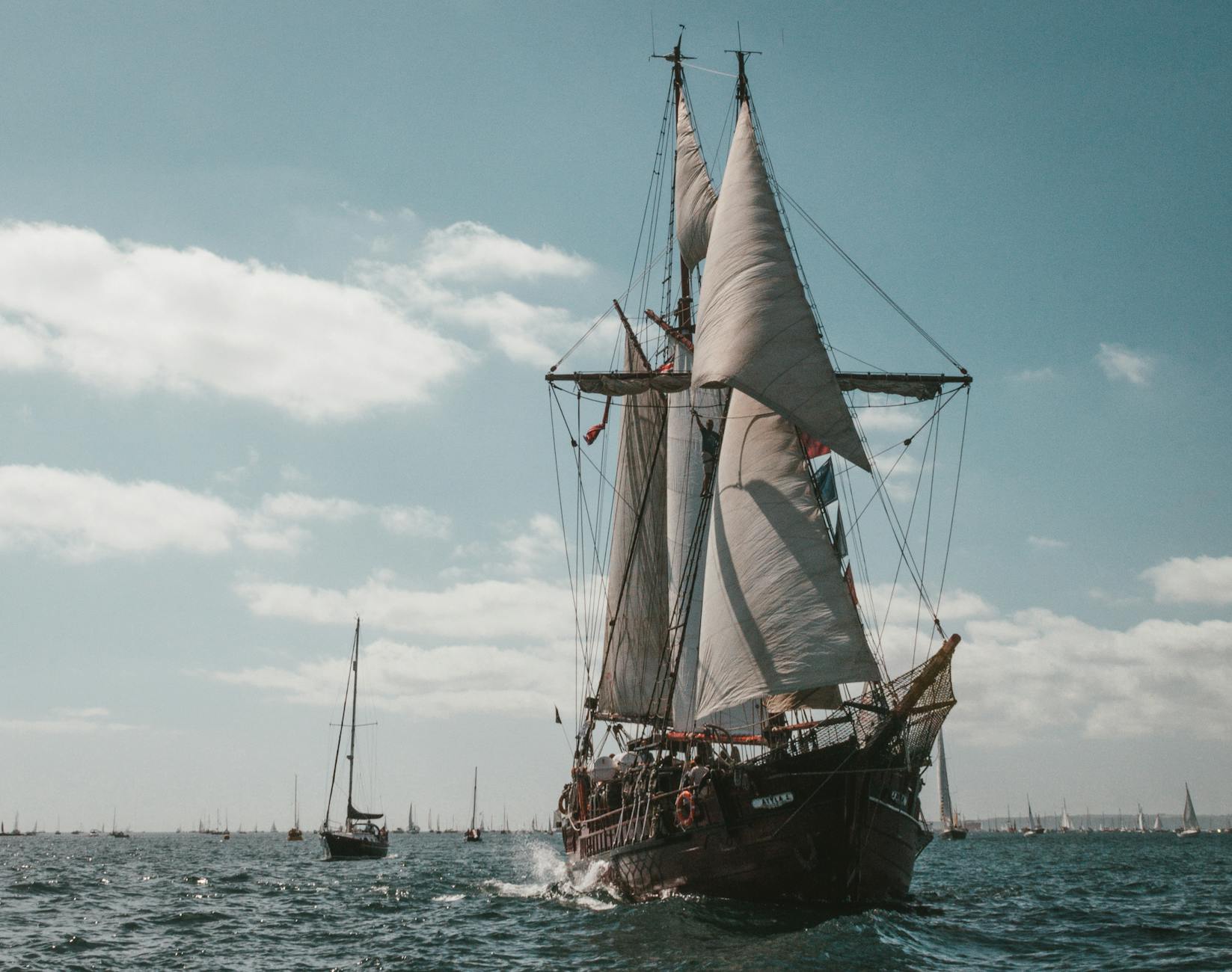








 My Stories