     I remember when I was young my mom told us May Day was a time to bring flowers to loved ones and the low and lonely.  She encouraged us to continue that tradition.  I'm sorry that nowdays that seems to be largely forgotten.  I still celebrate flowers on May Day:  my favorite ones, edible ones, the part they all play in making our planet liveable, beautiful.  I celebrate them for the whole month of May (and every day!).  I remember fondly the nearly forgotten May Day dance around the May Pole.  Now I also celebrate Mother Goose Day on May 1st. Remember the delight she brings to childhood, and even to adulthood.
     Cinco de Mayo is a chance to celebrate--again with flowers, and food as well, dance, music, costumes--a culture that has enriched our nation (meaning US the U.S.). May we remember that when mean people seek to set us against one another.
     In May we remember mothers, may we never forget them any day, but one day a year we take extra care to celebrate them, their role, their sacarifices, their quiet courage and heroism, their influence on the present and our destiny.  Often with flowers, and music (and why not dancing for joy?!).  We celebrate our own mothers, and their mothers, all those who nuture others.  We celebrate our chance to be mothers, and to mother/nurture others.
     At the end of May we celebrate Memorial Day, memorialize our military heroes who have fought and died for us.  We bring flowers and flags to their graves.  We don't celebrate their deaths, but their courage and willingness to sacrifice for our nation and our sakes, and to pass on our heritage to the future.  We celebrate their lives, honor their sense of honor, praise their patriotism.  And the wise remember the sacrifice of their families, friends, loved ones.  Their loss is a loss to our nation, and yet they are not lost to us.  They live on in our hearts, our history, our memories.
Don't treat me like a child--
I don't have use of my legs,
But I still have use of my brain.

Don't breeze in and take over my kitchen,
And you don't have to tell me how to tie my shoes.
I can't do everything, but let me do what I can for myself--
I know how to ask for help.

Because I don't know everything,
Don't assume I know nothing.

I may not have my life entirely together,
But neither do you.

Because I live sitting in a chair
     and you can stand,
Why should you pat me on the head?
     There was a traveler going out of town on business who arranged to stay at a certain inn in a certain town in a certain country.  Next to his bed was a bedside table, with a drawer in which some thoughtful soul had left a Bible for the use of guests.  Atop the bedside table were a lamp, a phone, and a clock with an alarm.  Thus, the traveler could have light, make and receive calls, and know the time—even set a time to wake.
     This traveler decided he did not want to receive calls, so turned the phone off.  He was weary, so turned off the light, having set his alarm to wake him to read scripture in the morning.
     Unfortunately, the traveler’s boss was unable to call with an important assignment, as the man was not taking calls.  The traveler decided he was too weary for the Word when the alarm sought to open his eyes.  He thought he could find his way without the light, but tripped and fell in the dark, injuring himself.  He swore he would never stay at that inn again, because it had brought him such bad luck.

     What can we learn from the foolish choices of this world traveler?  Shall we not always be ready to accept a call when it comes from Above us?  Shall we not ever be too weary for the Word of God?  Shall we not take heed of set times?  Shall we not listen when alarms sound?  Shall we not let the Light allow us to see where we are going, and how to wend our way to where we need or want to go, in order to avoid certain hurts and falls?  Shall we not blame bad luck, or others, for our own choices?
A Lighthouse built on a rock gives light to all who are asea in a storm.
     “. . . Jesus came into Galilee, preaching the gospel of the kingdom of God,  And saying, The time is fulfilled and the kingdom of God is at hand:  repent ye, and believe the gospel.”
Mark 1:14-15

     This is recorded in Matthew and Mark after the Baptism and Temptation of Christ, so it was early in His career, yet after John the Baptist was tossed in prison.  Some years ago I spent considerable time and study to make a Gospels Comparison Chart (or series of charts).  Between these references in the synoptic Gospels, were some events recorded only in the Gospel of John.

Timeline:
John 1:19-28 the Jews ask John the Baptists to tell who he is
John 1:29-34 the next day after Jesus returned from the wilderness came John’s testimony of “The Lamb of God”
John 1:35-42 Again the next day (same day as above?)
Jesus’ first disciples were first disciples of John the Baptist
Jesus’ first disciples:
Andrew & (probably John)
Peter, Andrew’s brother
Philip
Nathaniel
   Probably all these 4 were at the time living in Bethsaida, had perhaps come for the feast, heard ofJohn, and went to him to be baptized.   So when Jesus called to the fishermen “Follow Me”, they were not strangers, they were already his followers.
John 1:43-51 the day following, Philip and Nathaniel were on the way to Galilee

John 2 “The third day” . . . (after arriving in Galilee?) The marriage at Cana occurred
     Mary was a significant personage there, Jesus and his disciples were invited and went.  After that, they were in Capernaum a short time.
At the “1st” Passover in Jerusalem, Jesus cleanses the Temple from merchandising/commercialization.

John 3:1-21 Nicodemus
     Jesus talked with Nicodemus by night (a Pharisee and a ruler of the Jews).  Though he believed that Jesus was from God, he feared to follow Him openly.  Jesus gave a masterful sermon, of which we have but a brief abstract or synopsis.  But it contains what we often think of as the Gospel of Jesus Christ, about being Born Again (becoming a new person, receiving baptism & the Holy Spirit):
     “For God so loved the world, that he gave his only begotten Son, that whosoever believeth in him should not perish, but have everlasting life. For God sent not his Son into the world to condemn the world; but that the world through him might be saved.”  John 3:16-17
     Much as we associate this now with Gethsemane and the Crucifixion, I don’t think Jesus was revealing that yet.  I expect that these words were teaching much the same that the Baptist taught, “the baptism of repentance for the remission of sins.”  Luke 3:3.
     John told the people to, “Bring forth therefore fruits worthy of repentance, and begin not to say within yourselves, We have Abraham to our father: for I say unto you, That God is able of these stones to raise up children unto Abraham.  And now also the axe is laid unto the root of the trees: every tree therefore which bringeth not forth good fruit is hewn down, and cast into the fire.”  Luke 3:8-9
     More precisely, John told those that had an extra coat or food to share them with those who didn’t.  Tax collectors:  don’t take advantage of your position to enrich yourself.  Soldiers:  don’t push your weight around, bully others out of their “lunch money”.  Two of the strongest human weaknesses are greed for wealth and power.  The devil even tried these temptations on Jesus in the wilderness.

John 3:22-23 Jesus & disciples were baptizing near John
John 4:1-3 the Jews heard that Jesus (his disciples) baptized more than John, Jesus and followers left the area.  Danger was afoot.

John 4:4-42 the Samaritan woman at the well along the way north
     Jesus reveals that He is the Messiah and that worship is not so much a function of a physical place, but a place in one’s heart and soul:  spiritual worship.

John 4:43 after 2 days in Samaria, Jesus & followers went a 2nd time to Cana; healed a nobleman’s son.

     Then Jeus went to Nazareth.  Jesus was a fully practicing, participating Jew.  He went to synagogue/church every Sabbath.  In Nazareth He read to them from Isaiah “The Spirit of the Lord is upon me, because he hath anointed me to preach the gospel to the poor; he hath sent me to heal the brokenhearted, to preach deliverance to the captives, and recovering of sight to the blind, to set at liberty them that are bruised, To preach the acceptable year of the Lord.”  Luke 4:18-19
     Compare Isaiah 61:1-3 “The Spirit of the Lord God is upon me; because the Lord hath anointed me to preach good tidings unto the meek; he hath sent me to bind up the brokenhearted, to proclaim liberty to the captives, and the opening of the prison to them that are bound; To proclaim the acceptable year of the Lord, and the day of vengeance of our God; to comfort all that mourn; To appoint unto them that mourn in Zion, to give unto them beauty for ashes, the oil of joy for mourning, the garment of praise for the spirit of heaviness; that they might be called trees of righteousness, the planting of the Lord, that he might be glorified. . . .”
     This Good News, these Good Tidings of great joy are reminiscent of the Beatitudes of the Sermon on the Mount.  The meek are no longer to be emotionally trampled upon or taken advantage of.  Those who sorrow over the evil done in this life will be healed.  Those who are captive or imprisoned by debt, disease, or the devil’s addictions will be freed.  An acceptable year to the Lord would be one in which His will is done, His Kingdom would come, and things would be done on earth as they are in Heaven.  I think these words referred specifically in the Law of Moses to the Jubilee year, when Jewish servants and lands were redeemed to return to their rightful inheritance.  God promises to take vengeance on the wicked and the oppressors.
     Sounds great!  Why should this make anyone angry?  But this was understood as a declaration that He was the Messiah, for which they were going to stone Him.  He slipped away in the melee and left town.  People often have a hard time accepting the hometown boy making good.  They think they know him too well (“Familiarity breeds contempt”, it is said), they know what they consider his faults or ordinariness.  They want to see miracles, like they’ve heard about elsewhere.  But how can He work miracles without faith? (Perhaps He can, but won’t.) How many times did He tell those who were healed that it was their faith that had healed/saved them?

     So Jesus goes back to Capernaum.  He calls the fishermen to become fishers of men,  “Follow Me” (Matt 4:19).  They were already his disciples, though not so much in a formal way.  And though they dropped what they were doing, it wasn’t the last time they ever worked at their fishing trade.  But when he called for them to work with or for him, they put that Kingdom of God first.  And they were in training for when He would send them out on their own.

     “And Jesus went about all Galilee, teaching in their synagogues, and preaching the gospel of the kingdom, and healing all manner of sickness and all manner of disease among the people.  And his fame went throughout all Syria: and they brought unto him all sick people that were taken with divers diseases and torments, and those which were possessed with devils, and those which were lunatick, and those that had the palsy; and he healed them.  And there followed him great multitudes of people from Galilee, and from Decapolis, and from Jerusalem, and from Judaea, and from beyond Jordan.”  Matt 4:23-25  In the days before modern medicine, one can imagine the desperation people felt.

     Again, What “gospel” (good news, good tidings)? Not yet the Atonement, but the good news of Goodness, Godliness.  Of caring for one’s fellow beings, of helping one another in the trials of life. Of not misjudging others, of extending mercy, of being true to one’s spouse . . . Of the teachings of the Sermon on the Mount, of repentance, etc. See also Matt 4:17

     The Sermon on the Mount, led by the Beatitudes, follows; from Matt. 5 & Luke 6:
  This is the Gospel that Jesus was teaching.  Jesus taught and re-taught it, and as the disciples accompanied Him on His teaching tours, they no doubt became very familiar with His words (and works), so that they could continue His teachings after Him:
     Be humble, be a good person, merciful, pure in heart (pure, unsullied motives), a peacemaker . . . these are the inhabitants of the Kingdom of God, because the Kingdom inhabits their hearts (they invite it, they don't throw it out or discard it) . . .
     John the Baptist taught such things (Luke 3:8-14).  Compare Mary's words and expectation in Luke 1:50-54.  Prophets of the Old Testament taught similarly, such as Moses, Isaiah, and Ezekiel.
     Perhaps Jesus' words were recorded concisely, but they are rich with multiple meanings in Matt 5, both of the Kingdom within the hearts of true worshippers, and in the Kingdom to come, on earth (now and in a millennial paradise to come), and in Heaven:

v. 3—the poor in spirit:  humble, contrite, even beaten down by the vicissitudes of life . . . These are the true heirs of the Kingdom.
v. 4—they who mourn, sorrow, suffer:  for their own sins (Ezek 7:16), or the bad choices/behaviors of others, or for the wickedness of the world.  Those who mourn for their own sins will find comfort in divine forgiveness.  Those who sorrow/suffer because of others will find comfort in the Ultimate understanding of God, as a loving parent comforts a hurting child.  Those who mourn the wickedness of this world will be comforted in the assurance that one day God will right every wrong.
v. 5—the meek, humble, teachable--will be the ultimate heirs of the earth.  This throws conventional wisdom on its ear, which teaches that aggressively pursuing one's goals (and for many, the ends justify any means) is the way to gain all the world.
v. 6--Those who pursue personal righteousness, and the Right for others, as a hungry person seeks food, or a thirsty person seeks to quench that thirst, will find fulfillment in their hearts, and in the Kingdom, and in Heaven.
v. 7--The merciful, kind, compassionate, forgiving, non-judgmental . . . will be given what they gave.
v. 8—the pure in heart, uncorrupted, undefiled . . . comp Titus 1:15.  Those with no ulterior motives . . . only they will see God in His Kingdom, and in the hearts of His children.
v. 9--peacemakers are called God's children . . . Interestingly, we can choose our parentage, whether we are the children of God, or the offspring of . . .  someone/somewhere else . . . see John 8:39
v. 10-12:  This is the one that really seems difficult to me (like loving our enemies).  It’s hard to rejoice when we're being persecuted.  But I guess it's better to be persecuted than to be the persecutor.  Sometimes it's hard to know if we're being persecuted for our own faults and follies, or for righteousness' or Jesus' sake . . . perhaps we can only humbly keep trying, pleading that our intents, our hearts are pure, and our actions/behaviors are what God would command/commend.

Matt 5:19-20--Jesus was no rebel against the Law of Moses: He lived it, He embraced it, He taught people to live it. When we live the 2 Great Commandments (to love God with all we are, and to love others as ourselves), the 10 commandments are covered.  Of course, there was much more to the Law of Moses than the 10 commandments . . . a great deal of civil law, beside religious laws and ordinances.  Jesus did not teach against those.  But when the Apostles after His death took the Gospel to the Gentiles, they (as God’s authorities on earth) did not require the Gentiles to live the various performances and ordinances of the Law of Moses.
     Jesus was not just concerned about good behavior, He was concerned about good thoughts, good hearts, goodness for goodness' sake, being good on the inside as well as on the outside--not just for show and tell, and not just when people are looking.

Matt 5:38--"An eye for an eye" has been grossly misused and taken out of context over the centuries!  This was the law in very specific cases, to be carried out by civil authorities in consequence of misdeeds.  It was never meant as an excuse for personal or clan revenge for whatever perceived wrongs have been done by another.
     I'm amazed at how many "good people" will slight another because of a perceived slight, or even just because they think themselves better than another.  What’s the clever saying?  An eye for an eye and a tooth for a tooth leaves a lot of blind and toothless folks, without solving any issues.

Matt 5:48--Be perfect!  Overwhelming!  Only possible through the Grace of God.  By repenting, pleading to God for Grace through His Son, all that is less than perfect in us is totally washed away.

The Messages of Matt 6-7
1. Do the right things for the right reason, not for ulterior motives or for show.  Specifically, the Lord mentions giving alms, prayer, and fasting--all typically associated with Righteousness.  But if done for the wrong reasons, they make us hypocrites.  Jesus’ harshest words were for hypocrites.
2. Whatever you treasure is where your heart will be, your focus, your efforts and intents.  Let that be God and godliness, first of all.  And God's Kingdom is not just in our hearts, but in caring for our neighbors.
3.  You can't serve two Masters--have your residence in God's Kingdom, and a vacation home in the Devil's.  You can't go in two directions at once.  If you try to go one way, then the opposite, you'll never get anywhere--at least not anywhere good.  The Devil would like to keep us busy running to and fro, distracted from where we really want to go.
4. Leave your cares with the Lord.  It's not that we shouldn't work to support ourselves and families, and good endeavors, but when we get so caught up in that we lose our focus on the Lord.  The poor are full of anxieties about food and bills and the demands on their resources.  The Lord asks us to trust Him, have faith in Him, and go about doing good.  I have found in my life that as I try to serve God and my fellow beings, God has taken care of me.  I haven't become rich, materially, but my life is enriched, and I have had the things I need (not necessarily everything I've wanted).  The rich also may be full of anxieties, cares, worries over material matters, distracted from God, and callous to their fellow beings and their troubles.
5. Judge carefully--don't condemn or be critical of others--you don't know the whole story, and it's not your place.  What you give is what you get (Blessed are the merciful!).  Don't magnify others' faults and minimize your own (a human tendency ... the Lord calls us to rise above our animal natures and instincts).  Yet beware those who pretend to be something they are not--eventually the fruit of their inner selves will ripen and drop, rotten.
6. Don’t expose your most precious treasures to those who would mistreat and despise them.  This can be broad-ranging:  you don't share your heart with just anyone, but those with whom you can entrust your tender feelings.  Similarly, other things you hold most dear, you don't share with just anyone.  Many have objected to privacy of worship, and yet they seem only to want all exposed so that they can mock, scorn, and make fun.
7.  ASK God--God allows, even encourages us to ask favors and questions.  He's not afraid of our questions, and enjoins us to seek for answers--from Him (not others who don't know the whole story, what they're talking about, or can't be trusted to tell the Truth).  Though God already knows what we need He wants us to ask.  Good parents want their children to ask for what they need and want, not just expect to have all anticipated and fulfilled automatically.  Kids become quite self-centered and unappreciative that way.
8.  God is Good!  Remember that, trust in that.  He is the Ultimate Good.
9.  All roads don't lead to God.  All behaviors are not acceptable to Him.  He loves us unconditionally, but only those who choose Him and His way will be entrusted with all that He has.  Strait is the gate, narrow the way to His abode.
10. Lip service is not enough.  Pretense to know the Lord is not sufficient.  Superficial "discipleship" doesn't fool Him.  If we want to praise God, we must praise Him in the way we live, that is, live by His counse and commands.
11.  A wise person lays the foundation of his/her life on the Lord--builds his/her life on the Savior and His teachings.  Nothing else will survive the storms of life and the world.  And, the walls of the building must match the Foundation.
12.  Jesus taught with the voice of authority.  He didn't have to cite references about God and Goodness, because He knew them directly.

Luke 6:31--"And as ye would that men should do to you, do ye also to them likewise"--regardless of how we feel others have treated us, we ought to treat others the way we want to be treated.  Not easy.
Jesus calls us to a higher standard, not only of action, but of attitude--one that takes a lifetime of repenting, pleading for Grace, and trying, trying, trying again and again to be what He asks of us.


Adapted from my 2019 blog “New Testament readings and commentary”, which includes iinks to an earlier series of Gospel Comparison Charts I created
https://www.facebook.com/groups/756639301358414
and links as well to the “Drive Through History” series, 8 seasons of excellent interesting & entertaining ½ hr episodes, including one about the Gospels, one about the New Testament, and other Biblical material.
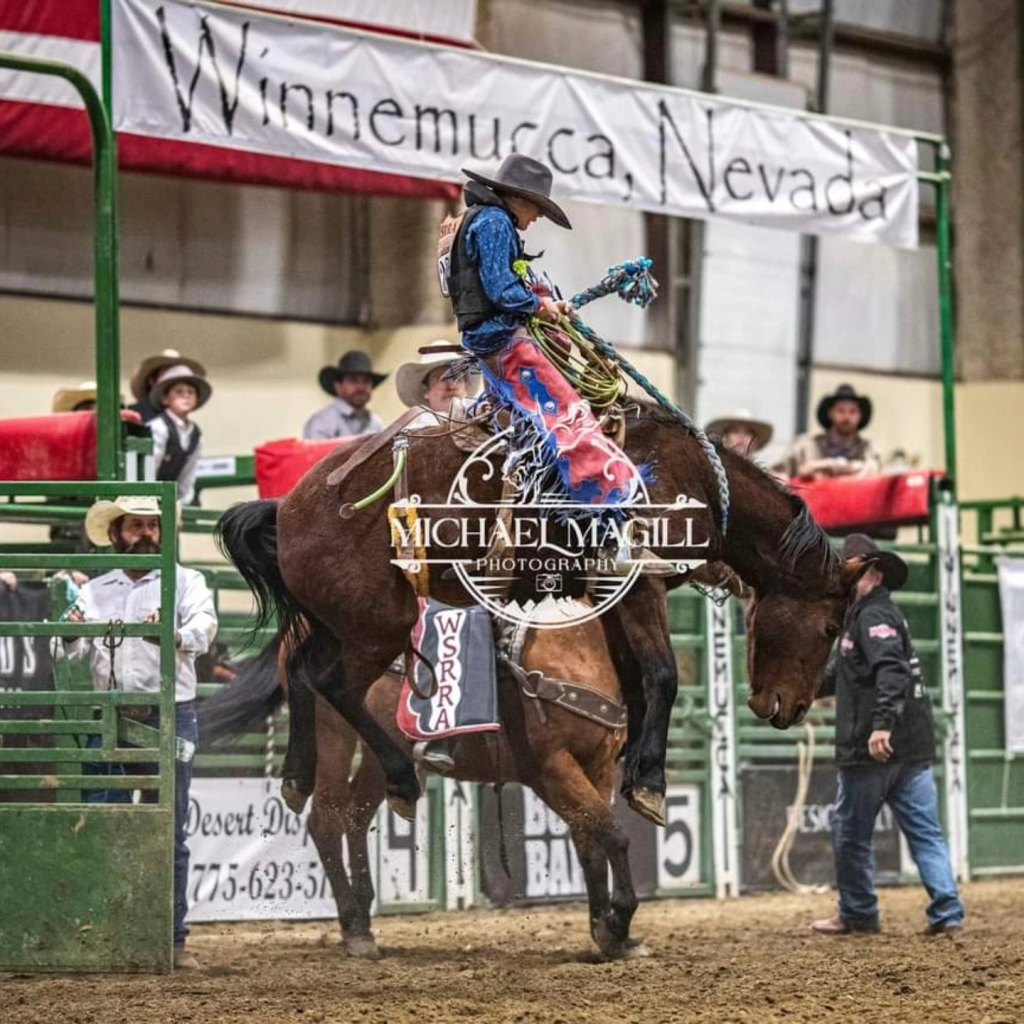
Not a bull, but a bronc. Posted by Ashley Walker on FB.
I recently heard the song "Live Like You Were Dying" by Tim McGraw.
He said “I was in my early forties With a lot of life before me And a moment came that stopped me on a dime I spent most of the next days Looking at the x-rays Talkin’ ’bout the options And talkin’ ’bout sweet time” I asked him “When it sank in That this might really be the real end How’s it hit you When you get that kind of news? Man, what’d you do?”
He said “I went skydiving I went Rocky Mountain climbing I went 2.7 seconds on a bull named Fumanchu And I loved deeper And I spoke sweeter And I gave forgiveness I’d been denying” And he said “Someday I hope you get the chance To live like you were dying”
He said “I was finally the husband That most of the time I wasn’t And I became a friend a friend would like to have And all of a sudden going fishin’ Wasn’t such an imposition And I went three times that year I lost my dad I finally read the Good Book, and I Took a good, long, hard look At what I’d do if I could do it all again And then
I went skydiving I went Rocky Mountain climbing I went 2.7 seconds on a bull named Fumanchu And I loved deeper And I spoke sweeter And I gave forgiveness I’d been denying” And he said “Someday I hope you get the chance To live like you were dying Like tomorrow was a gift And you’ve got eternity To think about What you’d do with it What could you do with it What did I do with it? What would I do with it?
Skydiving I went Rocky mountain climbing I went 2.7 seconds on a bull named Fumanchu And I loved deeper And I spoke sweeter And I watched an eagle as it was flying” And he said “Someday I hope you get the chance To live like you were dying To live like you were dying To live like you were dying”
     Every day I'm dying.  The questions are:  How long will it take?  How will I go?  What legacy will I leave? to start with.
     I wish I could write about it poetically, wish my life were poetic (not just poetic justice), or a great drama that would impact all who saw it in a powerful way.
     In my allotment, there's no skydiving, no Rocky Mountain climbing, no bull riding.
     Skydiving would scare the hell out of me, and what would be the purpose, other than that?  Merely to show courage?  Surely there are more important, valuable ways of being courageous.  It depends whether that skydiving was to save a life or a land, perhaps.
     I'd love to go Rocky Mountain climbing, but I have some limitations in that pursuit--means and mobility issues.  I am genuinely grateful for the travel I have done these last years, particularly.  Glad, grateful, I didn't put it off, thinking I could manage it better in some future, because this is that future, and such pursuits are less and less manageable for me.  Push against the pain?  I do, even if not as impressively as some athletes or others.  I think it not wise to ignore my body altogether, if I want to accomplish anything else in life.  Life is a balancing act, a negotiation, a conversation with compromise, hopefully not soul-compromising.
     Bull riding is meaningful for some, I have no criticism of them.  It's not an option for me.  The bulls I ride are of a different sort:  struggles with the challenges of my body, and they can be personally rough riding.  I'm so grateful for my daughter, who comes to my rescue and faces my feces with cheerful willingness . . . never making me feel bad about what I can't help.  Others, too, have rescued me in my various needs--my grandson and other family members, friends, acquaintances, even strangers.  I hope they have felt the gratitude I have tried to express, though perhaps poorly succeeded.
     If I knew I only had 3 years left to live in this world, what would I pursue?  Nothing so spectacular as skydiving--
     I want to come to some satisfying point in my projects.  They'll never be "done", but I want to feel some sort of completeness, as in a chapter that leaves a settled feeling.  One knows the story isn't over, but, like the final episode of "The Onedin Line", there is a sense of completion, even perhaps of an era.
     I would (as in "to do in future" as well as "have a will to do") continue to invest in whatever opportunities I may have to be a positive part of the lives of my loved ones--family and friends.  To do all I can to be an influence for good in their lives, bring whatever joy and significance to their lives I can.  So also in the lives of those to come, in whatever sphere I have in this world:  may my life be a meaningful contribution, not in dollars, but in sense.  I know I can only be of modest impact; I'm not seeking to be a bust on a pillar/pedestal, nor the pretentious adoration of the famous of today (or ever, I suppose).  I like to be appreciated, without having my name in lights at some gala full of applause and disingenuous speeches.
     My last days, as any of my days, I want to enjoy my gardens/yard, the beauties of the earth and God's creations.
     If perhaps my end is painful, I hope I can bear it courageously, not bitterly.  I hope I don't make it a misery for others.  I hope not to suffer, but if it must be so, may I pray, as Christ exemplified, "Thy will be done" in my life, and through my life.  Amen.
Reflections on the past
Reflecting on the future,
Janus is the entryway:
Looks backward and forward--
     not as a two-faced, but a two sided straight face
     (though maybe sometimes with humor . . .
     there must be humor!).
I look in the mirror
At what I've done, what I was,
And then at what I might do, might become . . .
     resisting hopelessness in frustration
     for my shortfalls, as well as long falls . . .
Wearing blinders against distractions
     (unless a break is needful),
     hopefully not against the Truth,
Helping me to focus on good ends.
I ask myself
What do I want to do?
What do I want to be?
How has what I've done and been
    helped or hurt my pursuits?
And how shall I do and be my best?
It's a perspective to ponder every day.
     James Onedin wants to be his own master, his life under his own command; he wants to own his own destiny.  He is a ship’s captain, and his employer, Callon, has dangled the promise of having his own command for nearly 6 years (S1 E2).  Although James has pressed himself, the ship, and crew hard in order to fulfill his employer’s expectations and earn a bonus for making a fast passage, his boss Callon  (the owner of the shipping line), only finds fault with both James and the crew for circumstances they could not help (the weather) and cargo losses.
     When he is paid (his earned bonus held back due to losses), James sees the advertisement of a ship (the “Charlotte Rhodes”) to be auctioned.  He asks his brother Robert (who has just inherited the family’s shop on the recent death of their father) to lend him money to make up the difference between his own savings and the expected price of the ship.  His brother refuses what he considers a highly risky, foolish venture.  Like their father, Robert is cautious in business.  Robert claims that James has no head for business.  We shall see.
     James already has a relationship with the Portuguese wine merchant Braganza, as ship’s captain for his employer Callon.  He knows the contract between them is expiring soon.  He notices that casks are far more valuable than what they carry.  He does due diligence in finding out the shape the ship is in, as well as the situation of the ship’s owner.  We soon find that he is a shrewd negotiator, when he goes to see the owner of the “Charlotte Rhodes”, the retired Naval Captain Webster, a cantankerous self-important old alcoholic who can’t afford to keep his ship in service.
     At his knock, Capt. Webster’s daughter Anne guardedly answers the door and suspiciously asks what he wants.  James tells her that it’s a matter of business he wishes to discuss with her father, concerning his ship.  She invites him in and announces him to her dilapidated father (helping him get spruced up as best they can do on short notice:  she wishes he’d bothered to shave that day, and he wants his uniform, which is all he has—the rest being in hock).  She asks James in an assertive tone whether he minds that a woman be present in the negotiation, making excuses for her father, and not wanting him to be taken advantage of.  She is the one who actually does the negotiating for her father.  James makes himself amenable.  When they sit down to negotiate and he is offered a drink of wine, he declines, saying that he prefers to keep a clear head when discussing business.
     To Anne’s price of 650 guineas, he makes a counter-offer of £175 in gold (to their shock and accusations from Capt. Webster that he is a rogue), and a partnership; he will bear the cost of having the ship refitted for sail himself.  Capt. Webster plainly considers himself above the Onedins’ class.  He characterizes the family as “pious, parsimonious” shopkeepers.  James vigorously lays out their situation and the benefits of the bargain, saying, “Before one can negotiate with certainty, it is necessary to fully comprehend the strengths and weaknesses of the other side.”   Capt. Webster calls him a villain and orders him out of the house.  Anne deftly steers James toward the door, saying that her father wishes to consider the matter closed, yet directs James into the kitchen and gives her father his alcoholic “tot” to send him to another room.
     Anne sternly confronts James, “Are you a fool or a charlatan?”  But then she lays her own cards, as well as his, on the table.  A partnership with her father would mean James would inherit upon her father’s death.  Despite any good intentions, that would be the result.  The exchange between Anne & James is one of the classics of the whole series, as they each consider what their bargain would mean.
     “I have little taste for penury.  One day my father’s weakness will assuredly drive him to the grave, and I shall be left penniless,” Anne admits.  “At best I shall be constrained to live off the charity of friends; at worst, it will mean the poorhouse.  I can assure you I have little fancy for either.  You understand the problem . . .”
     “Security,” James correctly deduces.
     “In return for the ship.”
     “I’ll not hide it from you Miss Webster, I cannot put up surety.”
     “And there is my father to be considered.  He’s a weak and foolish old man, but I would not see him destitute,” Anne at once shows her grasp of reality and her conscience.  She has quickly devised a solution.  “There is only one form of partnership that would ensure the sort of security I require, and the ship would not cost you one penny piece . . . as a dowry . . . There is only one way a woman may escape poverty, Captain Onedin.”
     “Marriage?” he looks at her quizzically with his head cocked.
     “A not uncommon arrangement,” Anne asserts firmly.
     “You strike a hard bargain, Miss Webster,” James deliberates.
     “Am I so unbecoming?”  (Robert described her as vinegar-faced, tart as a crabapple, and the wrong side of 30.)
     “Well, I’m no great romantic, but . . . matters such as this require a deal of thought . . .”
     “And I took you for a man quick to decision.”  She has shown her own such qualities:  decisiveness and acumen.
     “Well, you might not find me so great a catch, either . . .”
     “I should have the protection of your name and a share in your success.”
     “Yeah, or failure.”
     “I think you and failure to be poor bedfellows . . .” she discerns.
     “It’s a grave risk . . .”
     “Then we will say no more of it,” she concludes quickly.
     “Well, I mean for you . . .” he recovers himself somewhat.  “I ask you to consider carefully, Miss Webster, you might be exchanging one form of poverty for another.  I have but £175 in the world.”
     “And ambition.”
     “Oh, yeah.  I’ve ambition enough for an army of Napoleons, but ambition won’t feed us, clothe us, pay creditors.”
     “You would be hard put to find a better housekeeper, and a less complaining; I’m well-trained on that score, I can assure you,” she adds, both reflecting on her life with father, and attempting to persuade.
     “It is no easy road, one I would prefer to walk alone,” he advisedly states.
     “A few minutes ago you were speaking of partnership.”
     “Yeah, I could buy myself out of that kind of partnership, but the one you have in mind, that’s for life,” he ends on an upward note.
     “For better, for worse,” Anne acknowledges.
     James walks the room, considering.  “For richer or poorer,” he almost challenges.
     “I therefore plight thee my troth,” Anne softly offers.
     James slowly thinks aloud of all the ship will need for refitting.
     “It is a bargain, then?” Anne asks.
     James nods a little stiffly, “I wonder which of us will have the better of it.”

     When James returns to his family, they are shocked at the idea that he would suddenly marry the plain and poor Miss Webster.  Their reactions are telling:

Robert laughs and calls James a sly dog, implying the conventional need for a quick marriage.

James:  it’s simply a marriage of convenience . . . (in order to get the ship) . . . It’s as valid a reason as any for contracting an alliance . . . A ship is as much property as any heap of bricks and mortar [referring to the shop Robert so highly values, no doubt].  And a far more profitable investment.

Robert’s wife Sarah:  People marry for mutual regard, not for profit.

Their sister Elizabeth:  For love, James, for love.

James:  Well, then the more fool, they.  I cannot see how any man can keep cool judgment when in the grip of such a humor . . . I’m content with the bargain!

     James then gets Robert to sign a partnership agreement for the 1st voyage, leaving £150 in gleaming gold coin (dazzling Robert) to pay for refitting and victualing the ship, and promising half of the profits of the voyage.  As partner, Robert is also bound to pay any debts incurred by the voyage (such as the allotment spouses of the sailors get halfway through the voyage).  Who else could James trust to take care of his interests?
     When Anne sees the contract, she calls James a scoundrel for promising Robert half their profits.  She’s in such a flurry of ruffled feathers James can hardly get her calmed.  He tells her, “I’ll not be berated either before or after marriage.”  He gets her to see what the contract actually says.  She will not have to deal with creditors while he’s away, and he intends that there won’t actually be any profit from the voyage to split.  James assures her, “In matters of business, I give nothing away.”
     After they are married (having had the bans read 3 weeks earlier), and they have their reception aboard the ship, Anne insists that she sail with James.  He says it’s no place for a woman, to which she replies, “A wife’s place is beside her husband.”  And when he tells her he plans to drive the ship hard and it could be dangerous, she says, “I’ve no more fancy for widowhood than spinsterhood, James.  We sink or swim together.”  He bows to her forceful will, which matches his own.  Two peas from the same pod, an acquaintance describes them, and that is true of both their natures and interests.
     As they prepare for their first night together (on the voyage), Anne bemoans her plain looks.  James gently comforts her, “If men married for beauty alone, there would be a power of lonely women in the world.”  The next morning as she is sewing a company flag she has designed for their venture, they steal a glimpse of each other that silently speaks of their mutual satisfaction.  In the 2nd episode James kindly teaches her how to navigate (though she’ll be called upon to use her scarcely learned skill before she feels confident/competent to do so), and it’s clear they both love sailing the ocean.
     James had immediately got the work started on the ship.  Callon is suspicious.  He realizes James is after the Braganza contract.  He sails in his faster ship and beats James to Lisbon, offering Braganza the best bargain he’s ever made.  The ever-affable Braganza delays signing until James arrives, who has writ him a letter asking him to wait to see what he can offer.  After an exchange we see that Braganza is also a shrewd bargainer.  He knows that Callon’s topmost concern is to put James out of business, not any real care for himself and his interests.  James says he’ll ship the wine for free, in exchange for being sole agent in the sale of Braganza’s wine in the UK, and that he will return the empty casks at full freight charge.  Braganza chooses James’ offer, and Callon leaves in anger vowing essentially to crush James and his newly created enterprise.
     Already in the first episode several themes have been introduced, as well as the characters, and the setting (the evolving times of the 1860s and forward—in Liverpool England, on the seas, and an ever-widening scope in the world).  Unmentioned above is the initiation of the love triangle between sister Elizabeth and her 2 suitors (Fogarty & Frazer), the dysfunctional relationships of the Onedin family, and the clash of their faults and philosophies in life.  These and more move the drama of the story along.  But here is a partial proposal of themes that can be explored through this series.

1.	Business Sense:  including employer/employee relations, rivalries, success & failure
2.	Self-determination:  including freedom & slavery, class, spousal & parental control …
3.	Friendship:  its meaning, loyalty, influence for good and ill
4.	Family:  marriage, love, children
5.	Loss & grief experienced in life
6.	Religion & superstition:  public & private observance, and Faith
7.	A historical look at Health & Welfare:  at sea and land, by law, by class, by sex, by place, through harsh times, and compensation for injury & death
8.	Justice & Goodness:  character(s)

     Perhaps over time I will be able to pursue writing my absorption in this epic.  Among the appeals of the story are historic sailing ships, the beginning of steam ships, sea shanties, historic commerce and culture, Victorian manners and mores, as well as literary (and life) themes, and more.
In order to compare contemporary writings on the society of the Victorian Era, I looked for the literature of the period, remembering in particular Dicken’s novels. But then I realized that these were written (as was the “Onedin Line”) to market in the media of the time: magazines and books. As the “Onedin Line” story is propelled by characters, plots, and conflicts, so the writers of the 2nd half of the 19th century perhaps did not focus on the most laudable and peaceful aspects of life and society at the time. So, while we can learn something of the culture, we must be cautious of being too gullible about how such depictions could be generalized. A well-known influencer of the time was John Stuart Mill. The generation just preceding the time period of the “Onedin Line” possibly produced gentler literature, such as the stories of “Cranford”. Yet Dickens himself began writing in the 1830s, and the Bronte sisters wrote some dark novels before when the "Onedin Line" is set. I wanted to make more particular note of those closer to the timeframe of the “Onedin Line”. The same themes can be explored in these writings:
Elizabeth GaskellNorth and South (1855) https://www.elizabethgaskell.org/works-novels.php “Cranford” TV series based on Gaskill’s writings pub 1849-1858 (the decade before Onedin) https://en.m.wikipedia.org/wiki/Cranford_(TV_series)
Charles DickensGreat Expectations (1860), Our Mutual Friend (1864), The Mystery of Edwin Drood (1870), “Doctor Marigold’s Prescriptions” (1865), the play “Frozen Deep” with Wilkie Collins (1857), “George Silverman’s Explanation” (1868), “Going into Society” (1858), “A Holiday Romance” (1868), “Hunted Down” 1859, “A Message from the Sea” 1860 with Wilkie Collins, “Mrs. Lirriper’s Legacy” (1864), “Mrs. Lirriper’s Lodgings” (1863), “No Thoroughfare” with Wilkie Collins, “The Wreck of the Golden Mary” (1856) https://www.gutenberg.org/ebooks/1465
Wilkie CollinsThe Moonstone (1868), The Woman in White (1860), Blow Up With a Brig! A Sailor’s Story (1889), more at https://www.fictiondb.com/author/wilkie-collins~1490.htm
Anthony Trollope https://www.bookseriesinorder.com/anthony-trollope/ Doctor Thorne (1858; a 2016 TV series adaption was scripted by Julian Fellowes), The Way We Live Now (1875, also a 2001 BBC 6-part TV adaptation)
George EliotMiddlemarch (1872), Adam Bede (1859), Daniel Deronda (1876), The Mill on the Floss (1860), Silas Marner (1861), https://www.fictiondb.com/author/george-eliot~19229.htm
Thomas HardyFar from the Madding Crowd (1874), The Return of the Native (1878), Tess of the d’Urbervilles (1891), https://thebookslist.com/thomas-hardy-books/
Articles onVictorian Literature • https://study.com/academy/lesson/introduction-to-victorian-literature-overview-of-themes-style-and-authors.html#:~:text=So%2C%20Victorian%20literature%20is%20just,A%20huge%20growth%20in%20population . • https://en.m.wikipedia.org/wiki/Victorian_literature#:~:text=Victorian%20literature%20is%20English%20literature,leading%20literary%20genre%20in%20English. • https://brainly.com/question/55562504 Gothic Fiction in the Victorian Era • https://researchguides.library.tufts.edu/c.php?g=824030&p=6338054
A few weeks ago I felt myself in an impossible situation. I saw no way for it to be resolved, other than disaster. My thoughts turned to the story of Exodus, when the Children of Israel were faced with the impossible.
Moses was born into an underclass in Egypt at a time when male babies were by law to be murdered. His mother set him afloat in a basket she’d carefully prepared, in the river Nile, with his older sister Miriam to watch over him. Maybe the mother or the sister served under Pharaoh’s sister, with some knowledge of the woman’s character, and hoped she would take pity on the baby. That happened. One impossible situation resolved.
Moses was brought up in the Pharaoh’s court, no doubt educated as the ruling class. But he knew he was an Hebrew (no doubt circumcised, as Pharaoh’s sister saw immediately), and as an adult he empathized with the situation of his fellow Israelites. He thought they would recognize that he was in a position to help them, but they didn’t. His leanings came to Pharaoh’s knowledge, and he had to flee Egypt.
He ends up staying with a Midianite, and serves as a shepherd (or steward over the flock). He marries the daughter of his Midianite boss. He seems content to be far from the intrigues and complexities of the Egyptian royal court. Another impossible situation seems resolved.
Then one day God calls him to go back and save his people from their plight as slaves of the Egyptians. How can he go back? He’s already been rejected by the Israelites. He may speak the king’s Egyptian well, but having been raised in the royal court, no doubt his Hebrew is less than extraordinary—a definite handicap in such a mission. Why would the Israeliets trust a man who seems more Egyptian than Hebrew? What does he know of their culture and feelings? He doesn’t even know the name of the God they serve. He pleads for at least someone who can speak for him. God grants him that, gives him some signs of His authority, and promises that though the mission will seem like a failure (Pharaoh will refuse), God will back him up. Apparently, Moses and his brother Aaron were acquainted, and it’s possible Aaron had some standing amongst the Israelites, maybe even as a representative in the royal court. God sends Aaron to meet Moses.
Moses & Aaron go to the elders of the Israelites and tell them God has sent Moses to free them. They go to Pharoah, and their situation goes from bad to worse. The Hebrews are none too happy with Moses. Of course, he’s not on the Pharoah’s list of honored guests, either.
God keeps sending Moses back to the Pharoah. At first the Pharaoh’s magicians are able to simulate the same sort of signs/miracles that Moses does. That doesn’t help his reputation or effectiveness. Discouraging. Time after time Moses has to go back to Pharaoh, until he is barred. Eventually the plagues get so bad that Pharaoh’s own people beg him to listen to Moses and let the Children of Israel go.
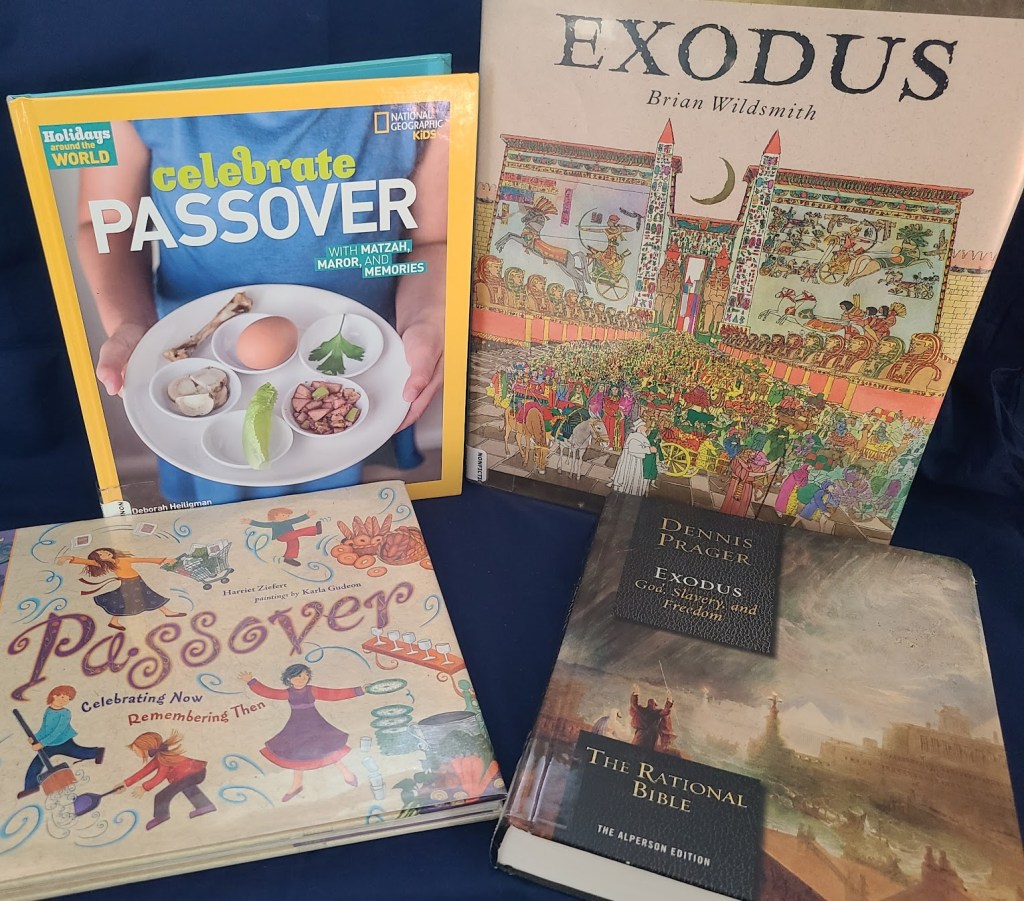
Why is this so hard? Why is it taking so long? If God is going to help them escape, why is He letting such setbacks happen? At the 10th plague, God institutes the Passover as a remembrance that He got them out of their impossible situation. For thousands of years now they have celebrated the Passover in remembrance that God was the one who freed them. Not Moses, not Pharaoh, even though they played their parts, and obviously Moses was prepared for his role. Yet only God could have saved them from their impossible situation. Still, all is not resolved.
When the Children of Israel reach the Red Sea, Pharaoh has changed his mind. This is too humiliating for an enslaved population to escape the powerful, prestigious Egyptian rule. The enslaved are a valuable commodity, as well, contributing not only prestige to the nation, but manpower for the glorification of Egypt and her Pharaoh. He has his army follow them. The Israelites are between the figurative rock and hard place: the sea and the armies of Pharaoh. Tensions build. God saves them again, by an astounding miracle. But this is not the end, either.
Through 40 years of tribulations and troubles, God provides miracle after miracle to save His people. Even when they reach the Promised Land, challenges arise, and God sends proofs that He knows their situation, cares about them, and is ready to help them when they turn to Him . . . though at times it is not immediate. He continually reminds them that He was the One that saved them. Only He could do that.
Well, God also resolved my impossible situation. He sent helps, but it is clear to me that only He could free me from those overwhelming circumstances.
Yet, here again I am faced with staggering challenges. I struggle between having faith and not wanting to take God for granted. Will He solve my problems, or does He expect me to? I know He can, but will He choose to help me out of this pit? Is it His intention that I suffer awhile, as He let the Israelites suffer for years, even hundreds of years? I am positive that He wants me to pray and plead for His help. I am positive that He wants me to have faith in Him, in His wisdom, understanding, love, and power. I will do the best I can for myself, and I will wait, with tears upon my pillow, as David of old who cried out with fervent pleas as well as faith and acknowledgement of God’s goodness, and His help in times past.
O God, our help in ages past,
Our Hope for years to come,
Our shelter from the stormy blast,
And our eternal home.

O God, our help in ages past,
Our Hope for years to come,
Be Thou our guard while life shall last,
And our eternal home.
My family heritage encompasses many who made the Pilgrim-age for religious freedom, from the 1620s on, including those who left the civilization of Europe & America to pioneer/settle the wilderness: some by choice, some by force. I relate to others in law who came later–such as the early 1900s–in search of a better life, a life less dictated by difficulties imposed by constant warfare and autocracies. These are the heritage of US.
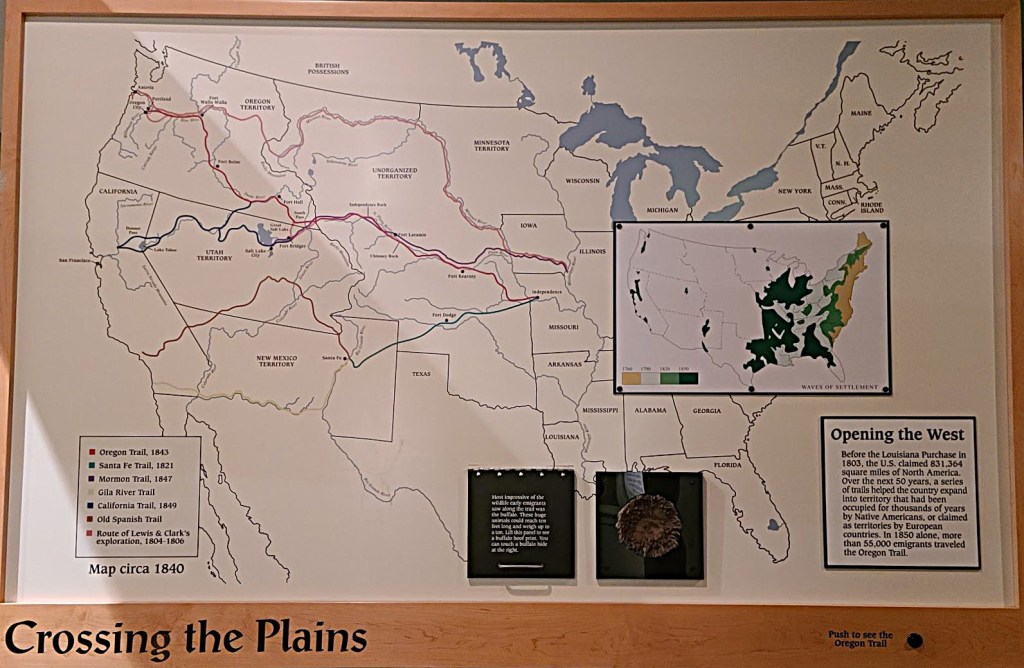
Note the inset showing waves of settlement, principally fueled by immigrants–visitor’s center at 3 Island Crossing, ID
Even though they left, they brought with them the heritage of the lands and cultures of their ancestors, my ancestors, our ancestors. Even Native Americans came from somewhere else, and brought, and amended, their cultures. I am grateful for those heritages, even despite their individual and national imperfections. I celebrate the good of every person and culture, knowing they each enrich my life. Actually, even their faults & failings enrich my life, both in consolation for my own faults & failings (since we are all human), and that I/we can learn to be more wise.
Immigrant Salads I made a few years ago to celebrate those who came to America
In my family’s past are those who fought for freedom, in wars from the American Revolution and Civil War, through more recent wars and conflicts abroad. They bore arms in defense of freedom, and they served to support those who did the physical fighting: their immediate and extended families, in particular. I have a heritage of those who fought for freedom in what they said and wrote, with their votes, and through serving in the duties and responsibilities of citizenship.
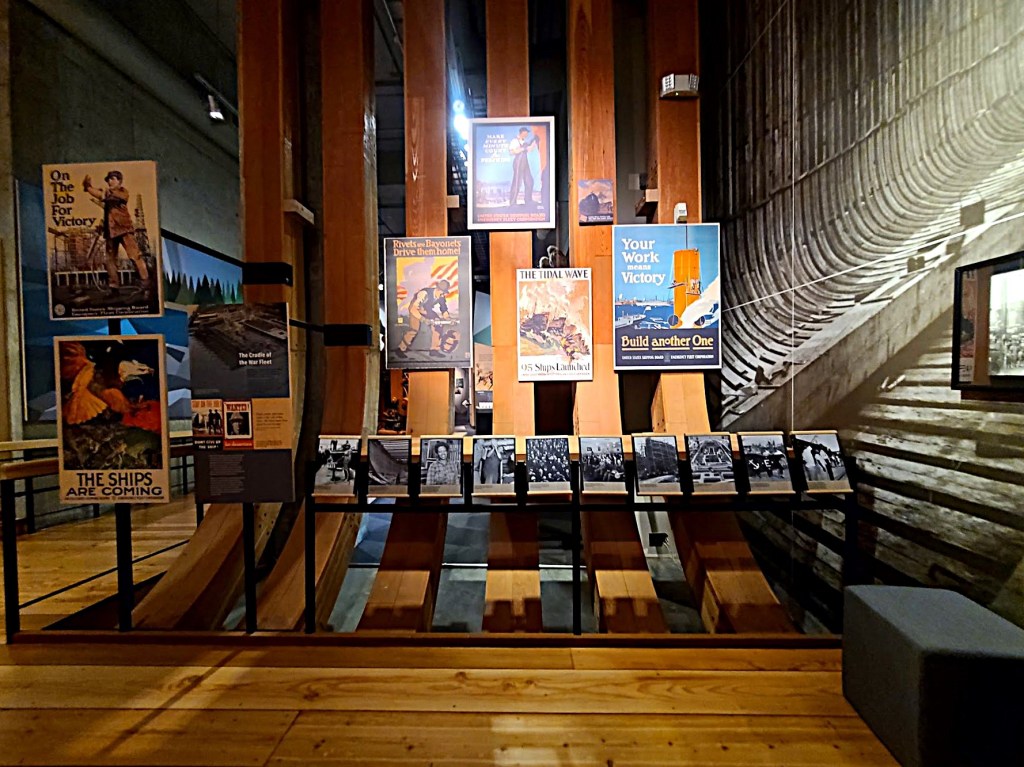
Washington State History Museum exhibit illustrating support for our troops in WWII with hard work
And I have a heritage of hard work, working through hard times, of staying the course, though long it may be. I have inherited what I value, such as honesty/integrity, kindness, learning from school and the school of Life, faithfulness & loyalty. I’m thankful to my progenitors and progeny who exemplify these in their lives.
The Statue of Liberty, courtesy Jennifer Gragg
How can I thank those who came before, and those who are yet to come, in a long chain of choices for freedom, independence, dependability, the blessings and offering of Hope these near and dear, and even those afar and unknown gave to and for me? Surely we honor best by living honorably, and I pray I will so live that I may be an influence for Good in whatever sphere I may be.
This year for my birthday I took a trip to Prosser WA for their States Day Celebration, partly as a treat for myself, partly to gather content for my Travel site. Birthday gifts: how that came about and how it all worked out.
As happens many years, my birthday was on Labor Day, which has metaphorical significance at least.
In order to be in Prosser for the beginning of the Celebration, I decided to stay over the night before. It seemed a gift that I was able to work that out. That evening I was able to reconnoiter parking and places I wanted to explore around town, and even take some photos for my site before the crowds, which also seemed gifts to me.
It was 100 degrees in Prosser, and on the way over. But the next day, the day of the parade and other events, and the day I’d be wandering about town in my wheelchair taking more pictures, the sky was overcast and the temperature in the mid 70s. What a great gift! The parade was fun: a highlight was the dancing horses. Another was the chance to chat with a local to find out something about the history of the celebration.
When I loaded into my vehicle to return home, I discovered that sometime during the day my foot had fallen off the footrest of the electric wheelchair, and the chair had chewed right through my shoe into my toes. Thus was the end of a delightful birthday! As I felt unable to cope with the little disaster on my own, I just drove back home. Even took some pictures along the way.
Once home I did what I could think to do (being maybe a bit in shock) to clean the injury, and called my sister to cry on her shoulder. She and her husband determined to drop all they had going on in their life and drive up from the southern Oregon coast the next day–a 5-7 hour drive, depending on Portland traffic. Her birth as my younger sister has been a gift to me, as well as the person she has chosen to be. She ended up staying 3 weeks, helping me and making sure I got the medical attention I needed at last, such as wound care and home health nursing. It was a dangerous wound for a diabetic paraplegic in both depth and locatio–in my extremities.
What a gift that was for me, not to have to face the troubles, frustration, care, and worry on my own! And while she stayed, we were able to do some fun things together, too–a seldom realized opportunity/gift.
My Birth Day
My mother labored to bring me into a conjugal, extended, and family lineage that gave me a sense of belonging, of being part of a higher purpose, a sense of direction and values: Truth, Beauty, and Goodness, to begin with. My parents labored to provide physical necessities, and the necessities of the soul–such as music, education & ethics, love & laughter. Of course our lives had challenges. We were not perfect, nor were they perfect. In life we suffered pains and hurts and difficulties–yet not as bad as some. These, too, have been gifts that developed who we are, who I am.
When my life suddenly jumped track due to a car accident (cause of my paraplegia) the year I turned 30, there were gifts in that as well. My mom, the driver, only suffered minor injuries, and my 4 year old daughter none. These were deeply felt gifts. And no one else was involved in the accident. Yet people were there right away to lift the car off me, and first responders were there quickly to respond.
I could have been injured far worse, or died (as well as my mom and daughter). Every other patient in the hospital with spinal cord injury when I was there, was quadriplegic. If I or my mom had been so afflicted, we could not have lived on our own, and there are much more serious health issues for quadriplegics. I knew at the scene of the accident that I was paralyzed, but felt the reassurance to my heart and mind, “This is something you can deal with”. Even though I knew that was naive, not knowing what that would entail, I knew it was important to let myself take comfort in that reassurance. I was gifted not to be plagued by “If only . . .” or, “Why me?” It has been a gift that I have not become bitter over it. Maybe that’s a gift I gave myself, but I think it not from myself alone.
An anecdote that I find humorous is when at the scene of the accident they kept asking me how old I was. Since I have a hard time remembering my age, I had decided at my previous birthday that I would say I was 30 both in the year I would turn 30, and the year I would be 30. So though I would not be 30 for a couple months, I said I was 30. They asked me so many times, I thought, “Why don’t you just write it down?” I didn’t realize until much later, in the hospital, that they were checking for brain injury!
This paraplegia, as I suppose all in life, has been a learning experience. It has been a gift to realize that this is a learning experience, despite and because of the challenges & frustrations it has brought. I have realized that the new life it has given me is not only for what I could learn, but the opportunity, even the responsibility, to be an influence in helping others through whatever challenges they might face, because they see me facing my most obvious one. A new life doesn’t necessarily mean an easier or trouble free life. But by our choices, can become one of more profound meaning and purpose. Maybe not all accidents are accidental.
My Daughter’s Birth
When I gave birth to my (first, last, most charming, beautiful, talented/gifted/intelligent, and only) daughter, she gave life to my life: a powerful purpose, joy, and reason to live. Her love and acceptance, despite my faults (of which she knows better than anyone but God) means more to me than anything or anyone (other than God’s love, mercy/forgiveness, and acceptance–now and forever).
Day of Rebirth
While being “born again” was a crucial decision I once made, every year, every week, every day dawns the birth of a new beginning to my being, and the gift that God gives to me through the gift of His Son–“For God so loved the world [and me!] that He gave His only Begotten Son . . .” The gift of that sacred Birth Day we celebrate with gift giving at Christmas. We celebrate it at Easter, and every day. It gives me Hope, Faith, and Love of/for God. It gives us reason/His expectation to love His children just as I want others to love, honor, respect, treat with kindness my daughter, and through her, the grand children that have been so great a gift to me.
Beside that great gift, are all the tender mercies He gives to me that fill my heart with joy and consolation. Beside daily bread & wherewithal, He has gifted me a beautiful earthly home & garden, and the promise of an even more beautiful heavenly home–and indeed, where His love is, is a heavenly home, no matter in this life or the next. Then we will be born into a never ending life of Joy & Peace, washed and clean, with no more tears.
Much more could be said, but my conclusion is that Birth Day Gifts are wondrous to unwrap.









 My Stories