by Susan Ternyey, Feb. 2026
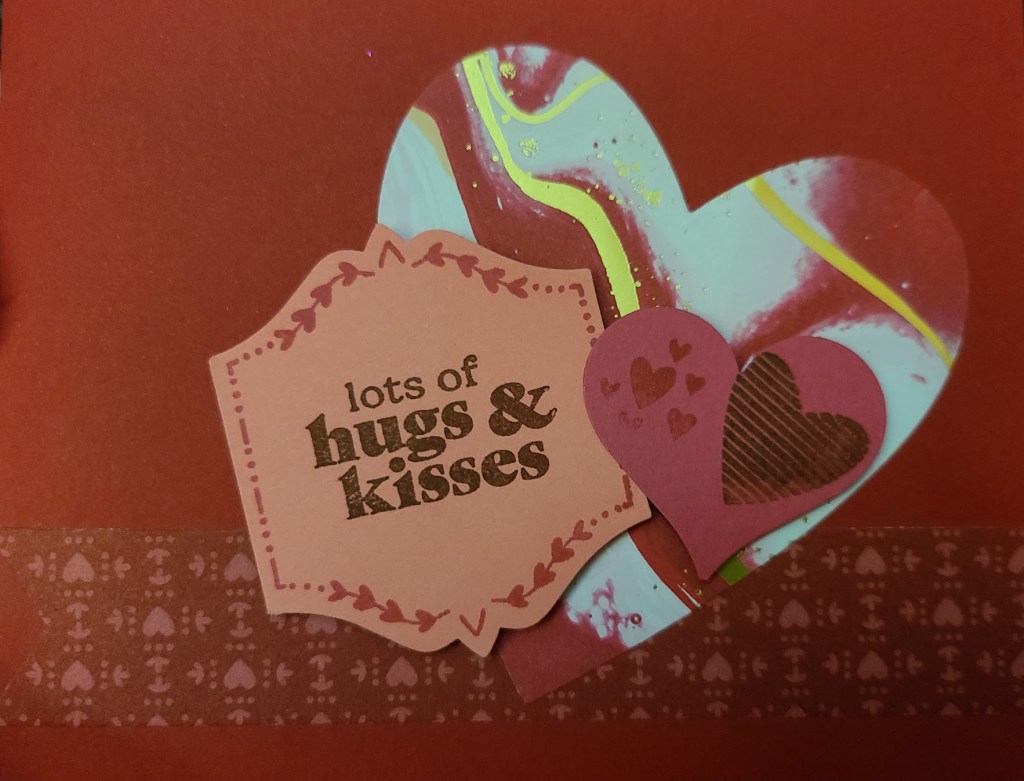
     Valentine’s Day—dedicated to love in our culture (though cards, notes, letters, and gifts are given as tokens of love for other holidays, events, and every days).  “St. Valentine is the Patron Saint of affianced couples, bee keepers, engaged couples, epilepsy, fainting, greetings, happy marriages, love, lovers, plague, travelers, and young people.”  More background about St. Valentine:
  https://www.catholic.org/saints/saint.php?saint_id=159
  https://ewtn.co.uk/article-st-valentine-how-a-beheaded-martyr-became-the-patron-saint-of-romantic-love/
    Not only was St. Valentine more complex than portrayed in popular culture, we use the same word “Love” for such a variety different things:  I love chocolate, my pets, the sunrise or sunset, the ocean, mountains, hiking or other interests, humanity, the world, my country, my community or group, my friends, my parents, siblings, children, “my loved ones”, my “dearly beloved”, my lover, my spouse . . . Clearly we love different things in different ways and to different depths.

What is love?
     “The Greeks used specific words for different types of love. The Greeks had six different words in place of the English word love. Eros described sexual passion, philia described friendship, ludus described playful love, agape described selfless love, pragma described mature love, and philautia described self-love [esteem/respect].”  https://www.worldatlas.com/ancient-world/love-in-ancient-cultures.html
     Likewise, we can learn something about love from ancient Indian words for love:  “Kama,” or sensory craving; “Shringara,” or rapturous intimacy; “Maitri,” or generous compassion; “Bhakti,” or impersonal devotion to someone or thing from the minute to all creation; and “Atma-Prema,” or unconditional self-love, not as in selfishness, but going deeper into the soul.  https://www.yesmagazine.org/health-happiness/2014/08/14/ancient-india-s-five-words-for-love#:~ see also https://www.forestessentialsindia.com/blog/a-peek-in-to-the-unsaid-gestures-of-love.html#
     “In Arabic literature, love is supposed to have seven stages. The seven stages are namely hub (attraction), uns (infatuation), ishq (love), akidat (trust/reverence), ibadat (worship), junoon (madness) followed by maut (death). ‘Satrangi Re’ [musical film], in some way or another, whether through lyrics or the choreography, gloriously portrays these stages of love and charms us along.” https://dichotomy-of-irony.blogspot.com/2014/07/satrangi-re-seven-stages-of-love.html?m=1#:~:
     5 Ways to Express Love in Persian gives some insights into the meanings of Love:  “1. Doostet daram (دوستت دارم) literally translates to ‘I like you’ but is a common and widely recognized way to say ‘I love you’ to a loved one, family or friends in Persian!  2. Asheghetam (عاشقتم) from the word eshgh ‘عشق’ (love), it literally translates to: ‘I’m in love with you.’ It’s a much more intense expression of love used in  both romantic and close platonic relationships alike!  3. Jigar tala (جیگر طلا) Now this Persian expression is a truly unique way to address a loved one – it literally means ‘golden liver’! It conveys how vital you think they are to your existence.  4. Fadat besham (فدات بشم) The ultimate expression of affection, this phrase means ‘I am willing to sacrifice myself for you.’ Use this expression the next time someone says something super adorable that makes your heart melt. This expression is purely metaphorical and not to be taken literally in any case!  5. Eshghe mani (عشق منی) Translating to ‘you are my love’, this phrase can be used in response to a lovely comment by a loved one. Derived from the word eshgh ‘عشق’ (love), you can flip the expression around and add the possessive pronoun ‘my’, or suffix ‘-am’ in Persian: ‘eshgh’ + ‘am’ = eshgham (عشقم) to mean ‘my love’.  https://natakallam.com/blog/5-ways-to-express-your-love-in-persian/#
     Japanese expressions of love distinguish different kinds of love:  Suki, Koi, and Ai.  “Suki” is used to talk about one’s likes or preferences (like sunsets and chocolate).
     “恋 (Koi) is used when you're falling for someone 恋 (koi) expresses a strong interest in someone and a desire to know more about them and get closer to them. The dictionary describes it as ‘being strongly attracted to,’ ‘harboring deep feelings to the point of heartache,’ and ‘the affectionate feelings between a man and a woman.’ 恋 involves a powerful attraction and an emotional intensity that often leads to inner conflict when trying to express these feelings directly. The fear of rejection can cause hesitation, making one anxious about confessing romantic feelings. As English equivalents, ‘romantic attraction’ or ‘romantic feelings’ might be good ways to think about 恋.
     “愛 (Ai) is a deeper love, and often what 恋 (Koi) leads to 愛 (ai), on the other hand, is described as ‘feelings of cherishing each other,’ ‘feelings of caring and valuing someone,’ and ‘feelings of thinking highly of someone and wanting to be devoted to them.’ Unlike 恋, which is limited to  romantic relationships, 愛 encompasses a broader range of relationships, including parental love, sibling love, and love for living beings such as animals. When feeling 愛, one can act without hesitation, regardless of the other person's reaction. 愛 is about the intention and the act of loving, often characterized by selflessness and the willingness to act for the other person's sake without expecting anything in return. The phrase 無償の愛 (mushou no ai) ‘unconditional love’ suggests that 愛 has an unwavering quality that allows one to express feelings unconditionally.
     “In Japan, love is usually expressed through acts of caring and service. Doing small favors, remembering occasions, preparing meals, or standing silently by each other during hard times are valued behaviors. These small, frequent actions convey commitment and love without words. Even some people like to express love in the form of shared routines, like riding to work together or eating at the same restaurant each week, rather than exaggerated declarations.”  https://japanswitch.com/top-27-japanese-love-sayings/

     Love is a gem of many facets, and if not cut with balance will be misshapen, lose its brilliance, perhaps even shatter.  Consider 1 Cor 13: 4-8  “Love is patient, love is kind. It does not envy, it does not boast, it is not proud.  It does not dishonor others, it is not self-seeking, it is not easily angered, it keeps no record of wrongs.  Love does not delight in evil but rejoices with the truth.  It always protects, always trusts, always hopes, always perseveres.  Love never fails . . .”

      Compare those qualities to people who kill or injure others for what they call “love” . . . such as their “loved one”, or their real or imagined rival.  Compare the kind of depth described above to shallowly loving someone because they are appealing, alluring, athletic, beautiful.  Compare that to a mere initial attraction or infatuation.  Compare that to idolizing a celebrity or one’s idealization of someone, their persona, or their caricature.  Likewise, there are those in love with being in love—a romantic view of romance.
     An evening, a day, a week, a summer of fun and/or the magic of romantic adventure is not the same as a love that endures.  Enduring love is strengthened by those, but also by the bonding that comes of enduring troubles and trials, the vicissitudes of life, together.
     Love doesn’t mean giving whatever is asked for by a loved one.  As a good parent gives a child limits/boundaries for his/her own sake, to love a person is to care about their future.  One gives a loved one what is right for that person.  Sacrifice is a part of real love, but not the sacrifice of one’s core values and beliefs.  A loved one who asks for that is not asking out of love, but a perversion of self love (selfishness, egotism, narcissisam).  Love requires respect, self-respect as well as respect for the loved one.
     Love should not be conflated with sex, but it ought to precede it.  Once the powerful sex drive is involved, it's hard to think clearly about a relationship.  Love is a choice involving action.  It’s not appropriate to have sex with whoever or whatever one loves, even deeply:  thus the reason for prohibitions of incestuous relations and adultery, for example.  Not all cultures have the same prohibitions, but millennia of human history have borne out the wisdom of Old Testament laws against the confusion of sexual relations.
     It is common for people to leave a spouse when an accident disables or disfigures, or when age or the rigors of life change one’s appearance.  Some seek divorce when the spouse is unable to perform sexually.  Though sex is a powerful drive, must we be driven by it?  We choose what we are and become.  It’s not just anger that needs self-restraint, “He who is slow to anger is better than a warrior, and he who controls his temper is greater than one who captures a city.” (Proverbs 16:32)  Joshua told the Israelites that they had a choice of which way to go and for what purpose to live.  (Joshua 24:15)  One way offers us a better life, one leads to the death of the soul.  (Deut. 30:19)
     Such are the lessons on love from the ancients, though more could be cited, of course.

Poets, Music, Movies—there’s no shortage of those touching on love, its facsimiles, and antonyms/opposites/oxymorons

Sonnet 116  by William Shakespeare
Let me not to the marriage of true minds
Admit impediments; love is not love
Which alters when it alteration finds,
Or bends with the remover to remove.
O no, it is an ever-fixèd mark
That looks on tempests and is never shaken;
It is the star to every wand'ring bark
Whose worth's unknown, although his height be taken.
Love's not time's fool, though rosy lips and cheeks
Within his bending sickle's compass come.
Love alters not with his brief hours and weeks,
But bears it out even to the edge of doom:
If this be error and upon me proved,
I never writ, nor no man ever loved.

Sonnets from the Portuguese 43:
How do I love thee? Let me count the ways
by Elizabeth Barrett Browning
How do I love thee? Let me count the ways.
I love thee to the depth and breadth and height
My soul can reach, when feeling out of sight
For the ends of being and ideal grace.
I love thee to the level of every day’s
Most quiet need, by sun and candle-light.
I love thee freely, as men strive for right;
I love thee purely, as they turn from praise.
I love thee with the passion put to use
In my old griefs, and with my childhood’s faith.
I love thee with a love I seemed to lose
With my lost saints. I love thee with the breath,
Smiles, tears, of all my life; and, if God choose,
I shall but love thee better after death.

     Paul & Linda McCartney wrote “Some people want to fill the world with silly love songs . . . what’s wrong with that . . . ?”  Certainly there’s good reason to focus on love and the happiness it can bring, or the misery if it’s missing from our lives.  No problem being lighthearted, but silly love songs and media cause more sorrow, misunderstanding, and misery than most other things in everyday life.  When marital partners face life as a team, outside forces are less forceful.  Jane Austen’s works give a lighthearted look at the misery of a life lived with the romantic choices one might make in youth (such as in Pride and Prejudice).  Some love songs, poetry, books, films give genuinely good perspectives, while others warp one’s view of love.  It’s a good idea to measure each by the wisdom one can learn from millennia of human experience, and maybe sometimes just from our own relatives’ and friends’ experience.  Surely also our own.
     As I was giving thought about what to write in this essay, I happened to watch “Sabrina” (1954 and 1995), “North and South” (based on Elizabeth Gaskill’s novel), “Old Fashioned” (2015), “A Night to Remember” (1958, about the Titanic vs the 1997 film “Titanic” I wasn’t even drawn to by the ads--compare that to “The Unsinkable Molly Brown”), “Andromeda” the TV series (“Gene Roddenberry’s”), and “The Onedin Line” TV series, among others.  Each of these have examples of both good and bad romances, lasting loves and superficial/uncommitted, sometime disastrous “love interests”.  Each movie, each TV episode, might make an entire essay.  It must suffice at present to point out that being sure of one’s own principles, and sticking to them, can not only eventually attract a like-minded person, it can protect one’s heart before it becomes so entangled by love or romantic feelings as to leave one hurt, injured, crippled for life.  Of all the Disney animated films, in this vein I like best “Beauty and the Beast” and “Frozen” because the protagonists developed love for one another born out of respect and shared caring.
     Popular culture builds a high tower of babble, confusing the young (and even the old) in language called love.

A few Proverbs about Love
     "The buttocks are like a married couple, though there is constant friction between them, they will still love and live together." (Nigeria) "A happy man marries the girl he loves, but a happier man loves the girl he marries." (Nigeria)  "No matter how kind a man is, he will never give his wife as a gift to his friends." (Nigeria)  "The quarrel of lovers is the renewal of love." (Morocco)  "One who marries for love alone will have bad days but good nights." (Egypt)  "If you marry a monkey for his wealth, the money goes and the monkey remains as is." (Egypt)  "Do not treat your loved one like a swinging door: you are fond of it but you push it back and forth." (Madagascar)  https://www.proverbshub.com/african-topic/marriage/

“Love” Stories, of friendship, of romance, of parents & children
     “One of the most emotional examples of [the love of a deep friendship] appears in Homer’s “Iliad.” After Achilles has discovered that his best friend and [possibly] lover, Patroklos, has died fighting in his place, he laments that he had always imagined that he himself, Achilles, would die and that Patroklos would live on in his place, returning to his home and introducing Achilles’ son Neoptolemos to his father. Achilles’ desire here isn’t simply friendship, or sexual desire, or family love: It is that love that makes you put someone else before yourself and suffer so much when you fail to.” https://www.brandeis.edu/stories/2025/february/ancient-love.html#:~:text=As%20a%20classicist%2C%20I%20am,a%20love%20inspired%20by%20wonder.
     Romantic love stories have been popular for centuries, from the classics to popular romance novels and films.  We are pretty familiar with the stories of Romeo & Juliet, Cleopatra’s lovers, and Arthur & Lancelot’s Guinevere/Gweneviere.  All tragedies worth learning from.  For Immortal Love Stories of Indian History, not all tragedies, see https://www.floweraura.com/blog/immortal-love-stories-of-indian-history#:~  Another is part of the Ramayana epic.  The Tale of Genji, perhaps the first novel in the history of the world, was written by a woman, Murasaki Shikibu, in the eleventh century.  Full of romantic and political intrigues in the Japanese court, it’s one of many good arguments against the bee amidst the flowers metaphor for sexual relations.  Operatic works of our culture are essentially tragic tales of love gone awry.  Folk and fairy tales tell tales of good and evil, even in love and families.

Ancient Love Deities from Around the World
https://smitinathan.com/ancient-love-deities-from-around-the-world/#:~:text=Xochipilli,varied%20across%20places%20and%20time
What about Love? A lot. It’s worth giving a lot of thought to, talking about, analyzing the things we see and hear, seeking insight, choosing carefully and wisely, and acting with good purpose in pursuit thereof.
 My Stories