Part 1
by Susan Ternyey, Dec 2024
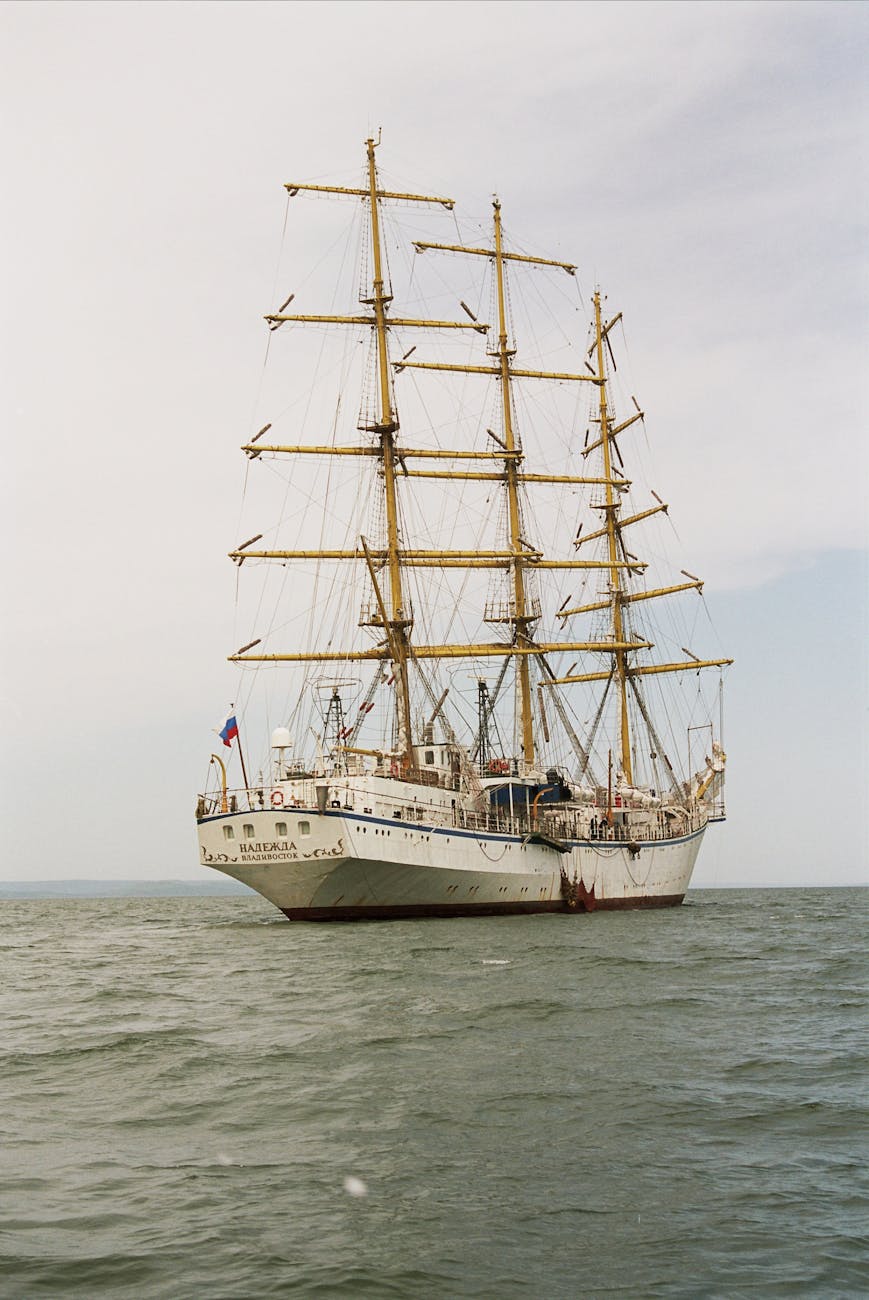
     James Onedin wants to be his own master, his life under his own command; he wants to own his own destiny.  He is a ship’s captain, and his employer, Callon, has dangled the promise of having his own command for nearly 6 years (S1 E2).  Although James has pressed himself, the ship, and crew hard in order to fulfill his employer’s expectations and earn a bonus for making a fast passage, his boss Callon  (the owner of the shipping line), only finds fault with both James and the crew for circumstances they could not help (the weather) and cargo losses.
     When he is paid (his earned bonus held back due to losses), James sees the advertisement of a ship (the “Charlotte Rhodes”) to be auctioned.  He asks his brother Robert (who has just inherited the family’s shop on the recent death of their father) to lend him money to make up the difference between his own savings and the expected price of the ship.  His brother refuses what he considers a highly risky, foolish venture.  Like their father, Robert is cautious in business.  Robert claims that James has no head for business.  We shall see.
     James already has a relationship with the Portuguese wine merchant Braganza, as ship’s captain for his employer Callon.  He knows the contract between them is expiring soon.  He notices that casks are far more valuable than what they carry.  He does due diligence in finding out the shape the ship is in, as well as the situation of the ship’s owner.  We soon find that he is a shrewd negotiator, when he goes to see the owner of the “Charlotte Rhodes”, the retired Naval Captain Webster, a cantankerous self-important old alcoholic who can’t afford to keep his ship in service.
     At his knock, Capt. Webster’s daughter Anne guardedly answers the door and suspiciously asks what he wants.  James tells her that it’s a matter of business he wishes to discuss with her father, concerning his ship.  She invites him in and announces him to her dilapidated father (helping him get spruced up as best they can do on short notice:  she wishes he’d bothered to shave that day, and he wants his uniform, which is all he has—the rest being in hock).  She asks James in an assertive tone whether he minds that a woman be present in the negotiation, making excuses for her father, and not wanting him to be taken advantage of.  She is the one who actually does the negotiating for her father.  James makes himself amenable.  When they sit down to negotiate and he is offered a drink of wine, he declines, saying that he prefers to keep a clear head when discussing business.
     To Anne’s price of 650 guineas, he makes a counter-offer of £175 in gold (to their shock and accusations from Capt. Webster that he is a rogue), and a partnership; he will bear the cost of having the ship refitted for sail himself.  Capt. Webster plainly considers himself above the Onedins’ class.  He characterizes the family as “pious, parsimonious” shopkeepers.  James vigorously lays out their situation and the benefits of the bargain, saying, “Before one can negotiate with certainty, it is necessary to fully comprehend the strengths and weaknesses of the other side.”   Capt. Webster calls him a villain and orders him out of the house.  Anne deftly steers James toward the door, saying that her father wishes to consider the matter closed, yet directs James into the kitchen and gives her father his alcoholic “tot” to send him to another room.
     Anne sternly confronts James, “Are you a fool or a charlatan?”  But then she lays her own cards, as well as his, on the table.  A partnership with her father would mean James would inherit upon her father’s death.  Despite any good intentions, that would be the result.  The exchange between Anne & James is one of the classics of the whole series, as they each consider what their bargain would mean.
     “I have little taste for penury.  One day my father’s weakness will assuredly drive him to the grave, and I shall be left penniless,” Anne admits.  “At best I shall be constrained to live off the charity of friends; at worst, it will mean the poorhouse.  I can assure you I have little fancy for either.  You understand the problem . . .”
     “Security,” James correctly deduces.
     “In return for the ship.”
     “I’ll not hide it from you Miss Webster, I cannot put up surety.”
     “And there is my father to be considered.  He’s a weak and foolish old man, but I would not see him destitute,” Anne at once shows her grasp of reality and her conscience.  She has quickly devised a solution.  “There is only one form of partnership that would ensure the sort of security I require, and the ship would not cost you one penny piece . . . as a dowry . . . There is only one way a woman may escape poverty, Captain Onedin.”
     “Marriage?” he looks at her quizzically with his head cocked.
     “A not uncommon arrangement,” Anne asserts firmly.
     “You strike a hard bargain, Miss Webster,” James deliberates.
     “Am I so unbecoming?”  (Robert described her as vinegar-faced, tart as a crabapple, and the wrong side of 30.)
     “Well, I’m no great romantic, but . . . matters such as this require a deal of thought . . .”
     “And I took you for a man quick to decision.”  She has shown her own such qualities:  decisiveness and acumen.
     “Well, you might not find me so great a catch, either . . .”
     “I should have the protection of your name and a share in your success.”
     “Yeah, or failure.”
     “I think you and failure to be poor bedfellows . . .” she discerns.
     “It’s a grave risk . . .”
     “Then we will say no more of it,” she concludes quickly.
     “Well, I mean for you . . .” he recovers himself somewhat.  “I ask you to consider carefully, Miss Webster, you might be exchanging one form of poverty for another.  I have but £175 in the world.”
     “And ambition.”
     “Oh, yeah.  I’ve ambition enough for an army of Napoleons, but ambition won’t feed us, clothe us, pay creditors.”
     “You would be hard put to find a better housekeeper, and a less complaining; I’m well-trained on that score, I can assure you,” she adds, both reflecting on her life with father, and attempting to persuade.
     “It is no easy road, one I would prefer to walk alone,” he advisedly states.
     “A few minutes ago you were speaking of partnership.”
     “Yeah, I could buy myself out of that kind of partnership, but the one you have in mind, that’s for life,” he ends on an upward note.
     “For better, for worse,” Anne acknowledges.
     James walks the room, considering.  “For richer or poorer,” he almost challenges.
     “I therefore plight thee my troth,” Anne softly offers.
     James slowly thinks aloud of all the ship will need for refitting.
     “It is a bargain, then?” Anne asks.
     James nods a little stiffly, “I wonder which of us will have the better of it.”

     When James returns to his family, they are shocked at the idea that he would suddenly marry the plain and poor Miss Webster.  Their reactions are telling:

Robert laughs and calls James a sly dog, implying the conventional need for a quick marriage.

James:  it’s simply a marriage of convenience . . . (in order to get the ship) . . . It’s as valid a reason as any for contracting an alliance . . . A ship is as much property as any heap of bricks and mortar [referring to the shop Robert so highly values, no doubt].  And a far more profitable investment.

Robert’s wife Sarah:  People marry for mutual regard, not for profit.

Their sister Elizabeth:  For love, James, for love.

James:  Well, then the more fool, they.  I cannot see how any man can keep cool judgment when in the grip of such a humor . . . I’m content with the bargain!

     James then gets Robert to sign a partnership agreement for the 1st voyage, leaving £150 in gleaming gold coin (dazzling Robert) to pay for refitting and victualing the ship, and promising half of the profits of the voyage.  As partner, Robert is also bound to pay any debts incurred by the voyage (such as the allotment spouses of the sailors get halfway through the voyage).  Who else could James trust to take care of his interests?
     When Anne sees the contract, she calls James a scoundrel for promising Robert half their profits.  She’s in such a flurry of ruffled feathers James can hardly get her calmed.  He tells her, “I’ll not be berated either before or after marriage.”  He gets her to see what the contract actually says.  She will not have to deal with creditors while he’s away, and he intends that there won’t actually be any profit from the voyage to split.  James assures her, “In matters of business, I give nothing away.”
     After they are married (having had the bans read 3 weeks earlier), and they have their reception aboard the ship, Anne insists that she sail with James.  He says it’s no place for a woman, to which she replies, “A wife’s place is beside her husband.”  And when he tells her he plans to drive the ship hard and it could be dangerous, she says, “I’ve no more fancy for widowhood than spinsterhood, James.  We sink or swim together.”  He bows to her forceful will, which matches his own.  Two peas from the same pod, an acquaintance describes them, and that is true of both their natures and interests.
     As they prepare for their first night together (on the voyage), Anne bemoans her plain looks.  James gently comforts her, “If men married for beauty alone, there would be a power of lonely women in the world.”  The next morning as she is sewing a company flag she has designed for their venture, they steal a glimpse of each other that silently speaks of their mutual satisfaction.  In the 2nd episode James kindly teaches her how to navigate (though she’ll be called upon to use her scarcely learned skill before she feels confident/competent to do so), and it’s clear they both love sailing the ocean.
     James had immediately got the work started on the ship.  Callon is suspicious.  He realizes James is after the Braganza contract.  He sails in his faster ship and beats James to Lisbon, offering Braganza the best bargain he’s ever made.  The ever-affable Braganza delays signing until James arrives, who has writ him a letter asking him to wait to see what he can offer.  After an exchange we see that Braganza is also a shrewd bargainer.  He knows that Callon’s topmost concern is to put James out of business, not any real care for himself and his interests.  James says he’ll ship the wine for free, in exchange for being sole agent in the sale of Braganza’s wine in the UK, and that he will return the empty casks at full freight charge.  Braganza chooses James’ offer, and Callon leaves in anger vowing essentially to crush James and his newly created enterprise.
     Already in the first episode several themes have been introduced, as well as the characters, and the setting (the evolving times of the 1860s and forward—in Liverpool England, on the seas, and an ever-widening scope in the world).  Unmentioned above is the initiation of the love triangle between sister Elizabeth and her 2 suitors (Fogarty & Frazer), the dysfunctional relationships of the Onedin family, and the clash of their faults and philosophies in life.  These and more move the drama of the story along.  But here is a partial proposal of themes that can be explored through this series.

1.	Business Sense:  including employer/employee relations, rivalries, success & failure
2.	Self-determination:  including freedom & slavery, class, spousal & parental control …
3.	Friendship:  its meaning, loyalty, influence for good and ill
4.	Family:  marriage, love, children
5.	Loss & grief experienced in life
6.	Religion & superstition:  public & private observance, and Faith
7.	A historical look at Health & Welfare:  at sea and land, by law, by class, by sex, by place, through harsh times, and compensation for injury & death
8.	Justice & Goodness:  character(s)

     Perhaps over time I will be able to pursue writing my absorption in this epic.  Among the appeals of the story are historic sailing ships, the beginning of steam ships, sea shanties, historic commerce and culture, Victorian manners and mores, as well as literary (and life) themes, and more.
     In order to compare contemporary writings on the society of the Victorian Era, I looked for the literature of the period, remembering in particular Dicken’s novels.  But then I realized that these were written (as was the “Onedin Line”) to market in the media of the time:  magazines and books.  As the “Onedin Line” story is propelled by characters, plots, and conflicts, so the writers of the 2nd half of the 19th century perhaps did not focus on the most laudable and peaceful aspects of life and society at the time.  So, while we can learn something of the culture, we must be cautious of being too gullible about how such depictions could be generalized.  A well-known influencer of the time was John Stuart Mill.
     The generation just preceding the time period of the “Onedin Line” possibly produced  gentler literature, such as the stories of “Cranford”.  Yet Dickens himself began writing in the 1830s, and the Bronte sisters wrote some dark novels before when the "Onedin Line" is set.  I wanted to make more particular note of those closer to the timeframe of the “Onedin Line”.  The same themes can be explored in these writings:

Elizabeth Gaskell  North and South (1855) https://www.elizabethgaskell.org/works-novels.php
“Cranford” TV series based on Gaskill’s writings pub 1849-1858 (the decade before Onedin)
https://en.m.wikipedia.org/wiki/Cranford_(TV_series)

Charles Dickens Great Expectations (1860), Our Mutual Friend (1864), The Mystery of Edwin Drood (1870), “Doctor Marigold’s Prescriptions” (1865), the play “Frozen Deep” with Wilkie Collins (1857), “George Silverman’s Explanation” (1868), “Going into Society” (1858), “A Holiday Romance” (1868), “Hunted Down” 1859, “A Message from the Sea” 1860 with Wilkie Collins, “Mrs. Lirriper’s Legacy” (1864), “Mrs. Lirriper’s Lodgings” (1863), “No Thoroughfare” with Wilkie Collins, “The Wreck of the Golden Mary” (1856) https://www.gutenberg.org/ebooks/1465

Wilkie Collins The Moonstone (1868), The Woman in White (1860), Blow Up With a Brig!  A Sailor’s Story (1889), more at  https://www.fictiondb.com/author/wilkie-collins~1490.htm

Anthony Trollope  https://www.bookseriesinorder.com/anthony-trollope/  Doctor Thorne (1858; a 2016 TV series adaption was scripted by Julian Fellowes), The Way We Live Now (1875, also a 2001 BBC 6-part TV adaptation)

George Eliot Middlemarch (1872), Adam Bede (1859), Daniel Deronda (1876), The Mill on the Floss (1860), Silas Marner (1861), https://www.fictiondb.com/author/george-eliot~19229.htm

Thomas Hardy Far from the Madding Crowd (1874), The Return of the Native (1878), Tess of the d’Urbervilles (1891), https://thebookslist.com/thomas-hardy-books/
Articles on Victorian Literature
•	https://study.com/academy/lesson/introduction-to-victorian-literature-overview-of-themes-style-and-authors.html#:~:text=So%2C%20Victorian%20literature%20is%20just,A%20huge%20growth%20in%20population .
•	https://en.m.wikipedia.org/wiki/Victorian_literature#:~:text=Victorian%20literature%20is%20English%20literature,leading%20literary%20genre%20in%20English.
•	https://brainly.com/question/55562504
Gothic Fiction in the Victorian Era
•	https://researchguides.library.tufts.edu/c.php?g=824030&p=6338054
 My Stories