by Susan Ternyey, Dec 2024
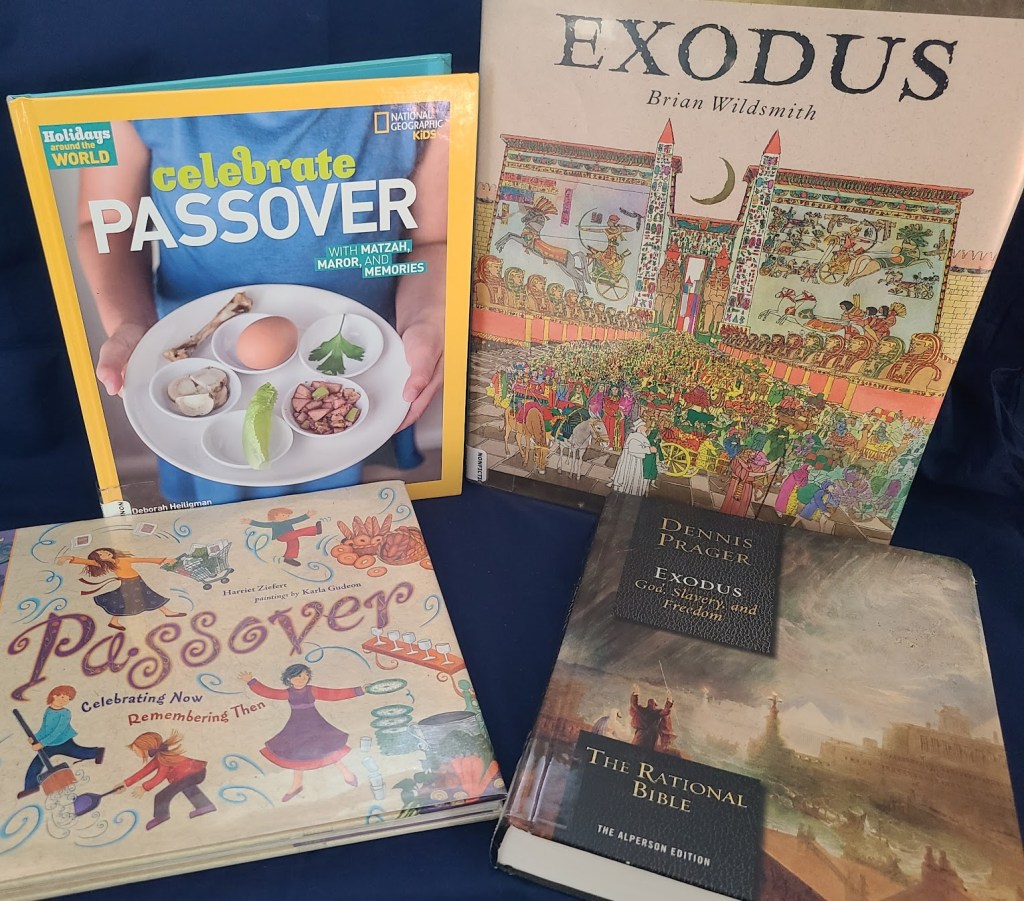
A few weeks ago I felt myself in an impossible situation. I saw no way for it to be resolved, other than disaster. My thoughts turned to the story of Exodus, when the Children of Israel were faced with the impossible.
Moses was born into an underclass in Egypt at a time when male babies were by law to be murdered. His mother set him afloat in a basket she’d carefully prepared, in the river Nile, with his older sister Miriam to watch over him. Maybe the mother or the sister served under Pharaoh’s sister, with some knowledge of the woman’s character, and hoped she would take pity on the baby. That happened. One impossible situation resolved.
Moses was brought up in the Pharaoh’s court, no doubt educated as the ruling class. But he knew he was an Hebrew (no doubt circumcised, as Pharaoh’s sister saw immediately), and as an adult he empathized with the situation of his fellow Israelites. He thought they would recognize that he was in a position to help them, but they didn’t. His leanings came to Pharaoh’s knowledge, and he had to flee Egypt.
He ends up staying with a Midianite, and serves as a shepherd (or steward over the flock). He marries the daughter of his Midianite boss. He seems content to be far from the intrigues and complexities of the Egyptian royal court. Another impossible situation seems resolved.
Then one day God calls him to go back and save his people from their plight as slaves of the Egyptians. How can he go back? He’s already been rejected by the Israelites. He may speak the king’s Egyptian well, but having been raised in the royal court, no doubt his Hebrew is less than extraordinary—a definite handicap in such a mission. Why would the Israeliets trust a man who seems more Egyptian than Hebrew? What does he know of their culture and feelings? He doesn’t even know the name of the God they serve. He pleads for at least someone who can speak for him. God grants him that, gives him some signs of His authority, and promises that though the mission will seem like a failure (Pharaoh will refuse), God will back him up. Apparently, Moses and his brother Aaron were acquainted, and it’s possible Aaron had some standing amongst the Israelites, maybe even as a representative in the royal court. God sends Aaron to meet Moses.
Moses & Aaron go to the elders of the Israelites and tell them God has sent Moses to free them. They go to Pharoah, and their situation goes from bad to worse. The Hebrews are none too happy with Moses. Of course, he’s not on the Pharoah’s list of honored guests, either.
God keeps sending Moses back to the Pharoah. At first the Pharaoh’s magicians are able to simulate the same sort of signs/miracles that Moses does. That doesn’t help his reputation or effectiveness. Discouraging. Time after time Moses has to go back to Pharaoh, until he is barred. Eventually the plagues get so bad that Pharaoh’s own people beg him to listen to Moses and let the Children of Israel go.
Why is this so hard? Why is it taking so long? If God is going to help them escape, why is He letting such setbacks happen? At the 10th plague, God institutes the Passover as a remembrance that He got them out of their impossible situation. For thousands of years now they have celebrated the Passover in remembrance that God was the one who freed them. Not Moses, not Pharaoh, even though they played their parts, and obviously Moses was prepared for his role. Yet only God could have saved them from their impossible situation. Still, all is not resolved.
When the Children of Israel reach the Red Sea, Pharaoh has changed his mind. This is too humiliating for an enslaved population to escape the powerful, prestigious Egyptian rule. The enslaved are a valuable commodity, as well, contributing not only prestige to the nation, but manpower for the glorification of Egypt and her Pharaoh. He has his army follow them. The Israelites are between the figurative rock and hard place: the sea and the armies of Pharaoh. Tensions build. God saves them again, by an astounding miracle. But this is not the end, either.
Through 40 years of tribulations and troubles, God provides miracle after miracle to save His people. Even when they reach the Promised Land, challenges arise, and God sends proofs that He knows their situation, cares about them, and is ready to help them when they turn to Him . . . though at times it is not immediate. He continually reminds them that He was the One that saved them. Only He could do that.
Well, God also resolved my impossible situation. He sent helps, but it is clear to me that only He could free me from those overwhelming circumstances.
Yet, here again I am faced with staggering challenges. I struggle between having faith and not wanting to take God for granted. Will He solve my problems, or does He expect me to? I know He can, but will He choose to help me out of this pit? Is it His intention that I suffer awhile, as He let the Israelites suffer for years, even hundreds of years? I am positive that He wants me to pray and plead for His help. I am positive that He wants me to have faith in Him, in His wisdom, understanding, love, and power. I will do the best I can for myself, and I will wait, with tears upon my pillow, as David of old who cried out with fervent pleas as well as faith and acknowledgement of God’s goodness, and His help in times past.
O God, our help in ages past,
Our Hope for years to come,
Our shelter from the stormy blast,
And our eternal home.

O God, our help in ages past,
Our Hope for years to come,
Be Thou our guard while life shall last,
And our eternal home.
Amen.
 My Stories