by ST, 2019
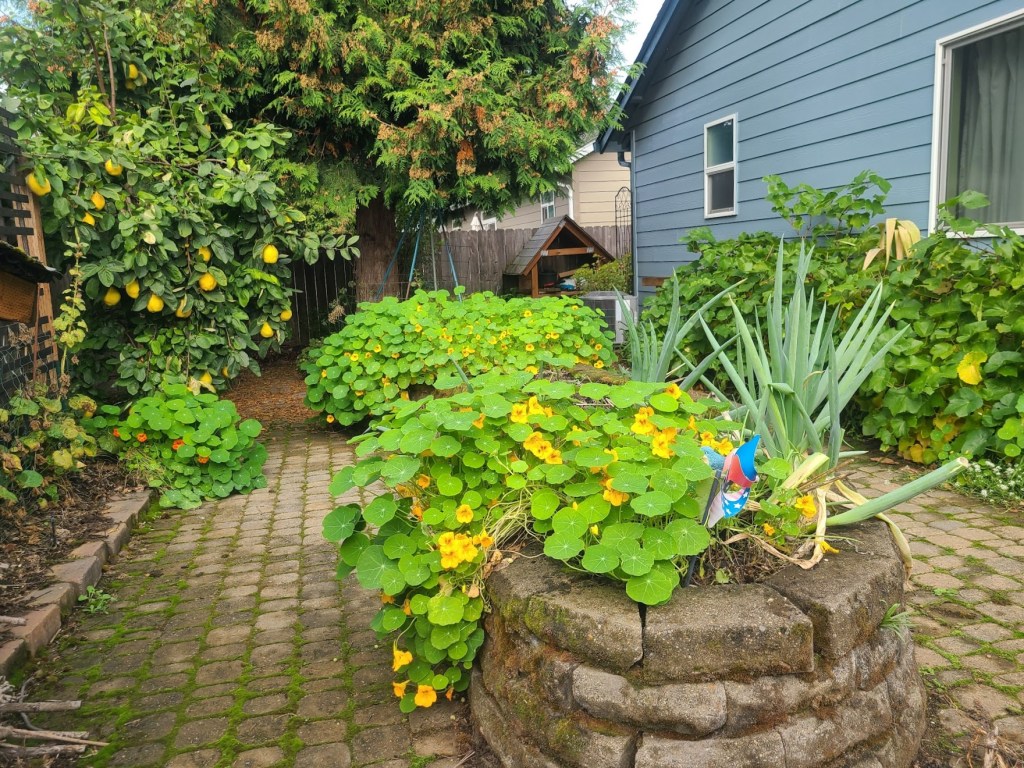
A New Start
	A certain woman, a paralytic grandmother of 50, acquired a lot in a certain city, in a subdivision, with certain covenants.  The lot appeared level, and was chosen for that reason.  But by the time the foundation was dug and poured, it was no longer level, and required a ramp for access to the home being built.  The builder, not of highest repute, was nonetheless willing to make many accommodations for the paralytic.  While the woman recognized that the home would not be of superior quality, and that the prices had not yet quite bottomed out, she felt it was best to get what she could when it was available.  Other disappointments came along (like the narrowness of the street that didn’t allow parking on her side), but she felt she could either walk away until all could be perfect, and she could afford perfection--never have anything--or she could be willing to compromise, in order to be able to have something.

Groundwork
	It was soon apparent that the ground was a haphazard mélange of clay, gravel, and sand.  It seemed it had been the clay bottom of a pond, with construction gravel and sand dumped rather indiscriminately near the street and drive.  A French drain had to be installed along the line next to the uphill neighbor.  Over years and years, various amendments had to be added for gardens to succeed.

Whose Plan?
	The city had made certain requirements of the builder—for instance 3 trees on the lot—regardless of whether they would be the kind or the placement the new owner would want.  The woman was able to negotiate to change out 2 of the trees--from a list.  The woman was required to submit a plan to the city, showing her intentions for the place.  The woman researched and chose a variety of shrubs she thought she would plant—knowing, of course, that one must live in a place for some time before one knows where to plant what.
	In the meantime, her mother-partner, her neighbors, friends, family, all had their ideas about what should and shouldn’t be planted where.  Her grandson ever lobbied for a fountain or water feature.  She and her partner wanted to extend the blooming season of the gardens just as long as possible.  There was the issue of affordability, and the partner brought many, many plants to transplant from her previous place.  And then, every trip to a nursery might bring home one or more plants that captured the interest of the women.  But space and circumstance would eventually circumvent  certain changes—it would be too late to do things differently.  If it could have been done all at once, the gardens might have had a more comprehensive plan.  But who could know, so early on, what changes would come?
Changes
	Over 10 (then 15) years, major changes almost entirely redesigned the woman’s gardens.  They wanted to try espalier, and grapes, and  . . . lots of other things:  everything was an experiment, and some were tried again, and again.  Not everything thrived where it was first planted, not everything survived at all.  Some things were beyond the ability of the woman to care for.  The wisteria, the espalier, the grapes, the grass had to go.  Each was changed to things easier for her to manage. Watering systems changed over the years, and eventually she was able to have a contractor install a sprinkler system (which she continued to tweak).  Over time the woman became aware of other plants she wanted to try.  Things that began small, grew large.  Change became constant, even if less overwhelming.

Kinder-Garten
	Being a grandmother, the woman wanted as kid-friendly a yard as possible, acquired various toys, kiddie pools that changed every couple years, and planted things the kids were encouraged to eat right from the garden.  In truth, the woman enjoyed that herself.  She loved watching pinwheels spinning in the wind.  She loved miniature fairy gardens.  She loved the laughter of little ones.

Farm & Garden Grandma
	And pets:  the woman let the children collect worms, slugs, snails for pets.  For herself, she tried miniature frogs in a small enclosed tank, a cat the kids were to help care for, a bunny with its barn over one of the compost piles (but as it turned out, had to come in for the winter), and chickens the children helped to raise until they were grown—the chickens, that is.  A dog would not do.  The woman was not willing to pick up its doodoo.  At last the woman had to admit that she could not care for pets, and the last dogs she bought were stuffed animals—easy to take care of, ate little, and pooped less.  She had previously tried fish—gold and beta—they died; would like to have had birds, but the pretty cages cost too much, and birds flick.  So she just enjoyed those birds that shared her garden with her (despite consternation over their cherry picking, and poops).

Laborers in the Yard
	Hired hands put in the patio, sidewalks, garden shed, pavers in the back, the final (one hopes) sprinkler system.  A brother put in the main raised bed, espalier posts, grape supports, painted the shed, helped one round of soil amendments, and one round of gate amending.  The woman managed to put in much of the block frameworks for edgings, gates, more raised beds.  Her mother, in her 70s with difficulty balancing, hauled her wheelbarrow handcart full of dirt, over and over one summer.  And the two women planted almost everything—an eclectic collection--themselves.  Church members, missionaries, various temporary housemates, neighbors, friends,  family—especially her grandson--all helped her in the work.  How many times has her grandson unloaded blocks, boards, bags of soil and such, beside weeding, trimming, reaching, carrying . . . ?  It was a way for him to earn money, and for grandma to have a regular helper.  Eventually others had to take his place, as his life moved on.

Compost, Chemicals, and Firepit
	The woman built two compost bins for developing soil from home and yard waste. But she had found sometime earlier that one way to fill a pot for less, was to layer kitchen and garden scraps  with bagged soil.  She called them her “pot garden”, and they served a variety of plants, eventually becoming the potato and squash pots. Every garden space became a compost for trimmings as well, both to build up the soil and to save the cost of city collection.   The firepit became a way to recycle prunings, beside providing a cooking and gathering place.  She decided the ashes might discourage ants and slugs, and encourage plant growth.  Yet, she invested yearly in many and various chemicals to try to check the destroyers--

The Destroyers
	Moles, ants, cats. and blackberries crossed the fence line.  Weedy seeds came blowin’ in the wind.  Squirrels—so adorable, so exasperating—“dug” her garden, for hiding and finding their nuts, nibbling tender roots, the fence serving as a superhighway from yard to yard.  Slugs seemed to procreate ex nihilo.  Winter cold, summer heat, drying winds, too much rain, too little rain, too much sun, too little sun . . . the life and death of the gardens.  Insects, disease . . . every mortal enemy she battled endlessly.  Appreciating all creatures great and small the Lord God made withal, yet like every other creature, she considered it her right to defend her territory from invaders, marauders, competitors.

Frugal Food?
	How satisfying to her soul was growing food to eat and share.  But did it save any money?  Considering the cost of chemicals and water?  In her accounting, she decided that nearly every landscape would cost to maintain, and so, like the chickens she kept both for eggs and as pets, she might as well get some return for the pounds she invested.  The aronia berries—well . . . they were so prolific, so nutritious, so . . . astringent!  Too much a daughter of her mother to let them go to waste, she mixed them with blueberries, or added them like blueberries to her pancakes.  Few people wanted to share in that harvest.  Ironically, despite their producing freely, their preservation necessitated so much sugar and additional blueberries from the store, they were not free.

Neighbors and Dog Walkers
	The closer one lives to others, the more potential for misunderstandings, for disagreements, for disagreeableness.  Good fences make good neighbors?  Well, depending on whether one neighbor influences the fence line to his advantage, and whether the fence keeps various plants and animals from crossing the line.  But this woman did not want to be enemies with her neighbors.  All in all, they were mostly good neighbors.  Better to try to cultivate friendship than a tangle of thorny relationships.  Not always easy, sometimes fuminously difficult.

Beauty All Around—indoors and out
	The woman loved the colors of gardens, the patterns of plants, for her décor inside as well as out.  Though less than brilliant with houseplants, she grew a few (that had to be replaced from time to time).  She painted her rooms (thanks to helpers) with garden colors, and bought curtains with botanical designs.  Her mother and she hung crystals from the kitchen window to play in the light, and delight the children with dancing rainbows.  Her soul craved beauty.

Windows on the World
	Windows let in light.  Windows opened the view to the gardens—and she planted so that the flowers would grow to show through the windows.  She wanted looking out, even on a dreary day, to be a delight to the eyes and heart.

The Gardens of the Lord—Eden & Gethsemane
	Compliments about her gardens always caused her embarrassed, humble pleasure.  How could she take credit for what was beautiful in them?  Though she put in pretty continuous work and watchfulness, and sometimes long hard days, beside whatever resources she could, could she really make anything grow?  She had witnessed the death of too many things to believe that.  Had she created any of the natural (or bred) beauty of any of the plants in her garden?  Her gardens seemed to her gifts from God, especially when her life otherwise (or even in the gardens) might be giving her miseries.

Roses are sometimes red, and Violets can make you blue
	Violets are so pretty, but they are spreaders (one of many)—and would take over the world if given half a chance.  Roses come in so many delectable colors . . . with a limited lot, how can you choose?  And rose cultivation has its thorns, and diseases.  Roses were a favorite of someones in the woman’s life, and perhaps symbolized her relationships with them, like the Bette Midler song “The Rose”.  Likewise, Grandma’s Gardens.

“Hear ye therefore the parable . . .”
	The woman chose her life the best she could, with the information and resources she had. Still, she could not control everything about her life.  It required all kinds of exertion and “amendments”, compromise and negotiation, to try to make beauty and a reasonable yield from what she had to work with.
	Changes happened in the woman’s life.  Some things didn’t work.  The kids and she grew up and older.  Her goals, desires, and pursuits changed.  What she was able to accomplish with her resources changed.  In a sense, life became a series of experiments, trials and errors—and sometimes delightful successes!
	The woman did as much for herself as she could, but she could not do it all alone.  This was both a curse and a blessing.  It was frustrating to have to accommodate her plans and ideas  to the convenience, conceptions, and quality of work she could get from others.  Yet it was a blessing that others were willing to help with what she was not capable or skilled to do.  And it built the bond between her and her most important others.
	In accounting for her life, financial considerations were not the only considerations.  There were other things she valued, and despite the destroyers of her intentions and efforts, she put all she had into winning what she hoped for in life.  Ultimately, the thorns were less important to her than the roses.
 My Stories